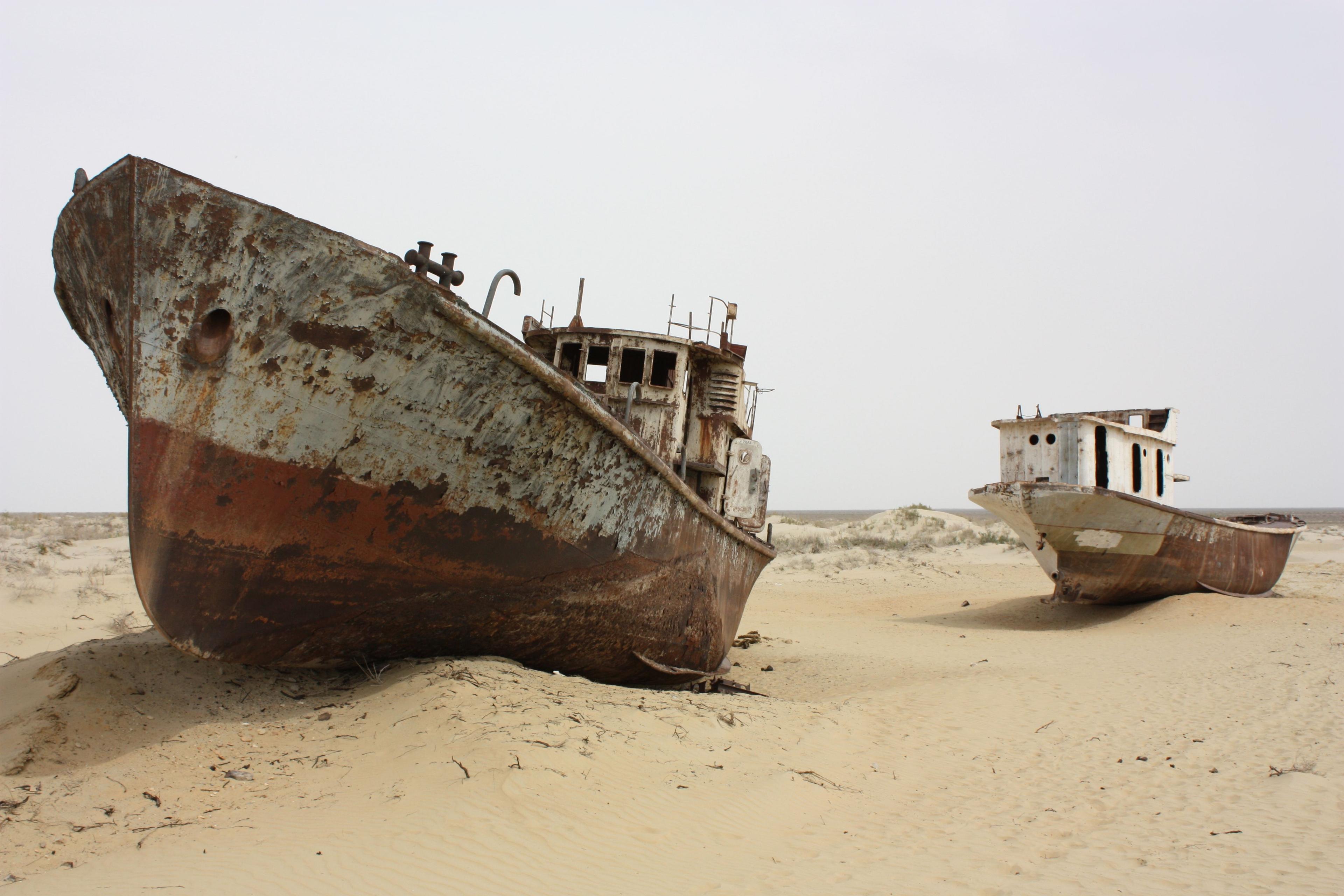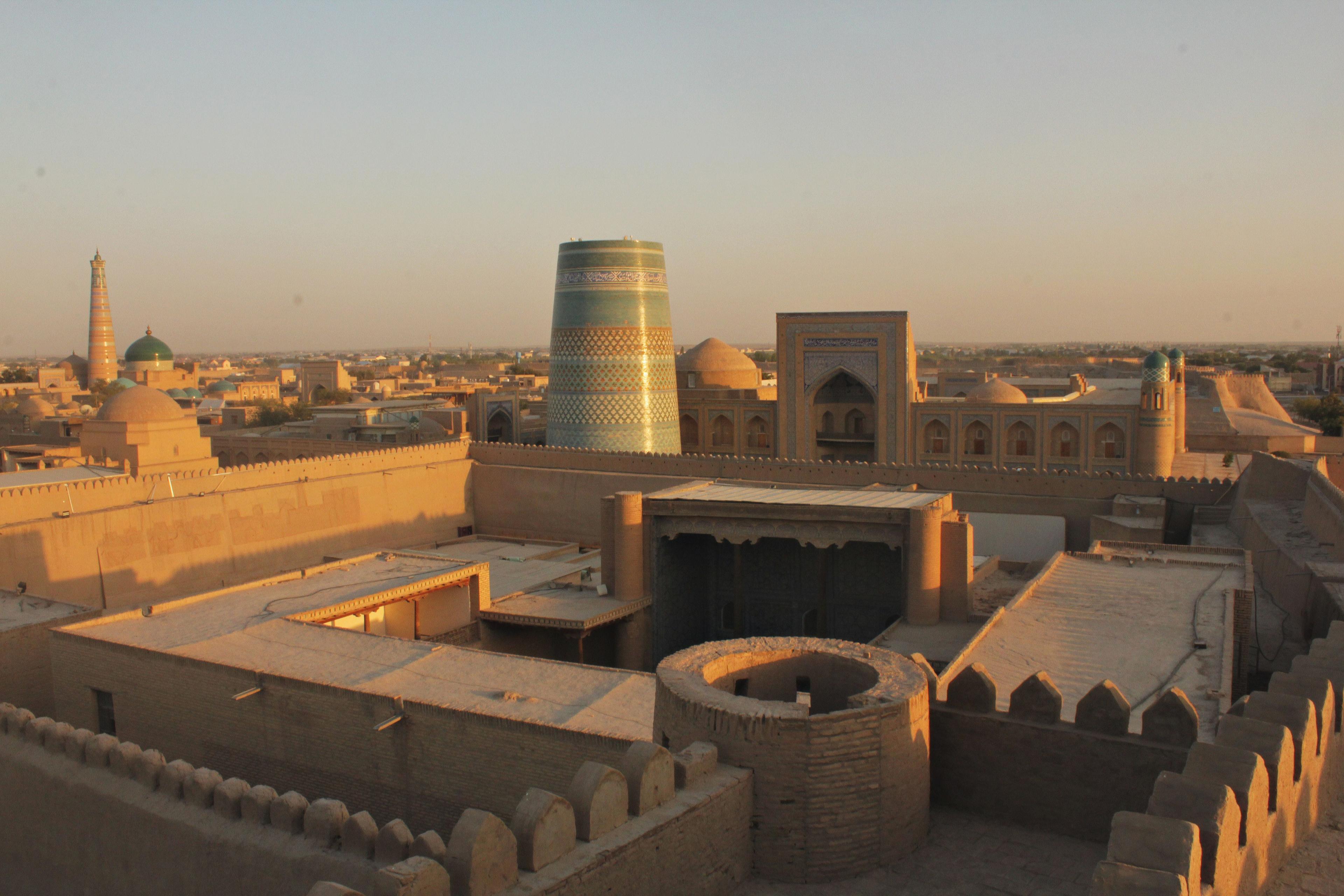
Ayaz-Kala, Toprak-Kala, Kyzyl-Kala and Janbas-Kala: the 2,000-year-old desert fortresses of Elliq-Qala. History, how to get there from Khiva or Urgench, 2026 costs, the Ayaz-Kala yurt camp and the best time to go.
Facts, prices and schedules checked on November 4, 2026
The desert fortresses of Khorezm are the best day trip from Khiva and one of the most atmospheric sights in Uzbekistan. Across the Amu Darya, on the edge of the Kyzylkum desert, dozens of mud-brick citadels rise out of the sand and cotton fields: Ayaz-Kala on its bare hill, the palace mound of Toprak-Kala, the square walls of Kyzyl-Kala and the lonely ring of Janbas-Kala. Locals call the area Elliq-Qala, fifty fortresses, and the name is not much of an exaggeration.
Most are two thousand years old or more, older than anything in the walled town of Ichan-Kala. This guide explains their history, which ones to see, how to get there from Khiva or Urgench, what a day trip costs in 2026, and whether to spend a night at the yurt camp below Ayaz-Kala.
What are the desert fortresses of Khorezm?
Khorezm (also written Khwarazm or Chorasmia) is the delta oasis of the Amu Darya, south of the old Aral Sea. From at least the middle of the first millennium BC it was a wealthy agricultural state, for a time a province of the Achaemenid Persian Empire and later an independent kingdom with its own rulers, coins and script. Its farmland depended on canals, and it was surrounded on three sides by desert and nomadic tribes.
The answer was the qala, a fortress of sun-dried mud brick and rammed earth. Some guarded the edge of the oasis and its canals, some were fortified towns, and some were the residences of local lords. Many were abandoned when rivers shifted course or canals silted, which is why they now stand in empty desert, preserved by the dry climate.
Most of the fortresses lie in the Ellikqala and Beruniy districts of Karakalpakstan, the autonomous republic that covers the north-west of Uzbekistan. They were studied systematically from 1937 by the Khorezm Archaeological and Ethnographic Expedition led by Sergey Tolstov, whose work revealed the palace of Toprak-Kala and much of what we know about ancient Khorezm.
UNESCO has listed the Desert Castles of Ancient Khorezm on its Tentative List since 2008. They are not yet a World Heritage Site, so be wary of anyone who tells you otherwise.
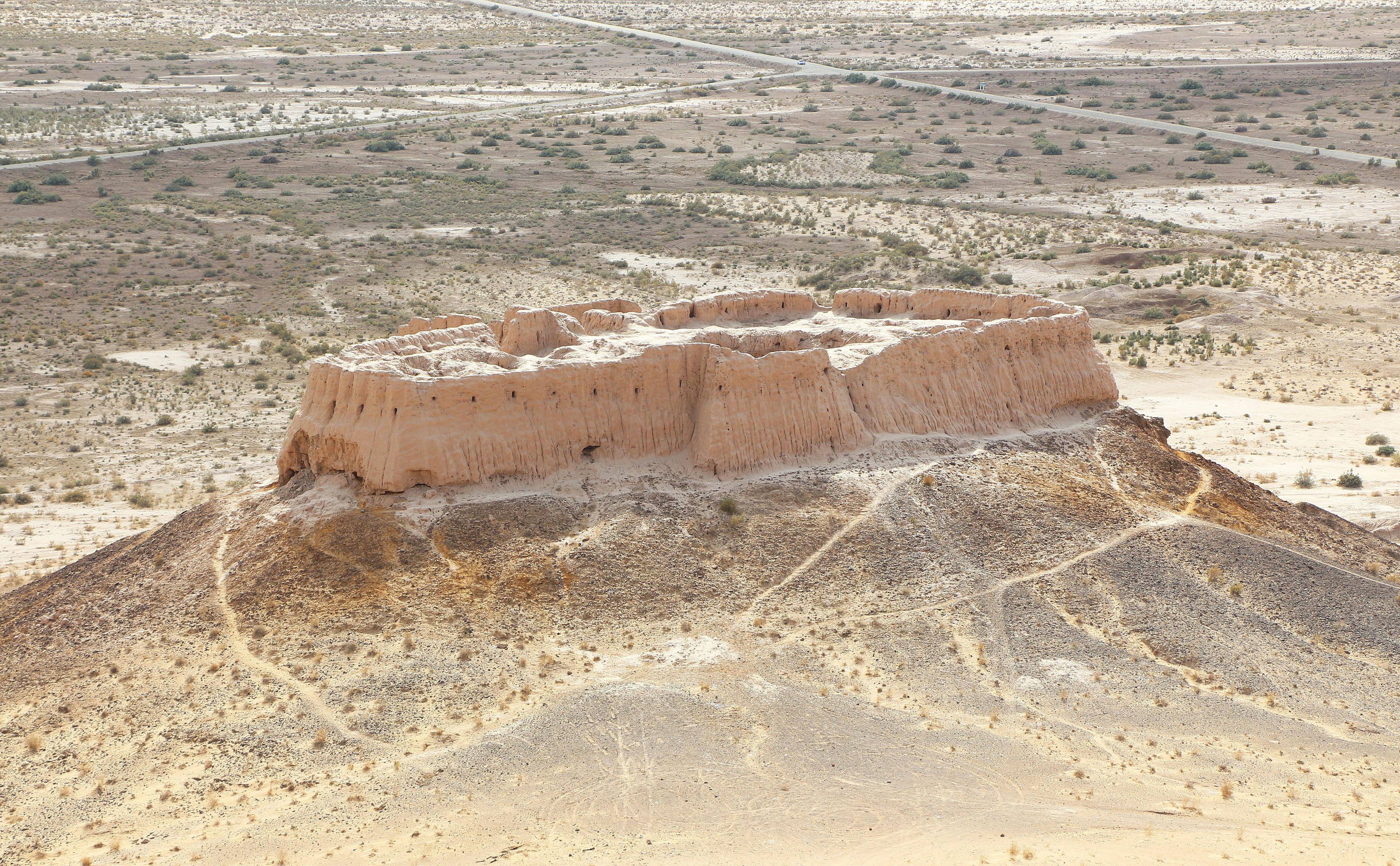
Ayaz-Kala: three fortresses and the best view
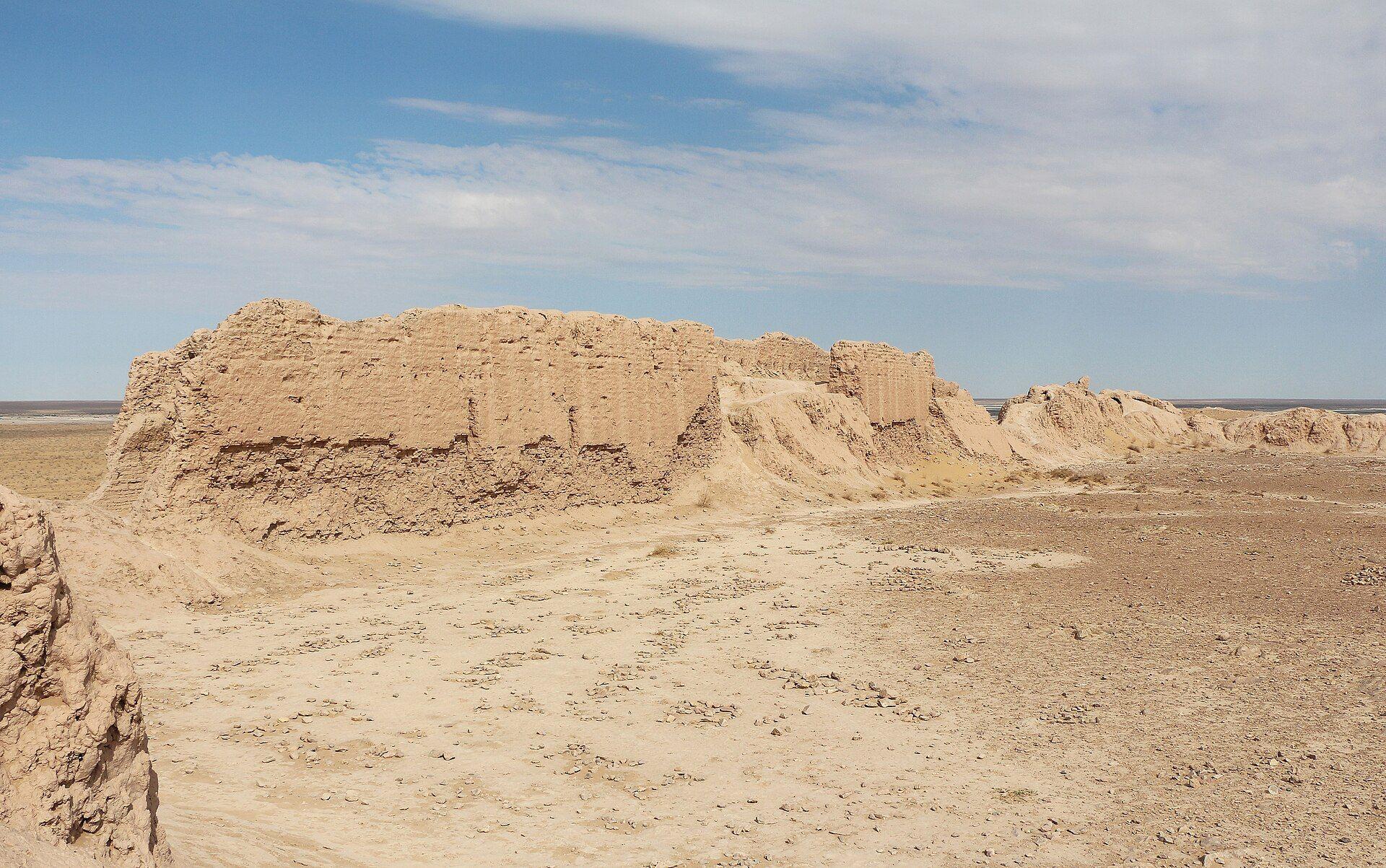
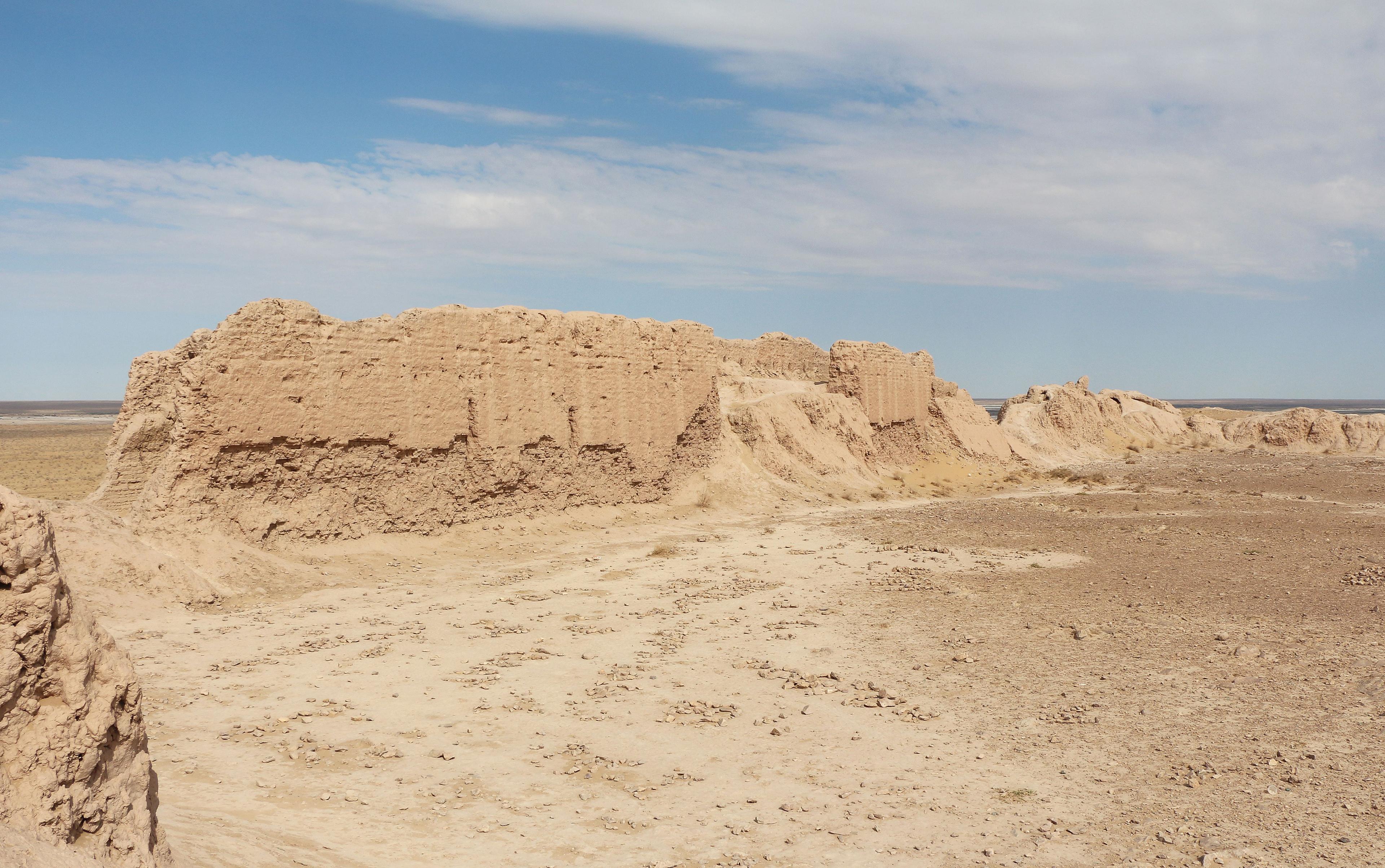
Ayaz-Kala (Ayaz-Qala) is the most dramatic of the group and the one in all the photographs. It is really three sites.
- Ayaz-Kala 1 sits on top of a steep hill and is the oldest, usually dated to the 4th or 3rd century BC. Its double walls with arrow slits are still easy to read. It probably served as a refuge and garrison rather than a town.
- Ayaz-Kala 2 is smaller and later, a fortified residence on a conical hill below, dated by most sources to the 6th to 8th centuries AD.
- Ayaz-Kala 3 is a large rectangular enclosure on the plain, believed to date from around the 1st and 2nd centuries AD, with fields that once surrounded it.
The climb to Ayaz-Kala 1 takes 15 to 20 minutes on a sandy path and is the highlight of the day. From the top you see the Kyzylkum desert on one side, the green oasis and the small Ayaz-Kul lake on the other, and the yurt camp below. Sunset and early morning give the best light and the most comfortable temperatures. Wear shoes with grip: the slope is loose sand and crumbling clay.
Toprak-Kala: the palace of the Khorezm kings
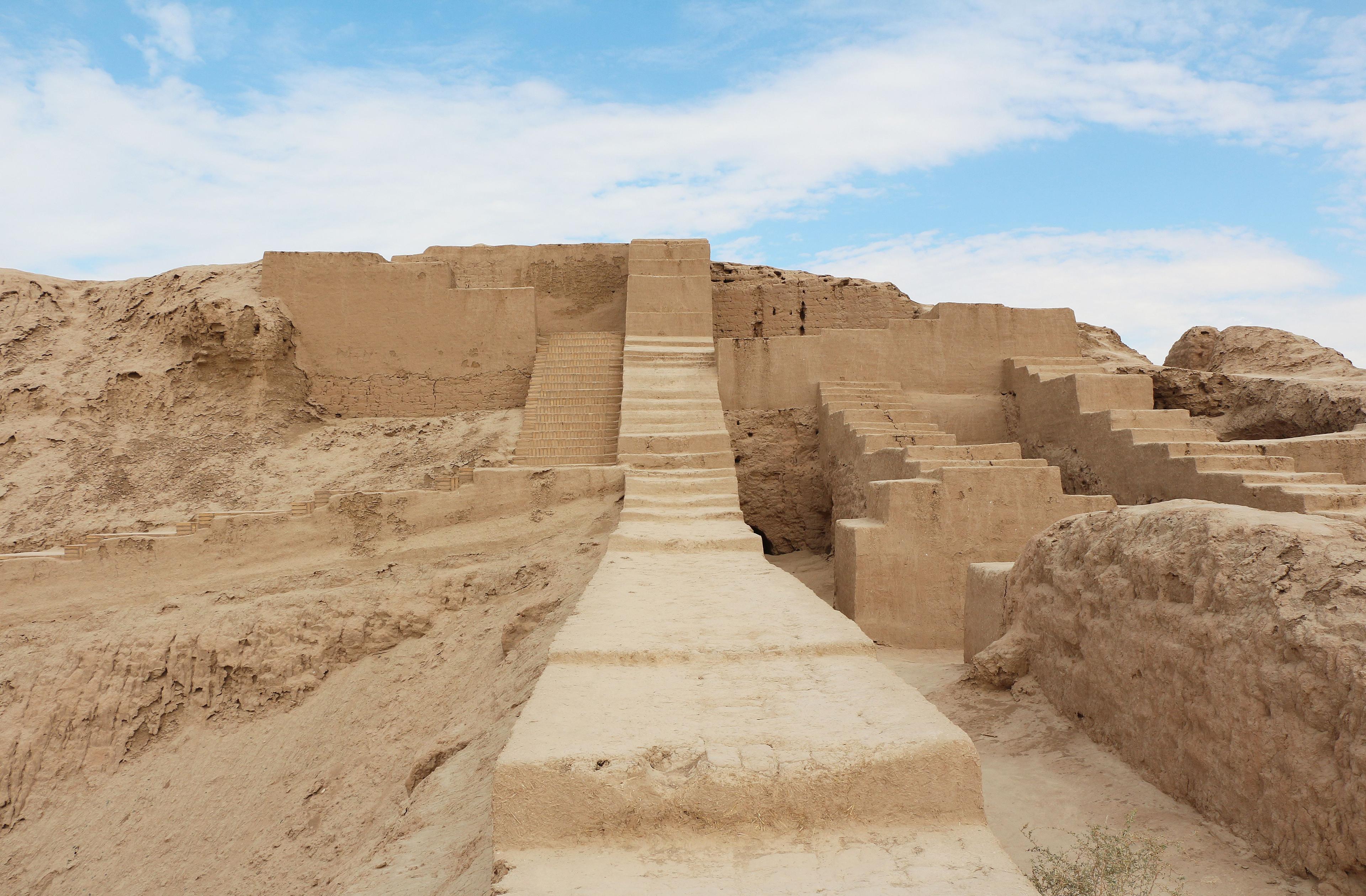
Toprak-Kala (Topraq-Qala) is the most important site historically. It was a planned town of about 17 hectares surrounded by walls with square towers, built in the 1st to 3rd centuries AD and occupied until about the 4th or 5th century. At its north-western corner stood a palace on a raised platform, where Tolstov's archaeologists found halls decorated with painted murals and clay sculpture, a fire temple and a throne room. They also found more than a hundred documents on wood and leather in the Khorezmian language, three of them dated to the years 207, 231 and 232 AD, which makes the site exceptionally well dated for its period.
What you see now is the outline of the city walls and the eroded palace mound, which you can climb for a view of the grid of the town. The murals and statues are no longer on site; finds from the Khorezm excavations are now in museums, including the Savitsky Museum in Nukus and the State Hermitage in St Petersburg. A good guide helps a lot here, because the ruins are harder to read than at Ayaz-Kala.
Toprak-Kala is about 30 km from Ayaz-Kala and usually the second stop of the day.

Kyzyl-Kala and Janbas-Kala
Kyzyl-Kala (Qizil-Qala), the Red Fortress, is a compact square fortress near the road between Toprak-Kala and the town of Beruniy. It was built and occupied between about the 1st and 4th centuries AD and then refortified in the 12th and 13th centuries, around the time of the Mongol invasion. Its walls, up to about 16 metres high, have been partly restored, so it gives the clearest idea of how these fortresses looked when complete. It takes 20 to 30 minutes and is an easy first or last stop.
Janbas-Kala (Djanbas-Qala) is further off the usual route, in Ellikqala district near the village of Kukcha. It is one of the oldest of the group, founded around the 4th century BC and abandoned around the 1st century AD. It is a large rectangle of walls without towers, which is unusual, and inside the southern part are the remains of a fire temple, one of the earliest known in Khorezm. Few visitors make it here, so you may have it to yourself. Add it if you have a full day and a driver who knows the tracks.
Other sites you may pass include Guldursun-Kala, whose massive walls are linked to a legend about a princess who betrayed the fortress to an invader, and Akchakhan-Kala, a large early settlement close to Ayaz-Kala. Ask your guide which are accessible on the day.
How to get to Ayaz-Kala and Toprak-Kala from Khiva
There is no public transport that makes sense for this trip. The practical options are a private car with a driver, a tour from Khiva, or a stop on the way between Khiva and Nukus.
- From Khiva: Ayaz-Kala is roughly 100 to 110 km away, a drive of about two hours via Urgench, across the Amu Darya and on through Beruniy or Bo'ston. A loop of Kyzyl-Kala, Toprak-Kala and Ayaz-Kala and back is about 250 to 300 km.
- From Urgench: about 70 to 80 km to Ayaz-Kala, an hour and a half by car. Urgench has the nearest airport and train station.
- From Nukus: the fortresses lie roughly halfway between Nukus and Khiva, so many travellers visit them on the transfer between the two, together with the Savitsky Museum and, on a longer trip, the Aral Sea at Muynak.
The roads are paved to the sites, with a short sandy stretch to the Ayaz-Kala yurt camp. A standard car is fine; you do not need a 4x4 for the main three fortresses. For Janbas-Kala and the smaller sites, ask your driver about road conditions in advance.
Leave Khiva early, around 08:00, especially from May to September. The sites have no shade, and the desert reaches 40 degrees Celsius and more in summer.
How much does a desert fortresses day trip cost?
Typical prices in 2026, as of November 2026:
- Private car with driver from Khiva for the day: roughly 60 to 100 US dollars per car, depending on the season, the number of fortresses and whether the car is booked through a hotel or agency.
- English-speaking guide: an additional cost, usually 40 to 70 US dollars for the day. Worth it at Toprak-Kala, where there is little on-site information.
- Group tours sold online from Khiva: often around 75 to 100 US dollars per person, usually without entrance fees.
- Entrance fees: modest, roughly 20,000 to 30,000 soum per site at the ticketed fortresses, paid in cash. Fees and ticketing change, and not every site charges.
- Lunch: at the Ayaz-Kala yurt camp or a roadside café in Beruniy or Bo'ston.
Agree in advance whether entrance fees and waiting time are included, and carry cash in soum. Our travel cost guide gives broader budgets for Uzbekistan.
The Ayaz-Kala yurt camp: is an overnight stay worth it?
Below Ayaz-Kala, on a low hill facing the fortress, a yurt camp has been receiving travellers for many years. Guests sleep in felt yurts on mattresses with blankets, with shared washrooms in a separate building. Dinner is usually local Karakalpak and Uzbek food, served with tea, and breakfast is included in most packages. Camel rides and short walks to the lake are offered as extras.
Is it worth it? If you have the time, yes. The day trip is good; the overnight stay is memorable. You see Ayaz-Kala at sunset and again at sunrise, when the walls turn orange and the desert is completely silent, and the night sky is far darker than in Khiva. It also breaks the long drive between Khiva and Nukus.
Things to know:
- Comfort is basic. Yurts are shared or private depending on numbers, and facilities are simple.
- Nights are cold in spring and autumn, even after a hot day. Bring a warm layer.
- Overnight packages from Khiva including transport, the yurt, dinner and breakfast are commonly sold for about 150 to 300 US dollars per person in 2026, depending on group size and inclusions.
- Opening dates depend on the season and the operator; confirm availability before planning a winter stay.
Our article on the Nuratau and Aydarkul yurt camp covers the other popular desert stay in Uzbekistan, if you want to compare.

A suggested one-day route from Khiva
A sensible order, starting early to beat the heat:
- 08:00 Leave Khiva, drive through Urgench and cross the Amu Darya.
- 09:45 Kyzyl-Kala, a short stop to see the restored walls.
- 10:30 Toprak-Kala: climb the palace mound and walk the old town grid, about an hour.
- 12:00 Drive to Ayaz-Kala and have lunch at the yurt camp.
- 13:30 Climb Ayaz-Kala 1 and walk down past Ayaz-Kala 2, about 90 minutes.
- 15:30 Start back, arriving in Khiva around 17:30 to 18:00.
In summer, reverse the order and arrive at Ayaz-Kala for sunrise, or split the trip with a night at the camp. If you are heading on to Nukus rather than back to Khiva, the same order works and the drive onward takes about two and a half to three hours.
Best time to visit the Khorezm fortresses
April, May, September and October are ideal: warm days, cool nights and soft light. March and November can be fine but chilly, with occasional dust storms. From June to August daytime temperatures often pass 40 degrees, so go at dawn, carry plenty of water and plan lunch indoors. Winter is cold and grey but quiet; the fortresses are open, though yurt camps may not be.
Whatever the season, bring:
- A hat, sunglasses and sunscreen; there is no shade at any site.
- At least two litres of water per person.
- Shoes with grip for the sandy climbs.
- Cash in soum for tickets, lunch and tips.
Our Uzbekistan weather by month guide has more detail on temperatures in Khorezm.

How to fit the fortresses into your itinerary
The fortresses work best in one of three ways:
- A day trip from Khiva. Allow a full day, ideally the second or third day of your stay after you have seen Ichan-Kala.
- On the way between Khiva and Nukus. Combine Kyzyl-Kala, Toprak-Kala and Ayaz-Kala with a night at the yurt camp, then continue to Nukus for the Savitsky Museum.
- As part of a longer Karakalpakstan trip with Muynak and the Aral Sea. This needs at least three days from Khiva.
Is it worth it? If you are spending two nights or more in Khiva, we think so. Ayaz-Kala and Toprak-Kala give a sense of age and landscape that the restored cities cannot, and they are one of the few places in Uzbekistan where you may share a site with only a handful of other visitors. Our Khiva travel guide explains how to plan the rest of your time in the region.
Visiting the fortresses with TourEast
Our Desert Fortresses and Aral Sea tour covers Ayaz-Kala and Toprak-Kala, the Savitsky Museum in Nukus and the Aral Sea at Muynak. We can also arrange a private day trip from Khiva with a car, driver and guide, or build the fortresses into a custom itinerary through Khorezm and Karakalpakstan.