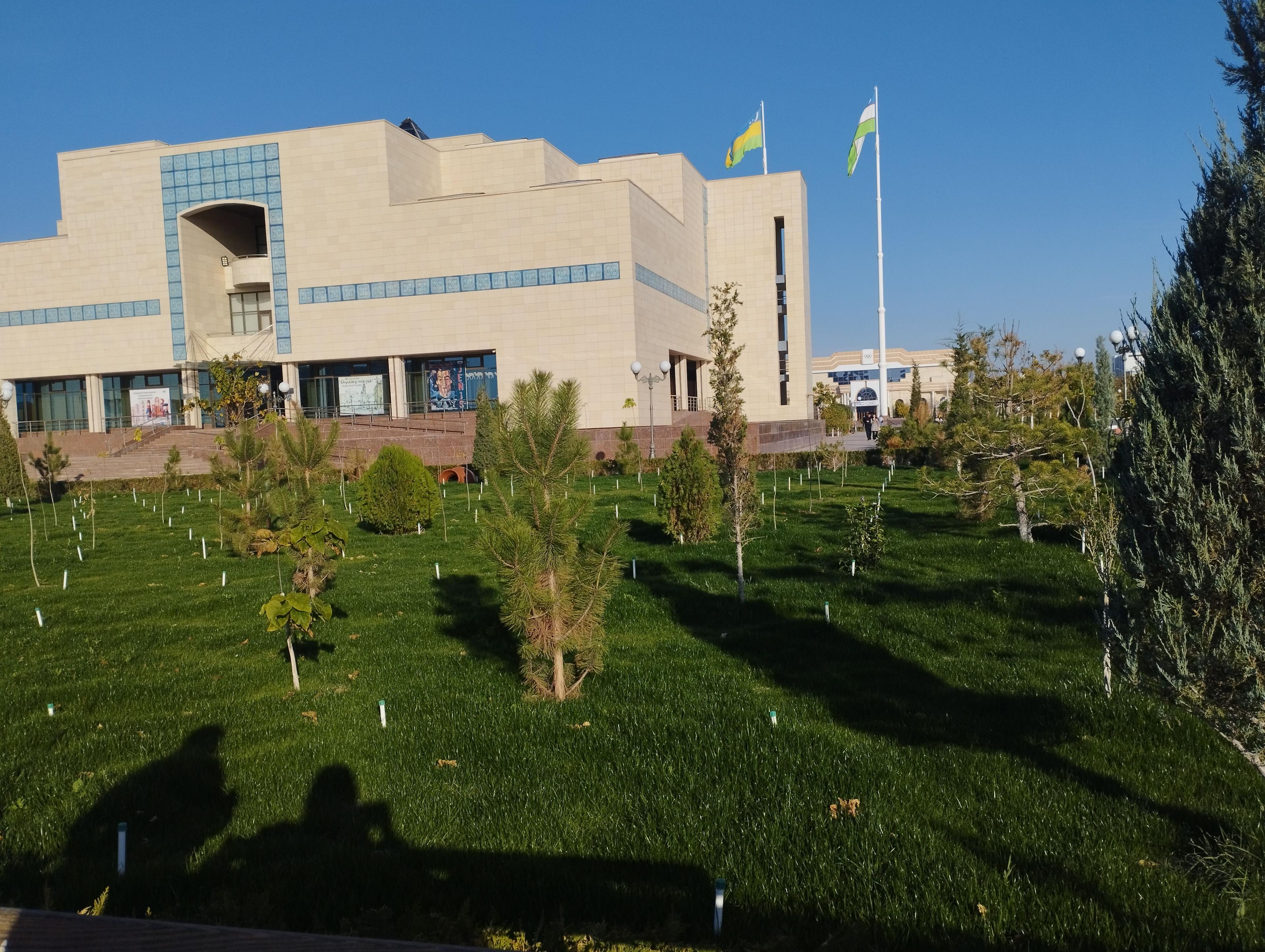
A Soviet-era collector, a remote desert capital and one of the world's great hoards of Russian avant-garde art. Our guide to the Savitsky Museum in Nukus: the collection, tickets and hours for 2026, how to get there and how to combine it with Khiva.
Facts, prices and schedules checked on November 4, 2026
Nukus is not a city people visit for its looks. The capital of Karakalpakstan is a low, wide-streeted Soviet town on the edge of the desert, a long way from Samarkand's domes. Yet travellers fly across the country to come here, often for a single afternoon, because Nukus holds one of the most remarkable art collections in the former Soviet world.
The Savitsky Museum, officially the I.V. Savitsky State Art Museum of the Republic of Karakalpakstan, is often called the Louvre of the desert. It preserves thousands of paintings by Russian and Central Asian avant-garde artists who were sidelined, censored or worse under Stalin, alongside an outstanding collection of Karakalpak jewellery, textiles and archaeology.
This guide explains who Igor Savitsky was, what to look for in the collection, opening hours and ticket prices for 2026, how to get to Nukus, and how to fit the museum into a trip with Khiva and the Aral Sea.
Who was Igor Savitsky?
Igor Savitsky was a Russian painter and collector who first came to Karakalpakstan in 1950 as an artist with the Khorezm archaeological and ethnographic expedition. He stayed. Over the following decades he gathered Karakalpak folk art, jewellery and textiles that were disappearing from village life, and in 1966 he persuaded the authorities to open a museum in Nukus, with himself as its first curator.
Then he did something far riskier. Officially, only Socialist Realism was acceptable art in the Soviet Union. Savitsky travelled to Moscow, Leningrad, Tashkent and elsewhere, visiting the widows, children and friends of artists whose work had fallen out of favour, and bought or was given canvases that would otherwise have been destroyed or forgotten in attics. Distance was his protection: Nukus was so remote that few officials took much notice of what hung in its museum stores.
He ran the museum until his death in 1984. His successor, Marinika Babanazarova, led it for three decades, and the story of the two of them is told in the 2010 documentary The Desert of Forbidden Art, which brought the collection to international attention.

Why was this art forbidden? A little context
It helps to know what Savitsky was up against. In the years after the 1917 revolution, Soviet art was briefly one of the most experimental scenes in the world. Painters played with colour, form and abstraction, and many of them travelled to Central Asia, drawn by its light and its ancient cities.
That freedom ended in the early 1930s. In 1932 the independent artists' groups were dissolved and replaced by a single state-controlled union, and Socialist Realism soon became the only approved style: optimistic, realistic images of workers, farmers and leaders. Work that looked too abstract, too gloomy, too religious or too Western was labelled formalist. Painters who did not adapt lost exhibitions and income, and a number were arrested during the purges of the late 1930s.
Much of what you see in Nukus was painted either just before that turning point or quietly afterwards, for the drawer rather than the gallery. Knowing this changes how you look at even a simple still life or village scene. Choosing to paint it that way was a risk.
What is in the collection?
The museum's holdings are vast. It reports more than 100,000 items in total, although only a small fraction is on display at any one time. The collection falls into three broad parts.
- Russian avant-garde. Roughly 10,000 works by artists active from the 1910s to the 1930s, often described as the second-largest collection of its kind after the Russian Museum in St Petersburg. Look for the bold, colourful landscapes of the Jack of Diamonds circle, such as Aleksey Morgunov, and the strange, expressive work of Vladimir Lysenko.
- The Uzbek school. Artists who came to Central Asia in the early Soviet period and fused European modernism with the light, colour and life of the region. Alexander Volkov, often called the father of the Uzbek avant-garde, is the star here, alongside Ural Tansykbaev and Mikhail Kurzin.
- Karakalpak folk and applied art. Silver jewellery, embroidered costumes, yurt bands, carpets and woodwork, plus archaeological finds from the ancient Khorezm fortresses that Savitsky helped excavate.
For many visitors the surprise is how much of the work is joyful rather than grim. These are not protest paintings. They are simply paintings that did not fit an official style, and their energy is still striking.

Why it matters: the Louvre of the desert
The nickname is a little grand, but the point behind it is serious. Without Savitsky, a whole chapter of 20th-century art would have survived only in fragments. Artists who painted in the wrong style lost commissions, were expelled from unions, and in some cases were arrested. Their families often had no safe way to keep the work.
The museum's international profile has grown quickly in recent years. Part of the collection was exhibited in Florence and Venice in 2024, Italian specialists from Ca' Foscari University of Venice helped redesign the galleries, and digitisation of the archive is under way. The museum received almost 70,000 visitors in the first nine months of 2025, about a quarter of them from abroad, with Italy, Russia and France among the top countries.
For travellers, the appeal is simple. You are looking at museum-quality work in an uncrowded gallery, in a city most tourists never see. Few places in Central Asia give you that combination.
Savitsky Museum opening hours and ticket prices (as of November 2026)
The latest published figures, from late 2025, are:
- Opening hours: daily 9:00 to 18:00, closed on Mondays. Monday visits are possible by advance arrangement.
- Foreign adults: 100,000 som (around 8 USD).
- Foreign students: 80,000 som.
- Foreign children under 12: 60,000 som.
- Citizens of Uzbekistan pay a much lower local rate.
- Guided group tours (up to 20 people): 200,000 som for foreign adults, with tours in several languages by prior arrangement.
Professional photography and video are a paid service. Rules on phone photography have changed over the years, so ask at the ticket desk before you take pictures in the galleries.
Prices in Uzbekistan change often, and older guidebooks and blogs still quote much lower fees, so treat these as a guide and confirm on arrival. Cash in som is the safest way to pay; see our guide to money in Uzbekistan for tips on cash and cards.

What to see in a two or three hour visit
The museum occupies two buildings in central Nukus. As of late 2025, the main displays are in the second building, where the redesigned halls host the exhibitions Avant-garde in the Desert and The World of Igor Savitsky. The first building is scheduled for reconstruction, with plans for a conference hall, café and shop, so expect some sections to be closed or rearranged.
How to use your time:
- Start with The World of Igor Savitsky to understand how the collection came together. It makes the art far more moving.
- Give the avant-garde halls at least an hour. The Uzbek school paintings, with their bazaars, caravans and portraits, are a highlight for anyone travelling on to Khiva and Bukhara.
- Finish with the Karakalpak applied art, especially the silver jewellery and costumes, if they are on display.
Most visitors spend two to three hours. Art lovers can easily spend a full day, and some come back the following morning. A good guide, whether one of ours or a museum guide, adds a great deal: the stories of the individual artists are half the experience.
How to get to Nukus
Nukus is in the far west of Uzbekistan, about 800 kilometres from Tashkent as the crow flies. There are three realistic ways in.
- By air from Tashkent: Uzbekistan Airways and Centrum Air fly to Nukus several times a day, with a flight time of roughly an hour and a half. This is the fastest option and what most of our guests choose. See our guide to domestic flights in Uzbekistan.
- By overnight train from Tashkent: sleeper trains take around 16 to 17 hours. Beds sell out, so book early on railway.uz. Uzbekistan Railways has said that faster trains will reach Nukus in future, but no date has been set.
- By road from Khiva: about three hours by car via Urgench, crossing the Amu Darya. This is the most common way to arrive if you are already in Khorezm.
Many travellers fly into Nukus, see the museum, then drive south to Khiva the same day or the next, or do the trip in reverse and fly out of Nukus or Urgench.
Is the Savitsky Museum worth the trip?
If you care about art, yes, without hesitation. It is one of the few places in Uzbekistan that people plan an entire detour around and rarely regret it.
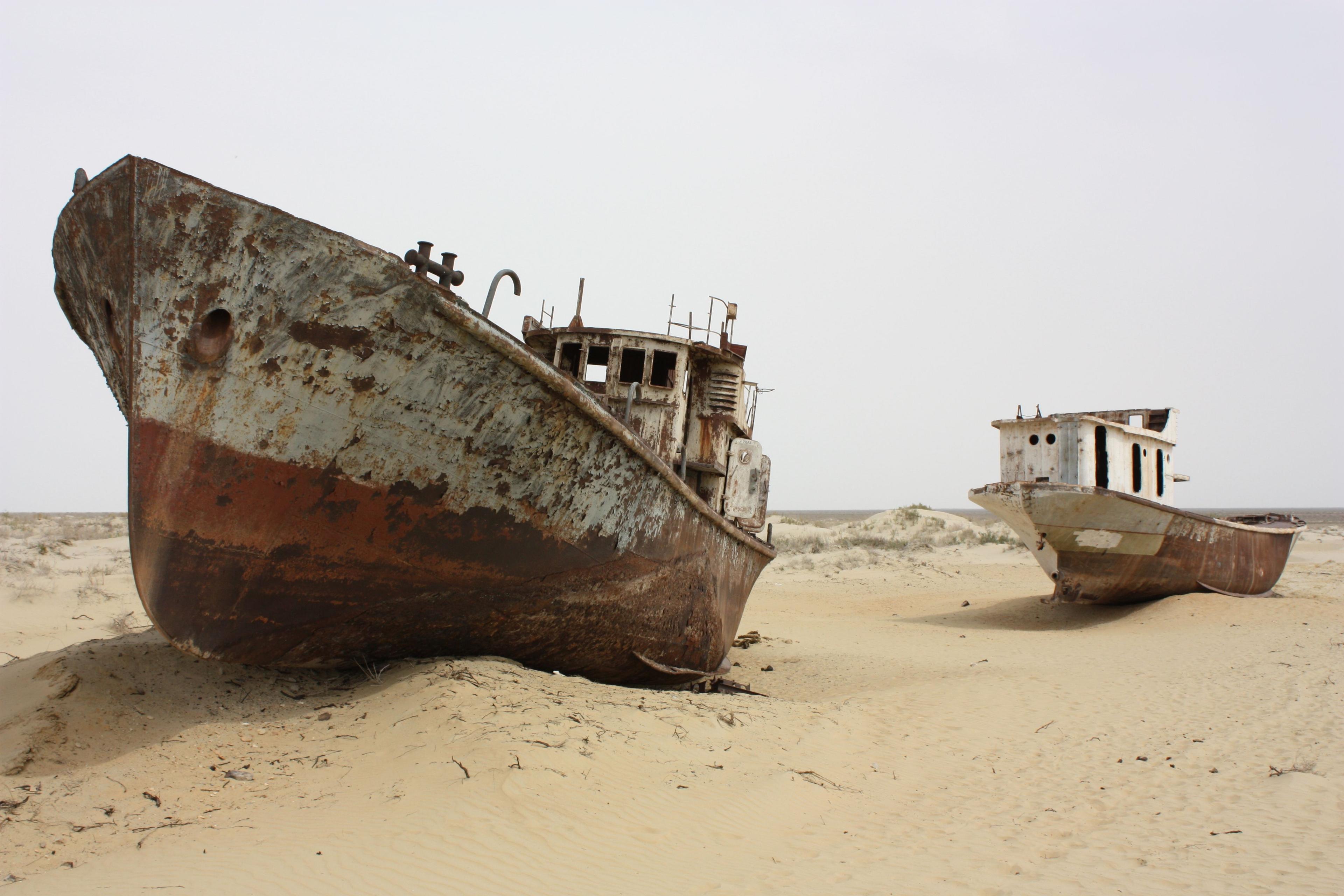
If museums are not your thing, think about what else Nukus opens up. It is the gateway to the Aral Sea and the ship cemetery at Muynak, and to the ancient desert fortresses of Khorezm. Combined, they make two or three days in the west that feel completely different from the Silk Road cities.
The honest caveat: Nukus itself is quiet, and outside the museum there is not a great deal to do in town. Plan one night at most, unless you are heading on to the Aral Sea.
Combining Nukus with Khiva
Nukus and Khiva pair naturally. The best way to travel between them is by private car, which lets you stop at the sights along the road:
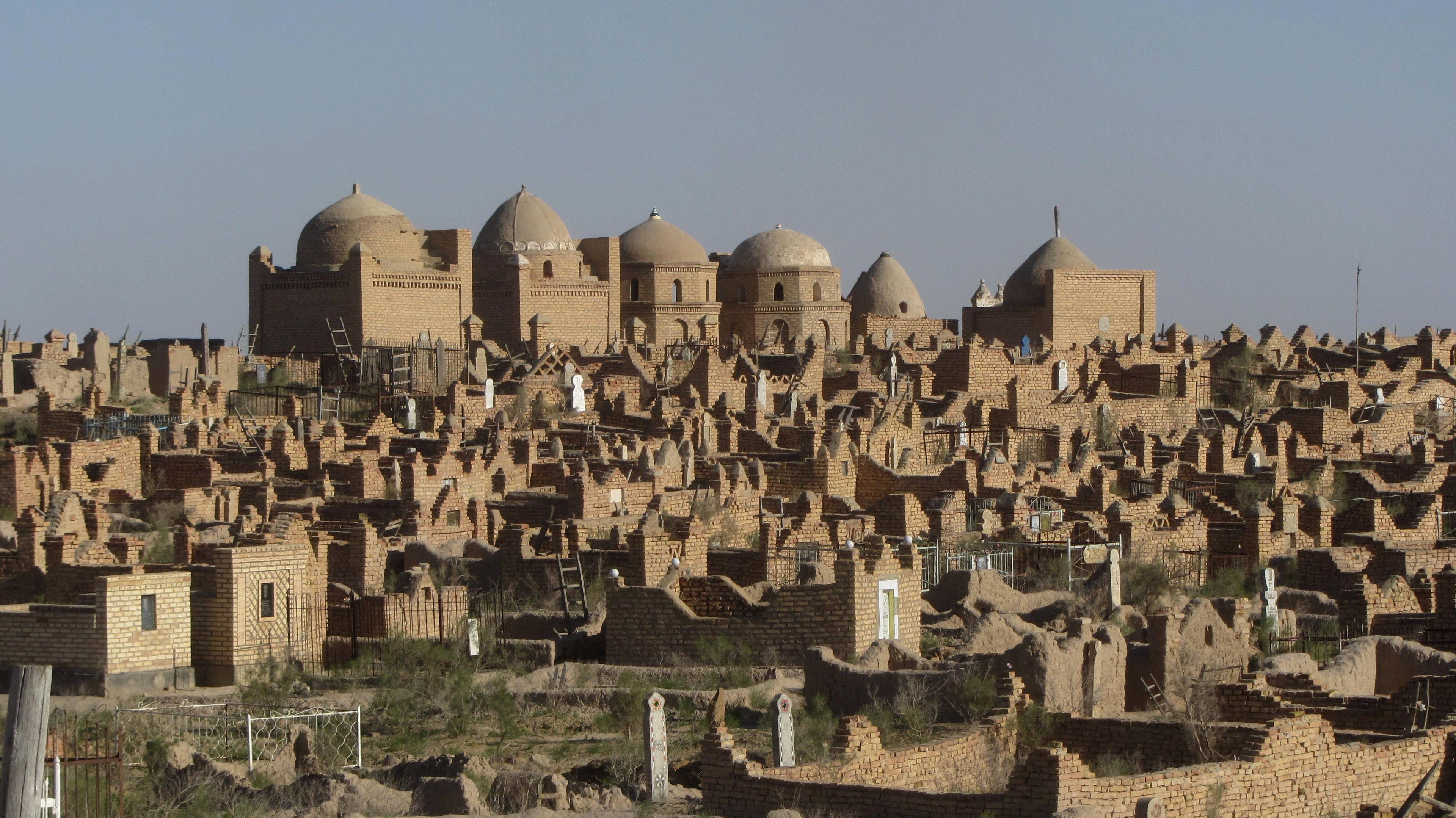
- Mizdakhan: a vast hilltop necropolis near Khodjeyli, about half an hour west of Nukus, with mausoleums and legends going back many centuries.
- Chilpik: a round Zoroastrian tower of silence on a hill by the main road south, where the dead were once exposed to the elements.
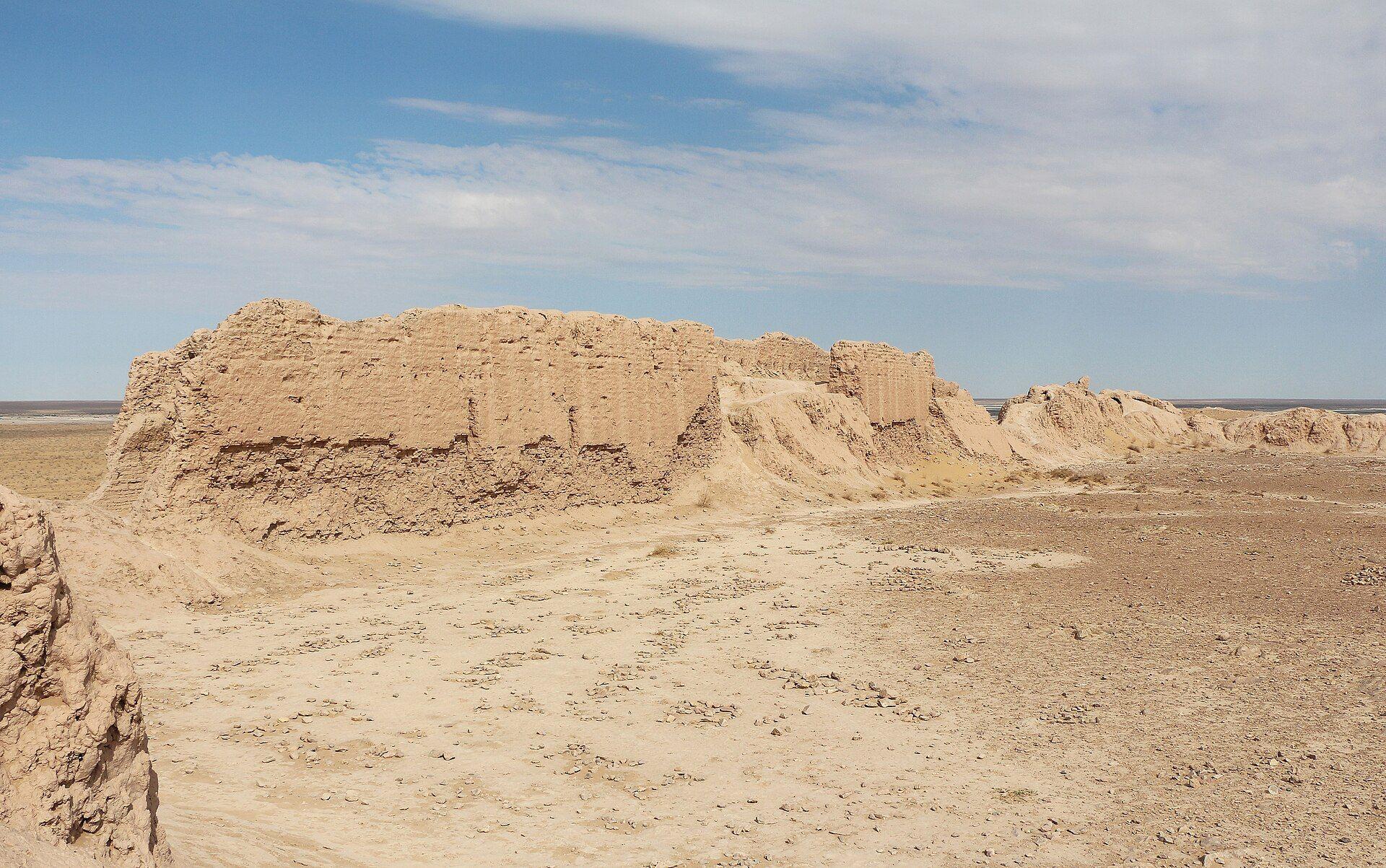
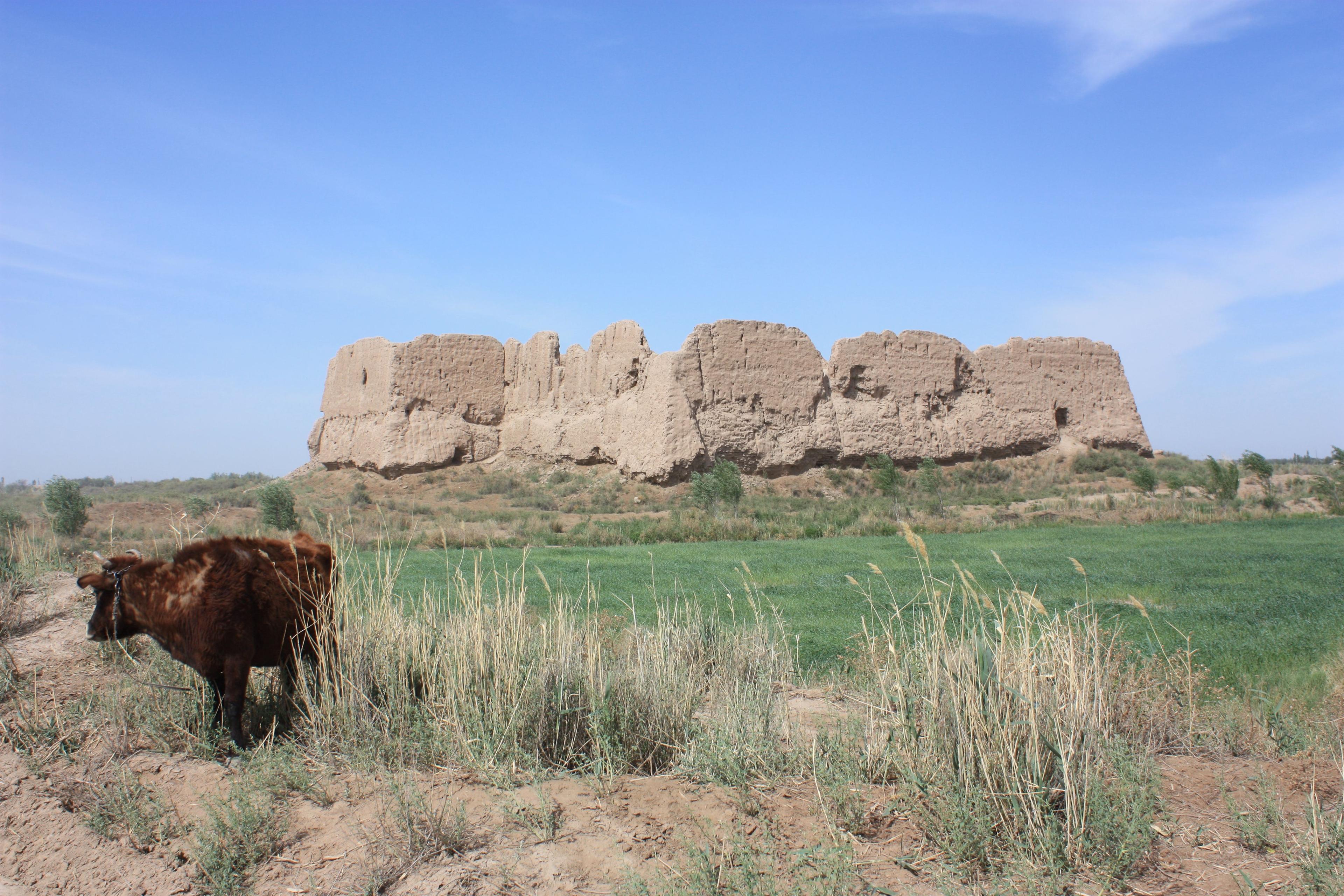
- The desert fortresses: Toprak-Kala, Ayaz-Kala and others, the mud-brick citadels of ancient Khorezm, rising out of the desert east of the Amu Darya. Ayaz-Kala has a yurt camp if you want a night under the stars.
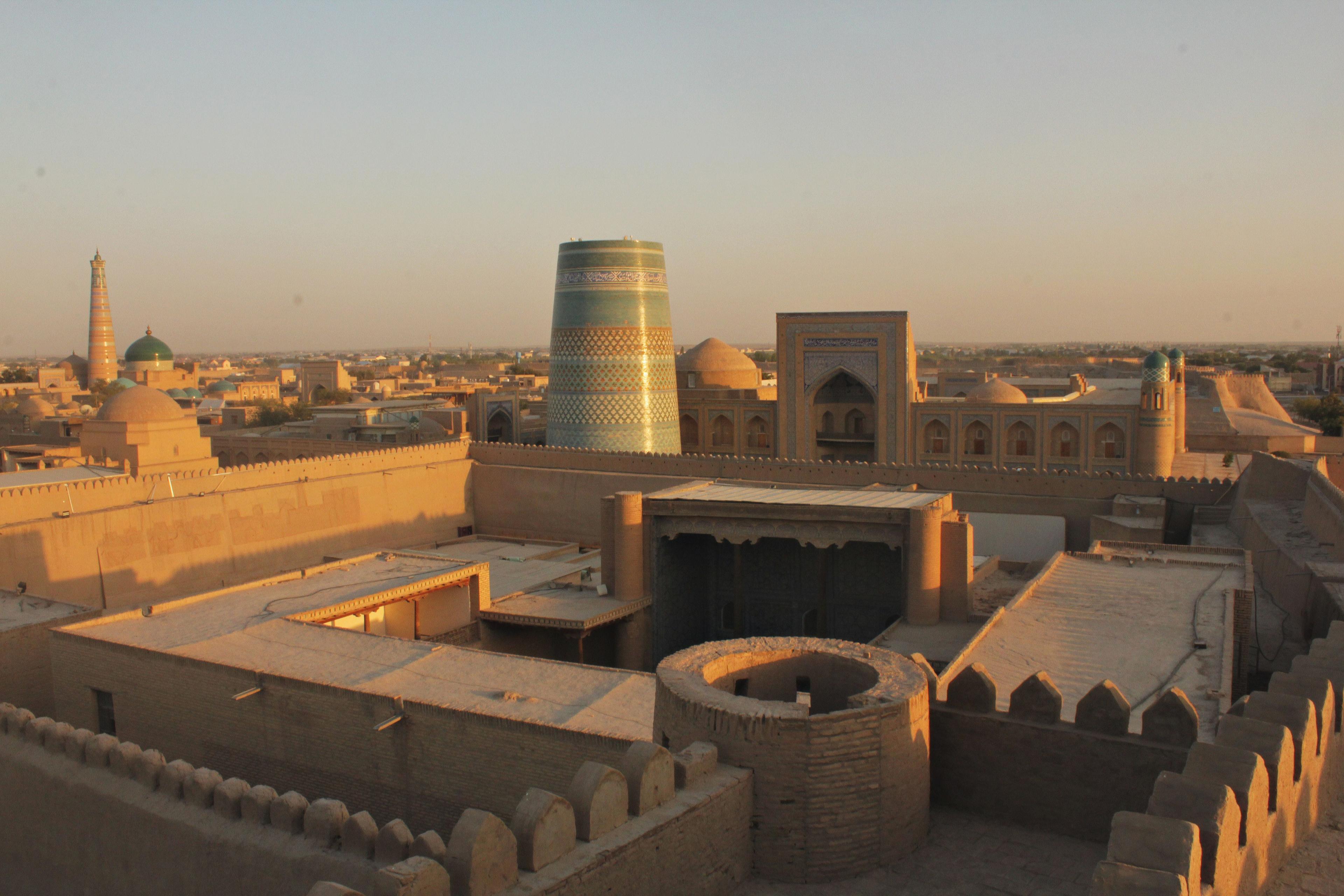
A sample plan: fly Tashkent to Nukus in the morning and visit the Savitsky Museum in the afternoon. Next day, Mizdakhan and Chilpik on the way south, then the desert fortresses, arriving in Khiva for sunset over Ichan-Kala. Our Desert Fortresses and Aral tour follows a similar route, and our extended group tour includes Nukus and the museum.
Practical tips: where to stay, eat and when to go
- Remember the Monday closure. It catches out more travellers than anything else.
- Go in the morning if you can. Groups often arrive in the afternoon after flights or the drive from Khiva.
- Nukus is very hot in summer and cold in winter. Plan the museum for the middle of the day and keep mornings and evenings for travelling.
- Leave your bags in the car or hotel if you can. Travelling light makes the galleries easier to enjoy.
- If you are flying in, check that your arrival is not on a Monday afternoon with only Tuesday morning free.
- Before you go, watch The Desert of Forbidden Art. It turns a good visit into a memorable one.
Nukus is a small city by Uzbek standards, and most of what visitors need is within a short taxi ride of the museum.
- Hotels: a handful of mid-range hotels and guesthouses, clean and comfortable rather than stylish. Book ahead in spring and autumn, when groups heading to the Aral Sea fill the better rooms.
- Food: simple cafés and restaurants serve Karakalpak and Uzbek dishes. Look for beshbarmak, boiled meat with flat noodles, a staple of Karakalpak and Kazakh cooking, as well as familiar plov and shashlik. Our guide to Uzbek food covers the dishes you will meet across the country.
- Getting around: city taxis and Yandex Go are cheap and easy for the short hops between the airport, hotels and the museum.
One night is usually enough. If you arrive on an early flight, you can see the museum the same day and drive on to the desert fortresses or Khiva the next morning.
Visiting with TourEast
Our guides know the Savitsky collection well and can bring the artists' stories to life in front of the paintings. We can arrange a flight-and-museum day from Tashkent, a private drive from Nukus to Khiva via the desert fortresses, or a longer western loop that adds the Aral Sea.