The earthquake of 26 April 1966 destroyed most of central Tashkent and the Soviet Union rebuilt it in four years. The story, the Monument of Courage, the Museum of Victims of Political Repression, the deportations and wartime evacuations behind the city's character, and a half-day walking route.
Facts, prices and schedules checked on November 4, 2026
At 05:23 on 26 April 1966 the ground under central Tashkent moved. The earthquake was not large by the standards of the Tien Shan, about magnitude 5.2, but its focus lay only a few kilometres beneath the city centre, and the old quarters of mud-brick courtyard houses collapsed into their lanes. Within days the Soviet Union had decided that Tashkent would not simply be repaired but rebuilt as a model city, and within four years it had been. Almost everything a visitor sees in the centre today, the wide avenues, the metro, the great concrete public buildings, the apartment districts, comes from that decision.
This article, written by our Tashkent team, tells the story of the earthquake and the rebuilding, and then goes behind it to the harder Soviet history the city holds: the memorial and museum to the victims of political repression, the deportations of the 1930s and 1940s, the wartime years when Tashkent took in a million evacuees and earned the name city of bread. It ends with a half-day walking route that joins them. For the buildings themselves, see our separate article on Tashkent modernism.
What happened on 26 April 1966
The facts, as far as they are agreed. The earthquake struck at 05:22 local time with its epicentre in the centre of the city and a focal depth of three to eight kilometres, which is why a moderate magnitude produced an intensity of eight to nine on the Soviet scale at the surface. Most of the old city and the Russian-era centre were built of unfired brick and adobe; between 78,000 and 95,000 homes were destroyed or made uninhabitable, along with schools, hospitals and most of the city's old mosques. More than 80 per cent of the built-up area was affected and 200,000 to 300,000 people, of a population of about 1.1 million, were left without shelter.
The official death toll was 15. Because the quake came before dawn, when people were asleep in low single-storey houses that collapsed rather than fell, and because many homes were empty of furniture that could crush, the figure is lower than it sounds, but historians note that Soviet reporting was selective and estimates run higher. Aftershocks continued for months; the city lived in tents, railway carriages and courtyards through the summer. One of the few buildings in the centre to come through untouched was the Navoi Theatre, built twenty years earlier with Japanese internee labour, a fact Tashkent has never forgotten.
How the Soviet Union rebuilt Tashkent
Leonid Brezhnev and Alexei Kosygin flew in within days, and the rebuilding became an all-Union project. Every Soviet republic and many large cities sent construction brigades, prefabricated panels and equipment; whole districts were built by Moscow, Leningrad, Kiev, Minsk, Tbilisi and the Baltic capitals, and some still carry their names in local memory. By 1970 about 100,000 new homes had been built, and the city had been replanned around broad boulevards, parks and the earthquake-resistant apartment blocks that still house most of Tashkent.
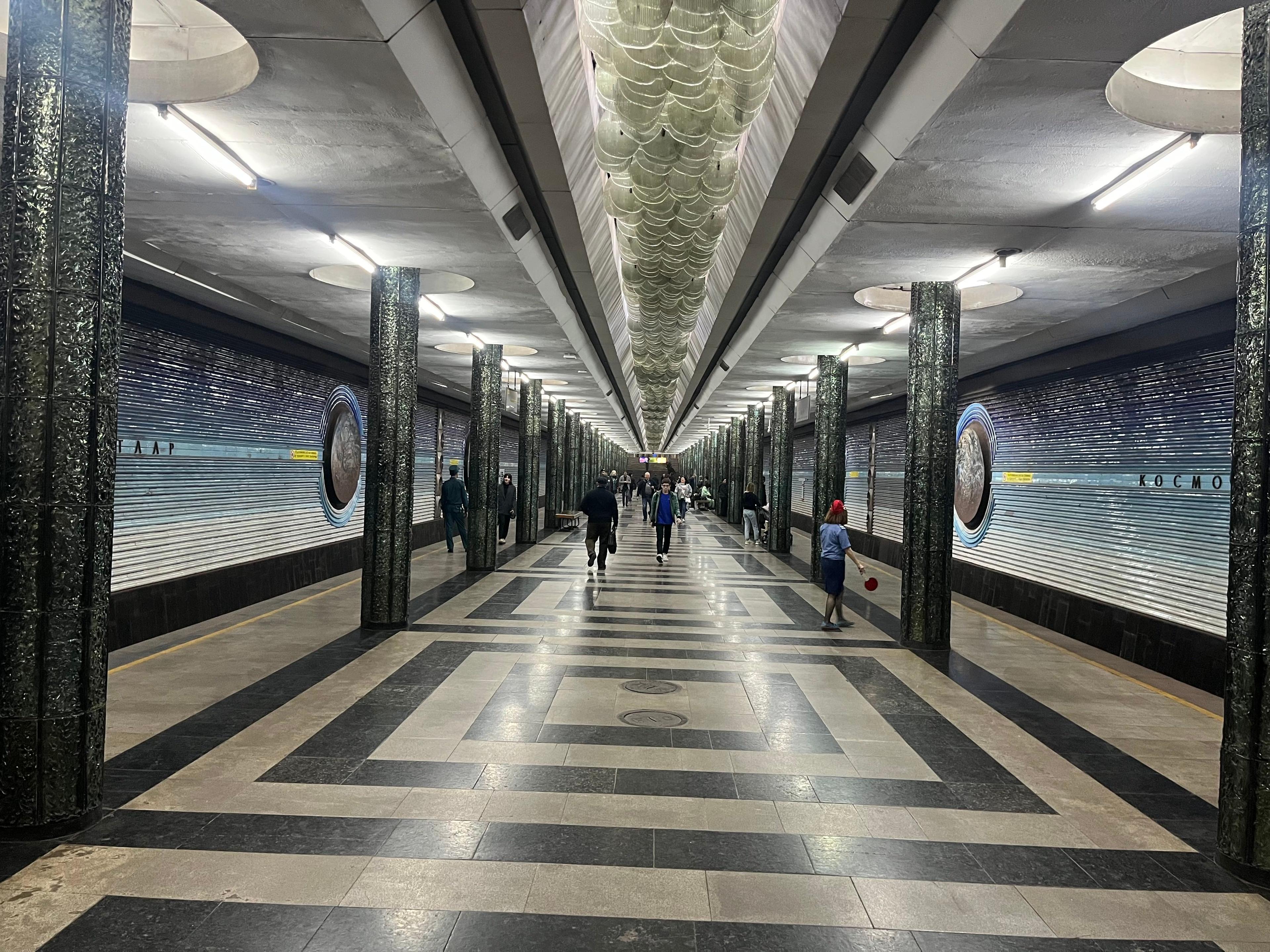
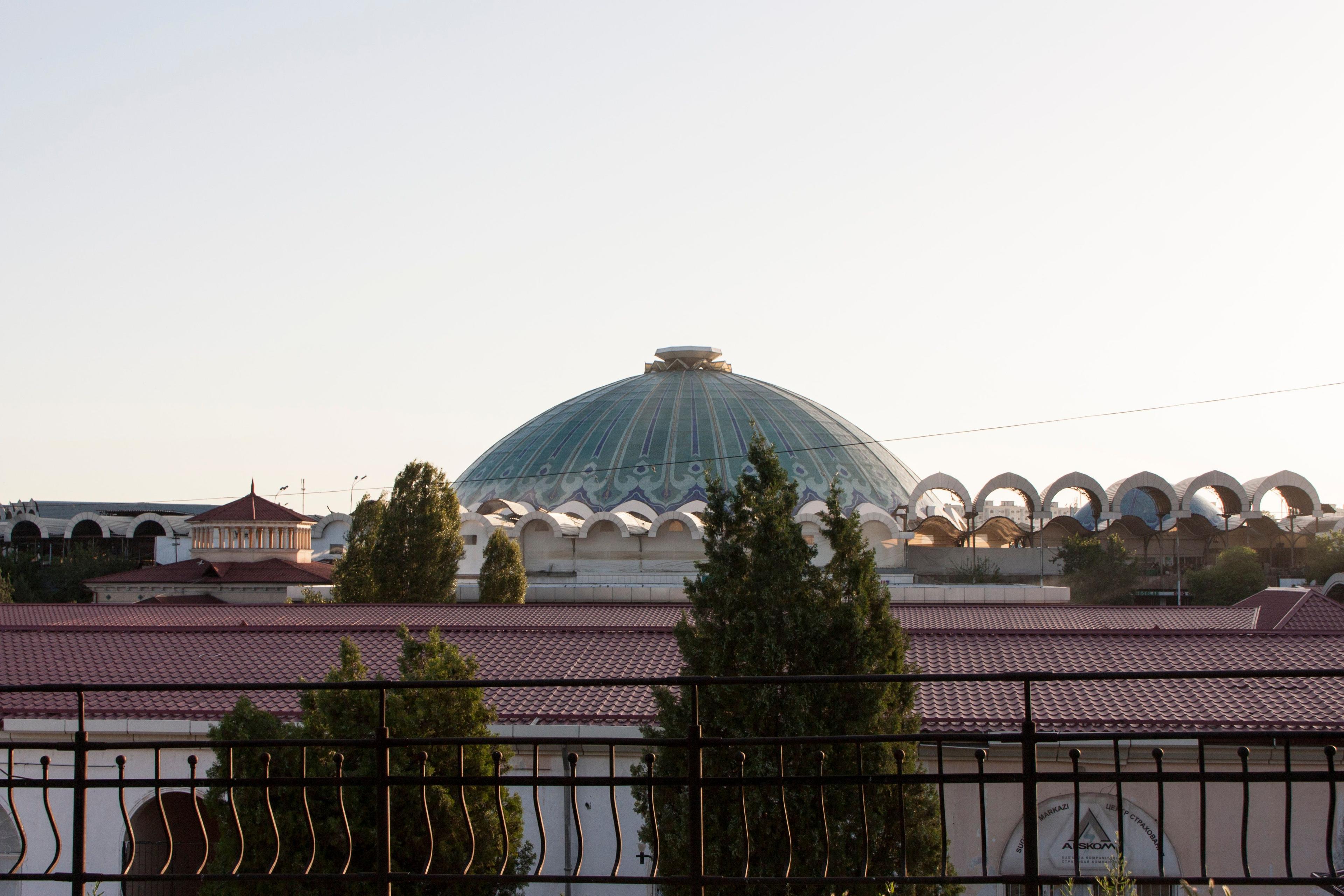
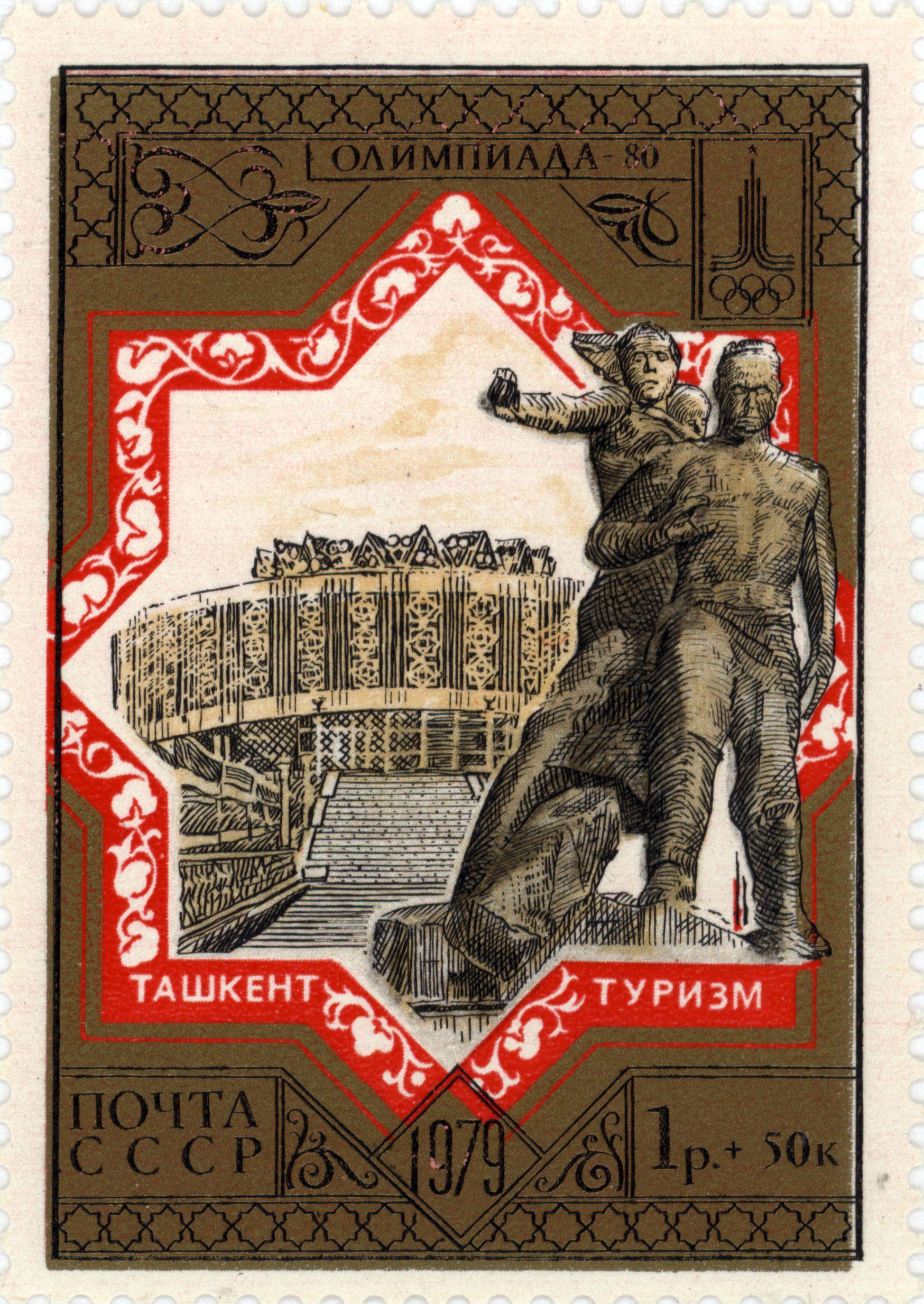
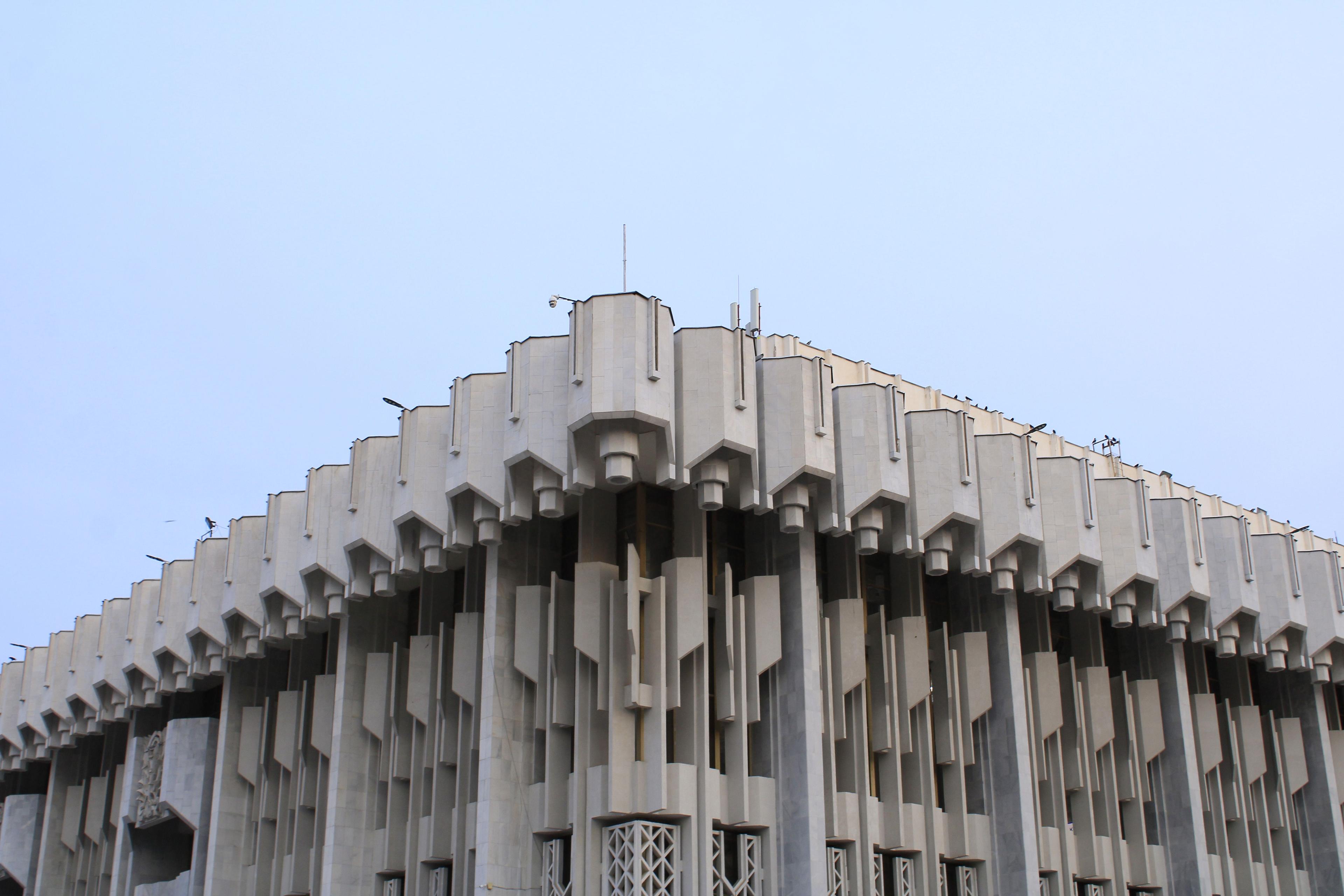
The builders were followed by families. Tens of thousands of Russians, Ukrainians and others stayed on in the flats they had built, which changed the city's population mix for a generation. The rebuilding also produced the Soviet modernist architecture that Tashkent is known for: the Hotel Uzbekistan, the Palace of Peoples' Friendship, the Chorsu Bazaar dome, the Panorama cinema and the metro, whose first line opened in 1977 with stations decorated as underground palaces. An institute of seismology was founded in 1966 and still monitors the fault.
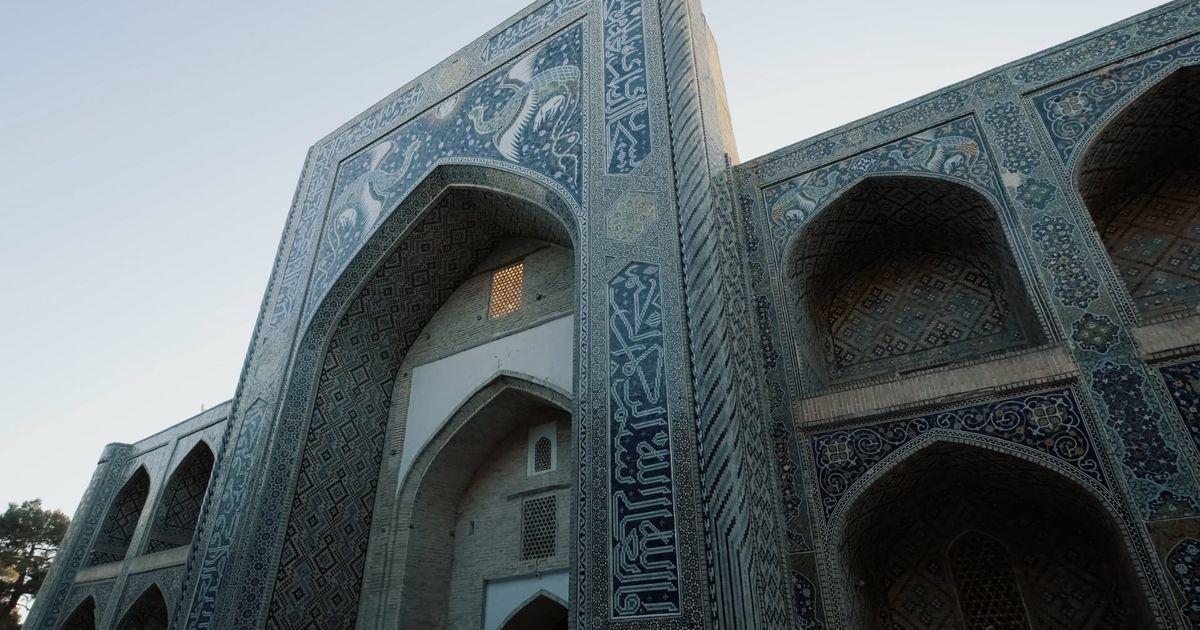
At the same time the earthquake erased much of pre-Russian Tashkent. The surviving old city around Chorsu and Hazrati Imam is a fraction of what stood in 1965, and older residents speak of the quake as both a catastrophe and a clearance.
The Monument of Courage
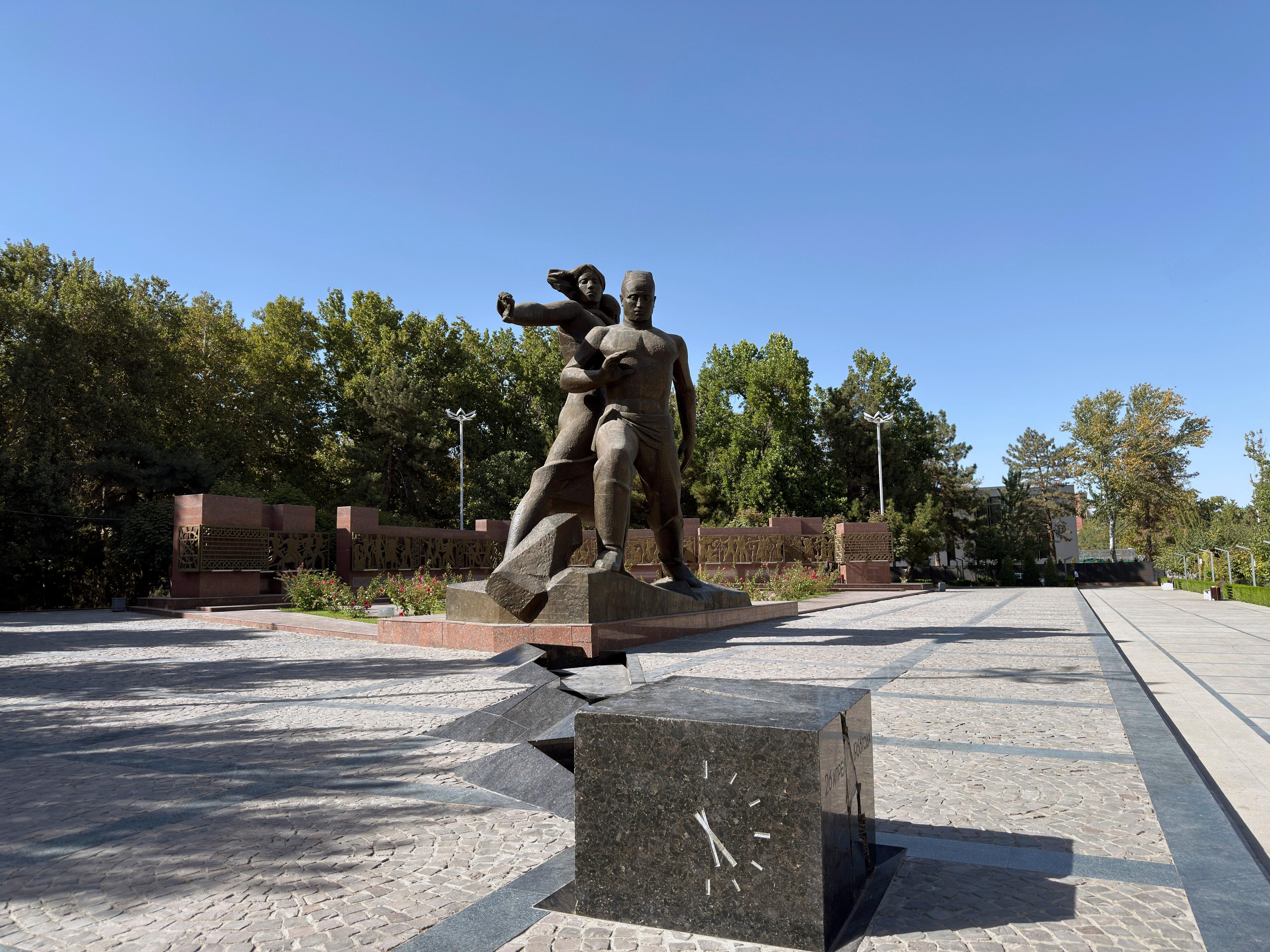
The memorial to the earthquake stands on Sharof Rashidov street, close to the epicentre and a short walk from the Anhor canal. Unveiled on 20 May 1976 for the tenth anniversary and designed by the sculptor Dmitry Ryabichev with a team of local architects, it is one of the most eloquent Soviet monuments in Central Asia. A black granite cube is split by a crack that runs across its face; on one side is the date, 26 April 1966, on the other a clock face stopped at 5:23. Behind it a bronze family, a man shielding a woman and child, stands against the fracture, and a line of reliefs shows the builders who came from across the Union.
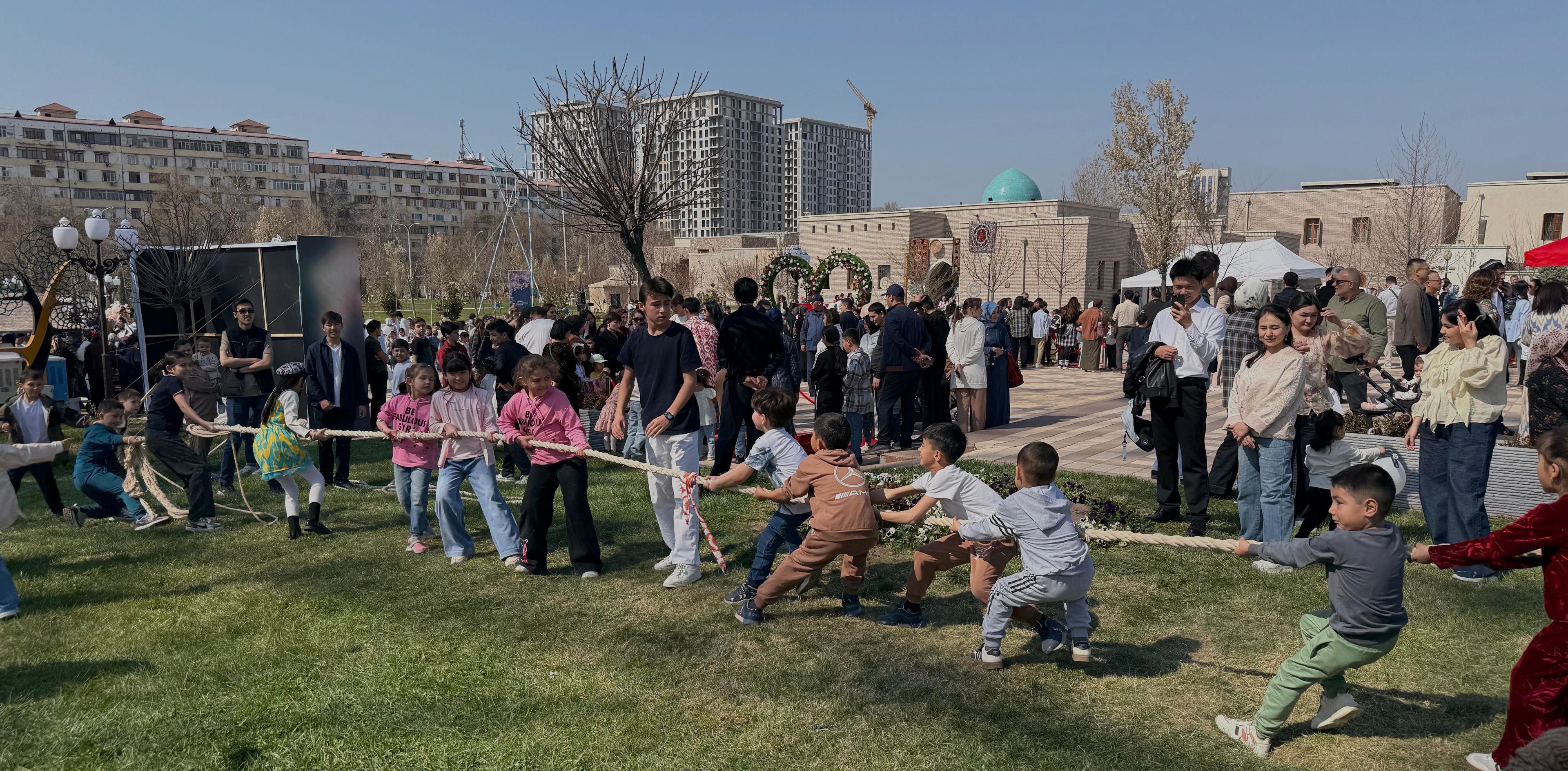
It is a quiet place, popular with wedding parties for photographs, and the best starting point for the walk below. Come in the late afternoon when the light falls on the bronze, and look at the ground: the paving is laid to suggest the fault lines spreading from the cube.
Shahidlar Khotirasi and the Museum of Victims of Political Repression
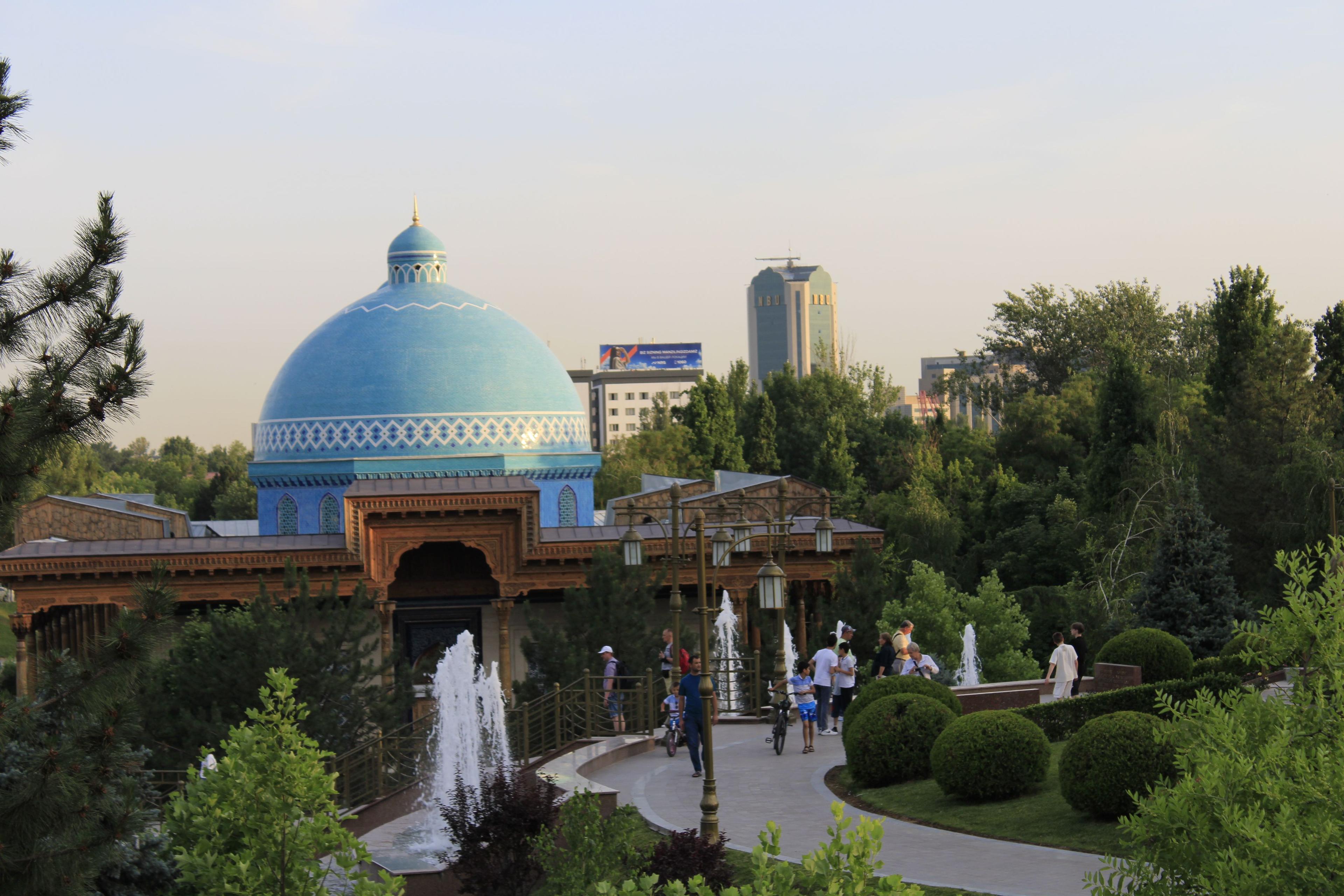
Across the city, on the bank of the Bozsu canal below the television tower, Uzbekistan remembers a different Soviet history. The Shahidlar Khotirasi memorial, the Memory of Martyrs, was built in 2000 on the site where, in 1937 and 1938, executed prisoners are believed to have been buried. It is a domed rotunda in traditional style on a terrace above the water, surrounded by a park of plane trees. Beside it, the Museum of Victims of Political Repression opened in November 2002.
The museum's ten halls follow the country's experience from the Russian conquest of Turkestan in the 1860s through the Jadid reform movement and its destruction, the suppression of the Turkestan autonomy of 1917 and the uprisings of the 1920s, collectivisation and the famine years, the Great Terror of 1937 and 1938 that killed the republic's writers, scholars and leaders, the deportations and the post-war purges, and the so-called cotton affair of the 1980s, when thousands of Uzbek officials were prosecuted. The displays are in Uzbek, Russian and English, with photographs, letters, prison objects and lists of names. It is open Tuesday to Sunday from 09:00 to 17:00, closed on Mondays, and the ticket costs very little; a guide is worth hiring, since the labels are brief. Allow an hour.
Deportations and evacuations: who came to Tashkent and why
Two movements of people in the Stalin years shaped the city as much as the earthquake. The first was forced. In 1937 the Soviet Korean population of the Far East, around 170,000 people, was deported to Kazakhstan and Uzbekistan; in 1944 the Crimean Tatars, more than 150,000 of whom were sent to Uzbekistan, followed by the Meskhetian Turks from Georgia and groups of Volga Germans, Chechens and others. Their descendants are part of Tashkent today: Korean markets and restaurants, the Crimean Tatar cultural centres, the mixed faces at Chorsu Bazaar.
The second was flight. Between 1941 and 1943 Uzbekistan took in around a million evacuees from the western Soviet Union, among them some 200,000 children, together with hundreds of factories, film studios and the Leningrad Conservatoire. Tashkent became the city of bread, a phrase borrowed from a 1923 novel about the earlier famine and reapplied to a city that shared what it had. The story everyone tells is of the blacksmith's family in the old town who adopted fifteen orphans of different nationalities; their monument, a bronze group of the couple and the children, was unveiled in 1982, removed from its square in 2008 and returned in 2017 to its place in front of the Palace of Peoples' Friendship. A statue of a Leningrad evacuee child was added nearby in 2025 for the eightieth anniversary of the war's end.
A half-day Soviet Tashkent walking route
The sites are spread across the city, so this is a walk with two metro rides. Allow four to five hours.
- Start at the Monument of Courage on Sharof Rashidov street, then walk south along the Anhor canal to Independence Square, the former Lenin Square, with its fountains and the Senate building, and on to the Hotel Uzbekistan and Amir Timur Square, where the Lenin statue once stood.
- Take the metro from Amir Temur Hiyoboni to Kosmonavtlar station, the finest of the first-line stations, and walk to the Palace of Peoples' Friendship for the monument to the family of fifteen orphans and the Leningrad child.
- Return by metro to Bodomzor on the Yunusabad line for the television tower, the Japanese garden, and the Shahidlar Khotirasi memorial and the Museum of Victims of Political Repression on the Bozsu canal.
- Finish, if energy remains, at Chorsu Bazaar on the Chilanzar line to see what survives of the old city the earthquake took, and the 1980 dome built in its place.
Our Tashkent two-day itinerary fits this route into a longer stay, and the Tashkent Metro guide explains tickets and which stations to see on the way.
Visiting with respect
These are places of mourning as well as history. At Shahidlar Khotirasi and the museum, dress modestly, keep voices down and ask before photographing other visitors. The deportations and the repression are discussed openly in Uzbekistan now, and museum staff and guides answer questions directly, but family memories are recent; be tactful if a guide or host mentions a relative. The earthquake, by contrast, is remembered with a kind of pride: ask older Tashkent residents where they were at 05:23, and most will tell you.
Exploring Soviet Tashkent with TourEast
We can add a half-day Soviet history walk to any Tashkent stay, with a guide who grew up in the rebuilt city and can take you inside the metro stations, the museum and the modernist landmarks in the right order. It fits naturally on the first or last day of our Classic Uzbekistan tour and our small-group departures, or as part of a private itinerary built around twentieth-century history.
Frequently asked questions
Watch
Photo gallery