How to combine Uzbekistan with Georgia and Azerbaijan in one trip: Baku–Tashkent and Tbilisi–Tashkent flights, the Caspian ferry for overlanders, a three-week Tbilisi–Baku–Tashkent–Samarkand–Bukhara–Khiva outline, visa notes for all three countries and which order suits each season, as of November 2026.
Facts, prices and schedules checked on November 4, 2026
The Caucasus and Central Asia were two halves of the same trade route, and they are increasingly visited as one trip. Tbilisi and Baku are three hours' flight from Tashkent; Georgia offers wine, mountains and monasteries, Azerbaijan the oil-age grandeur of Baku and the mud volcanoes of Gobustan, and Uzbekistan the tiled cities of the Silk Road. Together they make a three-week journey from the Black Sea side of the Caucasus to the Kyzylkum desert without a single long-haul flight in the middle.
This guide explains how to combine Uzbekistan with Georgia and Azerbaijan as of November 2026: the flights, the overland option across the Caspian, a 21-day outline, visas for all three countries and which order to travel in by season. We are a tour operator in Uzbekistan and plan the Uzbek part; the Caucasus half here is advice, not a product.
Why combine the Caucasus with Uzbekistan?
Three reasons, beyond geography:
- Contrast. Georgia is green, Christian, wine-growing and mountainous; Azerbaijan is Turkic, Shia, oil-rich and Caspian; Uzbekistan is Persian-Turkic, Sunni, oasis-based and monumental. The same Silk Road produced three different civilisations, and the differences are the pleasure.
- Flights. Baku and Tbilisi both have non-stop services to Tashkent, and AZAL and Uzbekistan Airways have shared codes since 2025, which makes multi-city tickets easier. Flying into Tbilisi from Europe and out of Tashkent, or the reverse, needs no backtracking.
- Visas. Georgia and Uzbekistan are visa-free for most Western and Gulf passports; Azerbaijan has a quick e-visa. No embassy visits are involved.
The trade-off is pace: three countries in three weeks means a flight or border every few days. Travellers who prefer slow travel should give two weeks to Uzbekistan alone and add one Caucasus country.
Baku to Tashkent and Tbilisi to Tashkent: the flights
Baku–Tashkent is the main air bridge. Azerbaijan Airlines and Uzbekistan Airways both fly non-stop in about 2 hours 25 minutes, several times a week each, and aggregators list further services by Uzbek low-cost carriers. Fares in late 2026 were around US$190 to 250 one way on the national carriers. Since June 2025 the two airlines have had a code-share agreement that also covers Samarkand–Baku, so it is possible to fly from Baku straight to Samarkand on some days and skip Tashkent entirely.
Tbilisi–Tashkent is newer and thinner. Uzbekistan Airways flies non-stop in about 3 to 3 hours 30 minutes two or three times a week on an A320neo, and aggregators show additional weekly services by other Uzbek carriers. Expect to pay slightly more than from Baku and to plan the day around the schedule.
Within the Caucasus, Tbilisi and Baku are linked by a one-hour flight and by an overnight train that runs between the two capitals; the land border at Lagodekhi–Balakan is also open to foreigners by road. Check all schedules directly with the airlines before booking; frequencies change between summer and winter timetables.
The Caspian ferry: Baku to Aktau for overlanders
Travellers crossing the whole route by land take the Caspian ferry. The ships are cargo ferries that carry a limited number of passengers; they leave from the port at Alat, about 70 km south of Baku, for Aktau or the newer port of Kuryk in Kazakhstan, and there is no fixed timetable. Departure depends on cargo, the crossing takes anything from 18 to 30 hours, and waiting a day or two in Baku for a sailing is normal.
As of the most recent reliable reports, a foot-passenger ticket with a berth and meals cost the equivalent of about US$70, payable in US dollars at the port office; cyclists and motorcyclists pay extra for vehicles. Kazakhstan announced in September 2026 that it wants to restart a proper passenger ferry on the Kuryk–Baku route, but at the time of writing no schedule or fares had been published.
From Aktau the overland line to Uzbekistan runs by rail through Beyneu to Nukus and Urgench, about a day and a half with a border stop, which puts you at Khiva from the west. It is a serious journey for serious overlanders. Everyone else flies.
Visas for Georgia, Azerbaijan and Uzbekistan
As of November 2026, for most Western, Gulf and East Asian passports:
- Georgia: visa-free for up to one year for citizens of around 95 countries, including the EU, UK, US, Canada, Australia, the Gulf states and Japan. Since 1 January 2026 arriving tourists are asked to show health and accident insurance covering at least 30,000 GEL; carry proof.
- Azerbaijan: most nationalities need an e-visa from the official ASAN portal, evisa.gov.az, issued within three working days, single entry, 30 days' stay, for a fee of roughly US$20 to 26 in 2026. Citizens of several Gulf states and some others are visa-free or get visas on arrival; check your passport on the portal and avoid third-party sites that charge several times the fee.
- Uzbekistan: visa-free for 30 days for more than 90 nationalities, including the EU, UK, US, the Gulf states, China, Japan and Malaysia; most others use the e-visa.
One caution for Azerbaijan: evidence of a visit to Nagorno-Karabakh without Azerbaijani permission is grounds for refusal. Travellers with Armenian stamps are generally admitted, but questions are possible. Our Uzbekistan visa guide and our border crossings guide cover the Uzbek side; for Georgia and Azerbaijan, use the official government portals.
A three-week outline: Tbilisi, Baku, Tashkent, Samarkand, Bukhara, Khiva
A 21-day line that runs west to east and ends in the desert:
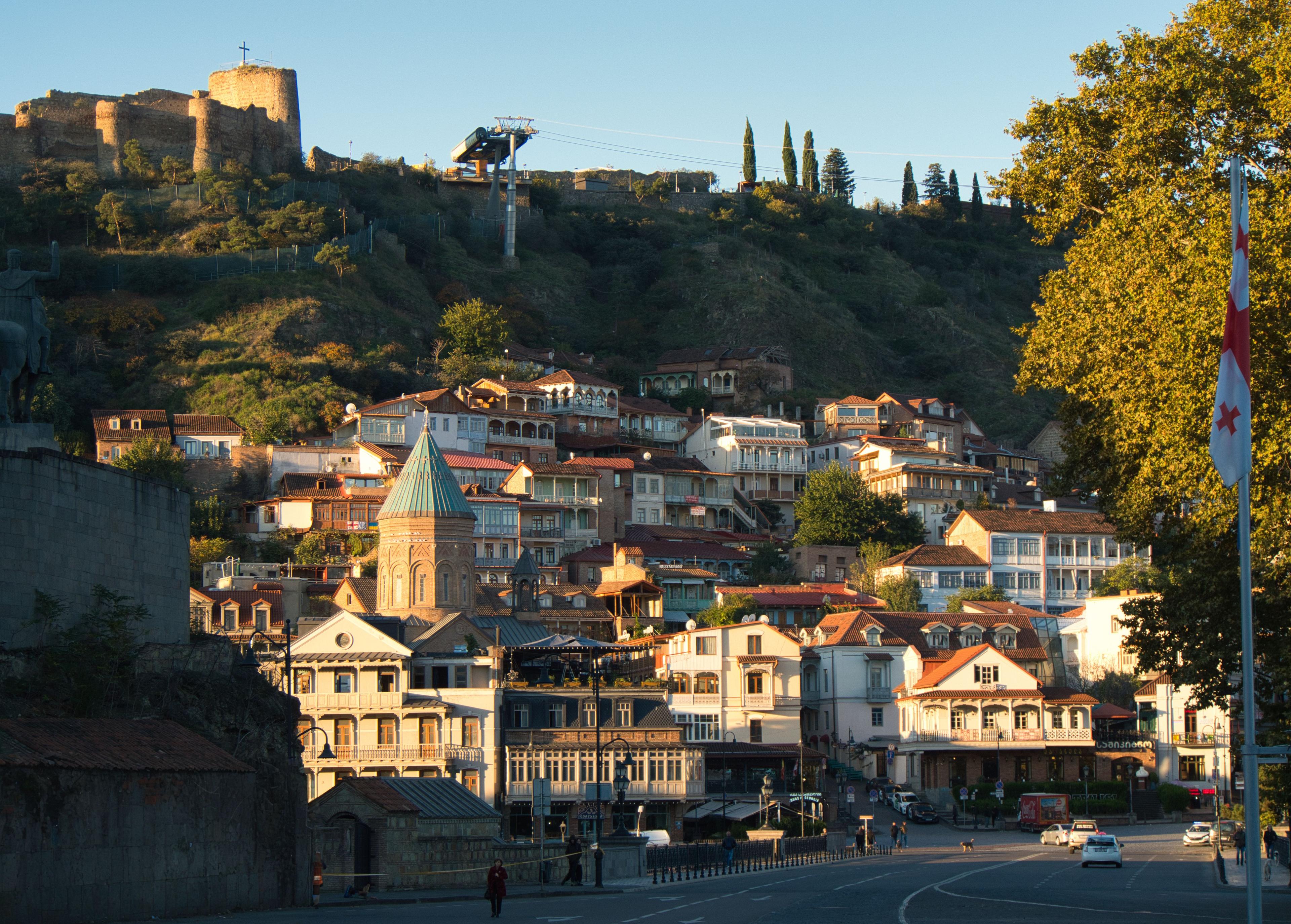
- Days 1 to 3, Tbilisi: the old town and sulphur baths, Mtskheta's cathedral, and a day trip to Kazbegi under the Caucasus peaks.
- Days 4 to 5, Kakheti: Georgia's wine region, Sighnaghi and the monasteries, with a qvevri winery visit.
- Day 6, Tbilisi to Baku: a one-hour flight, or the overnight train from Tbilisi arriving in Baku the next morning.
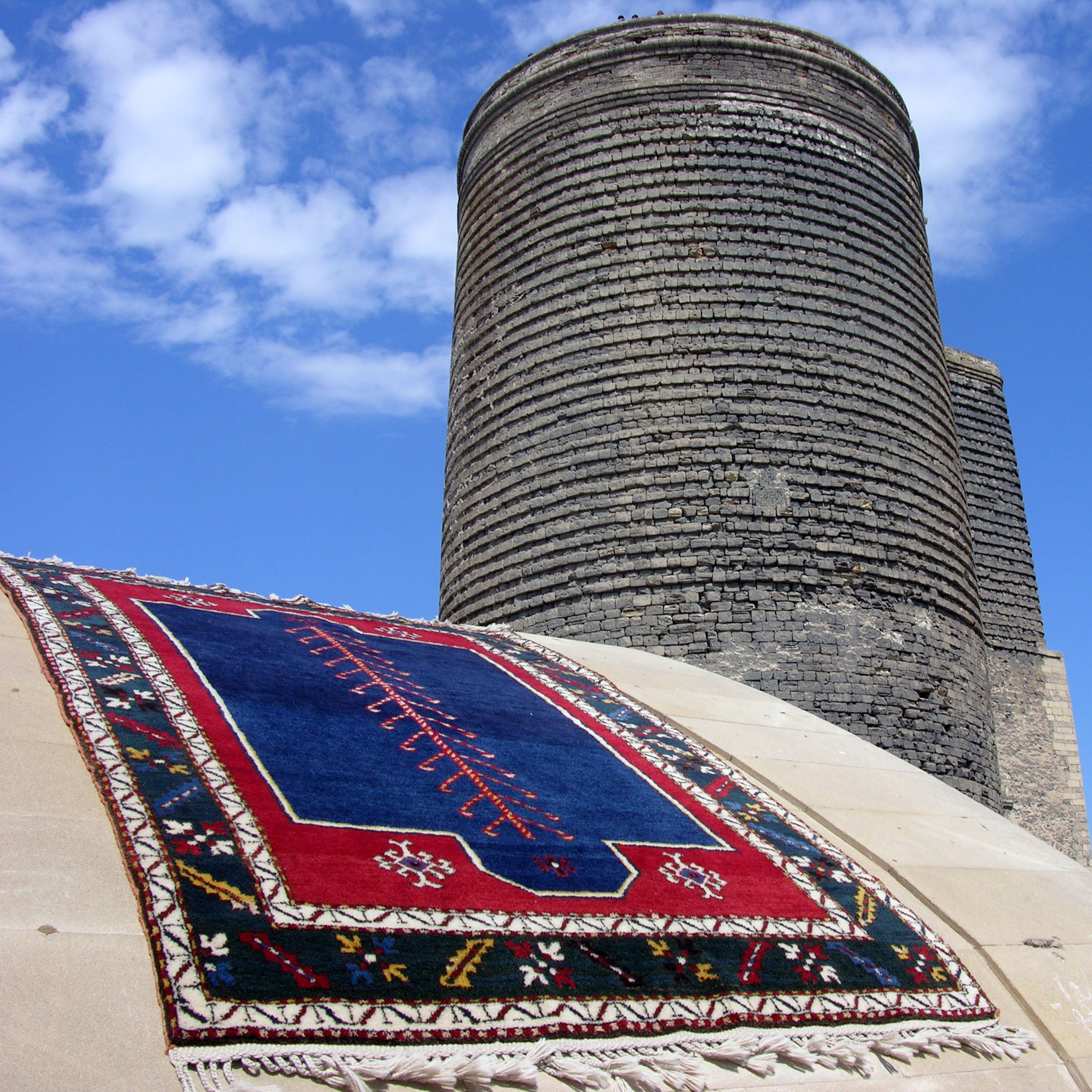
- Days 7 to 9, Baku and around: the walled old city with the Maiden Tower, the Shirvanshah palace, the Absheron fire temple and burning hillside, and a day at Gobustan's petroglyphs and mud volcanoes.
- Day 10, Baku to Tashkent: an afternoon flight of about 2.5 hours; or Baku to Samarkand on a code-share day.
- Day 11, Tashkent: the Hazrati Imam complex, Chorsu Bazaar and the metro.
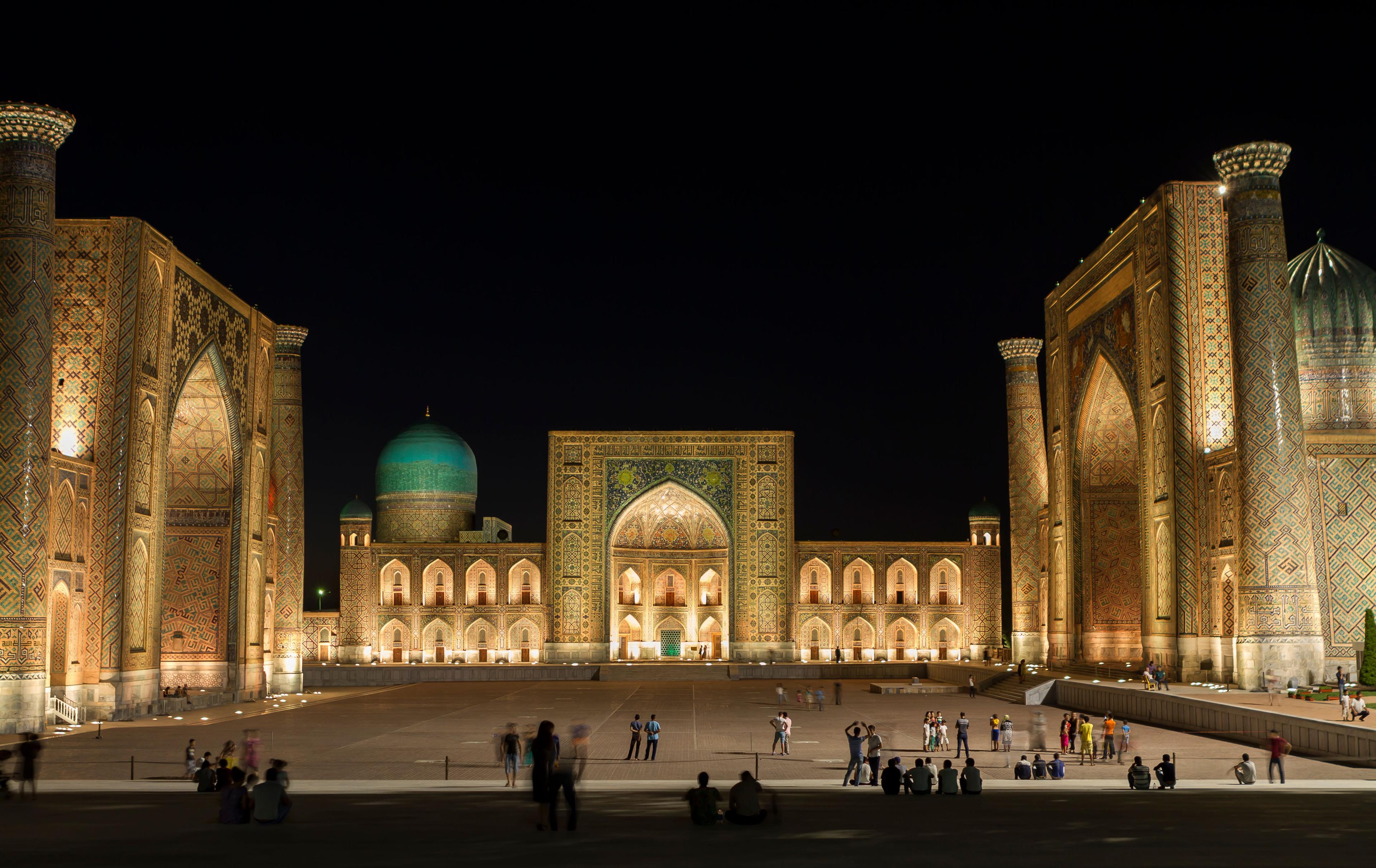
- Days 12 to 13, Samarkand: the Registan, Shah-i-Zinda, Gur-e-Amir, Bibi-Khanym and the Afrasiyab Museum, by Afrosiyob train from Tashkent.
- Day 14, Shakhrisabz over the Takhtakaracha Pass, or a Samarkand rest day.
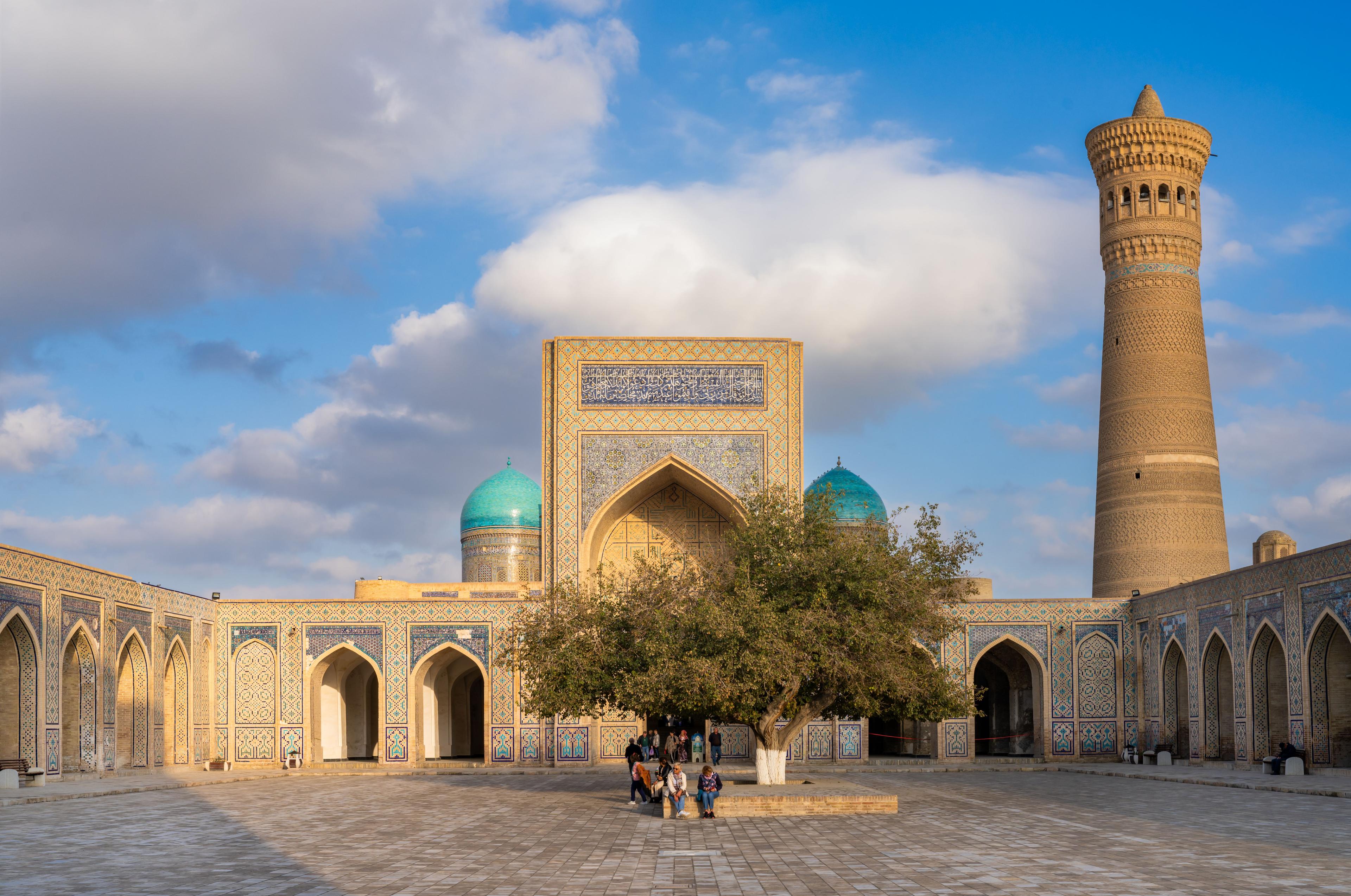
- Days 15 to 16, Bukhara: Po-i-Kalyan, the Ark, the trading domes and the Samanid Mausoleum, with an evening at Lyabi-Hauz.
- Day 17, a yurt night at Aydarkul or the Nuratau villages, or a second Bukhara day.
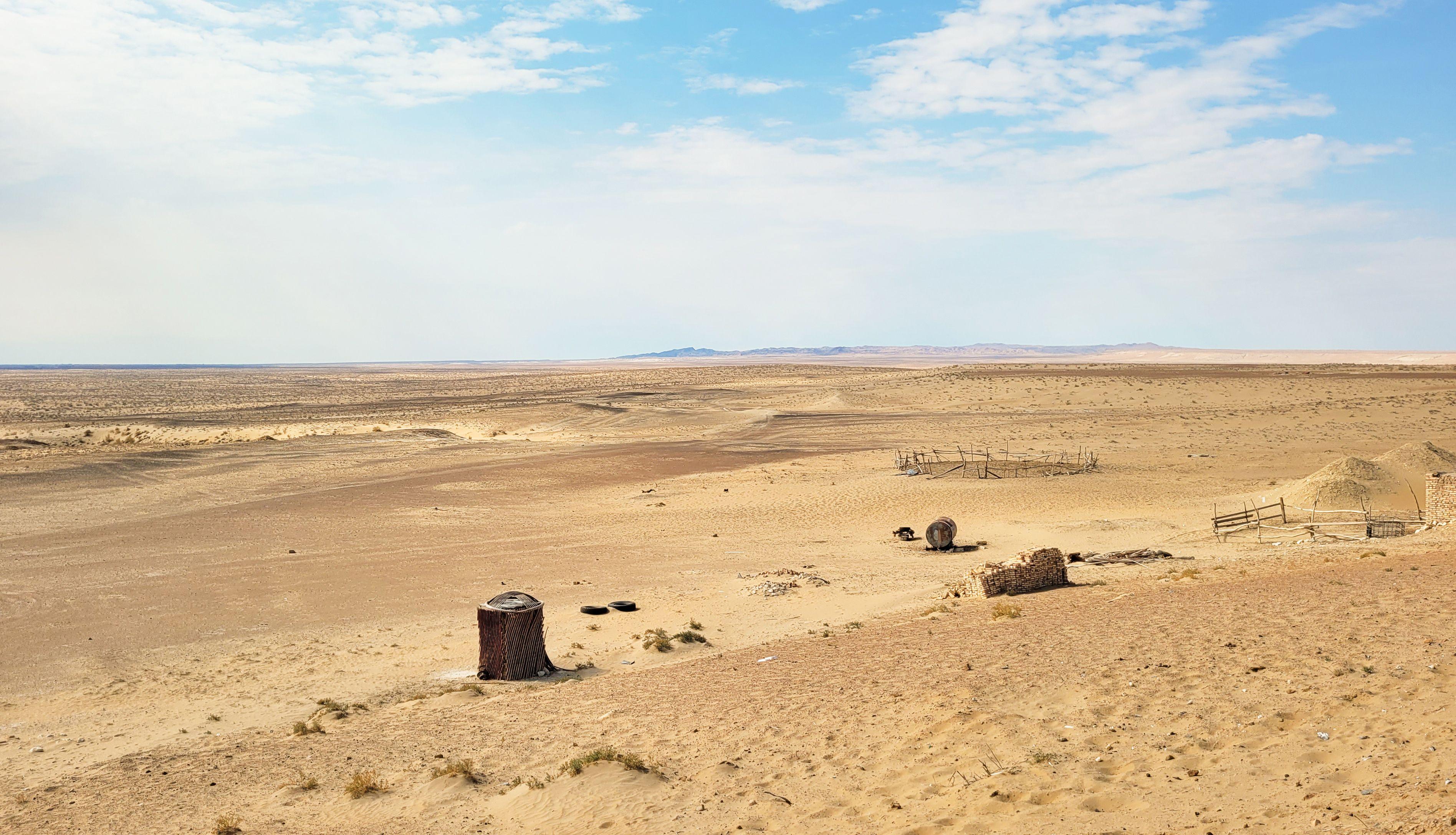
- Days 18 to 19, Khiva by the high-speed train across the Kyzylkum, with the desert fortresses of Khorezm.
- Day 20, fly Urgench to Tashkent.
- Day 21, depart Tashkent.
With two weeks, drop Kakheti and Shakhrisabz, give Georgia and Azerbaijan three days each and Uzbekistan eight. Our 7-day and 10-day Uzbekistan itineraries show how the Uzbek days fit.

Which order makes sense by season
The two regions have different best months, and the order of the trip should follow them.
Spring, April to May: start in Uzbekistan. April is the finest month in Samarkand and Bukhara, with blossom and mild days, while the Georgian mountains are still thawing. Finish in Georgia and Azerbaijan in May, when Tbilisi is warm and Kazbegi is open.
Autumn, September to October: start in the Caucasus. September is the grape harvest in Kakheti and the clearest weather in the mountains; Baku is pleasant once the summer heat fades. Arrive in Uzbekistan in October, the second-best month in the cities and the time of melons and markets.
Summer, June to August: possible, but Uzbekistan's lowland cities and Baku both reach 40 degrees. Keep the Uzbek days short and air-conditioned and spend the Georgian days in the mountains.
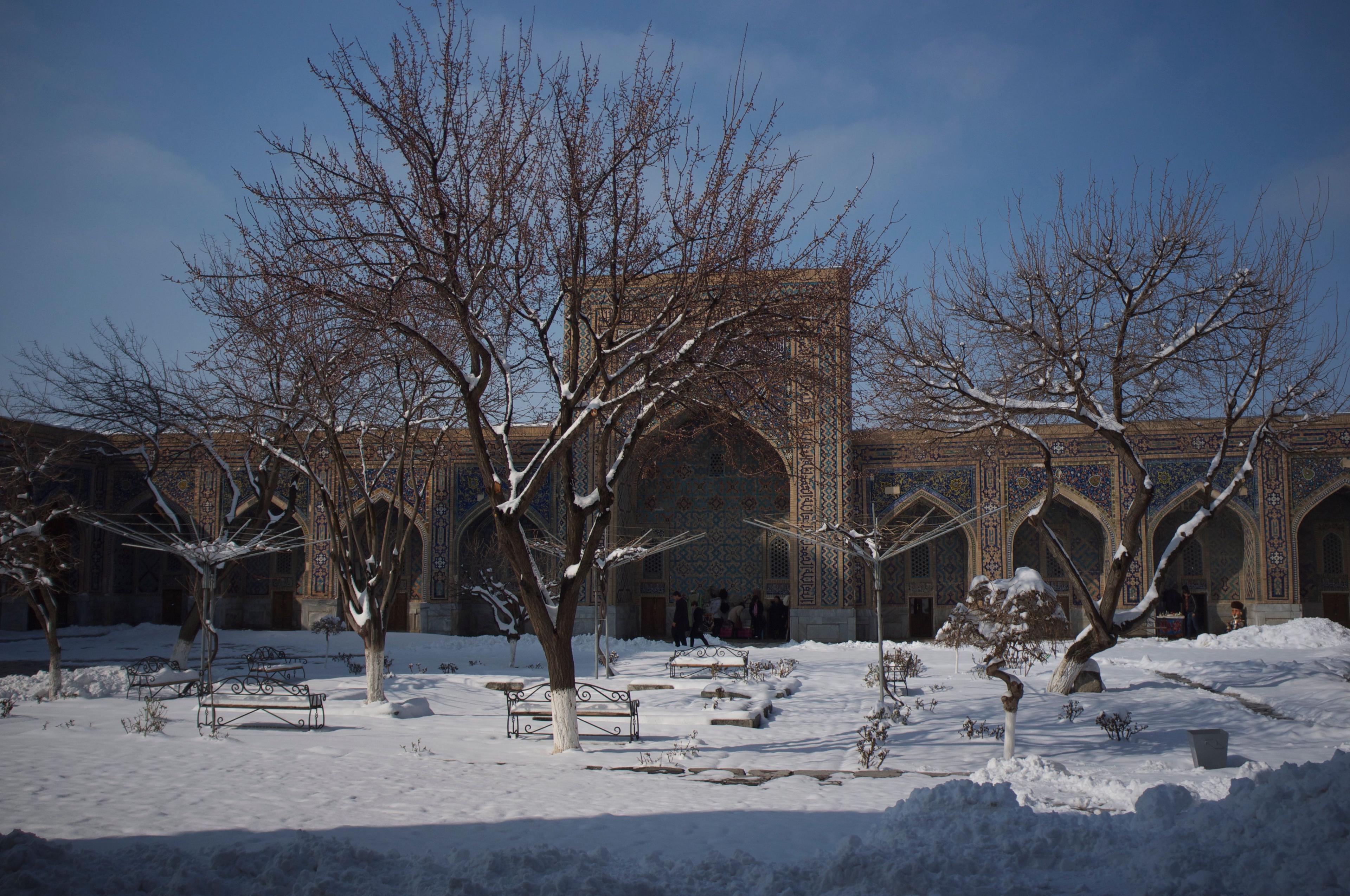
Winter: Georgia for skiing, Uzbekistan for empty monuments and clear light; the two combine well for travellers who do not mind the cold. Our guides to Uzbekistan in winter and the weather by month have the figures.
Money, SIM cards and the small differences
Three currencies, three SIM cards, three alphabets. A few notes:
- Georgia uses the lari, Azerbaijan the manat, Uzbekistan the som. Cards work widely in all three capitals; carry cash for villages, bazaars and the Uzbek countryside. Our guide to money in Uzbekistan explains the som and ATMs.
- eSIMs cover all three countries, or buy a local SIM in each airport; Uzbekistan requires the IMEI registration explained in our SIM guide for stays over a month, which a short visit avoids.
- Language: Georgian and Azerbaijani are unrelated to each other and to Uzbek; Russian is a common second language across all three, especially with older people, and English is improving in every capital.
- Alcohol: Georgia is a wine culture; Azerbaijan and Uzbekistan are Muslim-majority but relaxed, with wine and beer available in restaurants.
- Dress: modest in mosques and shrines in Baku and the Uzbek cities, and in Georgian churches, where women are asked to cover their hair. Our Uzbekistan packing guide covers what to wear.
Caucasus and Central Asia: how the two halves differ in feel
Georgia is a country of valleys, wine tables and churches on hilltops; its pleasure is slow meals and mountain roads. Azerbaijan is a one-city country for most visitors, and Baku is a surprise: a medieval walled core inside a Belle Époque oil town inside a glass-and-steel capital. Uzbekistan is about monuments and bazaars, the pleasure of walking from a 12th-century minaret to a 15th-century madrasah to a bakery that has not changed in a century.
What ties them together is the road. Caravans from Samarkand reached the Caspian, crossed by boat or skirted it to the north, and came through Baku and Tbilisi to the Black Sea and Constantinople. Travelling the line in three weeks is the closest a modern visitor comes to following it.
Planning your Uzbekistan leg with TourEast
We plan and operate the Uzbek days of Caucasus-and-Central-Asia journeys: the pick-up at Tashkent or Samarkand airport off the Baku or Tbilisi flight, the trains, the guides in each city, the desert night and the final flight from Urgench. For Georgia and Azerbaijan we can share route advice and timing so that the two halves fit; tell us your flights and we will build the Uzbek leg around them, privately or as part of our Silk Road grand tour.
Frequently asked questions
Photo gallery