How to continue west from Karakalpakstan into Kazakhstan: the Nukus to Beyneu train, the Karakalpakiya rail border, the change at Beyneu for Mangystau and Aktau, Bozjyra canyon and the Caspian coast, the Baku ferry question and what can be arranged on the Uzbek side. Honest about comfort and changing timetables.
Facts, prices and schedules checked on November 4, 2026
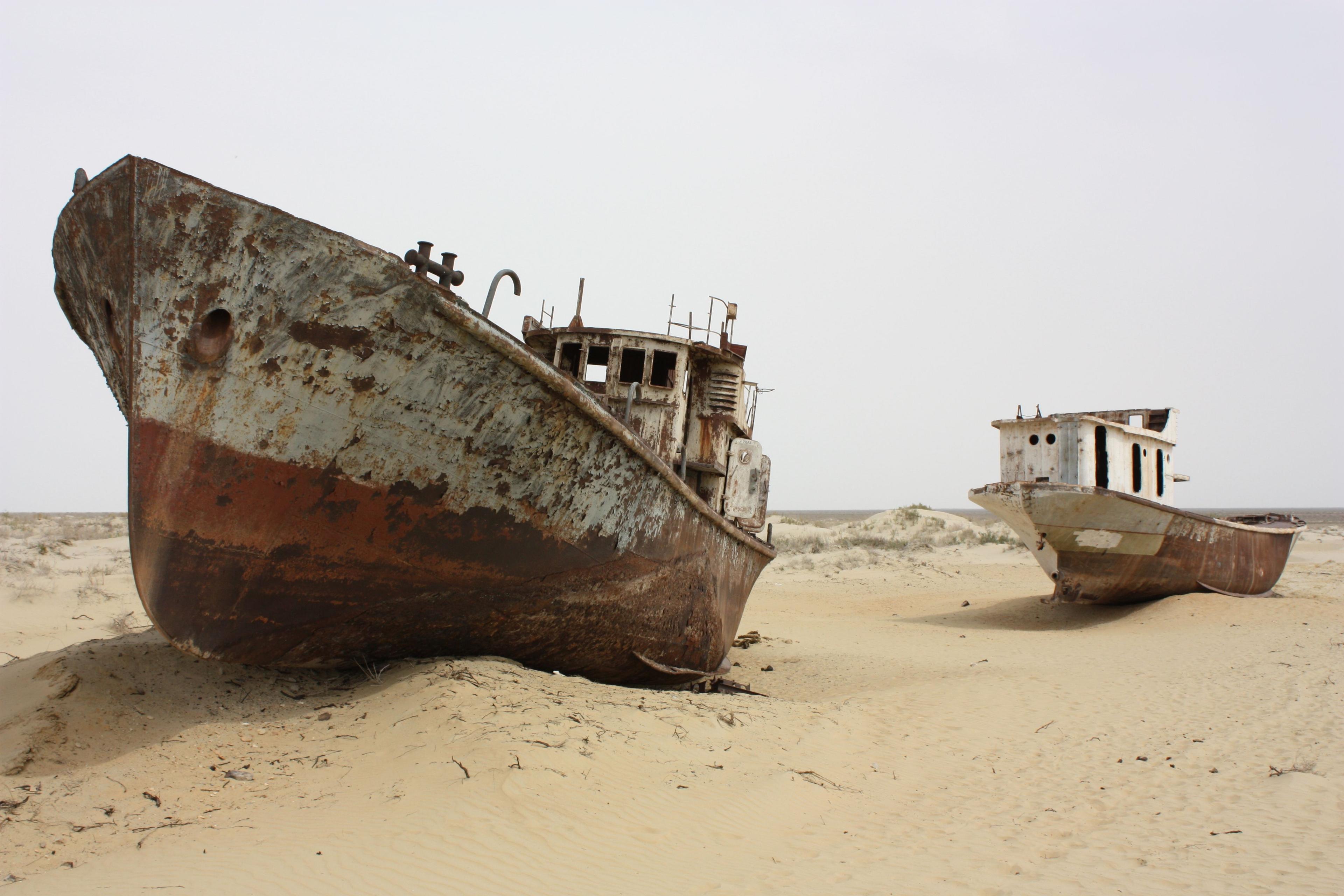
Most travellers who reach Nukus turn round. They have seen the Savitsky Museum, driven to the ship cemetery at Muynak and perhaps slept on the Ustyurt Plateau above the dead Aral Sea, and then they fly back to Tashkent. A smaller group keeps going west: across the Kazakh border by train to Beyneu, on to the Mangystau region and the Caspian port of Aktau, and from there to Baku by ferry or to Europe and the Caucasus by air.
This guide is for that second group. It covers the Nukus to Beyneu train and the Karakalpakiya rail border, the change at Beyneu for Mangystau station outside Aktau, what is worth seeing in Mangystau once you are there, the uncertain state of the Baku ferry, and what we can arrange on the Uzbek side. It is honest about the comfort of the journey, which is low, and about the timetables, which change more often than any other route in this part of the world.
We are an Uzbekistan operator. Everything in Kazakhstan below is advice, not a service we sell. Times and prices are as of November 2026.
Why go west from Nukus?
There are three reasons, and they attract different people.
- Overlanders and long-haul travellers heading to the Caucasus and Europe without flying, for whom Aktau is the Caspian gateway. The cargo-passenger ferries to Baku and Alat in Azerbaijan leave from the port of Kuryk south of the city.
- Landscape photographers drawn to Mangystau, a region of chalk canyons, white cliffs and underground mosques on the edge of the Ustyurt Plateau. Bozjyra, with its twin fangs of rock rising from a dry sea bed, is the most famous view, and Tuzbair, Sherkala and the Torysh valley of stone spheres are not far behind.
- Travellers who simply want to finish in a different place. Aktau has international flights to Istanbul, Baku, Almaty, Astana and the Gulf, so a trip that began in Tashkent can end on the Caspian without a long backtrack.
What it is not: a comfortable or scenic train ride. The line from Kungrad to Beyneu crosses about 400 km of flat Ustyurt desert, the trains are Soviet-pattern sleepers with no air conditioning in many carriages, and the border check happens in the small hours. If you want the Kazakh experience without the hardship, fly Tashkent to Aktau, and read the Mangystau sections below.

The Nukus to Beyneu train: what to expect
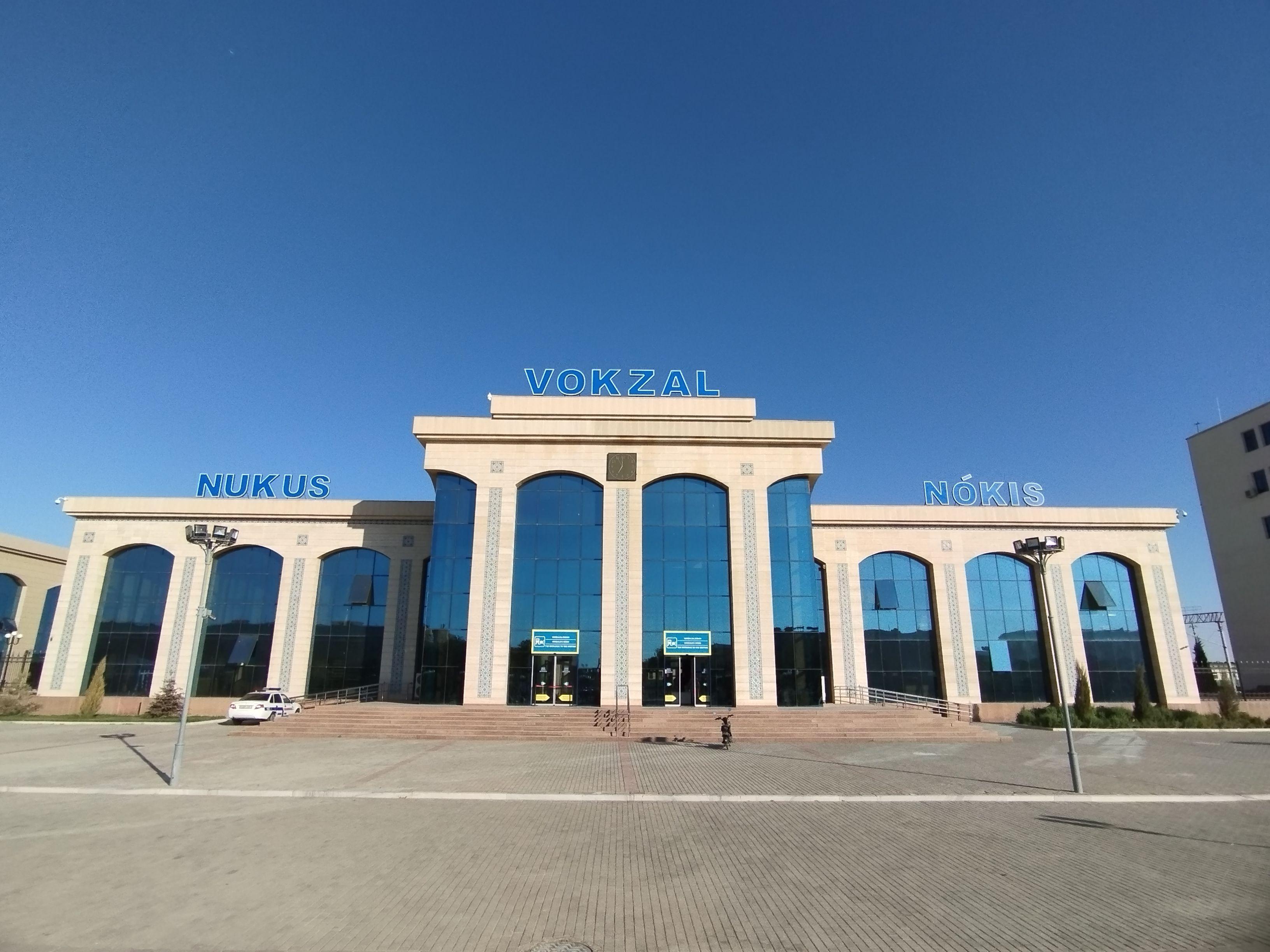
The direct service is train 647/648 Nukus–Beyneu, restored in May 2022 after the pandemic. It is the only passenger train across the western Uzbek–Kazakh border.
What the reports agree on:
- It runs from Nukus station in the early morning; a mid-2026 account gives a departure around 06:00. Earlier timetables showed afternoon departures, and the frequency has varied between daily and a few times a week. Check the current days and time at the station or on the Uzbekistan Railways app a week before.
- The scheduled running time is quoted between 8 and 14 hours depending on the source and the year. The difference is largely the border stop. Assume a full day.
- Carriages are platskart (open dormitory) and kupe (four-berth compartments). Kupe is worth the small extra cost for the border wait alone.
- Fares are low: in the order of US$15 to 25 in 2026, paid in som.
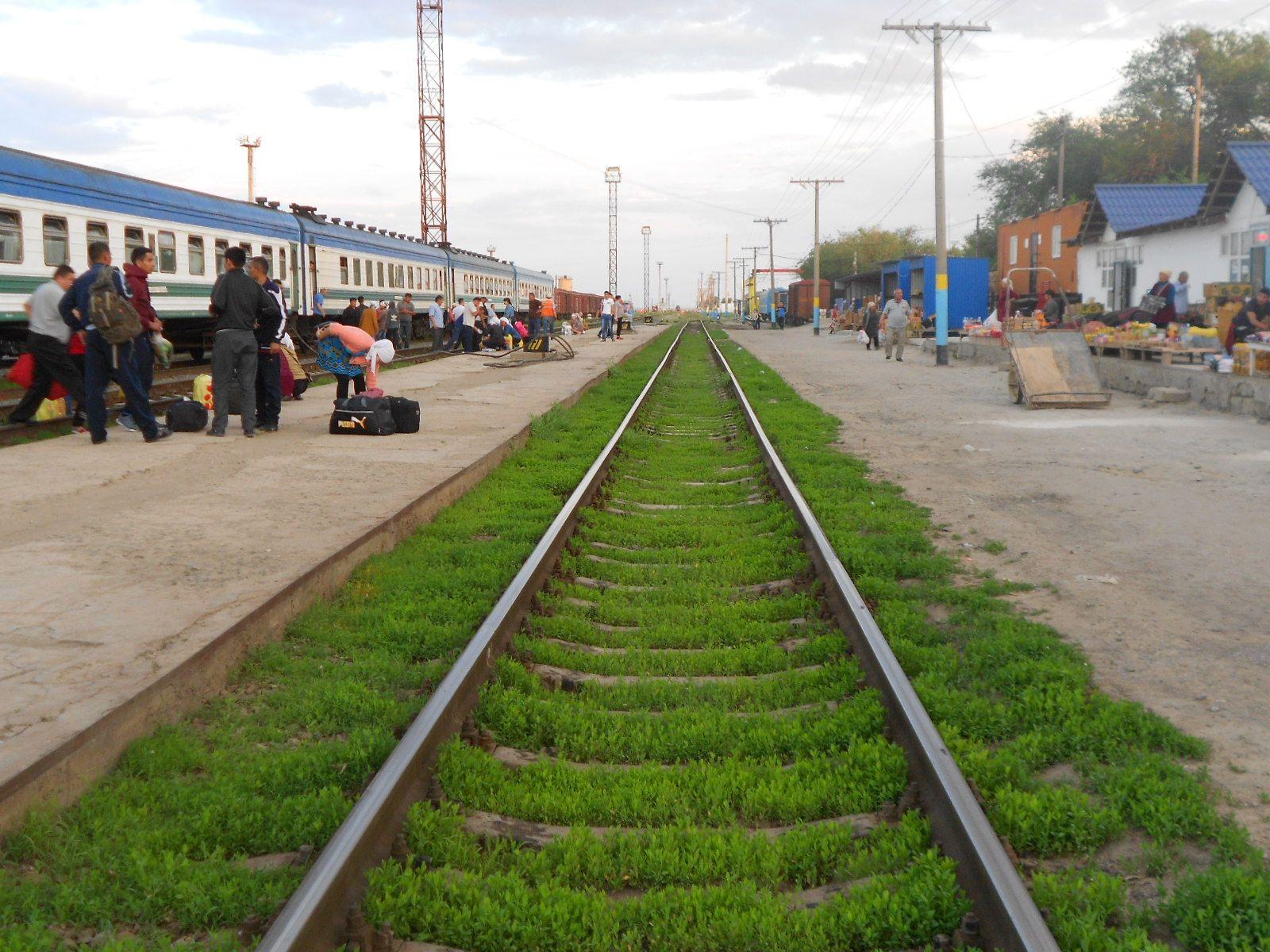
- Stops include Kungrad (Qo'ng'irot), the last real town in Uzbekistan and the last place to buy fresh food, then Karakalpakiya, the Uzbek border station on the plateau, then the Kazakh post, then Beyneu.
There is also a long-distance train from Tashkent and Samarkand to Beyneu two or three times a week, taking about 32 hours. It passes through Nukus and can be boarded there, which is useful if the 647 is not running on your day.
Water on the train comes from a samovar at the end of the carriage; bring your own bottles, tea bags, instant noodles, bread and fruit from the Nukus bazaar. The restaurant car, when there is one, sells plov, lagman and beer at low prices, but it is not reliable.
The Karakalpakiya rail border crossing
The border is crossed on the train, not on foot. The Uzbek rail post is Karakalpakiya, a settlement on the Ustyurt Plateau about 400 km from Nukus; the Kazakh post is usually called Tejen or Tajen on timetables, about 90 km before Beyneu. (The road crossing nearby, Daut-Ota, has been listed as temporarily closed on and off; it is irrelevant if you are on the train.)
How it works, from recent travellers' accounts:
- The train halts at the Uzbek post, often in the middle of the night. Officers board, everyone sits up on the lower berths, passports are collected or checked and some bags are opened. Questions about medicines, cash and souvenirs are normal. The Uzbek side has been the slower of the two, sometimes two hours or more.
- The train then crawls to the Kazakh post, where the check is quicker, typically half an hour to an hour. Kazakhstan gives most Western, East Asian and Gulf passports 30 days visa-free; others need a visa arranged in advance.
- The whole crossing has taken three to four hours in accounts from 2024 to 2026.
What to have ready: passport, your Uzbek hotel registration slips, a printed copy of your train ticket (one traveller was asked for an A4 printout on the Kazakh side), and your onward ticket or plan if asked. Spend or change your som before the border; money changers on the train and at Beyneu take dollars, tenge, som and roubles, but at poor rates.
Do not photograph the border stations or officers. Keep your phone in your pocket during the check.

Beyneu: the change for Mangystau and Aktau
Beyneu is a railway junction in the desert with a few hotels, a bazaar and nothing to see. Its only function for travellers is the change of trains.
- From Beyneu, trains run daily to Mangystau station, which serves Aktau, taking about seven to eight hours. Most are through services from elsewhere in Kazakhstan, so the departure time depends on the day; one account describes a wait of about three and a half hours in the station, another an overnight stay.
- Mangystau station is about 12 km outside Aktau. Taxis and marshrutkas run into the city.
- Other connections from Beyneu: north to Atyrau and Uralsk, and east to Aktobe and the rest of Kazakhstan, roughly daily.
- Tickets for Kazakh trains are bought on the Kazakh railways site or app (bilet.railways.kz) or at the station; foreign cards usually work online. Buy the Beyneu–Mangystau leg before you leave Nukus if the dates are fixed, because the sleeper berths fill with workers heading to the oil towns.
If you must stay the night, there are a couple of simple hotels within walking distance of the station. Beyneu is also the point where some travellers switch to the road: shared taxis and buses run to Aktau in about six hours, and in the other direction a road crossing to Kungrad in Uzbekistan exists, though its opening status for foreigners should be checked locally.
Total time from Nukus to Aktau by rail: about 24 to 30 hours including the wait at Beyneu. It is a day and a night of travel for a distance that a plane covers in ninety minutes.
Mangystau: Bozjyra, the underground mosques and the Caspian
Once in Aktau, Mangystau rewards two to four days with a local driver and a 4x4. The region is the size of a European country, the sights are 150 to 350 km apart on dirt tracks, and there is no public transport to any of them.
The main sights:
- Bozjyra (Bozzhyra): a chalk canyon on the edge of the Ustyurt escarpment, about 300 km from Aktau, with two pointed outliers rising from the floor and a panorama from the rim. Most tours arrive for sunset, camp or sleep in a yurt nearby, and photograph sunrise.
- Tuzbair: a white salt flat below the cliffs, mirror-like after rain.
- Sherkala: a lone table mountain shaped like a yurt, with the ruins of a medieval town at its foot.
- Torysh, the Valley of Balls: concretions the size of cars scattered across a plain.
- The underground mosques: Shakpak-Ata, carved into a cliff above the sea, and Beket-Ata, a pilgrimage site deep in the desert; both are living places of worship, so dress modestly and ask before photographing people.
- The Caspian shore at Aktau itself, with a long promenade, a lighthouse on a Soviet apartment block, and a sea that is pleasant for swimming from June to September.
Typical 2026 prices for a 4x4 with driver from Aktau are US$150 to 250 a day for the vehicle, more with a guide and camping gear; two-day Bozjyra trips with a night in a yurt camp are the standard product. These are Kazakh operators' prices, quoted here as a guide only. Mangystau's season is spring and autumn; summer is brutally hot and winter brings wind and ice on the tracks.
Aktau to Baku: the ferry and the flights
The Caspian ferries are the reason many overlanders come this way, and they are the least predictable part of the trip.
- Ferries sail from the port of Kuryk, about 70 km south of Aktau, to Alat near Baku in Azerbaijan. They are cargo vessels that take passengers and vehicles, not scheduled passenger ships. Departures depend on cargo and weather; waits of one to five days are normal, and the crossing takes roughly 20 to 30 hours.
- Tickets are bought at the port once a sailing is confirmed; prices for foot passengers have been in the range of US$80 to 120 with a cabin, plus a vehicle fee. Bring food.
- In September 2026 Kazakhstan proposed restarting a regular passenger ferry on the Kuryk–Baku route, and new rail ferries were announced for 2026. As of November 2026 we have no confirmation that a scheduled passenger service is running. Check with the port or recent traveller forums before relying on it.
Flying is the alternative and the one most travellers choose:
- Aktau has direct flights to Baku, Istanbul, Almaty, Astana, Atyrau and, seasonally, to the Gulf and Russia.
- Tashkent to Aktau direct flights have operated with Kazakh and Uzbek carriers a few times a week; if they run on your dates, they turn the two-day train journey into two hours. Check both airlines' schedules.
For visa purposes, Azerbaijan requires an e-visa for most nationalities, obtained online in a few days. Apply before you reach Aktau, since the ferry can leave at short notice.
Planning the route: sample itineraries
Western Uzbekistan and Mangystau in 8 days:
- Day 1: fly Tashkent to Nukus. Savitsky Museum.
- Day 2: Muynak and the ship cemetery, night on the Ustyurt escarpment or back in Nukus.
- Day 3: Khorezm fortresses on the way to or from Khiva, or a second day in Nukus and Chilpik.
- Day 4: morning train Nukus to Beyneu; border overnight.
- Day 5: Beyneu to Mangystau station; evening in Aktau.
- Days 6–7: Bozjyra and the underground mosques with a local 4x4, one night in a yurt camp.
- Day 8: fly out of Aktau, or to Kuryk for the ferry.
The classic overland version adds Khiva before Nukus and Baku after, and in the other direction works equally well: ferry to Kuryk, Mangystau, train to Nukus, then Khiva, Bukhara, Samarkand and Tashkent by train. Travellers arriving from Kazakhstan should note that Uzbekistan's registration rule starts on entry, and that the Nukus train arrives in the early morning; book a Nukus hotel for that night so that the registration is in order.
If you want the landscapes without the train, our desert fortresses and Aral Sea tour ends in Nukus, from where a Tashkent–Aktau flight or the train can continue the journey.
Comfort, safety and what to pack
The train is safe. Carriages are shared with Kazakh and Uzbek families, oil workers and traders; the attendant locks the carriage doors at night, and theft is rare. The discomforts are heat in summer, cold in winter, a thin mattress and a long wait at the border with the lights on.
Pack:
- Two litres of water per person plus food for a day; snacks from the Nukus bazaar travel well.
- A sleeping sheet or light sleeping bag in winter, a sarong in summer.
- Toilet paper, wet wipes and hand sanitiser; the toilets are locked during stops and at the border, which can mean four hours.
- Cash in US dollars in small notes, some tenge if you can get them in Nukus (the bazaar changers sometimes have them), and your remaining som.
- A power bank; sockets are few and often dead.
- Printed tickets and hotel confirmations.
Health: Nukus has pharmacies and a regional hospital; between Kungrad and Aktau there is nothing. Carry your own medicines. The water from the samovar is boiled and safe for tea.
Women travelling alone generally report no problems on this line, but choose kupe and, if possible, a lower berth near the attendant's compartment. Our solo female travel guide has more on trains in Uzbekistan.
What we can arrange on the Uzbek side
We can book your Uzbekistan trains and domestic flights, including the Nukus leg, arrange the Savitsky Museum, Muynak and the Ustyurt camp, and have a driver meet the Beyneu train at Nukus station in the early morning if you are coming the other way. For Kazakhstan we can only advise; the Mangystau drivers, Kazakh rail tickets and the ferry are arranged there. Tell us your dates and we will build the Uzbek itinerary so that it ends at Nukus station on the right morning.