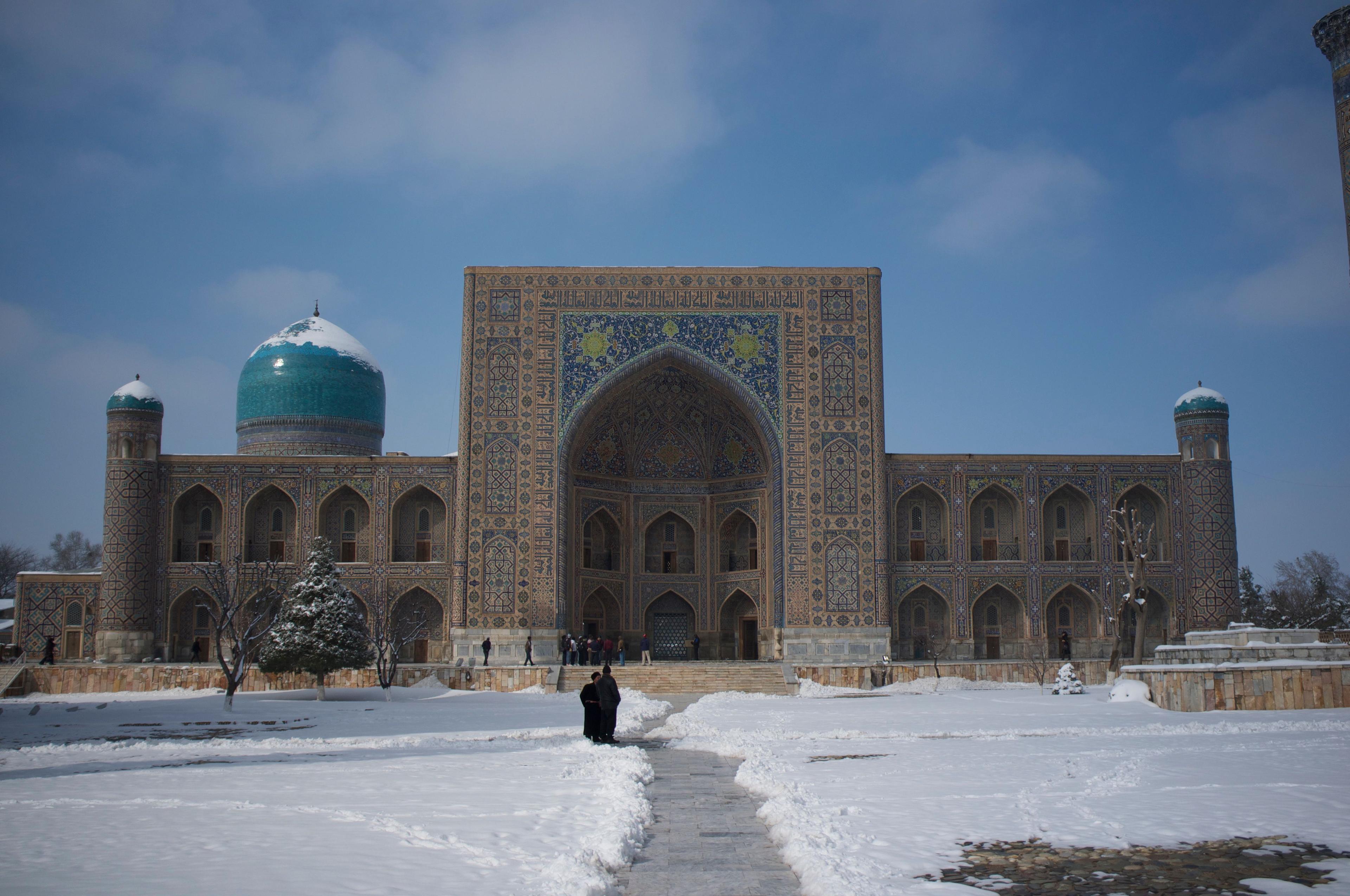
Uzbekistan in winter means crisp blue days, snow on the domes of Samarkand now and then, and the Registan almost to yourself. Our local guide to weather by city, what stays open, heating, New Year, what to wear and whether a December to February trip is worth it.
Facts, prices and schedules checked on November 4, 2026
Most people picture Uzbekistan in spring or autumn, and for good reason. But Uzbekistan in winter has a following of its own among travellers who have tried it. From December to February the skies over Samarkand and Bukhara are often a hard, clear blue, the tilework glows in the low sun, and the Registan, crowded by mid-morning in October, is quiet enough to hear your own footsteps.
Winter also asks more of you. Days are short, nights are below freezing, Khiva is properly cold, and some small guesthouses and cafés close until March. This guide sets out what December, January and February are really like, city by city: temperatures, the chance of snow, what is open, how hotels are heated, how Uzbeks celebrate New Year, what to pack and where to ski. At the end you should know whether a winter trip suits you.
Is it worth visiting Uzbekistan in winter?
For the right traveller, yes. Winter is the low season, and that changes the whole feel of a trip.
The main reasons to go:
- Empty monuments. The Registan, Shah-i-Zinda, the Ark Fortress and Ichan-Kala see a fraction of their spring crowds, and you can photograph them without a stream of tour groups.
- Lower prices. Outside the New Year week, many hotels drop their rates noticeably compared with April, May, September and October, and the best rooms in the old towns are easy to book.
- Easy trains. The Afrosiyob high-speed train runs all year, and in winter the seats that sell out weeks ahead in October are usually available a few days before travel.
- Real local life. In winter the cities belong to the people who live there. Chaikhanas are full of men drinking tea by the stove, bazaars are piled with dried fruit, nuts and pomegranates, and guides have time to talk.
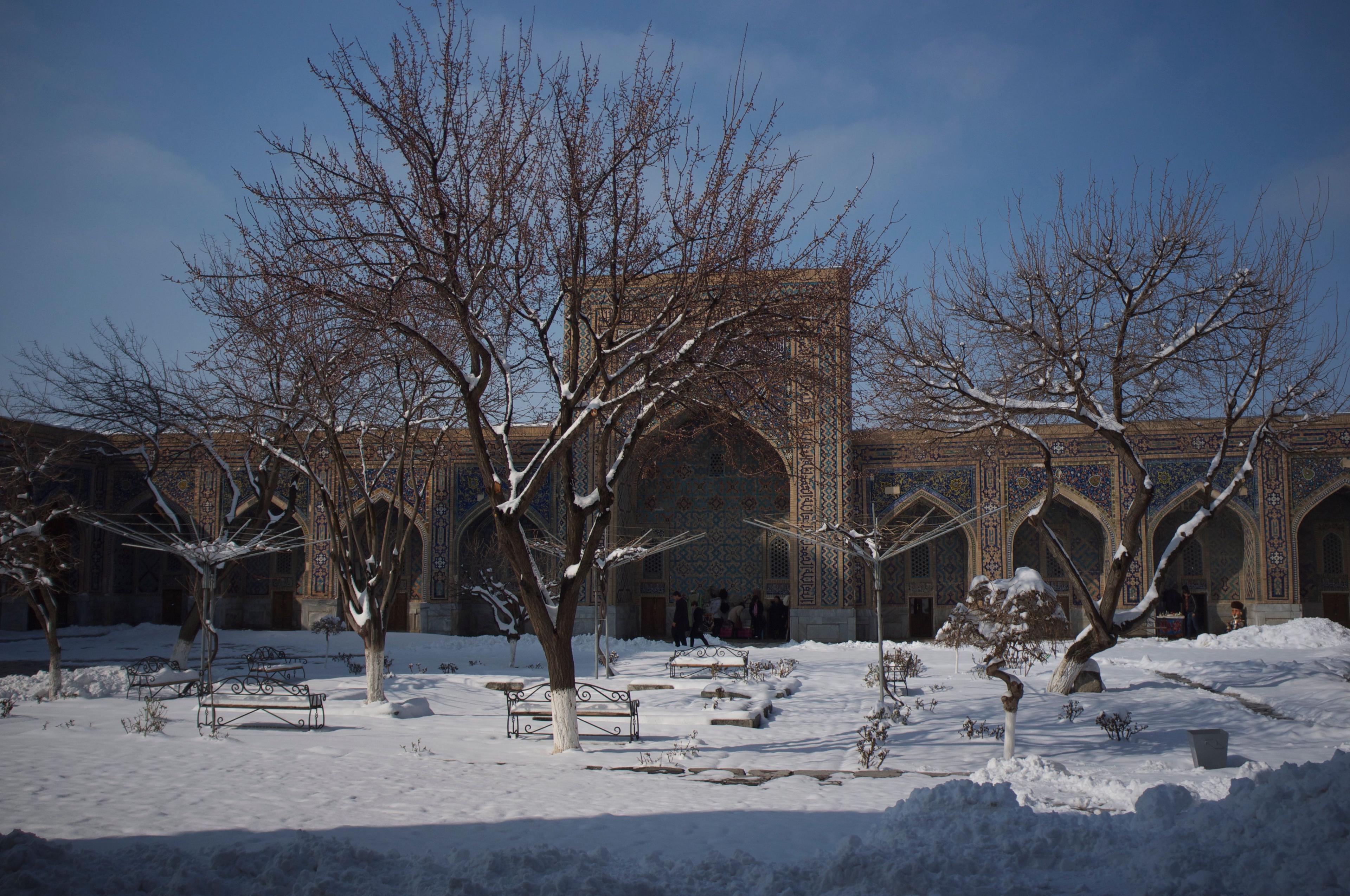
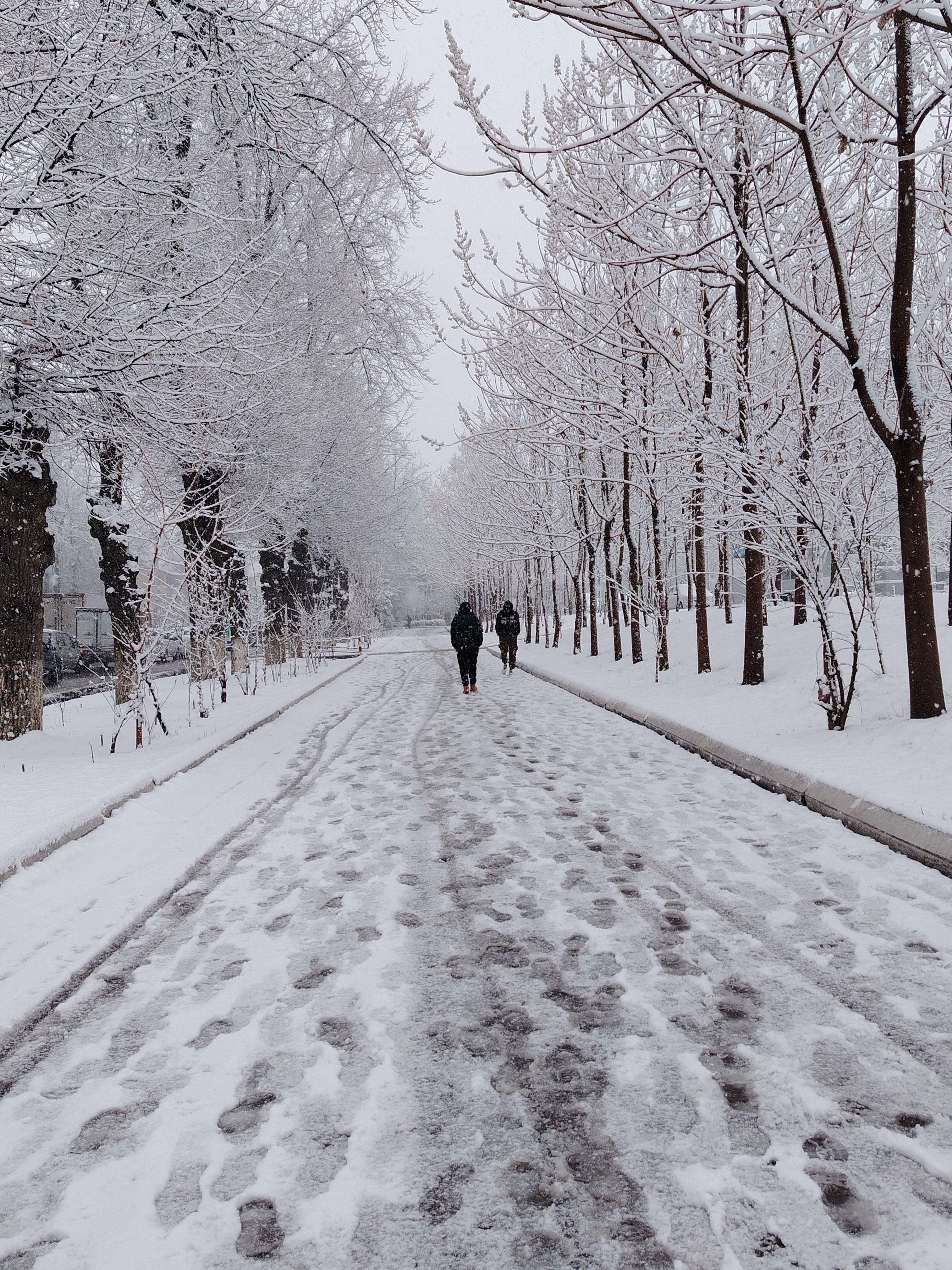
- The chance of snow. A morning of fresh snow on the domes of Samarkand or the walls of Khiva is one of the most memorable sights in Central Asia.
The honest trade-offs:
- It is cold, especially in the mornings and evenings, and inside many historic buildings that have no heating at all.
- Daylight is short: at the winter solstice there are only a little over nine hours between sunrise and sunset.
- Some guesthouses, rooftop cafés and craft workshops close or reduce hours, particularly in Khiva.
- The landscapes are brown rather than green, and the desert and mountain trips that shine in spring are harder or impossible.
If you mainly want architecture, history, food and few crowds, winter works well. If you want long warm evenings, outdoor dining and countryside, choose April to May or September to October instead (our guide to the best time to visit compares all the seasons).
Uzbekistan weather in December, January and February
Uzbekistan has a sharply continental climate: hot dry summers and cold, mostly dry winters. Winter days are often sunny and pleasant in the middle of the day, then the temperature drops quickly after sunset.
Average daytime highs and night-time lows (1991–2020 climate normals, rounded):
- December: Tashkent 9 / 0°C, Samarkand 9 / 0°C, Bukhara 8 / -1°C, Khiva 4 / -4°C
- January: Tashkent 7 / -1°C, Samarkand 7 / -1°C, Bukhara 7 / -2°C, Khiva 3 / -6°C
- February: Tashkent 10 / 0°C, Samarkand 10 / 0°C, Bukhara 10 / 0°C, Khiva 6 / -4°C
These are averages. Most winters bring a few days of cold snaps, when nights in Khiva and the Karakalpakstan desert can fall to -15°C or lower, and a few unusually mild spells when Tashkent and Bukhara reach 15°C or more.
City by city:
- Tashkent is the wettest of the four in winter, with grey, drizzly days between the sunny ones and occasional snow. It is the easiest city to enjoy in bad weather, with the metro, museums, cafés and malls all indoors.
- Samarkand sits higher, at around 700 metres, and feels similar to Tashkent. Mornings are frosty, afternoons often bright.
- Bukhara is drier and sunnier, with cold nights. The old town is compact, so you are never far from a warm teahouse.
- Khiva, in the Khorezm oasis near the Turkmen border, is the coldest of the main cities. Its daytime highs in January hover just above freezing, and a biting wind can blow off the desert.
Early December and the second half of February are the mildest weeks of winter; mid-January is the coldest and quietest.
For month-by-month figures across the whole year, see our guide to Uzbekistan's weather by month.
Does it snow in Samarkand, Bukhara and Khiva?
It does, but not reliably. Snow falls a few times in most winters in Tashkent and Samarkand, less often in Bukhara and Khiva, which are drier. It rarely stays on the ground in the cities for more than a few days before the sun melts it.
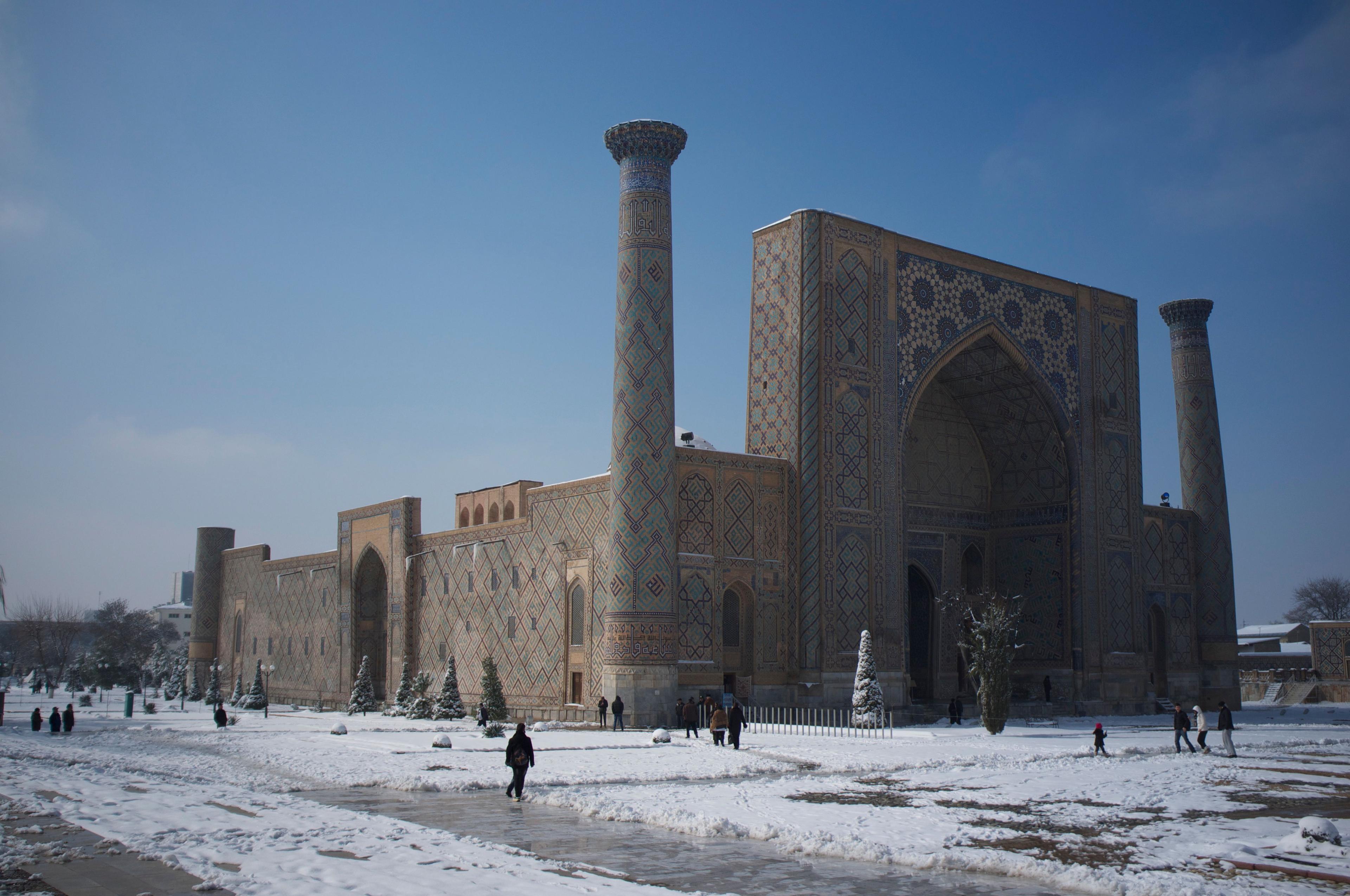
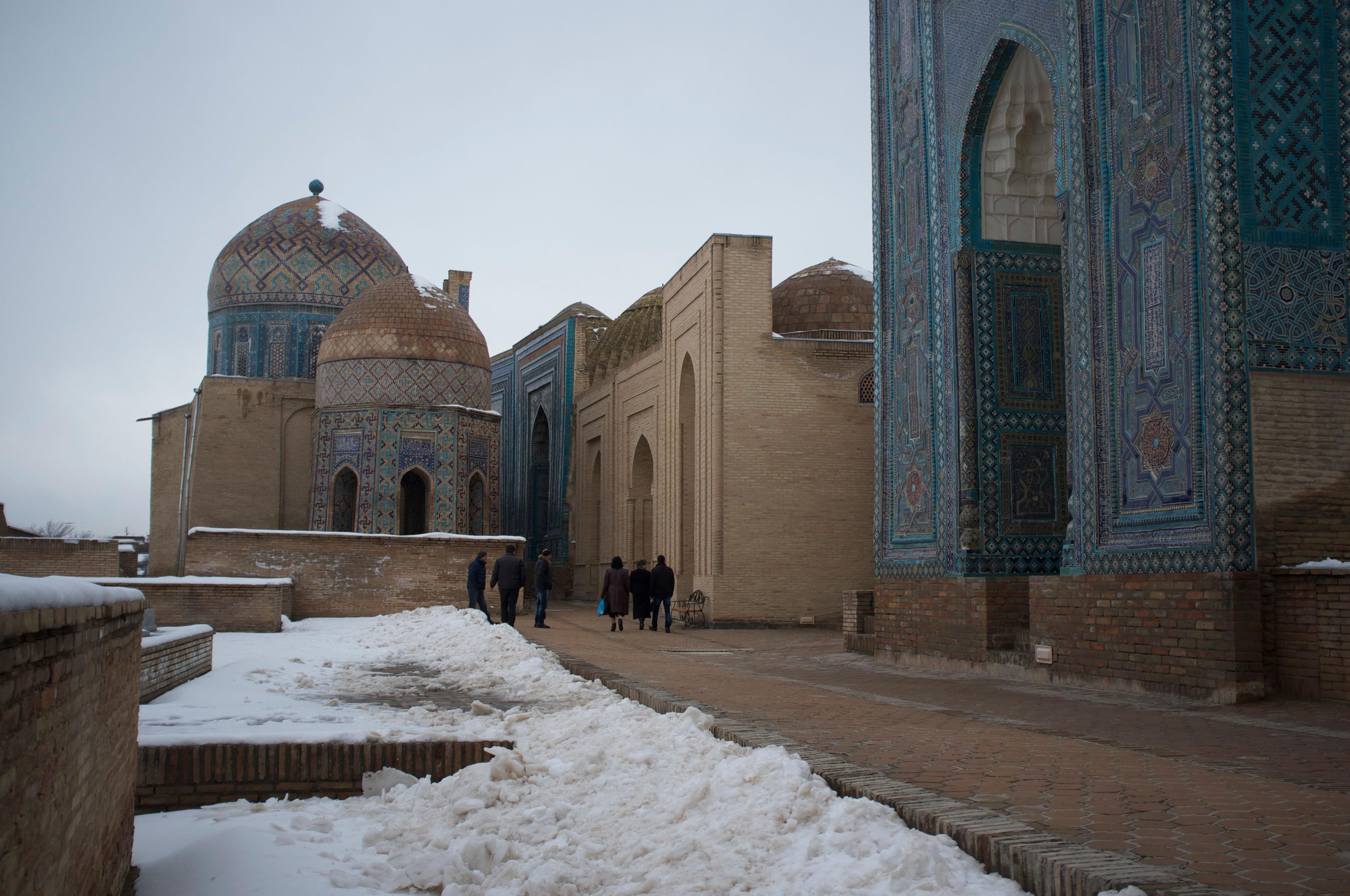
The chances are best from late December to mid-February. In January 2023, for example, a night of heavy snow left Samarkand white by morning, and temperatures then fell to around -5°C. In March 2013 a late snowfall covered the Registan and Shah-i-Zinda, a reminder that even early spring can surprise.
If you are lucky enough to wake up to snow:
- Go to the Registan early. The square is at its most beautiful before people and cleaners have walked across it, and the low sun lights the Tilya-Kori and Sher-Dor facades.
- Walk the walls of Ichan-Kala in Khiva, where the minarets and the turquoise Kalta Minor stand out against white roofs.
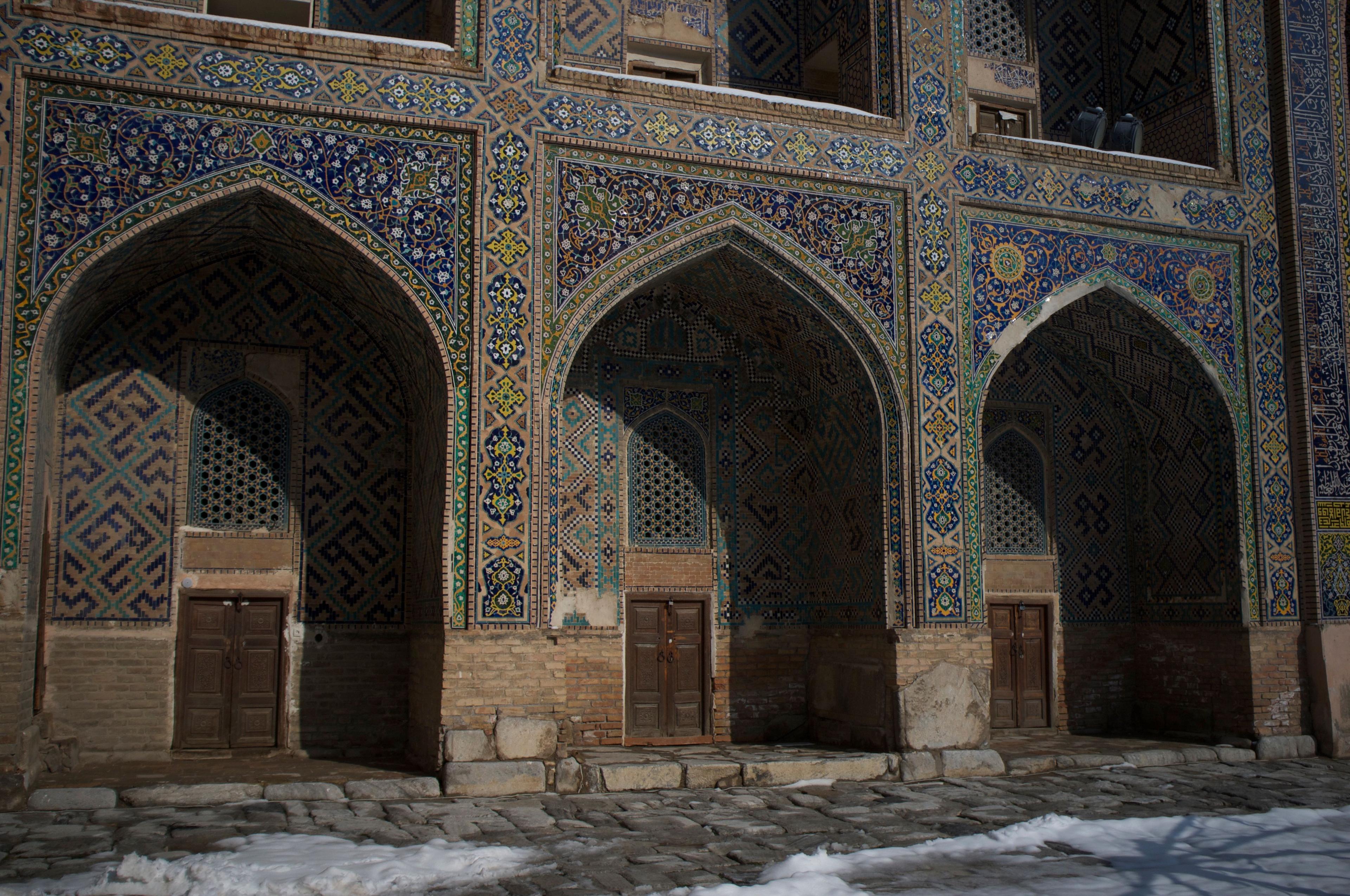
- Visit the Shah-i-Zinda necropolis, where the blue tiles look even brighter against snow.
Morning snow often turns to slush and ice by afternoon, and paving in the old towns can be slippery. Shoes with a good grip matter more than a heavy coat.
What is open in Uzbekistan in winter?
Almost everything a first-time visitor wants to see stays open all year.
- Monuments and museums. The Registan, Gur-e-Amir, Bibi-Khanym, Shah-i-Zinda, the Ark Fortress and Po-i-Kalyan, Ichan-Kala and its museums are open daily in winter. Opening hours are usually shorter than in summer and closing times move earlier towards dusk, so plan the main sights for the morning and early afternoon.
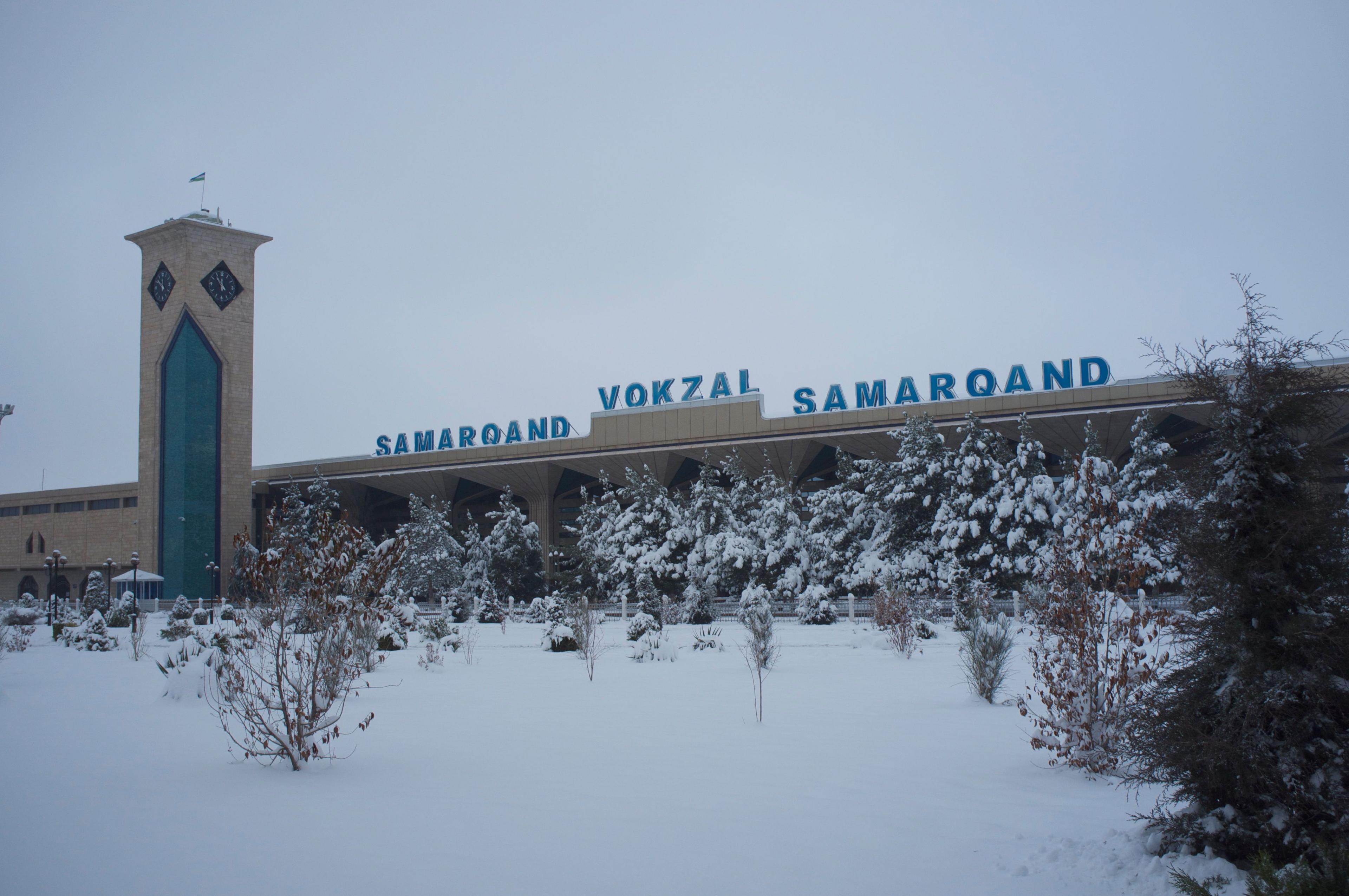
- Trains. The Afrosiyob high-speed trains between Tashkent, Samarkand and Bukhara run all winter and are rarely disrupted by weather. Since May 2026 high-speed trains also run on to Khiva. Schedules change seasonally, so check the live timetable when you book.
- Flights. Domestic flights to Urgench (for Khiva), Bukhara and Nukus run all year, though fog in December and January occasionally delays early departures.
- Restaurants and bazaars. Restaurants, chaikhanas and bazaars work normally. Outdoor terraces close, but indoor rooms are warm.
- Craft workshops. Most of the well-known workshops in Bukhara, Samarkand and the Fergana Valley keep working, although some family workshops in Khiva close for a few weeks.
What closes or becomes difficult:
- Some small guesthouses in Khiva and Bukhara close from December to February. Larger hotels stay open.
- Yurt camps at Aydarkul lake and most desert camps close for the season, so the Nuratau and Aydarkul yurt stay is a spring and autumn experience.
- Mountain roads and trekking routes in the Nuratau, Zaamin and Chimgan areas can be snowbound, except for the ski areas near Tashkent.
- The Aral Sea trip to Muynak is possible but harsh, with long drives in deep cold.
A practical rhythm for winter sightseeing is to start at 9:00, see the big monuments while the sun is up, stop for a long hot lunch, and finish the day indoors with a museum, a workshop, a hammam or an early dinner.
The empty Registan and other winter highlights
Winter rewards travellers who like to take their time. A few experiences that are at their best in the cold months:
- The Registan at opening time. On a clear January morning you may share the square with a handful of people. Climb to the upper galleries if access is offered, or simply sit in the courtyard of the Ulugbek Madrasah with the sun on the tiles.
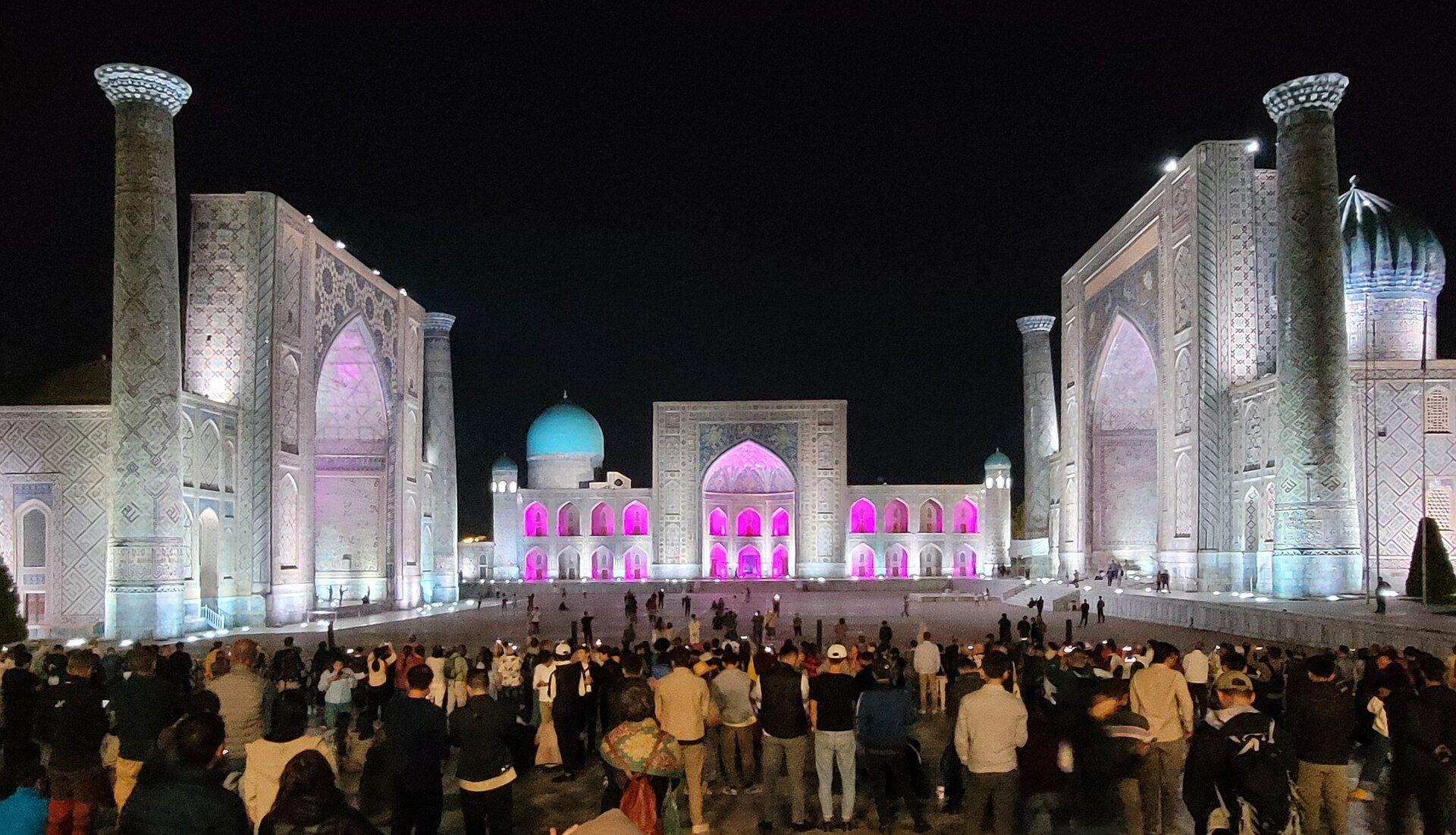
- Samarkand's evening light show. Sunset comes before 17:30 in December, so the illuminated Registan is visible early in the evening, followed by dinner without a late night.
- Bukhara's Lyab-i-Hauz in quiet season. The ensemble around the pool, the trading domes and the Kalyan minaret are almost empty in the late afternoon, when the brickwork turns gold.
- A hammam in Bukhara. The historic bathhouses of the old town are a very good way to warm up after a cold day of walking.
- Khiva at sunrise. Ichan-Kala is small enough to walk from end to end in fifteen minutes, and in winter you often have its lanes to yourself.
- Tashkent's metro and museums. On a grey day, the Tashkent metro stations, the State Museum of Applied Arts and the Amir Temur Museum make a full and warm itinerary.
The classic route of Tashkent, Samarkand, Bukhara and Khiva works in winter just as it does in spring. Our 7-day and 10-day itinerary guides suggest how to divide the days; in winter it is worth adding half a day of slack in Khiva in case of a cold snap or a fog-delayed flight. Eight to ten days covers the four cities at a comfortable winter pace, and flying back to Tashkent from Urgench saves backtracking on the shortest days.
New Year in Uzbekistan
New Year is the biggest secular holiday of the Uzbek year, a tradition inherited from the Soviet period and celebrated by almost everyone. Christmas is not a public holiday, but New Year trees, lights and decorations go up across the cities from early December.
What to expect:
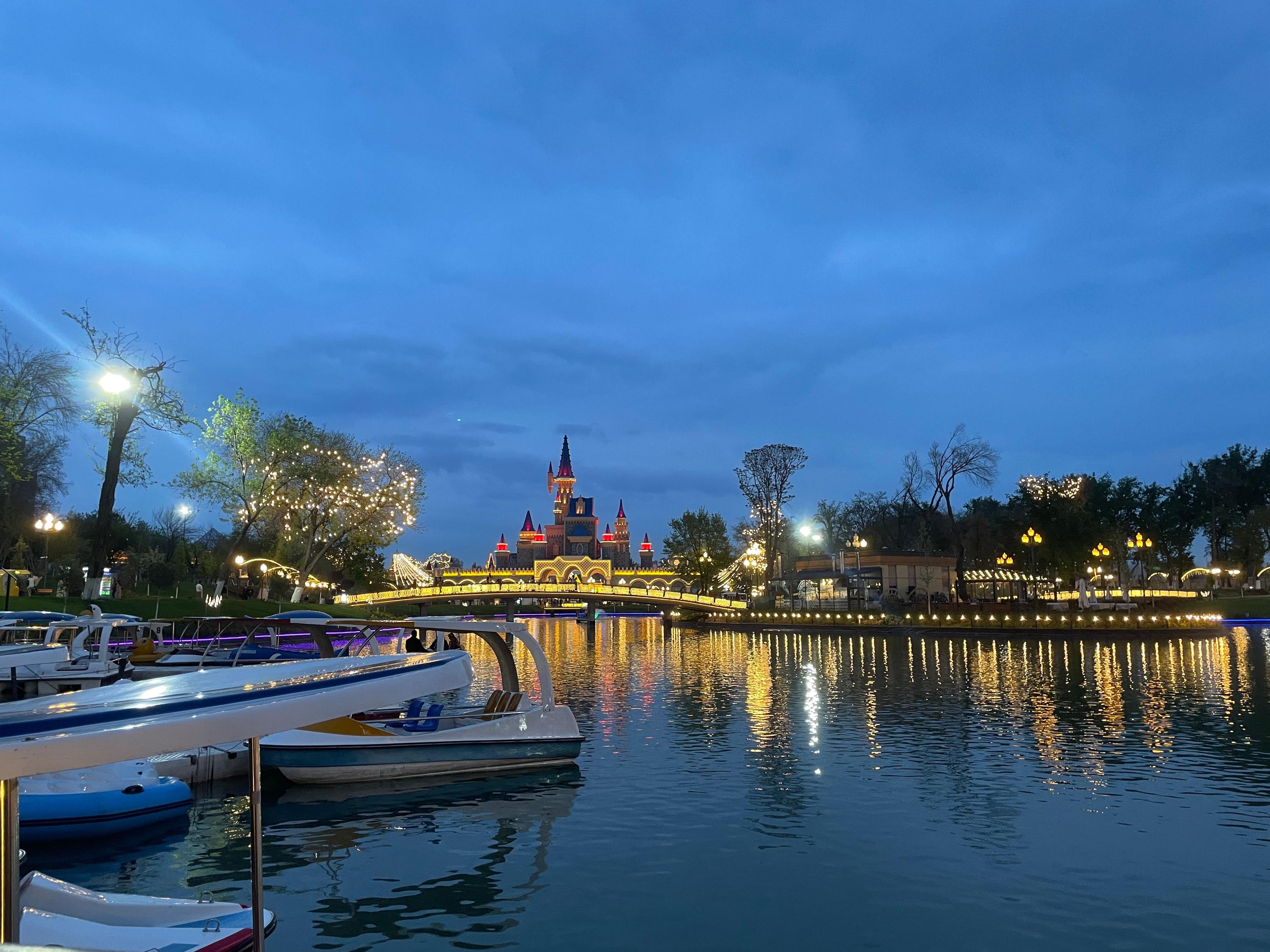
- Decorated city centres. Tashkent puts up large trees and light installations in its central squares and parks, and Samarkand and Bukhara decorate their main streets. Children wait for Qor Bobo (Grandfather Frost) and his granddaughter Qorqiz (the Snow Maiden).
- A family holiday. On the night of 31 December most Uzbeks celebrate at home with family, with a long table of salads, plov and sweets. Fireworks start at midnight.
- Gala dinners. Many hotels and restaurants hold New Year's Eve banquets with music and dancing. They are often booked weeks in advance and usually require a separate ticket.
- Days off. 1 January is a public holiday. In recent years the government has added extra days by decree, so offices, banks and some museums close for several days around 31 December and the first days of January. The exact days are announced each December.
For travellers, the New Year week is the one busy period of the winter. Trains, flights and hotels fill up with domestic travellers, and prices rise. If you want to see the city in its holiday dress, book early; if you want a quiet trip, travel in mid-January or February instead.
Other winter dates to know:
- 8 December is Constitution Day, a public holiday.
- Ramadan in 2027 is expected to begin around 8 February, with Ramazon Hayit (Eid al-Fitr) around 9 or 10 March, depending on the moon sighting. Daily life continues normally for visitors, and restaurants stay open.
Hotels and heating: staying warm indoors
Heating is the question travellers ask most about a winter trip, and the answer depends on where you stay.
- Larger city hotels in Tashkent, Samarkand and Bukhara have central heating or powerful air-conditioning units that work in heating mode. Rooms are usually warm, sometimes too warm.
- Boutique hotels and family guesthouses in the old towns often occupy traditional houses arranged around a courtyard. Rooms are heated by wall-mounted air-conditioning units, sometimes with an electric heater as backup. Bathrooms and corridors can be cool, and you may cross an open courtyard to reach breakfast.
- Historic buildings, madrasahs and mausoleums are not heated. Visiting the Registan or Ichan-Kala in January means staying in your coat indoors as well as outdoors.
Tips for a warm stay:
- When booking, ask whether the room has its own heating and whether it works overnight.
- In guesthouses, ask for a room away from the courtyard door and check there is a spare blanket.
- Cold snaps occasionally strain gas and electricity supplies in smaller towns. Hotels generally cope, but a small guesthouse may not, so in deep winter a well-established hotel is the safer choice.
- Carry a light down jacket or fleece to wear inside cold monuments and on the train platform.
Prices for a double room usually sit noticeably below spring and autumn levels from mid-January to the end of February. Since 1 September 2026 a tourist levy is also added per adult per night, as explained in our guide to travel costs.
What to wear in Uzbekistan in winter
Dress for a dry, cold climate with big swings between day and night. Layers are more useful than one very heavy coat.
A practical winter packing list:
- A warm insulated jacket, down or synthetic, ideally windproof and hooded
- Thermal base layers, especially for Khiva and early mornings
- Two warm mid-layers, such as fleece or wool jumpers
- Warm trousers, plus thermal leggings to wear underneath on the coldest days
- Waterproof walking shoes or boots with a good grip for icy paving
- Hat, scarf and gloves; touchscreen gloves are handy for photos
- Wool socks, enough for several days
- Lip balm and moisturiser, because the air is very dry
- Sunglasses and sunscreen for bright snow days and the mountains
Modest dress rules are easy to follow in winter, since long sleeves and trousers come naturally. Women may want a scarf to cover their hair in active mosques and at shrines. For a full season-by-season list, see our packing list and guide to what to wear in Uzbekistan.
Winter food: what to eat when it is cold
Uzbek cooking is at its most comforting in winter. Look out for:
- Shurpa, a clear, slow-simmered soup of lamb, potato, carrot and chickpeas
- Mastava, a thick rice and meat soup finished with yogurt
- Manti, large steamed dumplings, filled with pumpkin as well as meat in the cold months
- Plov, the national dish of rice, carrots and meat, especially at lunchtime when it is freshly cooked
- Tandoor somsa, flaky pastries from the clay oven, eaten hot
- Endless green and black tea, often with lemon, honey or dried fruit
Bazaars in winter are full of dried apricots, raisins, almonds, walnuts and pistachios, and the last pomegranates and persimmons of the season. Our Uzbek food guide explains the dishes in more detail.

Skiing near Tashkent: Amirsoy in brief
Winter in Uzbekistan is not only about the Silk Road cities. About 65 kilometres north-east of Tashkent, in the Chatkal Range of the western Tian Shan, Amirsoy Mountain Resort has modern gondolas, around 15 kilometres of groomed slopes and snowmaking that helps the season run from around mid-December to March, depending on snowfall.
It makes an easy add-on to a city tour: a day trip from Tashkent takes about an hour and a half each way by car, and ski and snowboard rental is available at the resort. In the 2025/26 season an adult full-day ski pass cost 320,000 som on weekdays and 390,000 som at weekends (about US$27 and US$33 as of November 2026), and non-skiers can ride the gondola for the views.
Nearby Chimgan and Beldersay offer older, simpler skiing, and a new resort at Chimgan is under construction. Our guide to skiing in Uzbekistan compares all three, with lifts, prices and transport.
Winter in Uzbekistan with TourEast
TourEast runs a fixed-date winter group tour of eight days through Tashkent, Bukhara and Samarkand by Afrosiyob train, with a day in the snow in the Chimgan mountains. We can also arrange private winter tours with flexible timings and an optional ski day at Amirsoy; tell us your dates and we will suggest the right route for the season.