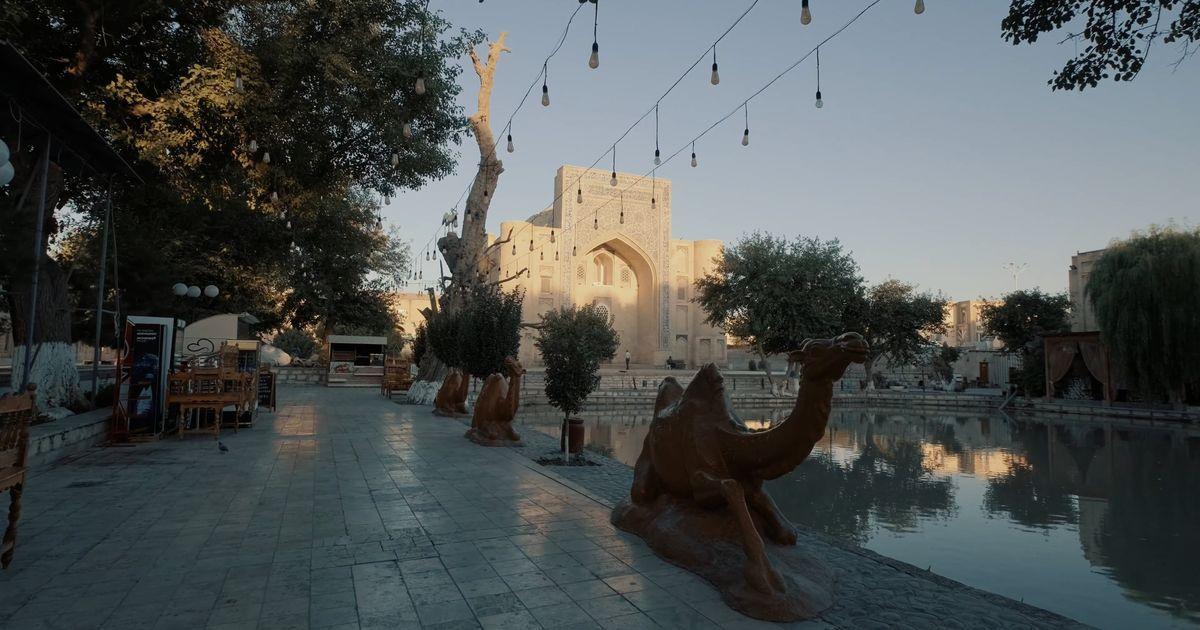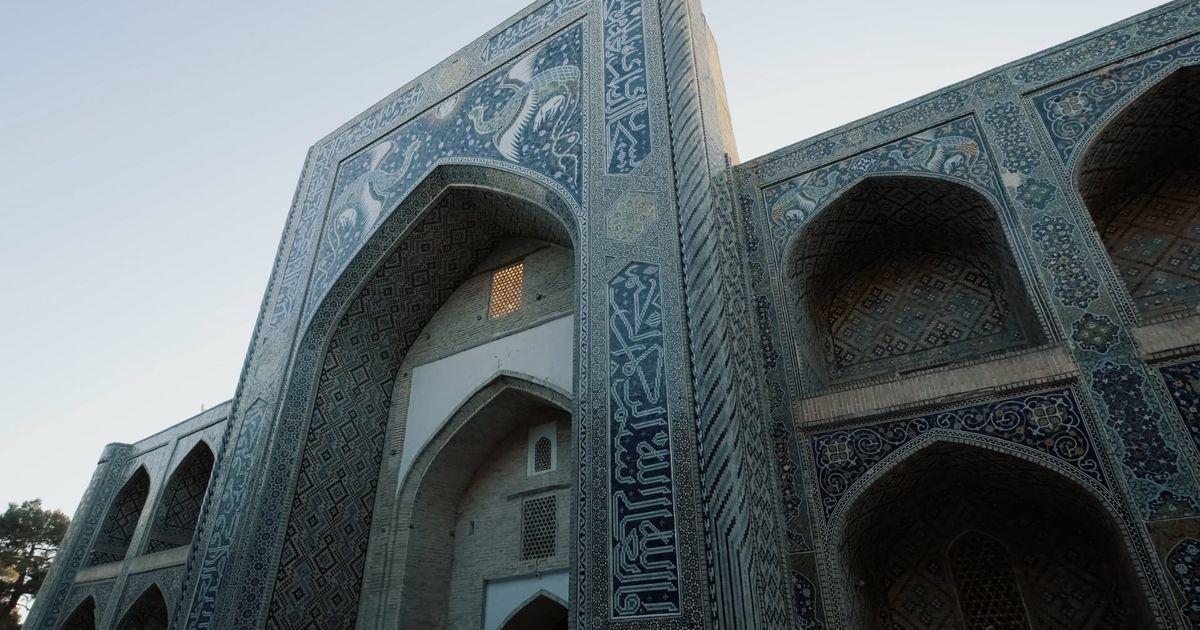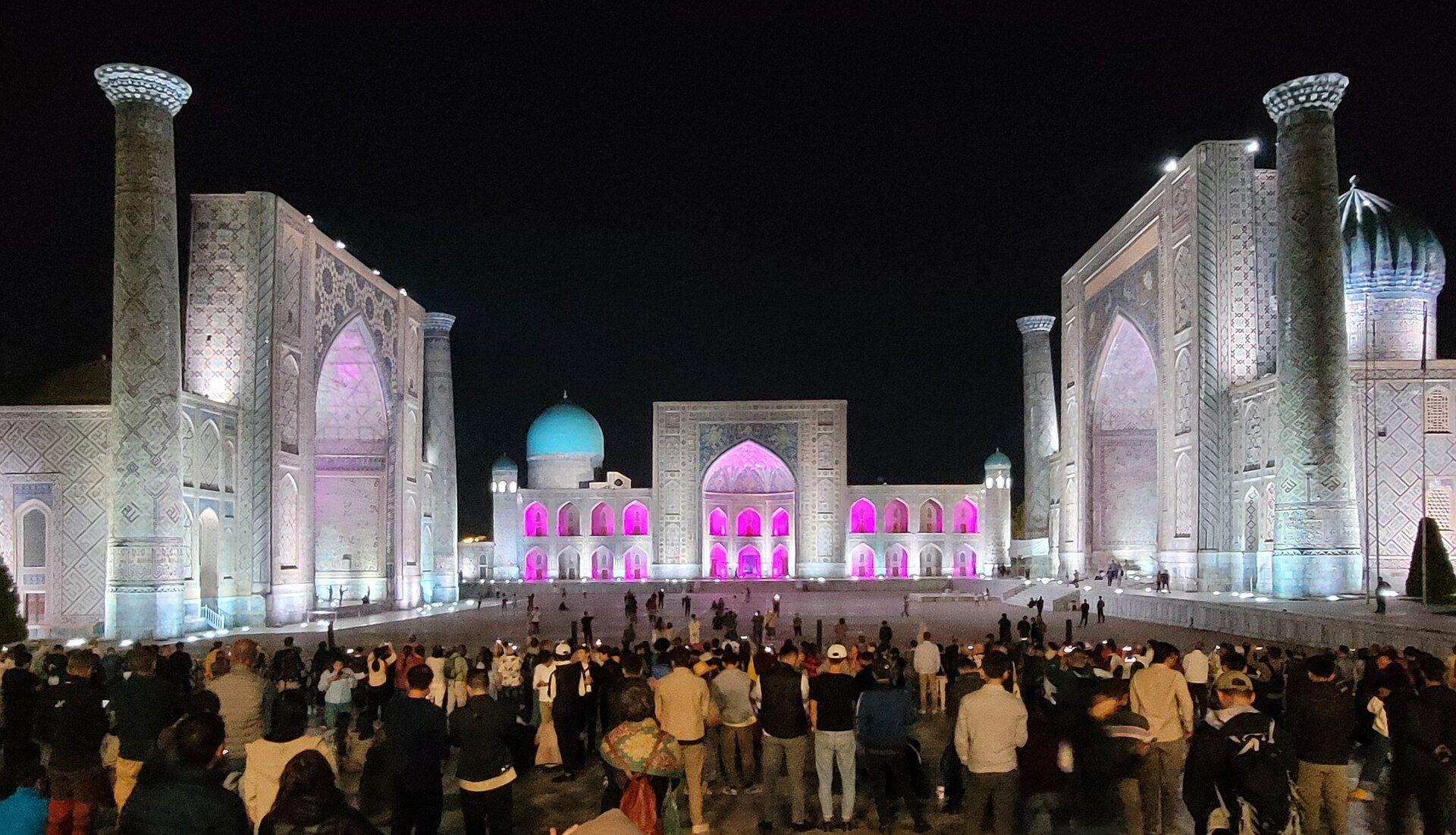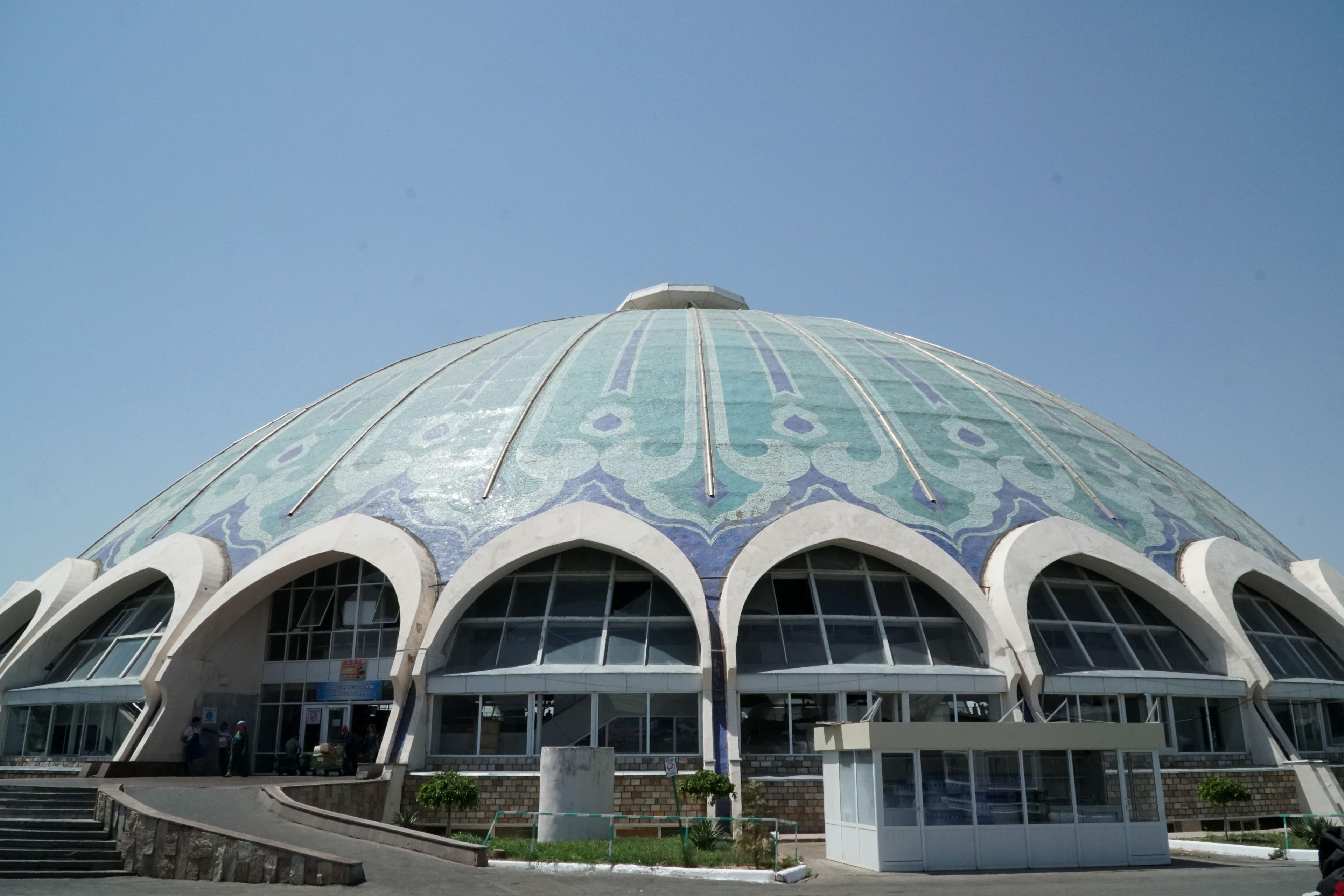
What to pack for Uzbekistan in every season, what to wear in mosques and mausoleums, which shoes and plugs you need, and the medicines that can cause trouble at customs, including codeine. A practical checklist from our guides, updated November 2026.
Facts, prices and schedules checked on November 4, 2026
What should you pack for Uzbekistan, and what should you wear once you are here? The questions are simple, but the answers depend on the season, on where you go and on a few rules that catch travellers out at customs.
Uzbekistan is a secular country with a Muslim majority and a relaxed, hospitable attitude to visitors. In Tashkent you will see everything from business suits to summer dresses. In the old towns of Bukhara and Khiva, and especially in active mosques and shrines, modest dress is expected and appreciated. The climate swings from above 40°C in July to below freezing in January, and the monuments are best explored on foot over uneven stone.
This Uzbekistan packing list is what our guides tell our own guests: what to wear by season, the dress code for mosques and mausoleums for women and men, shoes, plugs, a sensible medical kit, and what not to bring, from codeine-based painkillers to drones and vapes. Rules were checked in November 2026; customs rules change, so we point to the official sources.
The essential Uzbekistan packing list
Whatever the season, these are the things we would never travel without:
- Passport, valid for at least three months beyond your stay, plus a photocopy or scan; you must carry the original at all times and show it for trains and hotels
- Comfortable, broken-in walking shoes
- A light scarf or shawl, which covers hair, shoulders or knees in a mosque and doubles as sun protection
- Clothes that cover shoulders and knees, at least for the old towns and religious sites
- Sunglasses, sunscreen and a hat for most of the year
- A refillable water bottle
- A small daypack for sightseeing days
- Power adapter for type C/F sockets, if your plugs differ
- Phone, charger and a power bank
- Any prescription medicines, in original packaging with a copy of the prescription
- A Visa or Mastercard plus some US dollars or euros in clean, recent notes
- Hand sanitiser and a packet of tissues; public toilets do not always have paper
- Travel insurance documents
Pack light if you can. The overhead racks of the Afrosiyob train are narrow, guesthouses in Bukhara and Khiva often have steps, and the old towns are best entered on foot.
What to wear in Uzbekistan: the general rules
There is no legal dress code for visitors, and you will not be stopped in the street for what you wear. But Uzbekistan is more conservative than Western Europe, especially outside Tashkent, and dressing a little modestly earns you warmer welcomes and fewer stares.
A simple way to think about it:
- Tashkent: anything you would wear in a European city is fine, including knee-length shorts and summer dresses.
- The old towns of Samarkand, Bukhara and Khiva: comfortable clothes that cover the shoulders and reach at least the knee are the norm for both women and men. Locals rarely wear shorts here, though tourists in shorts are a common sight in summer.
- Villages, the Fergana Valley and Karakalpakstan: dress more conservatively, with longer sleeves and longer skirts or trousers.
- Active mosques and shrines: shoulders, upper arms and knees covered; women often cover their hair. See the next section.
Can you wear shorts in Uzbekistan? Men can, in cities and in the heat of summer, but long, light trousers are more comfortable against the sun and needed in mosques. For women, a midi skirt, a loose dress or light trousers works better than shorts in the old towns. Leggings are fine with a longer top. Very short, low-cut or sheer clothes attract attention away from Tashkent's modern districts.
Materials matter more than style: loose linen and cotton in summer, layers in spring and autumn, and something properly warm in winter.
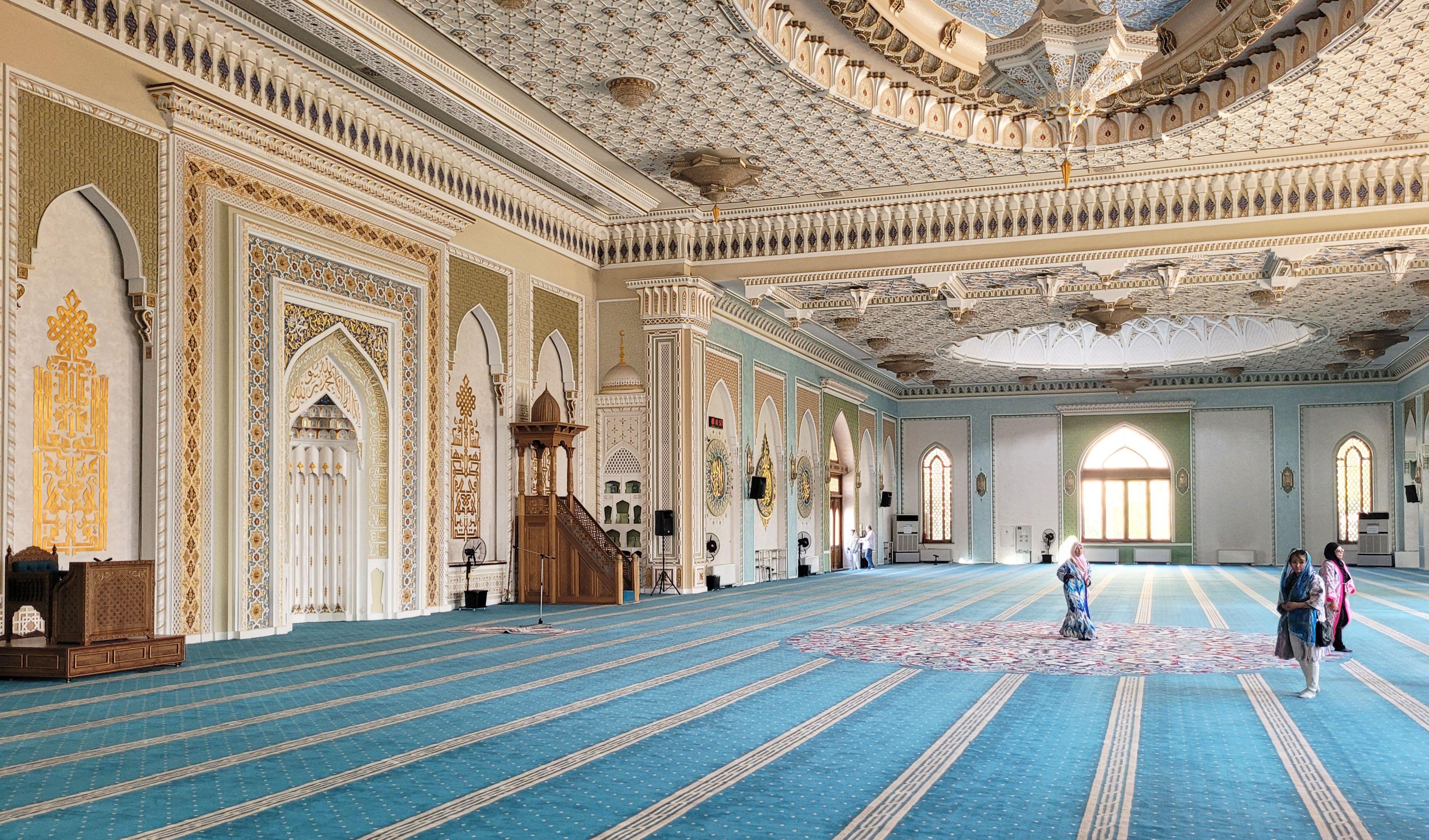
Dress code for mosques, mausoleums and madrasahs
Many of Uzbekistan's great monuments are museums rather than places of worship. The madrasahs of the Registan, the Ark in Bukhara and most of Ichan-Kala in Khiva have no formal dress code, though modest clothing is still sensible. Active mosques and pilgrimage sites are different, and these are the ones to plan for:
- The Khast Imam complex (Hazrati Imam) and the Minor Mosque in Tashkent
- Shah-i-Zinda in Samarkand, which is both a museum and an important pilgrimage site
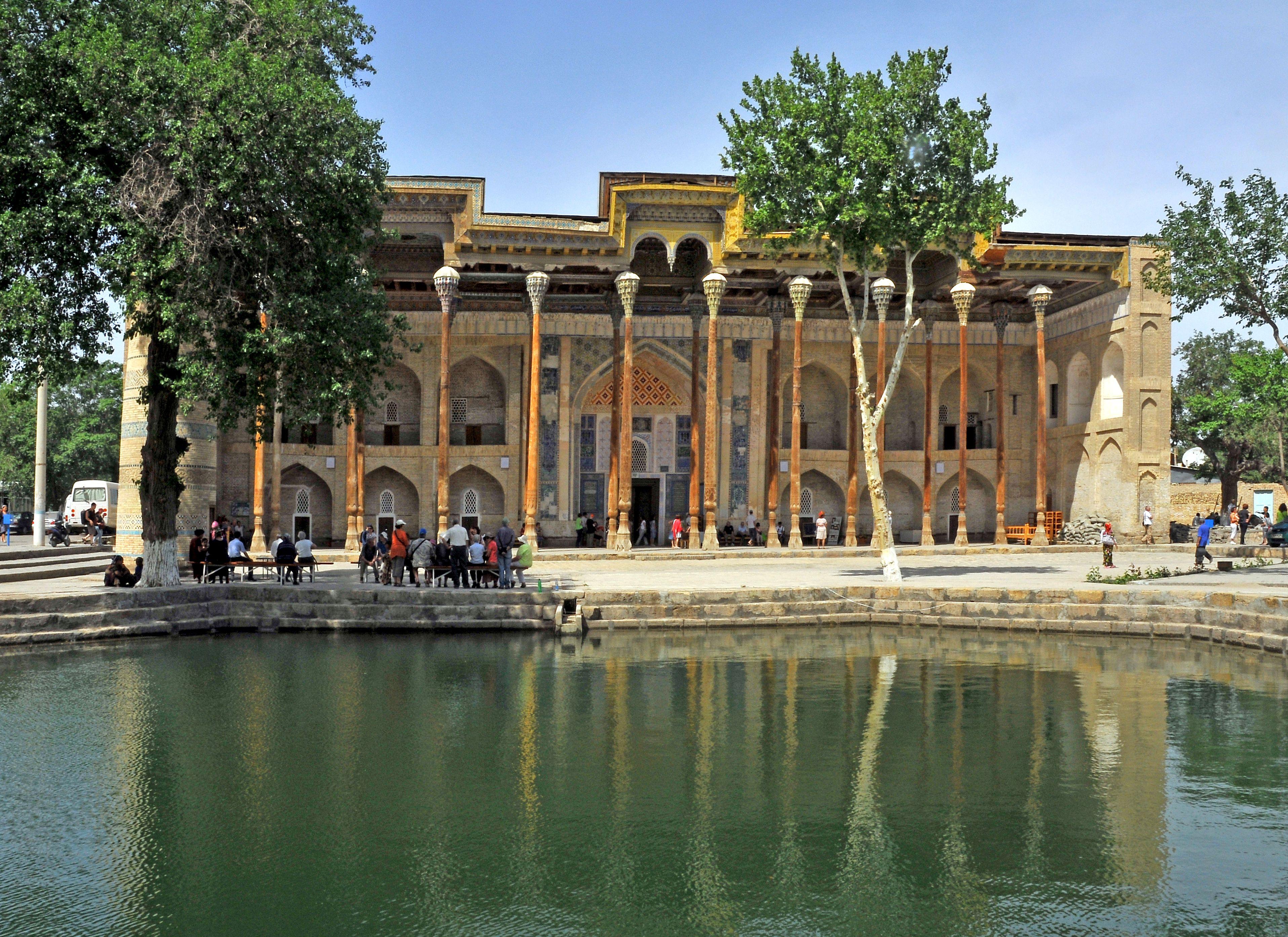
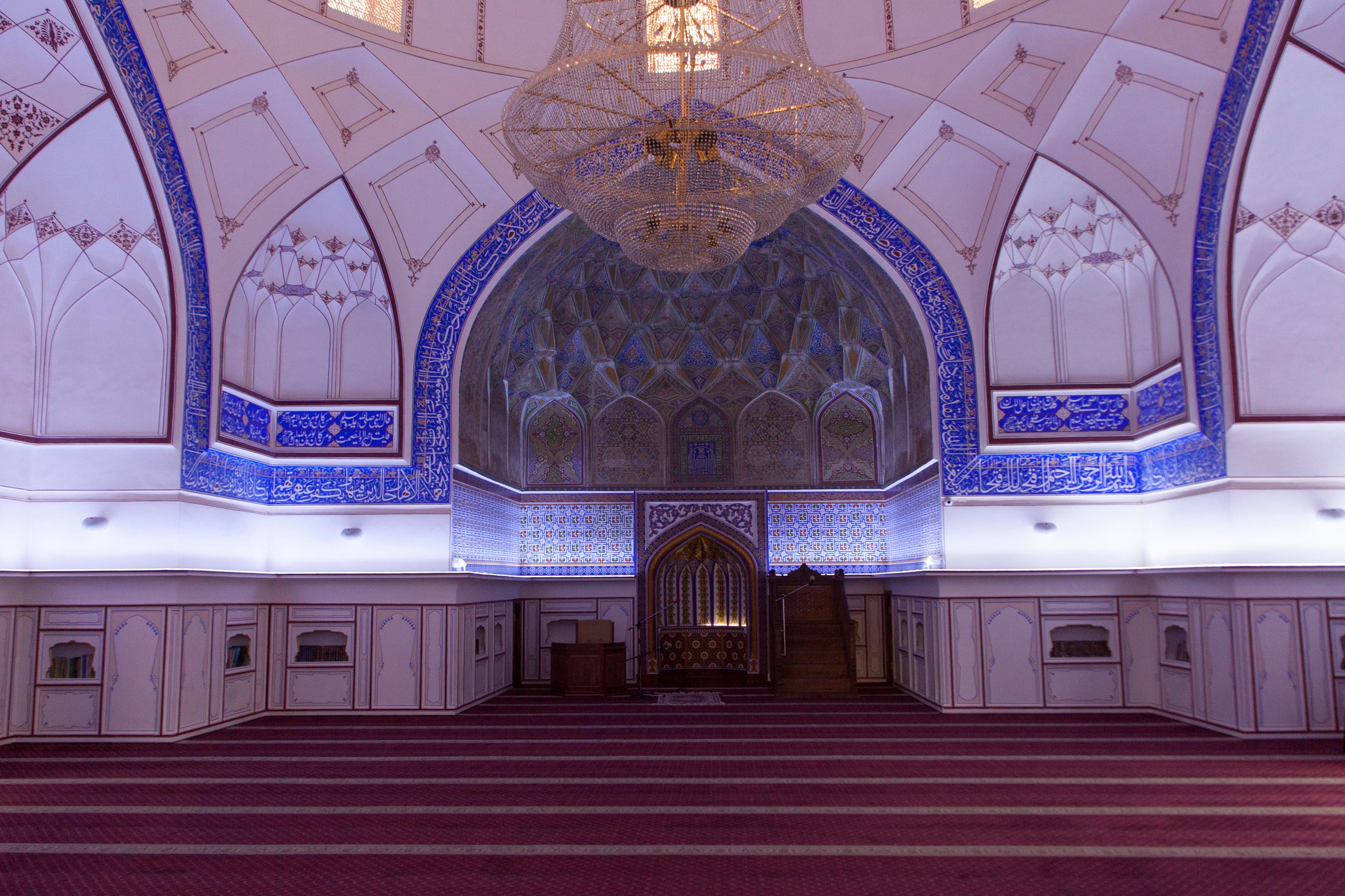
- The Kalyan Mosque in Bukhara, Bolo Hauz and the Bahouddin Naqshband complex outside the city
- Mausoleums such as Pakhlavan Makhmud in Khiva and Imam al-Bukhari near Samarkand, where people come to pray
Women:
- Cover shoulders, upper arms and knees; long sleeves and an ankle-length skirt or loose trousers are best
- Carry a headscarf. It is usually requested in active mosques and at shrines; at museum-mausoleums it is appreciated but not always required
- Avoid tight or sheer clothing
- Some sites lend scarves or wraps at the entrance, but do not count on it
Men:
- Long trousers, not shorts
- Shirts with sleeves; no vests or sleeveless tops
- Remove hats inside prayer halls unless locals around you keep a skullcap on
For everyone:
- Take off your shoes before stepping on carpets in prayer halls; slip-on shoes make this easy
- Non-Muslims are welcome in most courtyards, but some prayer halls may be closed to visitors during prayer times, especially at Friday midday prayers
- Speak quietly, do not walk in front of people praying, and ask before photographing worshippers
During Ramadan, life continues much as usual for visitors, but it is courteous not to eat, drink or smoke conspicuously near mosques during the day.
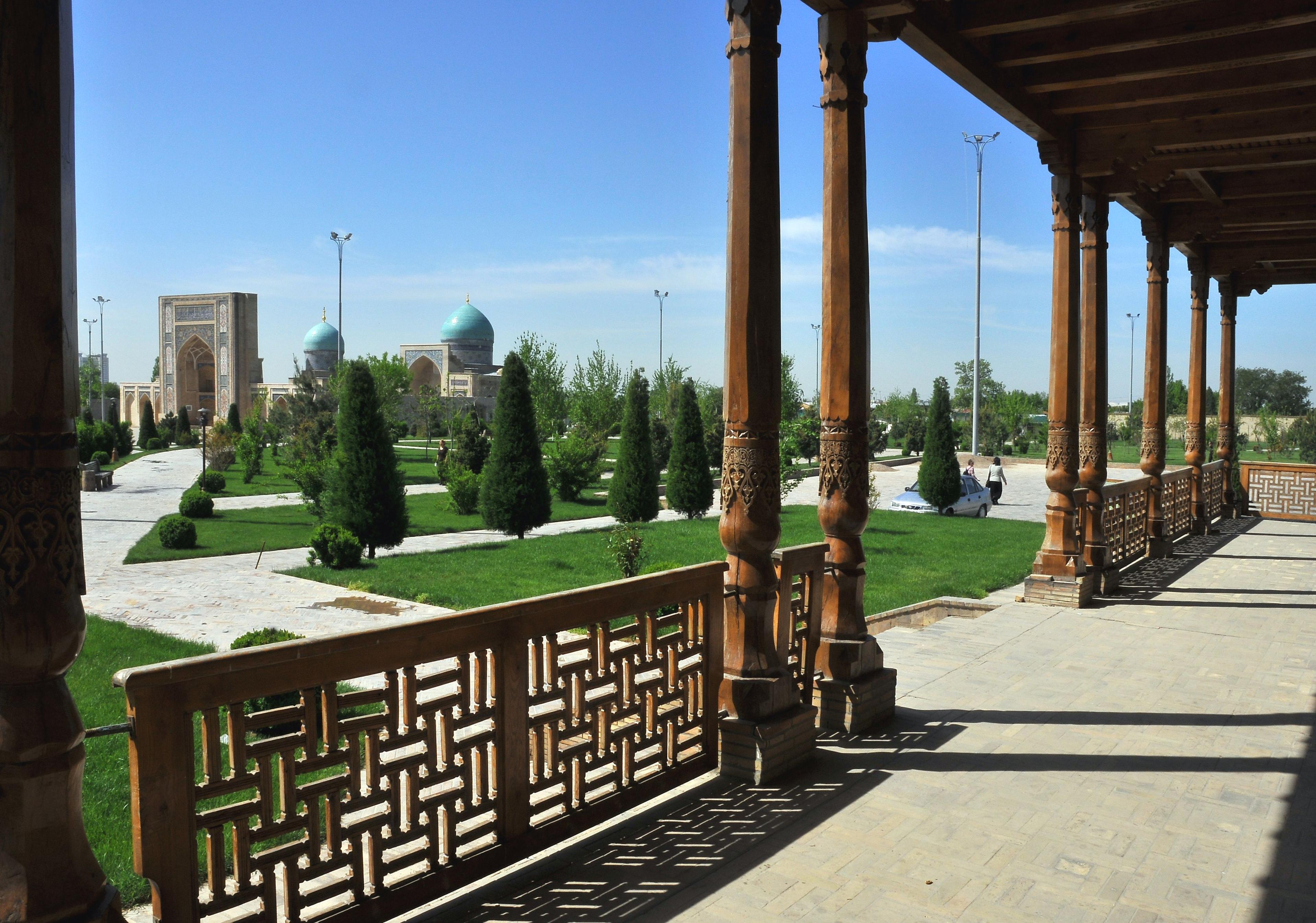
What to pack for each season
Uzbekistan's climate is sharply continental. Typical daytime highs and night-time lows for Samarkand and Bukhara are around 21 to 24°C and 10°C in April, 35 to 37°C and 20 to 22°C in July, 22°C and 8°C in October and 7 to 9°C and around freezing in January. Khiva is colder in winter. Our weather by month guide has the full figures.
Spring (March to May):
- T-shirts and long-sleeved shirts for layering
- A light fleece or sweater for cool evenings
- A light waterproof jacket, especially in March and April when Tashkent and Samarkand see showers
- Long trousers or a midi skirt
Summer (June to August):
- Loose, breathable cotton or linen that covers shoulders and knees; it is cooler than exposed skin in the desert sun
- A wide-brimmed hat, high-factor sunscreen and lip balm
- Electrolyte sachets for the heat
- A light layer for air-conditioned trains and mountain evenings
- Sandals for evenings; closed shoes for long walks
Autumn (September to November):
- Summer clothes for September, layers for October
- A warm jacket for November evenings, which can be close to freezing in Khiva
- A light rain jacket for November
Winter (December to February):
- A warm insulated jacket, hat, scarf and gloves
- Thermal base layers; many madrasahs and museums are unheated, so you will feel the cold indoors
- Waterproof, warm shoes with a good grip for icy paving
- Lip balm and moisturiser for the dry cold air
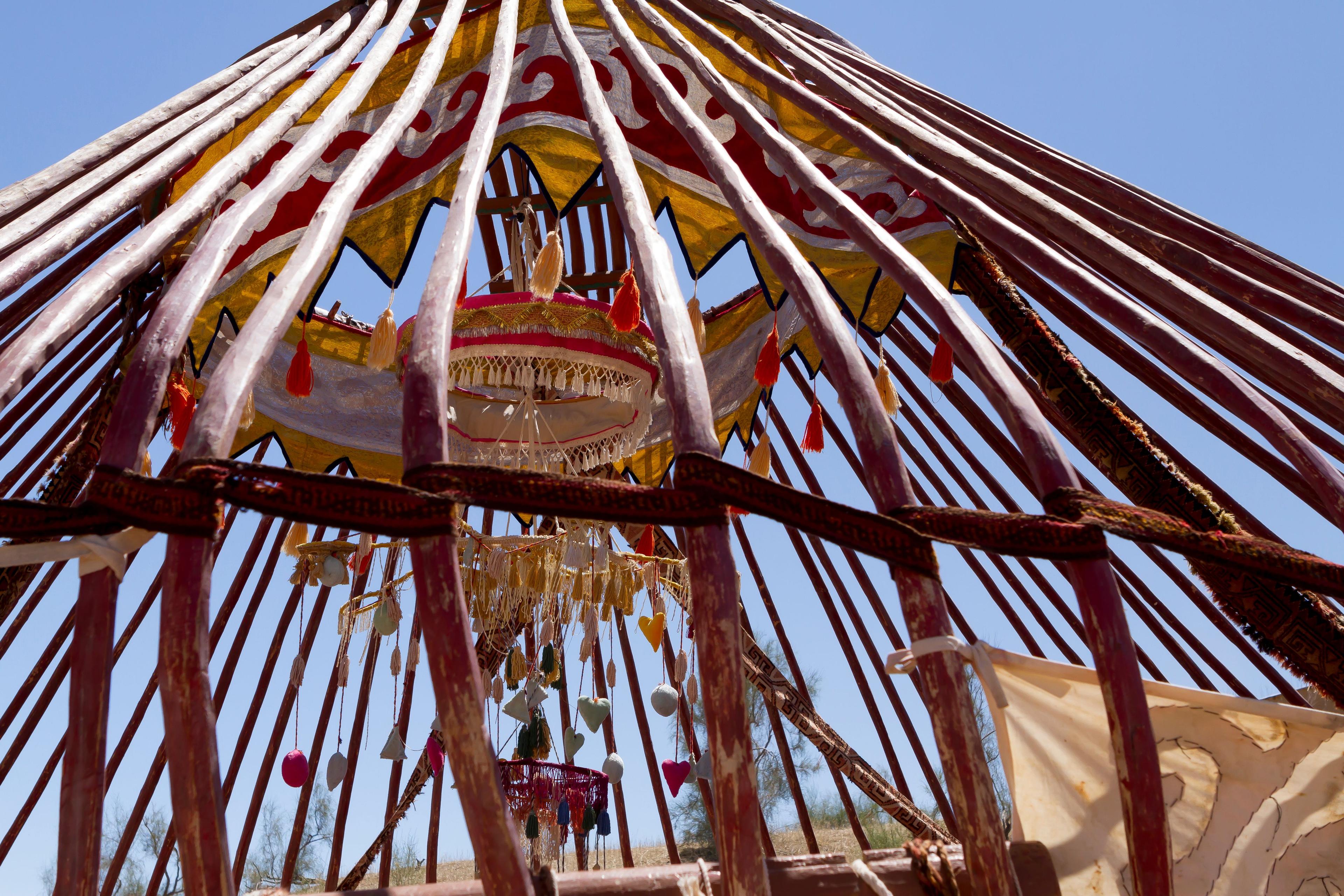
In the desert, at a yurt camp or on the Aral Sea trip, nights are much cooler than days even in summer, so bring a fleece.
Shoes: what really works
You will walk more than you expect. A typical sightseeing day in Samarkand or Bukhara is 10 to 15 km on stone paving, uneven cobbles, steep madrasah steps and dusty lanes. The best choices:
- Broken-in trainers or walking shoes with good cushioning for most days
- Slip-on shoes or sandals with a back strap for days with many mosques, since you may take them off several times
- Light hiking shoes if you plan the Chimgan mountains, the Nuratau hills, the Fergana Valley countryside or Shakhrisabz in winter
- Warm, waterproof boots in winter
High heels are a struggle on old-town cobbles, and brand-new shoes are the main cause of blisters on our tours. Climbing a minaret, such as Islam Khoja in Khiva, means narrow, dark, uneven stairs, so wear something with grip.
Plugs, power and staying connected
Uzbekistan uses European-style sockets, type C and type F, at 220 volts and 50 hertz. If your devices have two round pins, they will fit. Travellers from the UK, Ireland, North America, Australia, China and Japan need an adapter. Most phone, camera and laptop chargers accept 100 to 240 volts, so you need only an adapter, not a converter; check the label on hair dryers and other appliances.
A few practical points:
- Bring a small power strip or multi-port USB charger; older hotel rooms and guesthouses often have few sockets
- A power bank is useful on long sightseeing days and train journeys
- Local SIM cards are cheap and sold at operator shops with your passport; travel eSIMs work on local networks
- Download offline maps and install the Yandex Go taxi app before you arrive
Our guide to getting around Uzbekistan's cities explains Yandex Go and the metro.
Medicines: what to bring and what not to bring
This is the section to read carefully. Uzbekistan controls many medicines that are sold over the counter elsewhere, and travellers have had problems at the border with common painkillers.
The rules. Uzbekistan's lists of prohibited and restricted substances are set by Cabinet of Ministers Resolution No. 330 of 12 November 2015. The restricted lists include codeine, morphine and fentanyl, many benzodiazepines such as diazepam and alprazolam, and pseudoephedrine, the decongestant found in some cold remedies. The UK Foreign Office specifically warns that some medicines sold without prescription in the UK, including codeine, cause problems on entry, and that undeclared medicines can lead to civil or criminal proceedings.
What this means in practice:
- Do not bring codeine-based painkillers, cold and flu tablets containing codeine or pseudoephedrine, or sleeping pills unless you really need them. Ask your doctor for an alternative that is not on the lists; paracetamol and ibuprofen are fine.
- If you must bring a restricted medicine, carry only the amount you need for your stay, in its original packaging, with the prescription and a doctor's letter, ideally translated into English or Russian, describing your condition and dose.
- Declare it on the customs declaration form on arrival.
- For ordinary medicines that are not restricted, the official tourism portal says you can bring up to 10 different medicines, no more than five packs of each, without a document from a medical institution, kept in the manufacturer's packaging.
- Rules are applied more strictly at land borders than at airports.
Check the latest lists before you travel via the State Customs Committee website (in Uzbek and Russian) or your nearest Uzbek embassy. Travel guides also report problems with tramadol, other strong opioid painkillers and ADHD stimulants, so treat them with particular care.
A sensible travel medical kit:
- Your regular prescription medicines
- Paracetamol or ibuprofen
- Oral rehydration salts and an anti-diarrhoea remedy; a change of diet and the heat upset many stomachs
- Antihistamines, especially in spring
- Plasters and blister pads
- Sunscreen and after-sun
- Insect repellent for summer evenings and the Fergana Valley
Pharmacies (dorixona) are common in every city and sell most everyday medicines, often under different brand names.
What else not to bring: drones, vapes and more
- Drones. Private individuals have not been allowed to import drones without special permission since 2015. Since mid-2024, a first offence usually means a fine of up to 20 times the base calculation amount and confiscation of the drone rather than prosecution, but it is still an offence. A 2026 plan to liberalise drone use applies to licensed companies, not tourists. Leave your drone at home unless your operator has arranged a permit.
- E-cigarettes and vapes. A law signed in November 2025 bans the import and circulation of e-cigarettes and their liquids. The Health Ministry has said they will be confiscated from foreigners at the border. Heated tobacco devices were not included at the time.
- Drugs. Possession of any illegal drug, including cannabis products that are legal elsewhere, can lead to a long prison sentence.
- Large amounts of cash without declaration. Foreign currency above the equivalent of US$10,000 must be declared on arrival according to UK government advice, and you cannot leave with more foreign currency than you brought in. Our money guide has the detail.
- Religious literature in quantity, or material that could be seen as extremist, is restricted; personal religious items for your own use are fine.
As for buying things to take home, antiques and old carpets or suzani may need an export certificate; reputable sellers arrange this.
Cash, cards and photography in brief
Money. Bring a Visa or Mastercard and some US dollars or euros in clean, undamaged notes for exchange. Cards work in most mid-range hotels and restaurants in the main cities, but bazaars, chaikhanas, small guesthouses and tips are cash only, in som. ATMs are plentiful in Tashkent, Samarkand and Bukhara. Our money in Uzbekistan guide covers ATMs, exchange and tipping.
Photography. Photography is welcome at almost all monuments, bazaars and streets, and since 2018 it has been allowed in the Tashkent metro. Be careful around government buildings, police, military sites, airports, bridges and border posts, where the authorities can be sensitive. Ask before photographing people, especially women and worshippers; most will say yes with a smile, and some will ask you to send them the picture. A few museums charge for photography or ban flash. A lens cloth is useful, as summer dust gets everywhere.
Travel with TourEast
When you travel with us, your guide will tell you before each visit what the site expects. For private and small-group tours or a custom itinerary, our team in Tashkent and Bukhara is happy to answer any packing question before you fly.