The Seven Pirs of Bukhara are the masters of the Khwajagan, buried in villages around the city. Who each saint was, where the shrines are, how long the route takes, and how to visit with respect.
Facts, prices and schedules checked on November 4, 2026
The Seven Pirs of Bukhara, Yetti Pir in Uzbek, are seven Sufi masters whose graves lie in the villages and small towns around the city. Together they form a chain of teachers, the Khwajagan, that runs from Khoja Abdulkhaliq Gijduvani in the 12th century to Bahauddin Naqshband in the 14th, the master whose name was given to the Naqshbandi path. Visiting all seven in order is one of the oldest pilgrimages in Central Asia, and for many visitors from Turkey, Pakistan, India, Malaysia and Indonesia it is the reason they come to Bukhara.
Our general guide to ziyarat in Uzbekistan covers all the holy sites of the country. This article goes deeper into the Seven Pirs alone: who each master was, where each shrine is, how long the route takes by car, and how to behave at the graves.
Who were the Seven Pirs of Bukhara?
Pir means a spiritual guide, and the seven pirs of Bukhara are the masters of the Khwajagan, literally "the masters", a line of teachers in Mawarannahr who passed their teaching from one generation to the next. Each master trained the next, so the shrines are visited in the order of the chain, from teacher to student.
The chain begins with Abdulkhaliq Gijduvani, a successor of the great Sufi teacher Yusuf Hamadani, and ends with Bahauddin Naqshband (1318 to 1389). After Bahauddin, the path became known as the Naqshbandiyya and spread from Bukhara to India, the Ottoman lands, the Caucasus and the Malay world. That is why so many Muslims far from Central Asia feel a personal link to these villages.
Several of the masters were craftsmen: a carpenter, a weaver, a potter. Their teaching was meant to be lived in the middle of ordinary work, summed up in the saying associated with the Naqshbandi path, "the hand at work, the heart with God". Local guides like to point this out at each grave, and it gives the route a human scale that the great monuments of the old city do not have.
The Seven Pirs are not seven separate cults. They are one story, told across seven places, and the order matters to those who make the pilgrimage.
The first four: Gijduvani, Revgari, Fagnavi and Romitani
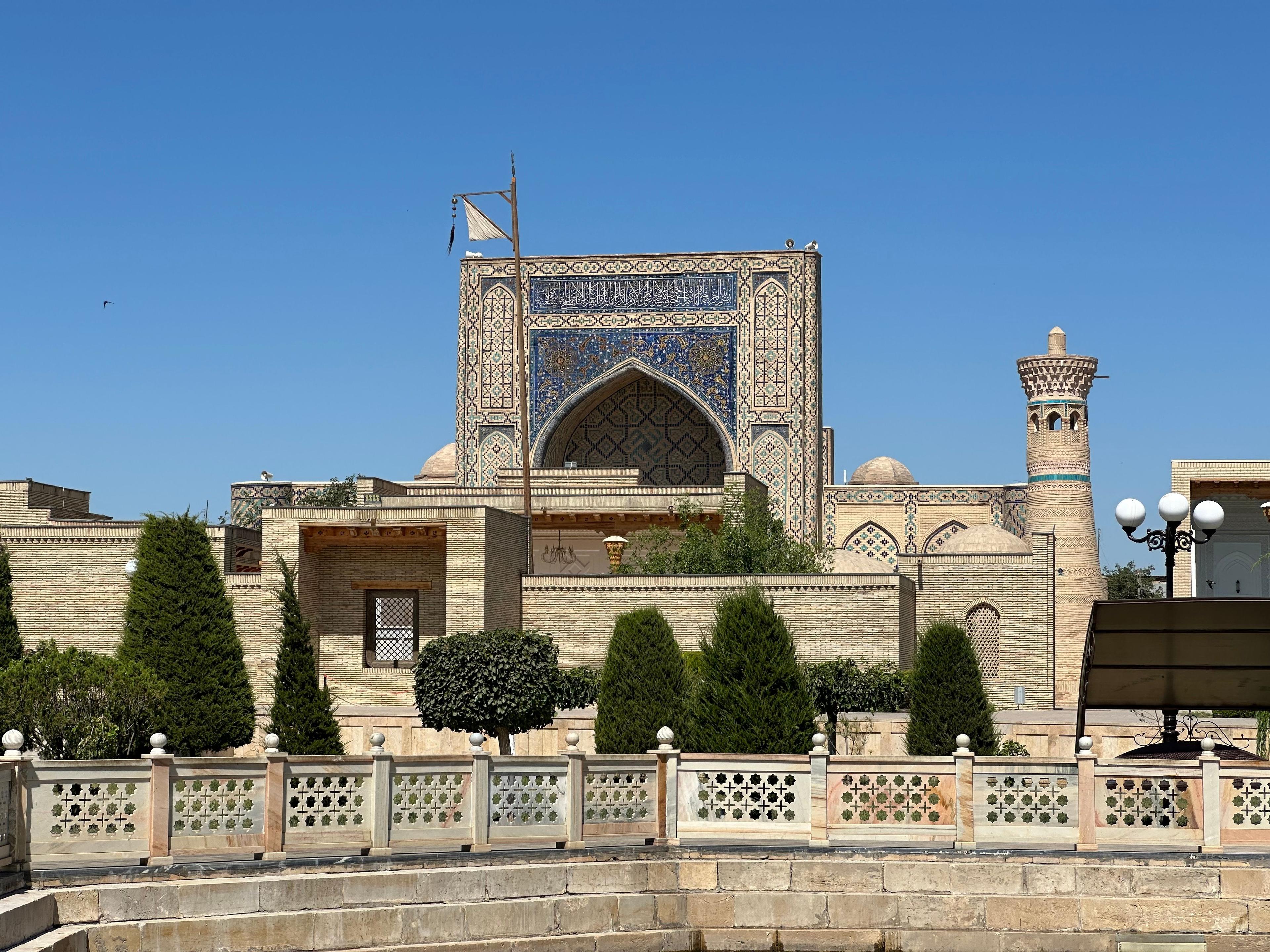
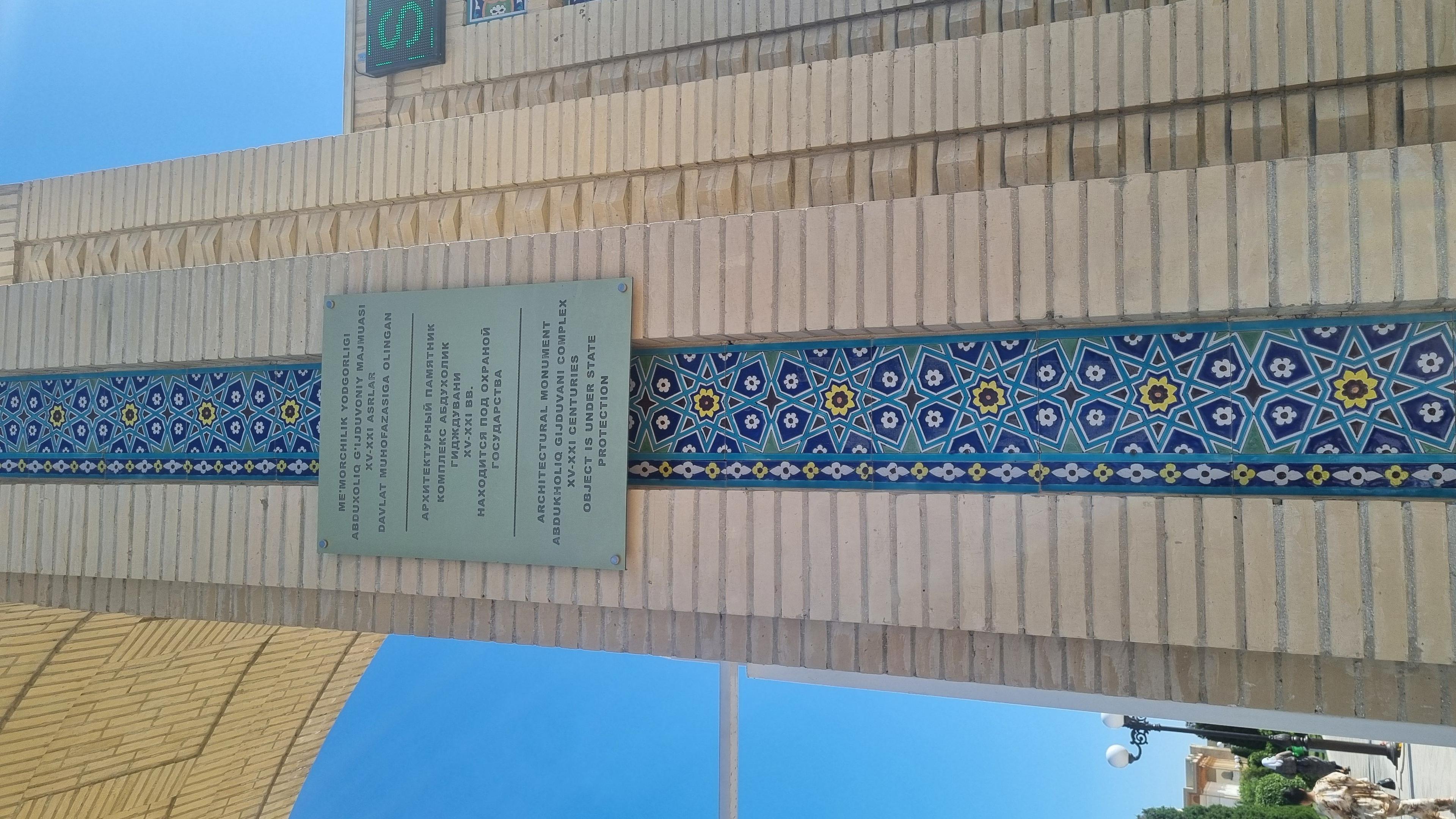
- Khoja Abdulkhaliq Gijduvani is buried in the town of Gijduvan, about 40 to 50 km north-east of Bukhara and roughly 50 minutes by car. He is credited with the first eight of the eleven principles of the Naqshbandi path, among them awareness of each breath and the silent remembrance of God. His grave lies in a garden beside a madrasah built by Ulugbek in 1432 and 1433, with a mosque and a pool; the dome over the grave was added in 2003. Almost everyone starts the route here.
- Khoja Muhammad Arif Revgari, a disciple of Gijduvani, was born in the village of Revgar in the 12th century. Tradition says he lived to a very great age. His shrine is in Shofirkon district, a short drive from Gijduvan.
- Khoja Mahmud Anjir Fagnavi was a carpenter before he became a master, and he is remembered as the first in the chain to practise the remembrance of God aloud. He is buried in his home village of Anjirbog, near Vobkent.
- Khoja Ali Romitani, called Khoja Azizon, the "dear master", was a weaver from Romitan. Local tradition credits him with bringing Mongol nobles to Islam and with helping the region recover after the Mongol invasion. His shrine stands in Romitan district.
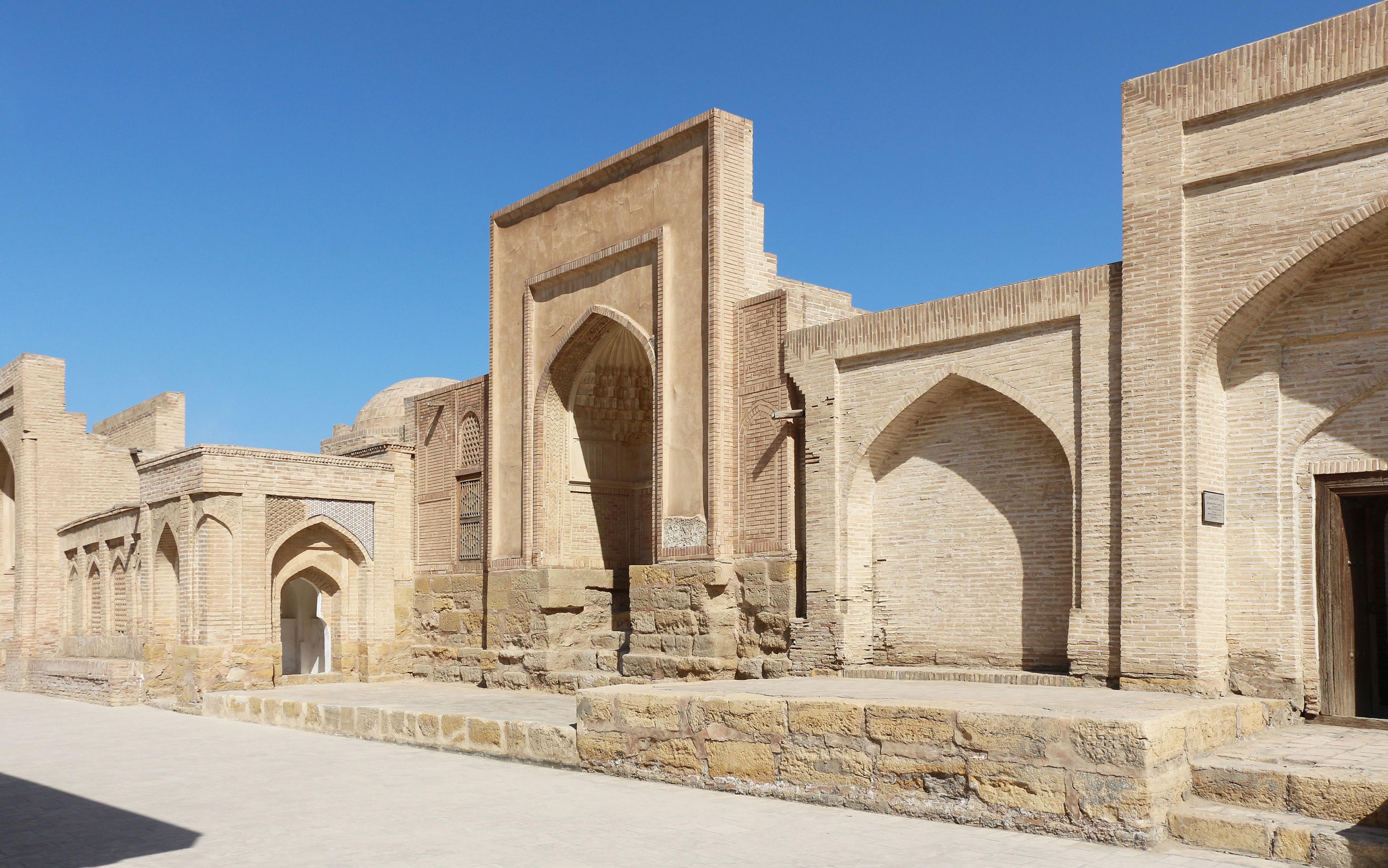
The four shrines are modest compared with the madrasahs of Bukhara: a grave enclosure, a small mosque or prayer room, a courtyard, often a well or a pool and old trees. Each has a caretaker, and local families come throughout the day.
The last three: Baba Samasi, Amir Kulol and Bahauddin Naqshband
- Khoja Muhammad Baba Samasi followed Ali Romitani and became the first teacher of Bahauddin Naqshband. Tradition says that he foretold Bahauddin's birth and adopted him as a spiritual son while he was still an infant. He died in 1354 and is buried in the village of Samos (Sammos) in Romitan district, where his shrine has a mausoleum, a mosque, a well and a garden.
- Sayyid Amir Kulol was a potter, kulol in Uzbek, and is remembered for his strength as well as his learning. He was Bahauddin's second teacher and taught him the practice of remembrance. He died in 1370 and is buried in his native village of Sukhor, east of Bukhara. A dress-code board stands at the entrance of the complex.
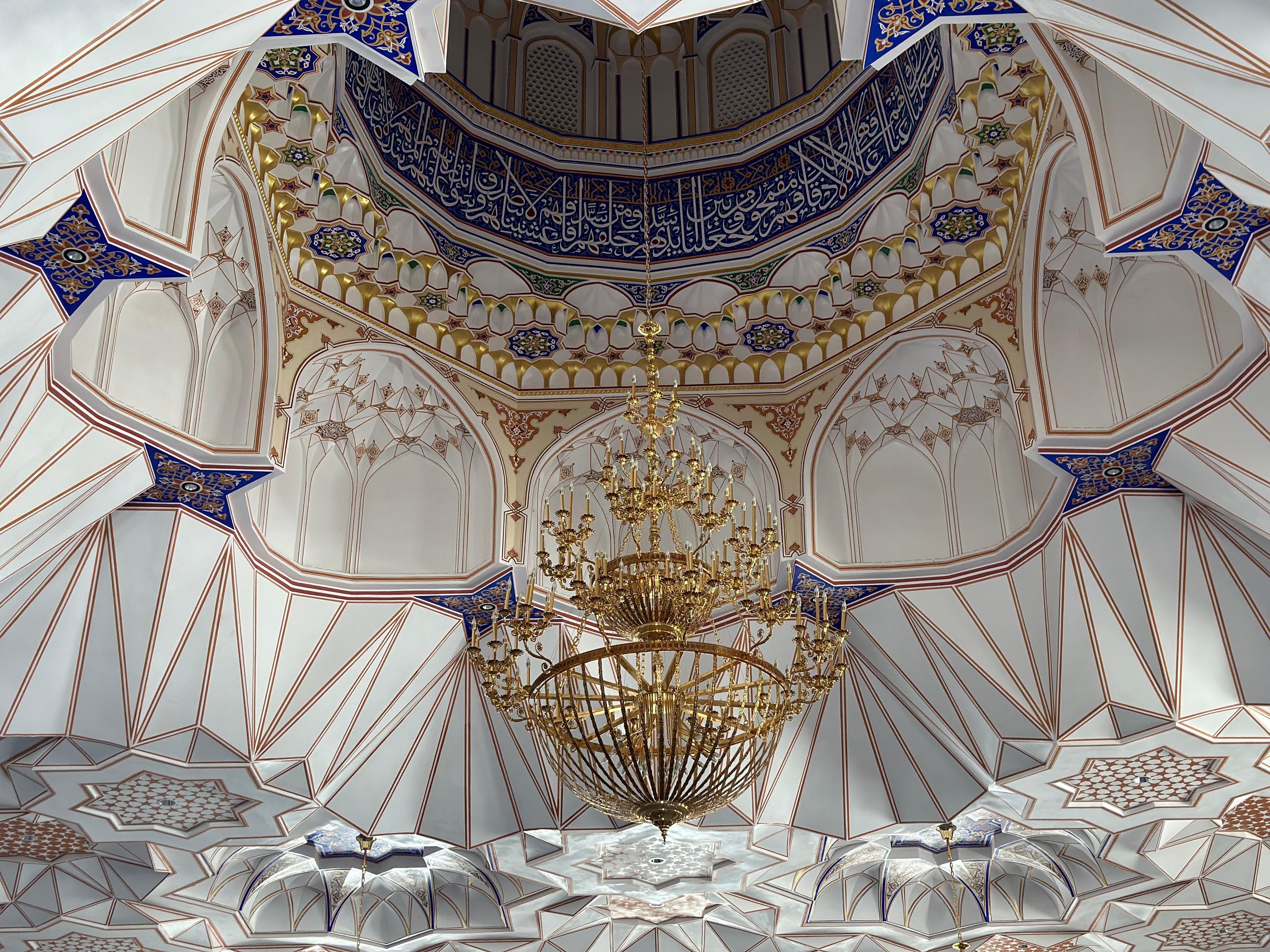
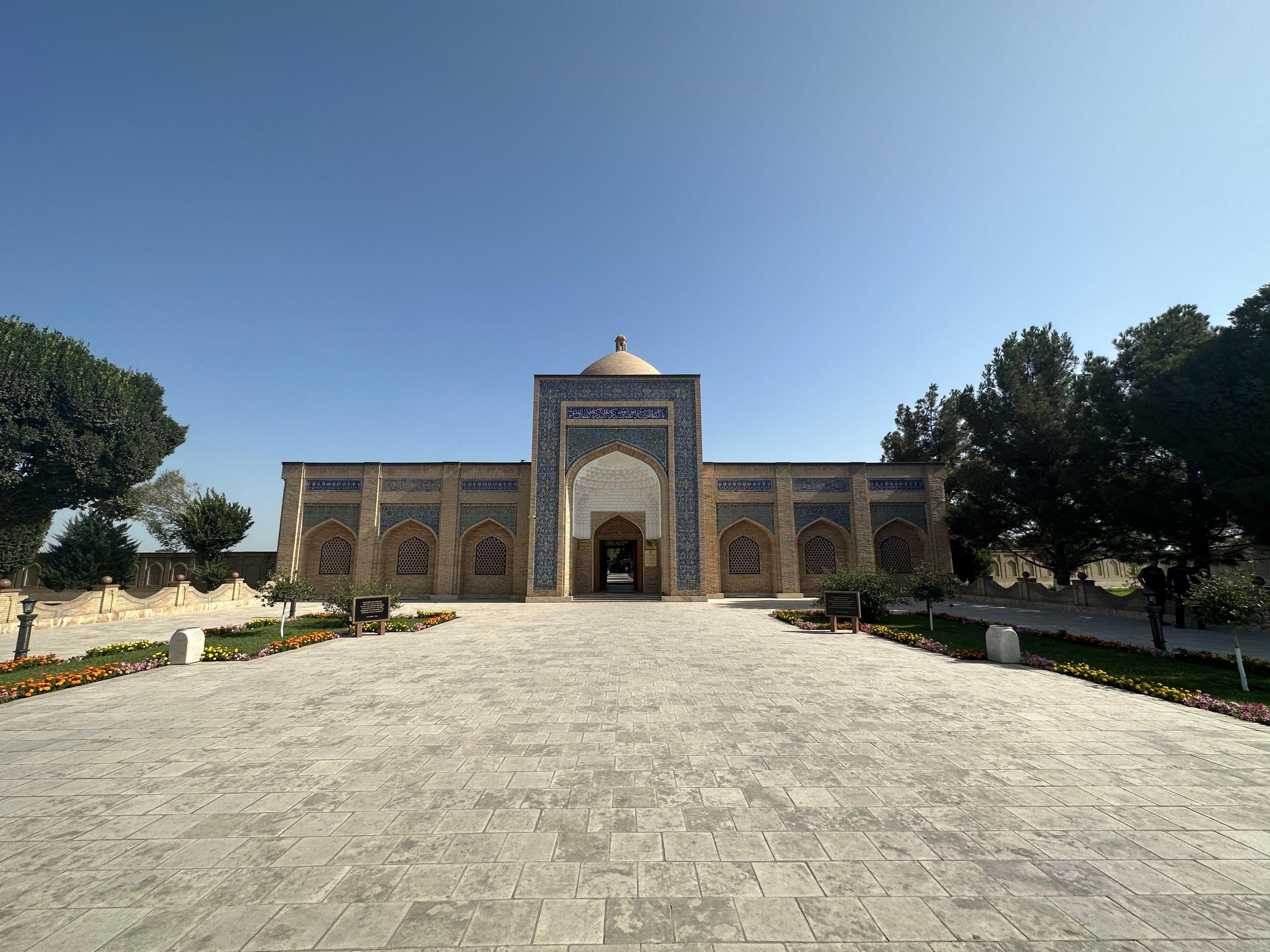
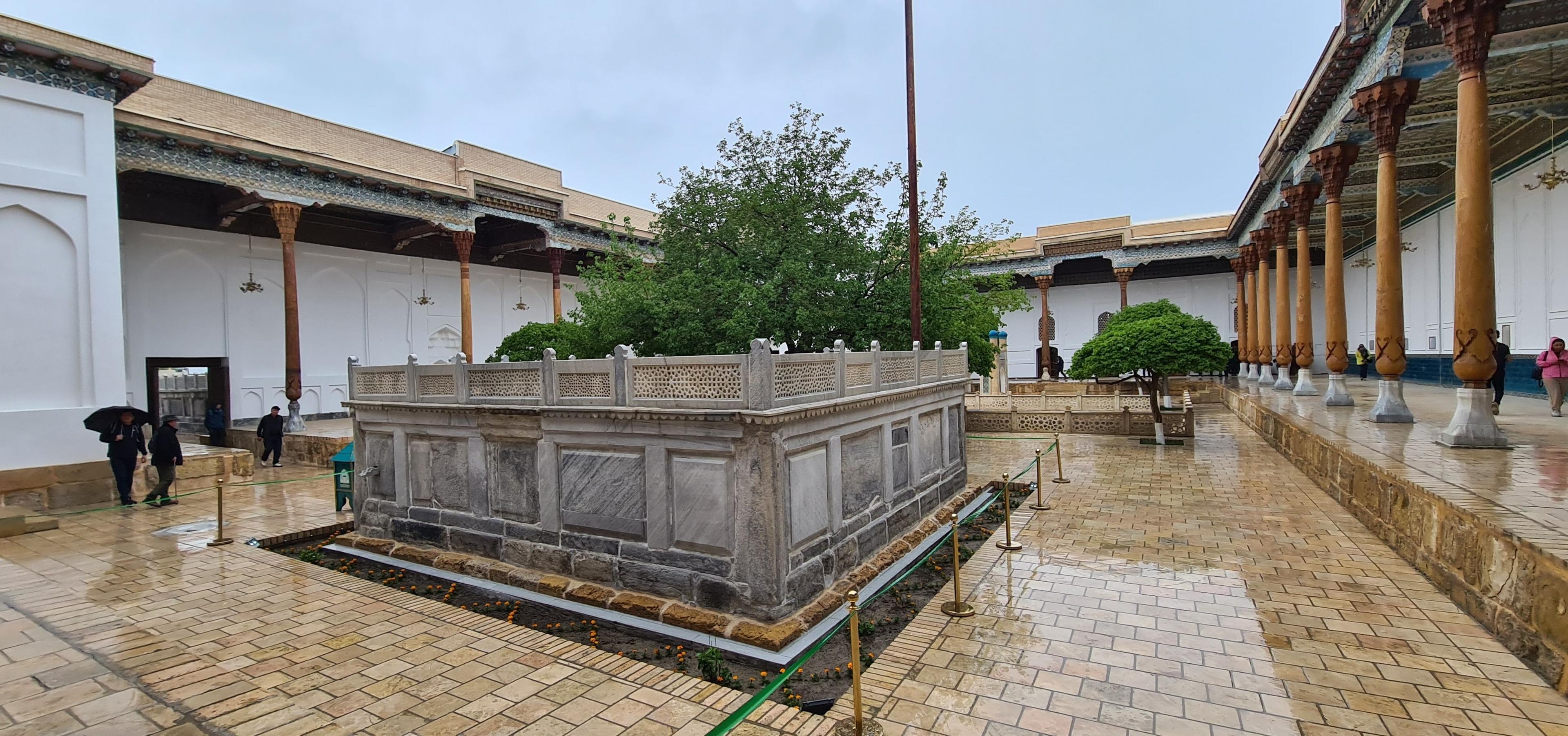
- Bahauddin Naqshband is the seventh and last. His memorial complex at Kasri Orifon, 10 to 12 km north-east of the old town, is by far the largest of the seven: the open grave enclosure, a 16th-century khanqah, mosques, a small minaret of 1885, a museum and the grave of his mother nearby. Closed to pilgrims in the Soviet period, it was restored from 1993 and is now part of the UNESCO World Heritage listing "Silk Roads: Zarafshan-Karakum Corridor".
The order of the last three is not just geography: Samasi taught Bahauddin first, Amir Kulol second, and the route ends where the chain ends.
How long does the Seven Pirs route take?
The shrines are spread over several districts north and east of Bukhara, between 10 and 60 km from the city, on village roads. Doing all seven in one day takes about ten hours with a car and driver. A realistic timing, starting at 07:30:
- Bukhara to Gijduvan: about 50 minutes.
- Gijduvan to Shofirkon (Revgari): about 20 minutes.
- Shofirkon to Anjirbog (Fagnavi): about 30 minutes.
- Anjirbog to Romitan (Romitani): about 35 minutes.
- Romitan to Samos (Baba Samasi): about 10 to 15 minutes.
- Samos to Sukhor (Amir Kulol): about 45 minutes.
- Sukhor to Kasri Orifon (Bahauddin Naqshband): about 30 minutes.
- Kasri Orifon back to Bukhara: about 25 minutes.
That is around four hours of driving in legs that never exceed an hour. Add about half an hour at each smaller shrine, 45 minutes at Gijduvan, an hour or more at Bahauddin Naqshband, and an hour for Dhuhr and lunch, and you are back in Bukhara at about 17:30.
These are our estimates for a car on the usual route; traffic, roadworks and the time you spend in prayer change them. Signs in the villages are mostly in Uzbek, and some shrines sit down narrow lanes, so this is not a route for a taxi driver who does not know it.
Seven Pirs in one day or two?
One day suits pilgrims with limited time and travellers used to long days. It keeps the chain unbroken, which some prefer for spiritual reasons, and it ends at Bahauddin Naqshband in the late afternoon light.
Two days suit families, older travellers and anyone who wants to read the Qur'an or sit quietly at each grave. The natural split is:
- Day one: Gijduvani, Revgari, Fagnavi, Romitani and Baba Samasi, the western arc of the route, back in Bukhara by late afternoon.
- Day two: Amir Kulol and Bahauddin Naqshband, both close to the city, combined with the necropolis of Chor-Bakr or an afternoon in the old town.
If one of your days is a Friday, plan the route so that the men can pray Jumu'ah at a Friday mosque on the way, for example at the Bahauddin Naqshband complex or in Bukhara at the Kalyan Mosque, and do the remaining shrines in the afternoon.
Many visitors also combine the Seven Pirs with Samarkand and Tashkent. The Imam al-Bukhari complex near Samarkand, rebuilt and reopened in March 2026, is the obvious companion. Our guide to planning a ziyarat tour in Uzbekistan sets out full routes of four to ten days.

What to wear at the Seven Pirs
These are living places of prayer, visited every day by local families, and a few rules of dress are expected at all seven:
- Women: loose clothing covering arms and legs, and a headscarf. Long skirts or wide trousers are both fine. A scarf can sometimes be borrowed at the entrance, but bring your own.
- Men: long trousers and shirts with sleeves. Shorts and sleeveless tops are not appropriate at any of the shrines.
- Shoes: you will take them off for prayer halls and some tomb chambers, and put them on and off many times in a day. Slip-on shoes save time.
- In winter, warm socks help: the floors of the smaller shrines are stone and unheated.
There is no separate dress code for foreigners. If you are dressed as you would be for your own mosque, you will be welcome everywhere on the route.
Seven Pirs etiquette: how to behave at the shrines
Each shrine has its own rhythm, but the same courtesies apply:
- Greet the caretaker. Most speak Uzbek and Russian, often some Arabic; your guide will translate.
- At the grave, pilgrims usually recite al-Fatiha and make du'a quietly. Many also read a few verses of the Qur'an, and caretakers sometimes lead a short recitation for a group.
- You will see local customs that may differ from those at home: touching the grave enclosure, walking around a sacred tree, tying a piece of cloth, drinking from a well. Some visitors follow these customs and many do not. Nobody expects a foreign visitor to take part, and nobody will comment if you simply pray and leave.
- Keep your voice low, and do not walk in front of people at prayer.
- Photography is fine in courtyards and of buildings. Do not photograph people at prayer, and ask before filming inside a tomb chamber or a mosque.
- Donation boxes stand at most shrines and support their upkeep. Giving is welcome and never required; small notes in Uzbek som are the norm, so carry some cash.
Bahauddin Naqshband can be busy on Fridays, on religious holidays and during the Naqshbandi festival in September, while the village shrines are often quiet. Plan more time at the large complex on those days.
Prayer on the Seven Pirs route
Finding a place to pray is easy: most shrines have a mosque or a prayer room, with a place for wudu nearby. Dhuhr fits naturally at Romitan or Samos around lunch, and Asr at a shrine mosque later in the afternoon, depending on the season.
Prayer times in Uzbekistan follow the Hanafi method published by the Muslim Board of Uzbekistan, so Asr comes later than in the Shafi'i timetables used in Malaysia and Indonesia. Many travellers keep the method used at home; the guide plans stops either way.
Women's spaces vary. The Bahauddin Naqshband complex has room for women, and women are welcome at all the graves and courtyards, but some of the small village mosques have no separate section. Your guide or the caretaker will show you where to pray. Our guide to halal travel in Uzbekistan covers prayer rooms, mosques and Friday prayer across the country in more detail.
Best time to visit the Seven Pirs
Spring (late March to May) and autumn (September to early November) are the most comfortable seasons, with daytime temperatures of roughly 18 to 30°C. The route is open all year, though:
- Summer (June to August) is very hot in Bukhara region, often 38 to 42°C in the afternoon. The shrines have trees and shade, but courtyards and car parks are exposed. Start at 06:30, or split the route over two mornings.
- Winter (December to February) is cold and often grey, with frosty mornings, but the shrines are quiet and the light is soft.
- In September, Bukhara hosts the international Naqshbandi tourism festival; in 2026 it ran from 17 to 23 September, and an official "Yetti Pir" route was organised for its guests. Expect more visitors at Bahauddin Naqshband that week.
- Ramadan 2027 is expected to begin around 8 February 2027, depending on the moon sighting. The shrines stay open, and a fasting day is easier with the two-day version of the route.
Beyond the Seven Pirs: other holy places around Bukhara
If you have more time in Bukhara, a few other places complete a ziyarat:
- Chor-Bakr, about 6 km west of the city: the necropolis of the Juybari sheikhs, a family of sayyids and Naqshbandi masters, with courtyards of family tombs, a mosque and a khanqah.
- The Bolo Hauz Mosque, with its tall wooden columns, and the Kalyan Mosque beside the Kalyan Minaret, Bukhara's main Friday mosque. Both are working mosques.
- Chashma-Ayub, a spring that local tradition links to the Prophet Ayub, next to the 10th-century Samanid Mausoleum.
- Gijduvan's family pottery workshops, a short stop on the first leg of the route.
The Bahauddin Naqshband complex and the main holy sites of Samarkand and Tashkent are described in our guide to ziyarat in Uzbekistan.
Visiting the Seven Pirs with TourEast
Our team is based in Bukhara as well as Tashkent, and we run a dedicated Seven Pirs ziyarat: a private day tour that follows all seven shrines in order with prayer stops and a halal lunch, and a three-day Seven Pirs programme for those who prefer a slower pace. Both are led by guides who know the history of each master; guides in Indonesian, Malay or Arabic are available on request. Tell us your dates and group size, and we will plan the route around your prayers.