A day-by-day 14-day Uzbekistan and Kyrgyzstan itinerary: Tashkent, Samarkand, Bukhara and the Fergana Valley, the Dostuk crossing to Osh, Bishkek, a yurt night at Song-Kul and Issyk-Kul. Which direction to run it, altitude pacing, visas and the Bishkek to Tashkent return.
Facts, prices and schedules checked on November 4, 2026
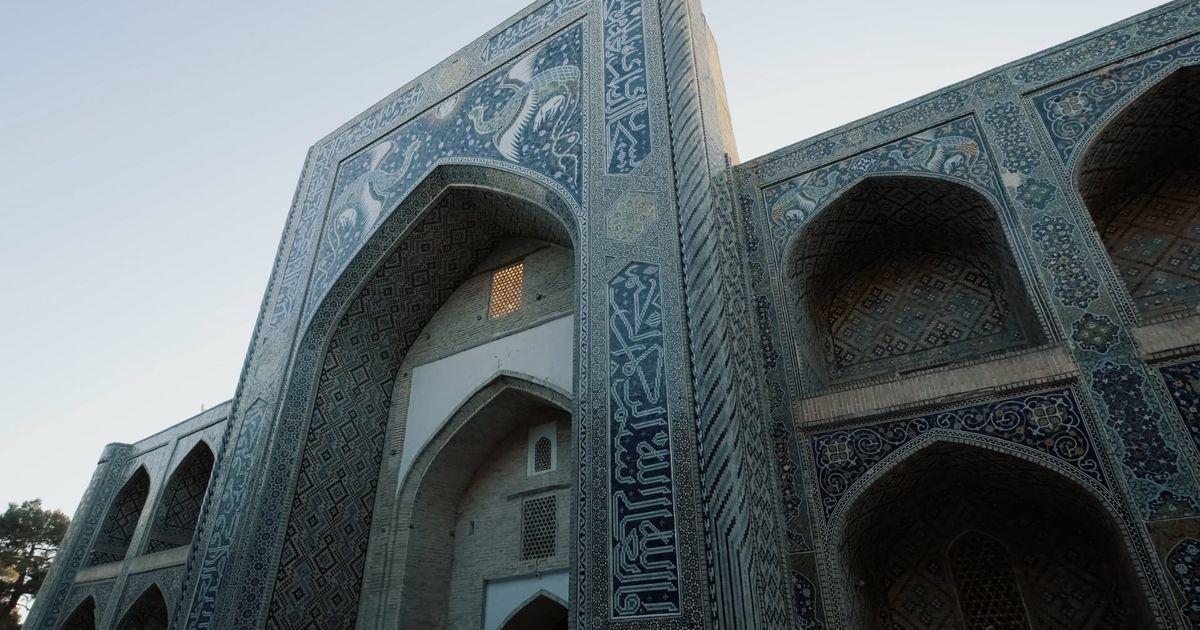
Uzbekistan and Kyrgyzstan are the two-country combination that makes the most sense in Central Asia. One has the Silk Road cities, the other has the mountains, and they share a land border in the Fergana Valley that foreign travellers can walk across in an hour. Put them together over two weeks and you get the Registan and Po-i-Kalyan in the first week and a yurt on the shore of Song-Kul, 3,016 metres up, in the second.
This is our day-by-day plan for an Uzbekistan and Kyrgyzstan itinerary of 14 days, as of November 2026: the route, the trains and flights that connect it, the Dostuk crossing between Andijan and Osh, how to pace the altitude, which direction to run it and what we arrange on the Uzbek side. TourEast is an Uzbekistan operator. We do not run tours inside Kyrgyzstan, but we plan the Uzbek half, take you to the border and can advise on the Kyrgyz half, where travellers usually book with a local company or a community tourism office.
Why this two-stans itinerary works
Most two-country trips suffer from backtracking. This one is a loop with one overland crossing and one short flight, and it never repeats a road.
- Week one is urban and historical: Tashkent, Samarkand, Bukhara and the craft towns of the Fergana Valley, linked by high-speed train and one mountain road.
- The Dostuk border puts you in Osh, Kyrgyzstan's southern city, an hour after leaving Andijan.
- A 45 to 55 minute flight from Osh to Bishkek skips the 12-hour mountain drive and lands you at the start of the northern circuit.
- Week two is outdoors: Burana Tower, a night at Song-Kul, the south shore of Issyk-Kul, Karakol and the Jeti-Oguz rocks.
- The return from Bishkek to Tashkent is a flight of about 1 hour 10 minutes to 1 hour 25 minutes, or you fly home from Bishkek directly.
The weak point is the Bishkek to Tashkent leg: there is no direct land border between them, so going overland means two crossings through Kazakhstan and a long day. The flight solves it, and most travellers end the trip in Bishkek anyway.
Which direction: Uzbekistan first or Kyrgyzstan first?
Uzbekistan first, in almost every case.
- The Uzbek cities are easy: trains, good hotels, short distances. They are a gentle start after a long flight.
- You climb gradually. Tashkent is at about 450 metres, Osh about 1,000, Kochkor about 1,800, Song-Kul 3,016. Running the trip this way gives your body a week before the high plateau.
- Kyrgyzstan's roads, yurt nights and simple guesthouses are more enjoyable once you have settled into the region.
- Flights from Bishkek to Europe, the Gulf and East Asia are reasonable, and if yours leaves from Tashkent, the hour-long hop back is painless.
Kyrgyzstan first makes sense only if your international flights are much cheaper into Bishkek and out of Tashkent, or if you travel in late September, when Song-Kul camps are closing and you want the mountains before the weather turns. In that case reverse the plan: fly into Bishkek, do the mountain loop, fly Bishkek to Osh, cross at Dostuk into the Fergana Valley and finish with the Uzbek cities.
Days 1 to 5: Tashkent, Samarkand and Bukhara
- Day 1: Arrive in Tashkent. Afternoon at the Hazrati Imam complex and Chorsu Bazaar, an evening ride on the Tashkent Metro. Plov for dinner.
- Day 2: Early Afrosiyob train to Samarkand, about 2 h 15 min. The Registan, Bibi-Khanym Mosque and the Siab Bazaar; the Registan again after dark.
- Day 3: Shah-i-Zinda at opening, then Gur-e-Amir, the Ulugbek Observatory and the Afrosiab museum. Free evening.
- Day 4: Morning train to Bukhara, about 1 h 50 min. Lyabi-Hauz, the trading domes, Po-i-Kalyan at sunset.
- Day 5: The Ark Fortress, Bolo-Hauz, the Samanid Mausoleum and Sitorai Mohi-Hosa. Afternoon Afrosiyob back to Tashkent (about 3 h 50 min) or a one-hour flight. Night in Tashkent.
This is the standard five-day core, and our 5-day Uzbekistan itinerary gives it hour by hour. Book the trains as soon as your dates are fixed; morning Afrosiyob seats sell out in spring and autumn.
Days 6 and 7: the Fergana Valley and the road to the border
The Fergana Valley is the bridge between the two countries, and it deserves more than a transit day.
- Day 6: Tashkent to Margilan. By car over the Kamchik Pass it is five to six hours with stops; by train through the Kamchik tunnel, a similar time to Margilan or Andijan. On the way, or on arrival, visit the Yodgorlik silk factory in Margilan, where ikat is still tied, dyed and woven by hand, and the Kumtepa Bazaar if it is a market day. Night in Margilan or Fergana city.
- Day 7: Rishtan, the ceramics town, for a morning in the workshops of its master potters, then on to Andijan, about two hours east, with a stop at the Kokand Khan's palace if you came that way. Night in Andijan, close to the border.
Our Fergana Valley guide and our articles on Margilan silk and Rishtan ceramics cover the workshops in detail. If the valley does not interest you, you can shorten this to one day and spend the spare night at Issyk-Kul, but we rarely recommend it: the valley is the most Uzbek part of Uzbekistan.
Day 8: crossing at Dostuk to Osh
The Dostuk crossing (Dustlik on the Uzbek side) lies about an hour from Andijan and is the standard border for foreign travellers between the two countries. Reports describe it as open around the clock; aim for mid-morning on a weekday, when queues are shortest.
- Your Uzbek driver drops you at the Uzbek post. You walk through exit passport control and customs with your luggage.
- Between the posts is a short walk, then Kyrgyz passport control. Allow 45 minutes to an hour and a half in all; foreign tourists are sometimes waved forward.
- On the Kyrgyz side, taxis wait for the short ride into Osh. Kyrgyz som are needed from here; change a little at the border or withdraw in Osh.
In Osh, spend the afternoon on Sulaiman-Too, the sacred mountain listed by UNESCO, with its cave museum and the view over the city, and the evening in the Jayma Bazaar along the river, one of the oldest markets in Central Asia. Our guide to Osh from the Fergana Valley has the details. Night in Osh.
If you are travelling with us, this is where our service ends: we arrange the Uzbek leg and the transfer to the border, and on the Kyrgyz side you continue with your own arrangements.
Day 9: Osh to Bishkek by air, then Burana Tower
Several Kyrgyz airlines fly Osh to Bishkek many times a day; the flight takes 45 to 55 minutes. Take a morning departure. The alternative, the M41 highway over two high passes, is a spectacular but exhausting 12 hours or so and belongs in a longer trip.
From Manas airport, rather than going into Bishkek, many travellers drive straight east. Burana Tower, near Tokmok about 80 km from the capital, is the stump of an 11th-century Karakhanid minaret standing alone on the steppe among balbals, the carved stone grave markers of the Turkic nomads. It is the one major medieval monument of northern Kyrgyzstan and a good link between the Silk Road week and the mountain week.
Continue to Kochkor, about three hours further, a small town at about 1,800 metres that serves as the base for Song-Kul. Its community-based tourism office arranges yurt stays, horses and drivers. Sleeping here, rather than pushing on to the lake in one day from Bishkek, is the single most important decision for altitude: you spend a night at 1,800 metres before sleeping at 3,000.
Days 10 and 11: Song-Kul, a night in a yurt
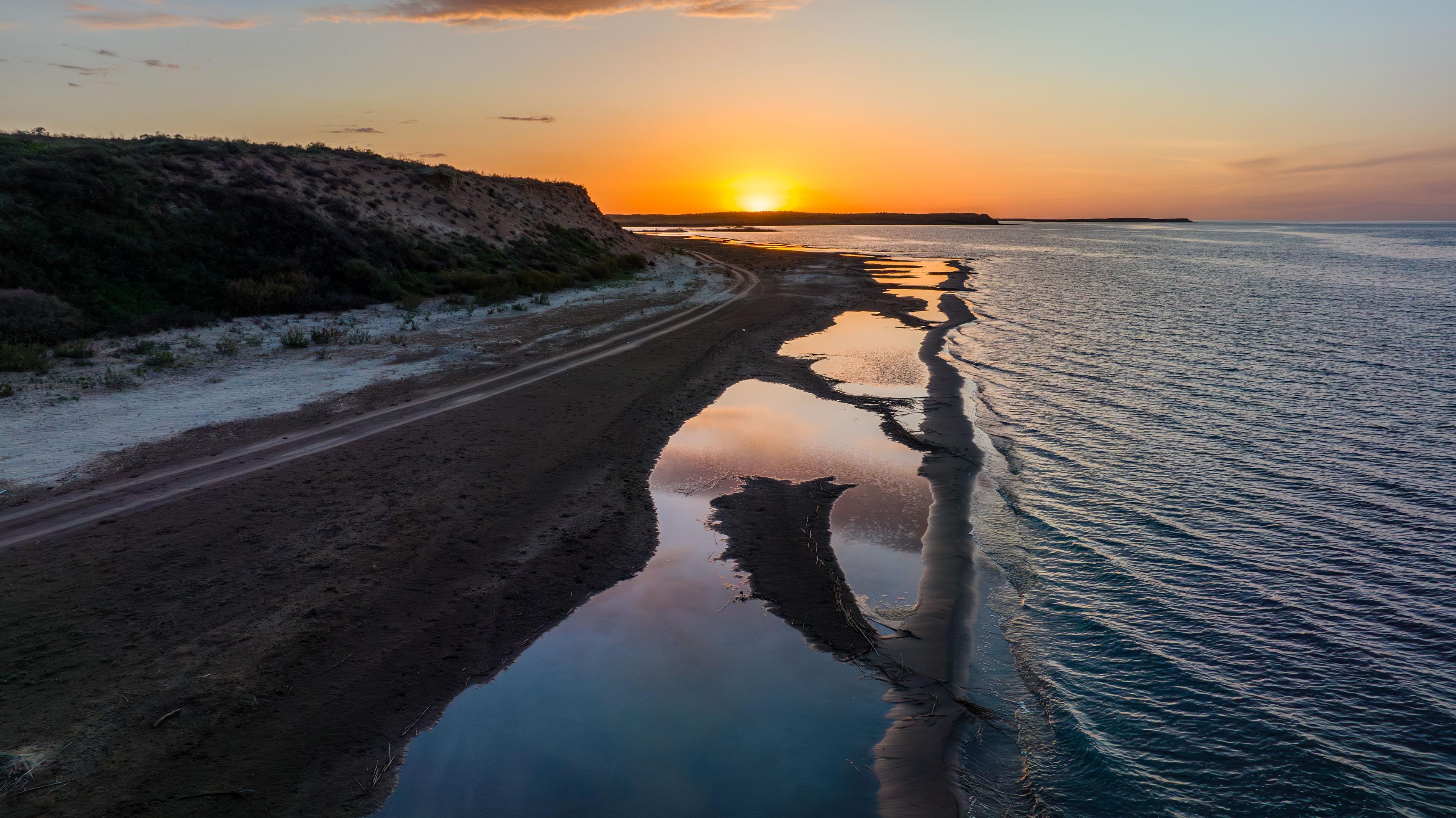
- Day 10: Kochkor to Song-Kul. The drive is two and a half to three hours, the last part on gravel over a pass of about 3,400 metres, so a high-clearance vehicle is needed. Arrive by early afternoon and do little: walk along the shore, watch the herds being brought in, drink tea in the camp. The lake sits at 3,016 metres on a plateau of summer pasture, with no village, no shops, no mobile signal in most places and nights close to freezing even in July. Dinner is in the family yurt; sleep under heavy felt blankets.
- Day 11: Sunrise over the water, then a ride on horseback or a walk to a neighbouring camp. In the afternoon drive down the far side of the plateau towards Issyk-Kul, about five hours, with a night on the south shore near Bokonbayevo or Tosor, or at Skazka canyon.
Song-Kul camps operate from roughly June to mid-September. Outside those months the road is closed by snow and the plan must drop the lake. Mild altitude symptoms, a headache or poor sleep, are common on the first night; drink water, avoid alcohol and tell your driver if symptoms are severe, since the only treatment is to go down.
Days 12 and 13: Issyk-Kul's south shore and Karakol
- Day 12: Skazka canyon in the morning, a short walk through red and yellow eroded ridges above the lake, then the drive east along the quiet south shore to Jeti-Oguz, the Seven Bulls, a wall of red sandstone cliffs at the mouth of a green valley. Continue to Karakol, the main town at the eastern end of the lake, at about 1,700 metres. Night in Karakol.
- Day 13: Karakol's two unusual buildings: the Dungan Mosque, built by Chinese Muslim settlers in the early 20th century like a Chinese temple without a single nail, and the wooden Holy Trinity Cathedral. Then a half-day walk or horse ride in one of the gorges above town, Karakol or Altyn-Arashan, and the drive west along the north shore to Cholpon-Ata, the main resort, with its open-air petroglyph museum of Bronze Age rock carvings. Night in Cholpon-Ata.
Issyk-Kul lies at about 1,600 metres, is one of the largest mountain lakes in the world and never freezes. Swimming is pleasant from July to early September; our Issyk-Kul add-on article covers the lake in more depth for travellers who want it without Song-Kul.
Day 14: back to Bishkek and home, or back to Tashkent
Cholpon-Ata to Bishkek is about 250 km and four hours. Leave after breakfast and you are at Manas airport by mid-afternoon.
- Flying home from Bishkek: Manas has direct flights to Istanbul, the Gulf, Moscow and several Asian cities. Many travellers book an open-jaw ticket into Tashkent and out of Bishkek.
- Flying to Tashkent: Uzbekistan Airways and other carriers fly the route most days; the flight takes about 1 hour 10 minutes to 1 hour 25 minutes and one-way fares in 2026 are typically around US$80 to 180. This suits travellers whose long-haul ticket is a Tashkent return.
- Overland to Tashkent: possible via Kazakhstan, with two border crossings and nine to thirteen hours on the road. We only recommend it for travellers who like road journeys for their own sake.
If you have a fifteenth day, spend it in Bishkek: Ala-Too Square, the Osh Bazaar and an afternoon at Ala-Archa National Park, an hour south of the city.
Visas for Uzbekistan and Kyrgyzstan in 2026
- Uzbekistan: visa-free for 30 days for citizens of more than 90 countries, including the EU, the UK, the US, Japan, South Korea, Malaysia, Indonesia and, since June 2025, China. Others apply for an e-visa at e-visa.gov.uz. Note that a single-entry e-visa is used up when you cross to Kyrgyzstan; if you plan to return overland, apply for a double-entry visa or, if you only fly back to Tashkent to connect, check airside transit rules.
- Kyrgyzstan: since 1 January 2026, citizens of around 55 countries, including the EU, the UK, the US, Canada, Australia and Japan, may stay visa-free for up to 30 days within each 60-day period, down from 60 days before. Malaysian citizens are also visa-free. Chinese and Indonesian citizens generally need a visa, available through the e-visa portal evisa.e-gov.kg.
Rules change; our Central Asia visa guide tracks them, and the official sites should be your final check before you book. Carry passport copies, keep your Uzbek hotel registration slips, and have US dollars in small, clean notes as a reserve for both countries.
Best time, costs and packing
Best time: June or September. June has green pastures, open Song-Kul camps and warm but not extreme Uzbek cities. September has clear skies, the harvest in the bazaars and warm Issyk-Kul water, with Song-Kul camps still open until around the middle of the month. July and August work for Kyrgyzstan but are very hot in Bukhara and Samarkand. From October to May, Song-Kul is closed and this itinerary becomes an Uzbekistan trip with Bishkek and Issyk-Kul added.
Typical costs in 2026, per person, excluding international flights: Uzbek trains about US$80 to 90; the Osh to Bishkek flight about US$40 to 80; a Bishkek to Tashkent flight about US$80 to 180; mid-range hotels in Uzbekistan US$50 to 100 a night; Kyrgyz guesthouses US$25 to 50 and family yurts at Song-Kul around US$15 to 30 with meals; a car and driver in Kyrgyzstan roughly US$80 to 150 a day shared between the group. A self-organised two weeks in mid-range comfort runs roughly US$1,300 to 2,000 per person on the ground.
Pack for two climates: light clothes and modest cover for the cities, then a warm layer, hat and gloves for Song-Kul nights, walking shoes, sunscreen, a head torch and a small first-aid kit.
How TourEast fits in
We plan and run the Uzbek half of this itinerary: the trains, guides and hotels in Tashkent, Samarkand, Bukhara and the Fergana Valley, and the drive to the Dostuk border, as a private trip or a small group with fixed dates. For the Kyrgyz half we can suggest a route and timing, and we plan your Uzbek days so that you reach Osh rested and acclimatised. Send us your dates and flight plans, and we will shape the Uzbekistan and Kyrgyzstan weeks around them.