Is the Door to Hell still burning, and how do you get there from Khiva? Our 2026 guide to Turkmenistan from the Uzbek side: the letter of invitation, transit visas, guide rules, the Shavat and Konye-Urgench borders, Konye-Urgench, Ashgabat and the crater today.
Facts, prices and schedules checked on November 4, 2026
The Darvaza gas crater, better known as the Door to Hell or the Gates of Hell, is the reason most travellers start reading about Turkmenistan. It is a burning pit in the Karakum Desert, about 60 to 70 metres across, and for half a century it has been one of the strangest sights in Central Asia.
We are an Uzbekistan operator, based in Tashkent and Bukhara, and many of our guests ask the same questions once they reach Khiva: is the crater still burning, can I get there from here, and what paperwork does Turkmenistan need? This guide answers them as of November 2026.
One point first. Turkmenistan is one of the most tightly controlled countries in the world for visitors. You cannot simply cross the border and improvise. Your Turkmen leg has to be organised by a travel agency licensed in Turkmenistan, which issues your invitation, books your hotels and provides your guide or driver. What we arrange is the Uzbek side: your time in Khiva, Nukus or Bukhara and the transfer to the border at the agreed hour.
Is the Darvaza gas crater still burning in 2026?
Yes, but far less than in the photographs you have probably seen. Here is what is reliably reported:
- January 2022: President Gurbanguly Berdimuhamedov ordered officials to find a way to put the fire out, citing health, environmental and economic reasons.
- 2024: two wells were drilled near the crater to capture gas before it reaches the pit.
- June 2025: Irina Luryeva, a director at the state gas company Turkmengaz, told a conference in Ashgabat that the fire had been reduced nearly threefold, and that the glow once visible from several kilometres away had become a faint source of combustion.
- August 2025: an AFP report described a charred crater with only a few pockets of small fires, and visitors who said they were disappointed.
- May 2026: The New York Times reported that the flames were still dimming but not about to go out. Satellite analysis by the British firm Capterio confirmed the decline and suggested it may have started before the new wells were drilled.
So what will you see? Expect fire in patches around the rim and walls of the crater rather than a wall of flame across the whole floor. It is still most impressive after dark. Visitor reports from spring 2026 range from "barely flickering" to "still worth it", which probably reflects the night, the wind and expectations.
There is also an environmental side. Scientists point out that the crater still releases a lot of methane, and that a fire turns methane into the less harmful carbon dioxide. Putting it out without capturing the gas would not necessarily be good news. For travellers, the practical message is simple: if Darvaza is the main reason for your trip, go sooner rather than later, and look at recent photos rather than the famous ones from the 2010s.

What is the Door to Hell, and how did it start?
The crater lies in the Karakum Desert roughly 260 km north of Ashgabat, near the former village of Derweze. It is about 60 to 70 metres wide and around 30 metres deep.
The popular story says that Soviet geologists drilling for gas in 1971 broke into a cavern, the ground collapsed and the gas was set alight in the hope that it would burn off within weeks. It is a good story, but the records are thin. Some local geologists say the collapse happened in the 1960s and the gas was only ignited in the 1980s. Treat any precise version with caution, including the one your guide tells you by the campfire.
The area around the crater was declared a nature reserve in 2013. There are two other, smaller craters nearby, one filled with water and one with bubbling mud, and tours often stop at them on the way in.
Do you need a visa for Turkmenistan?
Almost certainly yes. Unlike Uzbekistan, Kazakhstan and Kyrgyzstan, Turkmenistan does not offer visa-free entry to tourists from the EU, the UK, the US, China, Japan, India, Indonesia, Malaysia or Russia. The standard route for a holiday is a tourist visa backed by a letter of invitation (LOI).
How the LOI works, as of November 2026:
- A Turkmen travel agency applies to the State Migration Service on your behalf with a scan of your passport and a photo.
- Approval typically takes two to four weeks; allow six to eight weeks before travel to be safe. A refusal comes without explanation.
- The LOI states your dates and your entry and exit points. If you plan to come in at Shavat and leave at Farap, both must be on the letter.
- You collect the visa on arrival, at Ashgabat airport or at the land border, by showing the approved LOI.
At the border you pay at a bank window, in US dollars only. Reported fees in 2025 were around 85 USD for the visa (more for some nationalities and longer stays), a 14 USD migration fee and a 2 USD bank charge, and some travellers were still charged for a medical test. Bring clean, recent, undamaged notes in small denominations, because worn or old bills are often refused and change can be scarce.
The LOI fee itself (about 50 USD in 2025, plus whatever the agency charges) and the tourist package are paid to your Turkmen agency, not at the border. Fees change without notice, so ask your agency for the current figures shortly before departure.

The new Turkmenistan e-visa and the transit visa
In October 2026 Turkmenistan launched an e-visa portal, evisa.migration.gov.tm, with categories for tourism, business and humanitarian visits. Early reports say the tourist e-visa is meant to work without a letter of invitation. However, in the first weeks after launch, applicants and tour operators found that there was no way to register an account, and the authorities had not published fees, eligible nationalities or processing details. Until it is shown to work, plan on the LOI route and treat the e-visa as a promising development to watch.
The transit visa is the other option people ask about. It is designed for travellers crossing Turkmenistan from one neighbour to another, for example from Uzbekistan to Iran or to the Caspian ferry port. Key points:
- You apply at a Turkmen embassy or consulate, not at the border.
- It usually allows up to five days, along a fixed route with named entry and exit points.
- You normally need the visa for your next country already in your passport.
- No guide is required, which is why overlanders with their own vehicles favour it.
- Approval is unpredictable, and refusals are common, especially around public holidays.
For a visit to Darvaza and Ashgabat, the transit visa is not a realistic shortcut. Five days on a fixed route leaves little room for a desert detour, and you would still need transport out to the crater.
Do you need a guide in Turkmenistan?
On a tourist visa, yes, in practice. Outside Ashgabat you must be accompanied by your agency's guide or driver, and your hotels, permits and itinerary are all booked through the same company that issued your LOI. You cannot book hotels independently or stay with local families.
In Ashgabat itself, tourists can usually walk around without a guide once checked in to their hotel. Some areas of the country, including border districts, need additional permits, which your agency arranges.
Other things to know before you go:
- Photography of government buildings, the presidential palace area, police and military sites is prohibited, and guides will tell you where to put the camera away.
- International bank cards are of limited use. Plan to bring the cash you need in US dollars and exchange through official channels as your agency advises.
- The internet is slow and heavily filtered, and many apps and VPNs do not work. Download maps and documents before you cross.
- Border checks can take several hours, with bags searched and medicines examined. Carry prescriptions for any medicines.
How to get from Khiva to Darvaza: the Shavat and Konye-Urgench borders
Most travellers reach Darvaza from Khiva or Nukus in north-west Uzbekistan, because the crater lies on the road between the Turkmen city of Dashoguz and Ashgabat. There are two crossings in this region.
Shavat to Dashoguz. This is the classic route from Khiva.
- Khiva to the Shavat border: about 60 km, roughly one hour by car.
- Hours: daytime only, generally around 9:00 to 18:00. Aim to arrive in the morning, and some Turkmen agencies ask you to be at the border by 11:00.
- On foot: you walk through Uzbek exit formalities, cross a strip of about 1.5 km between the posts (shuttles are sometimes available), then complete Turkmen immigration and customs, where your guide or driver meets you.
- Allow one to three hours for the crossing itself.
- Dashoguz to Darvaza: roughly 270 to 300 km, four to five hours on a road that is rough in places.
The Uzbek and Turkmen governments opened a cross-border trade zone at Shavat–Dashoguz in November 2025. Its visa-free access applies to citizens of the two countries only, not to foreign tourists.
Khojeli to Konye-Urgench. From Nukus, the Khojeli (Khodjeyli) crossing lies about 40 km away, and Konye-Urgench is about 20 km beyond it on the Turkmen side. It is a quieter crossing with daytime hours and thorough checks. Some sources describe it as working mainly for entry into Uzbekistan, so confirm with your Turkmen agency that it is listed on your LOI and operating in your direction before you plan around it.
From Bukhara. The other common crossing is Alat to Farap, about 100 km south-west of Bukhara, on the road to Turkmenabat and Merv. It is the busier route between the two countries and makes sense if you want to enter from Bukhara and leave towards Khiva, or the other way round.
Whichever crossing you use, our drivers bring you to the Uzbek post at the agreed time, and your Turkmen agency collects you on the other side. If you are leaving Turkmenistan into Uzbekistan, the same works in reverse.
Konye-Urgench: the UNESCO site most visitors skip
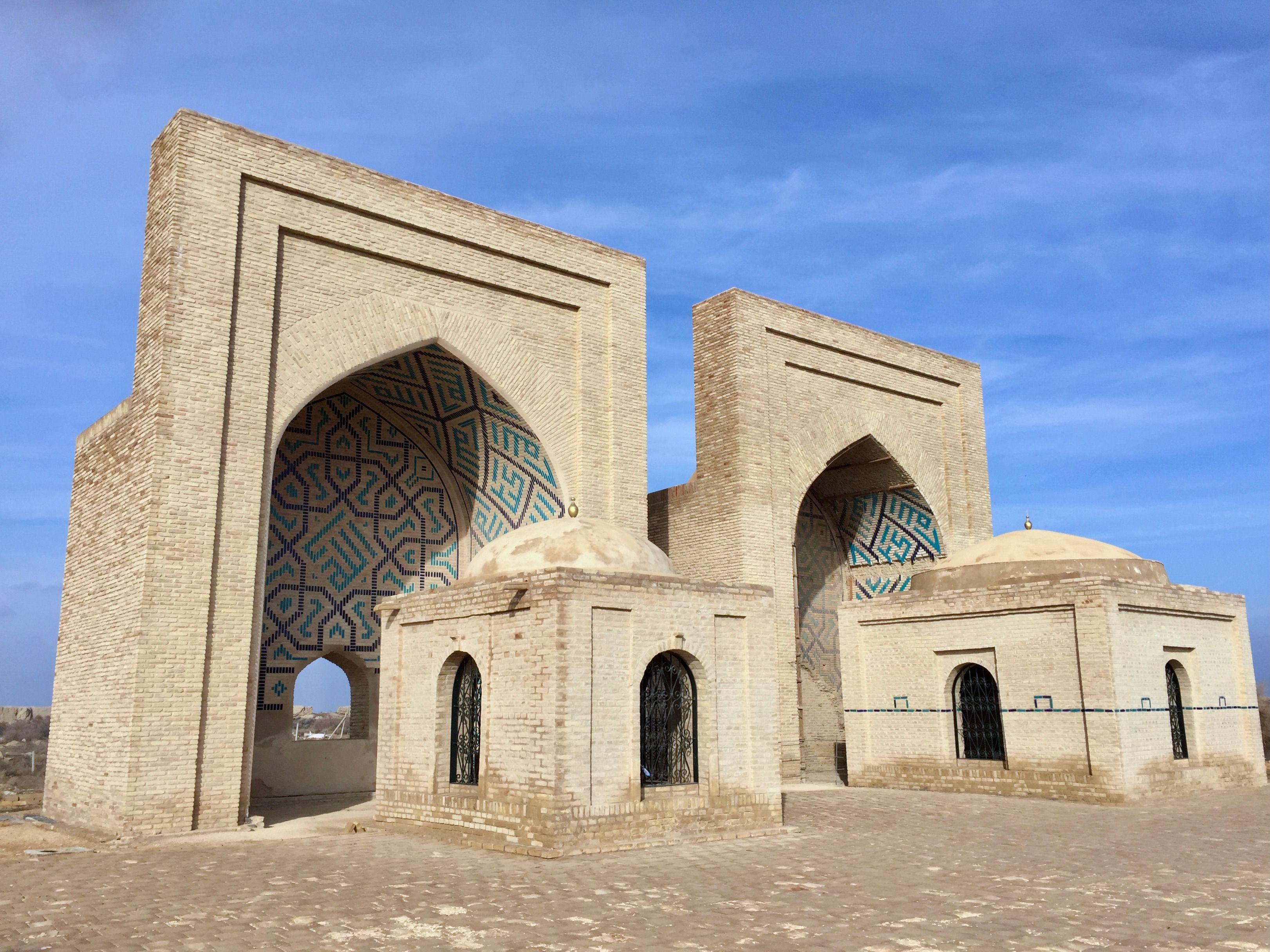
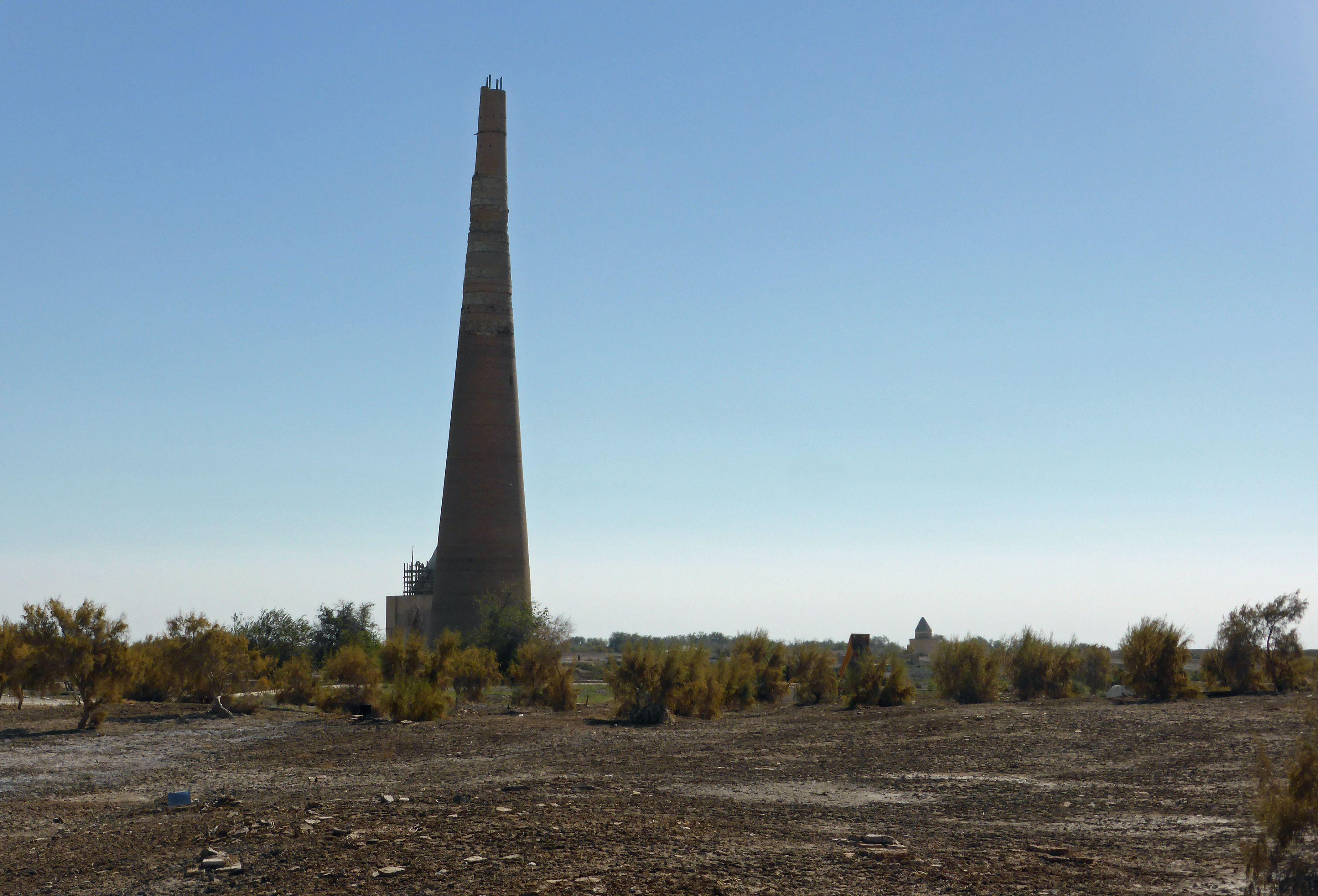
Konye-Urgench (also written Kunya-Urgench or Köneürgenç) was the capital of the Khorezm empire, one of the richest cities of the medieval Islamic world, until the Mongols destroyed it in 1221. It was rebuilt and ruined again in the following centuries, and today its scattered monuments stand in open ground on the edge of a modern town. The site has been on the UNESCO World Heritage List since 2005.
Highlights:
- The Kutlug-Timur Minaret, around 60 metres tall and among the highest medieval minarets in Central Asia, decorated with bands of brick ornament.
- The Turabeg Khanym Mausoleum, with a remarkable tiled inner dome.
- The conical-roofed Mausoleum of Sultan Tekesh and the Il-Arslan Mausoleum, with its unusual faceted dome.
If you have already seen Ichan-Kala in Khiva, Konye-Urgench is a fascinating counterpoint: the same Khorezm culture, but centuries older and left as ruins rather than restored as a living town. It fits naturally on the way from the border to Darvaza.

Ashgabat, Merv and how long to spend
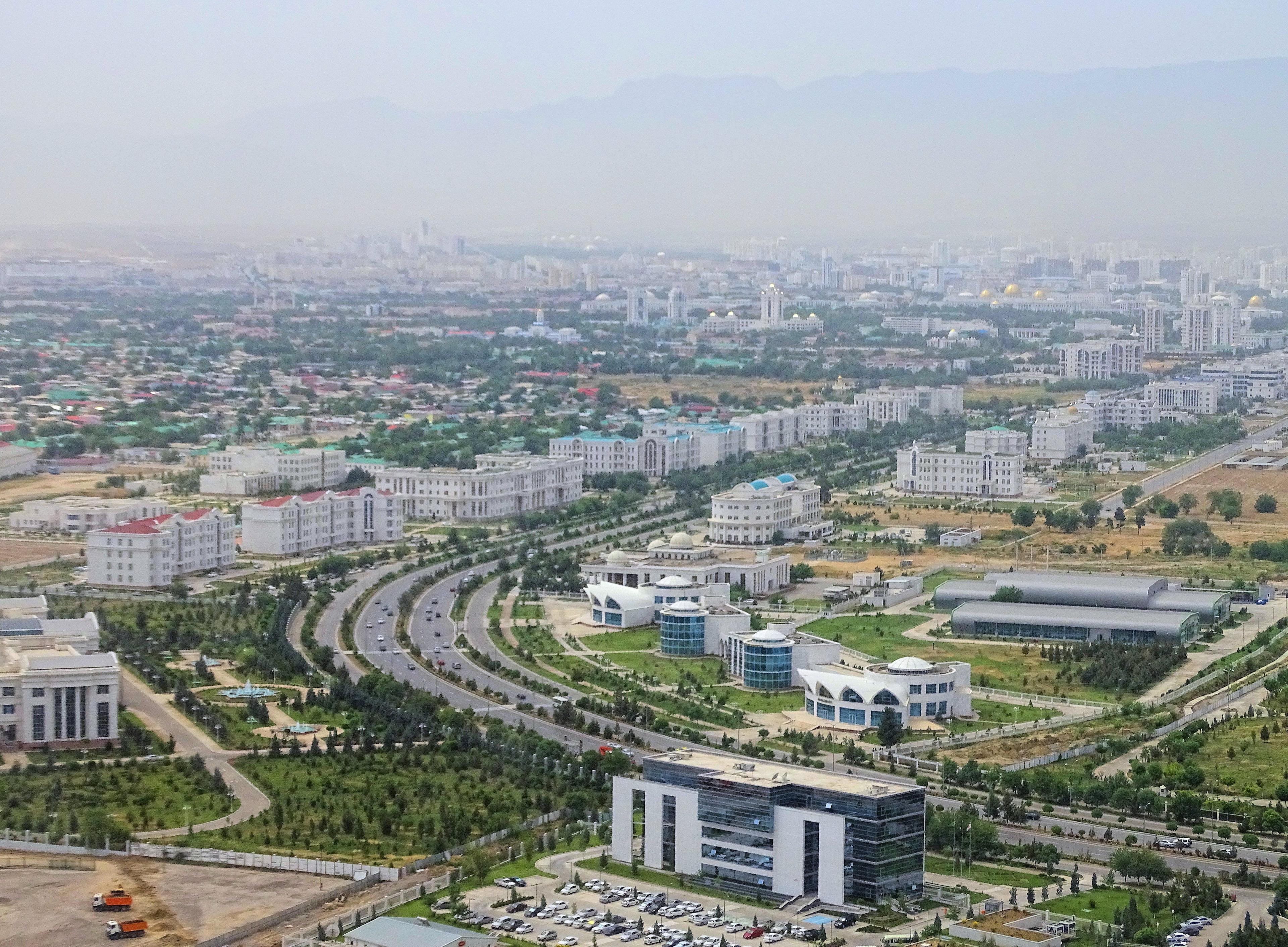
Ashgabat is unlike any other capital in the region: a city rebuilt in white marble, with wide empty avenues, gilded monuments and huge state buildings. In 2013 it entered the Guinness World Records for the highest density of white marble-clad buildings. Love it or not, it is unforgettable. Nearby are the Parthian ruins of Nisa, a UNESCO site, and further east lies ancient Merv, once one of the largest cities in the world, also on the UNESCO list.
There are currently no direct flights from Ashgabat to other Central Asian capitals, so most travellers who combine Turkmenistan with Uzbekistan do it overland. Typical shapes:
- Two days, one night: Khiva to Shavat, Konye-Urgench or straight to Darvaza, a night in the yurt camp by the crater, then back to Uzbekistan or on to Ashgabat. Agencies run short Darvaza trips on this pattern.
- Four to five days: enter at Shavat, visit Konye-Urgench and Darvaza, two nights in Ashgabat, then Merv and exit at Farap towards Bukhara. This is the most popular loop and links neatly with an Uzbekistan itinerary.
- Seven days or more: add the Caspian coast, the Yangykala canyons or the Kopet Dag mountains.
Nights at Darvaza are usually spent in a yurt camp or tents near the crater, with simple facilities and limited light, so bring a headtorch and warm layers. The desert gets cold at night outside summer.
The best months are April to May and September to October. Summer in the Karakum regularly passes 40°C, and winter nights fall below freezing.
Is a Turkmenistan detour worth it?
It depends on what you want. If you love unusual places, Soviet and post-Soviet oddities and Silk Road ruins without crowds, Turkmenistan is worth the paperwork. The combination of Konye-Urgench, Ashgabat and Merv is genuinely remarkable, even with a dimming crater.
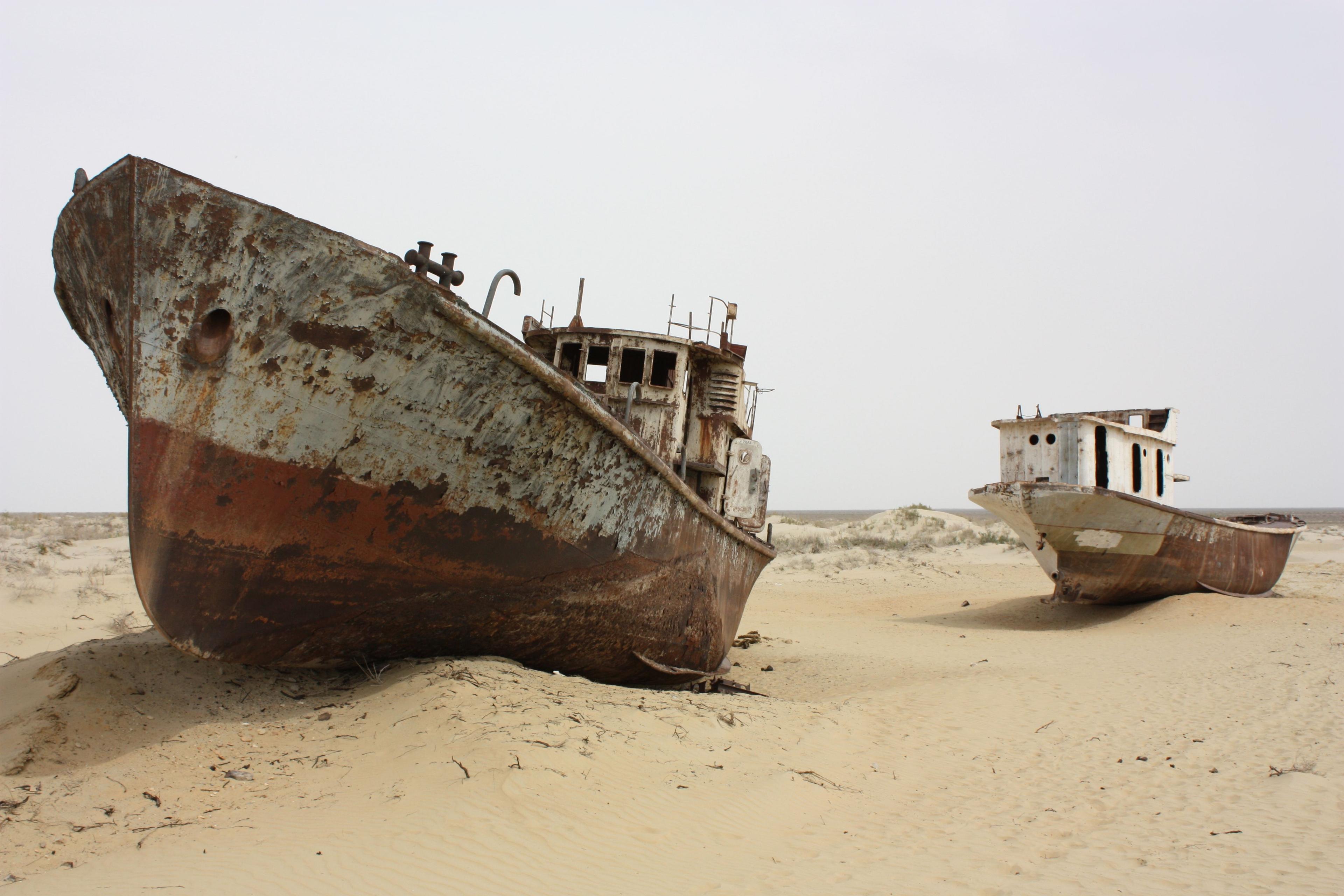
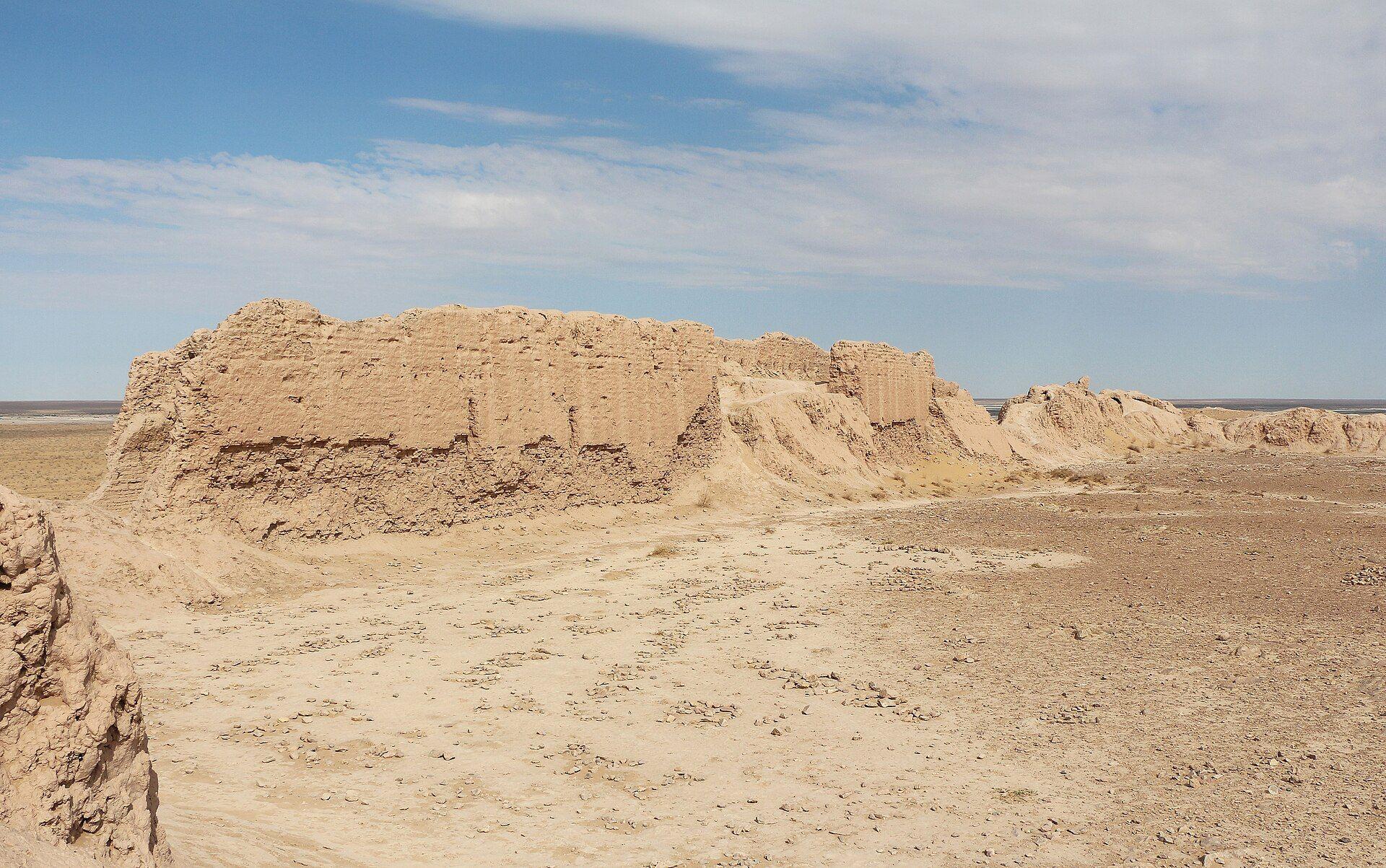
If the crater is your only reason, be honest with yourself about the cost and effort. You will need several weeks of lead time, a package from a licensed agency, around 100 USD or more in border fees on top, and some patience at the border, for a sight that is less dramatic than it was. Many travellers with limited time put the same days into Karakalpakstan instead, where the desert fortresses of ancient Khorezm, the Savitsky Museum in Nukus and the Aral Sea shore offer the same desert atmosphere with no extra visa.
Planning the Uzbek side with TourEast
We do not operate tours in Turkmenistan, but we plan the Uzbekistan part of trips that continue there: Khiva and Ichan-Kala, the desert fortresses of Karakalpakstan, and timed transfers to Shavat, Khojeli or Alat to meet your Turkmen agency. Tell us your Turkmen dates and we will build a private or small-group Uzbekistan itinerary around them.
Frequently asked questions
Watch
Photo gallery