
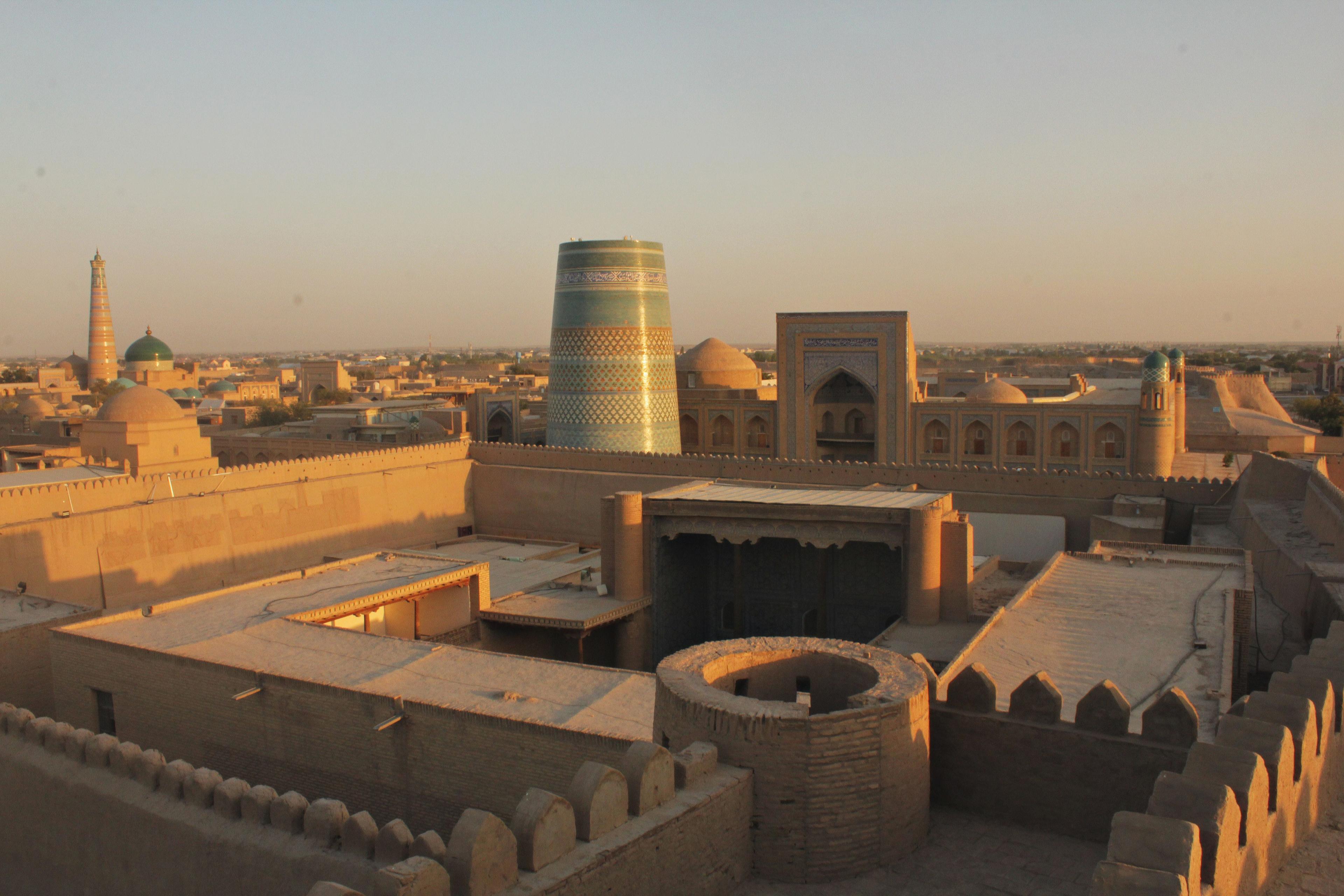
Architectural ensemble · Walls from antiquity; most buildings 18th–early 20th c.
Ichan-Kala, the Walled Inner Town
A complete walled town of madrasahs, minarets, palaces and mud-brick houses, still lived in. Ichan-Kala was Uzbekistan’s first UNESCO World Heritage Site, inscribed in 1990, and the reason most travellers cross the desert to Khiva.
About
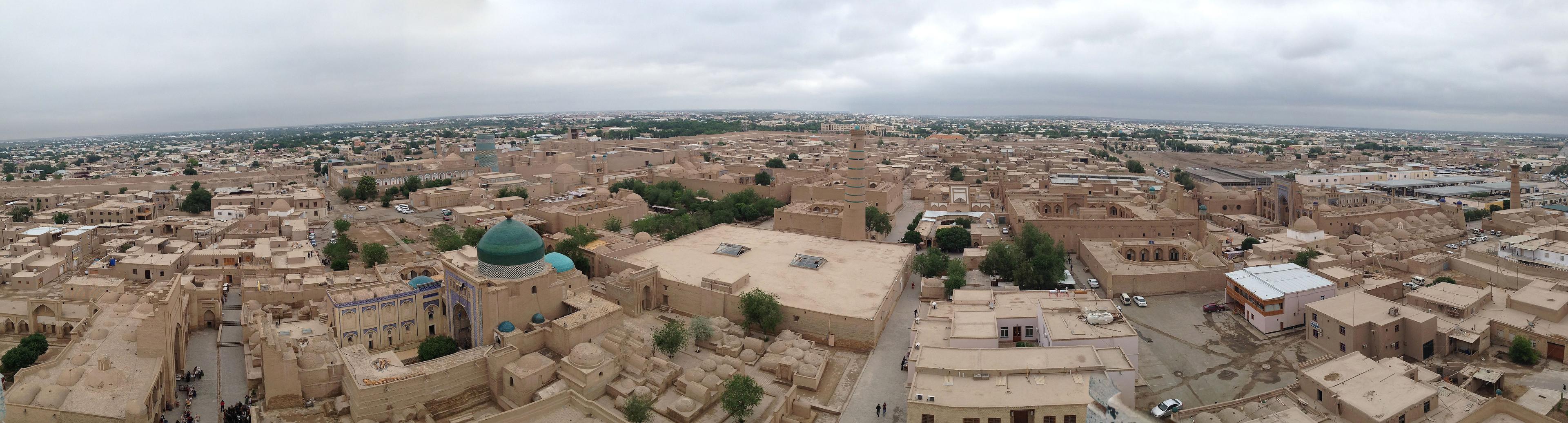
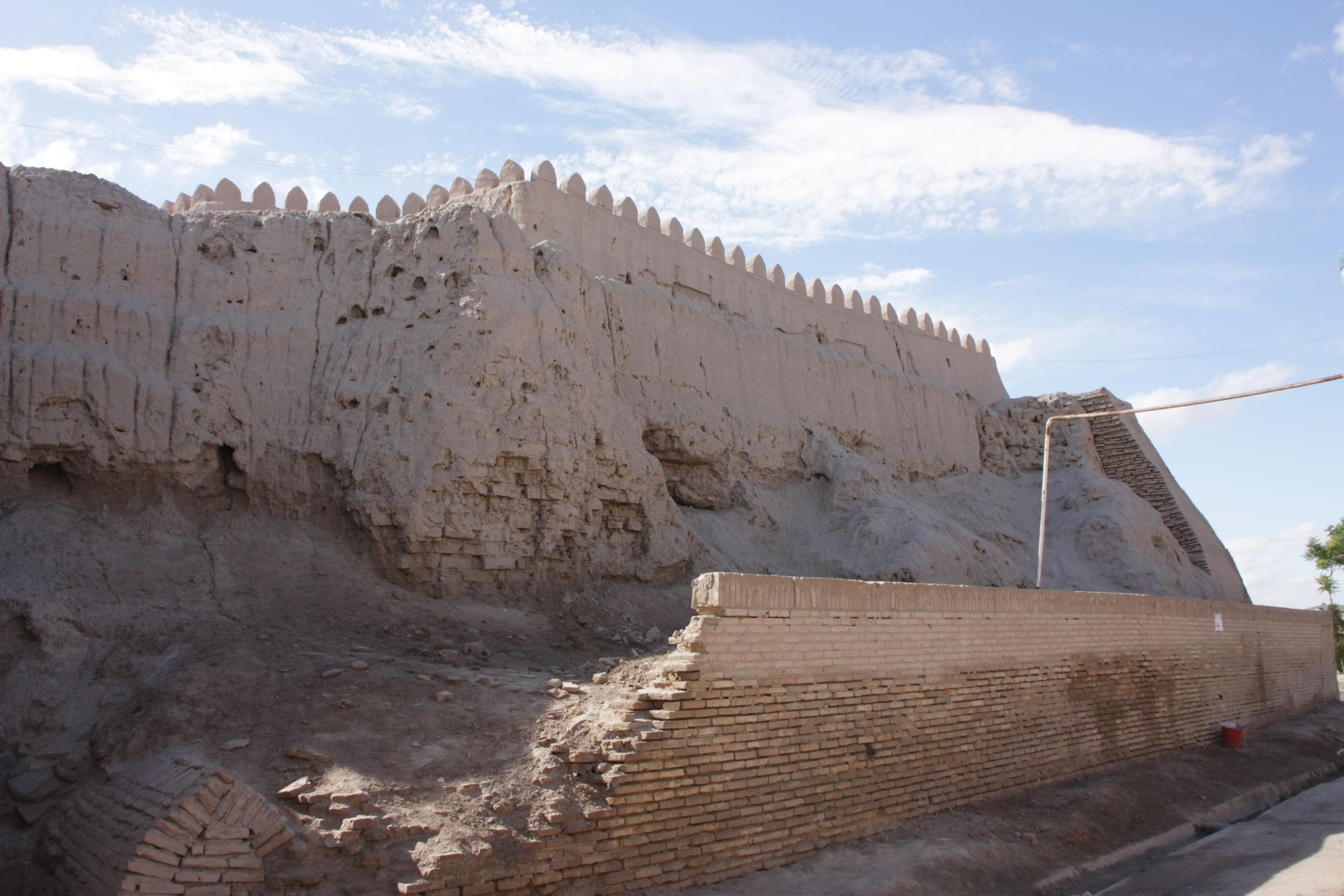
Ichan-Kala is the inner town of Khiva: about 26 hectares enclosed by mud-brick walls, with four gates facing the points of the compass. Inside are more than fifty historic monuments and a few hundred old houses, most of them built in the eighteenth and nineteenth centuries, when Khiva was the capital of an independent khanate on the lower Amu Darya. People still live here, which is what separates it from an open-air museum: children walk to school past madrasahs, and laundry dries on flat roofs beside tiled domes.
A town rebuilt by its khans
Khiva is old. Archaeologists have found traces of settlement going back well over two thousand years, and local tradition says the town grew around the Kheivak well, dug, the legend runs, by Shem, son of Noah. But the Ichan-Kala you walk through today is largely the work of the Kungrat dynasty of khans in the nineteenth century, who rebuilt the town after decades of war with Persia and Bukhara. That is why it feels so unified: the same clay brick, the same blue-and-white majolica, the same carved elm columns repeat from building to building. In 1873 Russian troops took the town and the khanate became a protectorate, but the khans stayed on until 1920, and they kept building almost to the end.
What to see
The main street runs east from the west gate, Ota-Darvoza, past the unfinished Kalta Minor and the Kunya-Ark citadel to the Palvan-Darvoza gate on the eastern side. Along it and in the lanes to the south are the sights most visitors come for:
- Kalta Minor and the Muhammad Amin Khan Madrasah by the west gate
- The Kunya-Ark, the khans’ citadel, with its tiled reception hall and watchtower
- The Juma Mosque and its hall of more than two hundred carved wooden columns
- The Pakhlavan Makhmud Mausoleum and the Islam Khodja Minaret, the tallest in Khiva
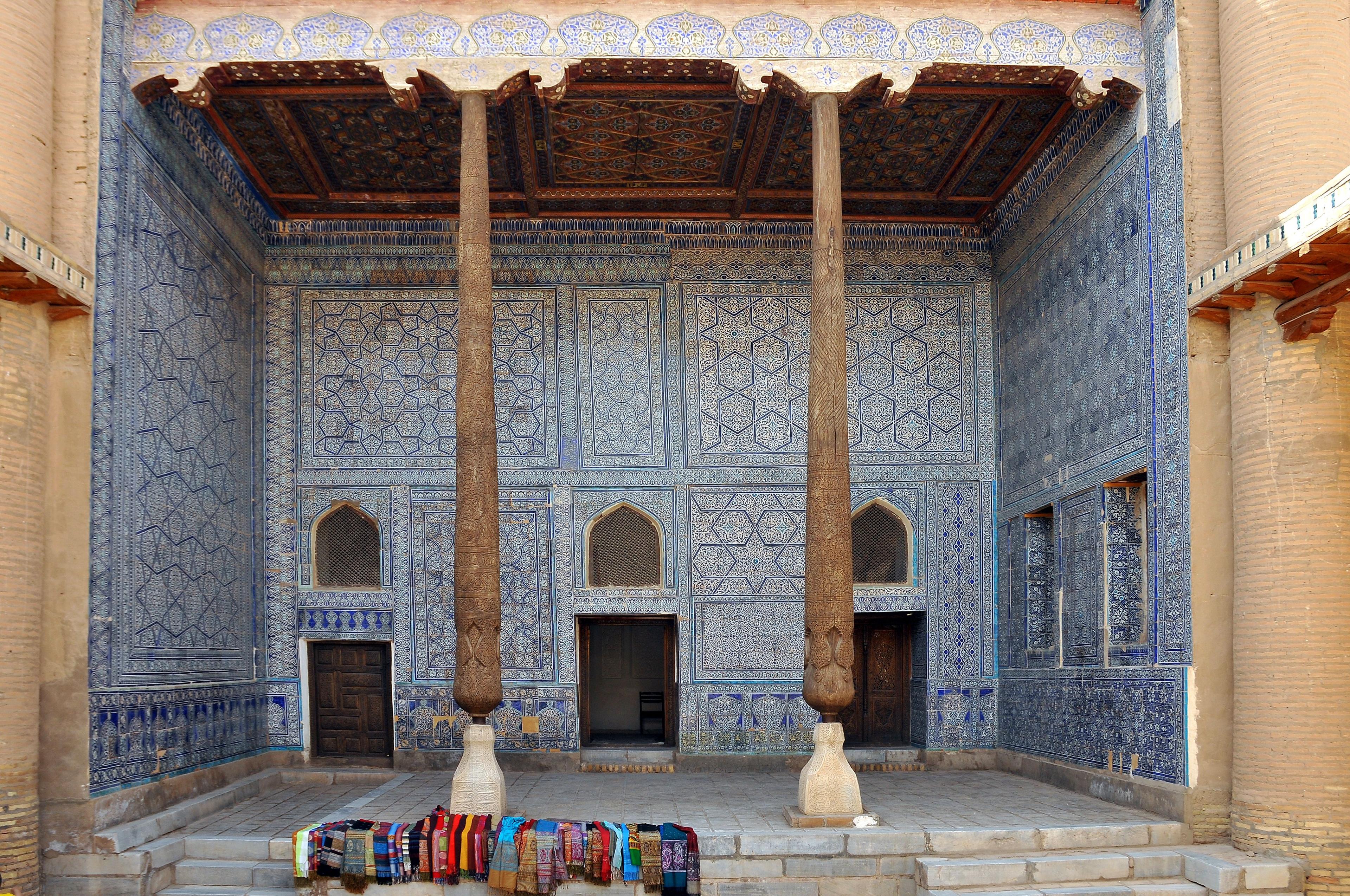
- The Tash-Hauli Palace near the east gate, with its majolica harem courtyard
Experiencing it
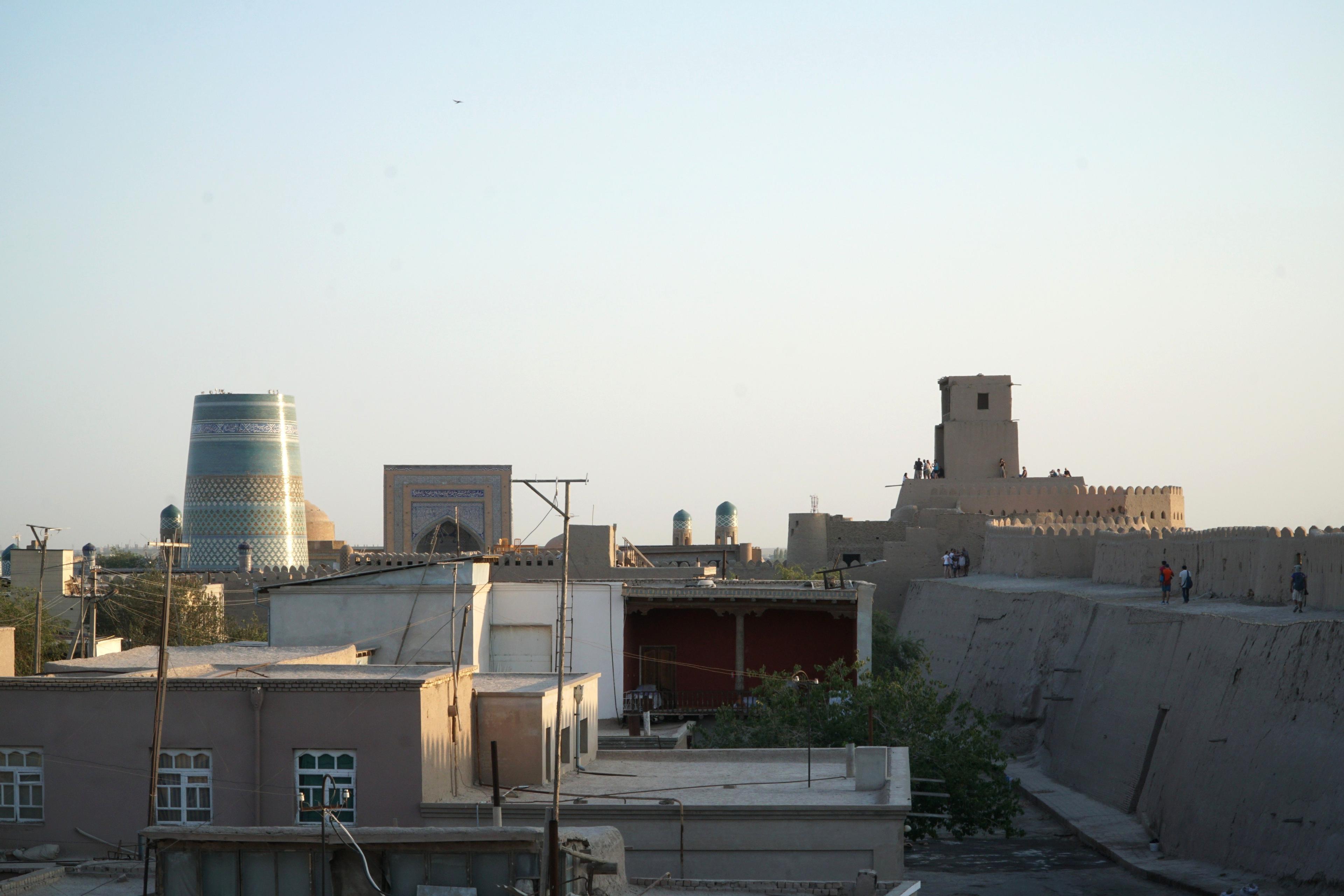
Ichan-Kala is small enough to cross on foot in ten minutes, but it deserves at least a full day. Arrive early, before the tour groups and the heat, and leave the middle of the day for a long lunch or a rest. The best light comes in the last hour before sunset, when the clay walls turn gold; climb the walls or a watchtower to see the domes and minarets together. After dark, when day-trippers have gone, the lanes are quiet and several monuments are lit. Staying inside or just outside the walls is the single best decision you can make in Khiva.
What to see
- The view along the main street from the west gate, with Kalta Minor ahead
- Sunset over the domes from the walls or the Kunya-Ark watchtower
- The forest of carved columns in the Juma Mosque
- Majolica courtyards of the Tash-Hauli Palace
- The climb up the Islam Khodja Minaret
- Woodcarving, silk-weaving and carpet workshops in former madrasah cells
- The lanes after dark, when the day visitors have left
Gallery
Tours that visit Ichan-Kala, the Walled Inner Town
 Best SellerTashkent · Samarkand · Bukhara · Khiva
Four Crowns: Tashkent, Samarkand, Bukhara, Khiva
From
$1,270
 Khiva · Khorezm fortresses · Nukus · Muynak · Aral Sea
Edge of the Map: Desert Forts and the Vanished Aral
From
$1,135
 PremiumSamarkand · Bukhara · Khiva
Silk Road in Silk: Private Uzbekistan
From
$1,815
More sights in Khiva
All of Khiva
See Ichan-Kala, the Walled Inner Town with a local guide
We build private and small-group trips around the places you want to see — with guides who grew up here.