

Mausoleum · Shrine from the 14th c.; present complex mostly 19th–early 20th c.
Pakhlavan Makhmud Mausoleum
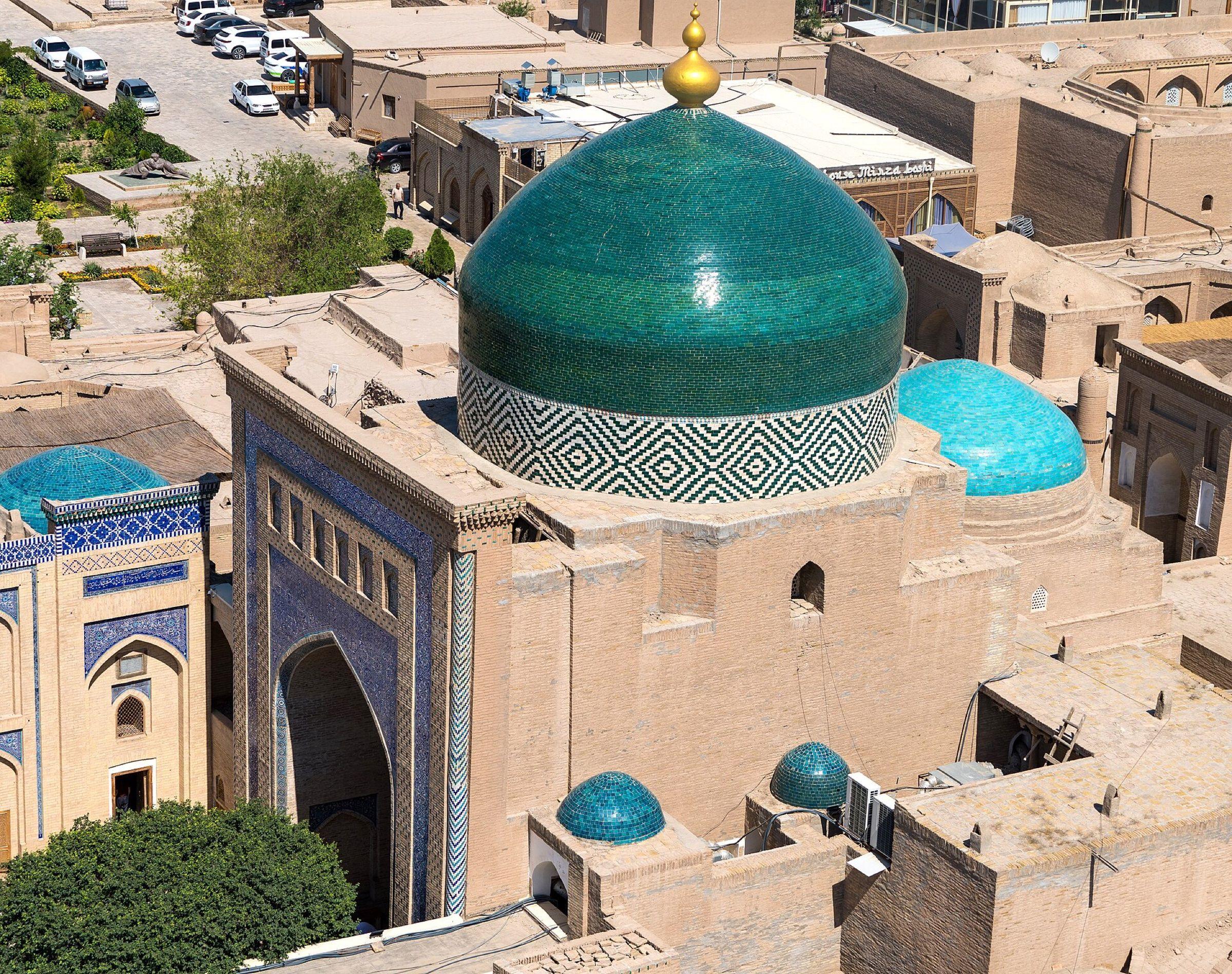
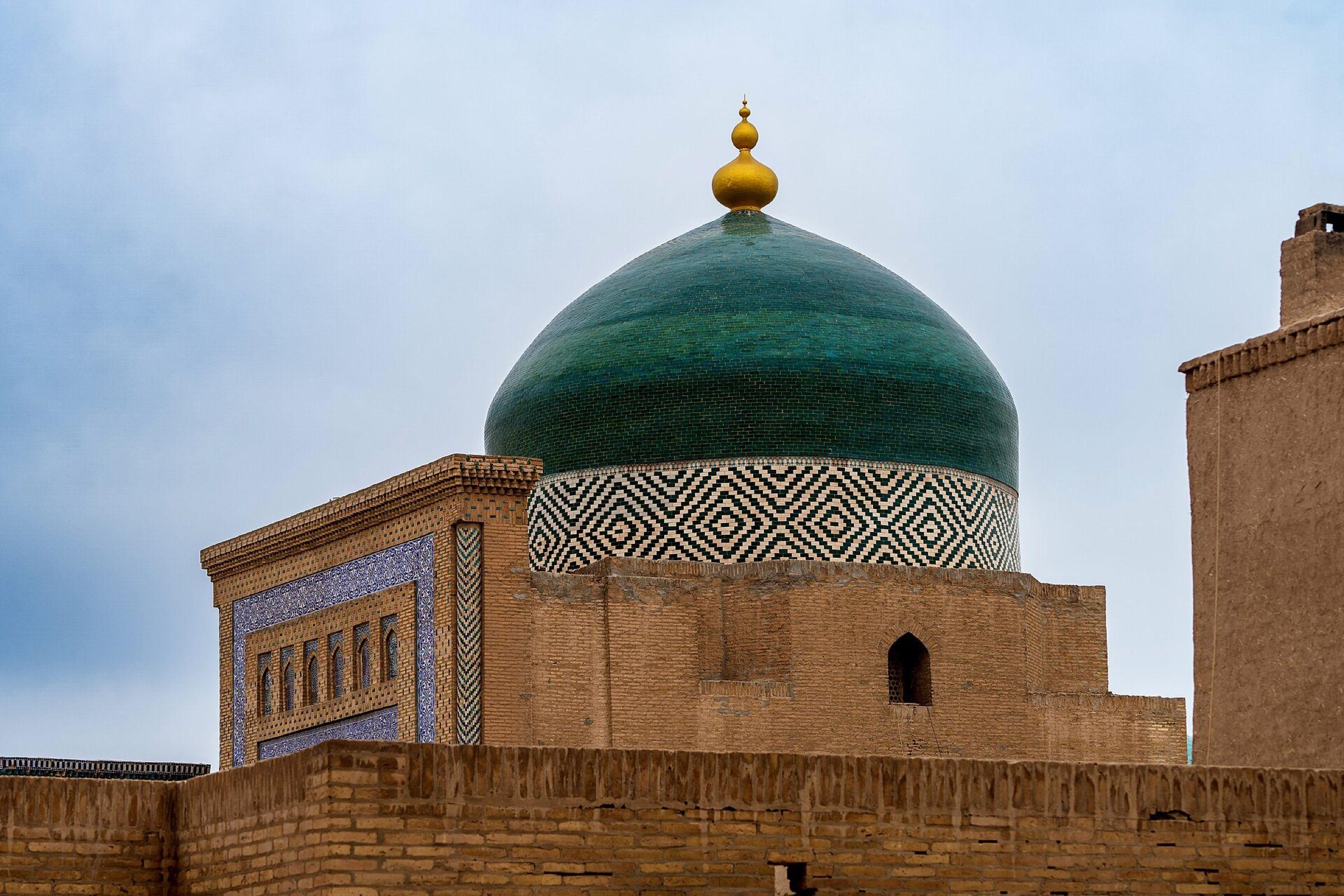
The shrine of Khiva’s patron saint, a 14th-century poet, furrier and undefeated wrestler, under the largest turquoise dome in town. Inside, walls of blue majolica; outside, pilgrims, newly-weds and a well said to grant strength.
About
Pakhlavan Makhmud is remembered as the patron of Khiva. Born in the second half of the thirteenth century and traditionally said to have died in 1325 or 1326, he made his living as a furrier, wrote quatrains (rubai) in Persian and was famous as a wrestler who was never beaten. He was also revered as a healer and a Sufi. His fame travelled far: in Iran and India he is honoured as Puriya-ye Vali, a patron of traditional strength sports. By his own wish he was buried in his workshop, and the site became a place of pilgrimage.
The building
A modest tomb stood here for centuries. The complex took its present shape in the early nineteenth century, when Muhammad Rakhim Khan I and his successors rebuilt it as a dynastic shrine; the khans of Khiva chose to be buried close to the saint, and several of them lie in the halls around his tomb. The great dome, tiled in turquoise and crowned with a gilded finial, is the largest in Khiva. A courtyard with a summer mosque, a small madrasah and a gatehouse were added around it up to the early twentieth century.
Inside
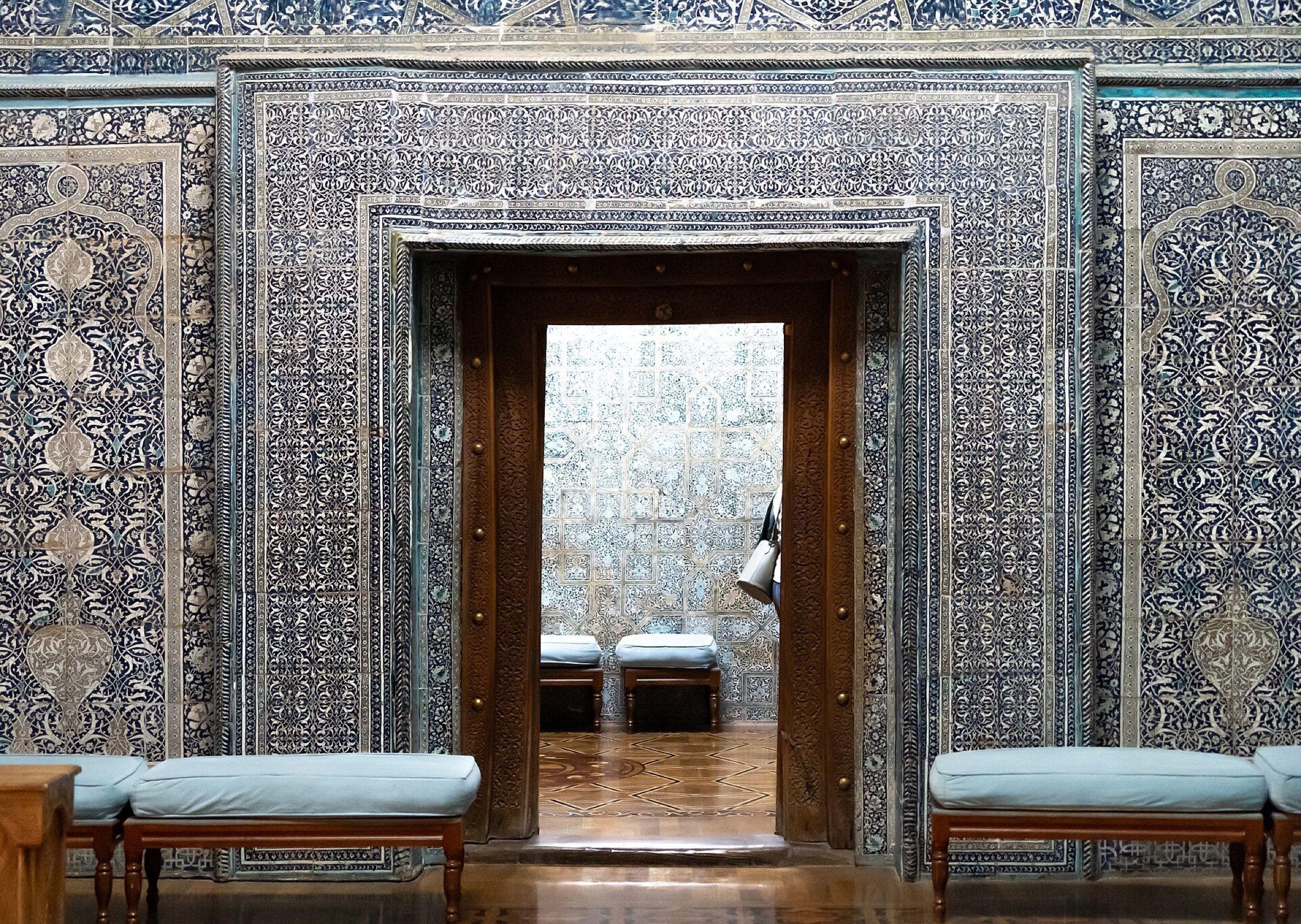
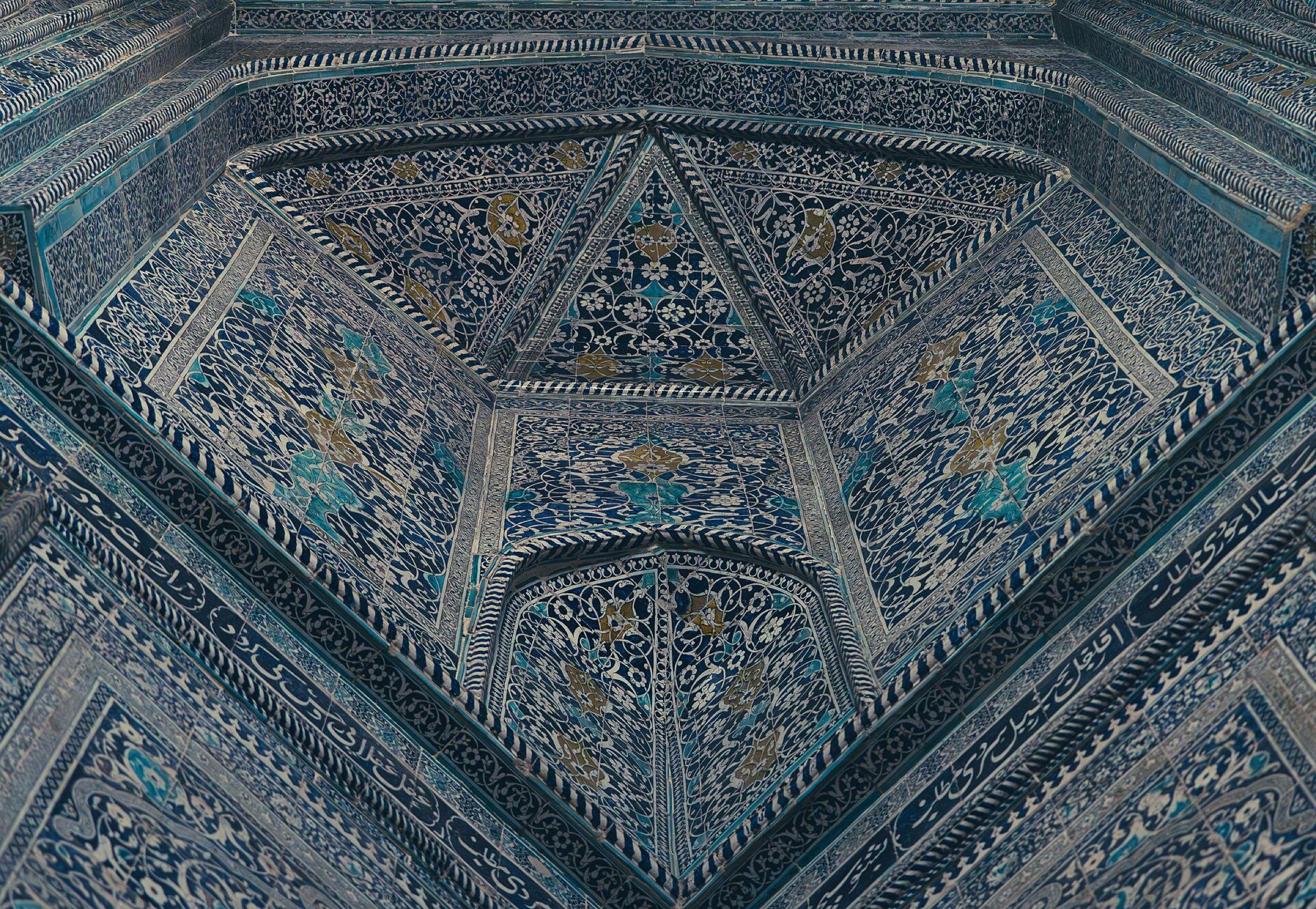
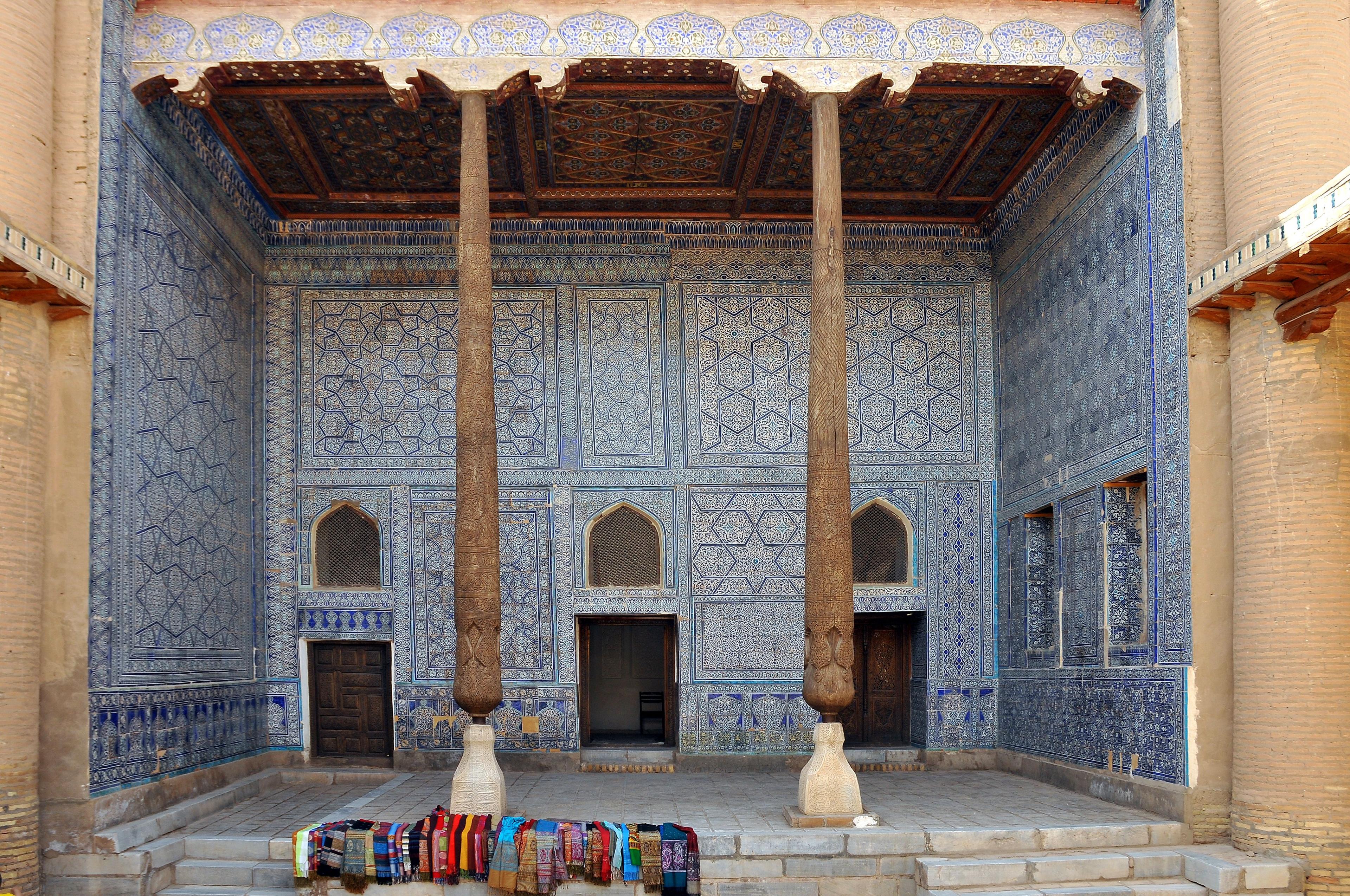
The prayer hall is lined with blue-and-white majolica of the 1820s–1830s, one of the richest tile interiors in the town. The saint’s tomb lies behind a carved door and screen in a side chamber, and the walls carry inscriptions, including some of his own verses.
Traditions
Visitors still come to pray, and wedding parties stop here for blessings and photographs. The well in the courtyard is said to give strength, and in some accounts to help couples hoping for a son. Respect the site: dress modestly, keep your voice down and avoid photographing people at prayer.
Experiencing it
Come in the morning, when the courtyard is quieter. The best photograph of the dome is with the Islam Khodja Minaret behind it, from the lane to the south-west.
What to see
- The largest turquoise dome in Khiva
- Blue-and-white majolica in the prayer hall
- The carved door to the saint’s tomb chamber
- Tombs of the khans of Khiva
- The courtyard well and its traditions
- Wedding parties visiting for a blessing
Gallery
Tours that visit Pakhlavan Makhmud Mausoleum
 Best SellerTashkent · Samarkand · Bukhara · Khiva
Four Crowns: Tashkent, Samarkand, Bukhara, Khiva
From
$1,270
 Khiva · Khorezm fortresses · Nukus · Muynak · Aral Sea
Edge of the Map: Desert Forts and the Vanished Aral
From
$1,135
 PremiumSamarkand · Bukhara · Khiva
Silk Road in Silk: Private Uzbekistan
From
$1,815
More sights in Khiva
All of Khiva

See Pakhlavan Makhmud Mausoleum with a local guide
We build private and small-group trips around the places you want to see — with guides who grew up here.