Uzbek wine and drinks explained by locals: the Khovrenko winery and Bagizagan near Samarkand, what Uzbek wine tastes like, beer and vodka culture, alcohol etiquette in a Muslim-majority country, and the many non-alcoholic choices from kompot to ayran.
Facts, prices and schedules checked on November 4, 2026
Uzbekistan is a Muslim-majority country, and many Uzbeks do not drink alcohol at all. It is also a country with grapes on every courtyard trellis, a wine tradition older than Islam in the region, and a Samarkand winery that has been making dessert wines since the 19th century. Both things are true at once, and most visitors find the balance easy once they understand it.
This guide covers Uzbek wine and drinks for travellers: whether and where you can drink alcohol, the Khovrenko winery and Bagizagan near Samarkand, what Uzbek wine tastes like, local beer, the role of vodka and toasts at celebrations, and the many non-alcoholic drinks that are just as much part of the table, from green tea to kompot and ayran.
Is alcohol legal in Uzbekistan? Etiquette for visitors
Yes. Alcohol is legal in Uzbekistan and is served in most hotels and many restaurants, especially in Tashkent, Samarkand and Bukhara. The country produces its own wine, cognac-style brandy, vodka and beer. A few rules and customs are worth knowing:
- The legal minimum age for buying alcohol and tobacco is 21.
- Alcohol may only be sold by licensed outlets, and sales near schools, sports facilities and religious buildings are restricted. Licensing was tightened from January 2026, so fewer small shops sell it than before.
- Many restaurants, especially family places, plov centres, chaikhanas and cafés near mosques and shrines, serve no alcohol. The Fergana Valley and some smaller towns are more conservative.
- Public drunkenness is frowned upon. Drinking in the street is not part of local culture.
- During Ramadan, restaurants in big cities still serve alcohol, but it is polite to be discreet, and some places stop selling it for the month.
At a family dinner, follow your host. Some families drink and toast, others never do, and nobody expects a guest to bring a bottle unless you know the family drinks. Saying no to a drink is always fine; a hand on the heart and a simple rahmat (thank you) is enough. Our culture and etiquette guide covers more on behaviour at the table.
A short history of wine in Uzbekistan
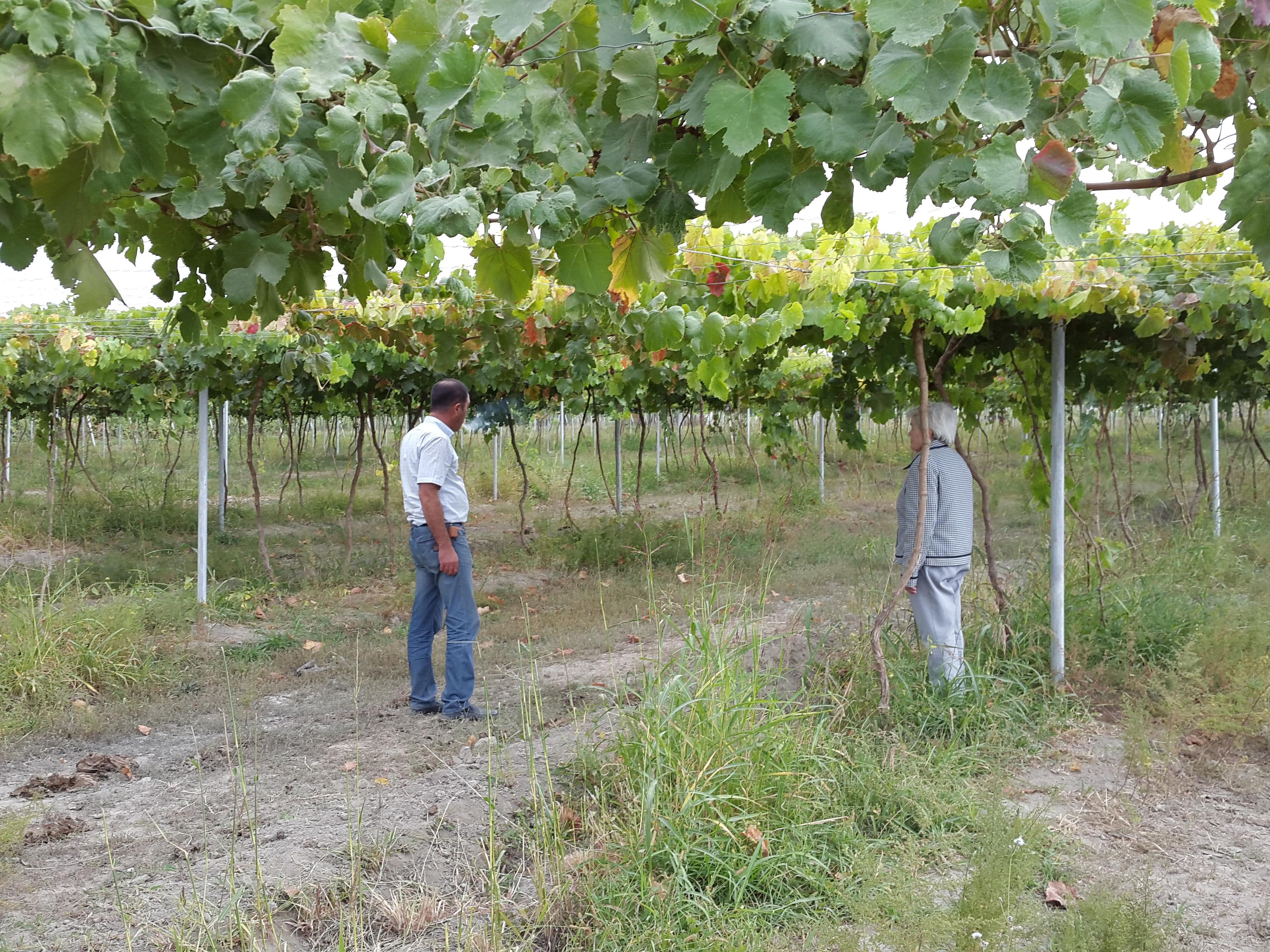
Grapes have been grown in the oases of Central Asia for thousands of years. Before the arrival of Islam, the Sogdians of Samarkand and the Zarafshan valley were known for their wine, and museum collections hold Sogdian silver wine cups from the 7th century. After the Islamic conquest, viticulture continued, but most grapes were eaten fresh or dried into raisins, and wine making largely retreated from public life.
Commercial wine making returned in the second half of the 19th century, after the Russian conquest. In Samarkand a merchant called Dmitry Filatov began making wine in 1868 for the Russian garrison and the growing European community. He bought grapes from local farmers, then planted his own vineyards with local and imported vines, and his wines won medals at exhibitions in the Russian Empire and abroad.
In the Soviet period the Samarkand winery was named after Mikhail Khovrenko, a chemist and winemaker who led its development and created several of its best-known dessert wines. Uzbekistan became a big producer of sweet and fortified wines and brandy for the Soviet market. After independence in 1991 the industry shrank, then began to modernise; since the late 2010s new private and family wineries have appeared, and wine tourism has started to grow.
Khovrenko winery in Samarkand: museum and tasting
The Samarkand winery named after M. A. Khovrenko (also written Hovrenko) is the oldest working winery in Uzbekistan and the easiest to visit. It is in the city, a short taxi ride from the Registan, and it is open to visitors for a museum tour and tasting.
What to expect:
- The museum is in the 19th-century house of Dmitry Filatov. It displays old wine-making and barrel-making tools, historic labels, specially made bottles, medals and photographs. In 1967 hidden cellars were found on the grounds with about 3,700 old bottles, presumably laid down by Filatov, and replicas of these are on show.
- The tasting is held in a hall next to the museum. Visitors report around ten drinks in small measures: a range of dry and dessert wines, one or two cognac-style brandies and a herbal balm, served with bread, nuts or fruit. The house style is sweet and fortified wine, so expect richer wines than you might be used to.
- A visit usually takes one to two hours with the museum.
Prices change, and reports vary. A standard tasting has been reported at around 200,000 som per person (about US$17 at November 2026 rates), with guided or private visits that include a guide and transfer costing more. Opening hours are not published reliably online, so we recommend booking ahead through your guide or hotel and checking the price when you book.
The winery shop sells bottles at factory prices, which makes it a good place to buy Samarkand wine to take home.

Bagizagan winery: Samarkand's estate wines
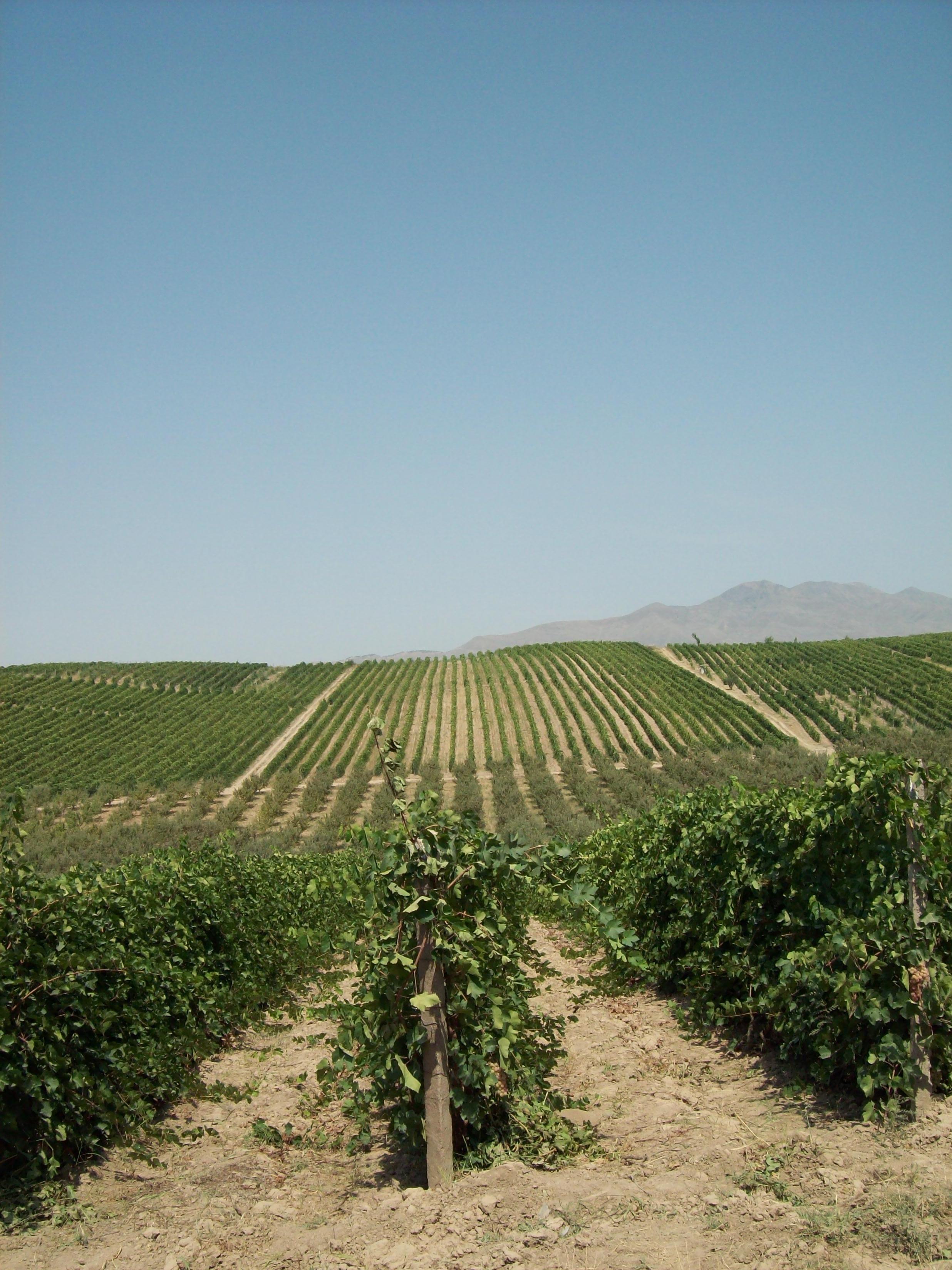
Bagizagan is the other well-known name in Samarkand wine, and it does exist and receives visitors. Its history goes back to 1964, when a grape collection and processing unit was set up on the site as part of the Khovrenko winery. After independence it was privatised and became a full-cycle winery. It later took on hundreds of hectares of its own vineyards in the Samarkand region, about 300 to 400 hectares depending on the source, and released its first estate wine, Select, from the 2007 harvest.
Bagizagan grows both European and local grapes:
- Reds: Cabernet, Merlot and Saperavi, used for blended red wines
- Whites: Chardonnay, Rkatsiteli, Bayan Shirey and the local Kuldzhinsky
- It also makes cognac-style brandy, a herbal vermouth and chacha, a strong grape spirit
There are two ways to visit:
- The tasting hall in Samarkand, attached to the winery's own boutique hotel and restaurant near the railway station. This is the easiest option for most travellers and works well as a late-afternoon or dinner stop.
- The winery and vineyards outside the city, on the rural outskirts of Samarkand, about 15 to 25 km from the centre according to different sources. Visits to the estate are arranged in advance, usually through a tour operator.
A tasting of six wines, brandies and chacha with cheese, fruit and nuts was listed at US$48 in early 2024, Monday to Saturday from 11:00 to 18:00. These figures may have changed, so check before you go; we confirm details when we plan a visit.
Other wineries near Tashkent
If your trip is focused on Tashkent, several newer wineries are within a day trip:
- Chateau Hamkor in Parkent district, about 35 to 40 km from Tashkent, is a modern winery known for cellars and oak-aged wines.
- Uzumfermer is a private family winery in the Tashkent region, with vineyards, a garden and tastings of its own wines, often combined with a meal in the countryside.
- Other family wineries have opened since rules for small producers were relaxed in 2019, so the list keeps growing.
These visits work best as a relaxed half day with lunch, and are easy to combine with the Chimgan and Charvak area in the mountains east of the capital. Visits need booking, and English is not always available, so it helps to go with a guide.
What does Uzbek wine taste like?
Uzbek wine has two faces.
The traditional style, made famous by Samarkand, is sweet and fortified: dessert wines from Muscat, Aleatico and local grapes, rich and high in sugar, with names such as Gulyakandoz and Farkhad that date from the Soviet period. They are best with dried fruit, nuts and sweets after a meal, much like a port or a sweet sherry.
The newer style is dry table wine. Saperavi and Cabernet make the most convincing reds, with ripe fruit from the strong sun; Rkatsiteli, Bayan Shirey and Chardonnay make fresh whites. Quality is improving year by year, and the better bottles from the new wineries are worth trying.
Uzbek brandy, usually sold as cognac, has a long tradition and is a popular gift. Local wine and brandy are much cheaper than imported bottles, which carry heavy taxes, so in a restaurant the local list is usually the best value. Ask your waiter which Uzbek wines they recommend; most good restaurants in Samarkand and Tashkent stock a few.
Uzbek beer, vodka and toasts
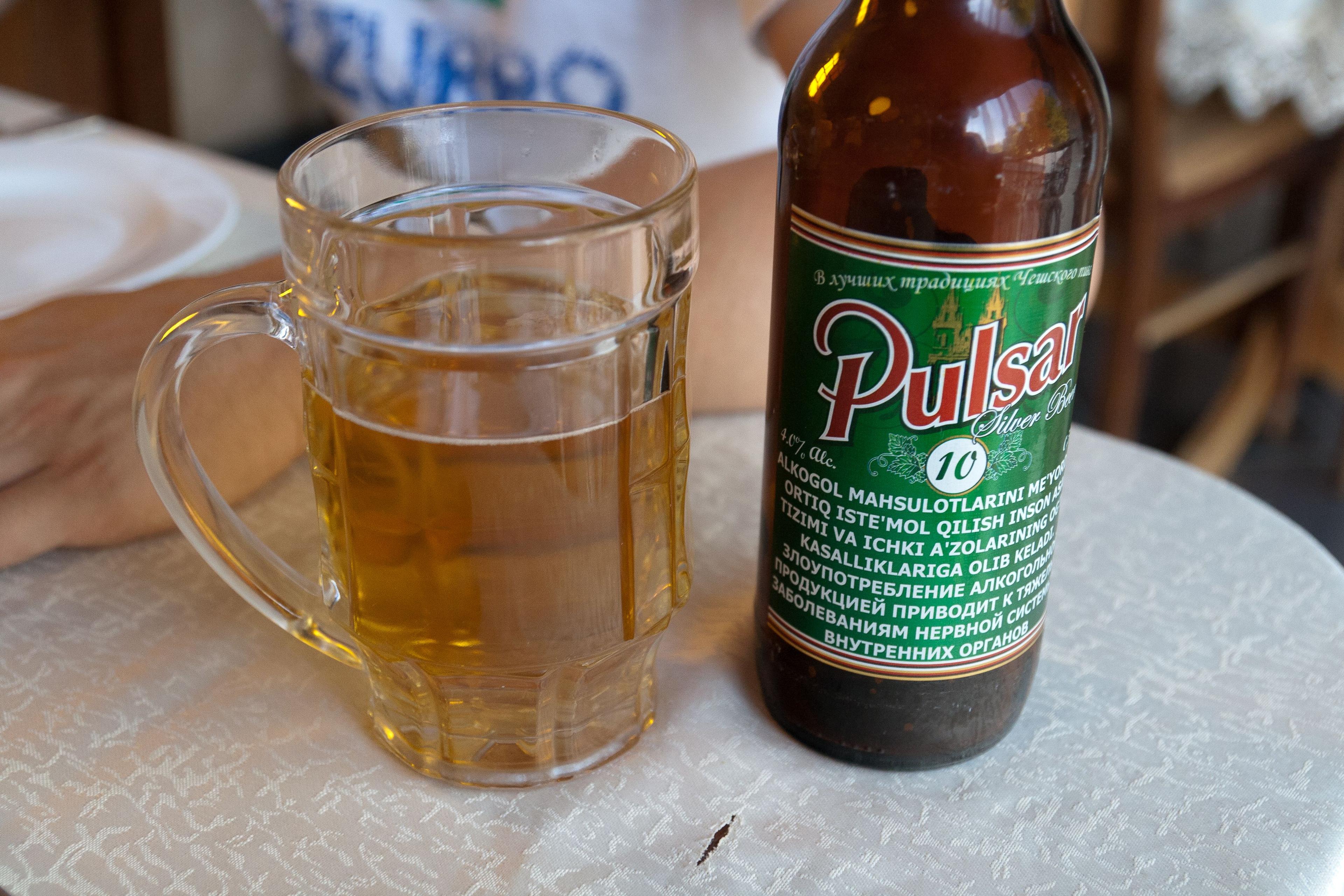
Beer is the most widely drunk alcoholic drink in Uzbekistan. Local lagers such as Pulsar and Sarbast are found in most restaurants that serve alcohol, alongside imported brands, and Tashkent has a growing number of beer bars and small breweries. In summer, a cold beer with shashlik and a bowl of salted apricot kernels is a classic combination for those who drink.
Vodka arrived with the Russian Empire and the Soviet Union, and in Tashkent and other cities it is still the traditional drink at some weddings, birthdays and banquets, alongside cognac. Where vodka is served, so are toasts. The host or an elder proposes the first toast, often a long, warm speech about the guests, the family or friendship, and others follow through the evening. If you are invited to give one, a few sincere words about your hosts and their hospitality are perfect.
You do not have to drink to take part. Raise a glass of juice or tea, or take a small sip and set it down. Nobody will press you, and it is considered polite to pace yourself.
Uzbek weddings vary a great deal: some serve alcohol, many serve none. Our guide to Uzbek weddings and mahalla life explains what to expect as a guest.
Non-alcoholic Uzbek drinks: tea, kompot, ayran and more
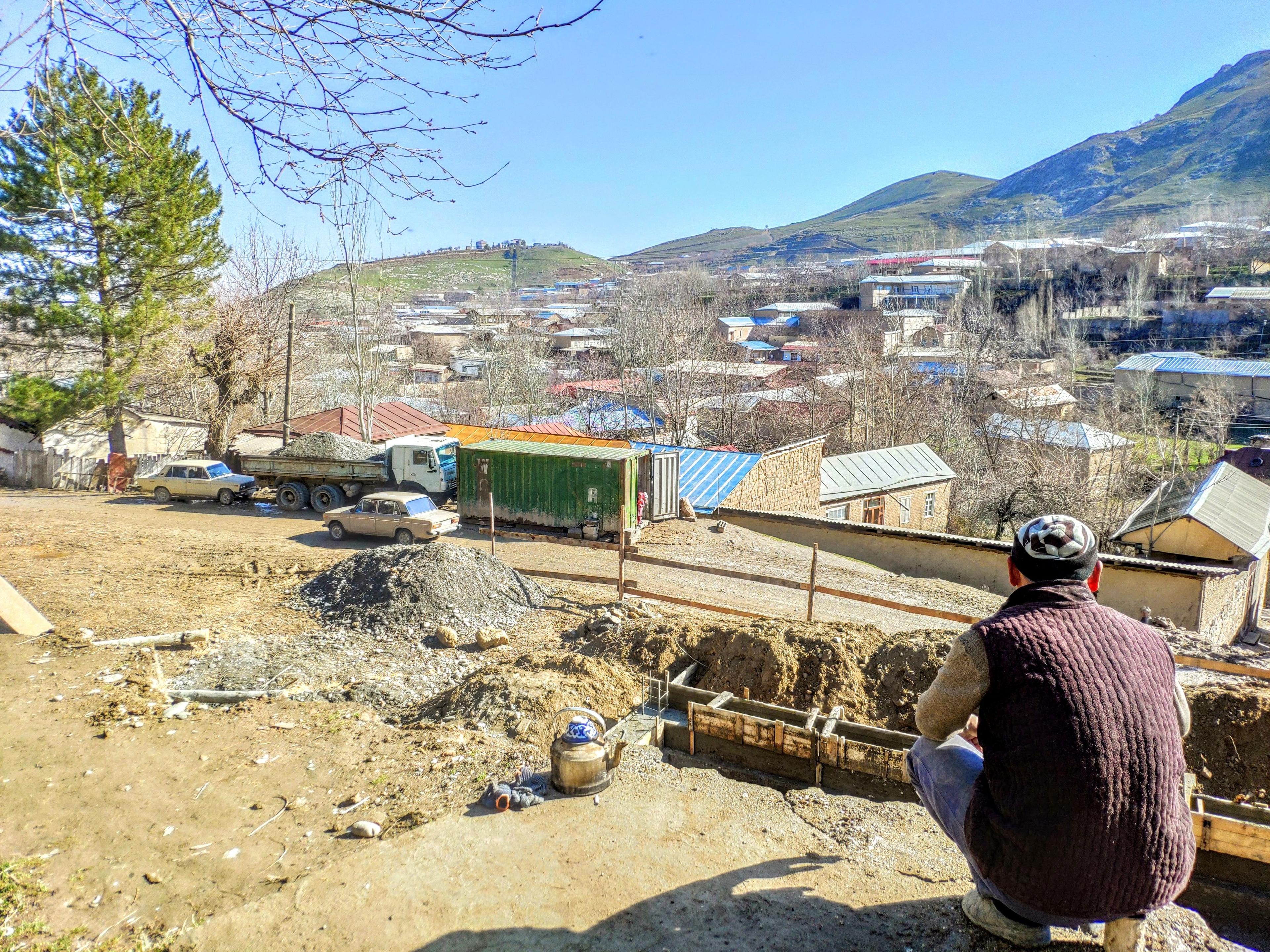
For most Uzbeks, the drink of every meal is tea. Green tea (ko'k choy) is poured from a pot into small bowls called piala all day long, and black tea (qora choy) has its own following, especially in Tashkent. Our bread, tea and chaikhana guide covers the rituals.
Beyond tea:
- Kompot: a home-made drink of fruit simmered in water with a little sugar, then cooled. Apricot, cherry, apple, quince and dried-fruit kompot are served with meals in homes and many cafés, often in a big jug.
- Ayran (ayron in Uzbek): qatiq yoghurt thinned with cold water and lightly salted, sometimes with chopped herbs. It is refreshing in summer and goes well with grilled meat and plov.
- Qatiq: the tangy local yoghurt, drunk on its own or spooned over soups.
- Chalop: a cold summer soup of qatiq, water, cucumber and herbs, somewhere between a drink and a dish.
- Fresh juice: pomegranate juice pressed to order in autumn, and carrot, apple and seasonal fruit juices at stalls and cafés.
- Mineral water and soft drinks: local still and sparkling water is sold everywhere, and the green tarragon soda known as tarkhun is a favourite with children.
- Coffee: once rare, now easy to find in Tashkent's many coffee shops and in hotels.
In summer, drink plenty. Bottled water is cheap, and our guide to health and tap water explains why it is best for visitors.
Practical tips: buying and bringing drinks home
- Where to buy: licensed shops, larger supermarkets and hotel bars in the cities. Fewer corner shops sell alcohol since the licensing changes of 2026.
- Carry your passport if you look young; the age limit is 21.
- In restaurants, local wine, beer and brandy are reasonably priced; imported wine and spirits are expensive.
- Wine and brandy make good gifts. Pack bottles well in checked luggage, and check your airline's rules and your home country's duty-free allowance for alcohol.
- During Ramadan and on religious holidays, be discreet and follow local cues.
- Near mosques, mausoleums and pilgrimage sites, including the Imam al-Bukhari complex and Bahauddin Naqshband, do not carry or drink alcohol.
If you prefer an alcohol-free trip, that is easy to arrange: most restaurants are halal and many serve no alcohol at all. Our halal travel guide has more.
Wine tasting and drinks with TourEast
We can add a museum tour and tasting at the Khovrenko winery, an evening at Bagizagan, or a countryside lunch at a winery near Tashkent to any private or small-group itinerary, with a guide to translate and transport so nobody has to drive. Our Samarkand weekend and Silk Road tours combine easily with a tasting, and alcohol-free itineraries are just as easy to plan.