
Monument · Mesolithic–Neolithic, roughly 8th–4th millennium BC (dating debated)
Zarautsay Rock Paintings
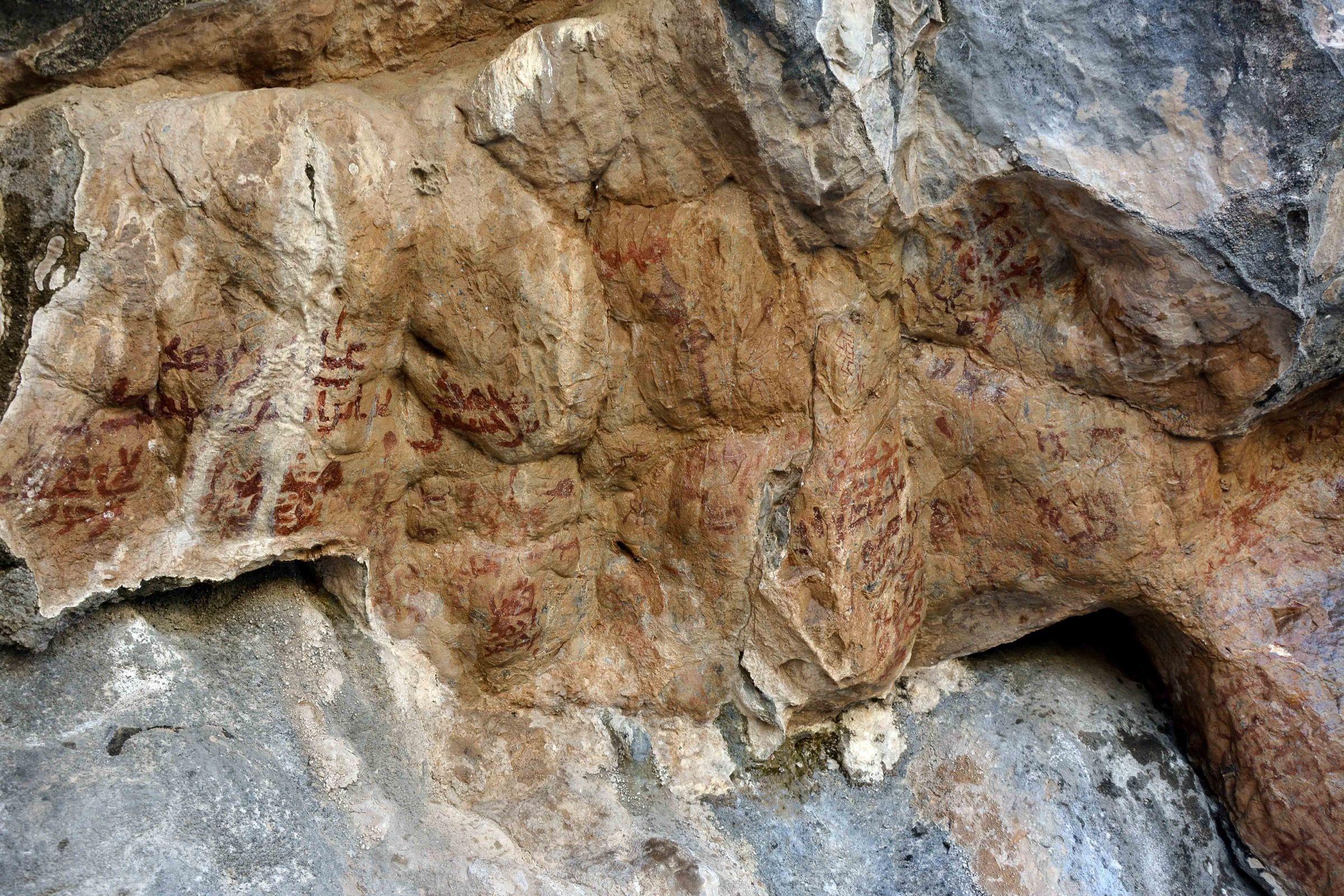
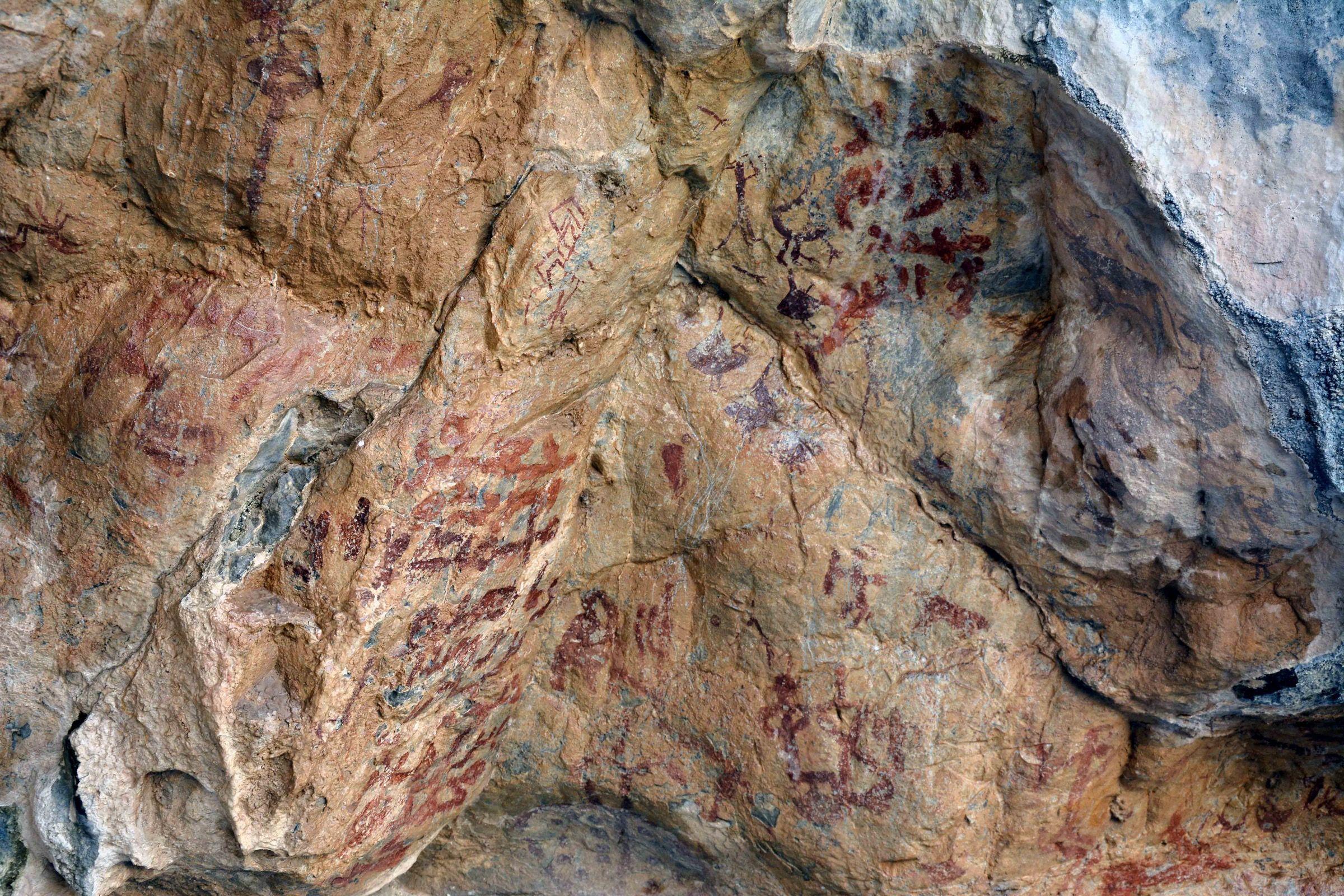
Red-ochre paintings of masked hunters, dogs and wild bulls on the walls of a rock shelter in the Kugitang mountains. Among the oldest painted rock art in Central Asia, reached by a walk through a wild gorge west of Termez.
About
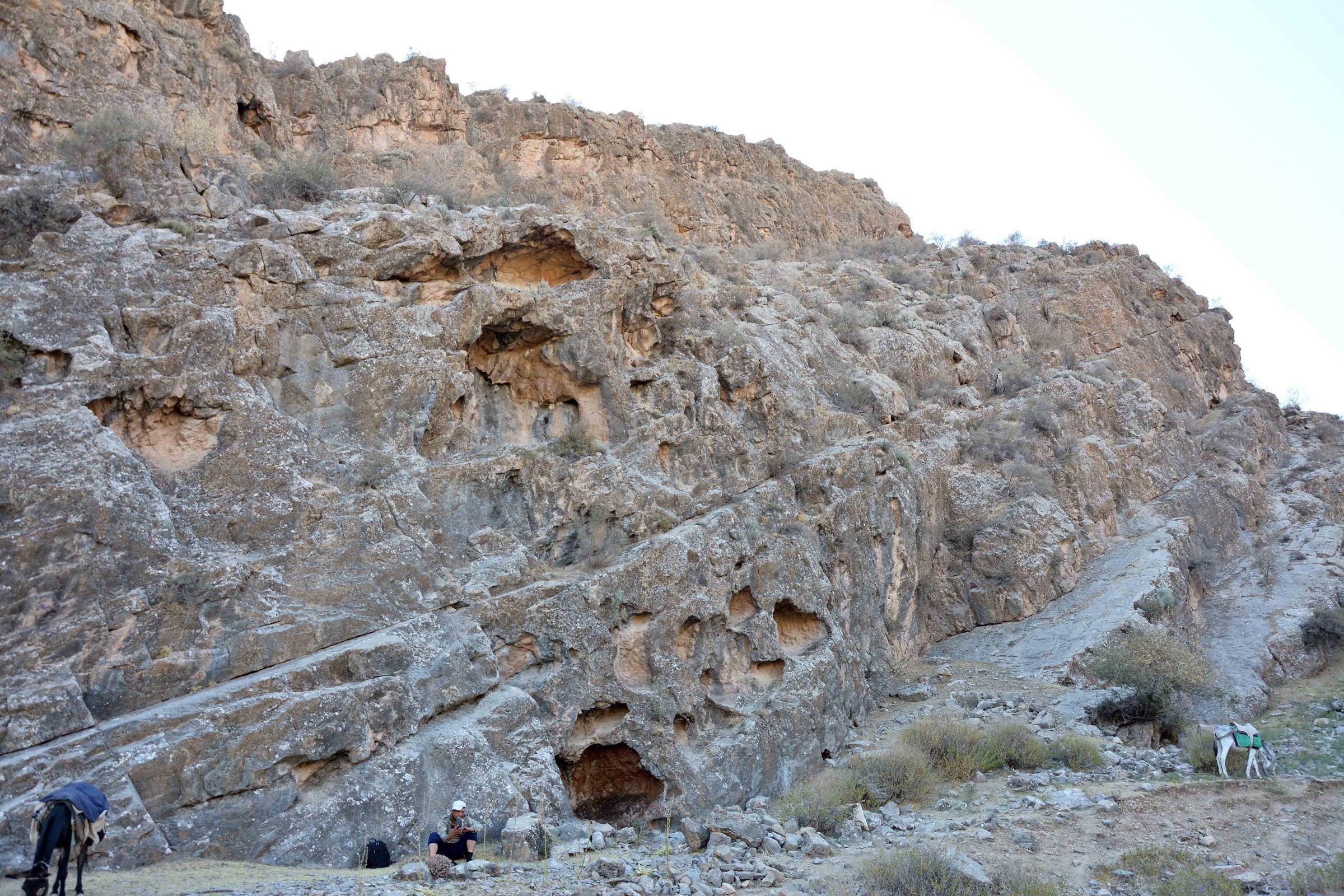
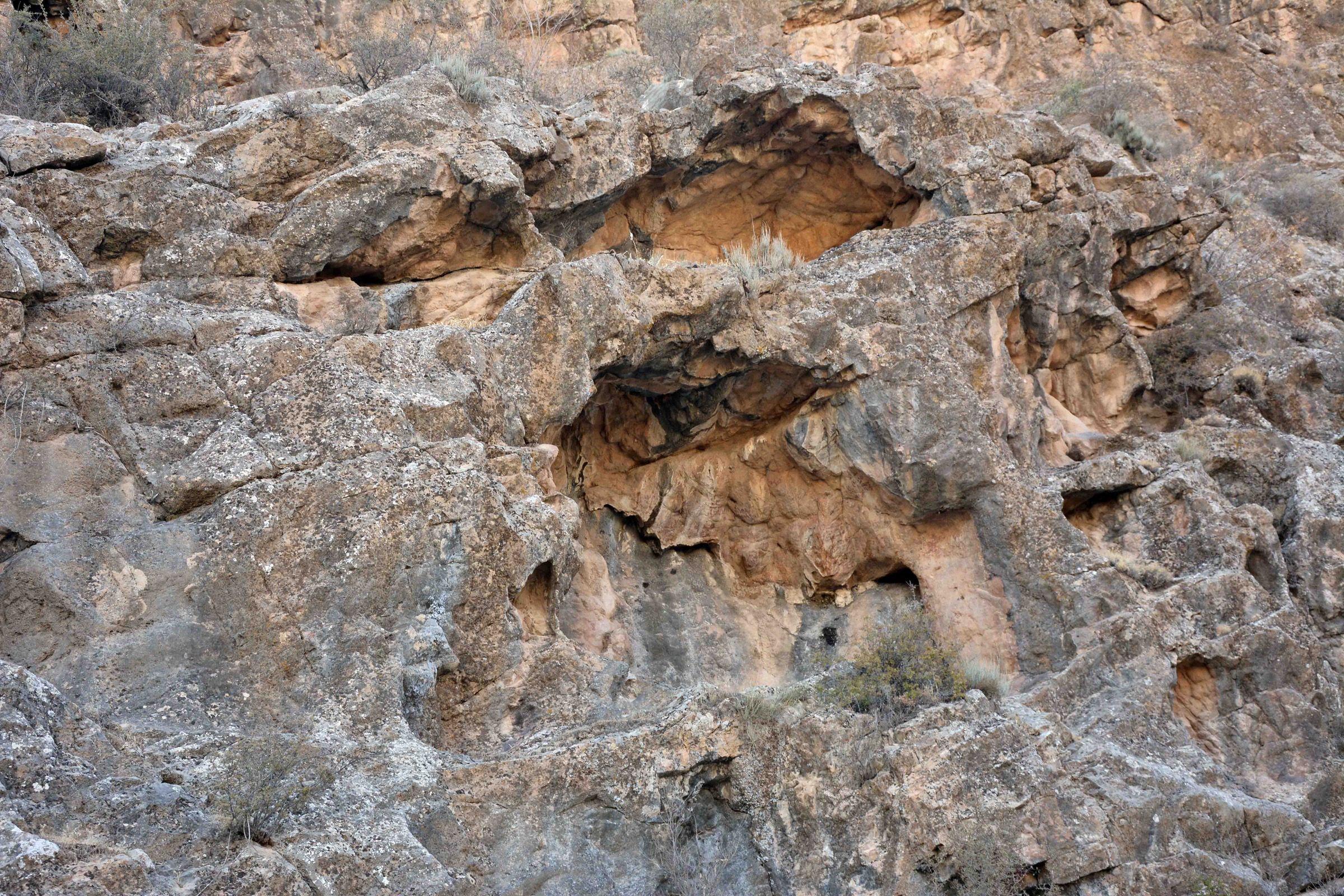
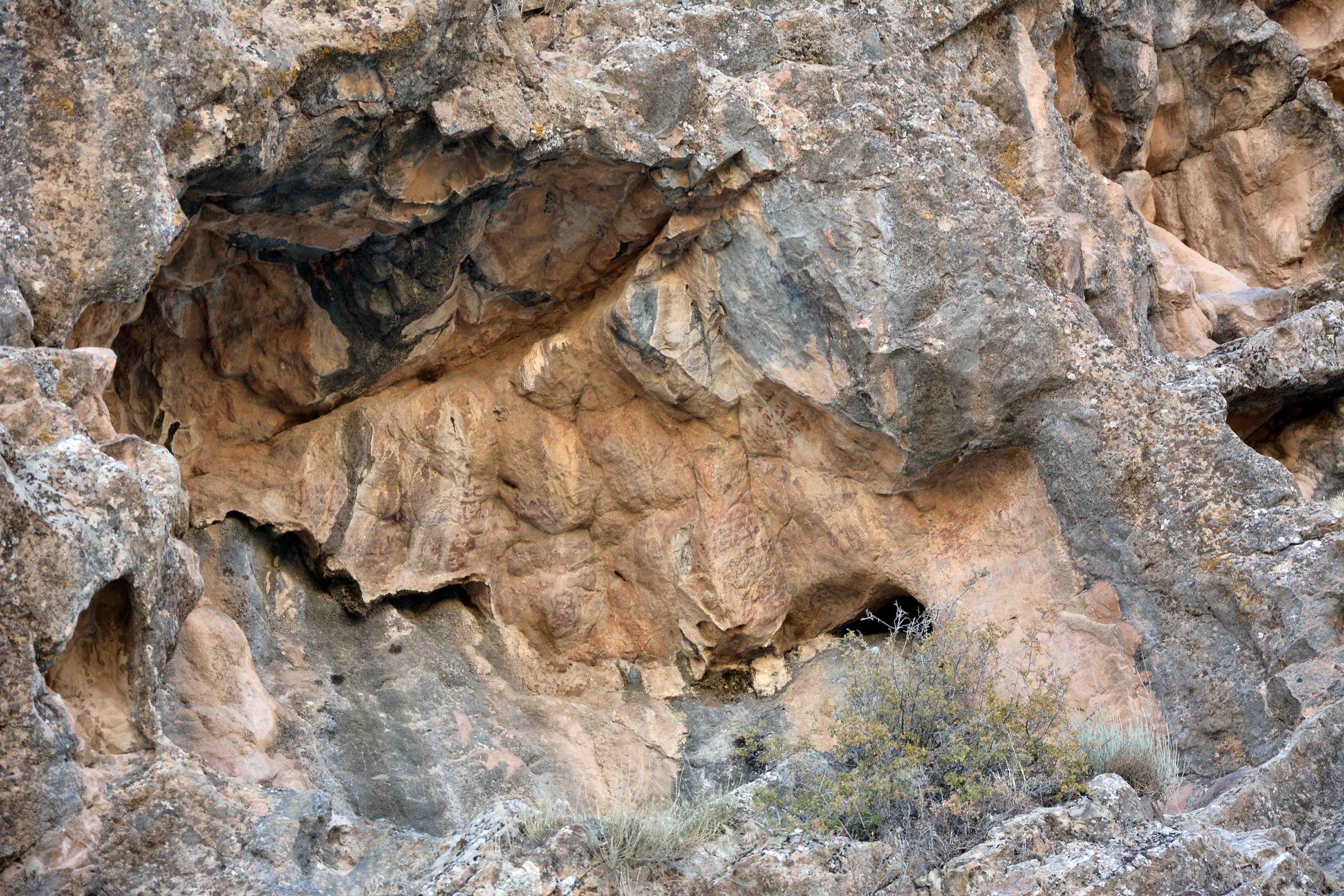
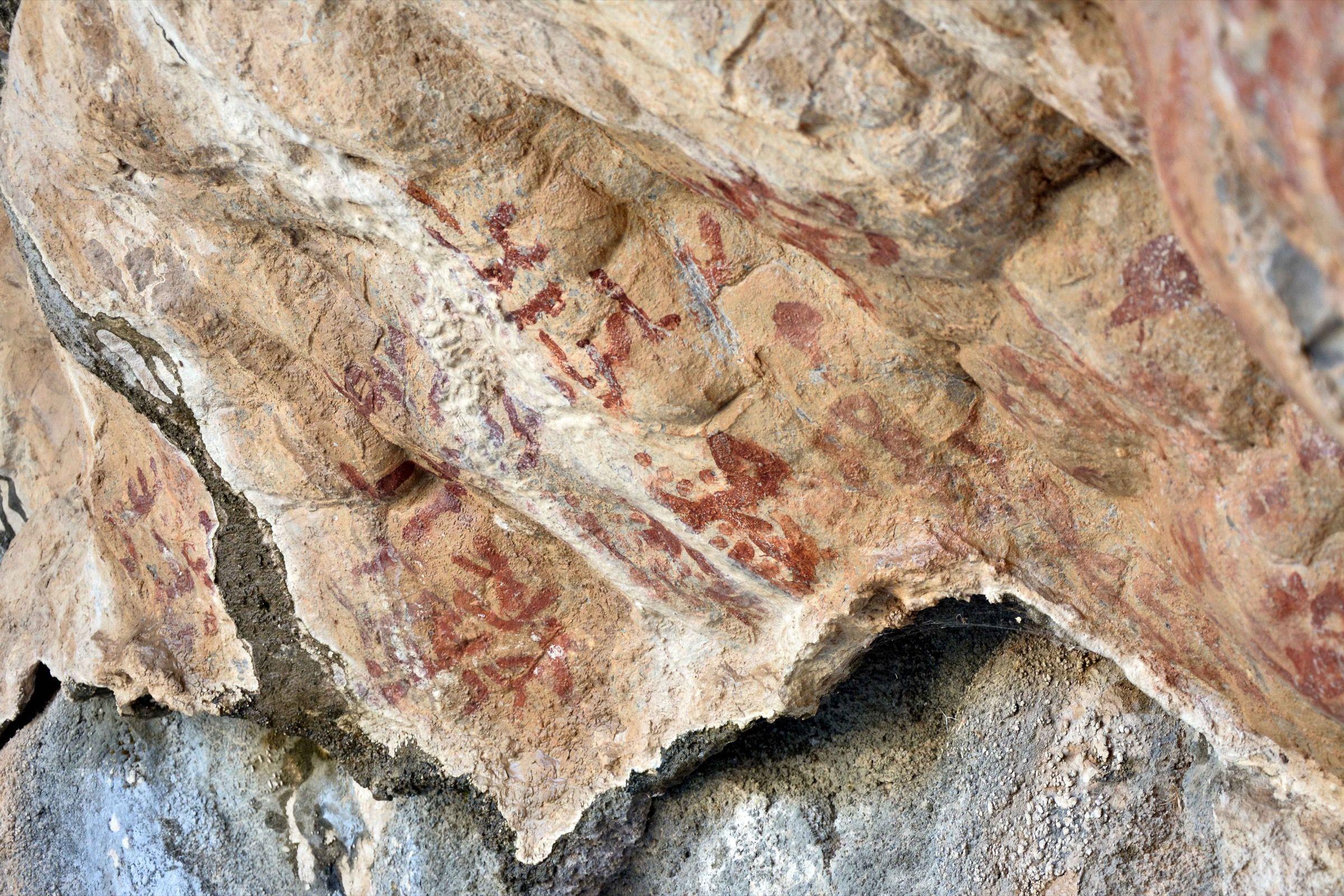
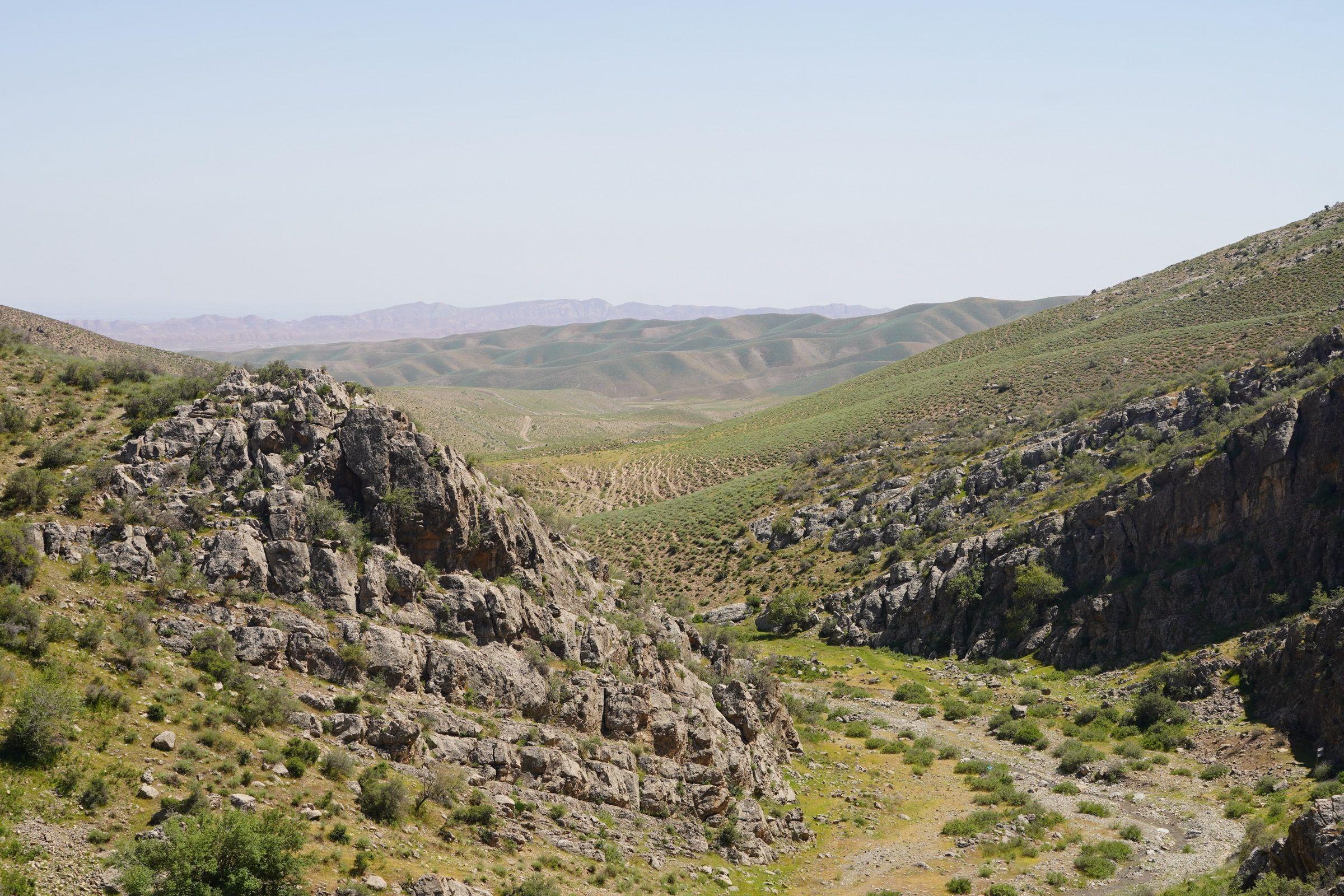
Zarautsay is a gorge on the eastern slope of the Kugitang range, in the Sherabad district about 100 km north-west of Termez, inside the Surkhan State Reserve. On the ceiling and walls of a shelter known as Zarautkamar, and in smaller niches nearby, prehistoric people painted some two hundred figures in red ochre mixed with animal fat. They are the best-known painted (as opposed to pecked) rock art in Uzbekistan and are on the country's UNESCO Tentative List.
What the paintings show
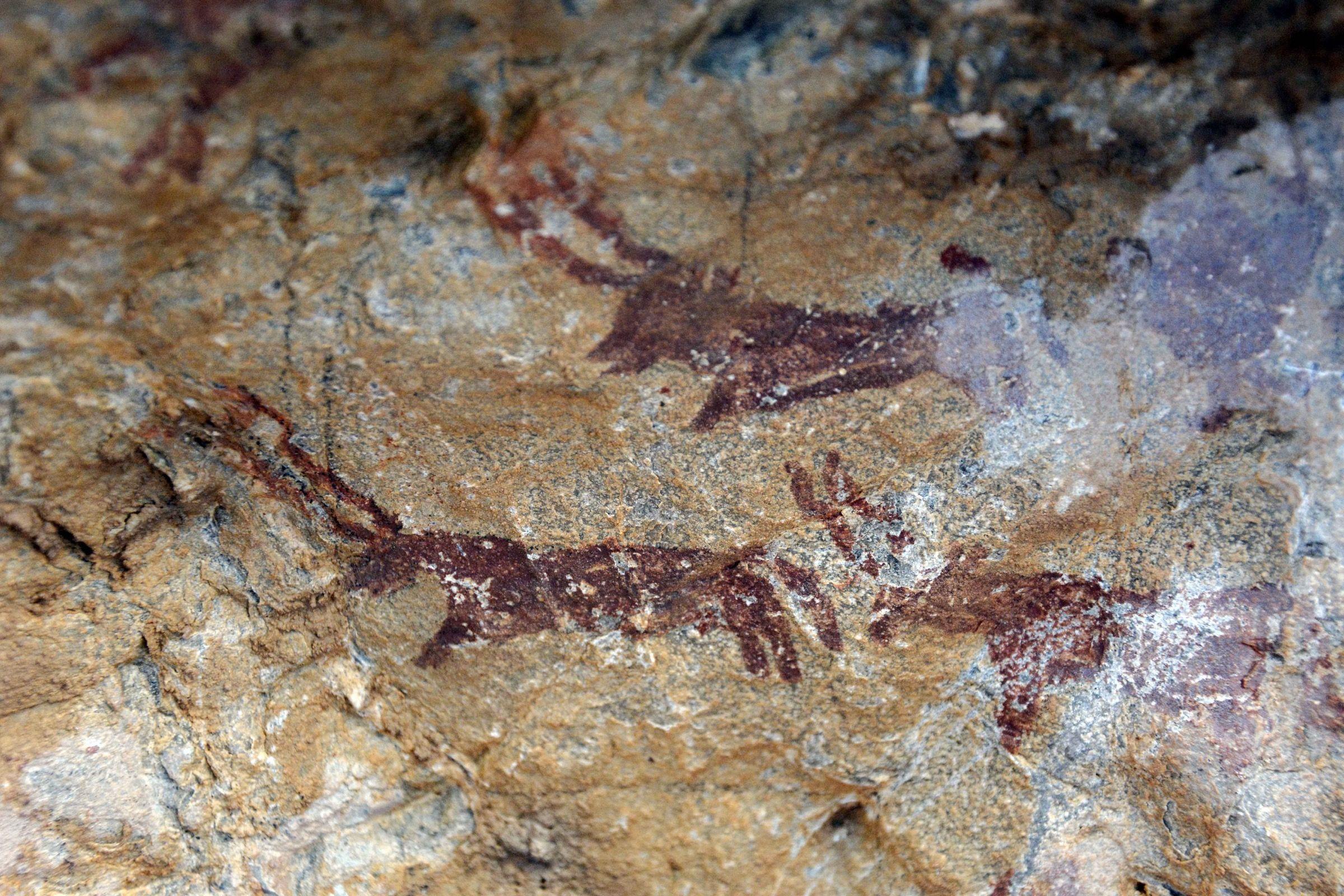
The central scene is a hunt: a group of men in long cloaks and masks, some apparently disguised as birds or animals, surround wild bulls with the help of dogs and bows. Smaller panels show ibex, gazelle, foxes and single figures, and a few images are in black pigment rather than red. Scholars usually date the main group to the Mesolithic or early Neolithic, when the valley was wetter and aurochs still roamed it; some have argued for a much earlier, late-Palaeolithic date for the oldest bulls, and the question is open. What is certain is that the paintings are faint, fragile and slowly fading as water seeps through the rock.
Discovery and study
The shelter was reportedly first noticed by a local hunter in the early 20th century, and was properly recorded in 1939–45 by the Termez archaeologist G. V. Parfyonov, who copied the figures and published them. Later surveys added more panels in the gorge. The copies are more legible than the originals today, and the Termez Archaeological Museum shows reproductions that help the eye before a visit.
The gorge
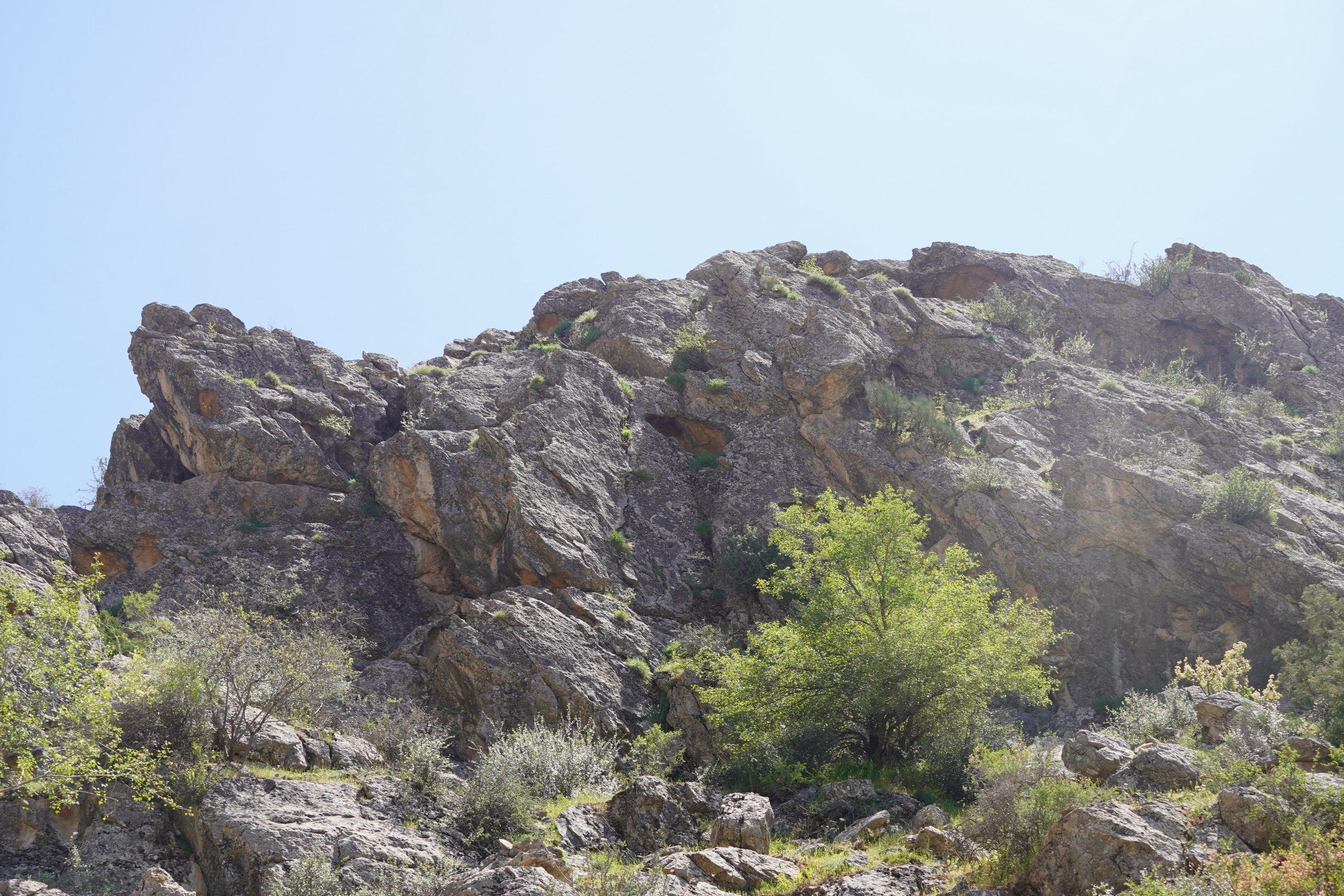
The approach is as much the point as the paintings. The track from the village ends at the mouth of a narrow limestone canyon, and from there the route is on foot for one to two hours along a stream, between walls of pink and grey rock with juniper and pistachio on the ledges. Birds of prey, and occasionally wild sheep, are seen on the cliffs. Because the gorge is inside a reserve, visits are made with a permit and a ranger or guide; the reserve office in Sherabad or a Termez operator arranges this.
Practical notes
Wear sturdy shoes and carry water; there is no shade outside the canyon. Do not touch or wet the paintings, which damages the pigment. The site is best in spring, when the gorge is green and the light is soft, and in October. It can be combined in one long day with the Khojaikon salt cave or with Kampyrtepa on the way back to Termez.
What to see
- The hunting scene of masked men, dogs and wild bulls in red ochre
- Smaller panels of ibex, gazelle and single figures
- A rare example of painted rather than pecked prehistoric rock art
- The walk through the Zarautsay canyon in the Kugitang mountains
- Wildlife of the Surkhan State Reserve on the cliffs
- Reproductions of the paintings in the Termez Archaeological Museum
Gallery
More sights in Termez & Surkhandarya
All of Termez & Surkhandarya
See Zarautsay Rock Paintings with a local guide
We build private and small-group trips around the places you want to see — with guides who grew up here.