
Nature · Bronze Age to Middle Ages
Sarmishsay Petroglyphs
A rocky gorge in the Karatau hills north-east of Navoi with thousands of rock carvings, from Bronze Age bulls and hunters to medieval inscriptions: one of the richest petroglyph sites in Central Asia.
About
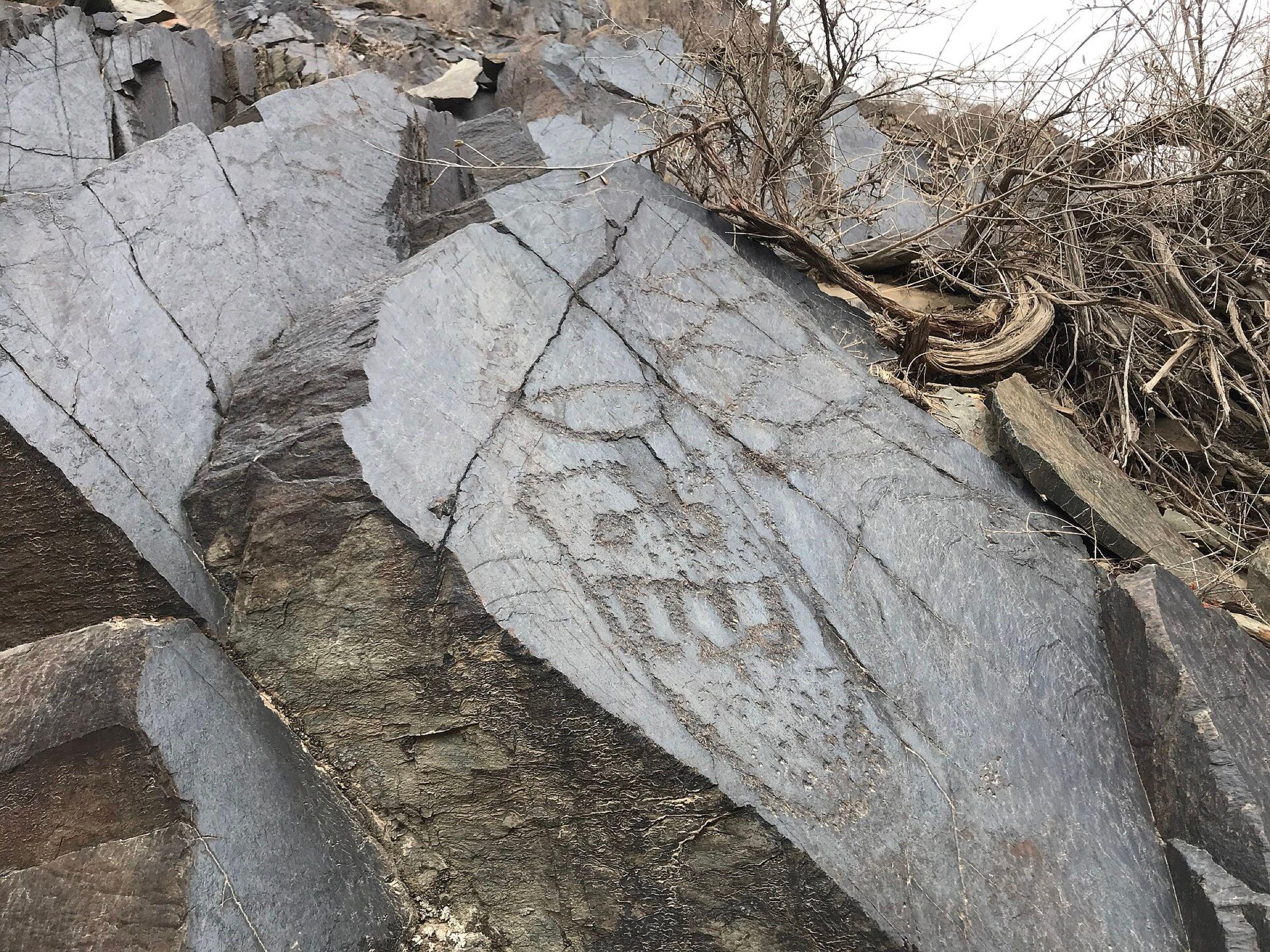
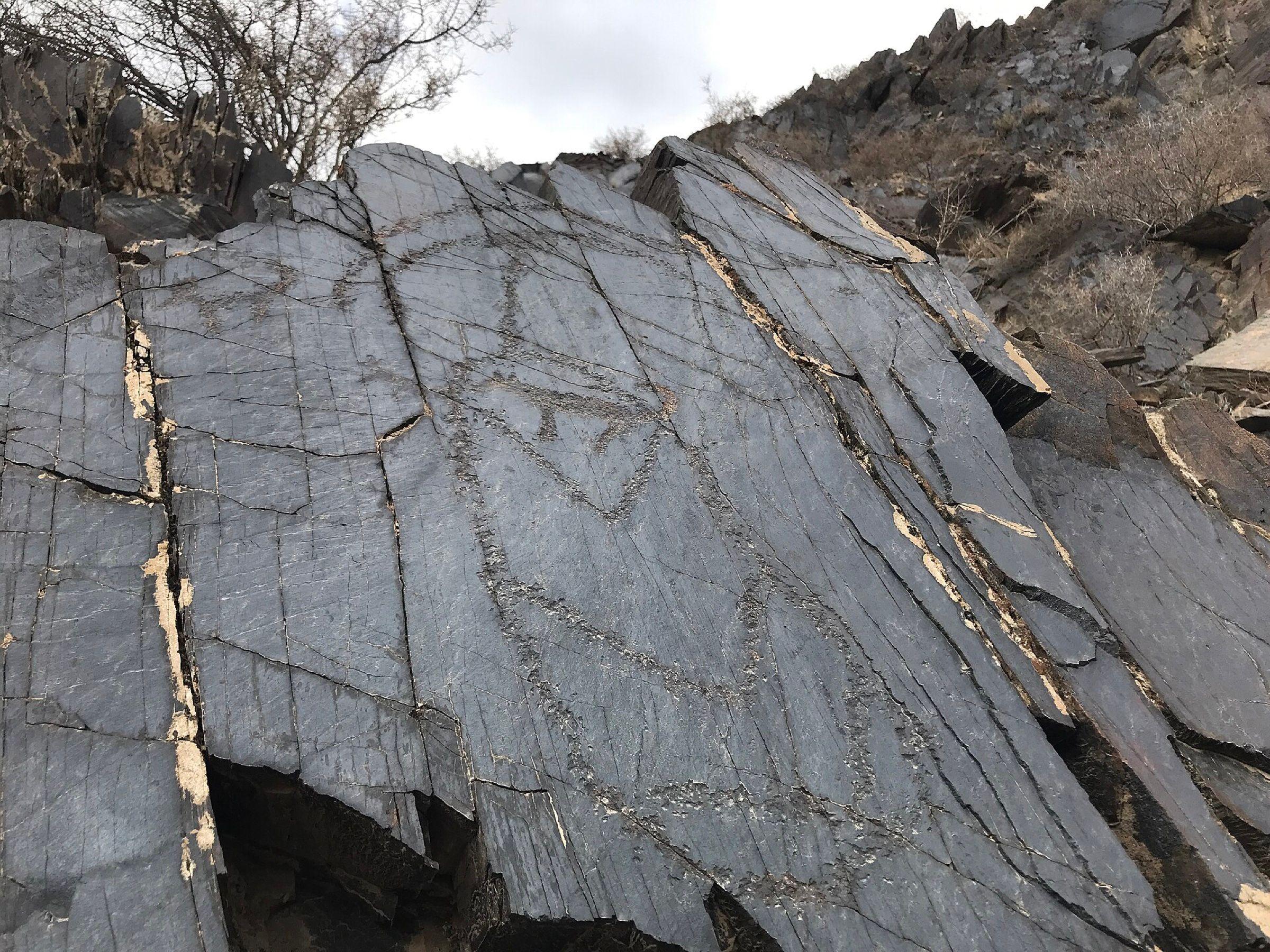
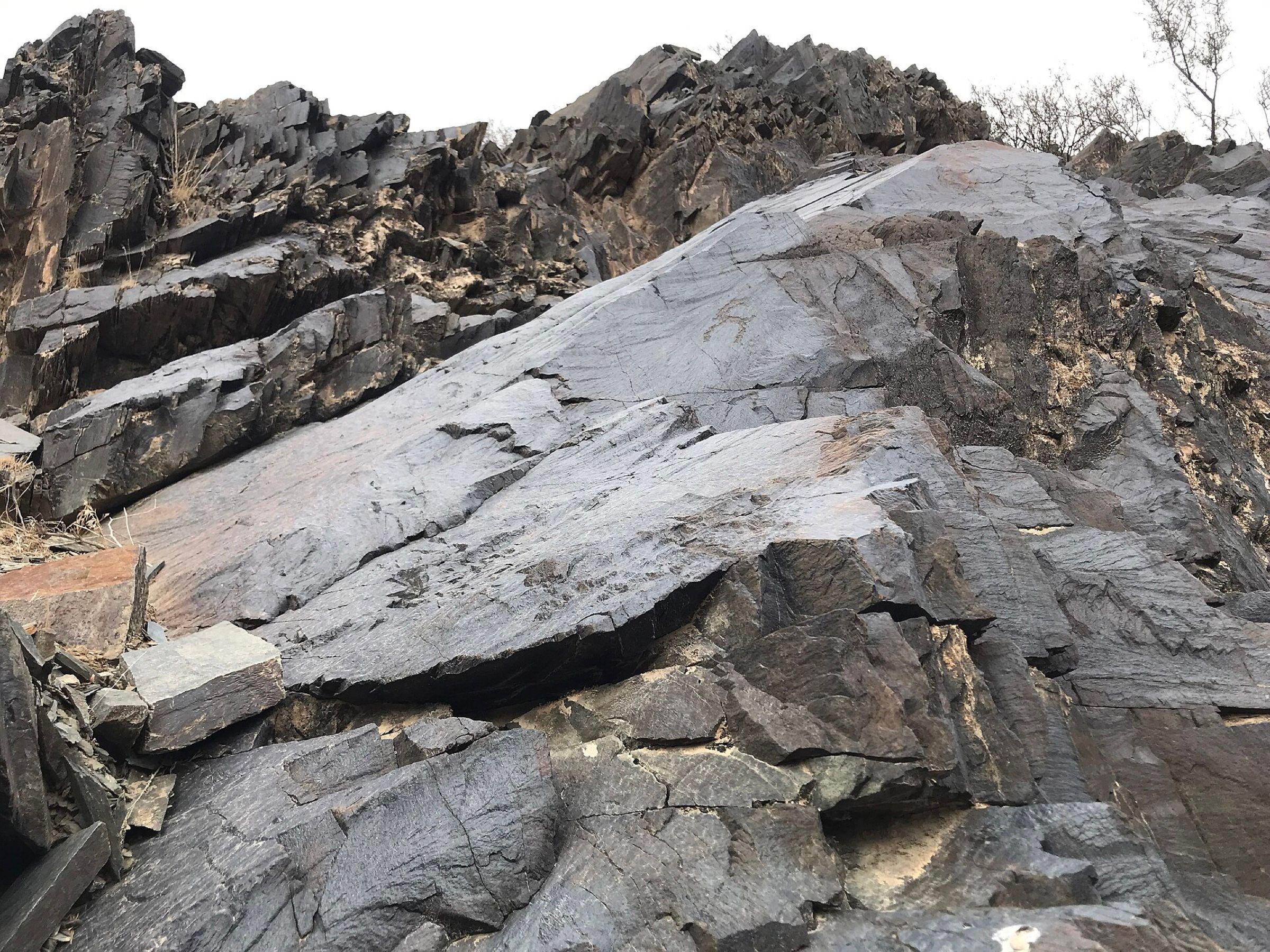
Sarmishsay is a gorge cut by a seasonal stream into the Karatau hills, a western outlier of the Nuratau mountains, in Navbahor district of Navoi region. On the dark, varnished rock faces along its sides, people carved images over thousands of years. Estimates of their number range from several thousand to more than ten thousand, which places Sarmishsay among the largest rock-art sites in Central Asia.
What the carvings show
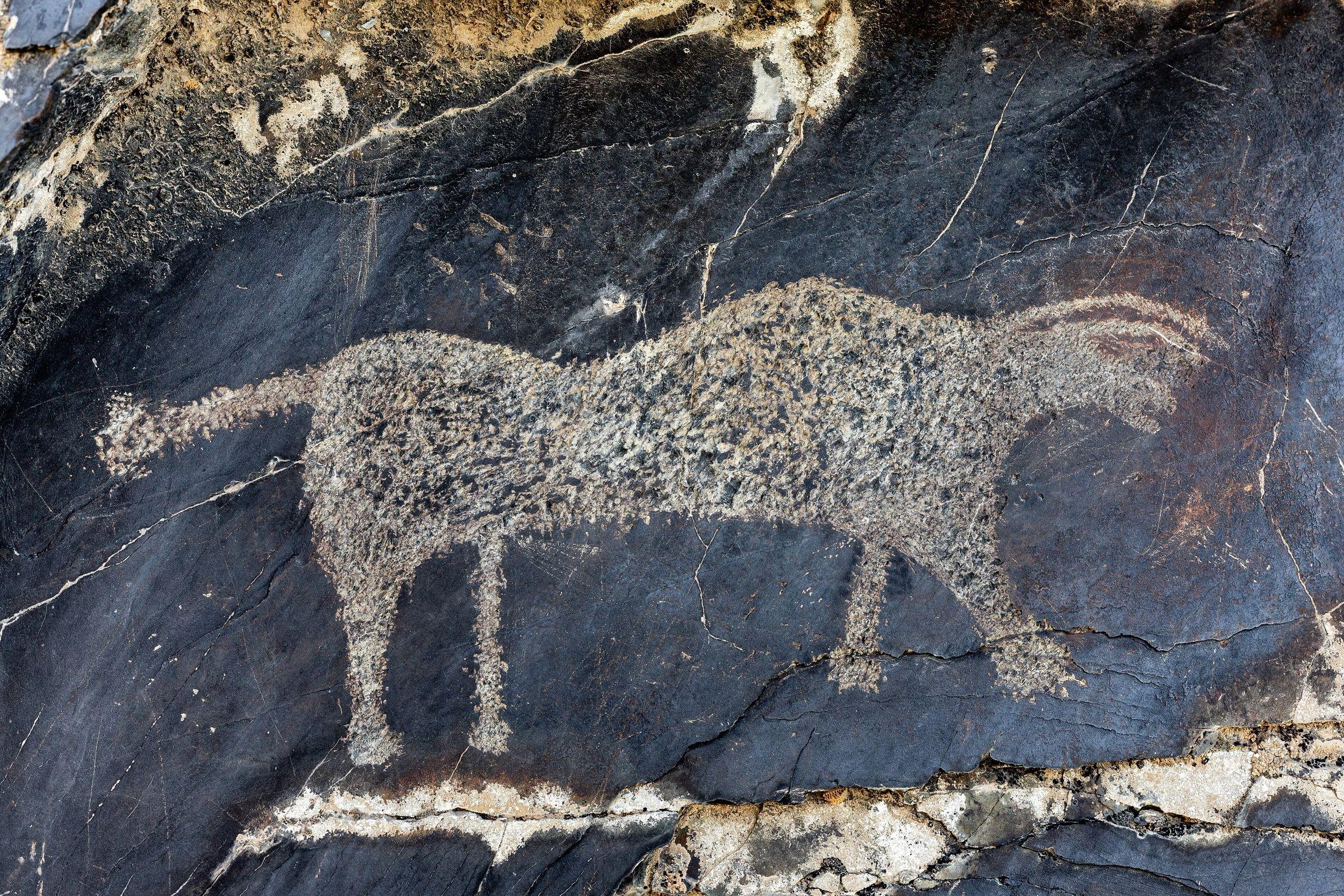
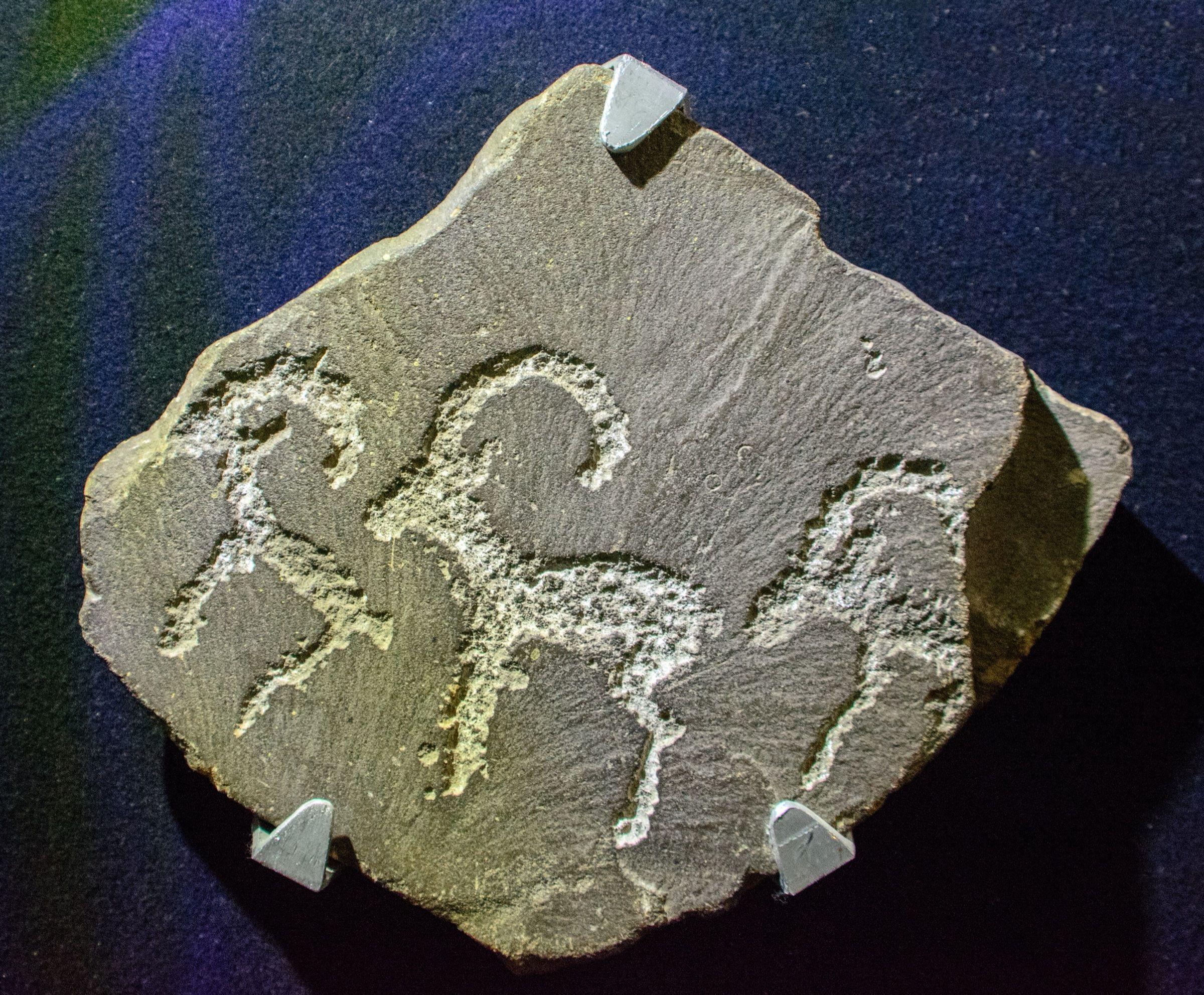
The oldest images are attributed to the Bronze Age and perhaps earlier: wild bulls, mountain goats, deer, predators and hunters with bows. Later layers include horsemen, scenes of the hunt and herding, signs and symbols whose meaning is debated, and from the medieval period Arabic and Turkic inscriptions. The gorge also has burial mounds and traces of ancient mining, showing how long people have used this valley.
Visiting
A track leads to the mouth of the gorge, and from there a walk along the stream bed reveals the carvings on both sides; a local guide helps to find the best panels. The ground is rocky, there is no shade, and facilities are minimal. Go in the morning or late afternoon, when low light makes the engravings stand out. Sarmishsay fits well into a day between Bukhara or Navoi and Nurata.
What to see
- Bronze Age images of bulls, goats and deer
- Hunting and herding scenes with archers and horsemen
- Enigmatic signs and symbols
- Medieval Arabic and Turkic inscriptions
- A walk along the rocky stream bed of the gorge
Gallery
More sights in Nurata & Lake Aydarkul
All of Nurata & Lake Aydarkul
See Sarmishsay Petroglyphs with a local guide
We build private and small-group trips around the places you want to see — with guides who grew up here.