

Palace · Early 1870s
Khudayar Khan Palace, Kokand
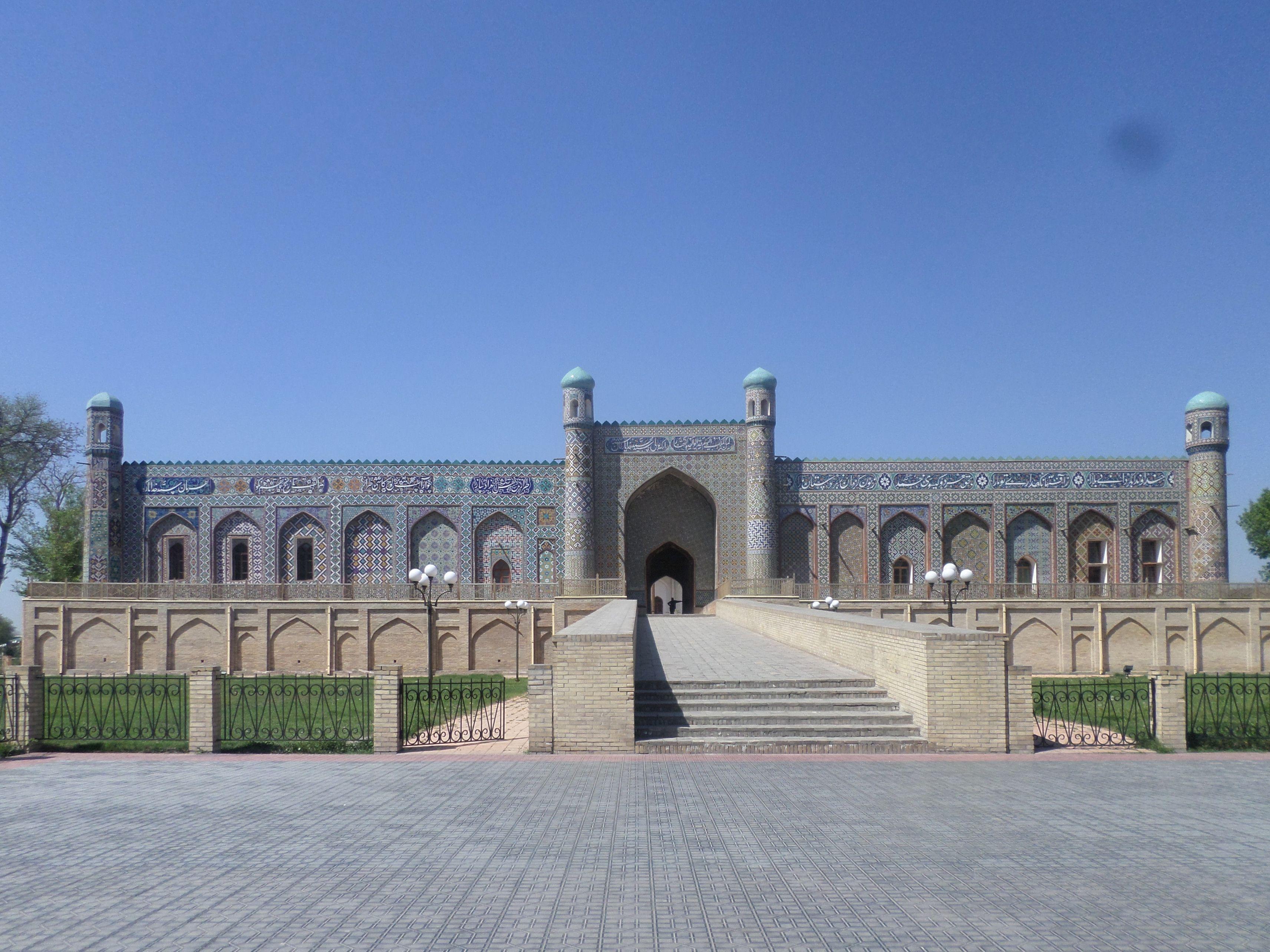
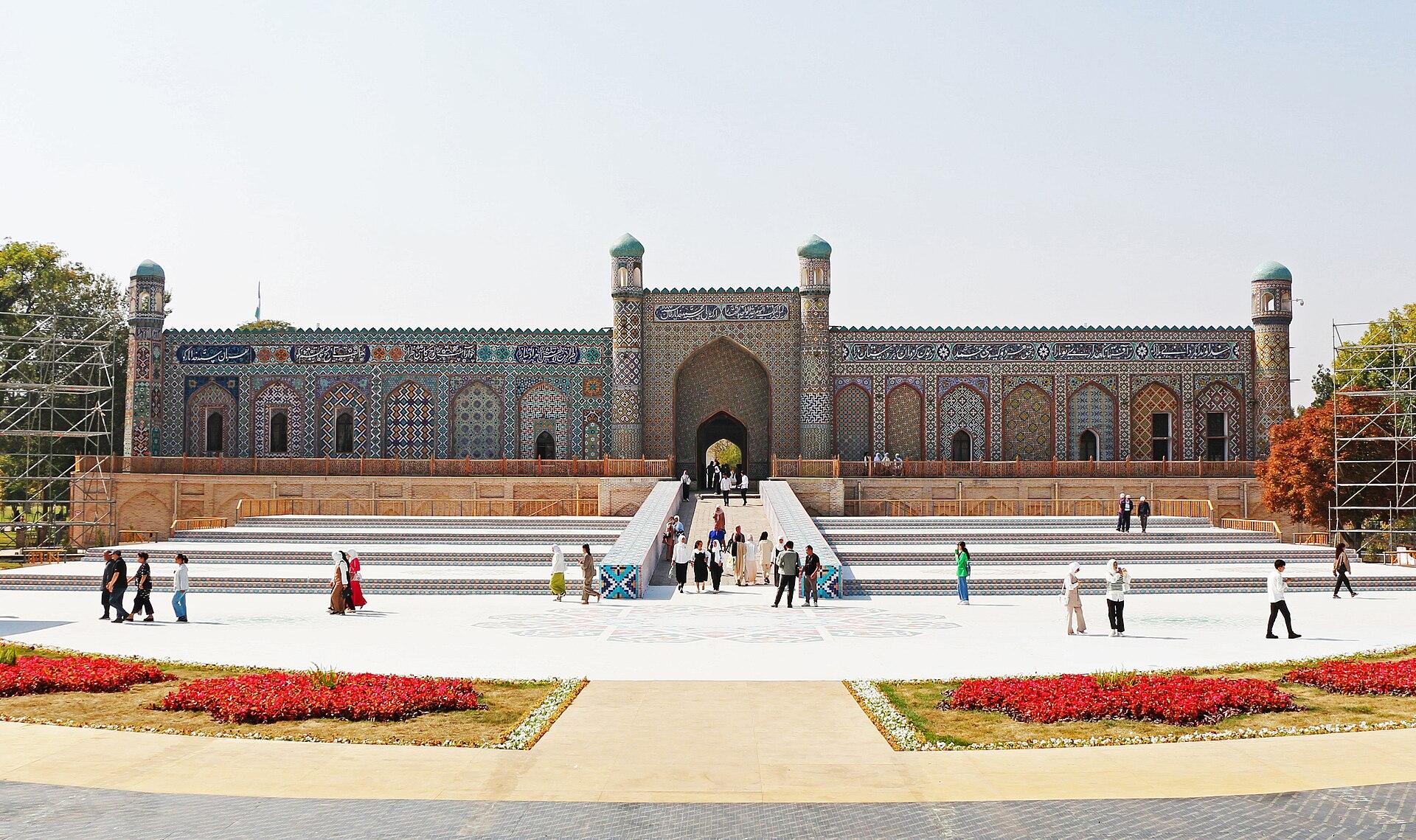
The tiled palace of the last ruling khan of Kokand, completed in the early 1870s on the eve of the Russian conquest: a long blue, green and yellow façade on a high platform, with painted ceilings and the regional museum inside.
About
For about a century and a half Kokand was the capital of an independent khanate that controlled most of the Fergana Valley and, at times, Tashkent. Its grandest survivor is the palace of Khudayar Khan, the last ruler to hold real power, built in the early 1870s. The timing gives the building its poignancy: within a few years of its completion the khan had fled a rebellion, and in 1876 the Russian Empire abolished the khanate altogether.
The façade is the reason to come. Raised on a high platform and reached by a long ramp, it stretches across the square in a sequence of tiled panels in blue, green, white and yellow, framed by slim corner towers and crowned by an inscription. The colours are brighter and the composition more theatrical than in the older monuments of Bukhara or Samarkand, and that is part of its charm: this is 19th-century court architecture, made to impress visitors arriving at the gate.
Inside the palace
Originally the palace had seven courtyards and well over a hundred rooms, including the khan's private quarters and a harem. Today five courtyards and 19 rooms survive. Since 1925 they have housed the Kokand regional museum, with displays of local history, crafts, weapons, costume and photographs of the khanate's last years. The original throne is in the Hermitage in St Petersburg, and a replica stands in the throne room.
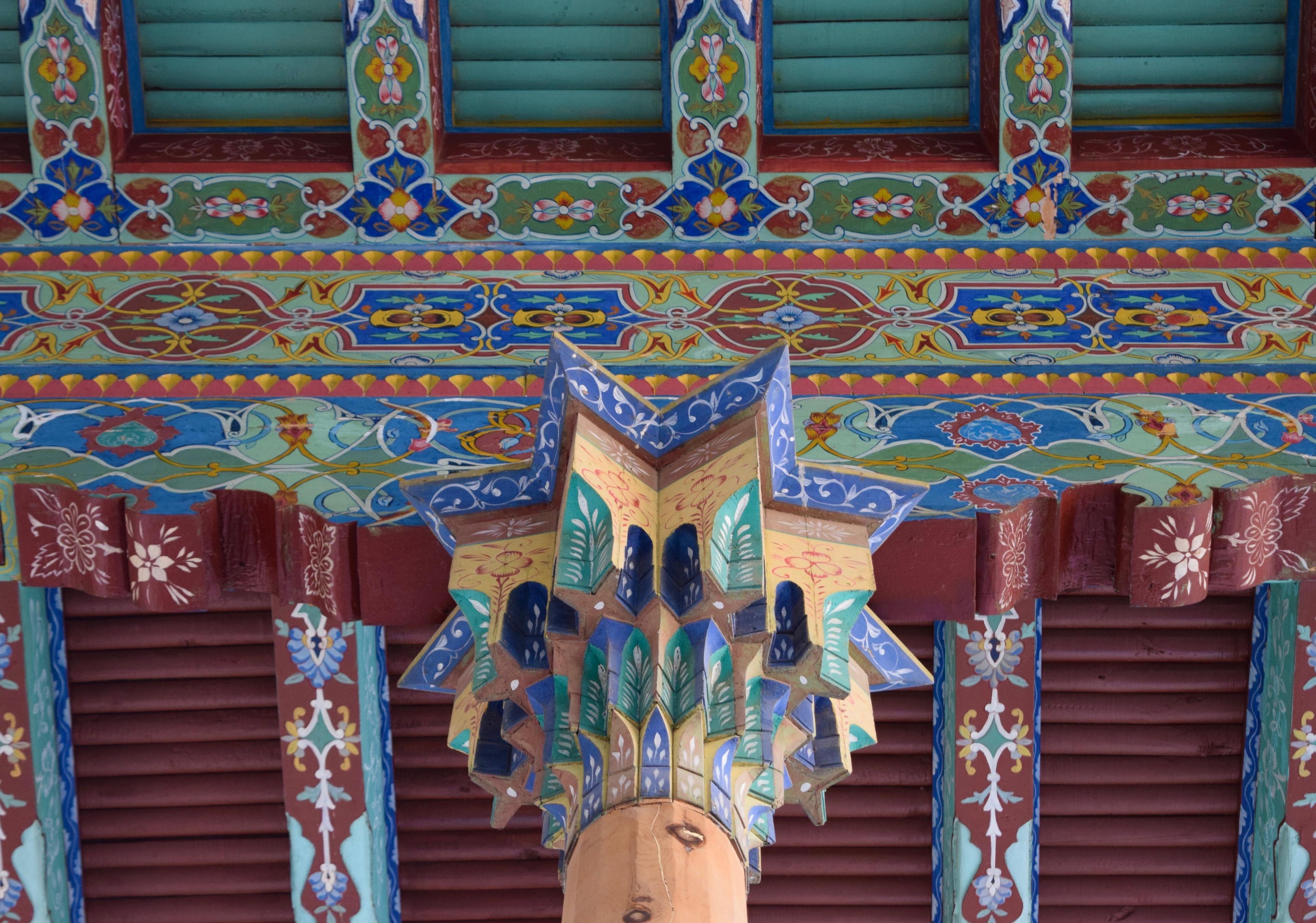
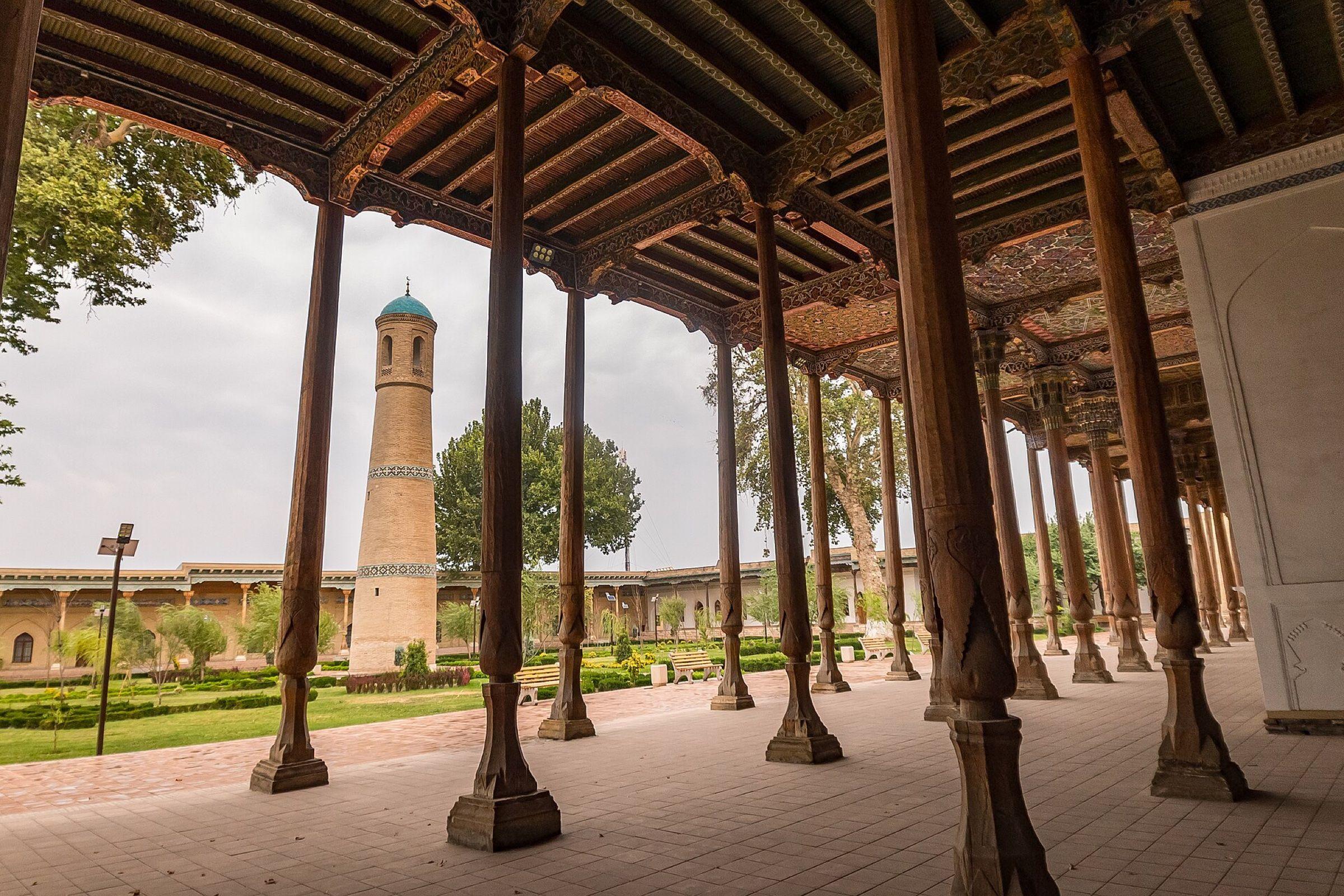
Look up as you walk through. The painted and carved wooden ceilings, in reds, greens and gold, are among the finest of their kind in Uzbekistan, and each room has a different design. The courtyards, planted with trees, are pleasant places to pause between halls.
Visiting
The palace is open daily, roughly from 09:00 to 17:00 or 18:00, with a modest entrance fee for the museum. Allow about an hour. The best light on the façade is in the morning, when the sun falls on the tiles; the square in front gives the full view. Kokand is about four to five hours from Tashkent by road over the Kamchik Pass, or around four hours by train, and the palace pairs naturally with the Juma Mosque and the Narbutabey Madrasah in the same town, and with the potters of Rishtan on the road to Fergana.
What to see
- The long tiled façade on its high platform
- Painted wooden ceilings, different in every room
- The throne room with a replica of the khan's throne
- Kokand regional museum collections of crafts and weapons
- Tree-shaded inner courtyards
- Morning light on the tiles from the square in front
Gallery



More sights in Fergana Valley
All of Fergana Valley
See Khudayar Khan Palace, Kokand with a local guide
We build private and small-group trips around the places you want to see — with guides who grew up here.