
Mosque · Early 19th century (c. 1812–1818)
Juma Mosque, Kokand
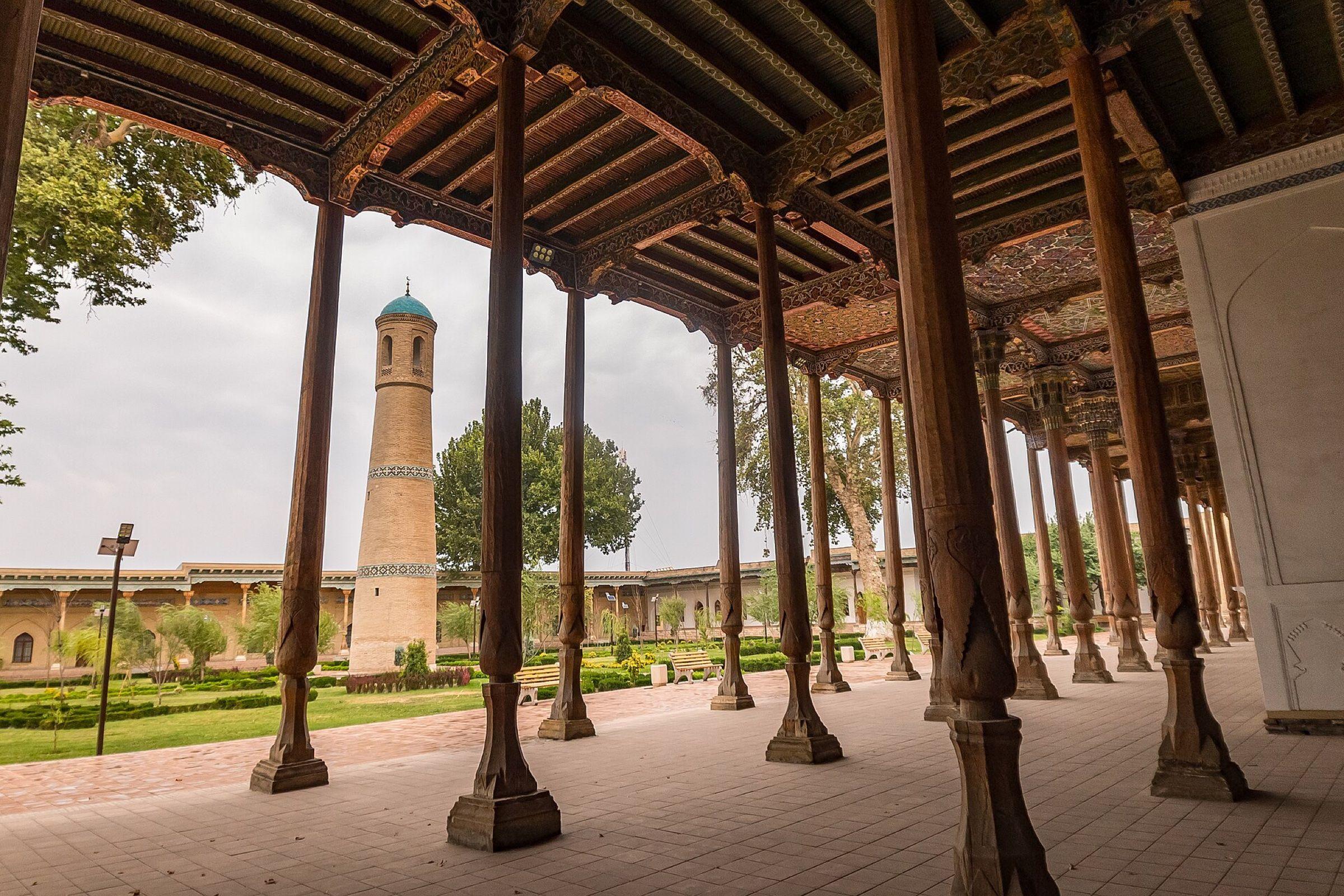
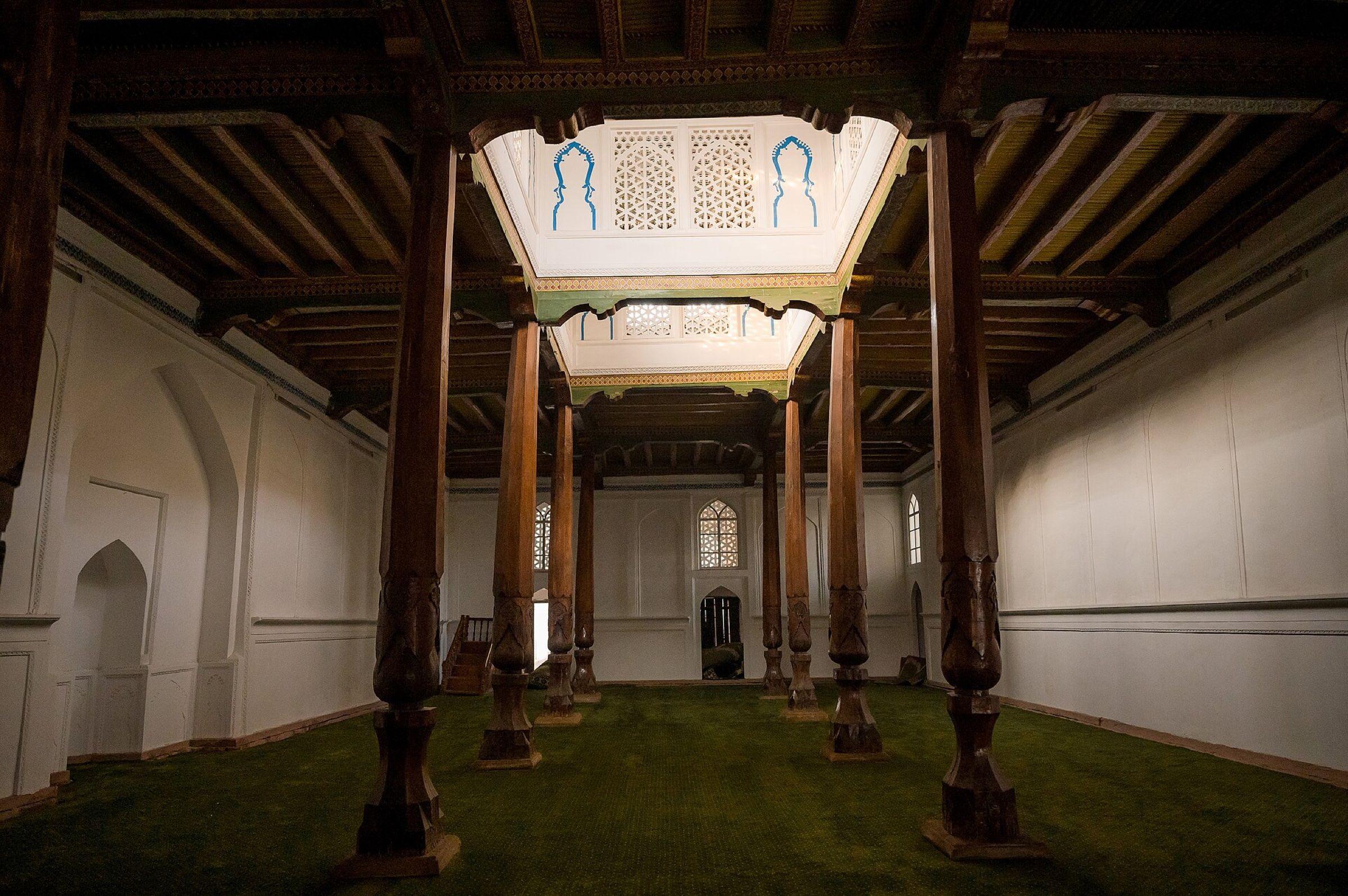
Kokand's Friday mosque, built under Umar Khan in the early 19th century: an open iwan about 100 metres long carried on 98 carved wooden columns, with a minaret of about 22 metres in the courtyard.
About
The Juma (Jami) Mosque was the main Friday mosque of the Kokand khanate, built under Umar Khan, who ruled from 1810 to 1822 and presided over the khanate's golden age of poetry and building. Sources date its construction to the 1810s, with work starting, stopping and resuming over several years. It is the finest example of the Fergana Valley's tradition of great wooden-columned mosques.
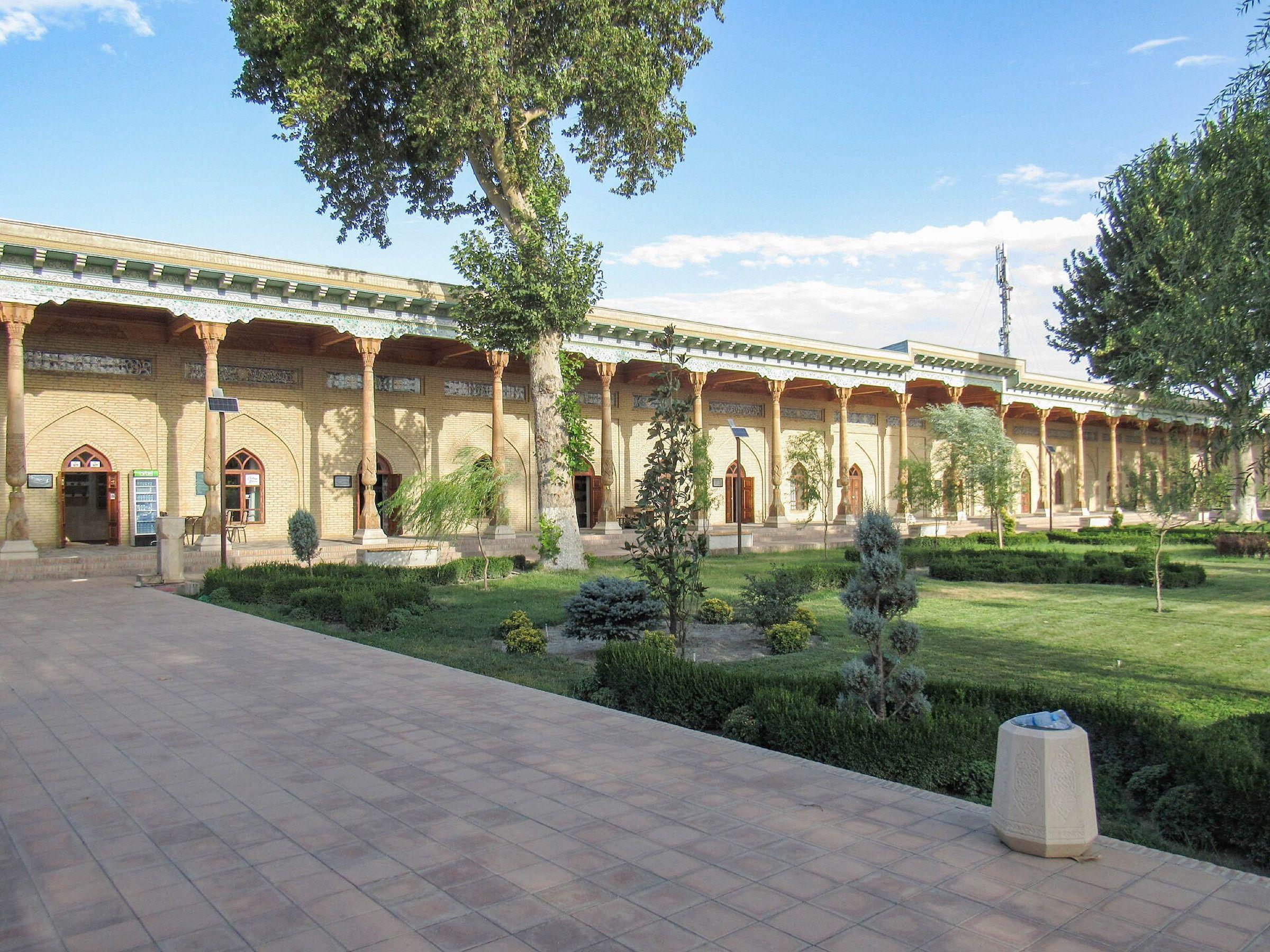
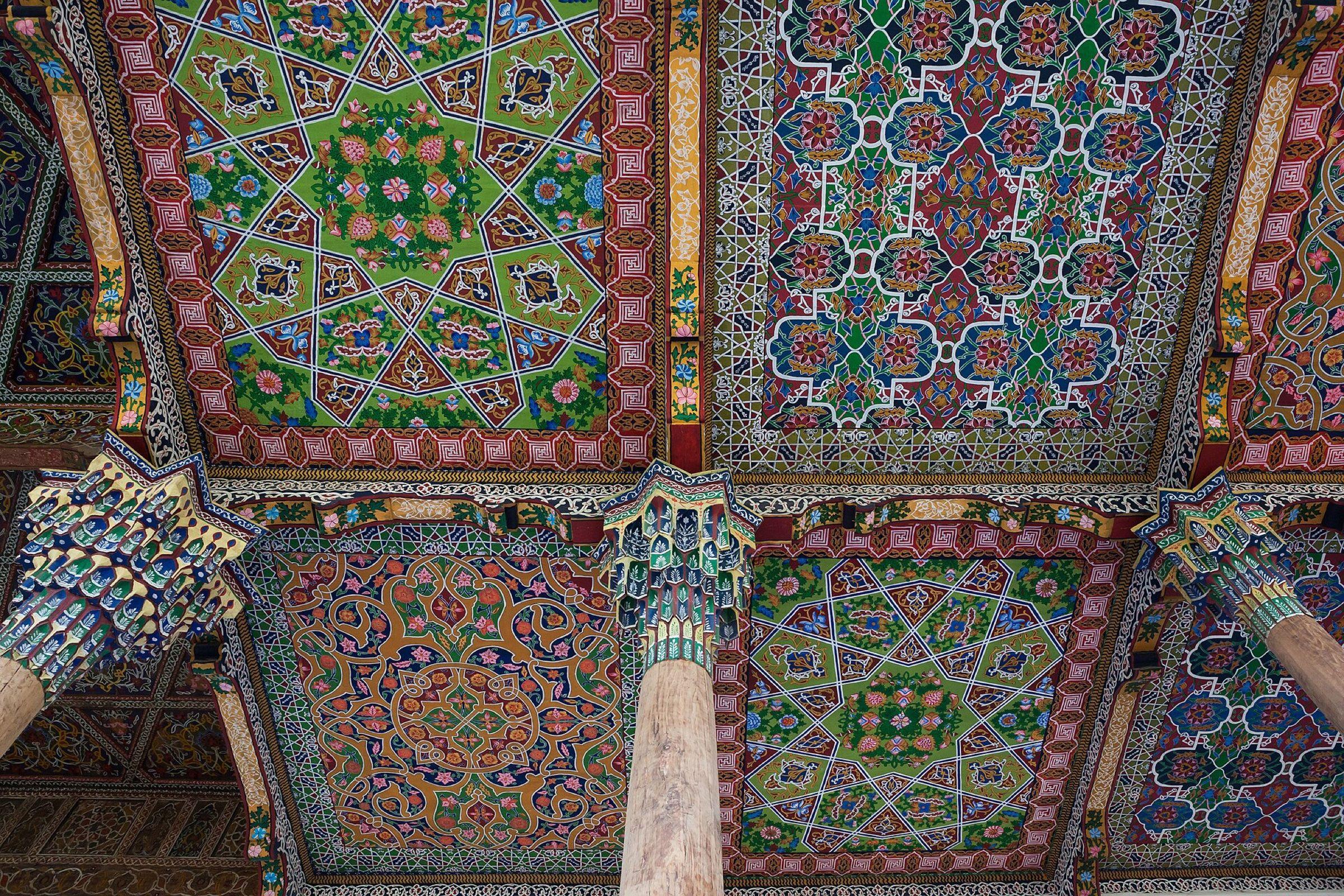
What makes it remarkable is its iwan, the open, roofed gallery that runs along one side of the courtyard for close to 100 metres. Its painted ceiling rests on 98 slender columns of carved wood, set on carved bases, and walking the length of it is like walking through a stylised forest. The ceiling beams and panels are painted in red, green and gold in the Kokand manner; the effect is light and airy, perfectly suited to a climate where most of the year a shaded open hall is more comfortable than a closed one.
The courtyard and minaret
In the centre of the large courtyard rises a minaret of fired brick about 22 metres tall, decorated with bands of patterned brickwork. The main prayer hall stands behind the iwan. Over the past century the complex has served both as a museum and as a place of worship, and parts of it house exhibitions on the history and crafts of Kokand; what is open on a given day can vary.
Reading the wood
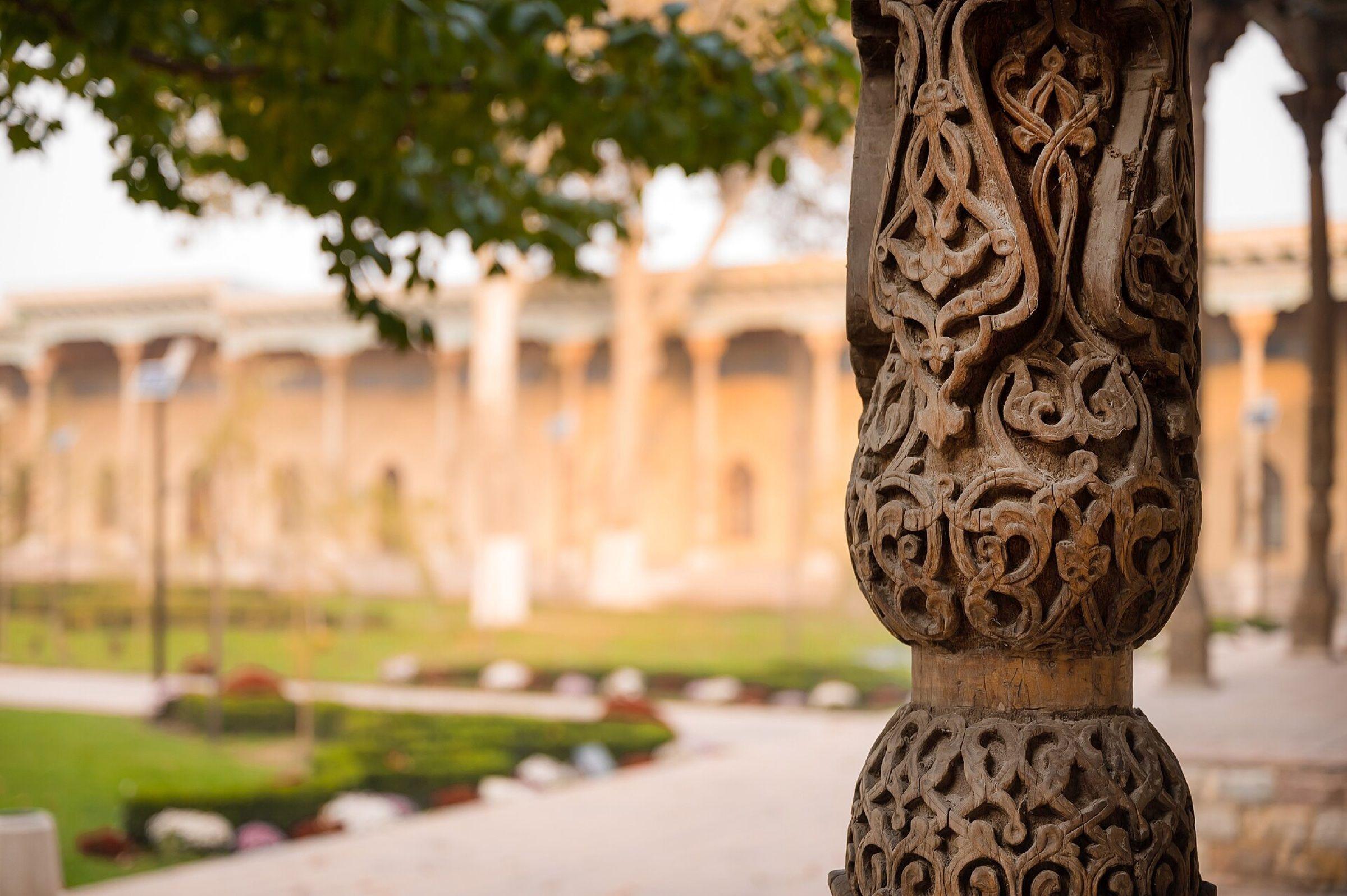
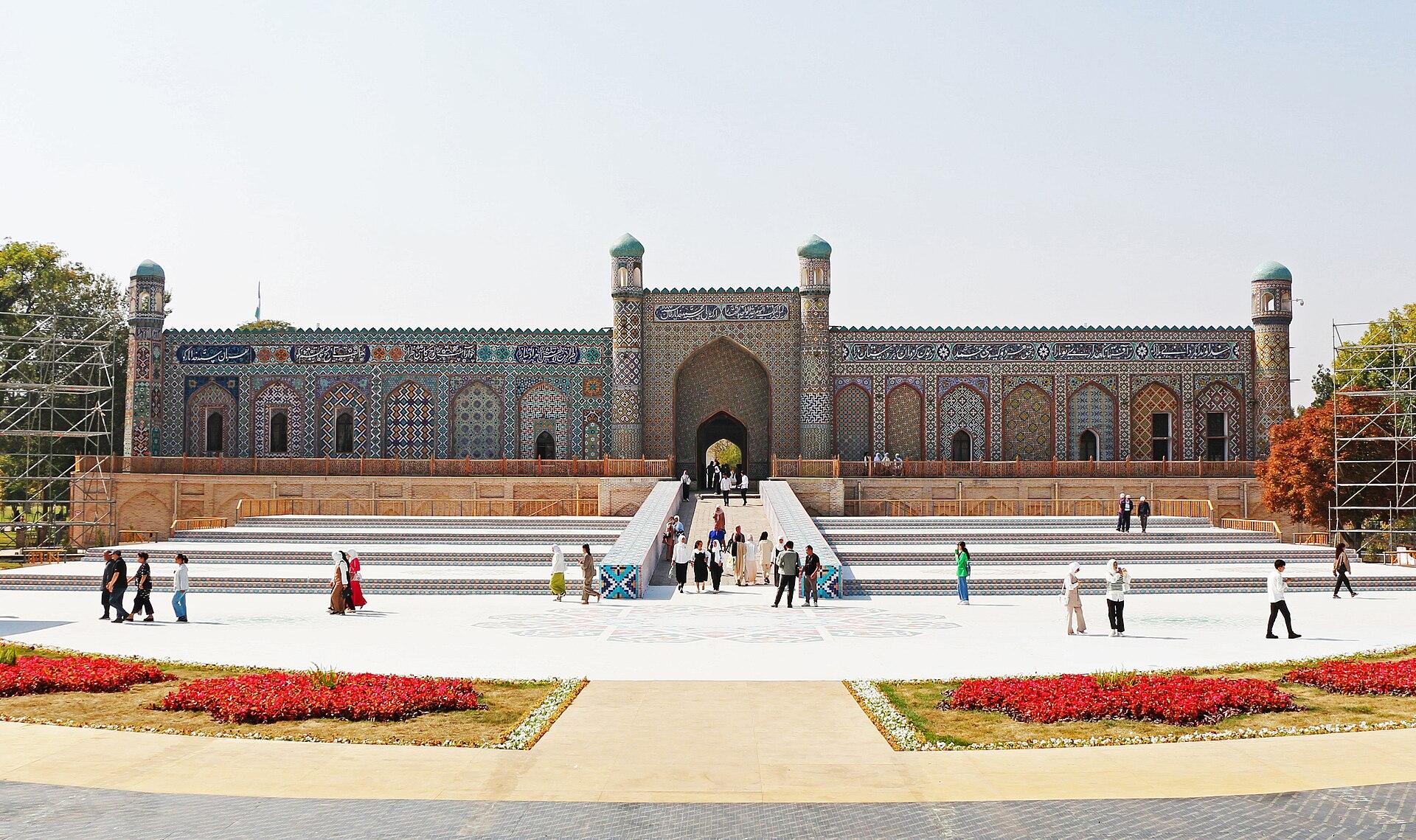
Look closely at the columns. Each was carved by hand, and the patterns on shafts and capitals are not identical, a reminder that Kokand's woodcarvers were famous across Central Asia. The same tradition appears in the carved doors of the Khudayar Khan Palace and in the columns of mosques in Andijan and Margilan.
Visiting
The mosque stands in the centre of Kokand, a 10-minute drive or about 20 minutes on foot from the Khudayar Khan Palace, and the two fit comfortably into one morning. Dress modestly; women should bring a headscarf, and shoes come off in the prayer hall. Avoid Friday midday prayers. A small fee may be charged for the museum section. The iwan is at its best in the afternoon, when the low sun slants between the columns.
What to see
- The iwan of 98 carved wooden columns, nearly 100 metres long
- Painted ceiling beams in red, green and gold
- The 22-metre brick minaret in the courtyard
- Hand-carved column bases and capitals, each slightly different
- Exhibitions on Kokand history and crafts, when open
Gallery


More sights in Fergana Valley
All of Fergana Valley

See Juma Mosque, Kokand with a local guide
We build private and small-group trips around the places you want to see — with guides who grew up here.