
Monument · 11th century
Rabat-i Malik Caravanserai
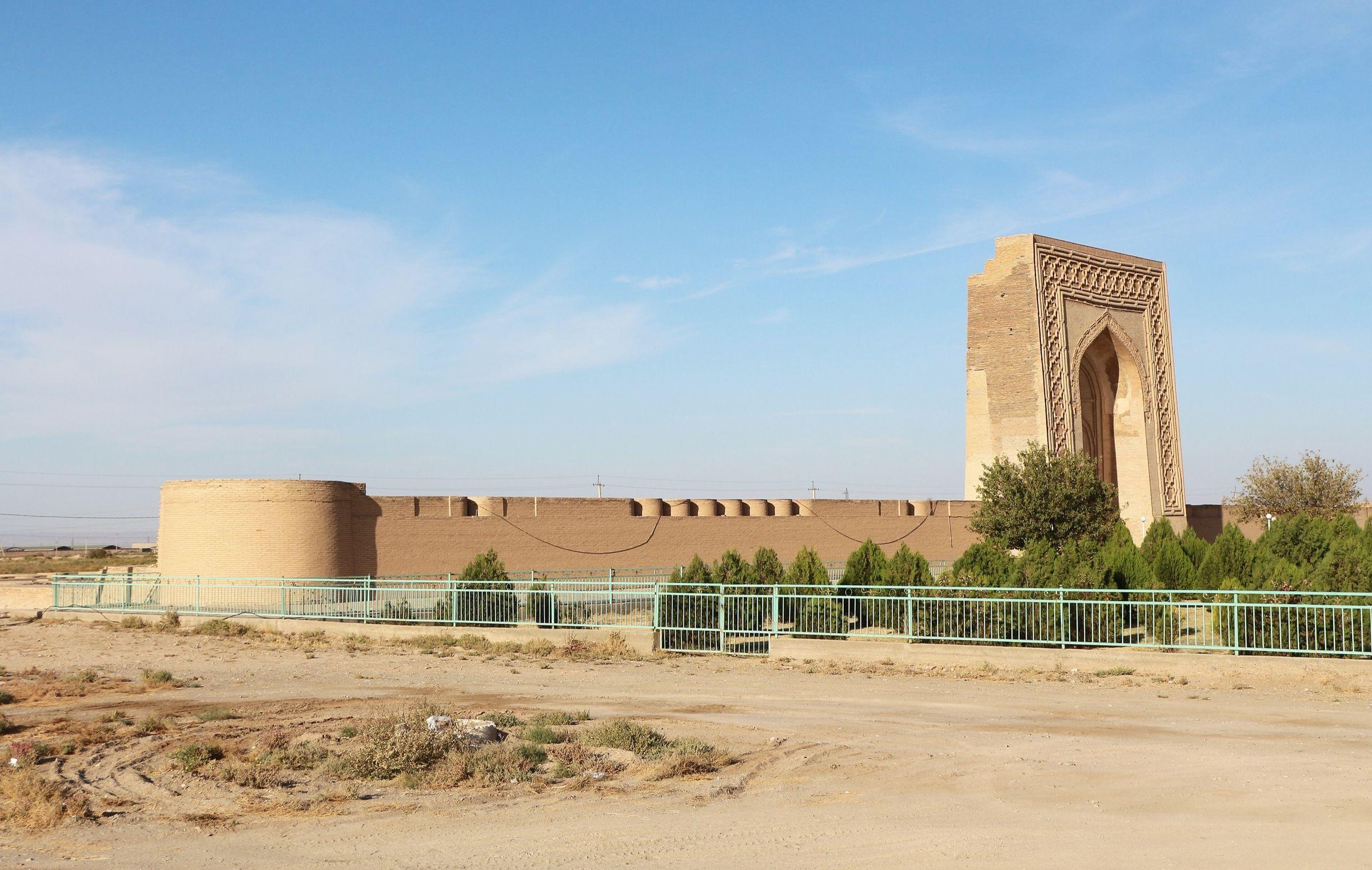
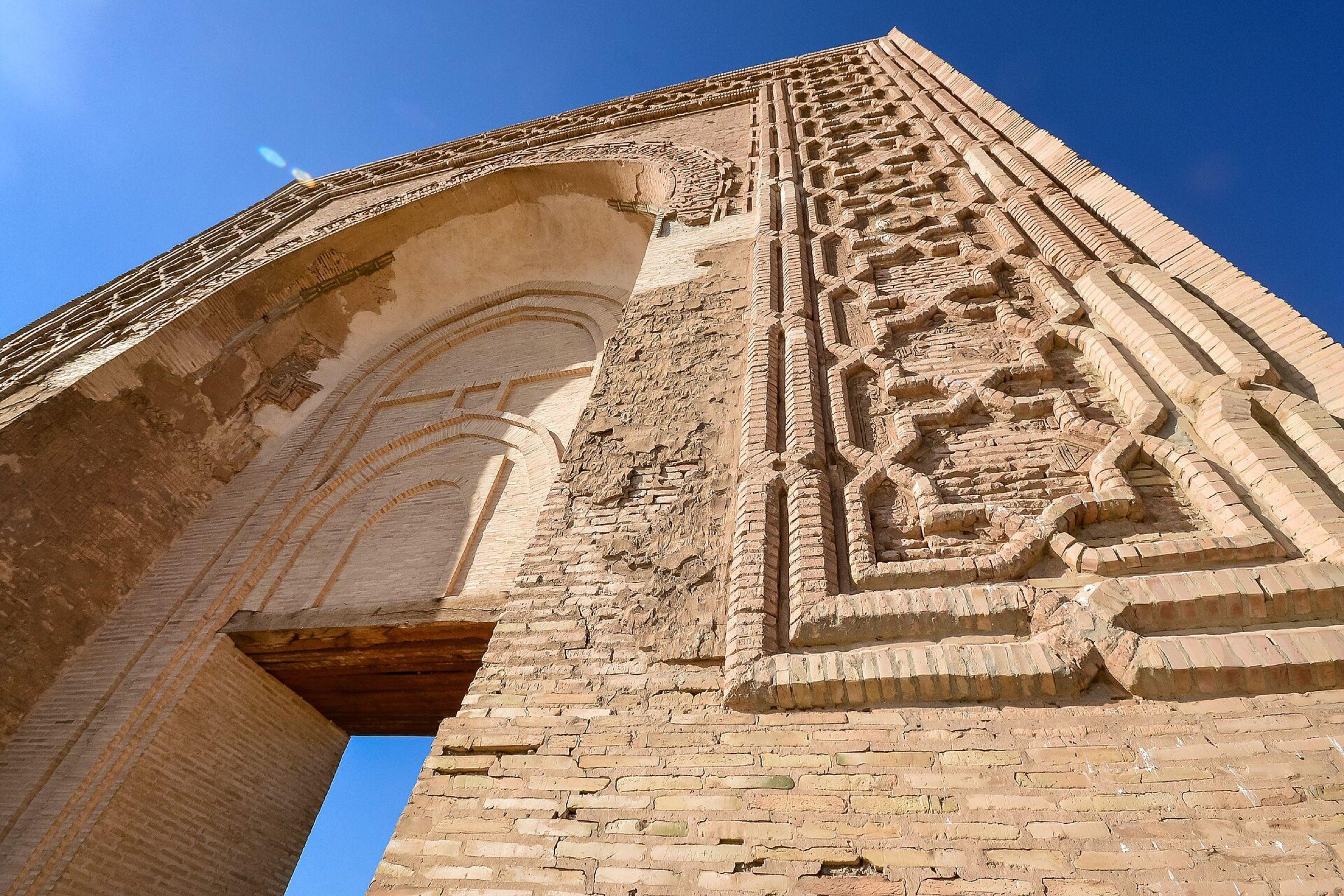
The monumental portal of a royal caravanserai built by the Karakhanid ruler Shams al-Mulk in the 11th century on the road between Samarkand and Bukhara, with a domed water cistern opposite.
About
Rabat-i Malik, the king's caravanserai, stood on the great road between Samarkand and Bukhara, near today's city of Navoi. It was built in the second half of the 11th century by Shams al-Mulk Nasr, ruler of the Karakhanid state, as a fortified royal station where caravans, officials and the ruler himself could rest.
What survives
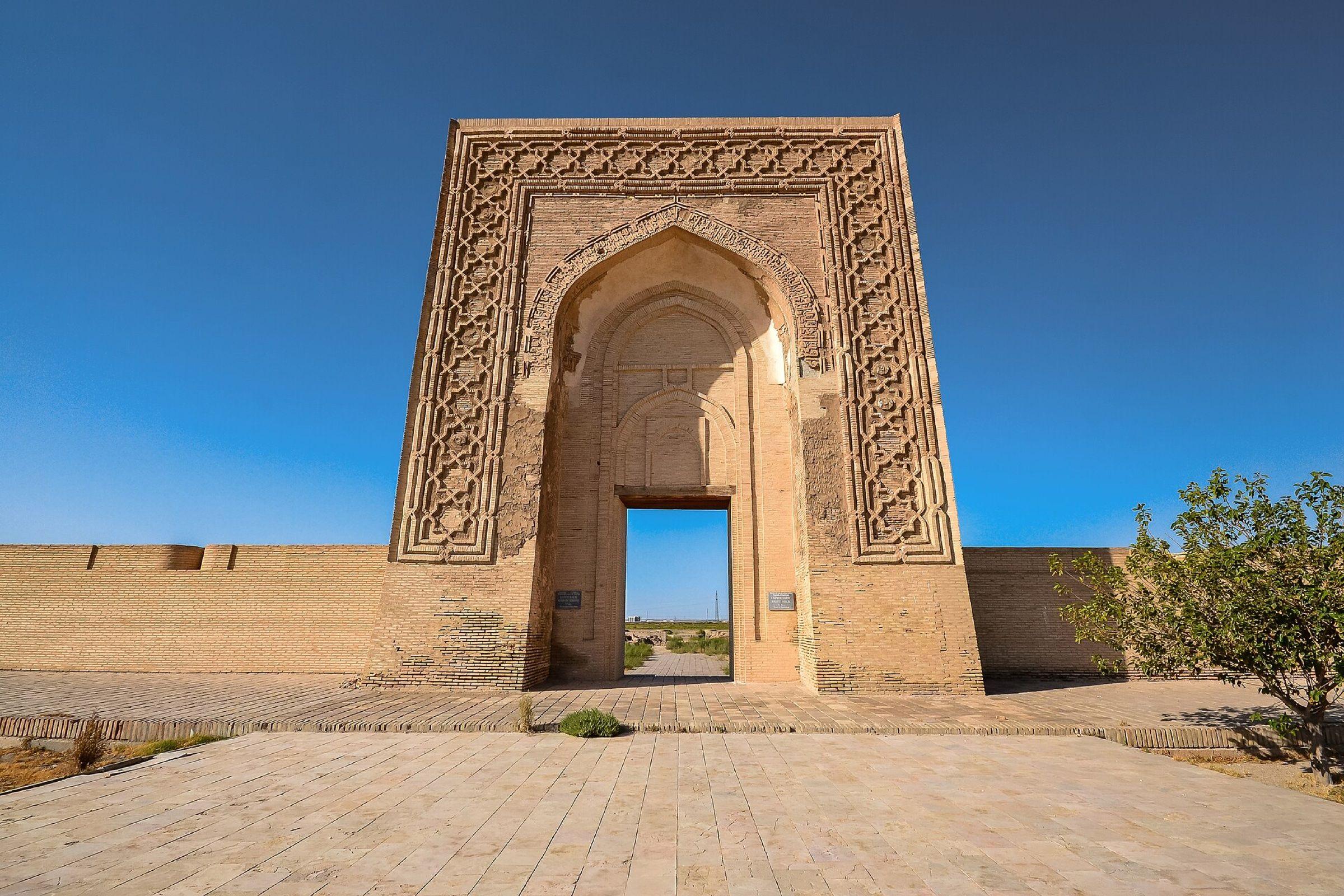
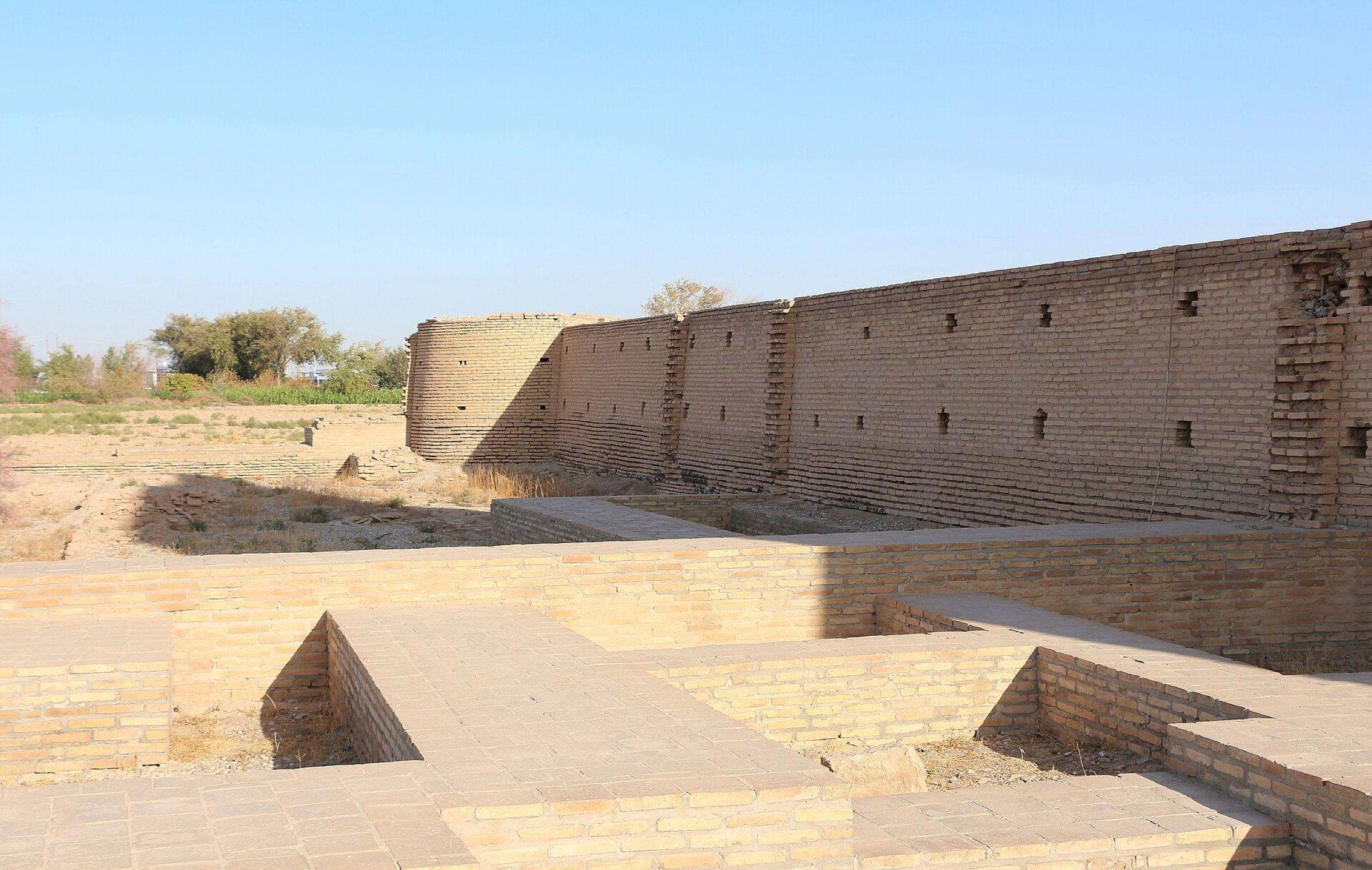
The caravanserai was a square fortified enclosure with towers along its walls, and visitors in the 19th century still saw much of it. Of the original, the monumental entrance portal is what survives; it has been restored, and the outer walls with their round towers have been partly rebuilt on the excavated foundations. The portal is a masterpiece of early Islamic brick architecture: a tall arch framed by deep, fluted piers and panels of carved terracotta and patterned brick.
The sardoba
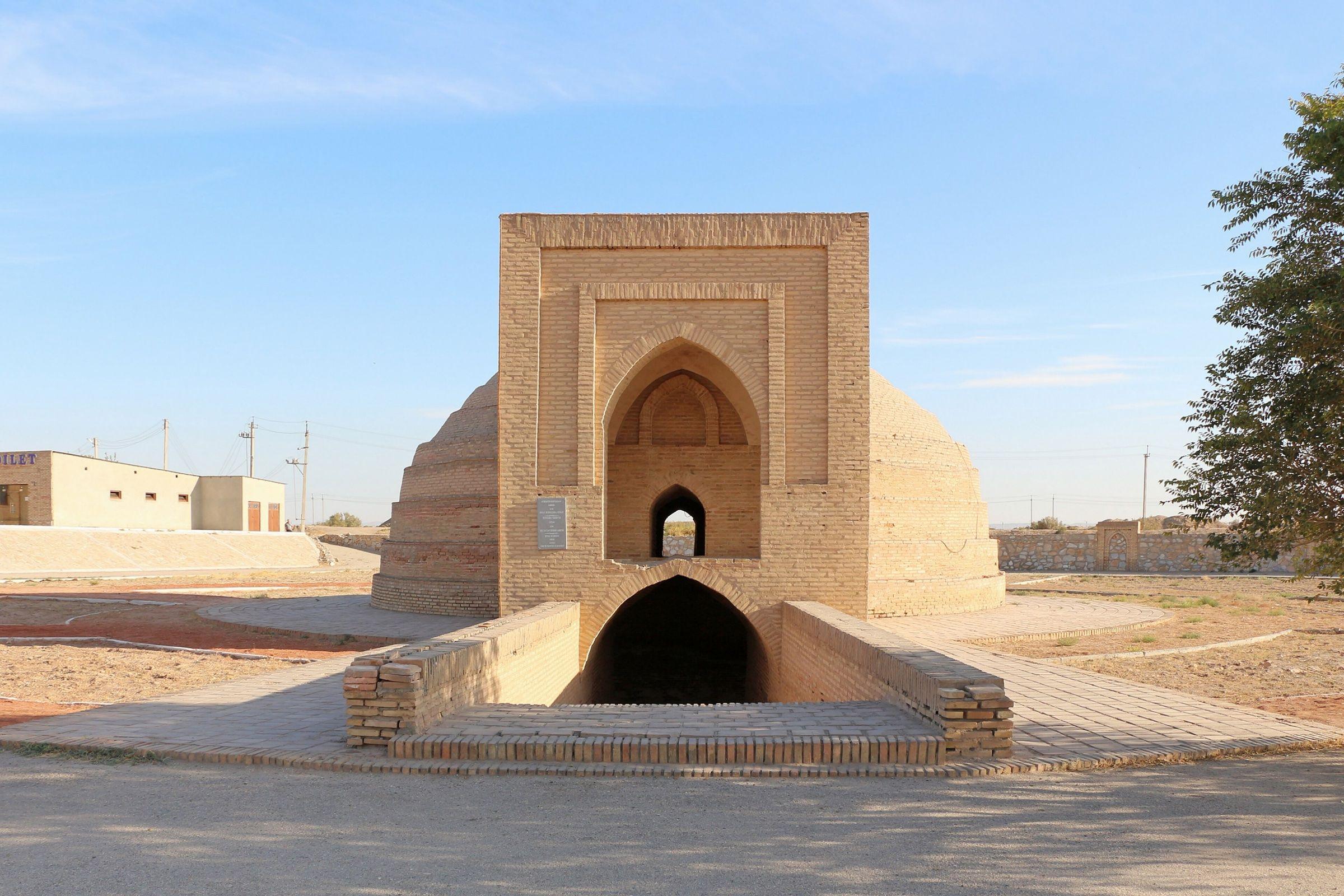
Across the road stands the Malik sardoba, a domed brick cistern that stored water for the caravanserai and travellers. Steps lead down towards the water level, and the cool inside is striking on a hot day. Water is said to have been brought from the Zarafshan valley by an underground channel.
Visiting
The site lies right on the highway, so it is an easy stop of half an hour on the way between Samarkand and Bukhara or on the road to Nurata. Together with the sardoba it shows how seriously medieval rulers took the safety and supply of the caravan road.
What to see
- The restored 11th-century portal with its fluted piers
- Carved terracotta and patterned brickwork
- The partly rebuilt outer walls and corner towers
- The domed Malik sardoba cistern across the road
Gallery
More sights in Nurata & Lake Aydarkul
All of Nurata & Lake Aydarkul
See Rabat-i Malik Caravanserai with a local guide
We build private and small-group trips around the places you want to see — with guides who grew up here.