
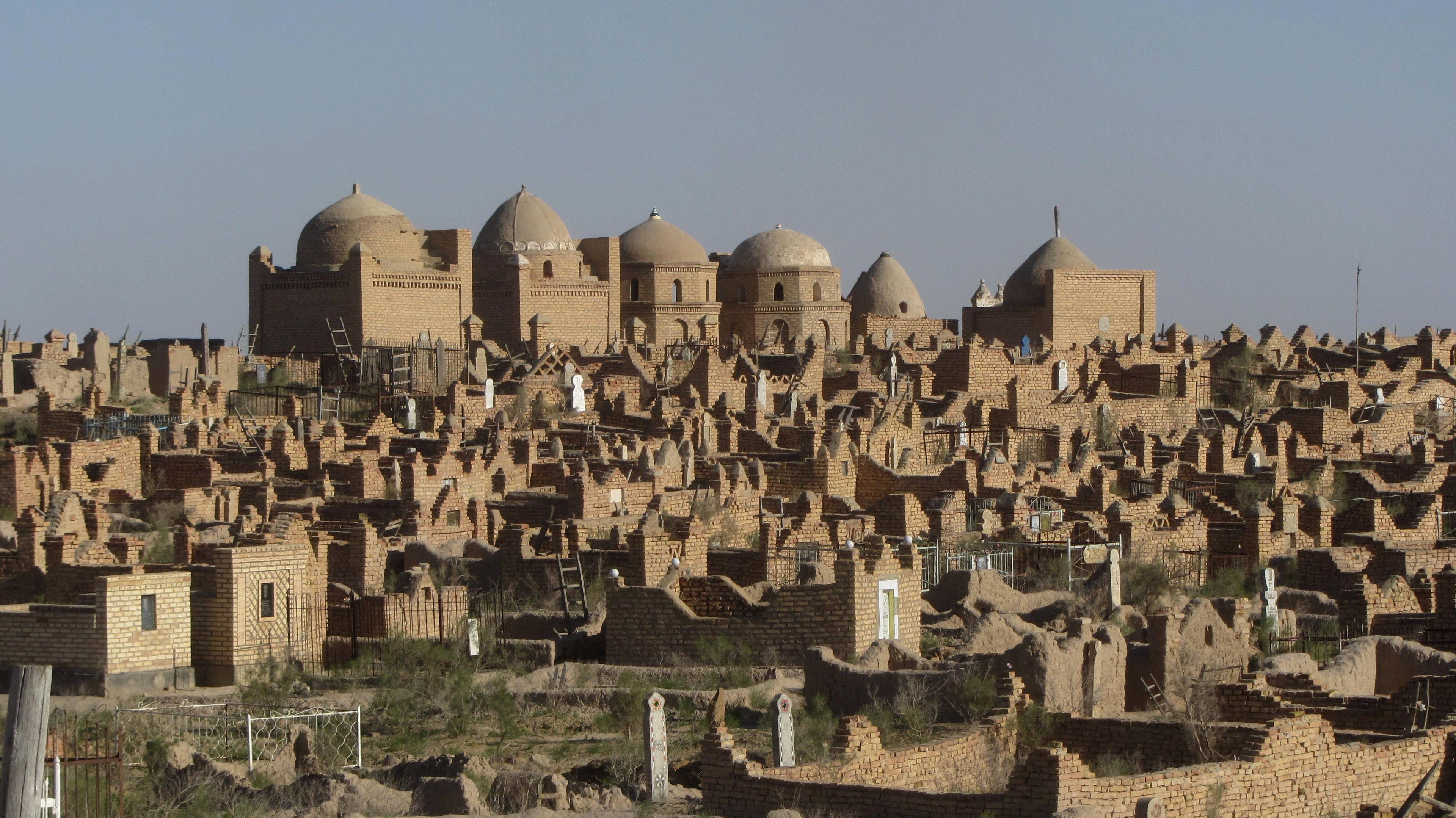
Architectural ensemble · From the 4th c. BC; mausoleums mostly 12th–19th c.
Mizdakhan Necropolis
A hill of tombs west of Nukus that has been a burial ground for more than two thousand years, from Zoroastrian ossuaries to medieval mausoleums. Legend places the grave of Adam here and says the world will end when one tomb crumbles.
About
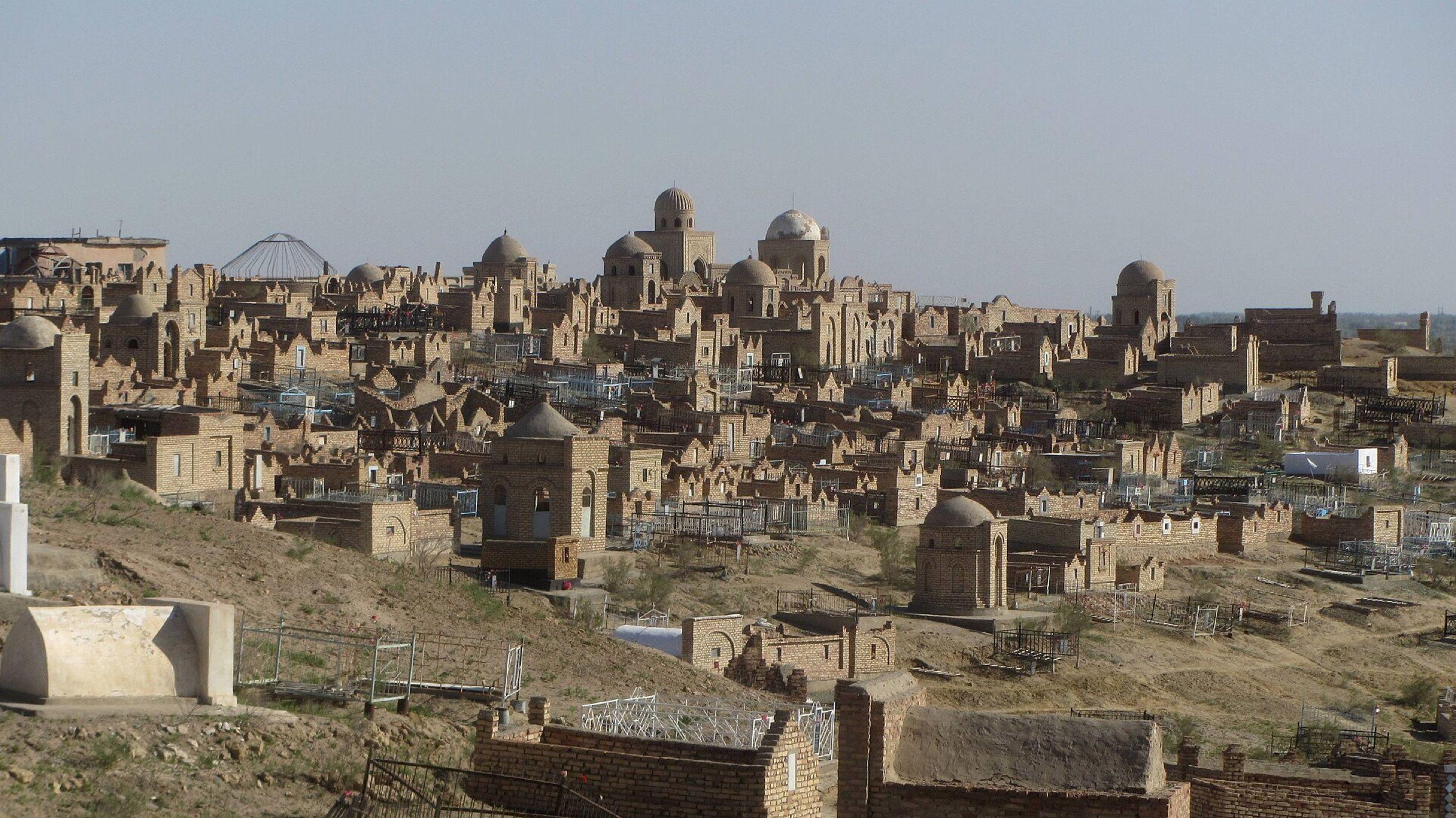
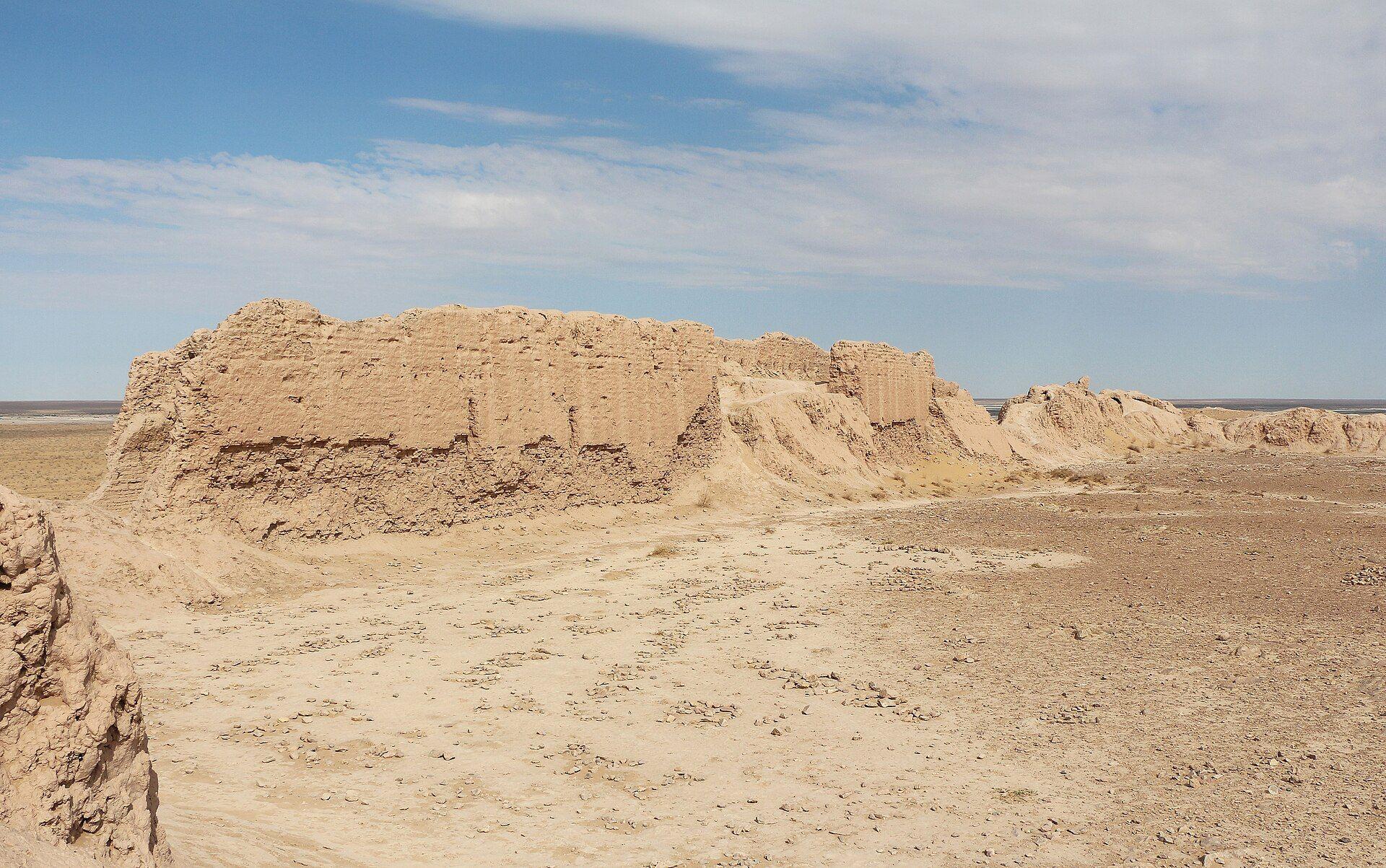
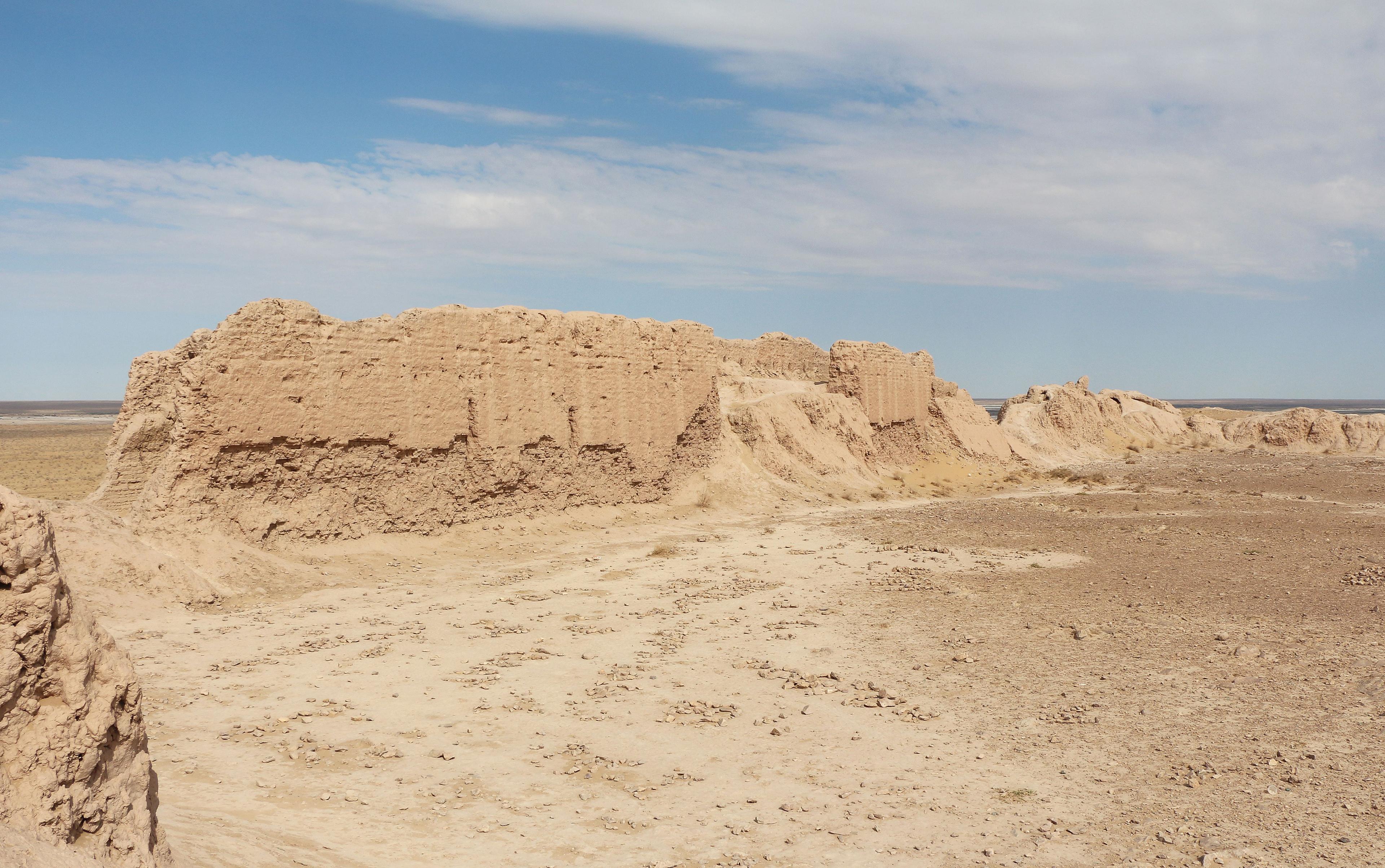
Mizdakhan lies on low hills near the town of Khodjeyli, close to the Turkmen border, about 20 kilometres west of Nukus. It was once one of the larger cities of Khorezm: a settlement grew here from at least the fourth century BC, with a fortress, Gyaur-Kala, on the neighbouring hill. Over the centuries the city declined, especially after the campaigns of Timur in the late fourteenth century, but the cemetery never stopped being used. It remains a sacred place, and local families still bury their dead here.
Layers of belief
Before Islam, the people of Khorezm followed Zoroastrian rites, exposing the dead to be cleaned by birds and then keeping the bones in clay ossuaries; many have been found at Mizdakhan. Muslim tombs followed, and the hill gradually filled with domed mausoleums, small mosques and simple graves in clay.
The main monuments
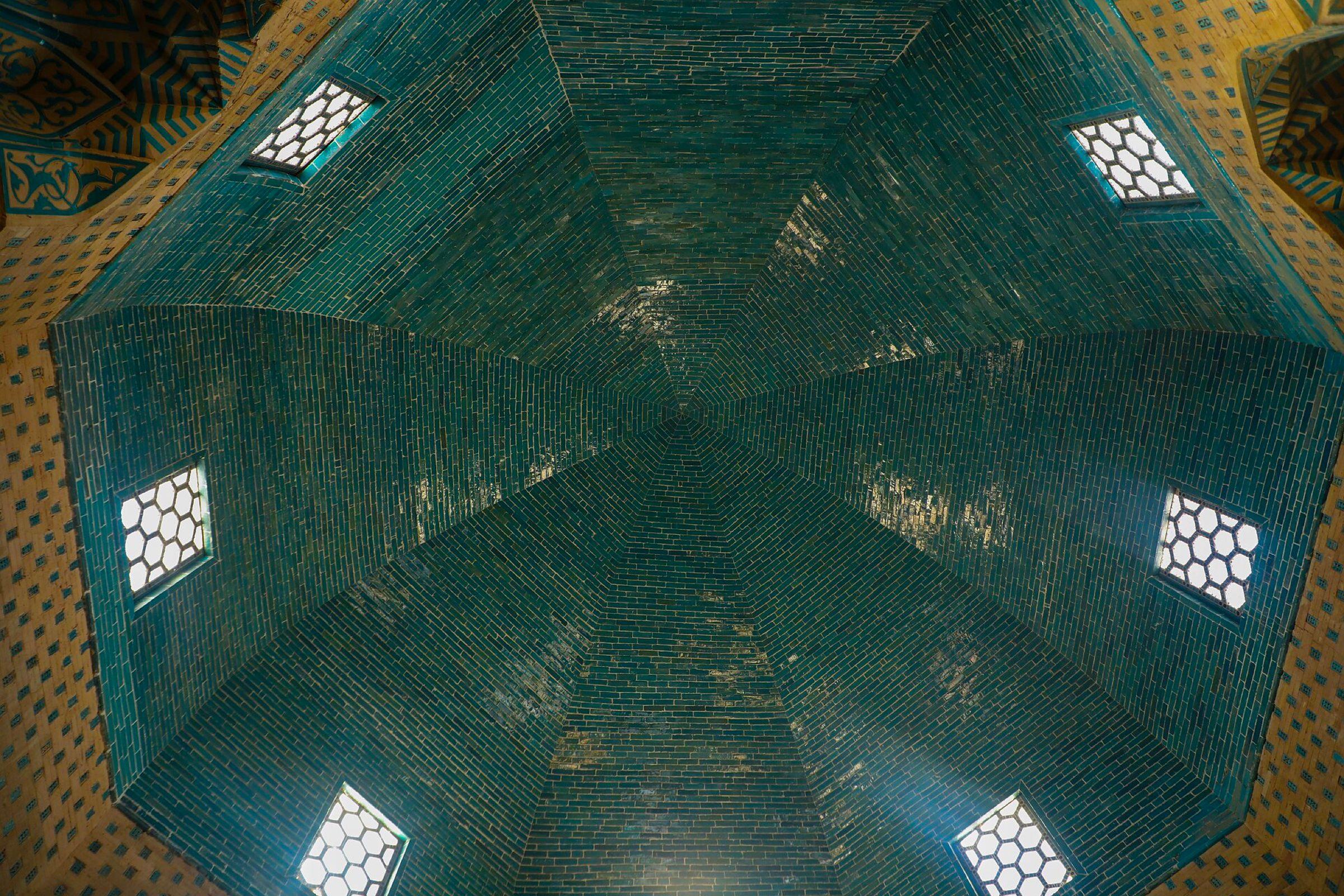
- The Mausoleum of Mazlumkhan Sulu, partly underground, with fine glazed tilework, generally dated to the fourteenth century. A legend tells of a princess and the architect she loved
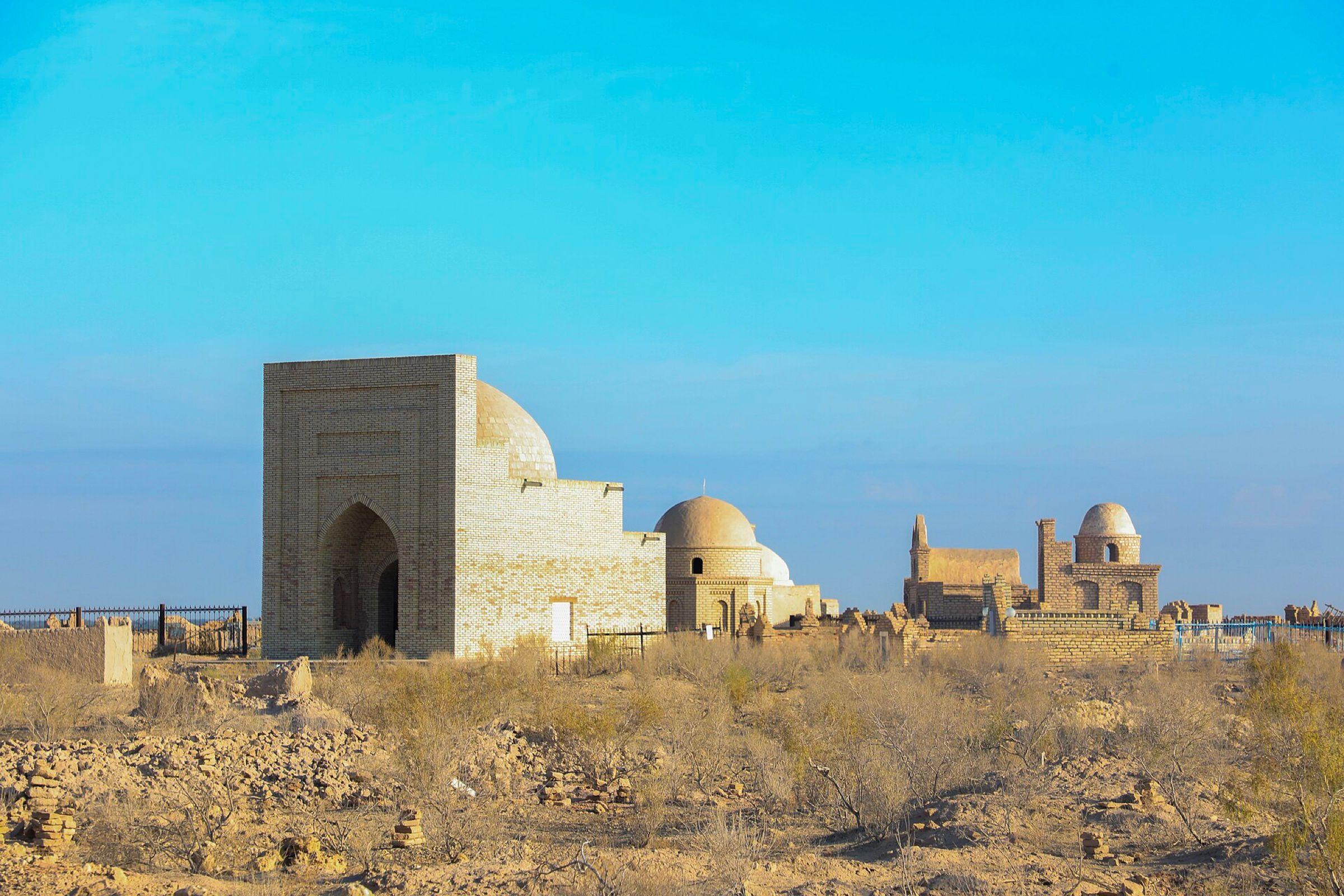
- The Mausoleum of Shamun Nabi, a long, low building with a row of domes, traditionally said to hold the grave of a prophet of giant stature
- The Mausoleum of Erezhep Khalfa, one of the most visited shrines on the hill
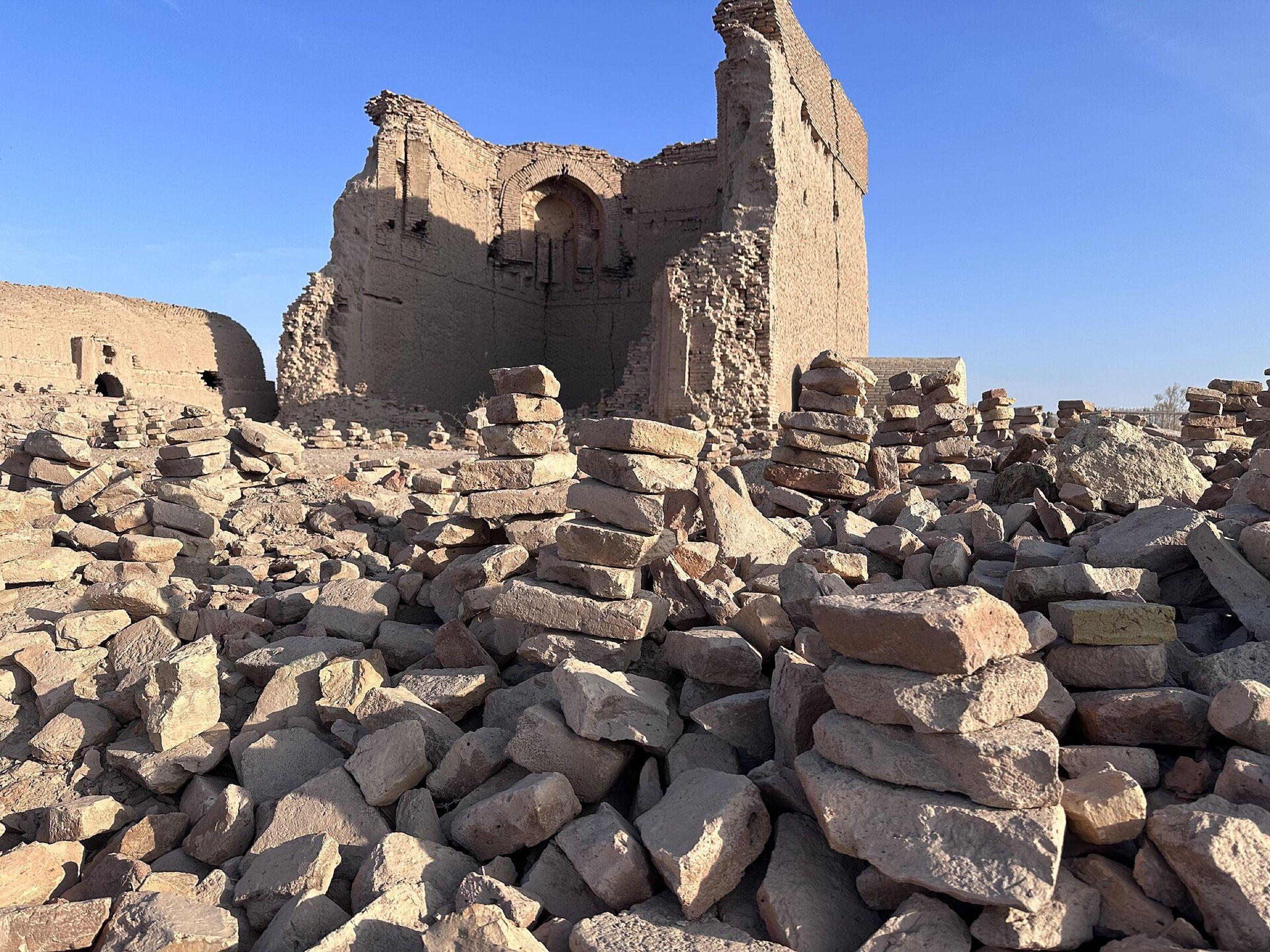
- The so-called “world clock”, a ruined structure from which, legend says, a brick falls every year; when the last falls, the world will end. Pilgrims add bricks to delay it
Legends
Mizdakhan is said in local tradition to be the burial place of Adam, and in Zoroastrian lore it is linked with Gayomart, the first man. These are traditions, not history, but they explain the reverence with which visitors treat the site.
Experiencing it
Walk slowly and respectfully: this is an active cemetery. Dress modestly and do not photograph mourners. Late afternoon light on the domes is beautiful, and from the hill you can see across to Gyaur-Kala.
What to see
- The half-underground Mausoleum of Mazlumkhan Sulu
- The long, multi-domed Mausoleum of Shamun Nabi
- The “world clock” and the tradition of adding bricks
- Views over the necropolis to Gyaur-Kala
- Layers of Zoroastrian and Islamic burial
Gallery
More sights in Karakalpakstan
All of Karakalpakstan
See Mizdakhan Necropolis with a local guide
We build private and small-group trips around the places you want to see — with guides who grew up here.