
Minaret · 11th century (Karakhanid period)
Burana Tower
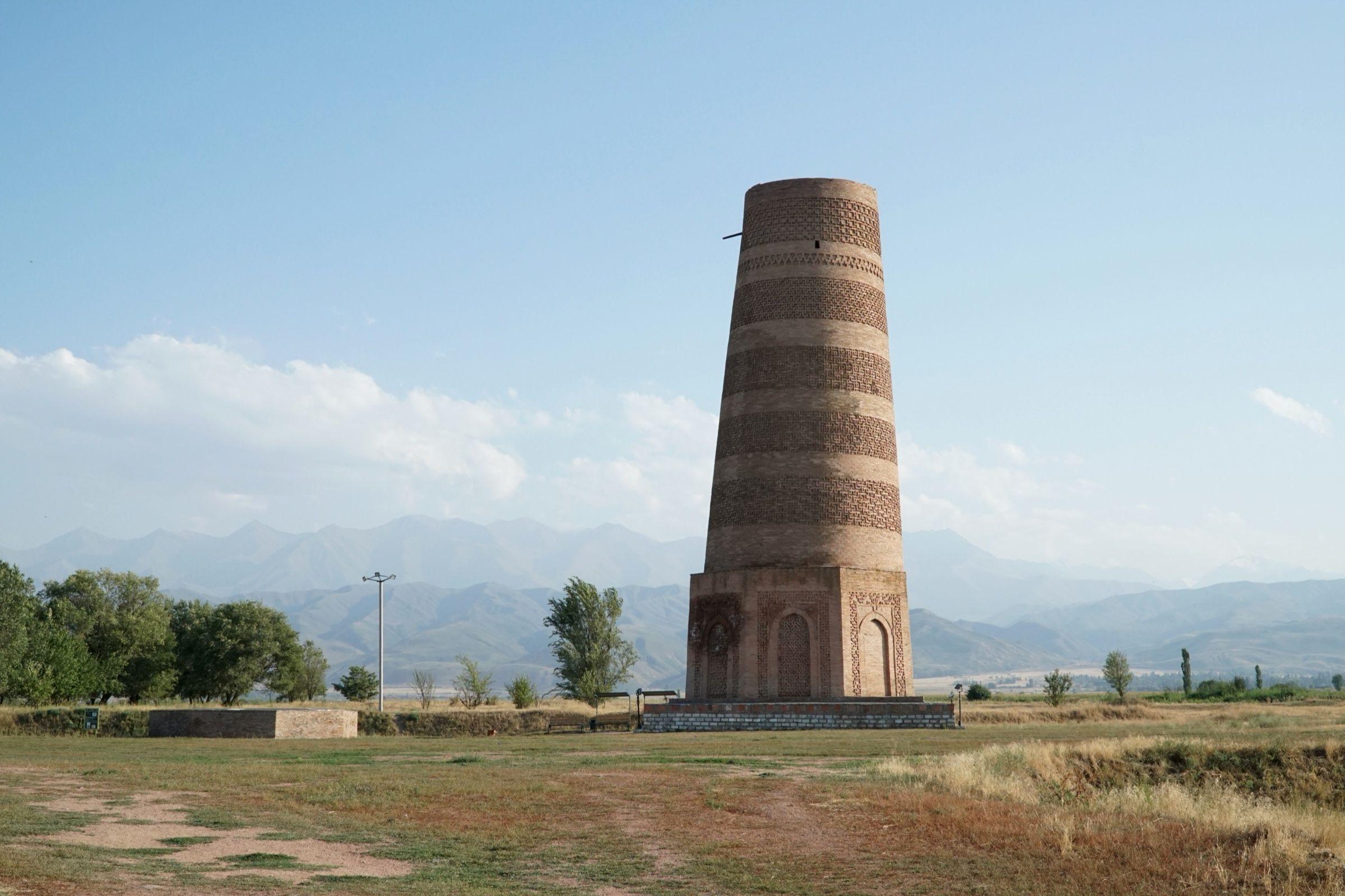
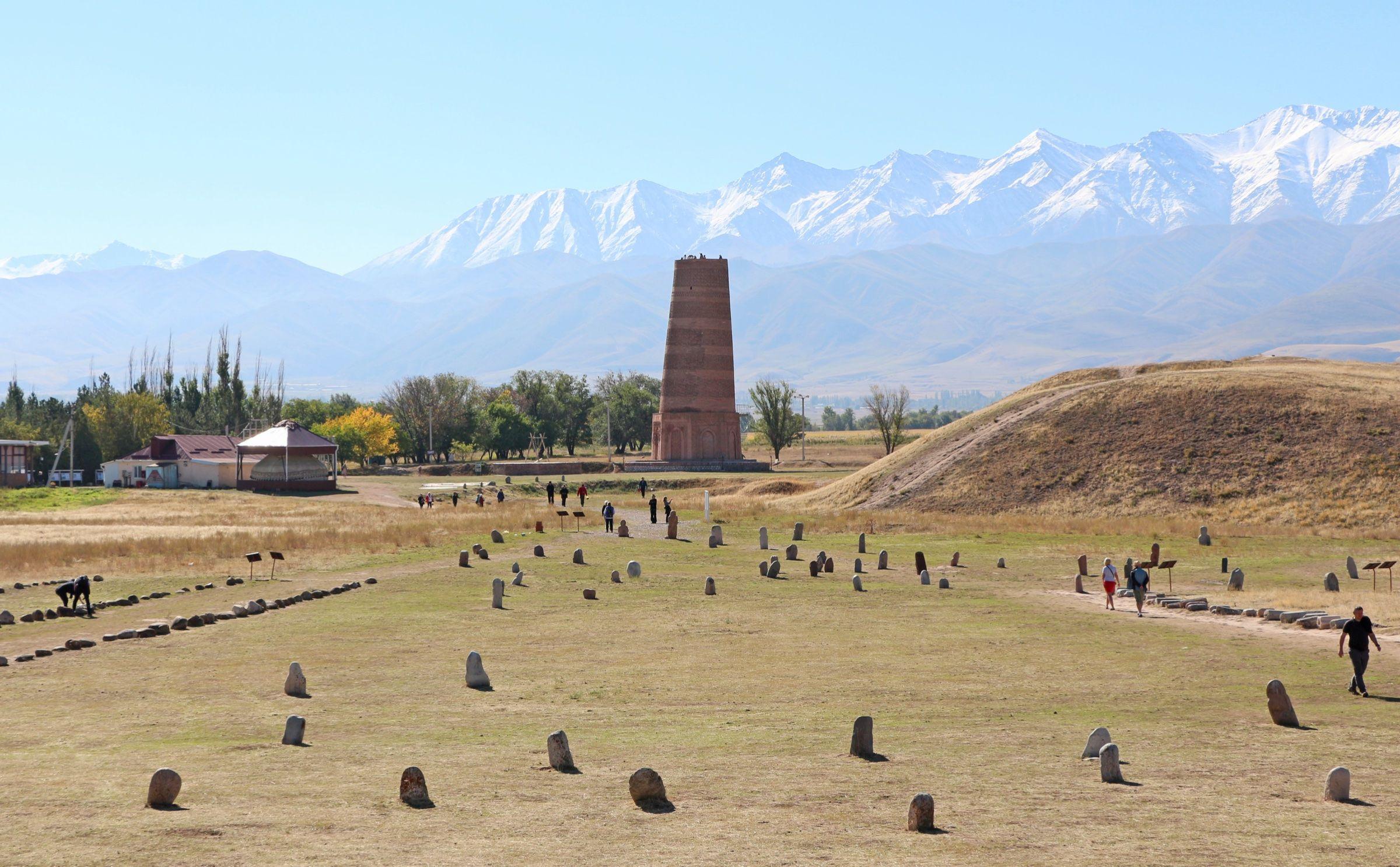
The stump of an 11th-century minaret standing in the fields of the Chui valley, all that rises above ground of the Karakhanid city generally identified as Balasagun. Around it lie a field of Turkic stone figures and a small museum.
About
The Burana tower stands in open country near Tokmok, about 80 kilometres east of Bishkek, with the Kyrgyz Ala-Too range behind it. It is a brick minaret built in the 11th century, when this part of the Chui valley belonged to the Karakhanids, the first Turkic dynasty to adopt Islam. Most historians identify the surrounding ruins with Balasagun, one of the Karakhanid capitals and an important city on the northern Silk Road; it is part of the transnational UNESCO World Heritage listing 'Silk Roads: the Routes Network of the Chang'an–Tianshan Corridor', inscribed in 2014.
The tower
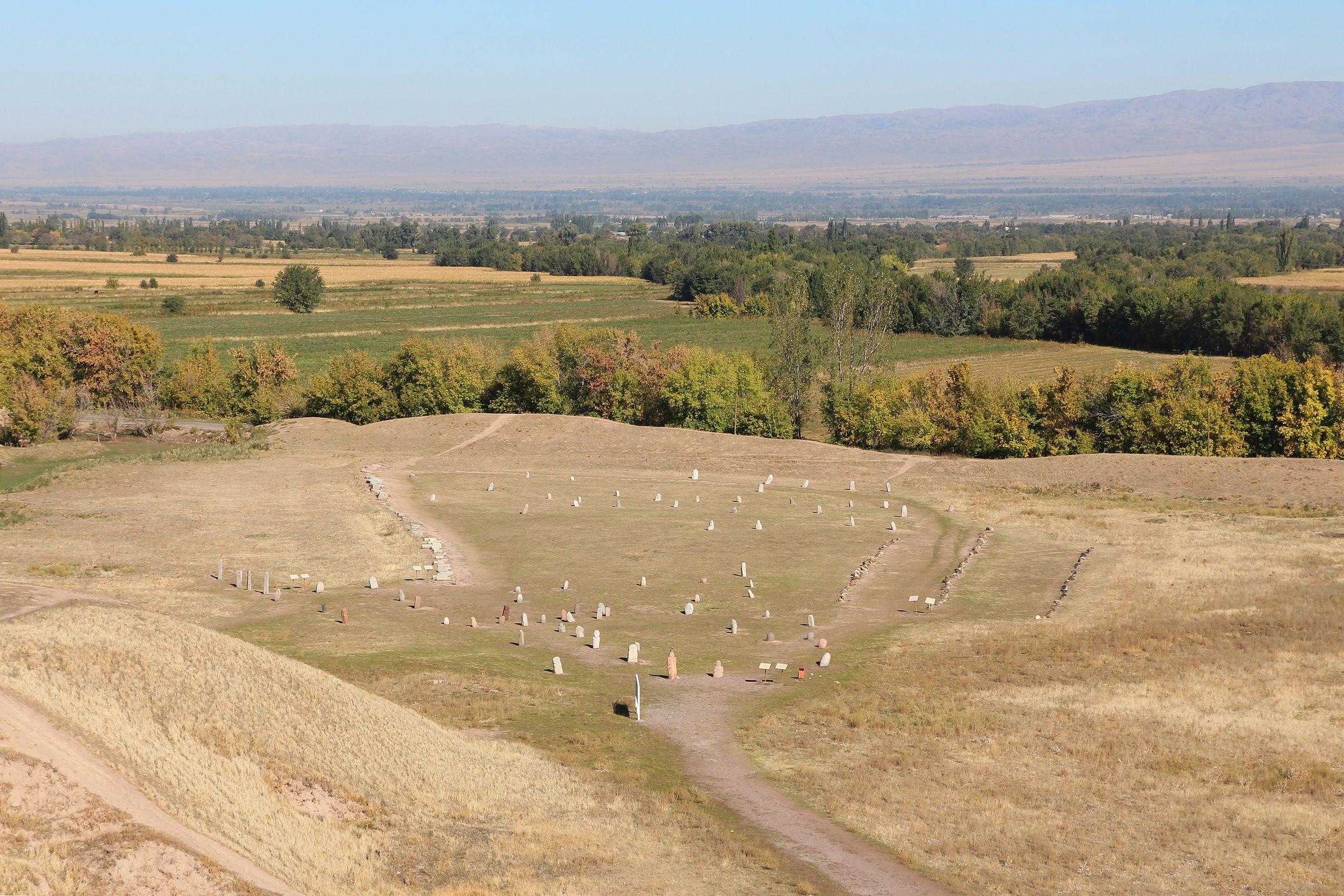
The minaret was originally much taller, perhaps around 40–45 metres; earthquakes over the following centuries, and later the removal of bricks by local builders, brought it down to its present height of roughly 25 metres. Restored in the 1970s, it shows bands of decorative brickwork in geometric patterns. A steep, narrow internal staircase, reached by an external metal stair, leads to the top, from which you can see the outline of the city walls in the fields. The climb is dark and cramped, and not for the claustrophobic.
Balbals and the open-air museum
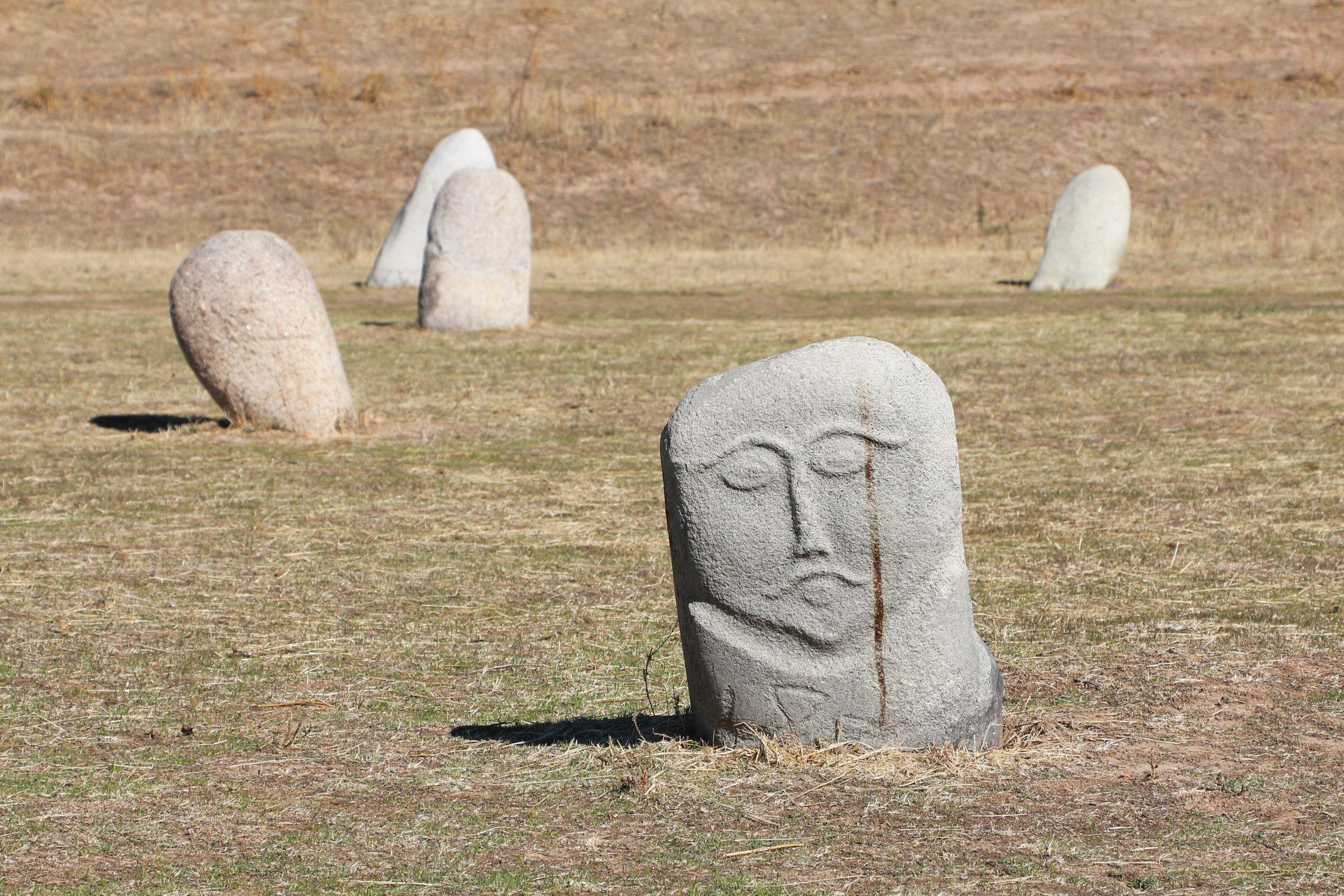
Near the tower a collection of balbals, carved stone figures from Turkic graves of roughly the 6th to 10th centuries, has been gathered from across the region. Each shows a face, often with a moustache, and a hand holding a cup at the chest. There are also millstones, petroglyph stones, the foundations of mausoleums and a small museum with finds from Balasagun and the Chui valley, including ceramics and coins.
How to visit
Burana is an easy half-day trip from Bishkek and fits on the road to Issyk-Kul. Combine it with the nearby Konorchek canyons for red-rock scenery, or with a visit to a family making traditional felt or bread. Spring, when the fields are green and the mountains still white, and autumn are the most photogenic seasons.
What to see
- The 11th-century minaret with its patterned brickwork
- Climbing the narrow internal staircase to the top
- The field of Turkic balbal stone figures
- Traces of Balasagun's walls in the surrounding fields
- Finds in the site museum
- Views of the Kyrgyz Ala-Too range
Gallery
More sights in Kyrgyzstan
All of Kyrgyzstan
See Burana Tower with a local guide
We build private and small-group trips around the places you want to see — with guides who grew up here.