
Museum · c. 1424–1429
Ulugbek Observatory
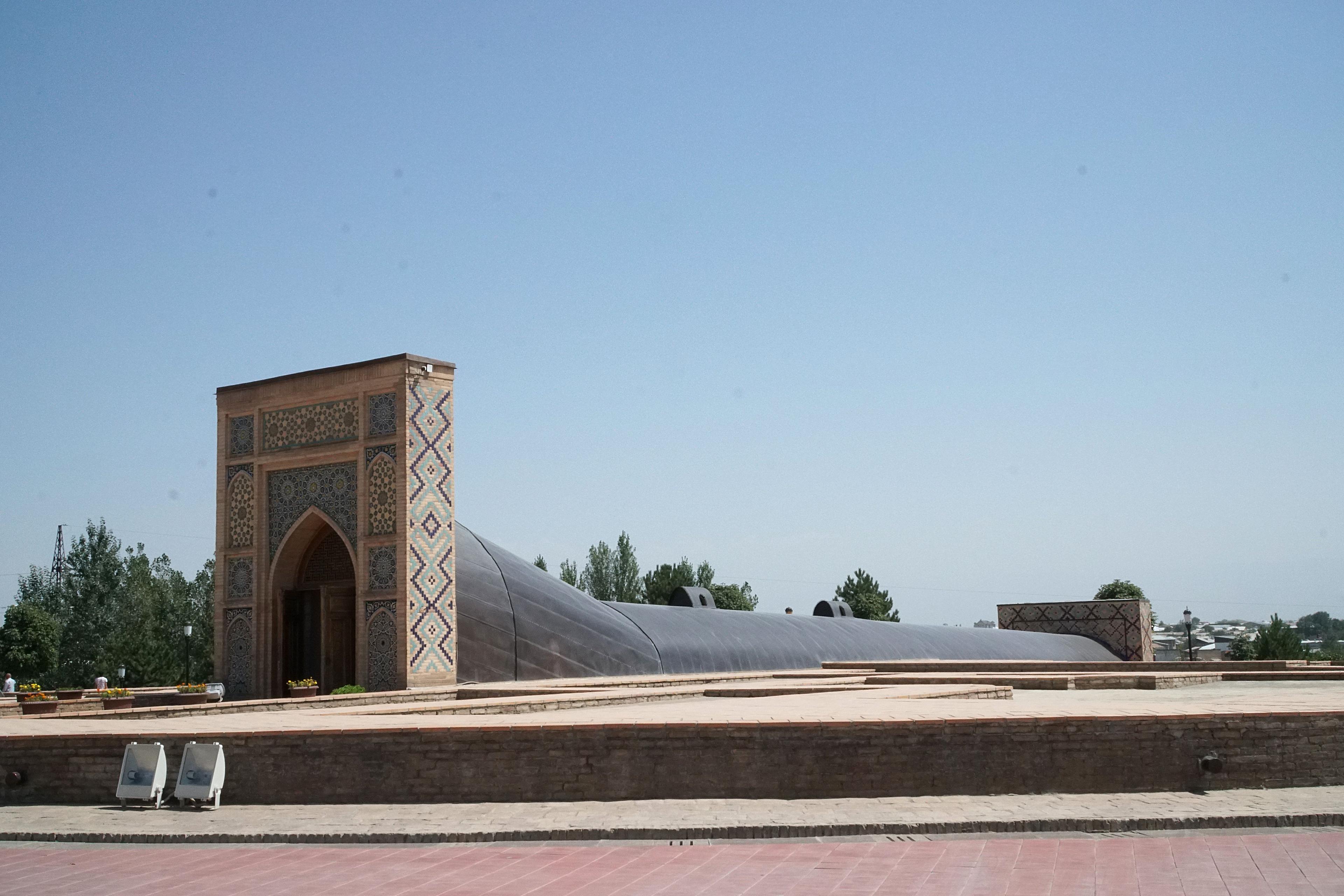
The remains of the great observatory where Timur’s grandson Ulugbek catalogued over a thousand stars: a giant meridian arc cut into the rock of Kohak hill, with a small museum beside it.
About
Mirzo Ulugbek ruled Samarkand for nearly forty years, but he is remembered less as a king than as an astronomer. In the 1420s he built an observatory on Kohak hill, north-east of the city, that was among the most advanced in the world in its time, and gathered around it a circle of scholars that included Qazi-zade Rumi, Ghiyath al-Din Jamshid al-Kashi and, later, Ali Qushji.
The instrument
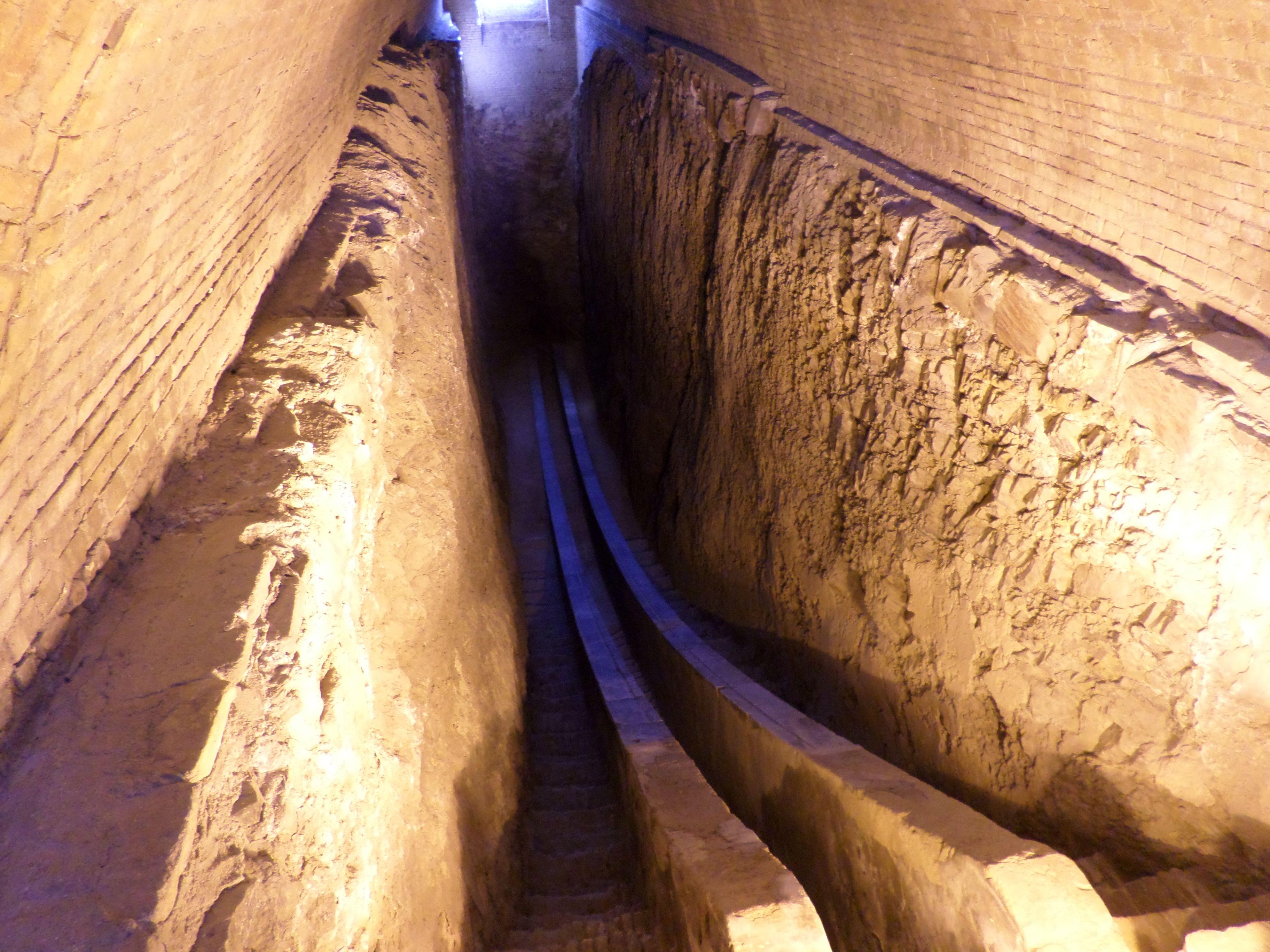
The observatory was a three-storey circular building, roughly 46 metres across. At its core was an enormous meridian arc, often called the Fakhri sextant, with a radius of about 40 metres, aligned exactly north–south. Astronomers observed the sun, moon and stars as they crossed the meridian and read their positions off a graduated marble-lined track. What survives today is the lower, underground part of that arc, cut into the hill and now protected by a vault: two parallel stone rails descending into the rock.
What it achieved
The observatory produced the Zij-i Sultani, a set of astronomical tables with a catalogue of 1,018 stars, the most complete since Ptolemy and used in Europe after it was published in Latin in the seventeenth century. Ulugbek’s team calculated the length of the sidereal year as 365 days, 6 hours, 10 minutes and 8 seconds, within about a minute of the modern value.
Rediscovery
After Ulugbek was murdered in 1449, in a plot backed by his own son, the observatory was abandoned and dismantled, and its location was forgotten. In 1908 the archaeologist Vasily Vyatkin found it again using a sixteenth-century document that described the site. Vyatkin asked to be buried here, and his grave is on the hill.
Visiting
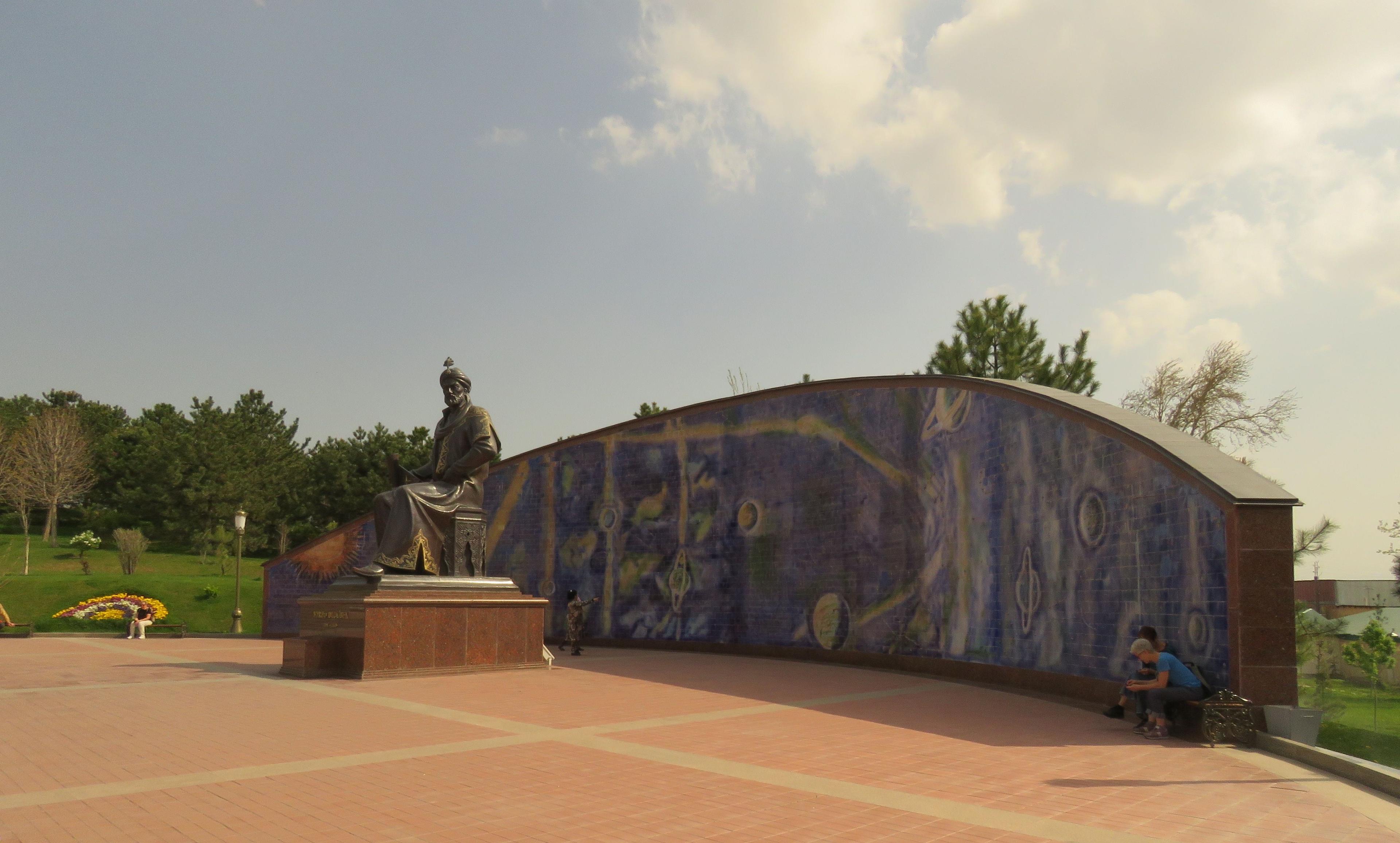
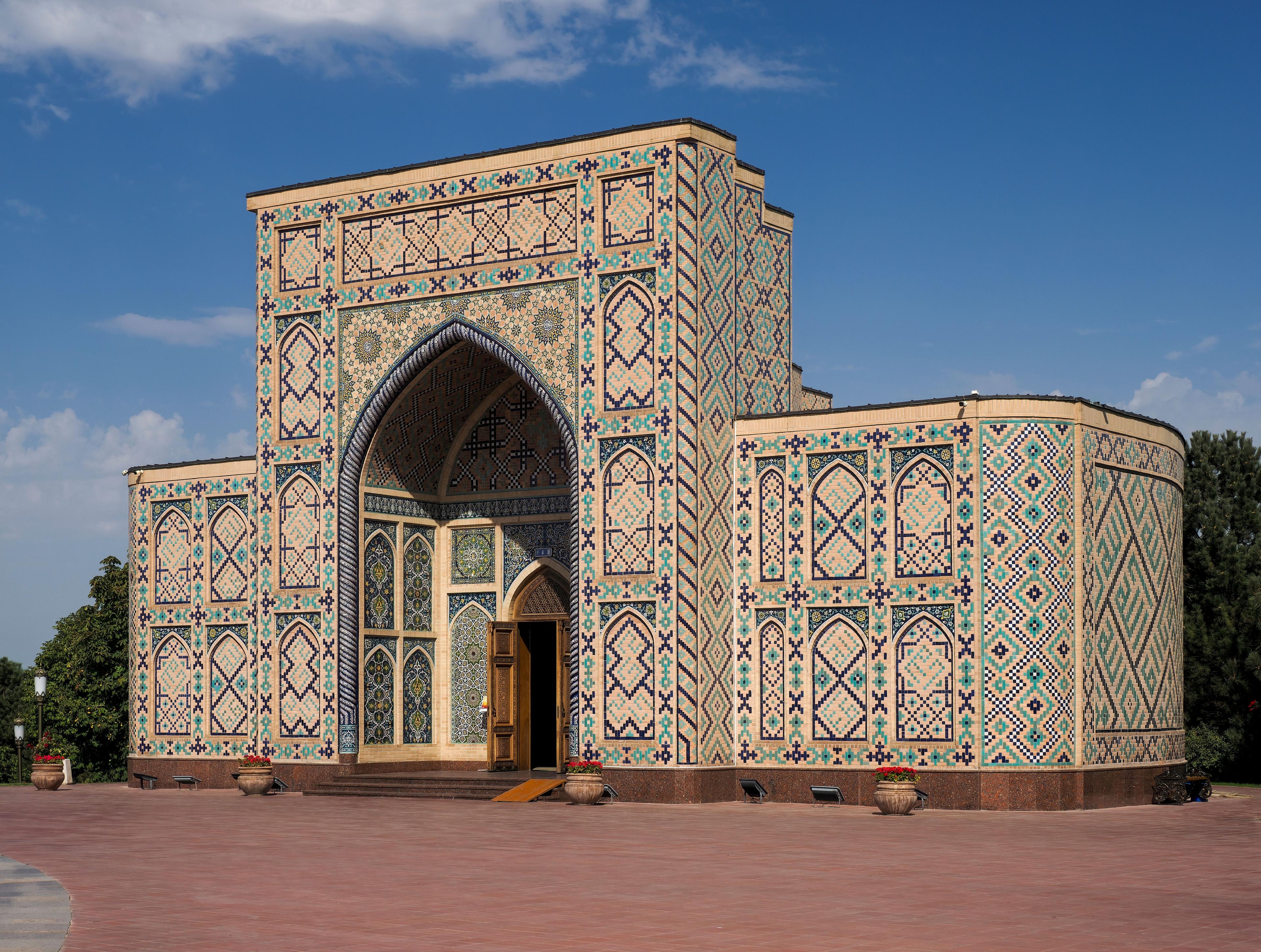
The visit has two parts: the excavated arc under its protective vault, and a small museum with copies of Ulugbek’s star tables, miniatures and instruments. A seated statue of Ulugbek stands in front of a mosaic panel. Allow time to stand at the top of the arc and imagine its full height rising above you. The site is on the way to the Afrasiab hill and Konigil, so it is usually combined with them.
What to see
- The surviving underground section of the meridian arc
- Museum displays on the Zij-i Sultani star catalogue
- The statue of Ulugbek before a mosaic star panel
- The grave of Vasily Vyatkin, who rediscovered the site
- Views over north-eastern Samarkand from Kohak hill
Gallery

More sights in Samarkand
All of Samarkand

See Ulugbek Observatory with a local guide
We build private and small-group trips around the places you want to see — with guides who grew up here.