
Architectural ensemble · 11th–19th centuries (mostly 1330s–1440s)
Shah-i-Zinda Necropolis
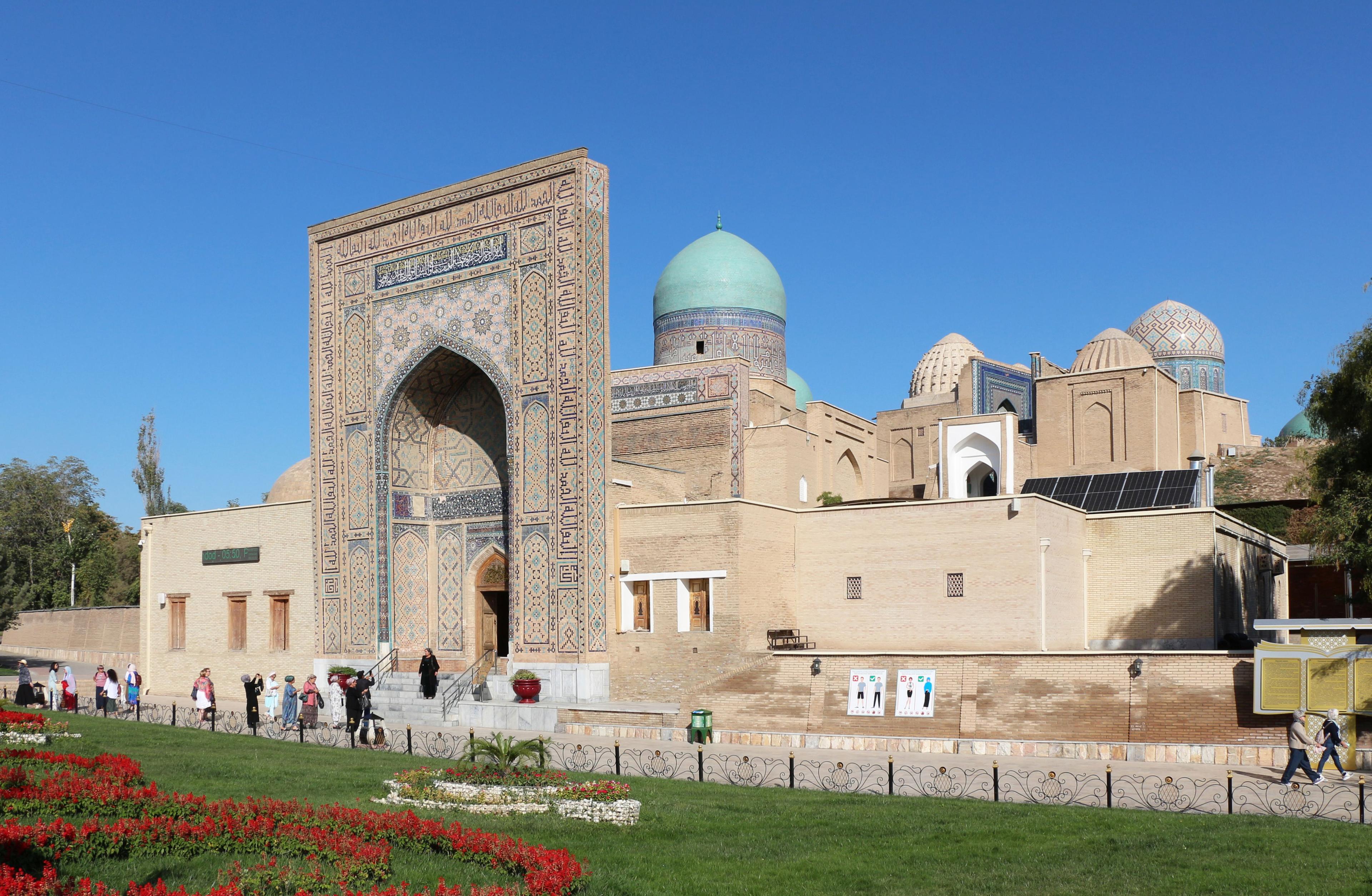
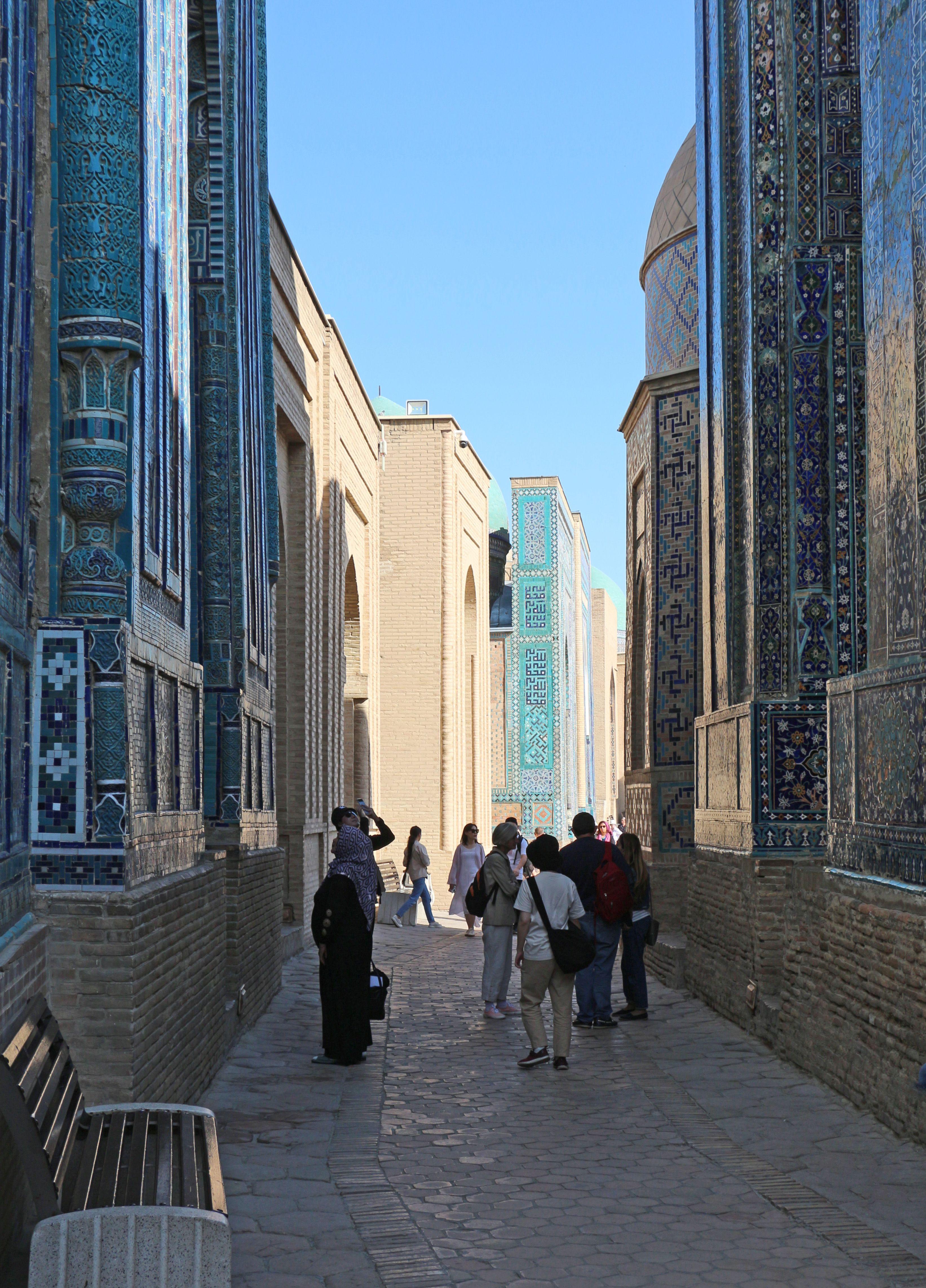
A narrow lane of some twenty mausoleums climbing the slope of Afrasiab, faced in the finest glazed tilework of the Timurid age and gathered around the shrine of Qusam ibn Abbas.
About
Shah-i-Zinda, “the Living King”, takes its name from Qusam ibn Abbas, a cousin of the Prophet Muhammad who, by tradition, came to Sogdiana with the first Arab forces in the seventh century and was killed while preaching. The legend holds that he did not die but walked into a well carrying his own head, and lives on beneath the hill. His shrine at the top of the lane made this one of Central Asia’s most venerated places of pilgrimage, and for centuries the Timurid elite wanted to be buried close to it.
The lane of tombs
The result is a street of mausoleums packed shoulder to shoulder along a single path. You enter through a portal built in 1434–35 under Ulugbek, climb a flight of steps, and walk up through three groups of buildings: - The lower group, with the portal and the double-domed mausoleum traditionally linked to Ulugbek’s astronomer Qazi-zade Rumi. - The middle group, the heart of the ensemble, where tombs built for women of Timur’s family stand face to face: Shadi Mulk Aka (1372), for Timur’s niece, and Shirin Bika Aka (1385), for his sister. - The upper group, around the shrine and mosque of Qusam ibn Abbas, with the tomb of Tuman Aka, one of Timur’s wives (1405), and some of the oldest facades in the lane.
Why the tilework matters
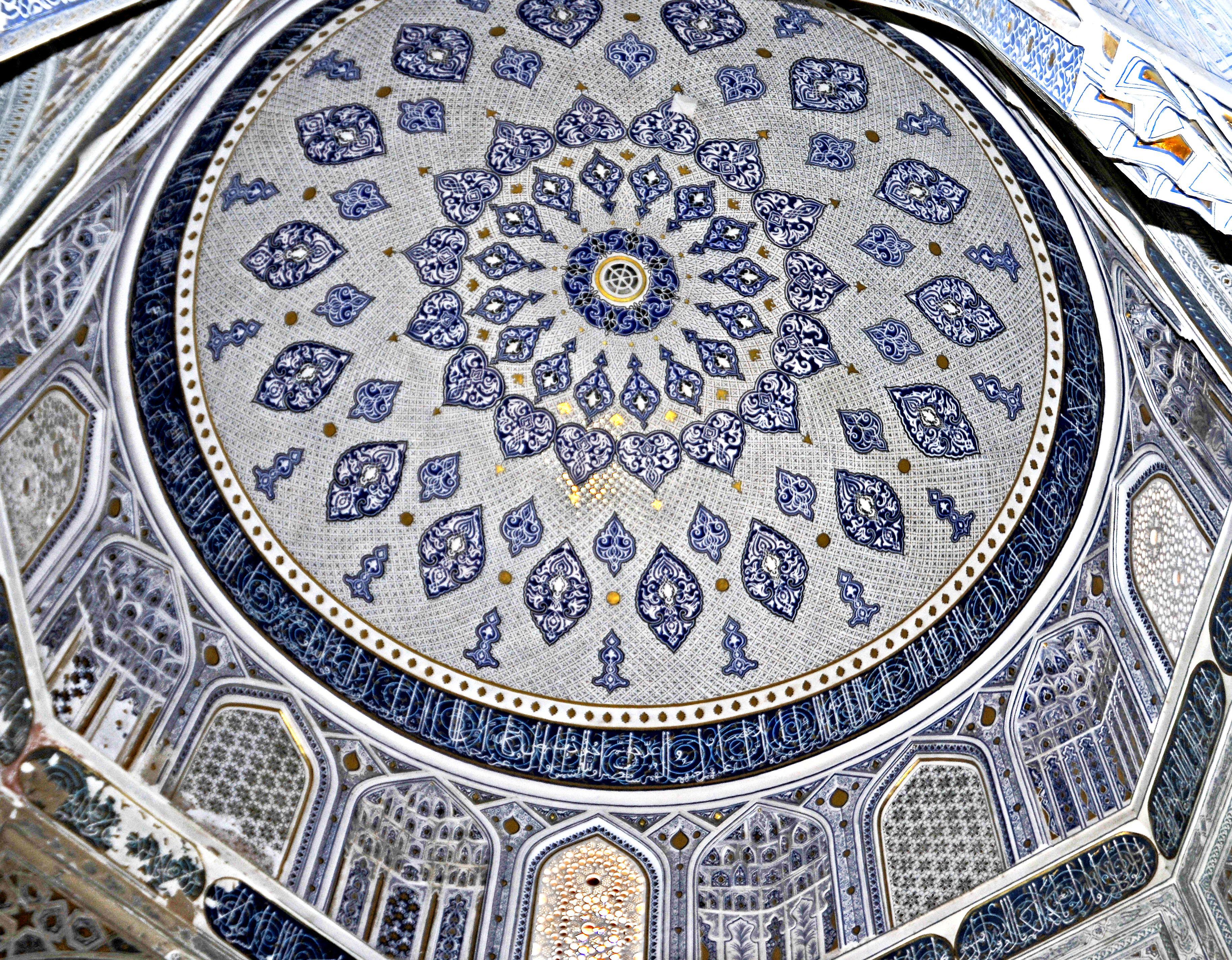
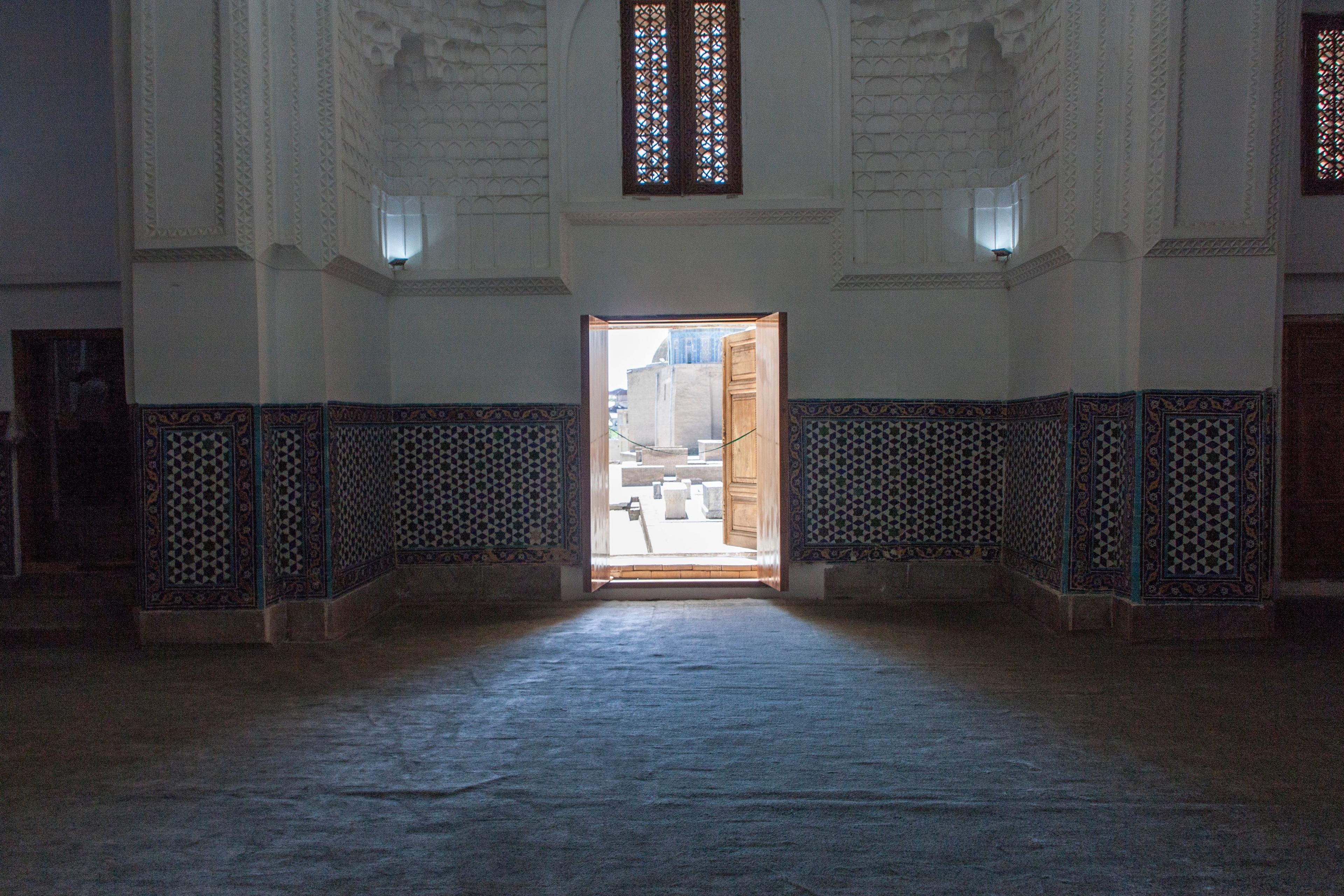
Shah-i-Zinda is effectively an open-air catalogue of Central Asian ceramics from the fourteenth and fifteenth centuries: carved and glazed terracotta, cut-tile mosaic, painted majolica, and turquoise and cobalt glazes that keep their intensity after six hundred years. Look closely at the Shadi Mulk Aka facade, where the carved terracotta is so deep it casts shadows. Much of the complex was heavily restored in the mid-2000s, a campaign criticised by conservationists, so the oldest original work is best seen on the less-retouched panels and in the interiors.
Customs and legend
This is still an active pilgrimage site. Local tradition says you should count the steps of the main stairway going up and coming down: if the numbers match, your sins are forgiven. Pilgrims may be praying in the Qusam ibn Abbas shrine, so keep your voice low and dress modestly.
When to come
Arrive at opening time. By mid-morning tour groups fill the narrow lane, and the tiled facades photograph best in soft, even light before the sun is high.
What to see
- The stairway from the entrance portal, and the legend of counting the steps
- Carved glazed terracotta on the Shadi Mulk Aka mausoleum
- The paired facades of the middle group
- Muqarnas vaulting inside the portal arches
- The shrine and mosque of Qusam ibn Abbas
- The view back down the lane from the upper group
Gallery

Tours that visit Shah-i-Zinda Necropolis
More sights in Samarkand
All of Samarkand

See Shah-i-Zinda Necropolis with a local guide
We build private and small-group trips around the places you want to see — with guides who grew up here.