
Sight · Founded 1881; rebuilt after 1948; marble city from the 1990s
Ashgabat, the White-Marble Capital
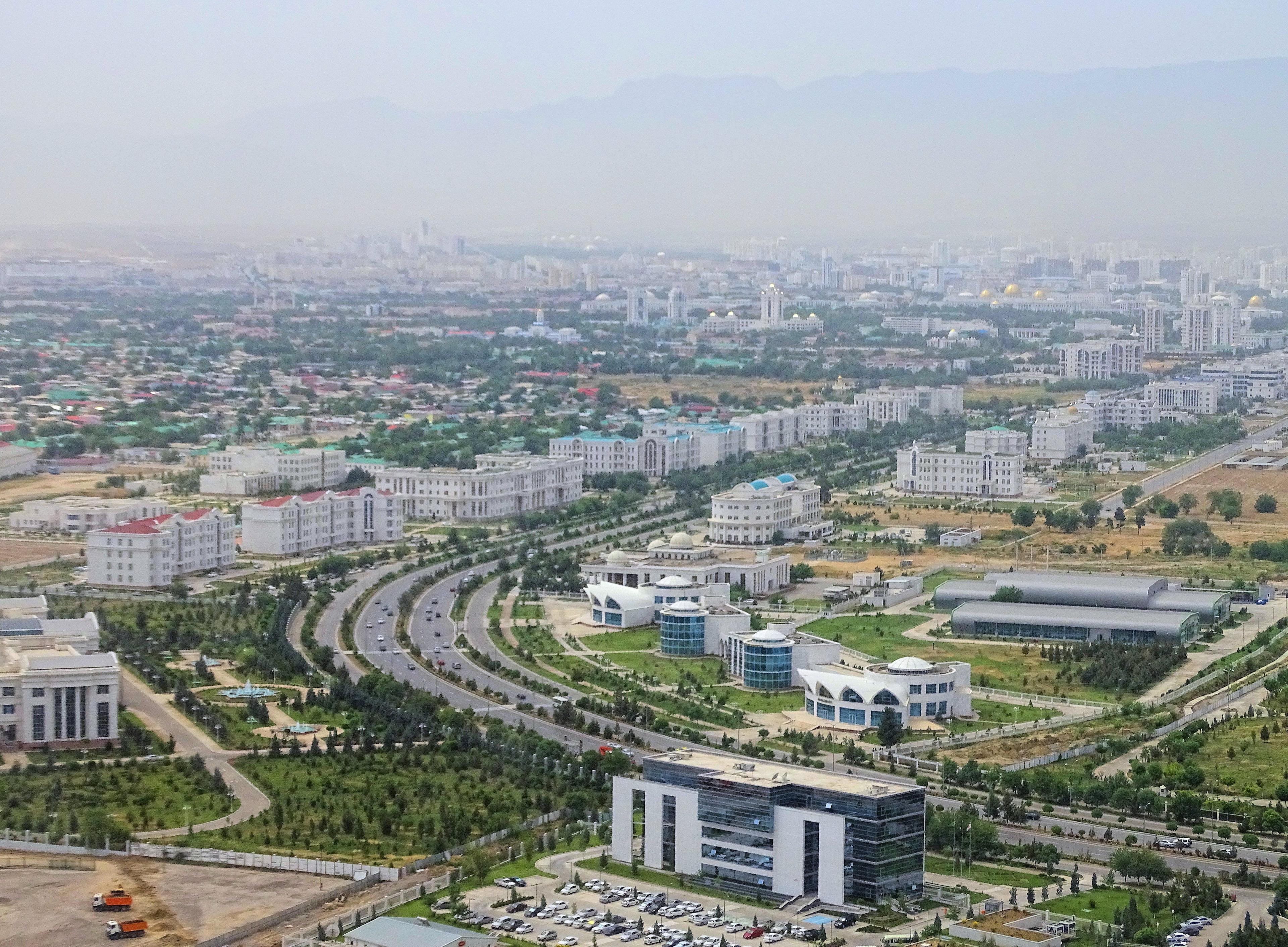
A capital clad in white marble and gold, with broad empty avenues, monumental state buildings and fountains under the Kopet Dag. Ashgabat holds a world record for marble-faced buildings and has no real equivalent anywhere in Asia.
About
Ashgabat lies on the southern edge of the Karakum Desert, at the foot of the Kopet Dag mountains that mark the border with Iran. It began in 1881 as a Russian military post beside a Turkmen village, after the Russian conquest of the Akhal oasis, and grew into a low provincial town of gardens and adobe houses. On the night of 6 October 1948 an earthquake destroyed almost all of it and killed tens of thousands of people; figures are disputed and were long kept secret. The Soviet city rebuilt on the ruins was itself largely replaced after independence in 1991.
The marble city
Under the presidents Saparmurat Niyazov and Gurbanguly Berdimuhamedov, Ashgabat was rebuilt as a showcase of the new state: ministries, apartment towers, museums and palaces faced in white marble, with gilded domes, fountains and lines of street lamps along spotless boulevards. In 2013 Guinness World Records listed it as the city with the highest density of white marble-clad buildings, counting more than 500 of them. The effect is dazzling, theatrical and a little eerie, because the avenues are so quiet; many visitors find it the most memorable city of their whole Central Asian trip.
What you see
Most tours combine a drive through the centre with a few stops. The Independence Monument rises over a park of statues of Turkmen heroes on the southern side of the city. The Arch of Neutrality, a three-legged tower topped by a golden statue of Niyazov, was moved from the centre to the foothills in 2010–11 and has a viewing platform. The National Museum of History holds finds from Nisa, Merv and Gonur Depe, including Parthian ivory drinking horns, and the Carpet Museum displays Turkmen weaving of the highest quality, among them one of the largest hand-woven carpets in the world. On the city's western edge, at Gypjak, the vast Türkmenbaşy Ruhy Mosque stands beside Niyazov's mausoleum. The Alem Cultural Centre is home to what Guinness listed as the largest enclosed Ferris wheel.
How to experience it
On a tourist visa you can usually walk around the centre without your guide once you have checked in, but photography of government buildings, the presidential palace area, police and soldiers is forbidden, and guards will intervene. Ashgabat is at its best in the evening, when the buildings are lit and the heat has gone; in summer the middle of the day is very hot. Pair the city with Old Nisa, 18 km west, and a morning at the Altyn Asyr bazaar.
What to see
- Marble boulevards and fountains lit up after dark
- The Independence Monument and its park
- The Arch of Neutrality and its view over the city
- Parthian, Margiana and Bronze Age finds in the National Museum of History
- The Turkmen Carpet Museum
- The Türkmenbaşy Ruhy Mosque at Gypjak
- The Kopet Dag mountains rising behind the city
Gallery


More sights in Turkmenistan
All of Turkmenistan
See Ashgabat, the White-Marble Capital with a local guide
We build private and small-group trips around the places you want to see — with guides who grew up here.