
Architectural ensemble · c. 6th century BC – 18th century AD
Ancient Merv
Five walled cities built side by side over two thousand years, from an Achaemenid citadel to the Seljuk capital of Sultan Sanjar. Merv was once among the largest cities on earth; today its ruins form a UNESCO site of rare scale and silence.
About
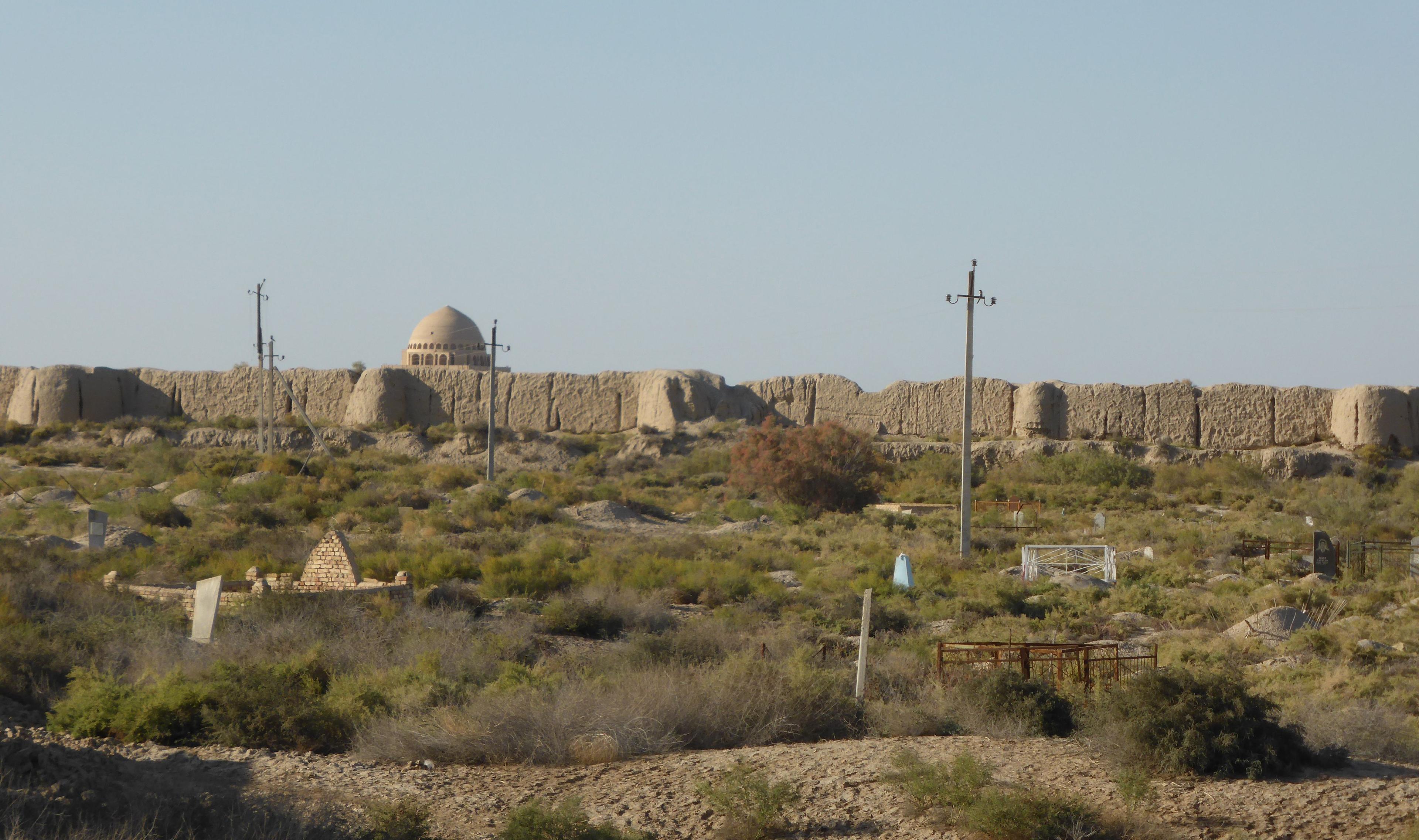
Merv stands on the delta of the Murghab river, where the water running north from Afghanistan spreads out and dies in the Karakum Desert. For more than two thousand years this oasis was one of the great crossroads of the Silk Road, and its successive cities were built not on top of each other, as in most of Central Asia, but next to each other. The result is a landscape of walls, mounds and lone monuments spread over some 1,200 hectares near the town of Bayramali, about 30 km east of Mary. UNESCO listed it in 1999 as the State Historical and Cultural Park 'Ancient Merv'.
Cities of many empires
The oldest part, Erk Kala, is a ring-shaped fortress of the Achaemenid period, from around the 6th century BC, when Margiana was a province of the Persian empire. Alexander's successors enclosed a much larger square city around it, Gyaur Kala, which the Seleucid king Antiochus I refounded as Antiochia Margiana; it stayed in use under the Parthians and Sasanians, and archaeologists found a Buddhist stupa, a Christian church and a mosque within its walls. To the west the Seljuk Turks built Sultan Kala in the 11th and 12th centuries, when Merv was the capital of their eastern empire and, by many estimates, one of the largest cities in the world. Medieval geographers called it Marv-i Shahijan, 'Merv, Queen of the World'.
That world ended in 1221, when the Mongol army under Tolui, son of Genghis Khan, took the city and massacred its population. The Timurids later built a smaller fortress, Abdullah Khan Kala, to the south, and Merv was finally abandoned after the Bukharan emir destroyed its dam in the late 18th century.
What you see
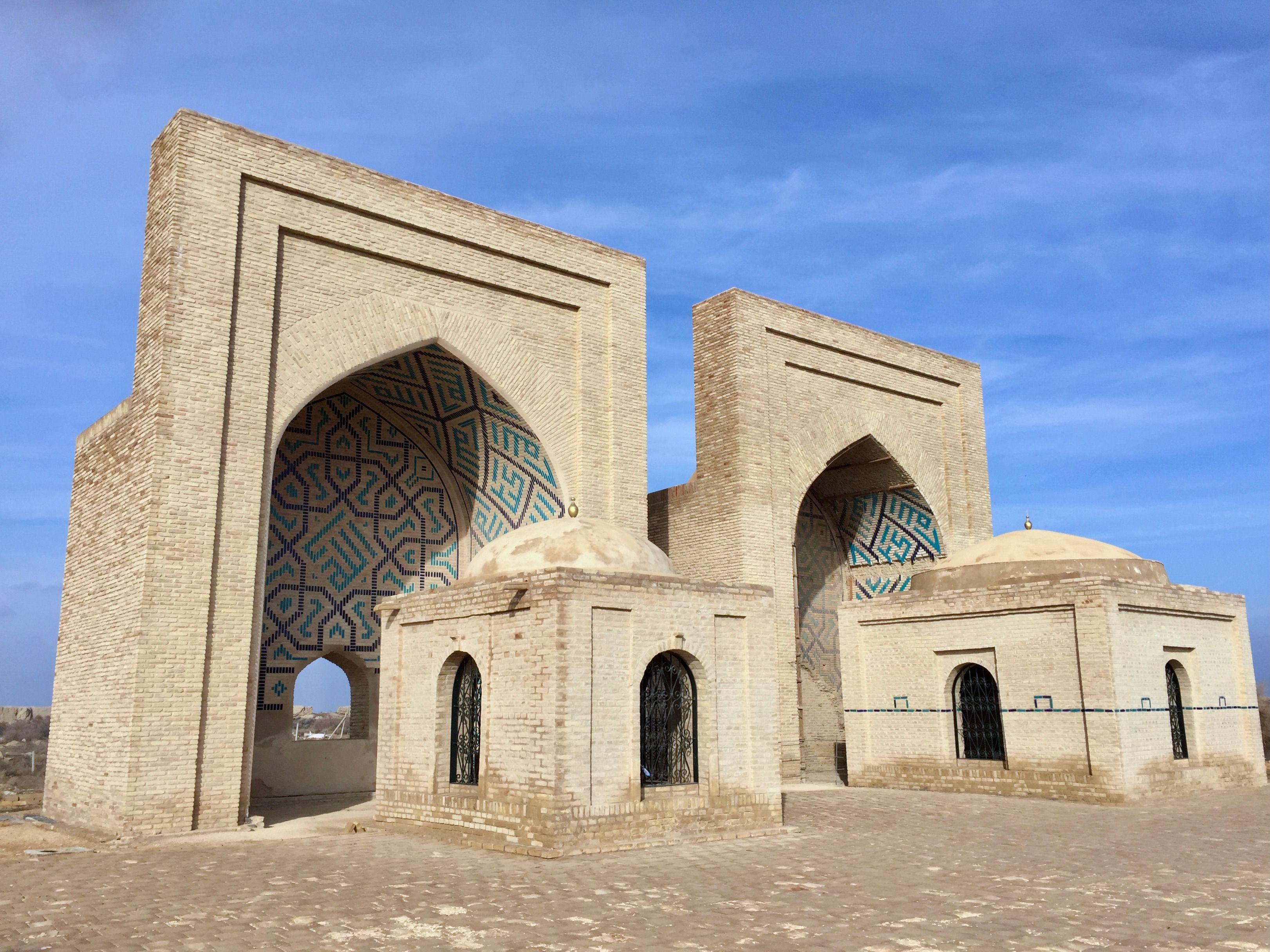
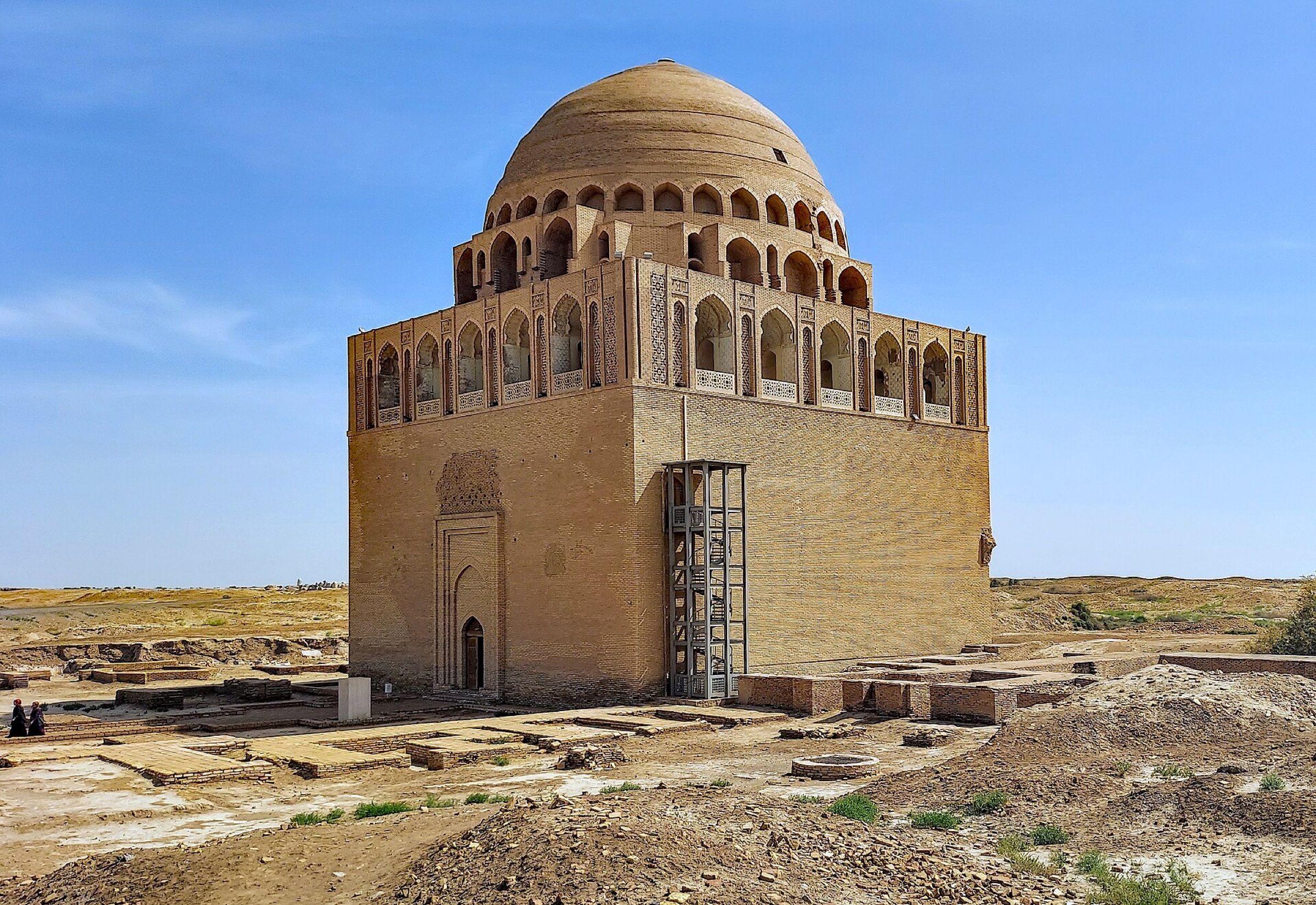
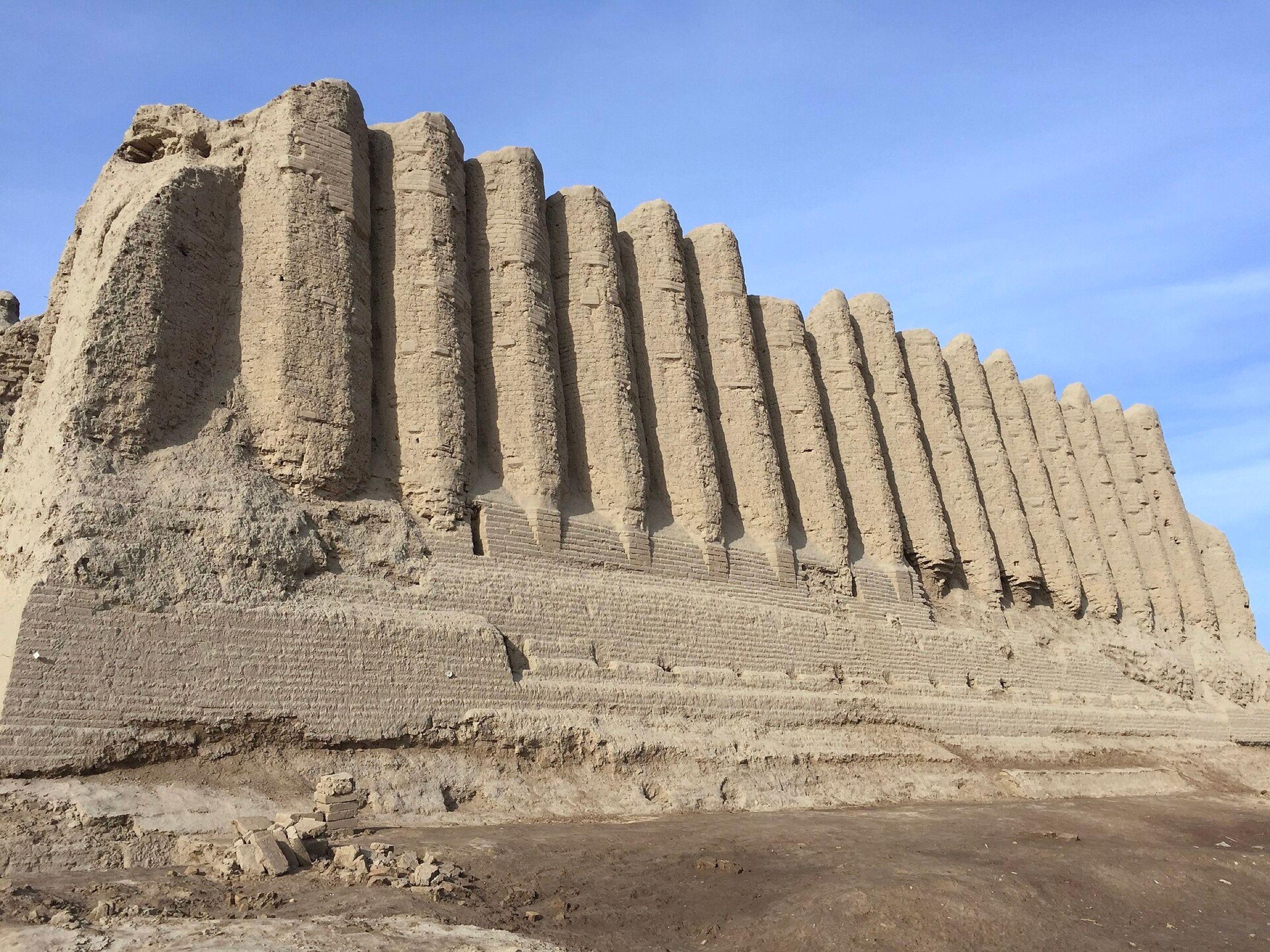
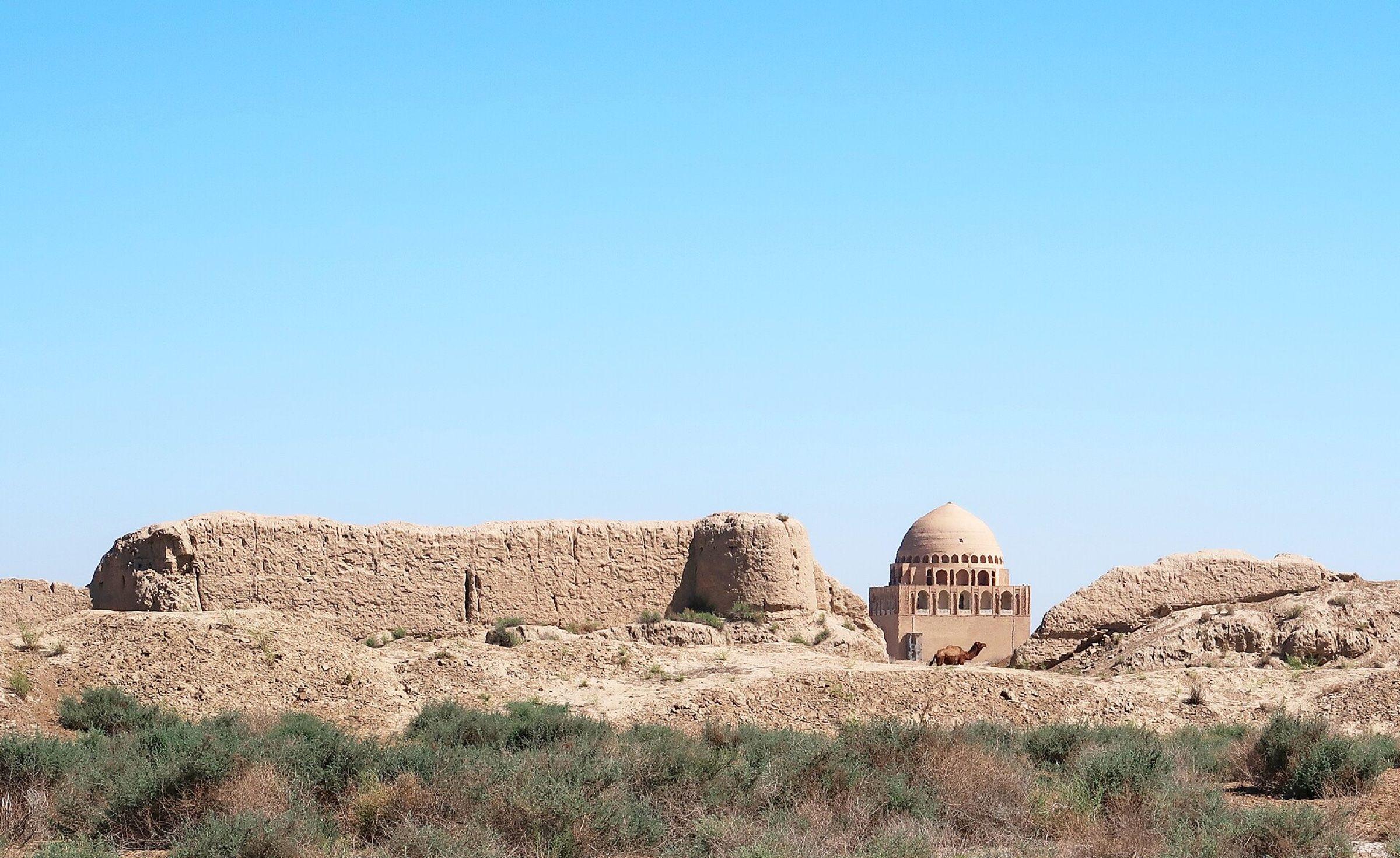
The great survivor is the Mausoleum of Sultan Ahmad Sanjar, the last great Seljuk ruler, who died in 1157. Its cube of fired brick, about 27 metres on each side, carries a double dome some 17 metres across, and fragments of blue tile and painted plaster survive inside. Medieval writers said its outer dome was covered in turquoise tiles visible a day's ride away. Outside the walls stand the two Kyz Kalas, Great and Little, fortified manor houses of the 6th or 7th century whose corrugated walls look like folds of cloth. To the south-west, the Askhab mausoleums, a pair of 15th-century portals over the graves of two companions of the Prophet Muhammad, remain an active place of pilgrimage, as does the 12th-century mausoleum of Muhammad ibn Zayd.
How to experience it
Merv is too large to walk; you drive between monuments with a guide and climb the walls of Erk Kala for a view across the whole site. Allow most of a day, and add the regional museum in Mary for finds from Merv and Gonur Depe. Light is best early and late, and summer middays are fiercely hot.
What to see
- The Mausoleum of Sultan Sanjar and its double dome
- The view over the oasis from the walls of Erk Kala
- The corrugated walls of the Great Kyz Kala
- The Askhab mausoleums, a place of pilgrimage
- The square ramparts of Gyaur Kala, the Hellenistic city
- The mausoleum of Muhammad ibn Zayd
- Finds from Merv in the regional museum in Mary
Gallery
More sights in Turkmenistan
All of Turkmenistan
See Ancient Merv with a local guide
We build private and small-group trips around the places you want to see — with guides who grew up here.