
Architectural ensemble · 11th–16th centuries
Konye-Urgench
The ruined capital of the Khorezmshahs, destroyed by Genghis Khan and again by Timur. Its tiled mausoleums and the 60-metre Kutlug-Timur Minaret stand in open steppe, just across the border from Khiva.
About
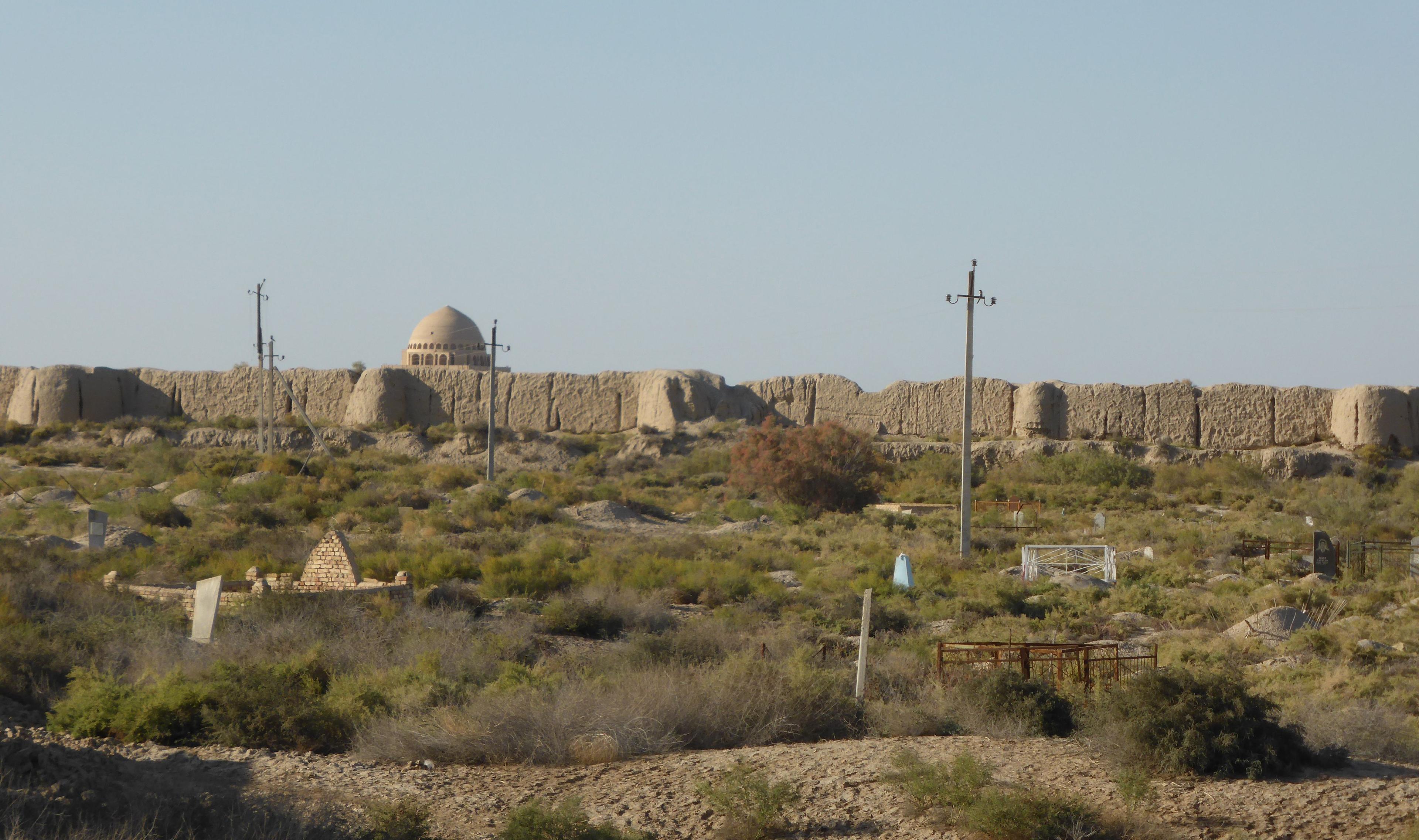
Konye-Urgench, also written Kunya-Urgench or Köneürgenç, means 'Old Urgench'. Under the name Gurganj it was the capital of Khorezm, the rich oasis state on the lower Amu Darya, and in the late 12th and early 13th centuries it was the seat of the Khorezmshahs, whose empire stretched from the Aral Sea to the Persian Gulf. Scholars such as al-Biruni and Ibn Sina worked at its court before that. The monuments that survive are scattered across open ground on the edge of the modern town, and since 2005 they have been a UNESCO World Heritage Site.
Destruction and survival
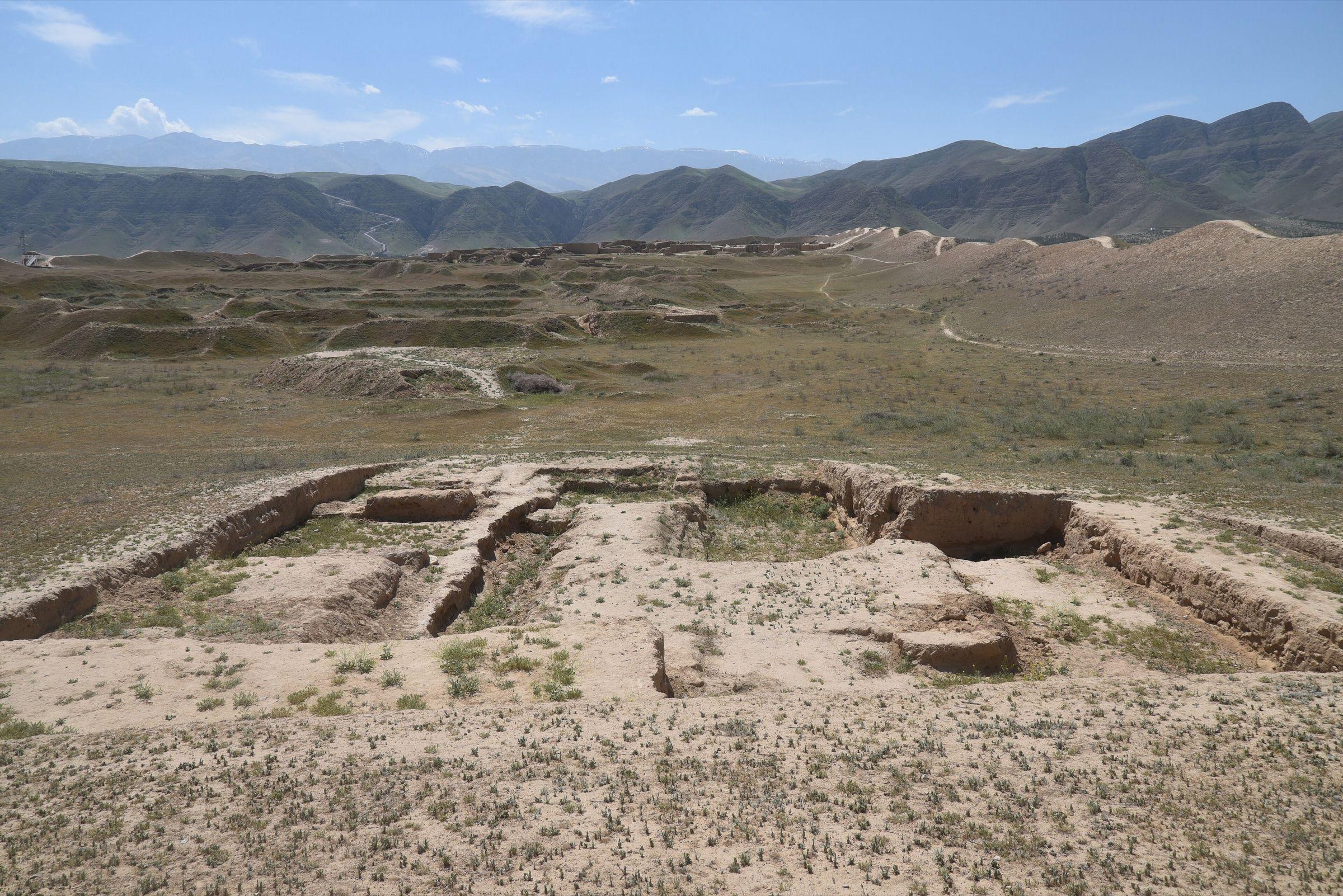
In 1221 the Mongol army besieged Gurganj for months. According to the Persian historian Juvayni, when the city fell the Mongols broke the dams on the Amu Darya and flooded it. Urgench recovered under the Golden Horde and flourished again in the 14th century, only to be sacked by Timur in 1388. When the river shifted its course in the 16th century and the city lost its water, the khans moved their capital to Khiva, and Old Urgench was left to the desert.
What you see
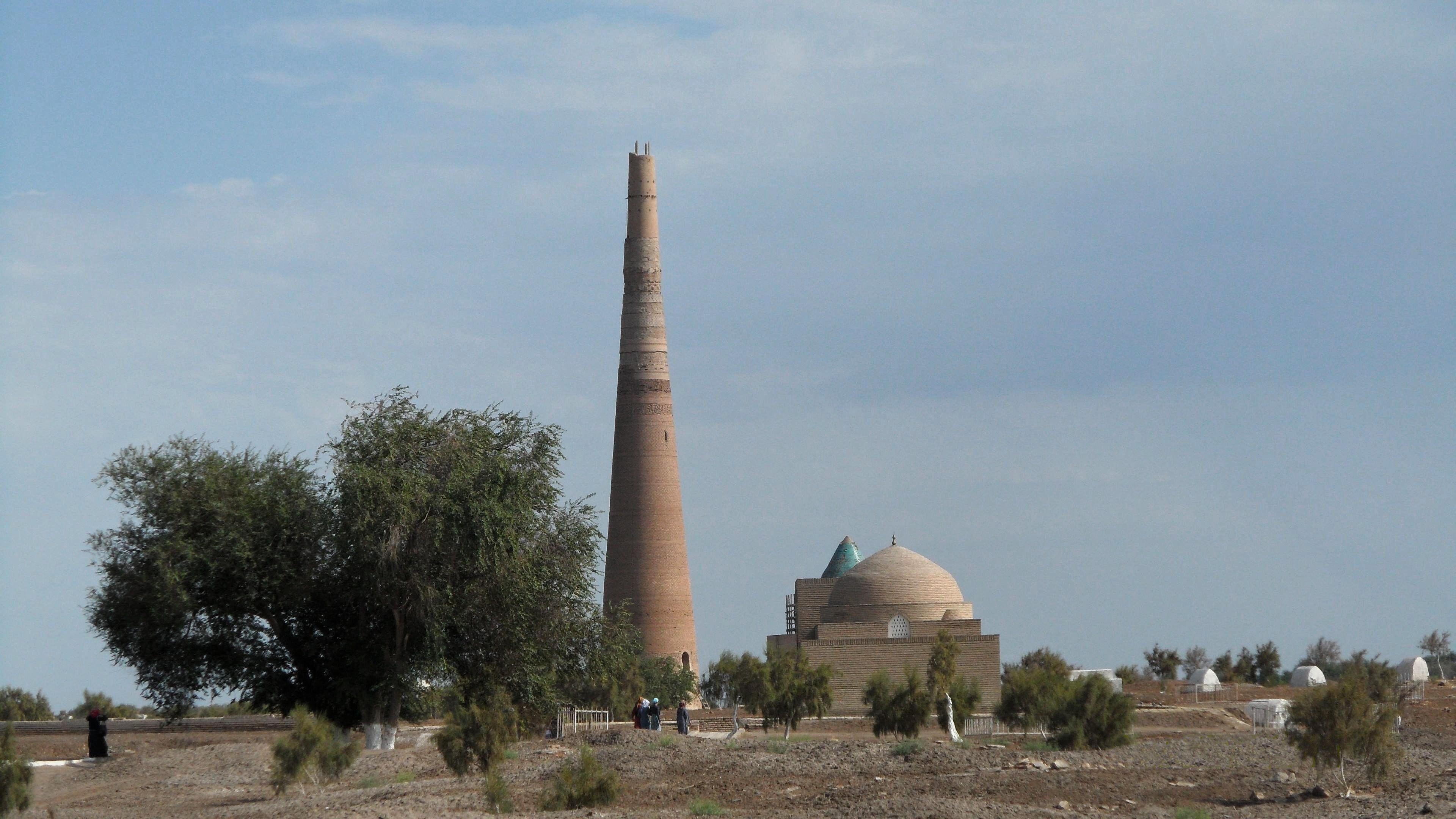
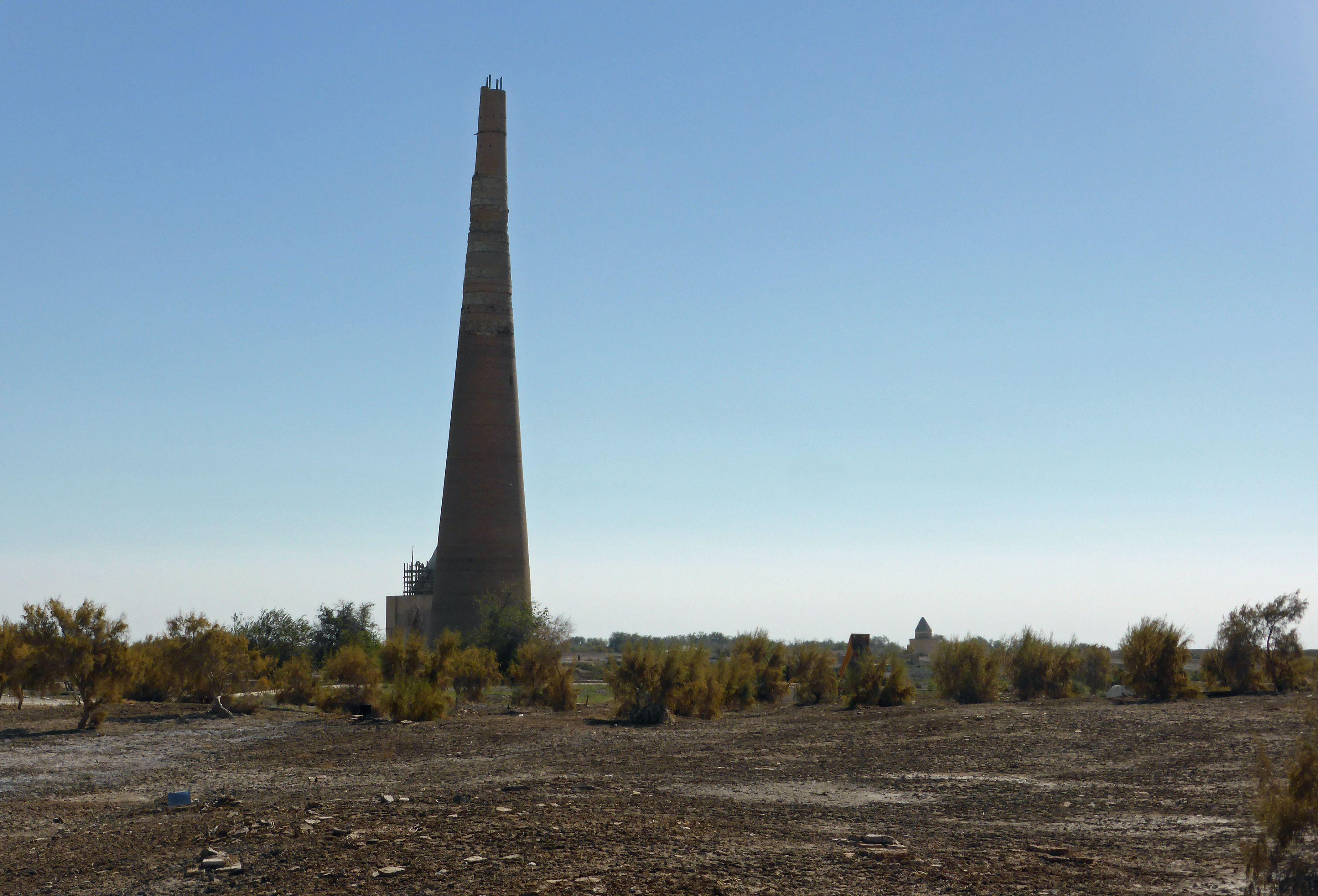
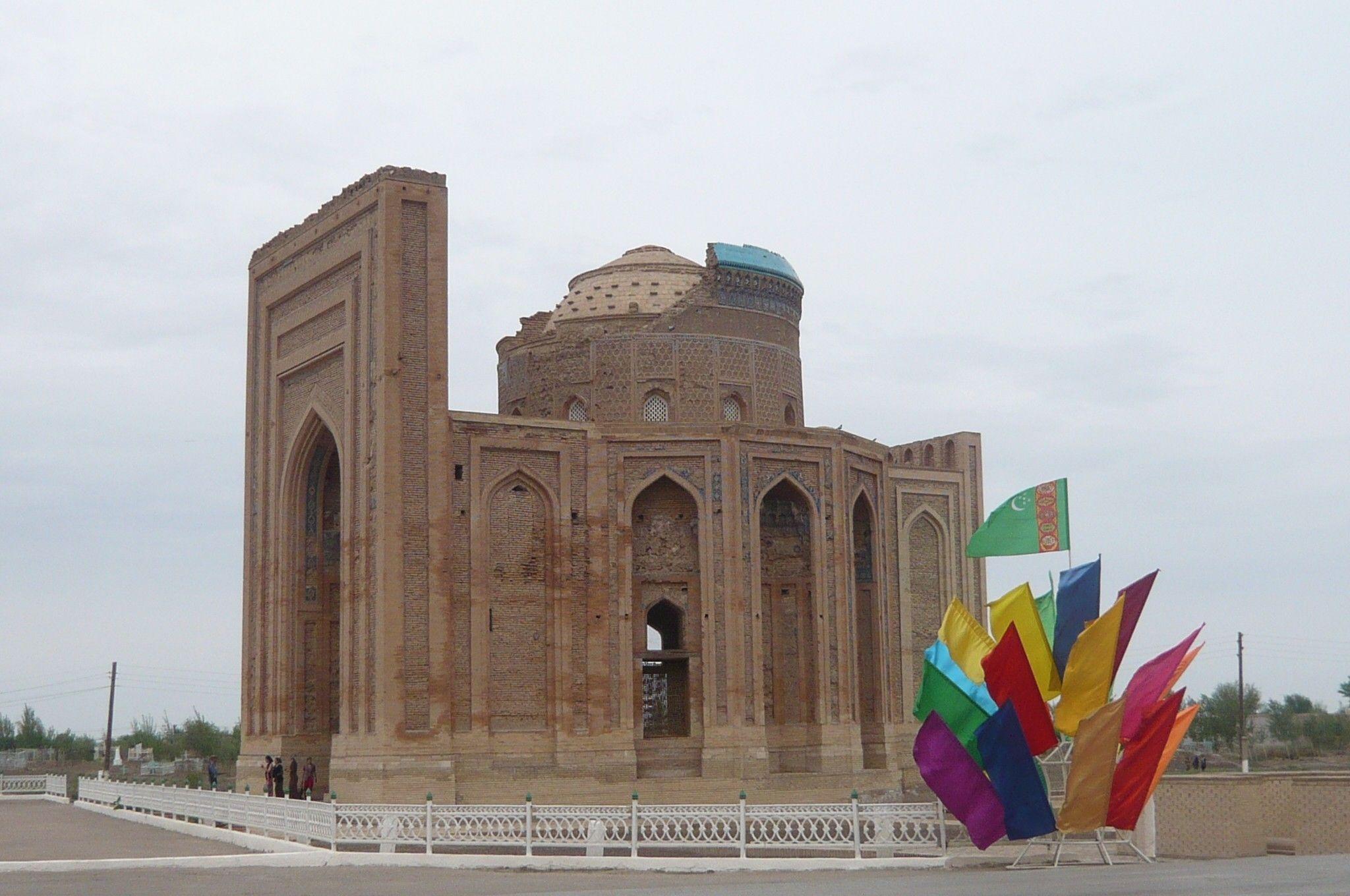
The Kutlug-Timur Minaret, about 60 metres tall, is among the tallest medieval minarets in Central Asia. Its brick shaft is wrapped in bands of geometric ornament and a Kufic inscription naming Kutlug-Timur, the Golden Horde governor of Khorezm in the 1320s and 1330s; some scholars think the core is older and that he restored it. Opposite stands the Turabeg Khanym Mausoleum, a 14th-century building whose inner dome is covered with a mosaic of glazed tiles in deep blue, turquoise and white. Local tradition counts 365 facets in its decoration for the days of the year, 24 arches for the hours and 12 for the months, a numerology that is best treated as legend.
Further south are the Mausoleum of Sultan Tekesh, who died in 1200, with its turquoise conical roof, and the smaller Mausoleum of Il-Arslan, his father, whose twelve-sided tent dome and terracotta façade make it the oldest building on the site. A separate group gathers around the Mausoleum of Najm ad-Din Kubra, the Sufi master who founded the Kubrawiyya order and is said to have died defending the city in 1221. It is an active place of pilgrimage, as is the low hill of Kyrk Molla, where women traditionally come to pray for children.
How to experience it
The monuments are spread over several kilometres, so you drive between groups and walk at each. Come in the morning before the heat, dress modestly for the pilgrimage sites, and expect to share them with Turkmen families rather than tour groups. If you have seen Ichan-Kala in Khiva, Konye-Urgench is a striking counterpoint: the same Khorezm culture, centuries older and left as ruins.
What to see
- The Kutlug-Timur Minaret, about 60 metres of patterned brick
- The tiled inner dome of the Turabeg Khanym Mausoleum
- The turquoise conical roof of the Mausoleum of Sultan Tekesh
- The twelve-sided dome of the Il-Arslan Mausoleum
- Pilgrims at the Mausoleum of Najm ad-Din Kubra
- The pilgrimage hill of Kyrk Molla
- The ruined portal of a 14th-century caravanserai
Gallery

More sights in Turkmenistan
All of Turkmenistan
See Konye-Urgench with a local guide
We build private and small-group trips around the places you want to see — with guides who grew up here.