
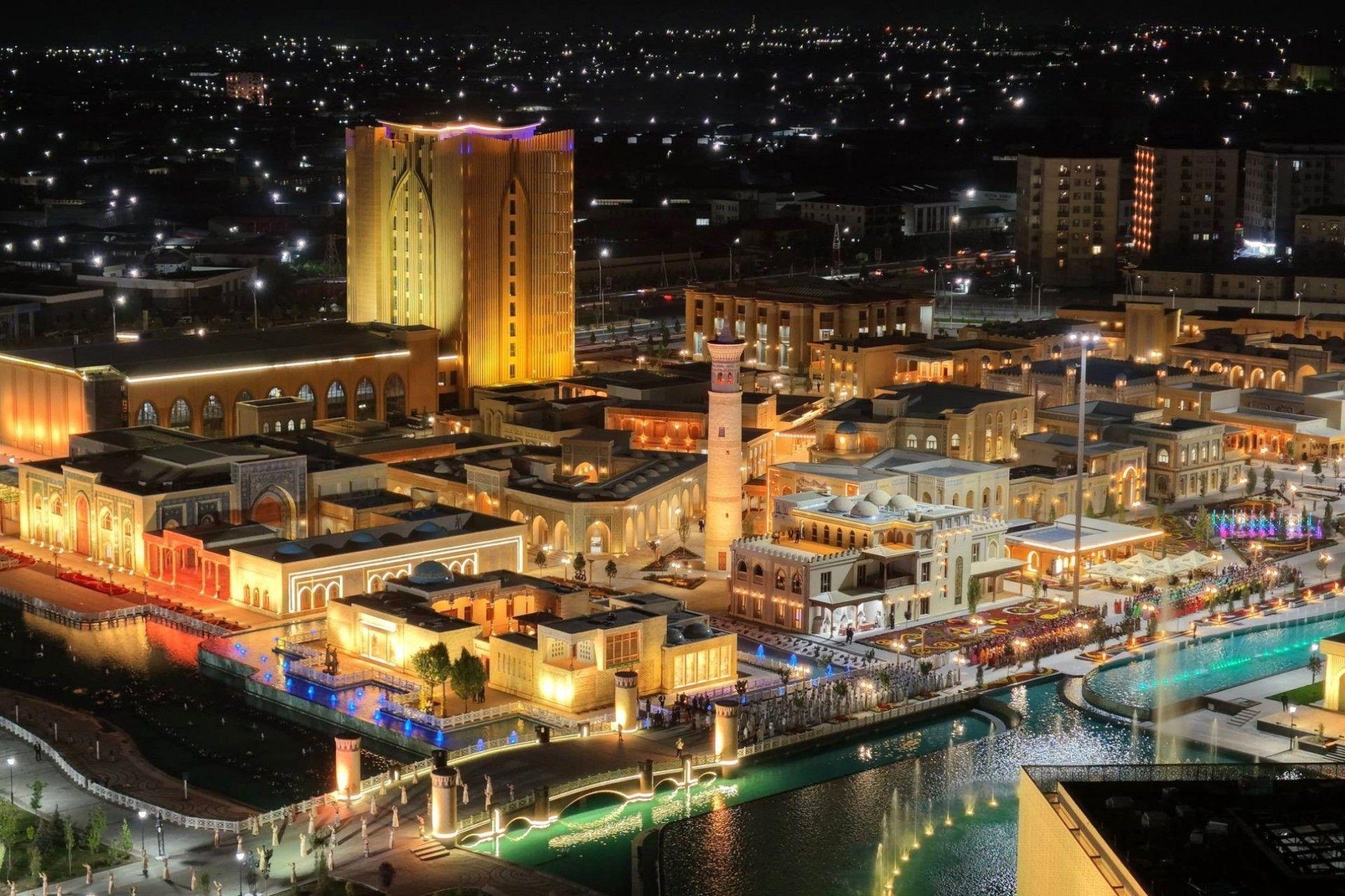
Architectural ensemble · 2025–2026; opened 27 April 2026
Burhaniddin Marginani Complex, Margilan
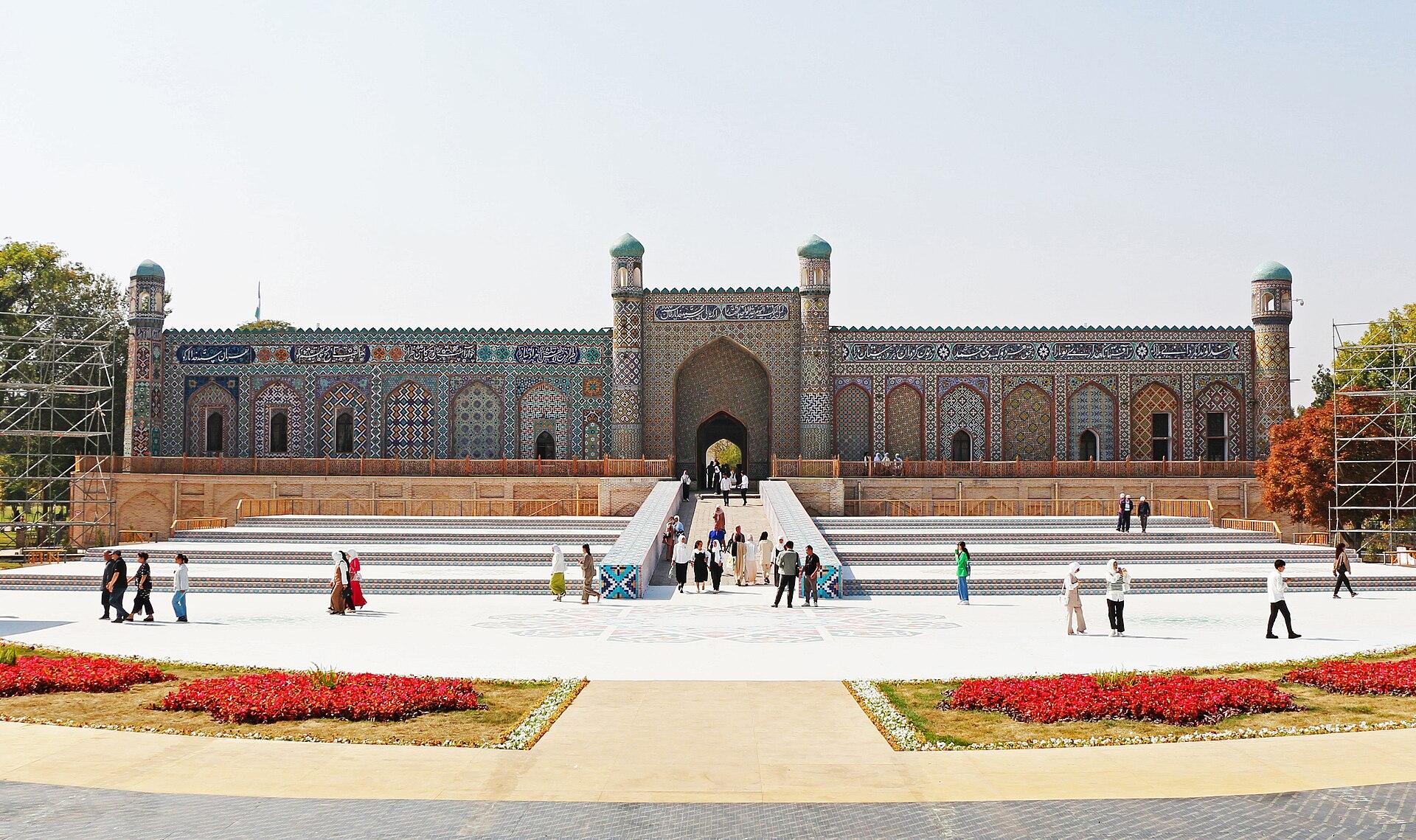
Margilan's new 35-hectare cultural quarter, opened in April 2026 and named after the medieval jurist who wrote al-Hidaya: a research institute, Maqom theatre, museum, bazaar, hotels and an artificial lake, all built in a modern take on Fergana architecture.
About
Margilan has been famous for silk for a thousand years; since the spring of 2026 it also has a civic centrepiece to match. The Burhaniddin Marginani scientific, educational and tourism complex, laid out across about 35 hectares in the Navruz mahalla on the edge of the city, was built under a presidential decree of April 2025 and opened on 27 April 2026 with the President of Uzbekistan in attendance. Local press describe it as a “city within a city”, and the description is fair: it is less a monument than a new district designed around scholarship, performance and trade.
Who was al-Marghinani
Burhan al-Din al-Marghinani (1135–1197), born in Marghinan as the city was then written, was a Hanafi jurist whose manual al-Hidaya (“The Guidance”) became one of the most studied legal texts in the Islamic world. It was taught from Bukhara to Delhi, and in the eighteenth century the British in Bengal had it translated into English as a basis for the courts; it is still read in madrasahs today. He died in Samarkand, where his grave is, so the Margilan complex is a tribute to his birthplace rather than a tomb.
What is inside
- The Burhaniddin Marginani Research Institute, dedicated to Islamic jurisprudence and the scholar's legacy.
- A Maqom theatre of about 500 seats for the classical music tradition of the Fergana Valley.
- The Margilan history museum and a 27-metre minaret that serves as the complex's landmark.
- The “House of Otabek and Kumush”, a stage-set recreation of the world of Abdulla Qodiriy's novel “Days Gone By”, with performances.
- An amphitheatre, a man-made lake with a musical fountain, a national bazaar, a caravanserai-style trading court and an artisans' centre.
- A 190-room Wyndham hotel and guest houses; a congress hall is planned for a second phase.
The official target is 200,000–250,000 foreign visitors a year, which tells you how central the site is meant to become to Fergana Valley tourism.
How to use it
The complex works best as an evening stop after Margilan's craft sites: see the Yodgorlik silk factory and Kumtepa bazaar by day, then come here for a maqom performance and dinner by the lake. It is also the most comfortable base for overnight stays in the valley, which until now had few hotels of international standard. As the site is brand new, opening hours, ticketing for the museum and theatre schedules are still settling; we confirm them before each tour.
What to see
- The 27-metre minaret and the lake with its musical fountain
- An evening maqom concert in the purpose-built theatre
- The Margilan history museum
- The “House of Otabek and Kumush” literary stage-set
- The artisans' centre and national bazaar for silk and ikat
- The amphitheatre and the research institute devoted to al-Hidaya
Gallery


More sights in Fergana Valley
All of Fergana Valley

See Burhaniddin Marginani Complex, Margilan with a local guide
We build private and small-group trips around the places you want to see — with guides who grew up here.