
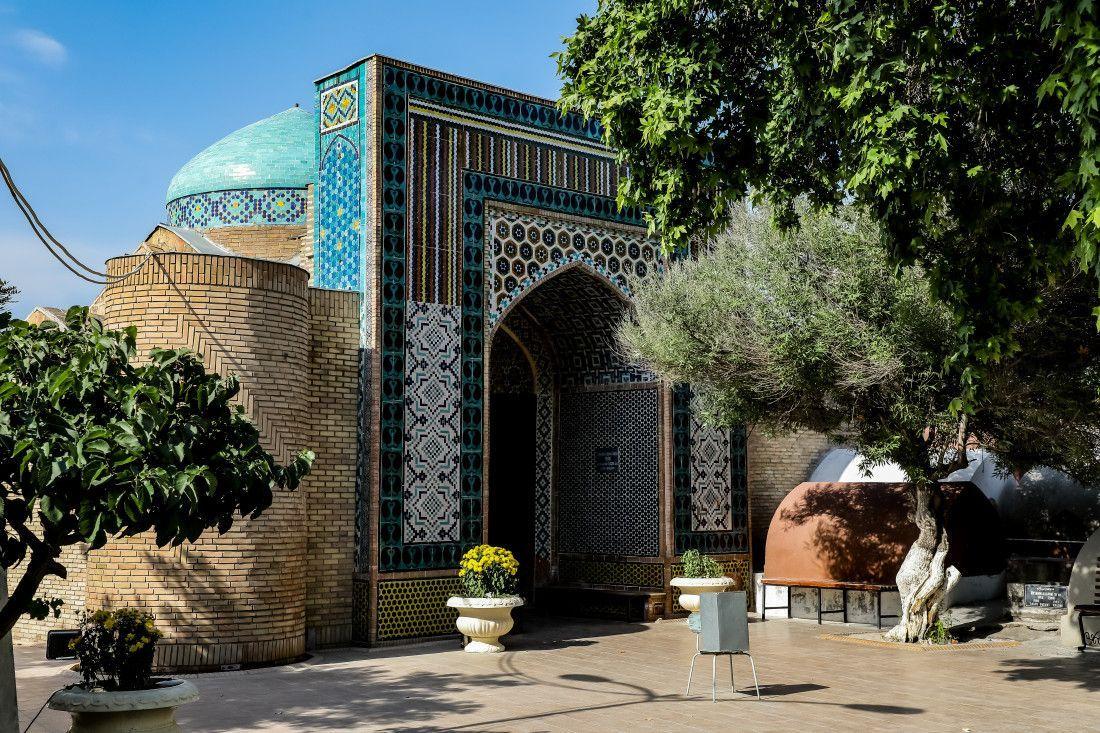
Mausoleum · c. 1825; Chalpak madrasah and Modari Khan mausoleum added in the same decade
Dakhma-i-Shakhan, the Khans' Necropolis, Kokand
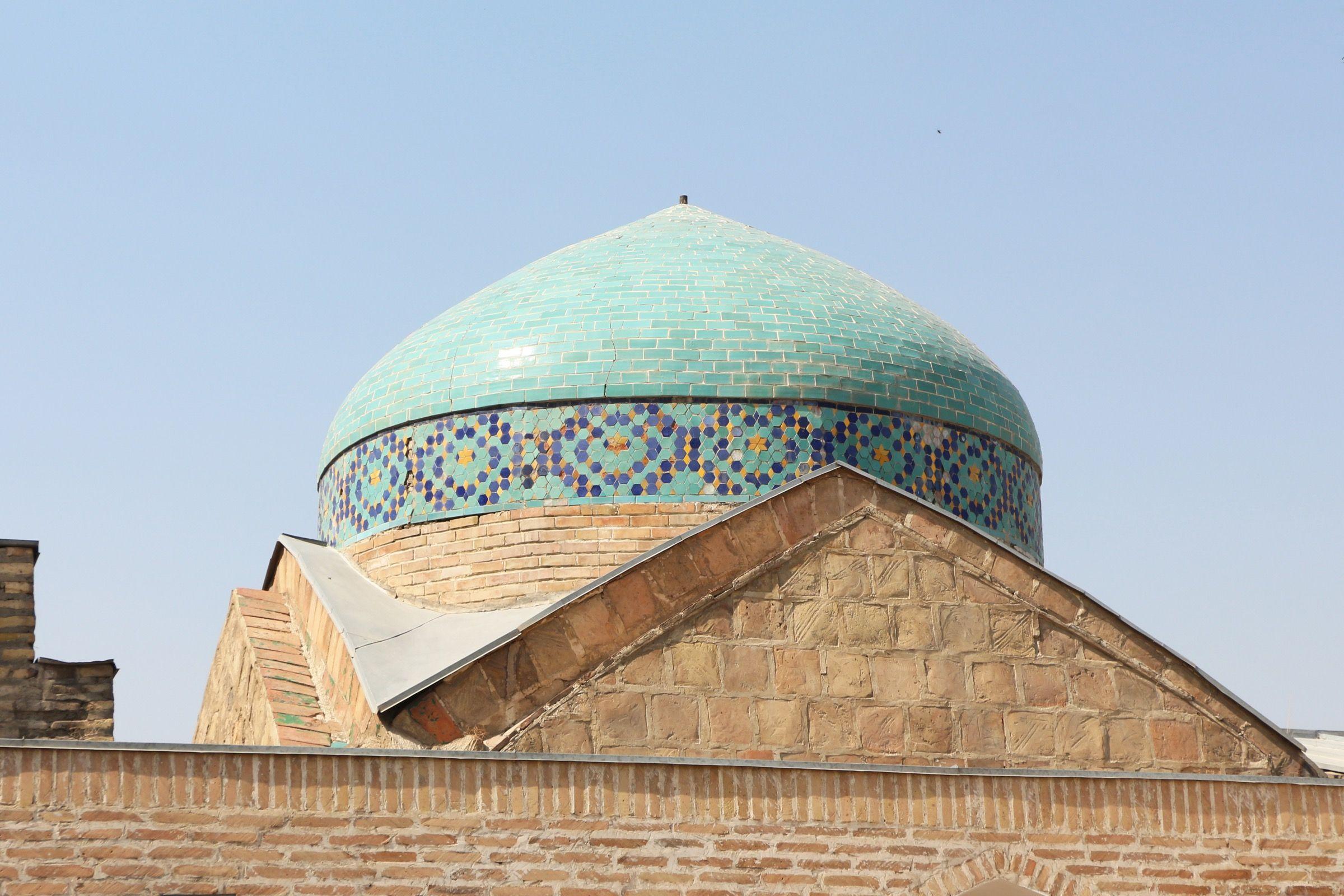
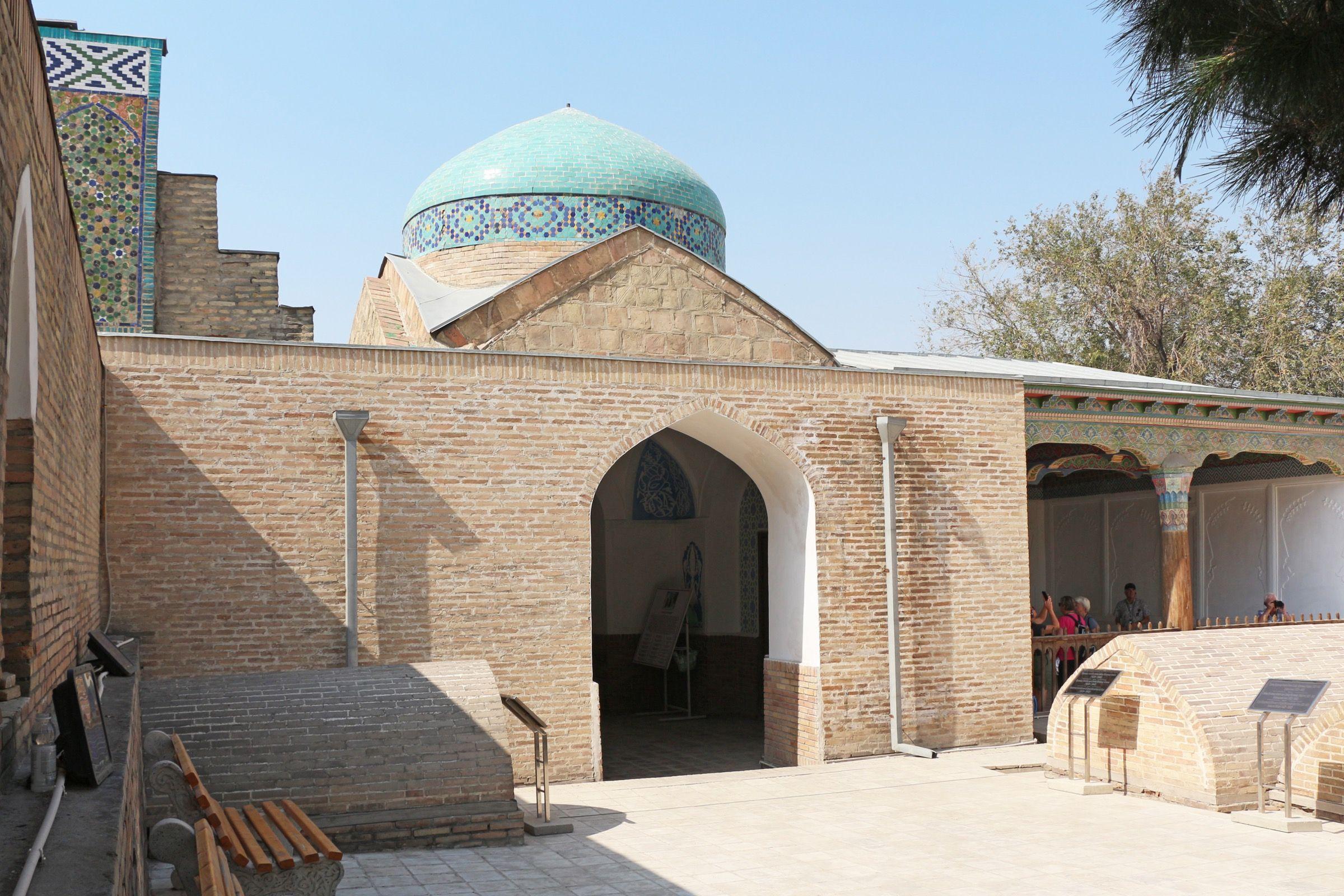
The family tomb of the Kokand khans, commissioned by the poet-queen Nodira after the death of her husband Umar Khan: a tiled portal, a small mosque and a courtyard of graves behind the Narbutabey Madrasah.
About
Kokand was the capital of a khanate that at its height controlled the whole Fergana Valley and reached as far as Tashkent and the Kazakh steppe. Its rulers were buried not in a grand single mausoleum but in a khazira, a walled courtyard of graves, and this one, known as Dakhma-i-Shakhan or the “tomb of the kings”, is where Umar Khan and members of his line lie. It stands in the old cemetery behind the Narbutabey Madrasah, a few minutes from the Juma Mosque.
Nodira and Umar Khan
Umar Khan ruled from 1810 to 1822 and was a poet as well as a sovereign; his wife Mohlaroyim, better known by her pen-name Nodira, was the most celebrated woman poet of nineteenth-century Central Asia and effectively co-ruled during the minority of their son Madali Khan. Most sources agree that the complex took shape around 1825, after Umar Khan's death, on Nodira's initiative, and that she also ordered the Chalpak madrasah next to it. Nodira herself was executed in 1842 when the Emir of Bukhara seized Kokand; she is buried close by, in the Modari Khan mausoleum, which was originally built for Umar Khan's mother and became the resting place of the women of the court.
What you see
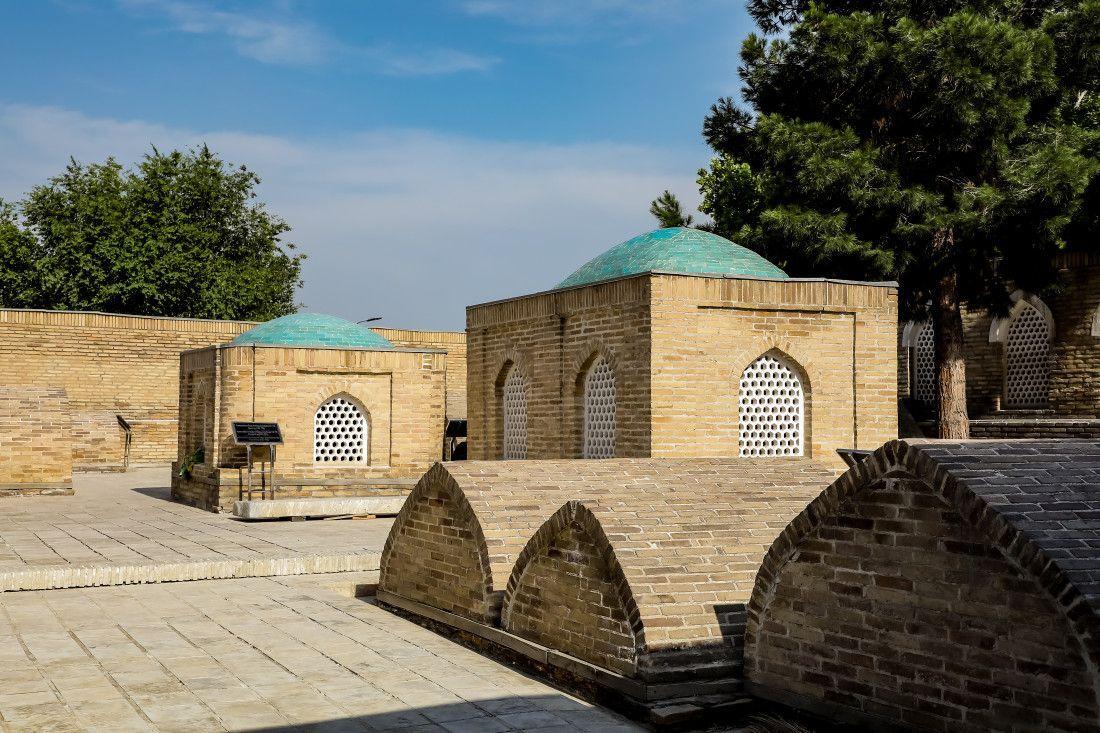
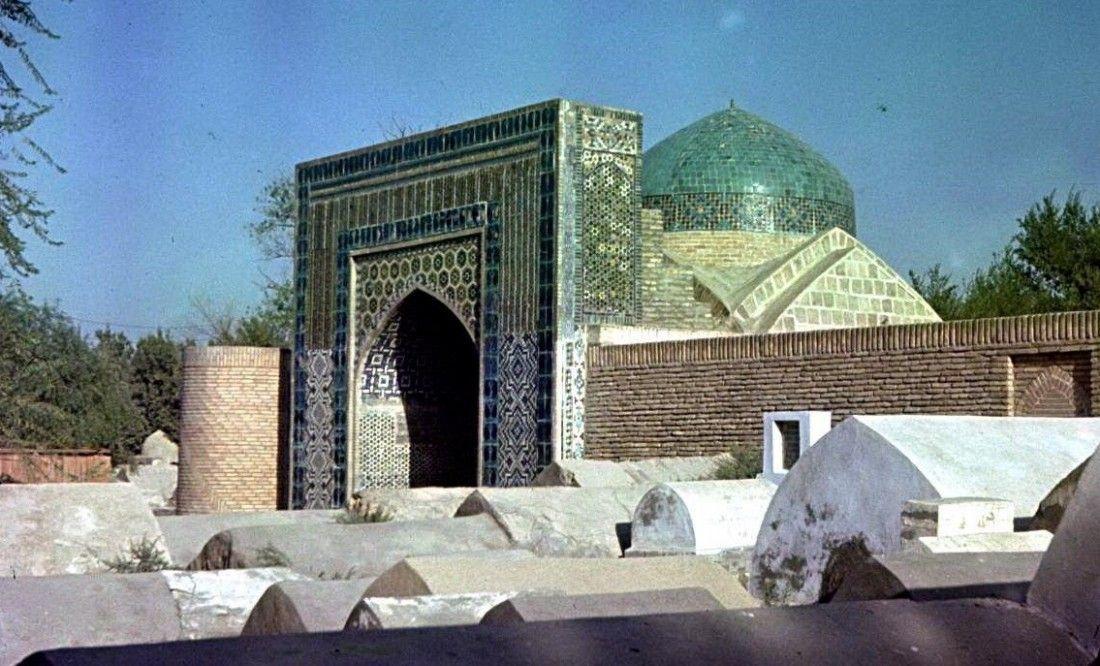
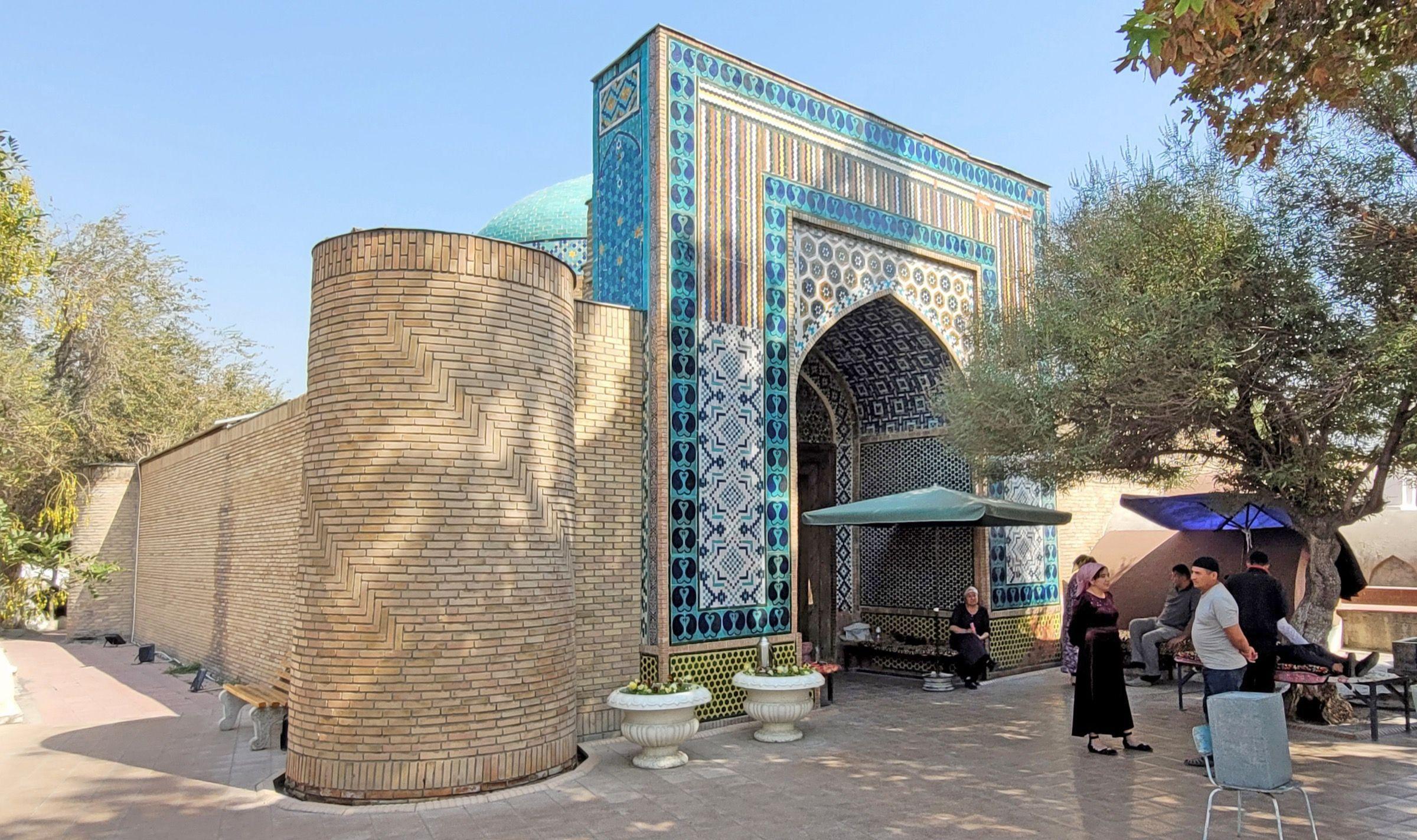
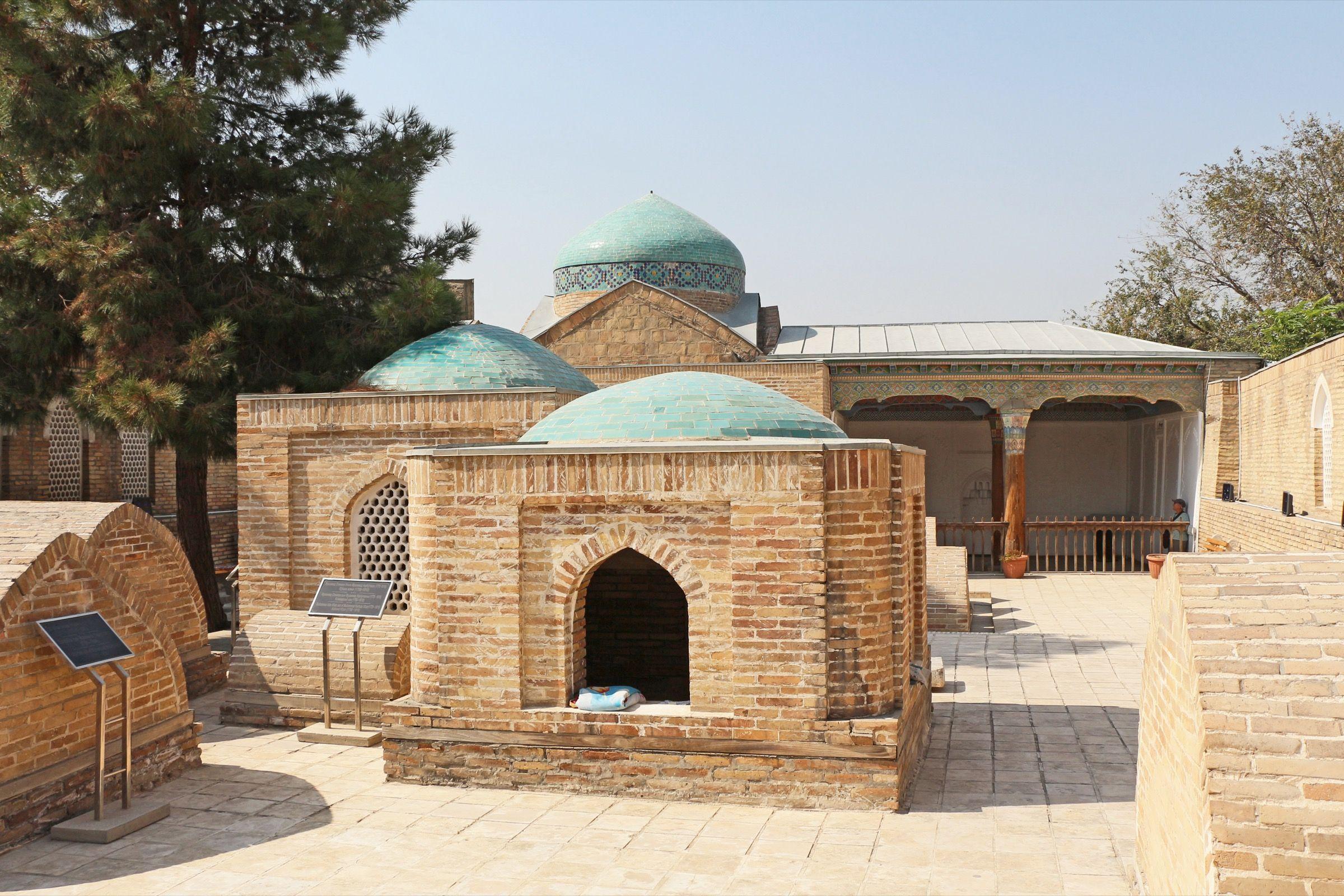
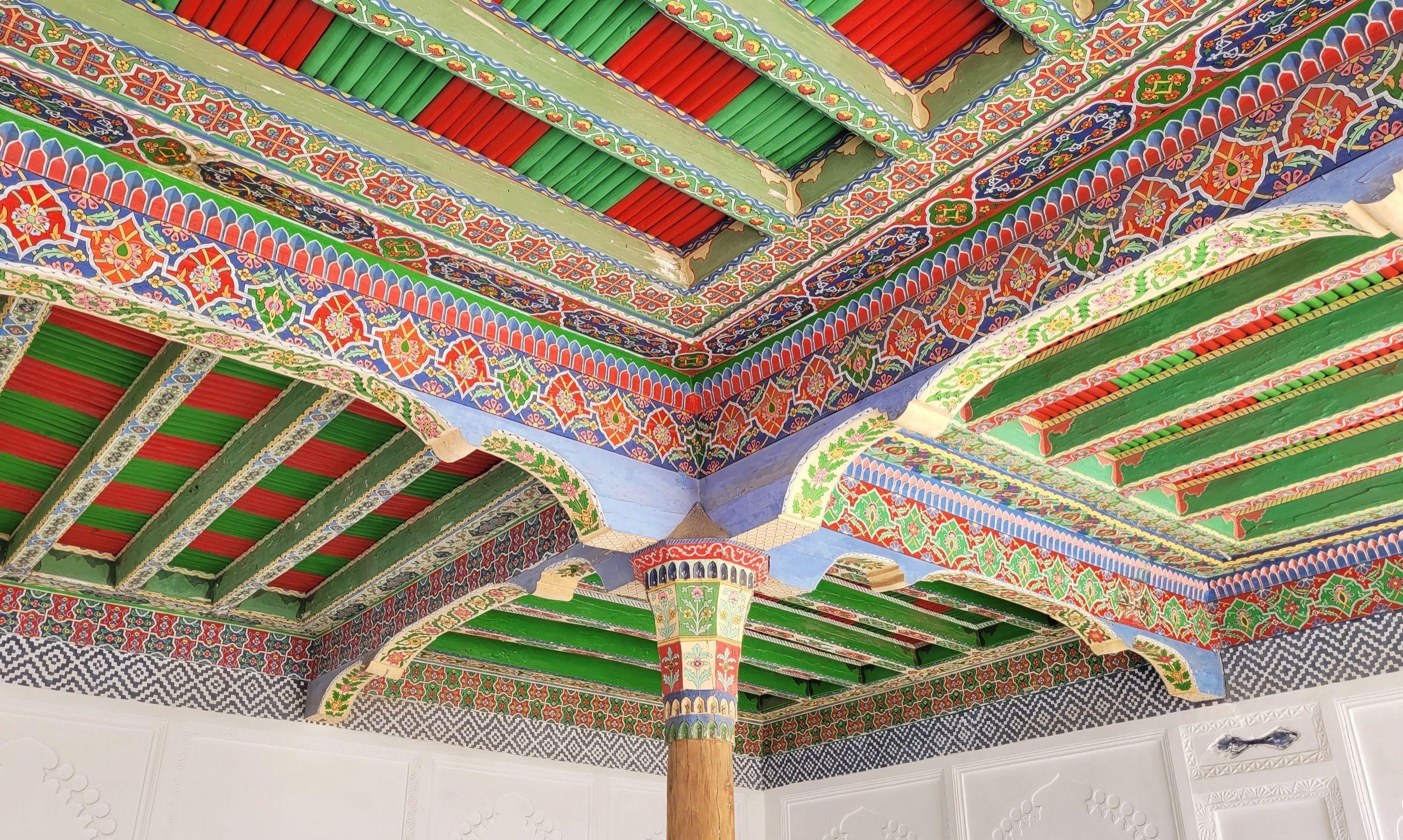
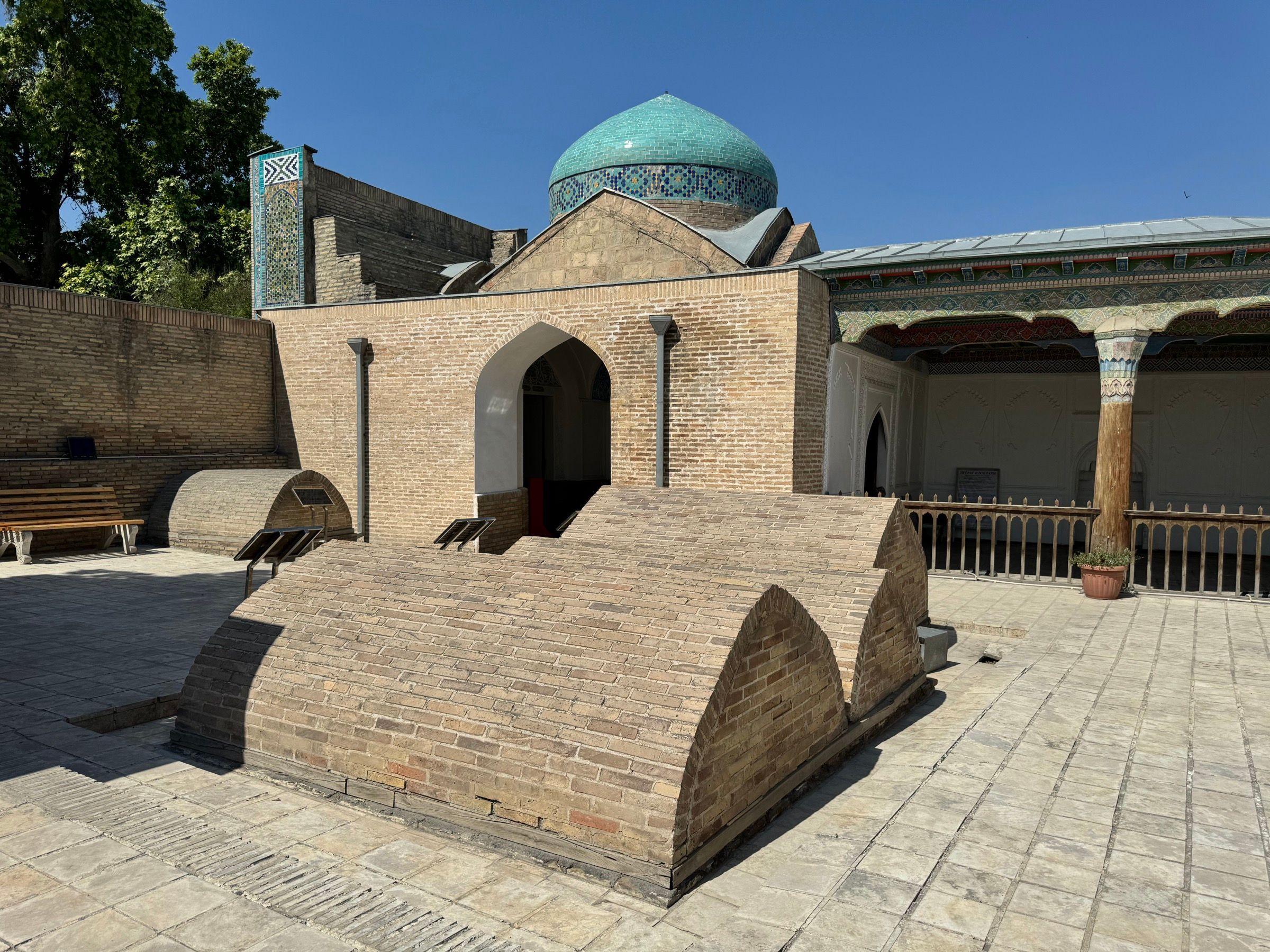
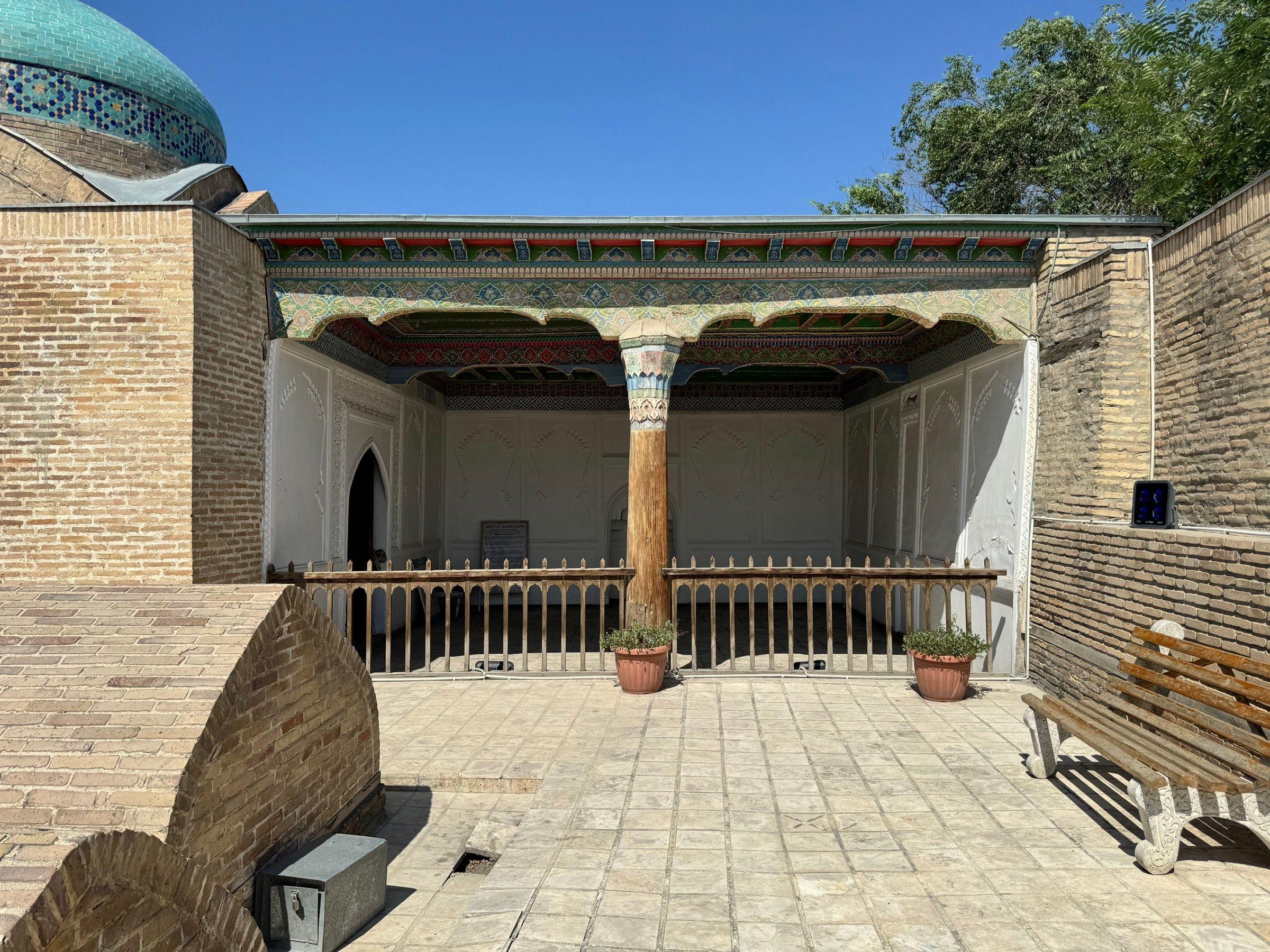
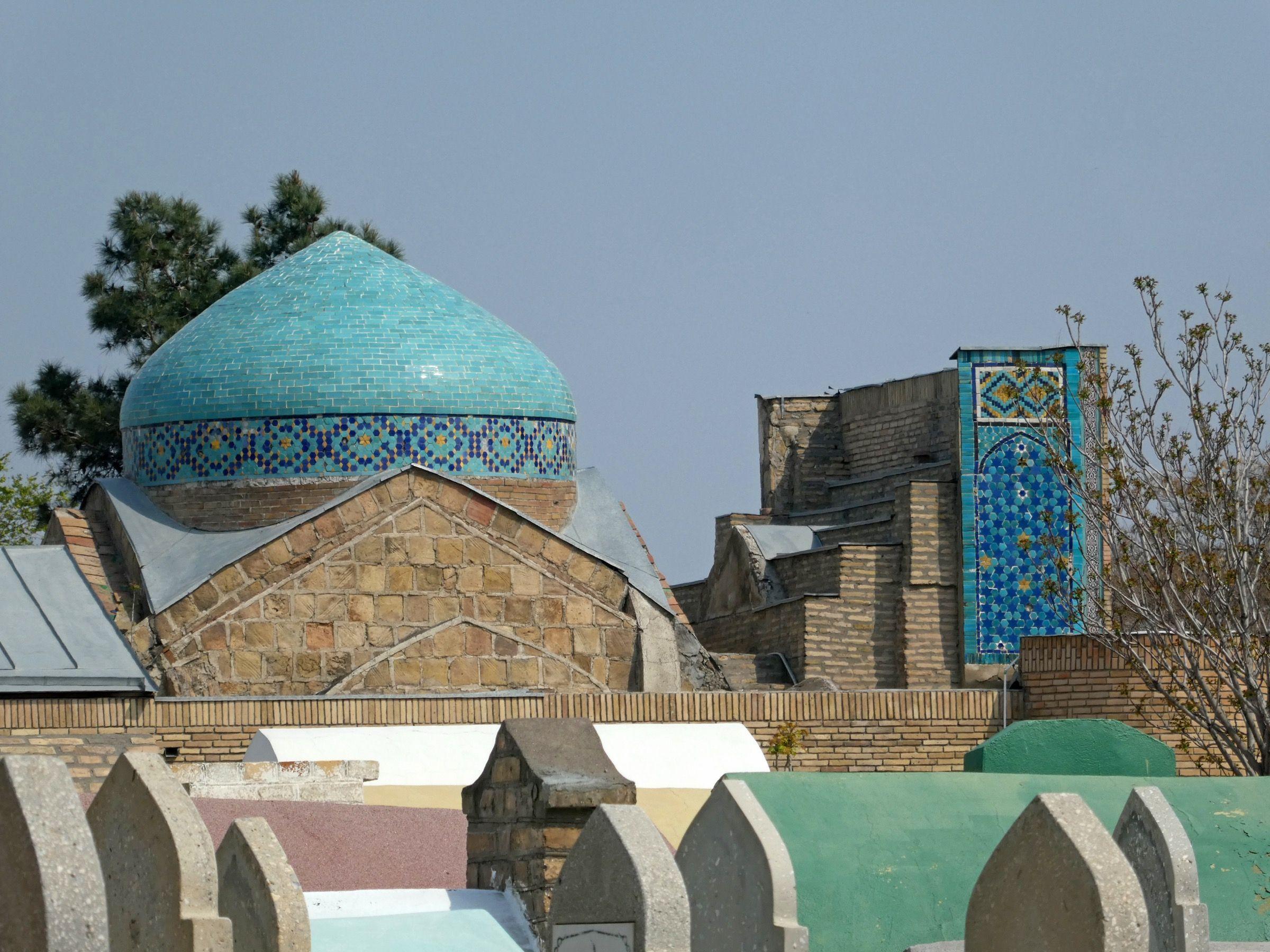
The entrance is a tall portal faced with glazed tiles in blues, turquoise and white, its patterns said to echo the designs of Fergana textiles. The carved wooden door carries Quranic verses and lines of Umar Khan's own poetry in Arabic script. Inside is a small domed mosque and the enclosure of carved marble gravestones, each cut with ornament and inscriptions; several low brick tombs with turquoise domes have been restored in recent years. Compared with the showpieces of Samarkand it is modest in scale, which is exactly the point: this is a private, dynastic place rather than a public monument.
Why it matters
Together with the Khudayar Khan Palace, the Juma Mosque and the Narbutabey Madrasah, the necropolis completes the picture of Kokand as a royal city. It is also the one place where the story of Nodira, a ruler and poet whose verses are still recited across Uzbekistan, can be told on the spot.
Visiting
Allow half an hour, more if you combine it with the Narbutabey Madrasah next door and the Modari Khan mausoleum. The cemetery is a working one and pilgrims come to the graves of the khans: dress modestly, keep voices low and ask before photographing people. Morning light falls best on the tiled portal.
What to see
- The tiled entrance portal with patterns borrowed from Fergana textiles
- The carved door inscribed with Umar Khan's poetry
- The courtyard of carved marble gravestones of the Kokand khans
- The small domed mosque inside the enclosure
- The Modari Khan mausoleum nearby, where Nodira is buried
- The Narbutabey Madrasah at the entrance to the cemetery
Gallery
Tours that visit Dakhma-i-Shakhan, the Khans' Necropolis, Kokand


More sights in Fergana Valley
All of Fergana Valley

See Dakhma-i-Shakhan, the Khans' Necropolis, Kokand with a local guide
We build private and small-group trips around the places you want to see — with guides who grew up here.