
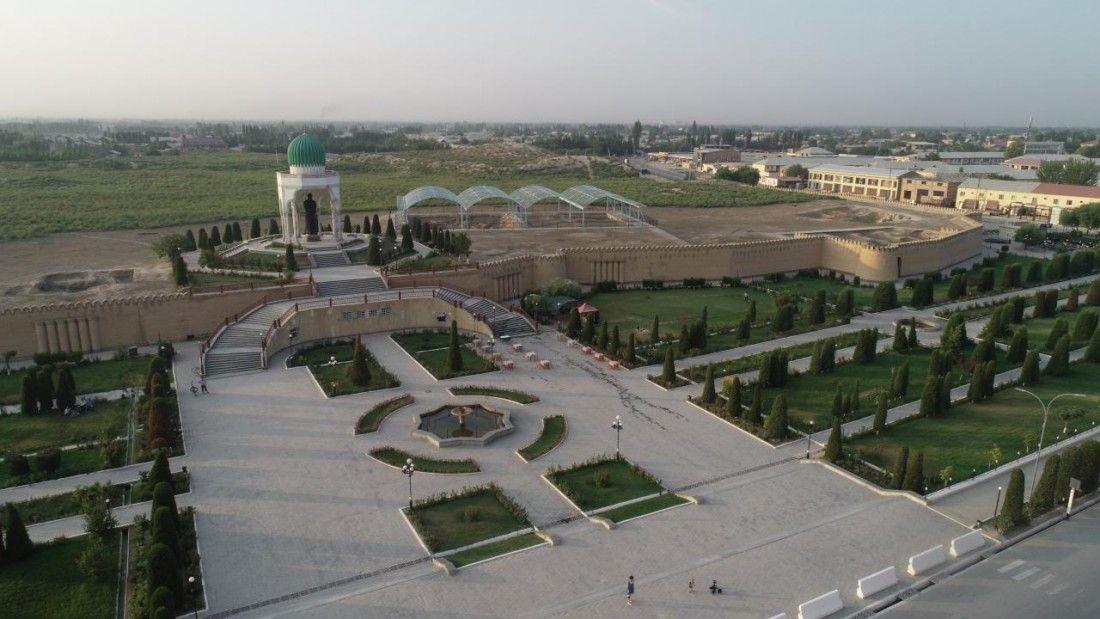
Monument · Settlement from the 1st millennium BC; Buddhist temple 7th century; memorial complex 1998
Kuva: Buddhist Temple Site and the al-Farghani Memorial
A small garden town between Fergana and Andijan that hides one of Central Asia's few excavated Buddhist temples and claims the astronomer al-Farghani, known to Europe as Alfraganus, as its son.
About
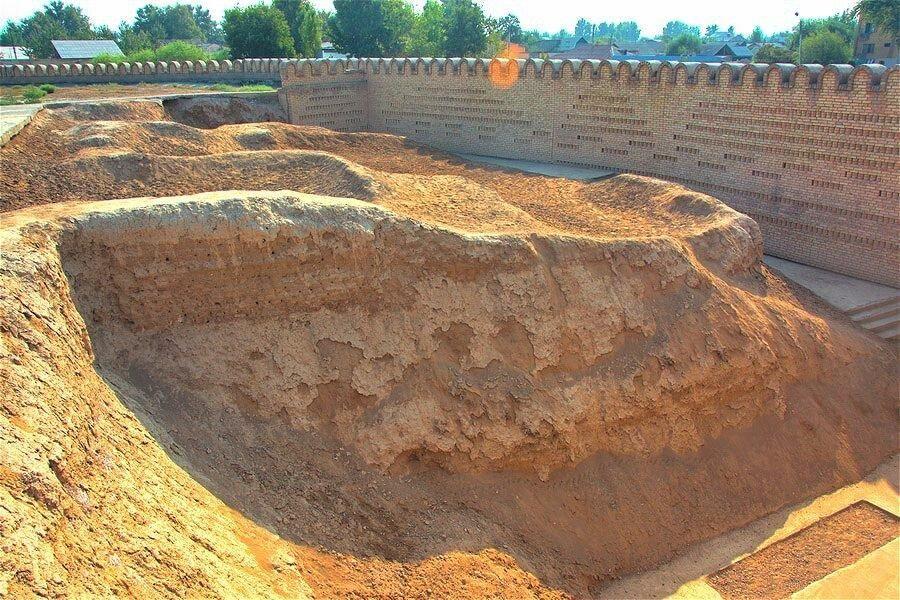
Kuva is the kind of place most itineraries drive past: a quiet district town of orchards and pomegranate gardens on the road from Fergana to Andijan. Yet in the Middle Ages, when Arab geographers wrote it as Quba, it was the second city of the Fergana Valley after Akhsikent, a stop on the caravan road to Kashgar with a citadel, a walled shahristan and a suburb of potters and metalworkers. The mound of that city still rises beside the modern centre, and recent Uzbek–Chinese excavations have traced defensive walls more than two thousand years old.
The Buddhist temple
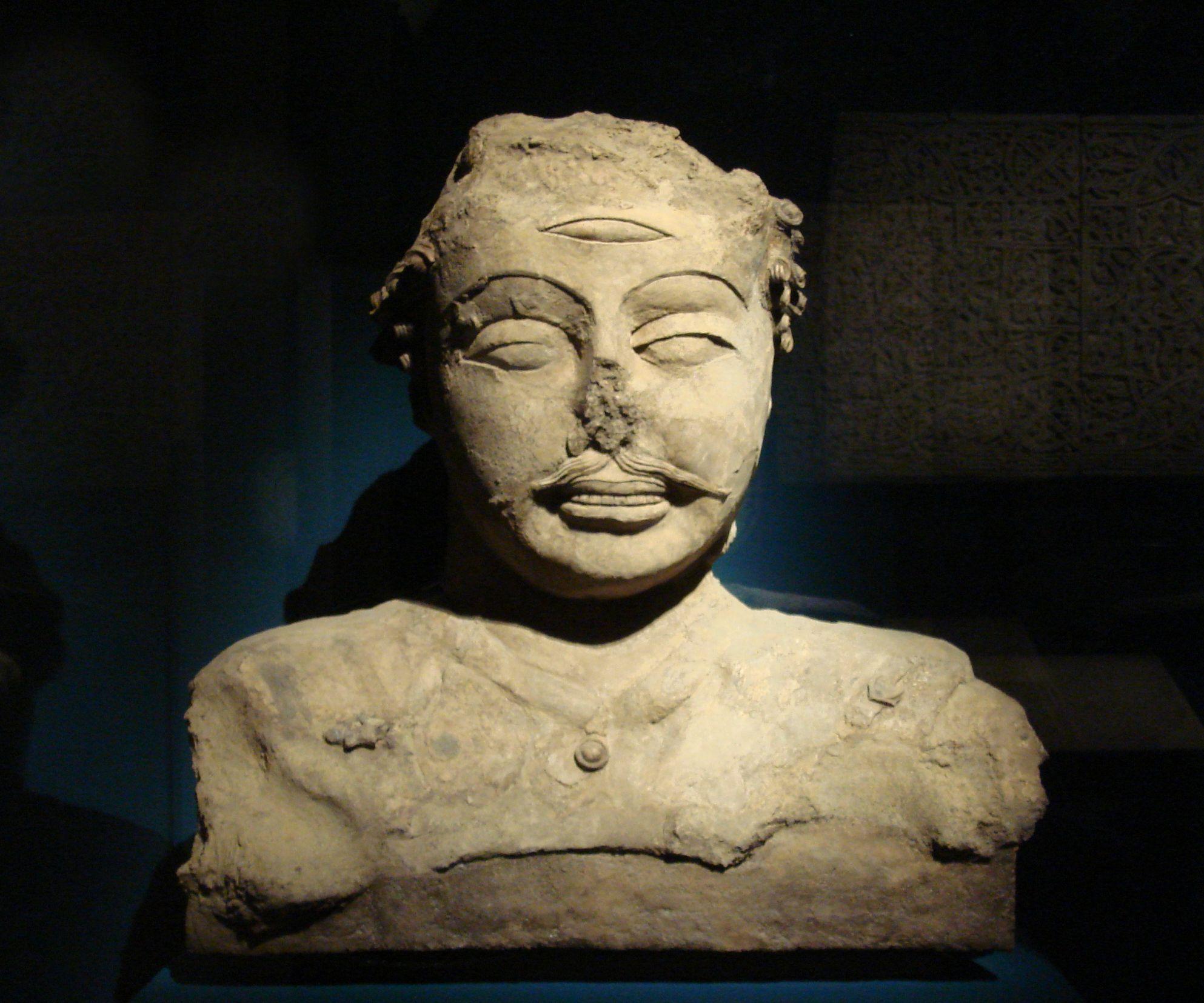
The discovery that put Kuva on the archaeological map came in 1956–57, when an expedition of the Uzbek Academy of Sciences uncovered a Buddhist temple of the seventh century inside the old town. The sculpture had been deliberately smashed, probably when the Arab commander Qutayba ibn Muslim campaigned through Fergana in the early eighth century, but enough survived to reconstruct a seated Buddha of monumental size, a head of a demon with bulging eyes, and figures of guardian deities, among them a statue identified as the wind god Weshparkar. These are the only Buddhist finds of their kind from the valley, and they show that the religion reached far beyond Termez. The originals are in museums in Tashkent; the site itself is a grassed mound with the lines of walls, best understood with a guide.
Alfraganus
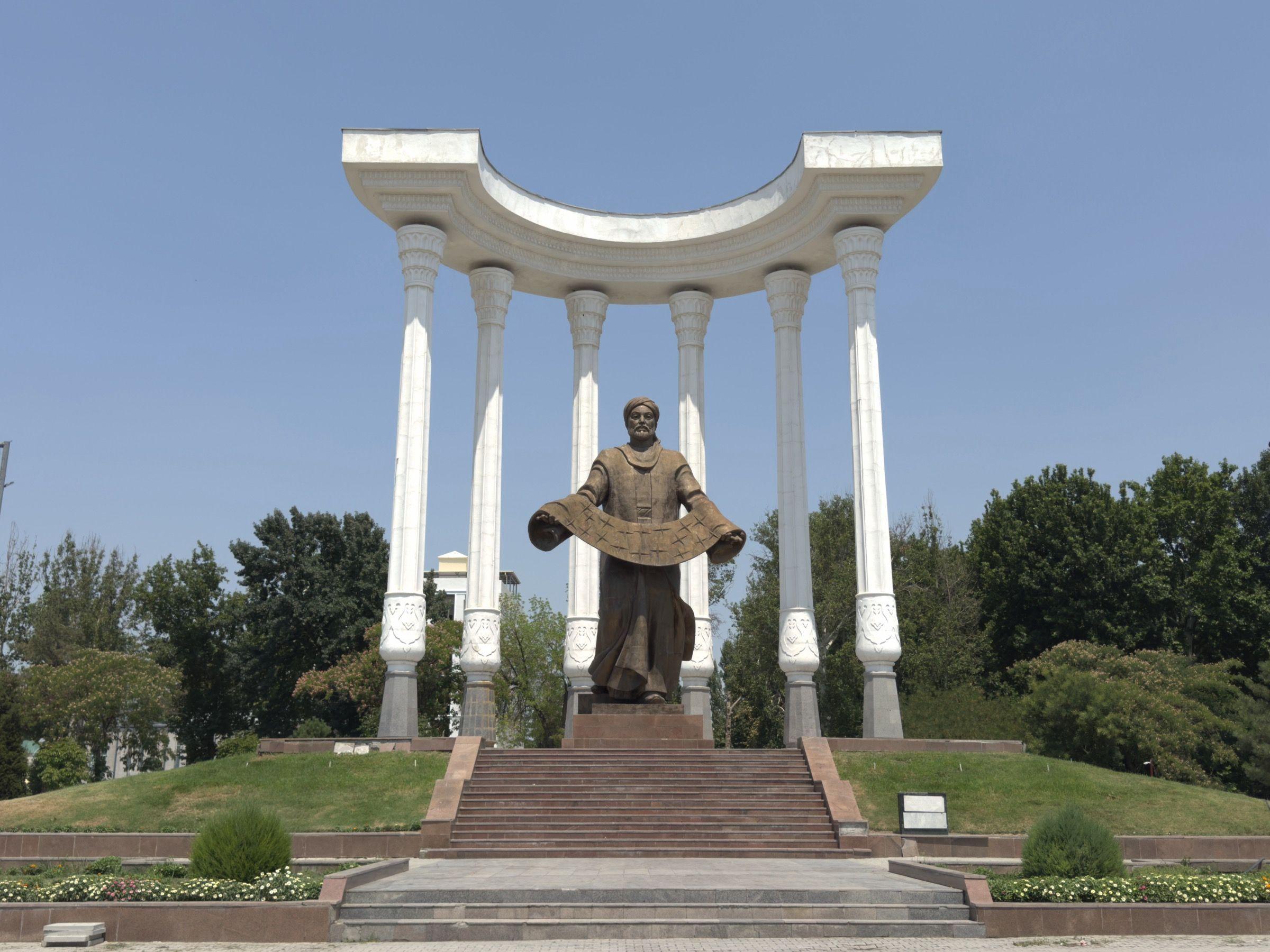
Ahmad ibn Muhammad al-Farghani (c. 800–870) was one of the astronomers of the Abbasid court in Baghdad. His “Elements of Astronomy” was translated into Latin in the twelfth century, read by Dante and Columbus, and gave Europe its working summary of Ptolemy; he also supervised the Nilometer in Cairo, which still stands. His exact birthplace is not recorded, but the Fergana archaeologist Gennady Ivanov argued for Kuva, and in 1998, for the 1,200th anniversary of his birth, a memorial complex was laid out beside the shahristan: a formal garden with fountains, a double staircase up to a green-domed pavilion and a bronze statue of the scholar looking out over the mound of his city.
Why it matters
Kuva's temple and the Termez monasteries are the two ends of a Buddhist map of Uzbekistan that is still being drawn, and the site matters most to travellers from Japan, Korea and South-East Asia who follow that map. For everyone else it is a chance to stand on the earth of a Silk Road city that had no Timur to rebuild it and so kept its original shape, and to meet a scholar whose Latin name was once on every educated European's shelf.
Visiting
Kuva takes an hour or so and fits neatly between Fergana or Margilan and Andijan. Come in autumn if you can: the town is known for its pomegranates and persimmons, sold along the road. The memorial is open ground; the archaeological mound beside it has no facilities, so wear closed shoes.
What to see
- The mound of medieval Quba with its excavated wall lines
- The site of the 7th-century Buddhist temple
- The al-Farghani memorial with statue, pavilion and fountains
- The view from the pavilion over the old city and the orchards
- Pomegranate and persimmon stalls in autumn
Gallery
Tours that visit Kuva: Buddhist Temple Site and the al-Farghani Memorial


More sights in Fergana Valley
All of Fergana Valley

See Kuva: Buddhist Temple Site and the al-Farghani Memorial with a local guide
We build private and small-group trips around the places you want to see — with guides who grew up here.