

Sight · 1977 onwards (Kosmonavtlar station 1984)
Tashkent Metro
Central Asia's first metro, opened in 1977, where every station is decorated around a theme: chandeliers and marble at Mustaqillik Maydoni, the domes of Alisher Navoiy and the cosmonauts of Kosmonavtlar, now part of a UNESCO site.
About
The Tashkent Metro was planned after the earthquake of 1966 and opened on 6 November 1977, the first underground railway in Central Asia. It was built for a seismic city, with shallow tunnels designed to withstand strong shocks, and for a city that wanted to show off. Each station was given a theme, from a poet to a profession to the conquest of space, and decorated by some of the best artists of Soviet Uzbekistan in marble, carved alabaster, ceramics and glass.
For four decades the system doubled as a civil-defence shelter and photography was forbidden. The ban ended on 1 June 2018, and since then riding the metro has become one of the most rewarding things to do in Tashkent. One fare covers your journey, including changes between lines, for as long as you stay inside the gates, which makes station-hopping both easy and very cheap.
The stations to see
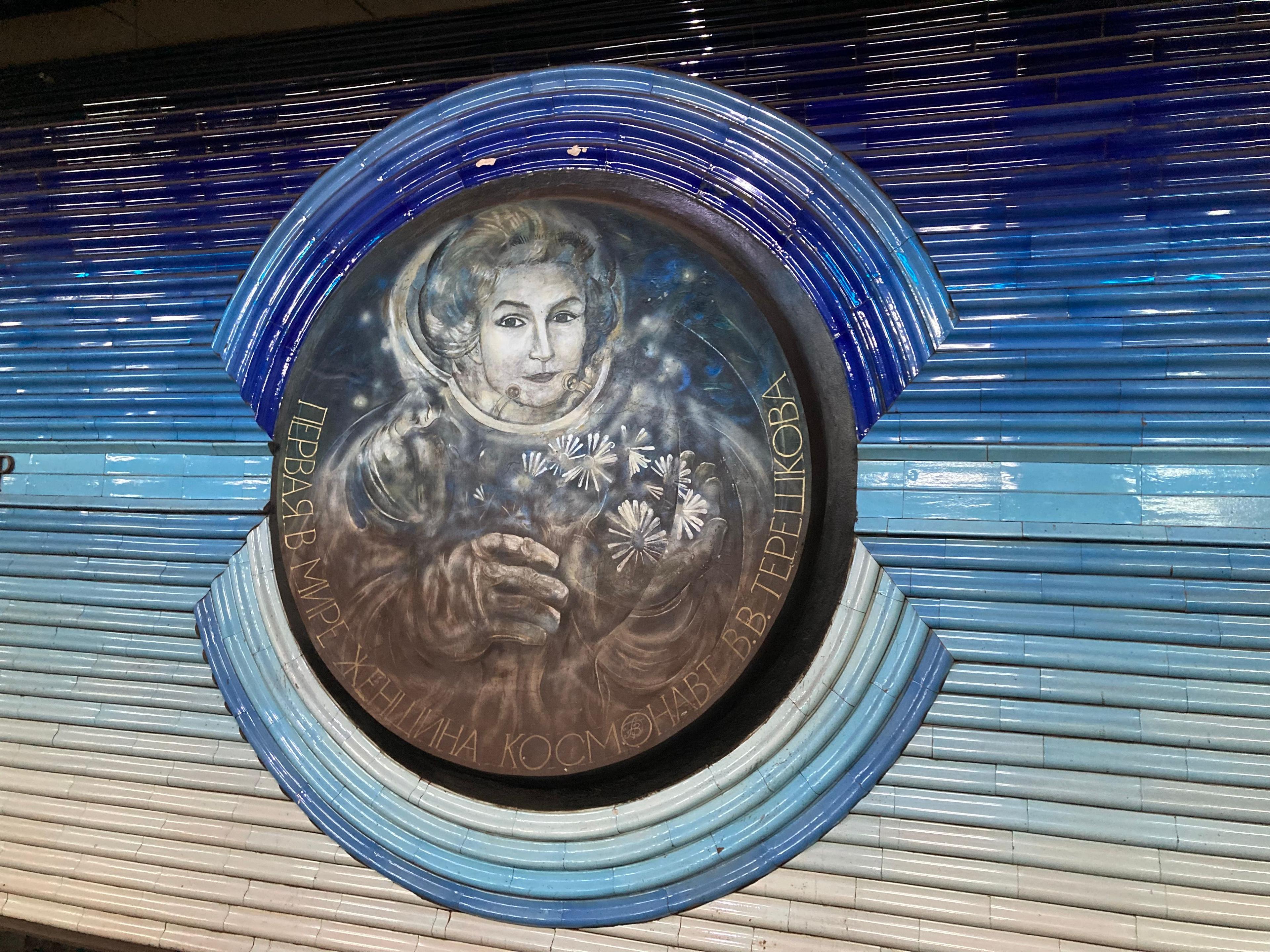
- Kosmonavtlar (1984), the star of the network: blue ceramic walls that darken from sky to deep space, glowing columns and round medallions of Ulugbek, Yuri Gagarin, Valentina Tereshkova and Vladimir Dzhanibekov, the cosmonaut from the Tashkent region. In July 2026 it was inscribed on the UNESCO World Heritage List as one of the ten buildings of Tashkent Modernist Architecture.
- Alisher Navoiy (1984), named after the 15th-century poet: a hall of shallow white and blue domes, carved and gilded, with ceramic panels of scenes from his verse.
- Mustaqillik Maydoni (1977), beneath Independence Square: three aisles of white marble columns and crystal chandeliers hanging in small domes, the most palatial hall on the network.
- Paxtakor (1977), where mosaics turn cotton bolls into abstract patterns, and Toshkent (1984), under the forecourt of the main railway station.
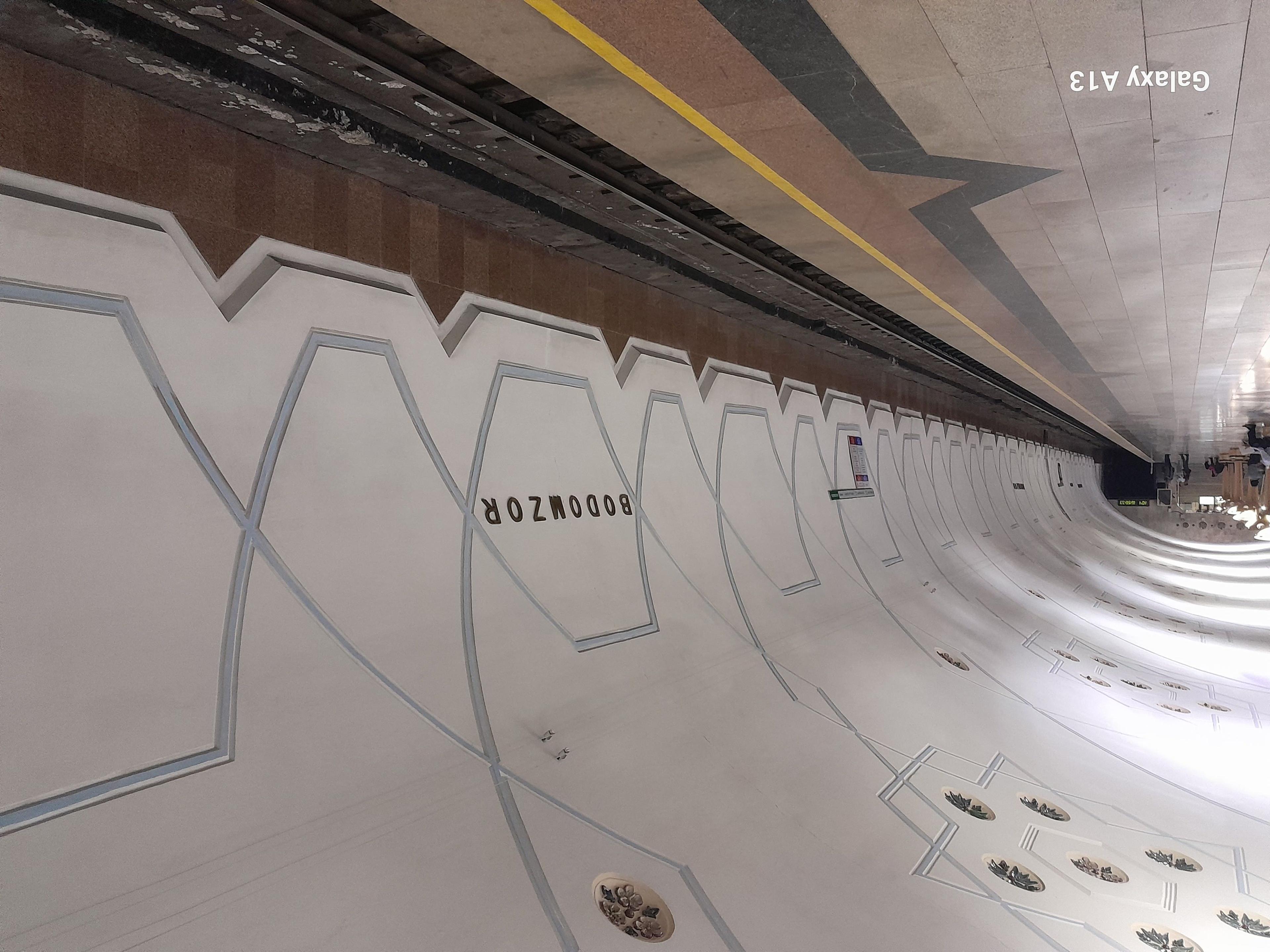
- Bodomzor (2001), "almond grove", a lighter post-independence design in white and blue.
Riding it
The network now has four lines and about 50 stations, including the mostly overground Circle Line, and runs from about 05:00 to midnight. Since 1 October 2026 a ride costs 2,500 som with electronic payment and 3,000 som in cash, roughly 20 to 25 US cents. Buy a QR ticket at a kiosk or ticket office, or an ATTO transport card if you will ride often. A good loop on a single fare runs Kosmonavtlar – Alisher Navoiy – Paxtakor – Mustaqillik Maydoni and takes about an hour with photo stops. Avoid the rush hours, roughly 08:00 to 09:30 and 17:30 to 19:00, and do not photograph police or security staff.
What to see
- Kosmonavtlar station and its cosmonaut medallions, part of a UNESCO site since 2026
- The white and blue domes of Alisher Navoiy station
- Marble columns and chandeliers at Mustaqillik Maydoni
- Cotton-boll mosaics at Paxtakor
- Bodomzor, the almond-grove station of 2001
- Views over the low-rise city from the overground Circle Line
- A station-hopping loop on a single fare
Gallery


Tours that visit Tashkent Metro
 Best SellerTashkent · Samarkand · Bukhara · Khiva
Four Crowns: Tashkent, Samarkand, Bukhara, Khiva
From
$1,270
 PremiumTashkent · Fergana Valley · Samarkand · Nurata · Bukhara · Khiva
Twelve Gates of the Silk Road
From
$1,750
 Tashkent · Samarkand · Lake Aydarkul · Nurata · Bukhara
Plov, Camels and Castles: Uzbekistan for Families
From
$1,305
More sights in Tashkent
All of Tashkent

See Tashkent Metro with a local guide
We build private and small-group trips around the places you want to see — with guides who grew up here.