
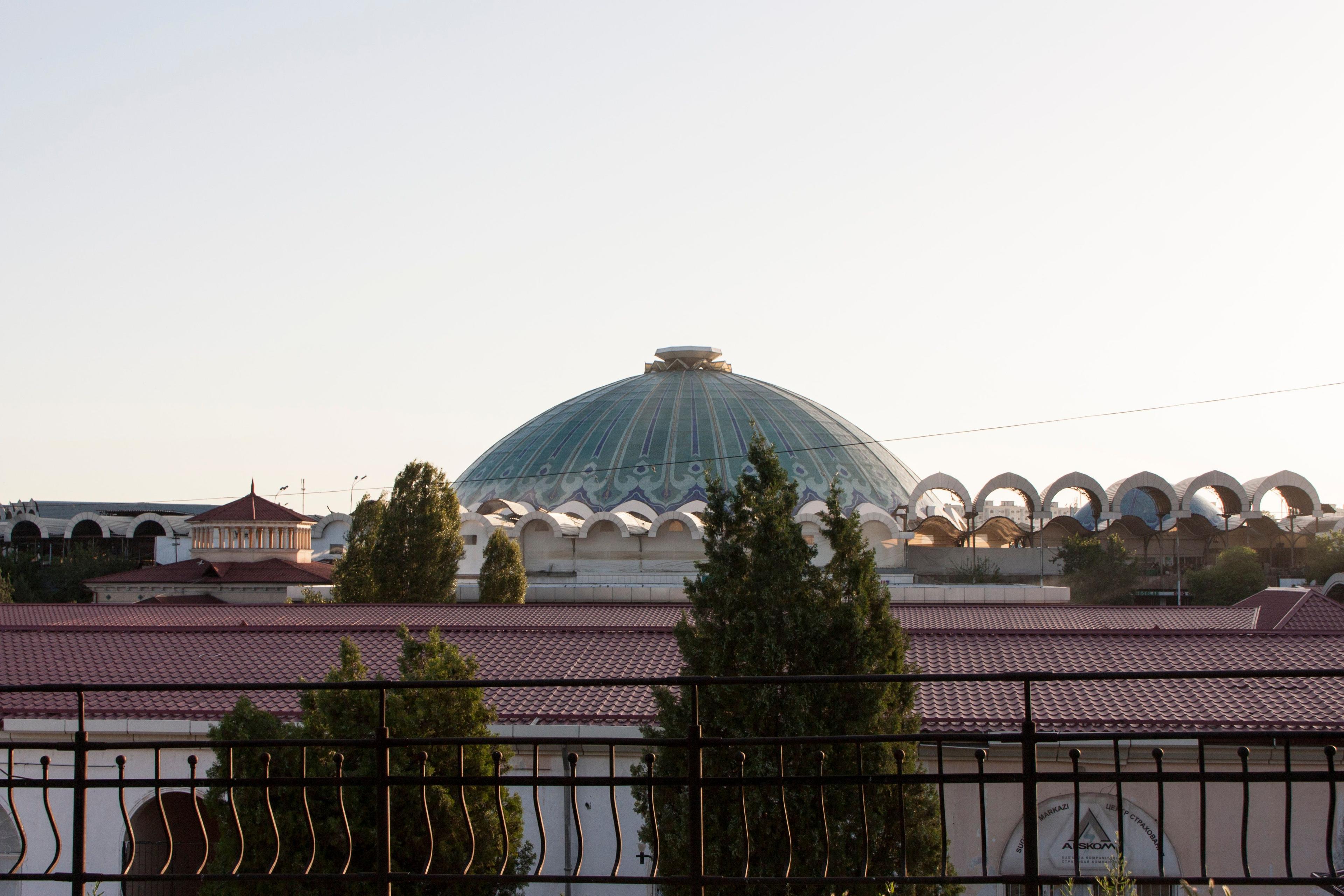
Bazaar · Market for centuries; present domed building 1980s, opened 1990
Chorsu Bazaar
Tashkent's great old-town market under a turquoise-tiled dome: spices, dried fruit, bread, kurt cheese and fruit by the cartload, in a 1980s modernist building that joined the UNESCO World Heritage List in 2026.
About
Chorsu means "four streams" or "crossroads" in Persian, and there has been a market at this junction of the old town for centuries. The building you see today is far younger. After the 1966 earthquake the architects Vladimir Azimov and Sabir Adylov designed a new bazaar beneath a cluster of domes, built alongside the Chorsu metro station; it opened in 1990 and its main dome was fully tiled by 1993. A great central dome is ringed by smaller ones, all glazed in green and blue geometric patterns that echo the madrasahs of Samarkand at the scale of an aircraft hangar.
In July 2026 UNESCO inscribed Tashkent Modernist Architecture on the World Heritage List, and Chorsu is one of its ten buildings. It is, without doubt, the busiest of them. Nothing here has been arranged for visitors: this is where Tashkent buys its bread, meat and spices, and the noise, the porters with their carts and the cries of the sellers are the point.
Under the dome and around it
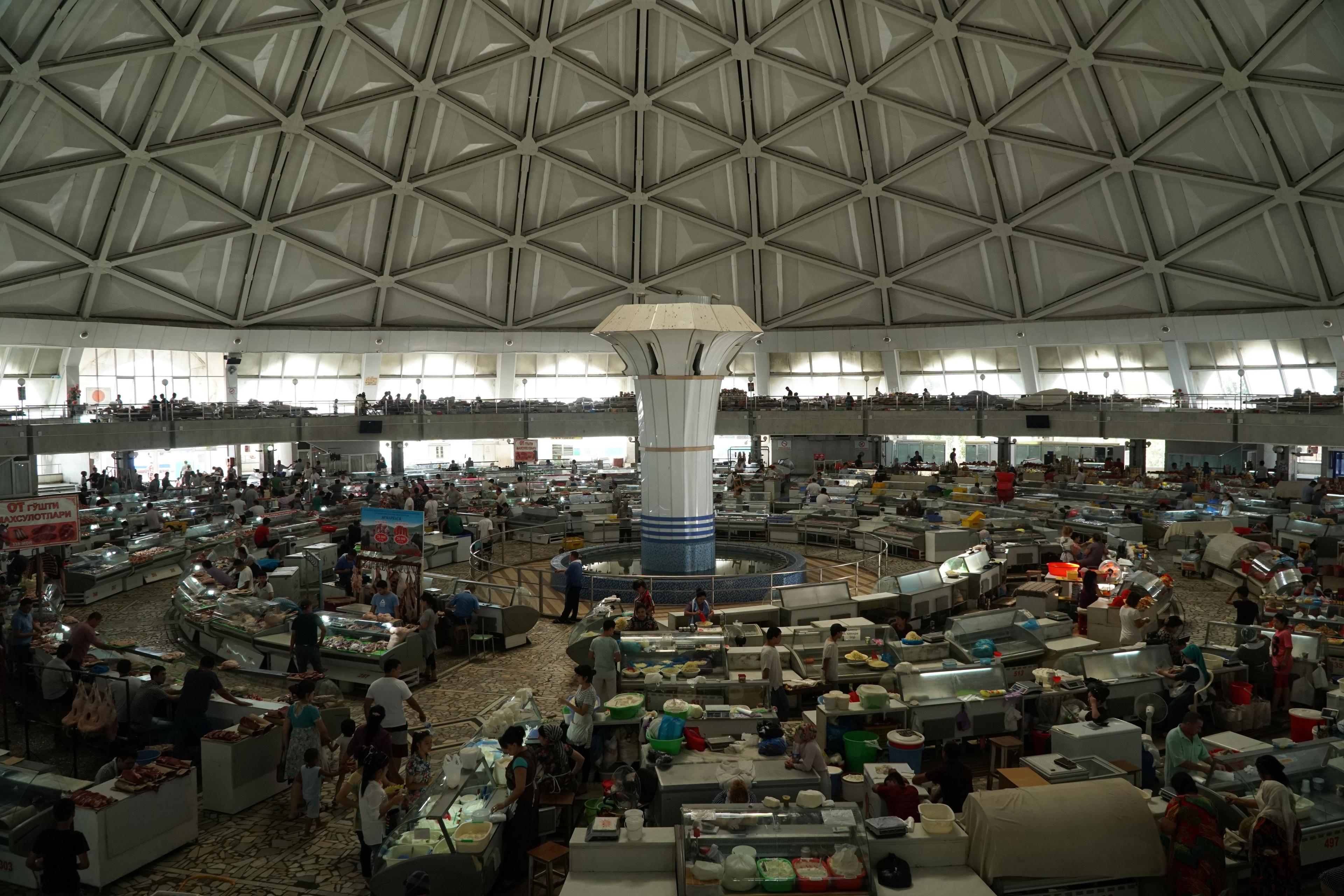
The circular main hall works on two levels. On the ground floor are meat and dairy: kazy horse-meat sausage, suzma strained yoghurt and kurt, the hard salty balls of dried yoghurt sold by the bag. The upper gallery belongs to spices, dried apricots, raisins in half a dozen colours, nuts and halva, and from its rail you get the classic view down over the stalls. Outside, covered rows run off in every direction: a bread row stacked with round non stamped with patterns, long avenues of fruit and vegetables, and pavilions of skullcaps, knives, ceramics and inexpensive textiles.
Traders in the gallery will offer tastings. Accept them; it is part of the custom and nobody expects you to buy from everyone. Food is sold at near-fixed prices by the kilo, while crafts and textiles invite polite bargaining. In late summer and autumn the fruit rows are reason enough to come: melons, grapes, figs and pomegranates that taste of the valley they came from.
Planning your visit
Go in the morning, when the market is fullest and the light falls softly through the dome; weekdays are calmer than weekends. Chorsu station brings you up beside the building, and the 16th-century Kukeldash Madrasah stands just across the square, so the two belong in the same hour. From there the lanes of the mahalla lead north to the Khast-Imam complex. Carry small notes in som, keep your phone in a front pocket in the crowds and ask before photographing people, especially women and older traders.
What to see
- The view from the upper gallery over the spice and dried-fruit stalls
- The turquoise-tiled main dome, part of a UNESCO World Heritage property since 2026
- Bread row with round non stamped with patterns
- Kurt, kazy and suzma in the dairy and meat hall
- Fruit and melon rows in late summer and autumn
- Stalls of skullcaps, knives and Rishtan ceramics
- Plov and samsa at the food stalls at lunchtime
Gallery

Tours that visit Chorsu Bazaar
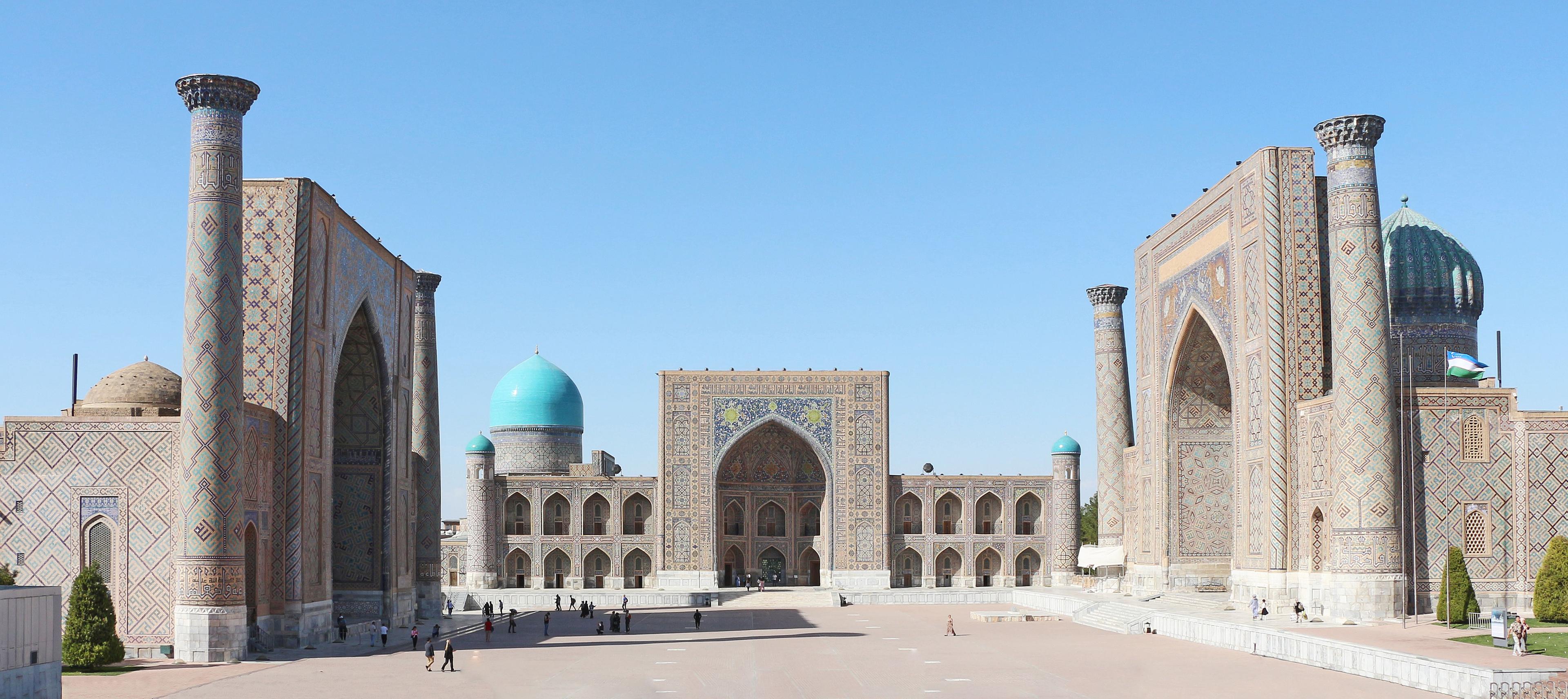 Best SellerTashkent · Samarkand · Bukhara · Khiva
Four Crowns: Tashkent, Samarkand, Bukhara, Khiva
From
$1,270
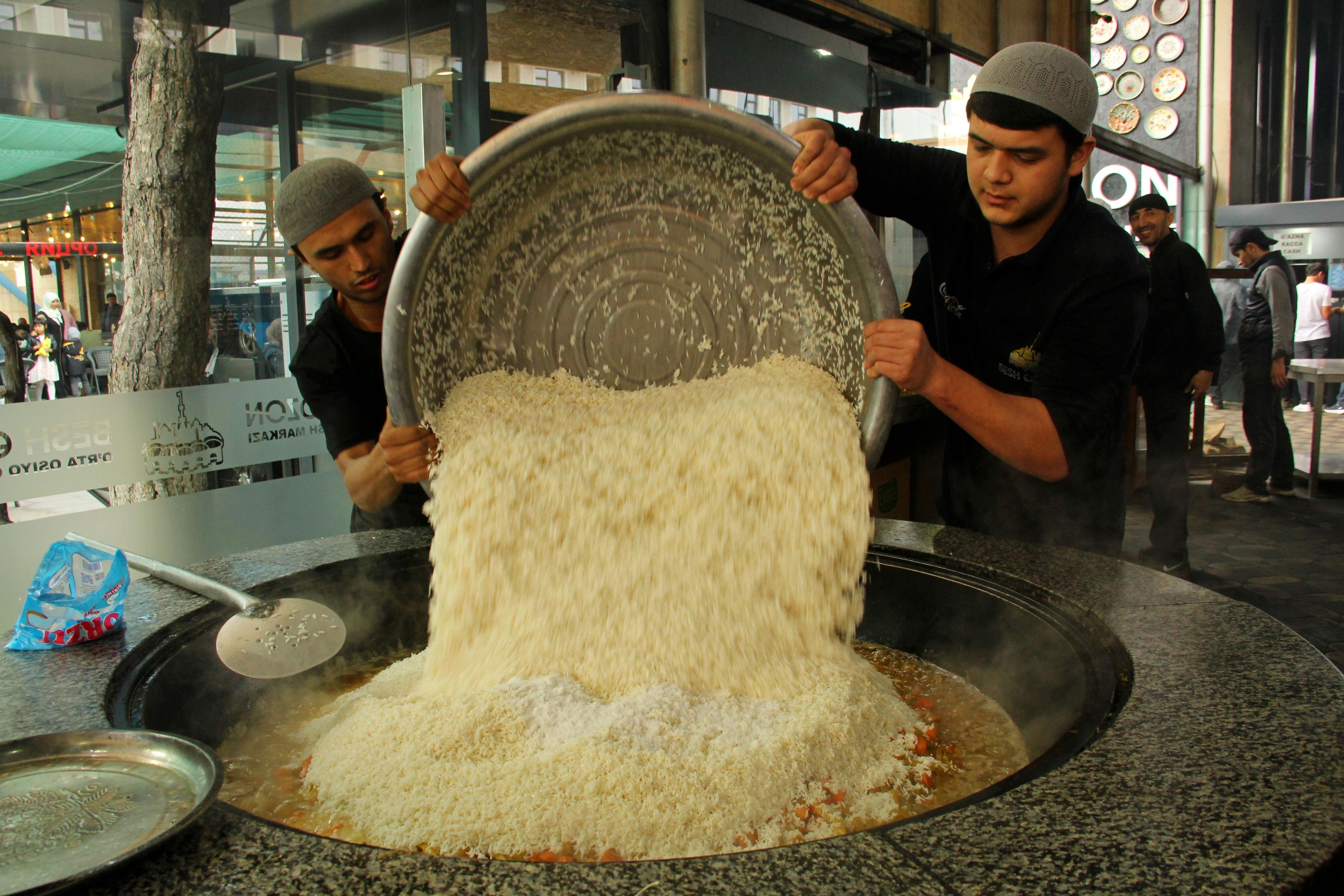 NewTashkent · Samarkand · Gijduvan · Bukhara
Six Days, Seven Plovs
From
$995
 PremiumTashkent · Fergana Valley · Samarkand · Nurata · Bukhara · Khiva
Twelve Gates of the Silk Road
From
$1,750
More sights in Tashkent
All of Tashkent


See Chorsu Bazaar with a local guide
We build private and small-group trips around the places you want to see — with guides who grew up here.