
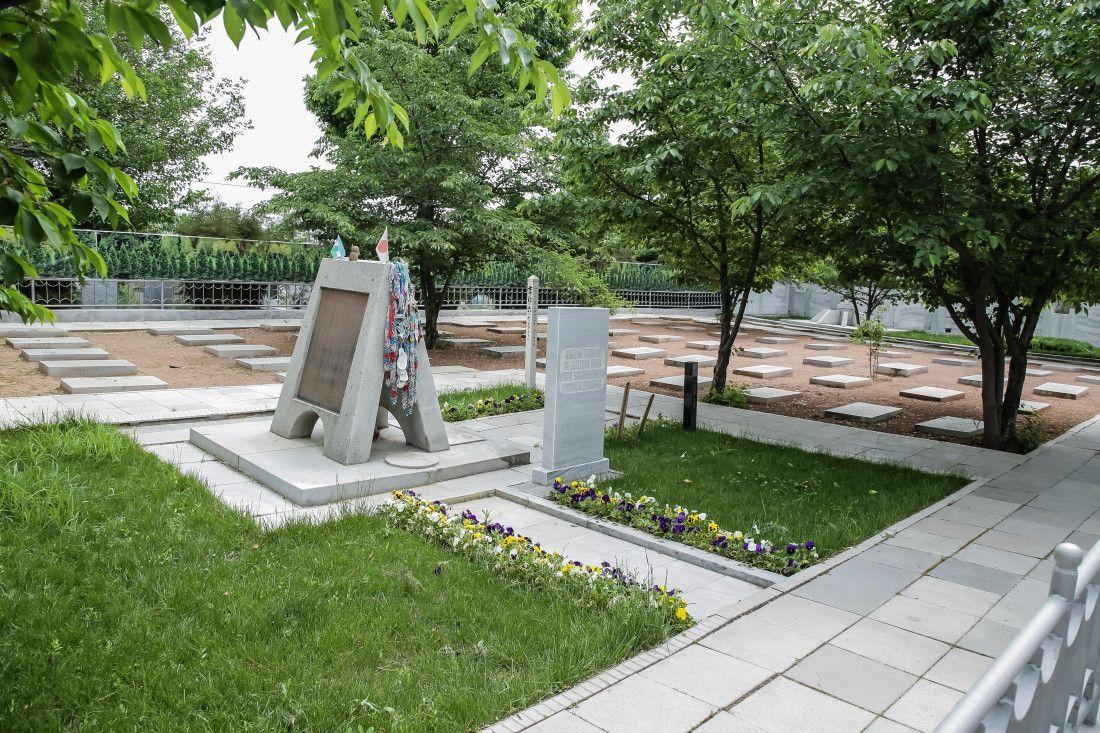
Monument · Burials 1945–49; memorial stones and landscaping 1990s–2000s
Japanese Cemetery Fozil-ota
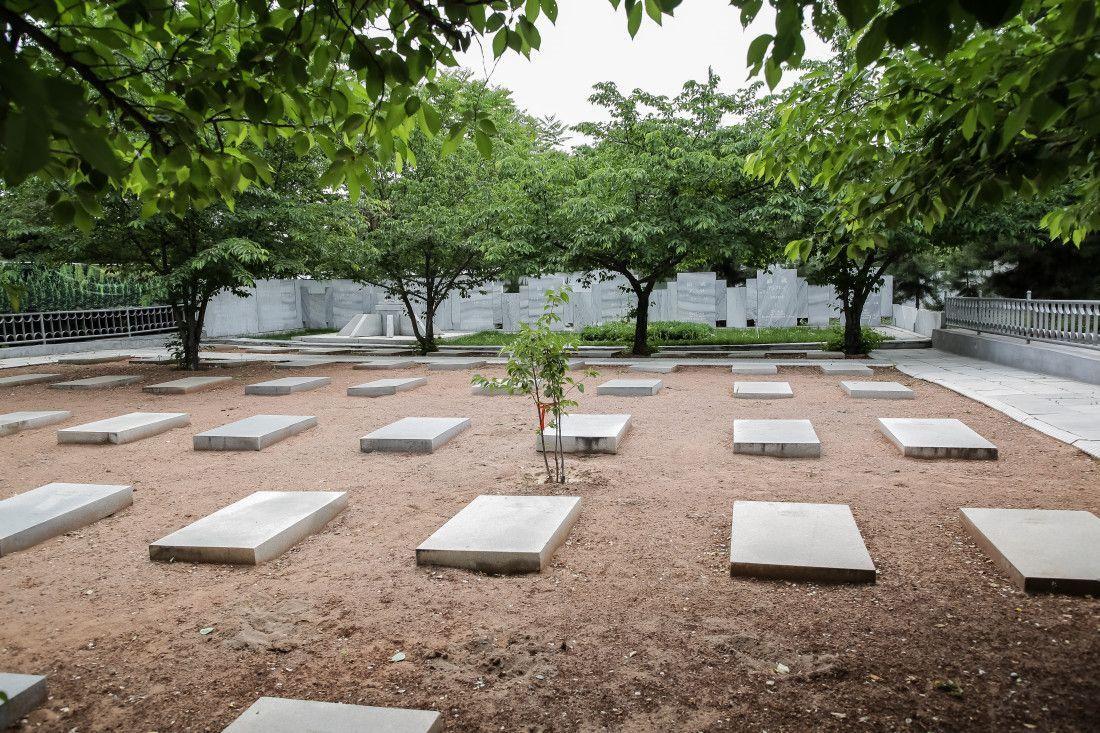
Seventy-nine white stone graves of Japanese prisoners of war who died in Tashkent after 1945, tended for forty years by one Uzbek family, with a cherry tree from the Japanese embassy. A small, quiet place of memory in the Yakkasaray district.
About
After August 1945 the Soviet Union sent roughly 25,000 Japanese prisoners of war to Uzbekistan, where they worked on roads, canals, power stations and, most famously, the Alisher Navoi Theatre in central Tashkent. Several hundred died of illness and cold before the last were repatriated at the end of the 1940s. Seventy-nine of them lie in a walled plot inside the Muslim cemetery of the Yakkasaray district, and the way that plot has been cared for is the reason people come.
The caretaker
For four decades the graves were tended by Mirokil Fozilov, who took over the duty from his father. He kept the plot clean, planted flowers and received the Japanese families and official delegations who began arriving after 1991. Japan awarded him the Order of the Rising Sun, Silver Rays, and the cemetery was renamed Fozil-ota, "father Fozil", by decision of President Karimov. Since his death his sons have continued the work. A cherry sapling brought by the Japanese ambassador Kyoko Nakayama and planted beside the graves is now a mature tree that blossoms each April.
What you see
The Japanese section is laid out in the Japanese manner: rows of low white marble slabs on raked earth, each carved with a name, home prefecture and date, a central stele and a memorial wall. A plaque reads, in several languages, "No to war". German prisoners of war are buried in a neighbouring plot. It is a place to spend twenty minutes, not an hour.
Why it matters
The story of the Japanese prisoners in Tashkent is told with unusual warmth on both sides. Older residents remember the sound of wooden sandals on the road to the work sites and the food that local families passed over the fences; Japanese veterans wrote that they were treated as people, not enemies. The theatre they helped build carries a plaque in Japanese and Uzbek, placed on Karimov's instruction in 1996, that calls them citizens of Japan rather than prisoners. A museum dedicated to the internees opened in Tashkent in recent years, and the cemetery is a fixed stop for visiting Japanese delegations.
Visiting
The cemetery is open in daylight hours and free. Be discreet: this is an active Muslim burial ground with funerals on most days. The plot pairs naturally with the Navoi Theatre and, for the Japanese context, the Japanese Garden near the TV Tower.
What to see
- Seventy-nine white marble graves laid out in Japanese style
- Memorial stele and the 'No to war' plaque
- The cherry tree planted by the Japanese ambassador
- The story of caretaker Mirokil Fozilov and the Order of the Rising Sun
- Link to the Navoi Theatre built with the prisoners' labour
- Adjacent German prisoner-of-war plot
Gallery
Tours that visit Japanese Cemetery Fozil-ota
 New
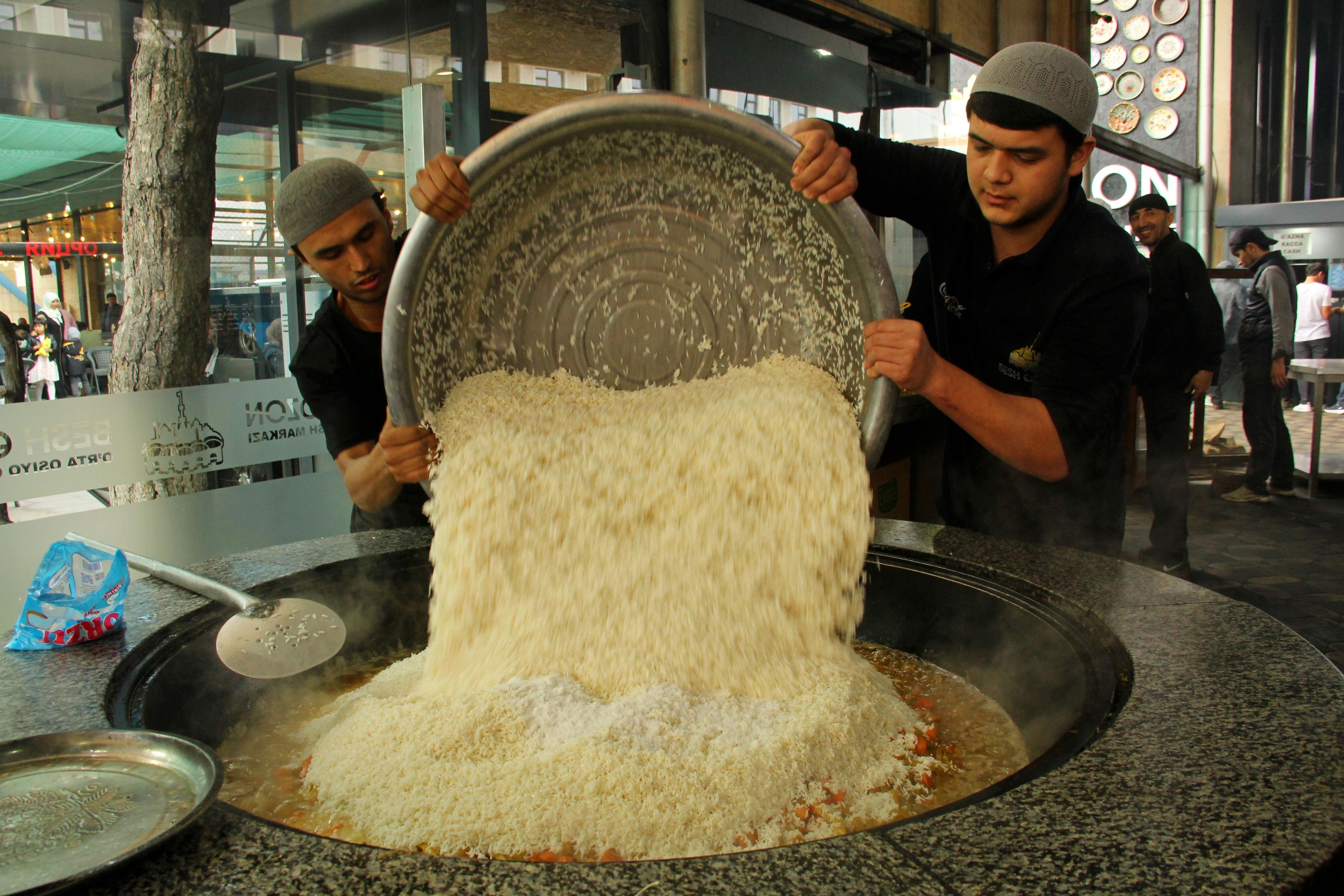
Six Days, Seven Plovs
From
$995
 Premium
Twelve Gates of the Silk Road
From
$1,750
 Best Seller
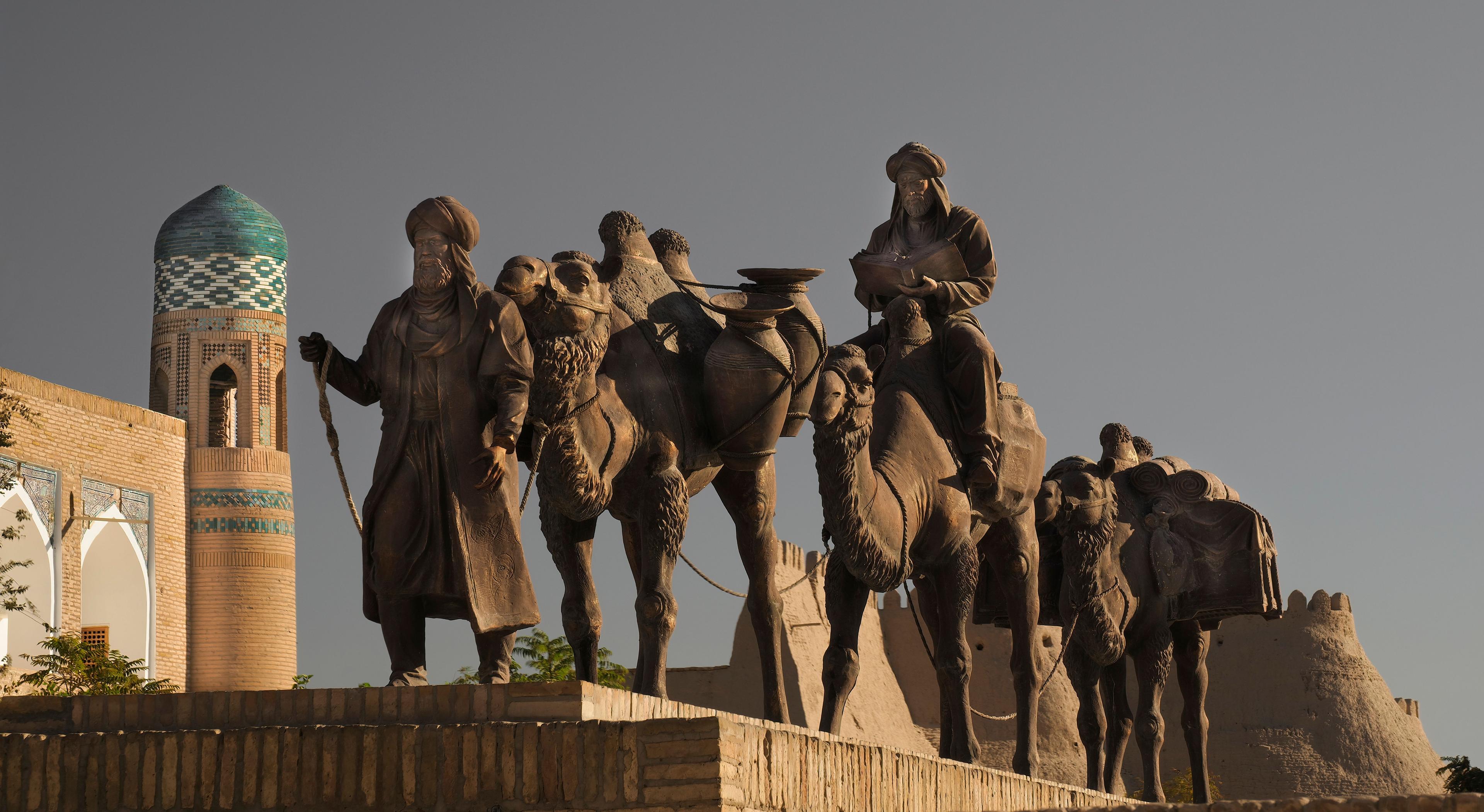
Four Crowns: Tashkent, Samarkand, Bukhara, Khiva
From
$1,270
More sights in Tashkent
All of Tashkent


See Japanese Cemetery Fozil-ota with a local guide
We build private and small-group trips around the places you want to see — with guides who grew up here.