
Museum · Settlement 7th c. BC – 1220; museum opened 1970
Afrasiab Museum and Ancient Settlement
The grassy plateau north of the old town is ancient Samarkand itself, abandoned after the Mongols. Its museum holds the 7th-century Sogdian Ambassadors’ Painting, one of the great survivals of the Silk Road.
About
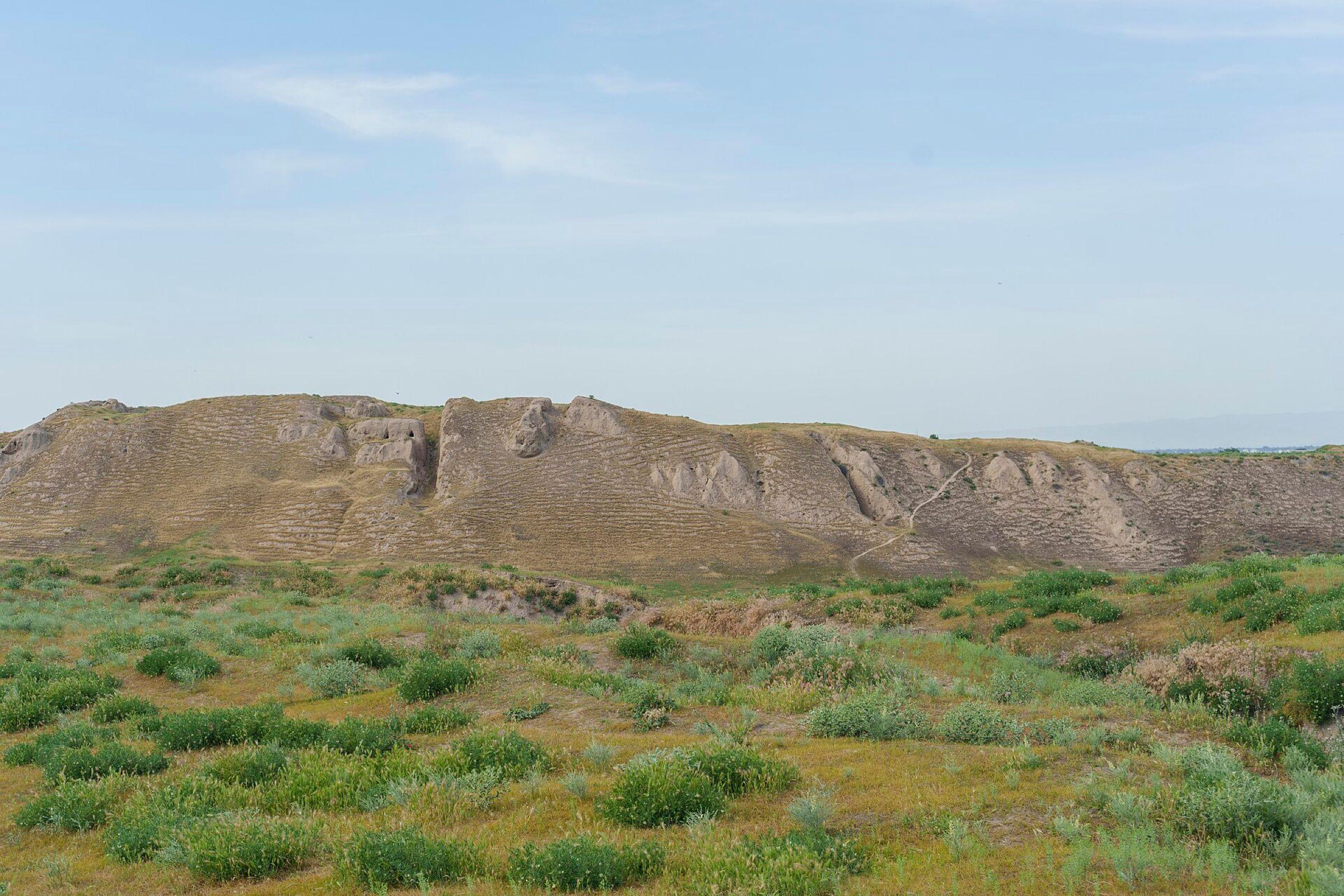
The rolling, empty hills north of Shah-i-Zinda are not natural. They are Afrasiab, the site of Samarkand for some two thousand years before the Mongols destroyed it in 1220. Here stood Marakanda, the Sogdian capital that Alexander the Great took in 329 BC; the city of the Sogdian kings; the Arab-ruled city from the eighth century; and the prosperous Samanid and Karakhanid town whose glazed ceramics were exported across the Islamic world. After the Mongol conquest the city was rebuilt to the south, and Afrasiab was left as a field of mounds covering more than two square kilometres.
The Ambassadors’ Painting
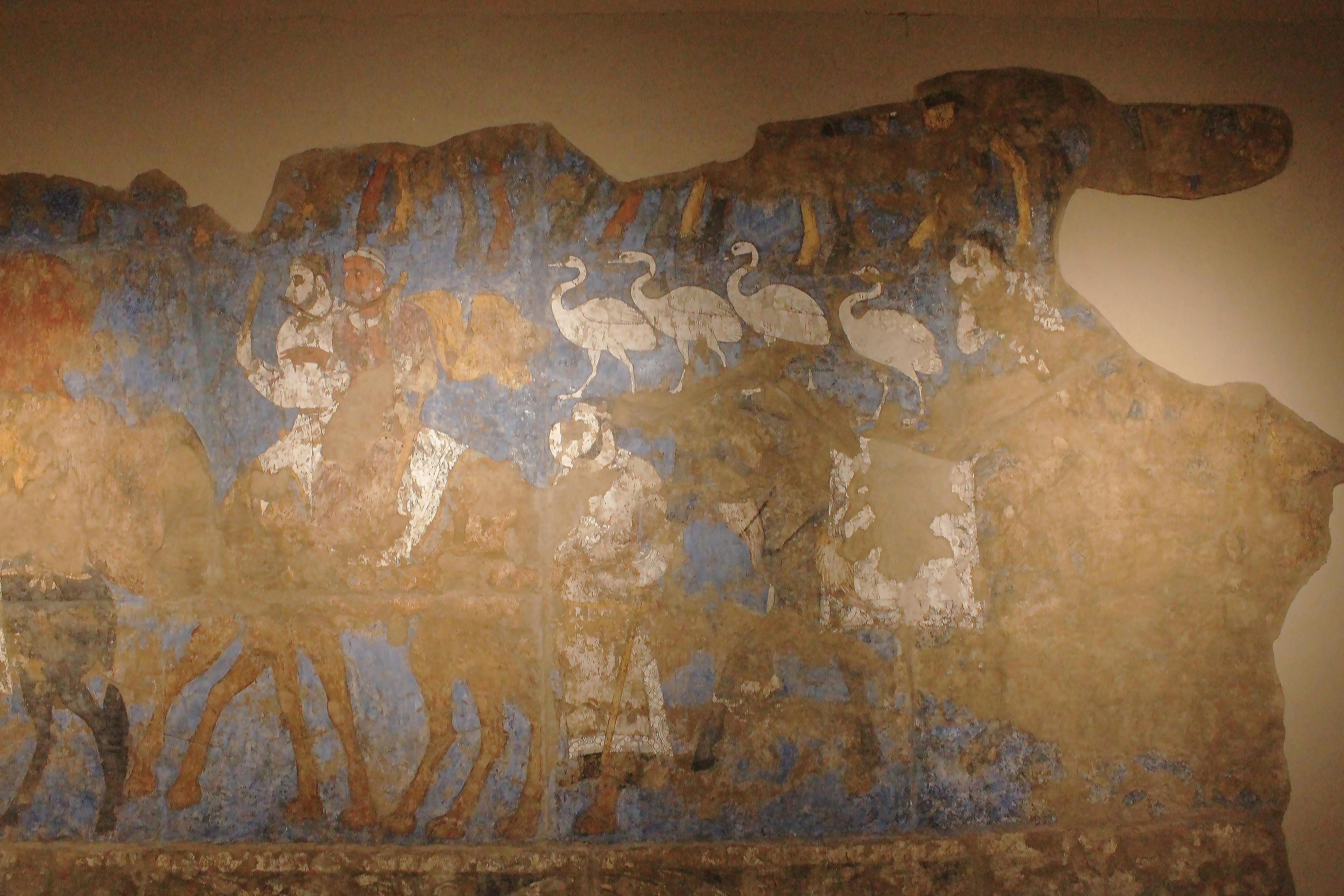
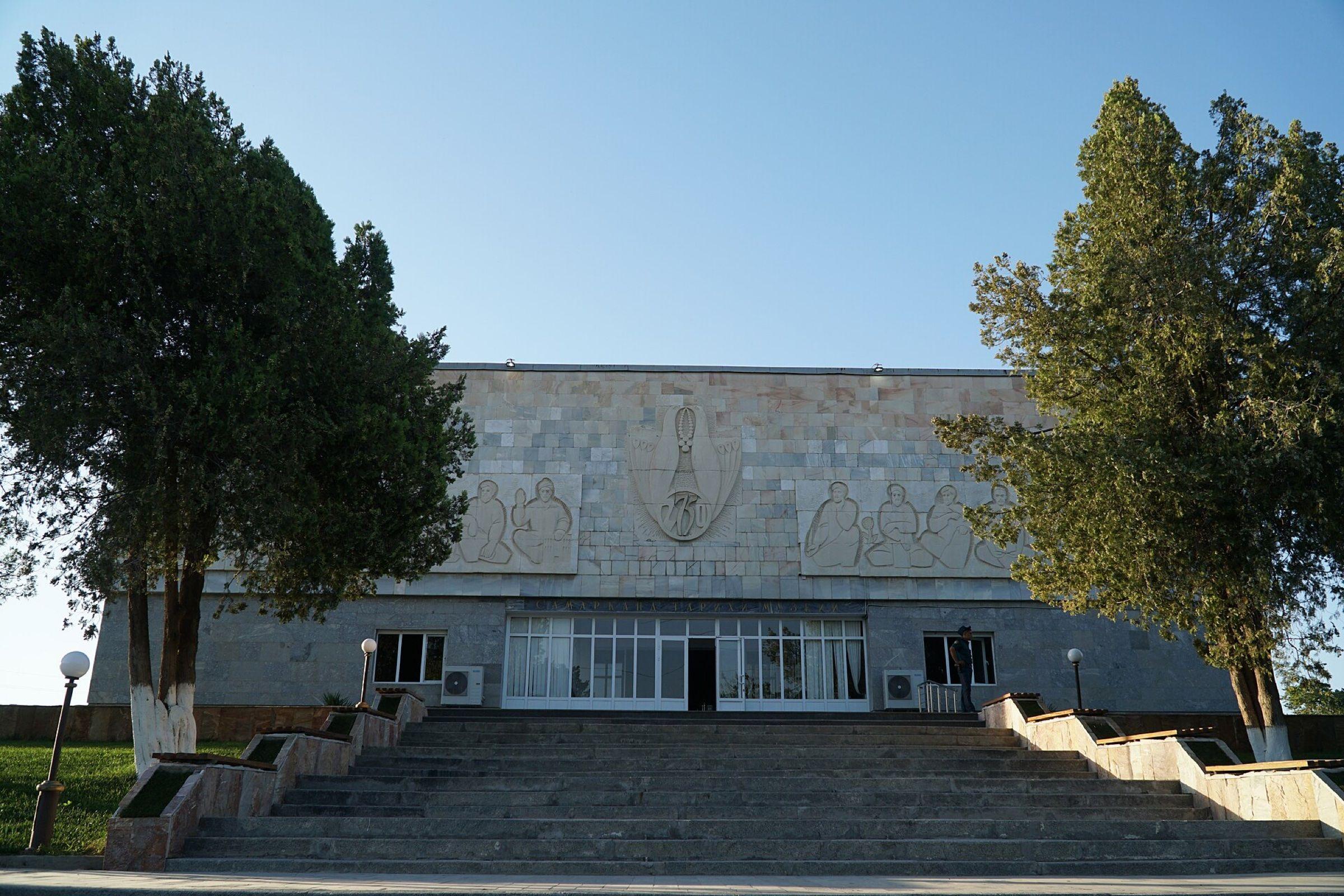
In 1965, road builders cutting across the site struck the remains of a palace room whose walls were covered with paintings. Dated to about the 660s, they were made for Varkhuman, a king of Samarkand, and show a reception of foreign embassies: envoys from China, Korea, the Turkic steppe and neighbouring kingdoms bringing gifts, a Chinese princess on a boat, a procession with elephants and camels. Faded but still legible, the murals are a rare first-hand image of the cosmopolitan world of the Silk Road at its height. The Afrasiab Museum was built around them and opened in 1970 for Samarkand’s official 2,500th anniversary.
The rest of the museum
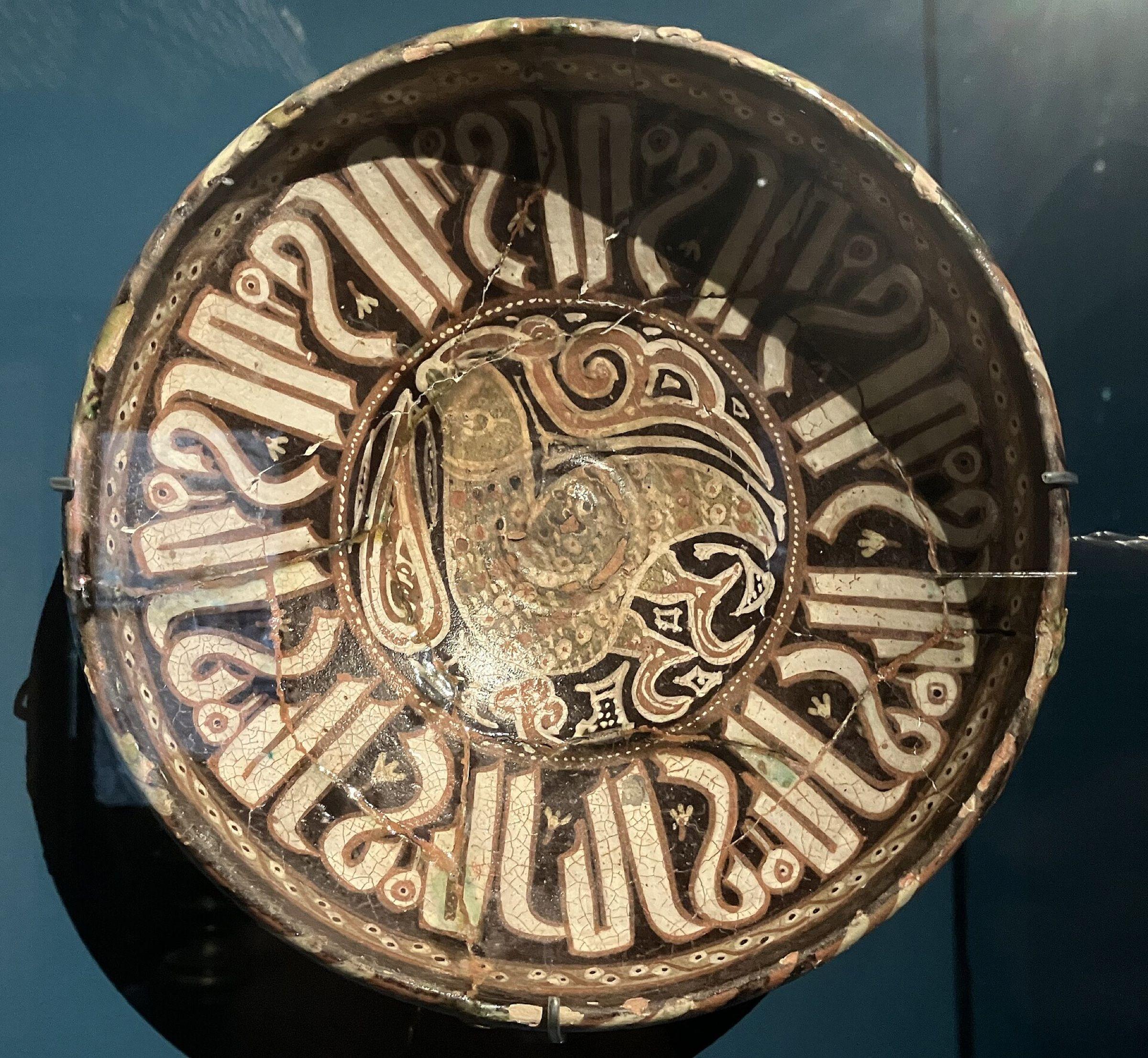
Smaller halls trace the city’s long history: Sogdian ossuaries (clay boxes for the bones of the dead, from the Zoroastrian tradition), coins, carved ganch (plaster) from Samanid buildings, and the elegant white-slip ceramics with Arabic calligraphy for which ninth- and tenth-century Samarkand was famous.
The settlement
Outside, you can walk out onto the plateau. Excavated areas are modest and unfenced in places, and most of what remains is earthworks and the lines of old walls, but the view is the point: from the top you see modern Samarkand to the south, the domes of Bibi-Khanym and Shah-i-Zinda, and the Siab stream curving below. Wear proper shoes, and avoid the open ground in the midday heat of summer.
Visiting
Combine the museum with the Tomb of Saint Daniel on the northern edge of the hill and the Ulugbek Observatory just to the east. A guide makes a real difference to the murals, which repay a careful explanation.
What to see
- The 7th-century Ambassadors’ Painting
- The Chinese princess and the procession of envoys in the murals
- Sogdian ossuaries and Samanid calligraphic ceramics
- Carved ganch from early Islamic buildings
- The view over Samarkand from the plateau
Gallery

Tours that visit Afrasiab Museum and Ancient Settlement
More sights in Samarkand
All of Samarkand

See Afrasiab Museum and Ancient Settlement with a local guide
We build private and small-group trips around the places you want to see — with guides who grew up here.