
Architectural ensemble · Abu Ubayda complex 15th century; bridge 1583; Odina and Kok-Gumbaz 16th century
Karshi: Abu Ubayda Shrine, Odina Madrasah, Kok-Gumbaz and the 1583 Bridge
The capital of Kashkadarya, on the road between Shakhrisabz and Bukhara: a ten-arched Shaybanid bridge of 1583, a 16th-century women's madrasah, the blue-domed Kok-Gumbaz mosque and the shrine of Abu Ubayda ibn al-Jarrah, one of the Prophet's closest companions.
About
Karshi is where the road from Samarkand and Shakhrisabz turns west towards Bukhara, and almost every traveller passes it without stopping. That is a mistake for anyone interested in ziyarat or in the Shaybanid century. The city celebrated its 2,700th anniversary in 2006: it began as Nakhshab, later Nasaf, a Sogdian town that Alexander is said to have visited and that produced the theologian Abu Mu'in an-Nasafi. The present name dates from the 1320s, when the Chagatai khan Kebek built a palace here; “karshi” is the Mongol word for it.
Abu Ubayda ibn al-Jarrah
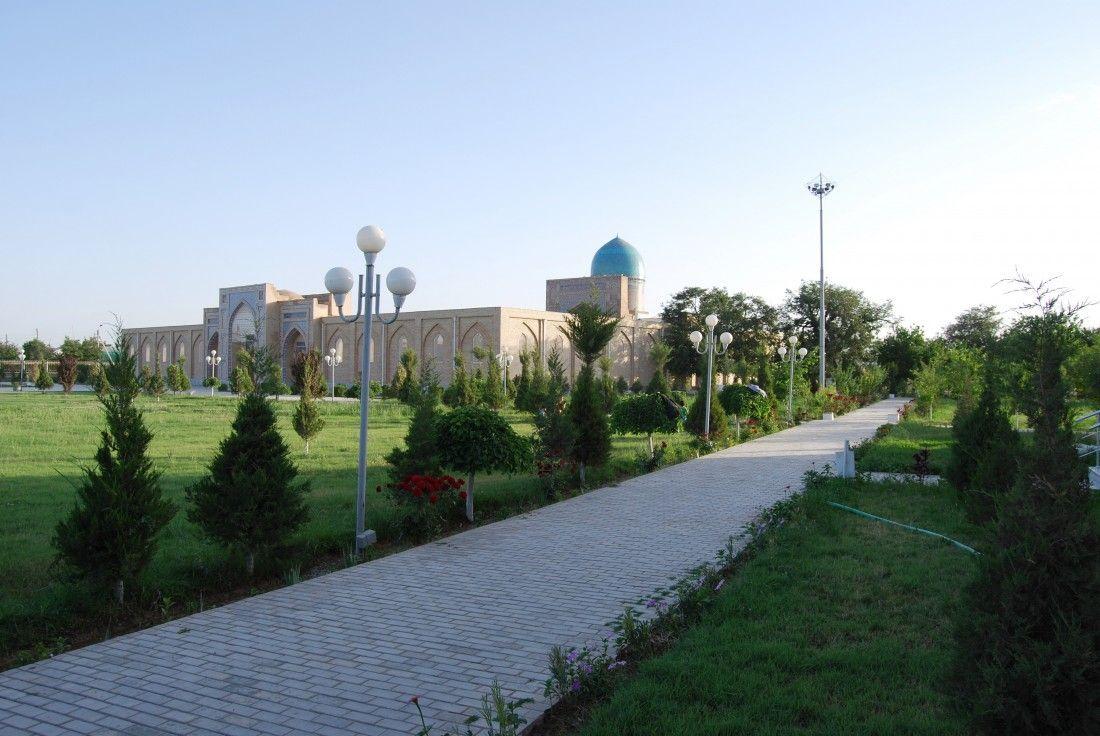
Abu Ubayda was one of the ten companions to whom the Prophet promised paradise, commander of the Muslim armies in Syria and a man the Prophet called the trustee of the community. He died of plague in 639 and his grave is honoured in the Jordan Valley; the Karshi complex, a few kilometres from the centre, is a memorial shrine, a maqam, that local tradition explains with a story of Timur ordering relics brought back from a campaign. Historians treat that as legend. What is not in doubt is the devotion: the fifteenth-century complex, renovated in recent years, with its minaret topped by nesting storks, an old plane tree, a pond and a long flower-lined approach, draws pilgrims from across Uzbekistan and increasingly from Turkey, the Gulf and South-East Asia.
The bridge and the Shaybanid city
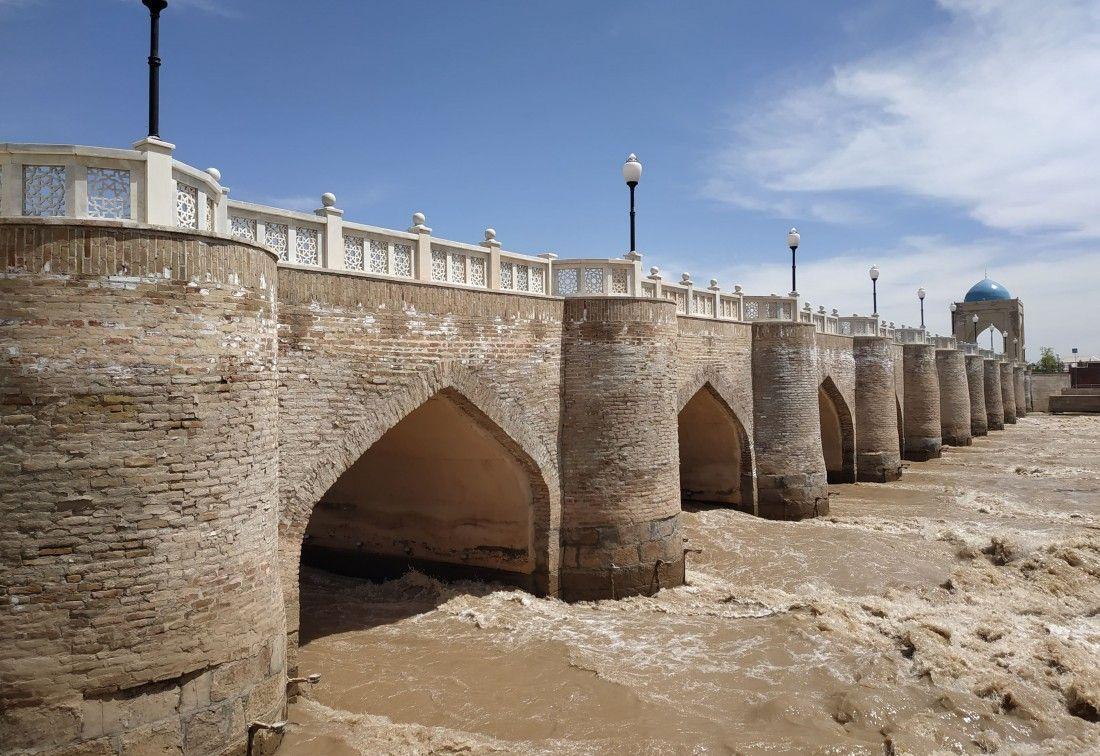
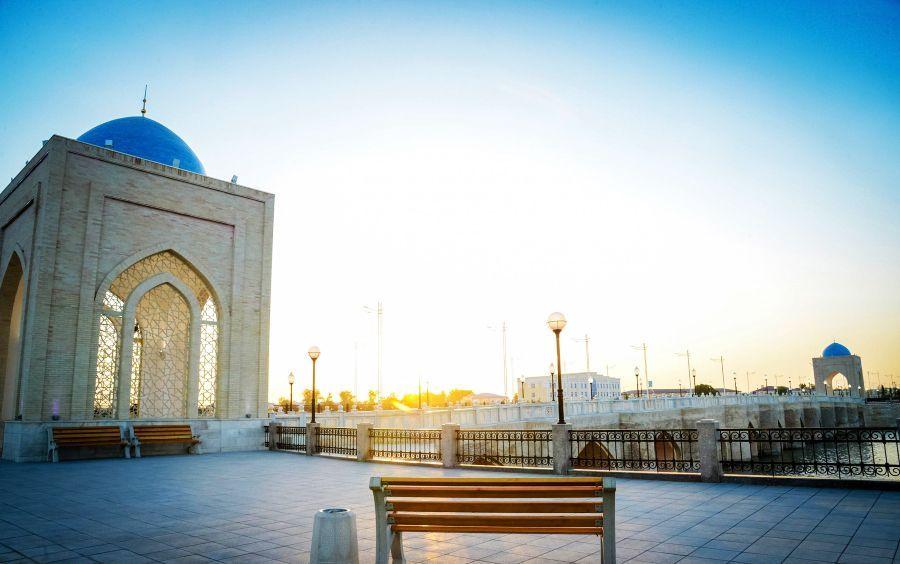
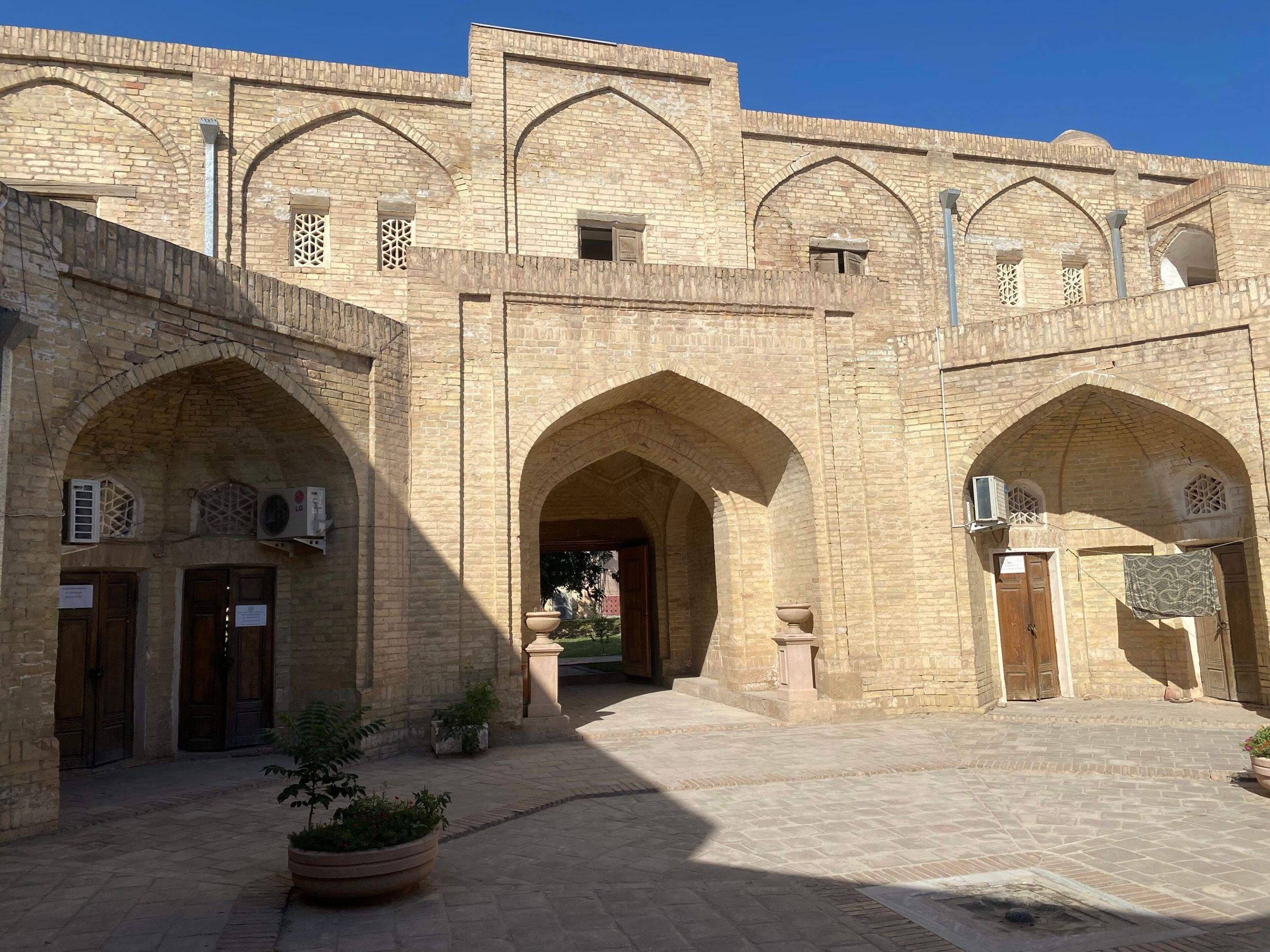
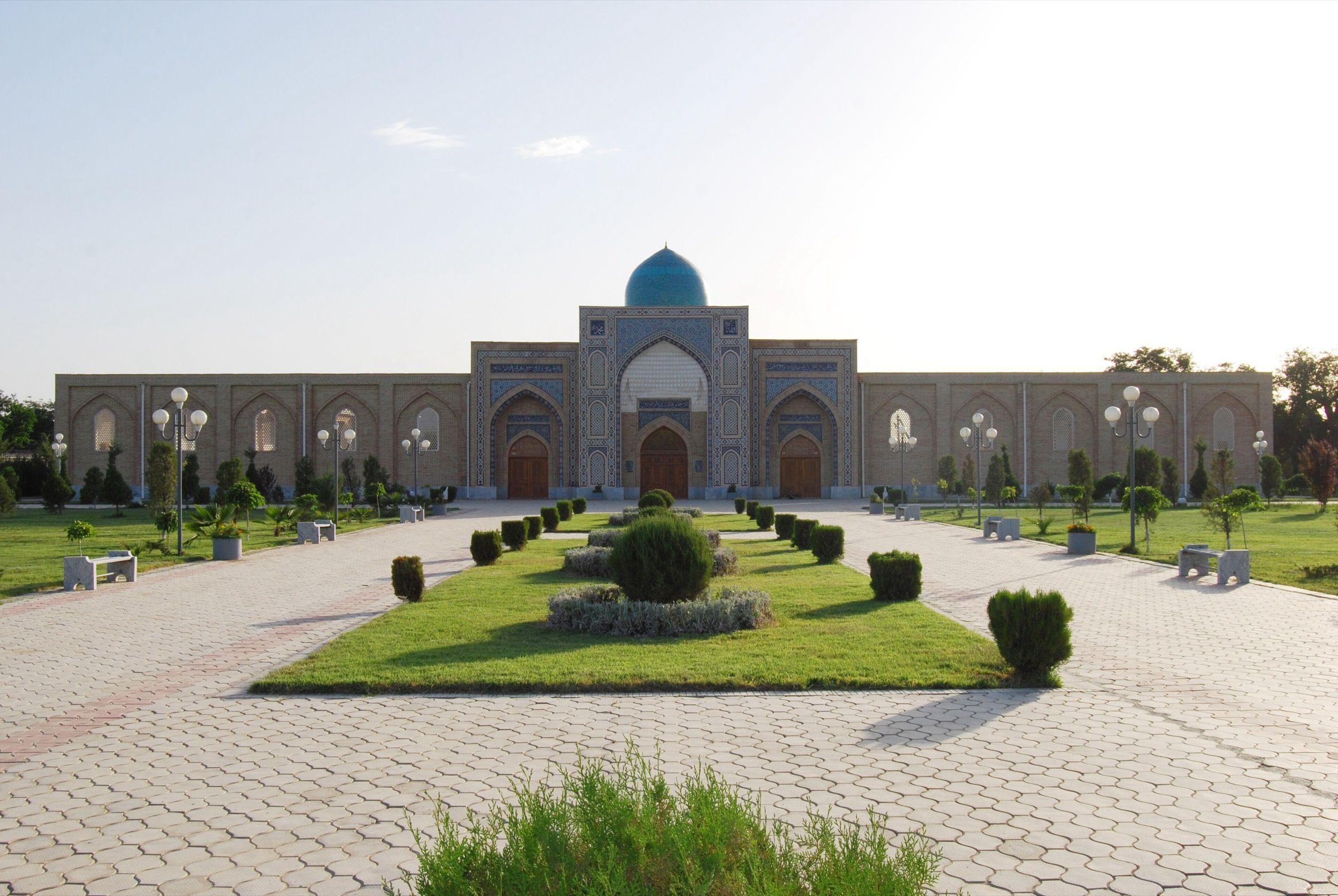
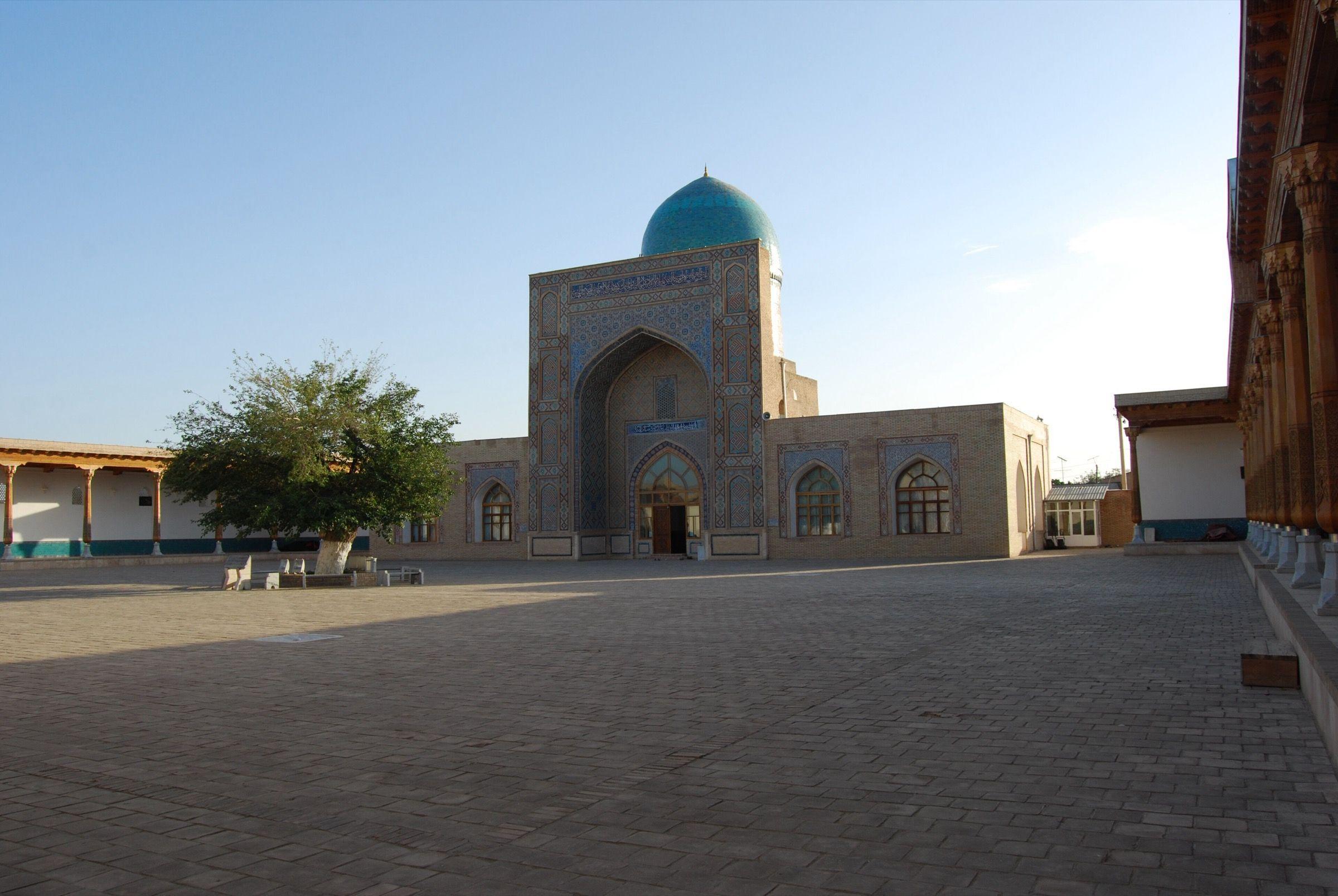
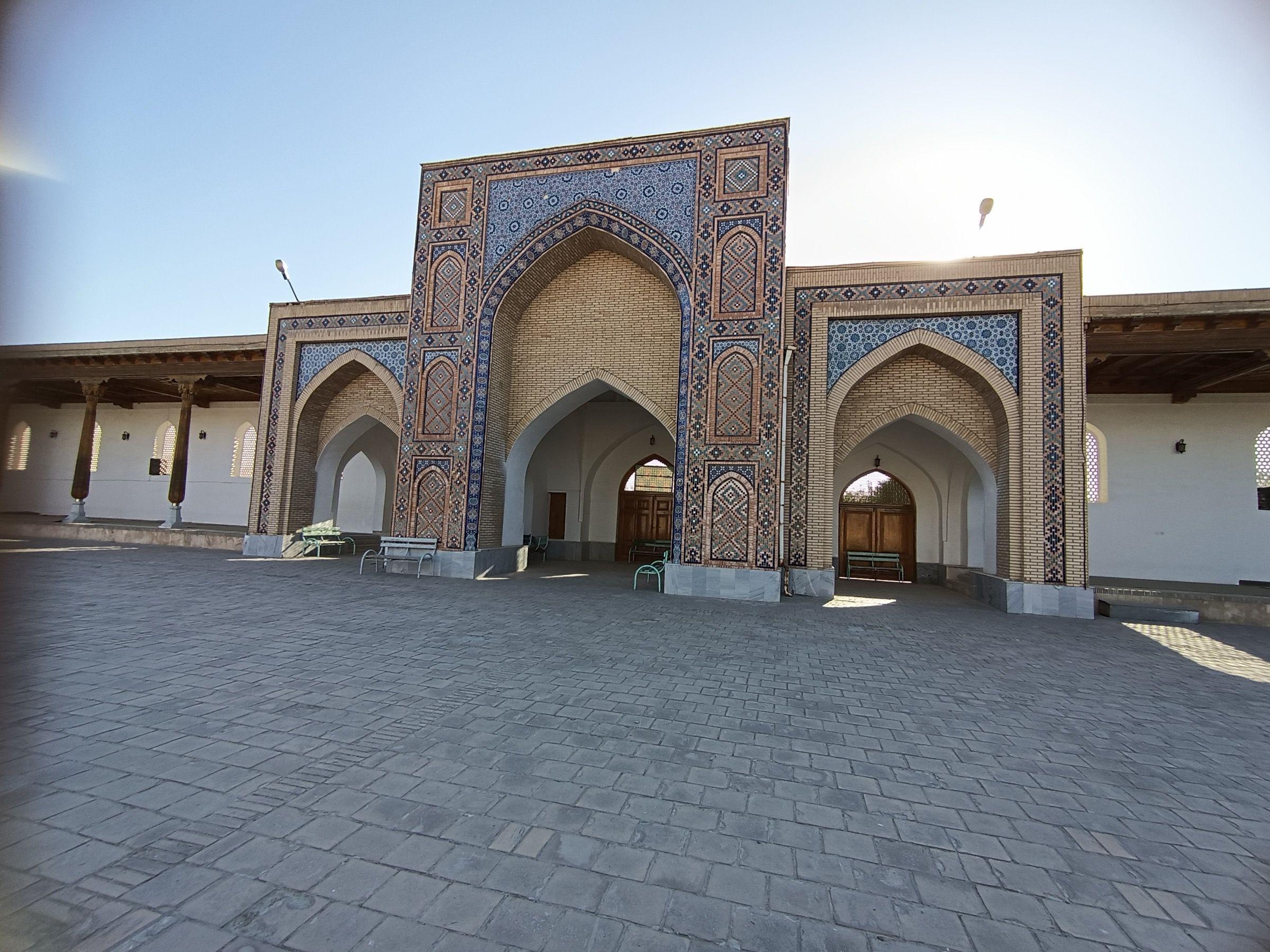
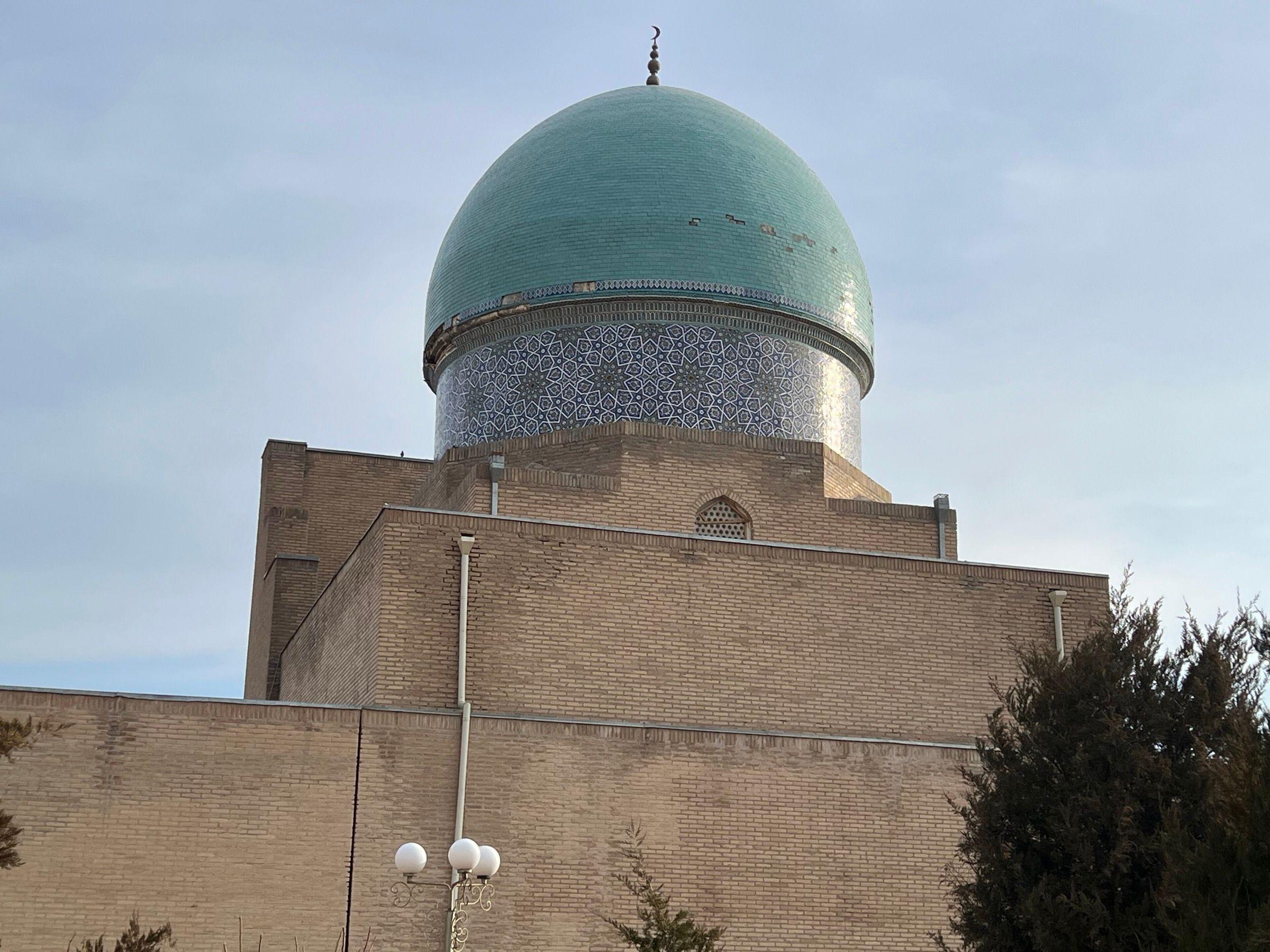
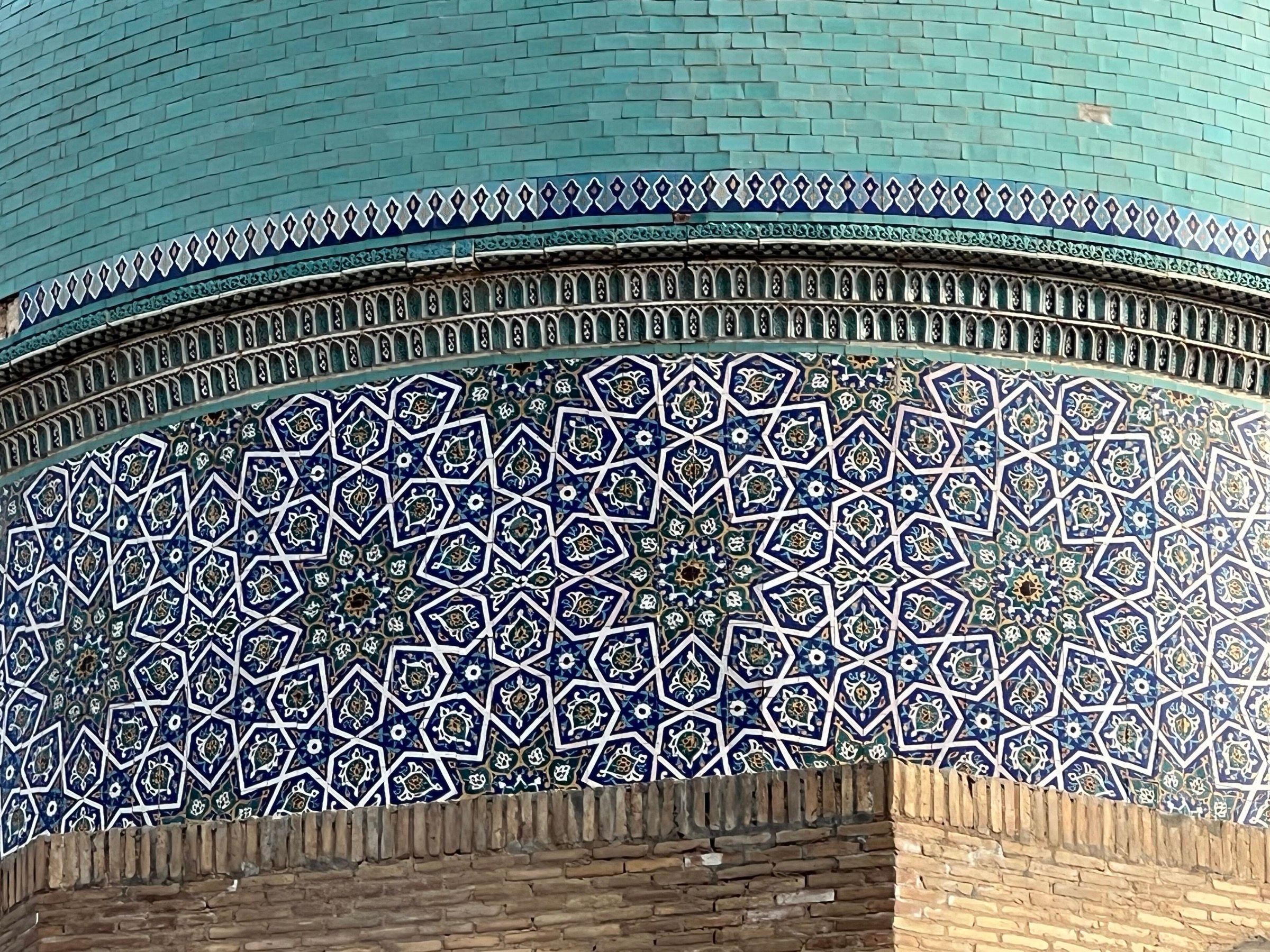
In 1583 Abdullah Khan II, the great builder of the Shaybanid dynasty, threw a brick bridge across the Kashkadarya: 122 m long, 8 m wide, ten pointed arches on massive round piers. It is one of the oldest bridges still standing in Central Asia and has carried caravans, the Russian army and modern traffic; today it is a pedestrian promenade with a riverside park and pavilions. From the same century come the Odina madrasah and mosque, built on the site of Kebek's palace and described locally as the only madrasah in the region founded for women; it now houses a museum of the Shaybanids. The Kok-Gumbaz, “blue dome”, from the end of the sixteenth century, is still the city's Friday mosque, a broad brick hall under a single turquoise cupola.
Smaller things
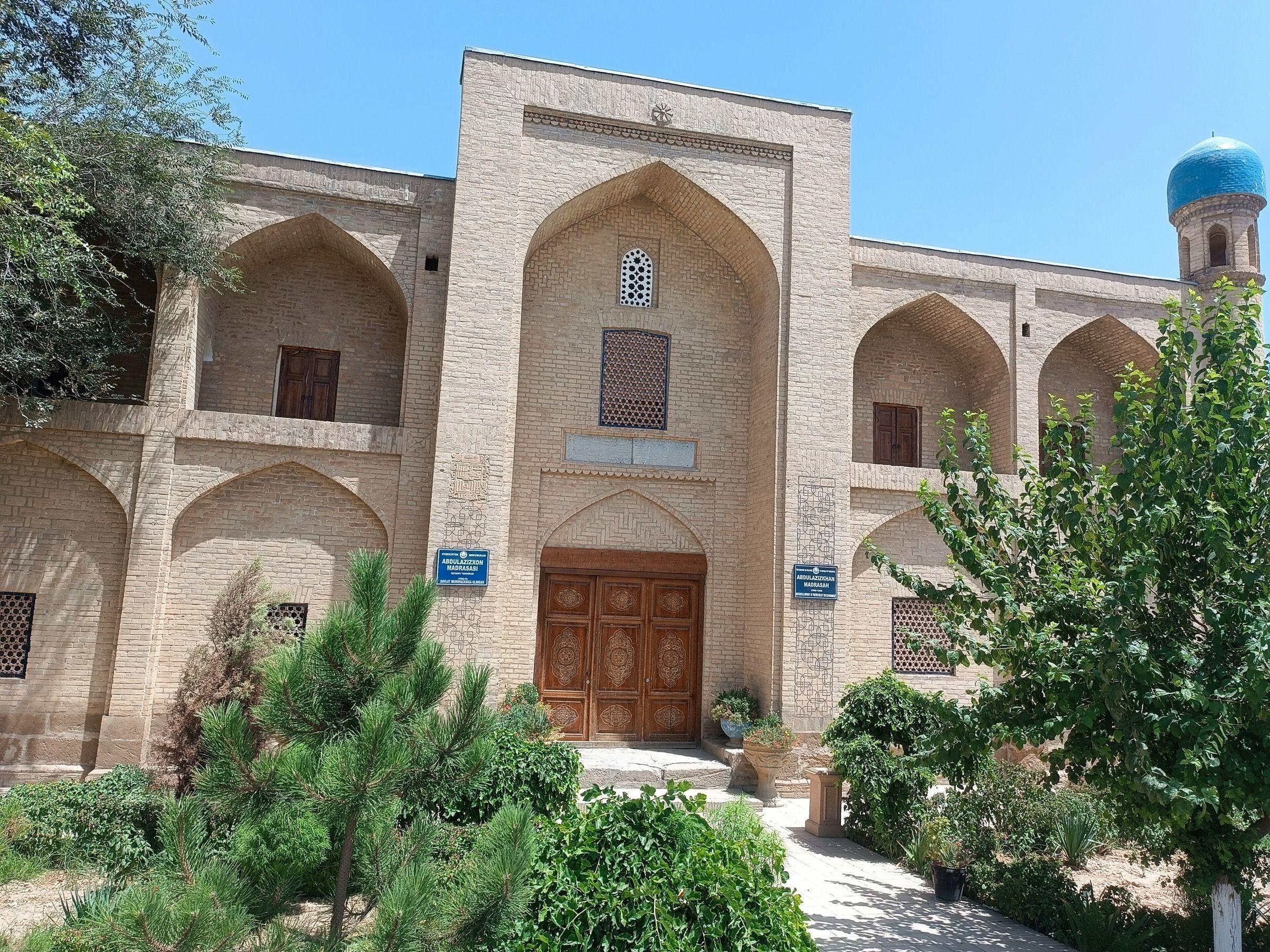
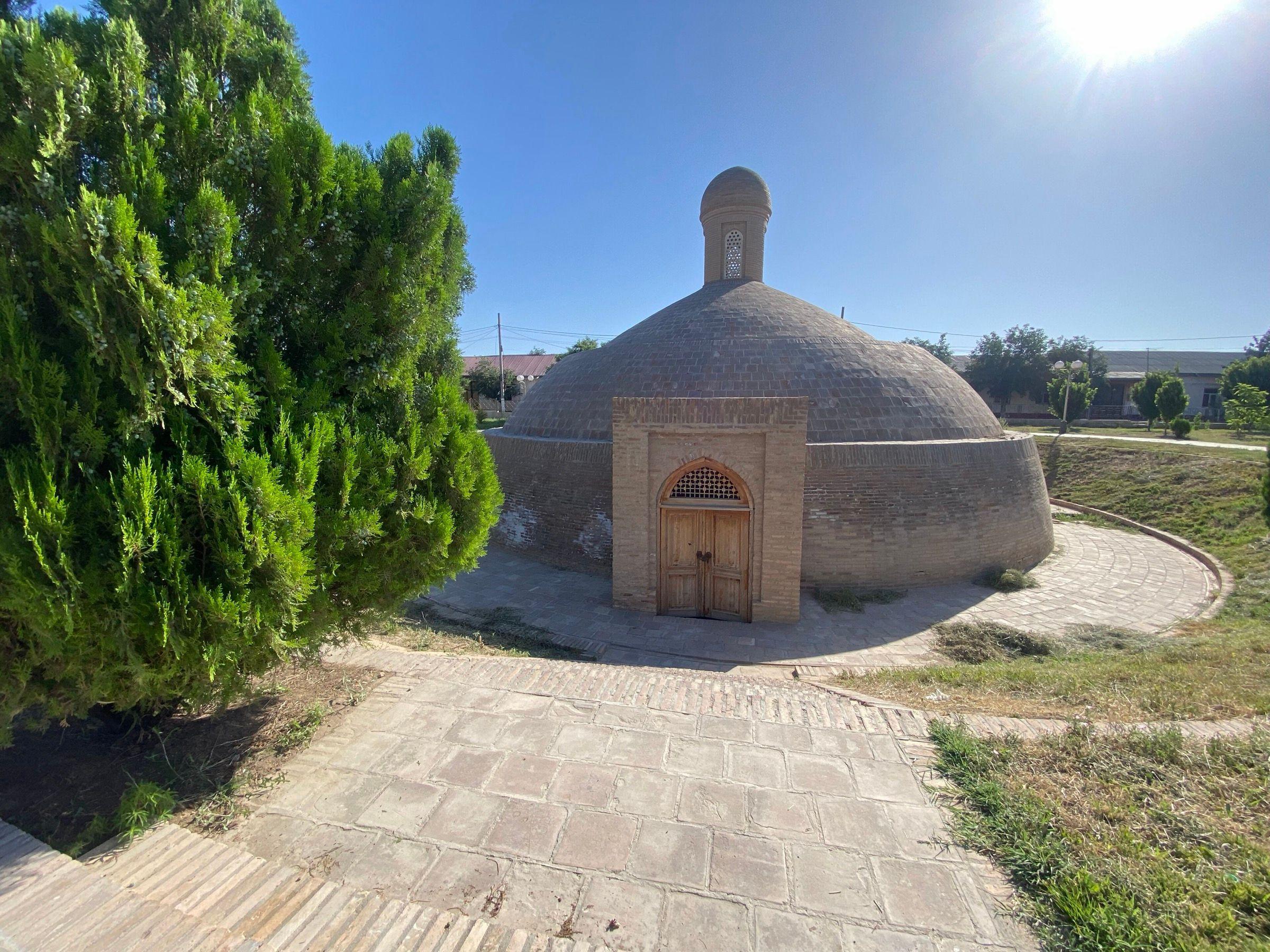
Around the old centre are a fourteenth-century sardoba, a domed water cistern whose acoustics locals like to demonstrate, sixteenth-century baths, and two early-twentieth-century madrasahs, Khoja Abdulaziz (1909) and Kilichboy (1914), one of which served as the regional museum. Karshi is also the place to eat tandir gusht, lamb baked in a sealed clay oven over juniper, and the city's samsa.
Visiting
Karshi is about 85 km from Shakhrisabz and 200 km from Bukhara, which makes it a natural lunch-and-sightseeing stop on the Samarkand–Shakhrisabz–Bukhara road. Two to three hours cover the shrine, the bridge and the Odina museum. Pilgrims should allow longer at Abu Ubayda; dress modestly and expect to remove shoes in the shrine.
What to see
- The memorial shrine of Abu Ubayda ibn al-Jarrah with its stork-topped minaret
- The ten-arched bridge of 1583 over the Kashkadarya
- The Odina madrasah and its museum of the Shaybanid dynasty
- Kok-Gumbaz, the blue-domed Friday mosque
- The 14th-century sardoba cistern and 16th-century baths
- Tandir gusht, Kashkadarya's slow-baked lamb
Gallery
Tours that visit Karshi: Abu Ubayda Shrine, Odina Madrasah, Kok-Gumbaz and the 1583 Bridge
 New
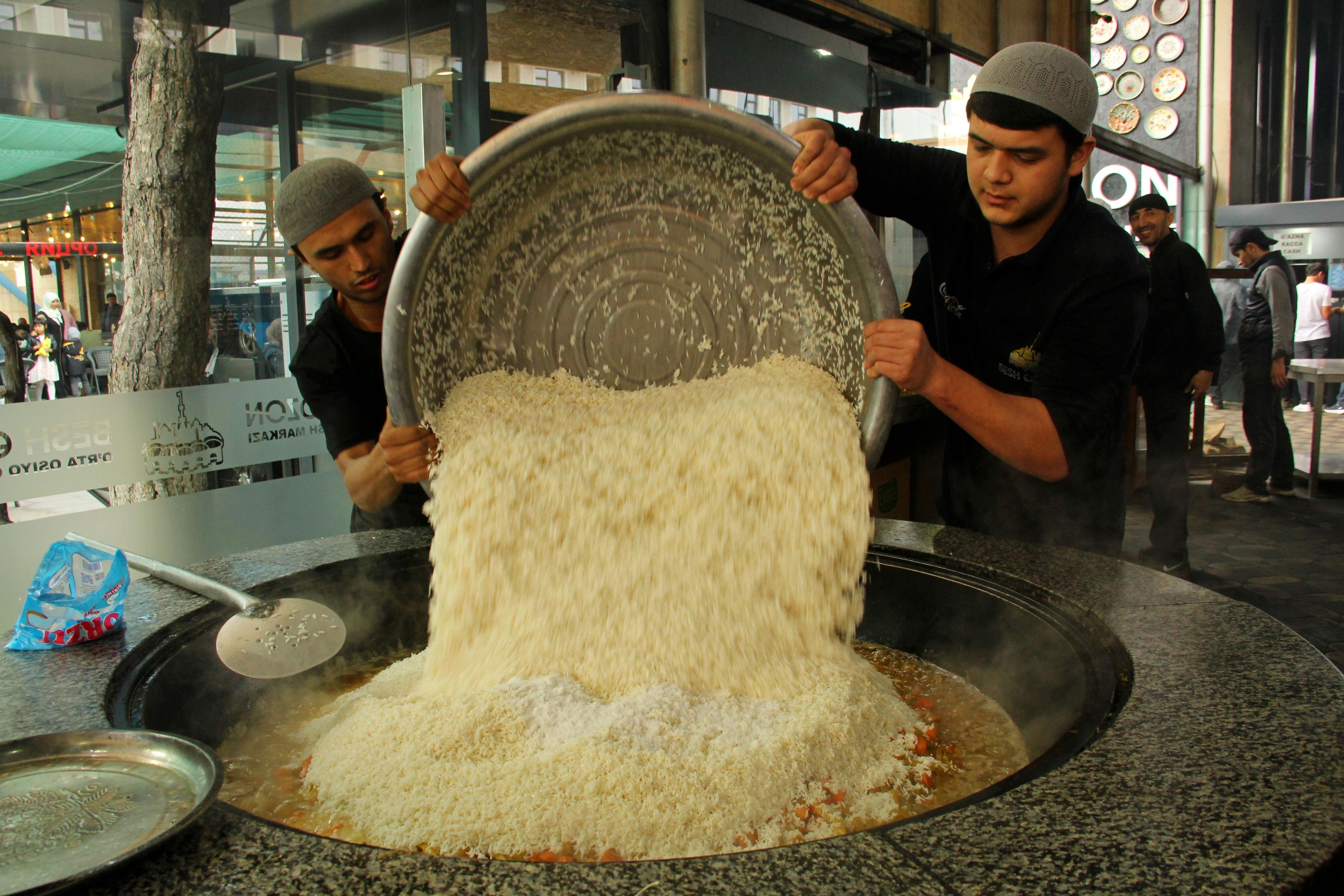
Six Days, Seven Plovs
From
$995
 Premium
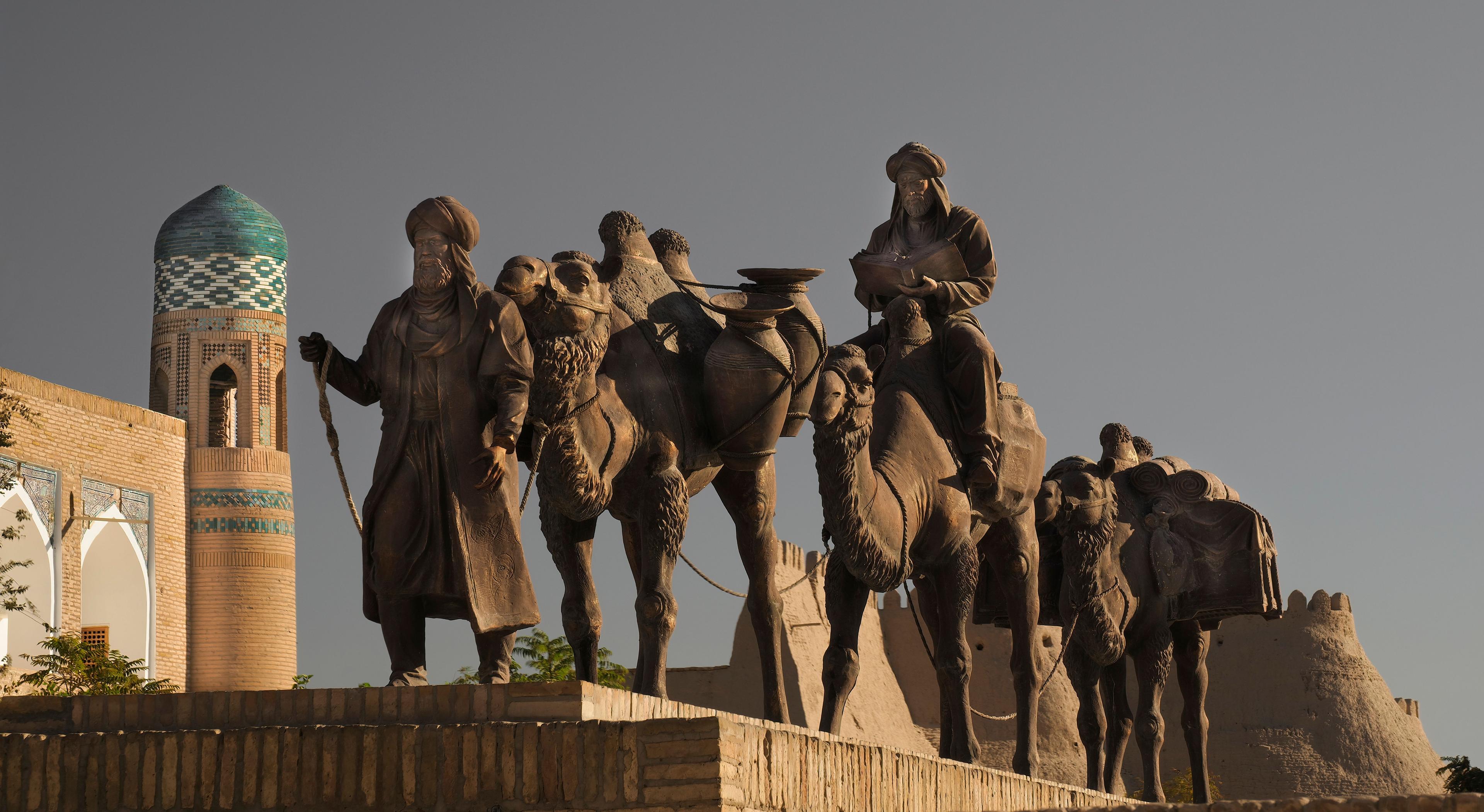
Twelve Gates of the Silk Road
From
$1,750
 Best Seller
Four Crowns: Tashkent, Samarkand, Bukhara, Khiva
From
$1,270
More sights in Samarkand
All of Samarkand
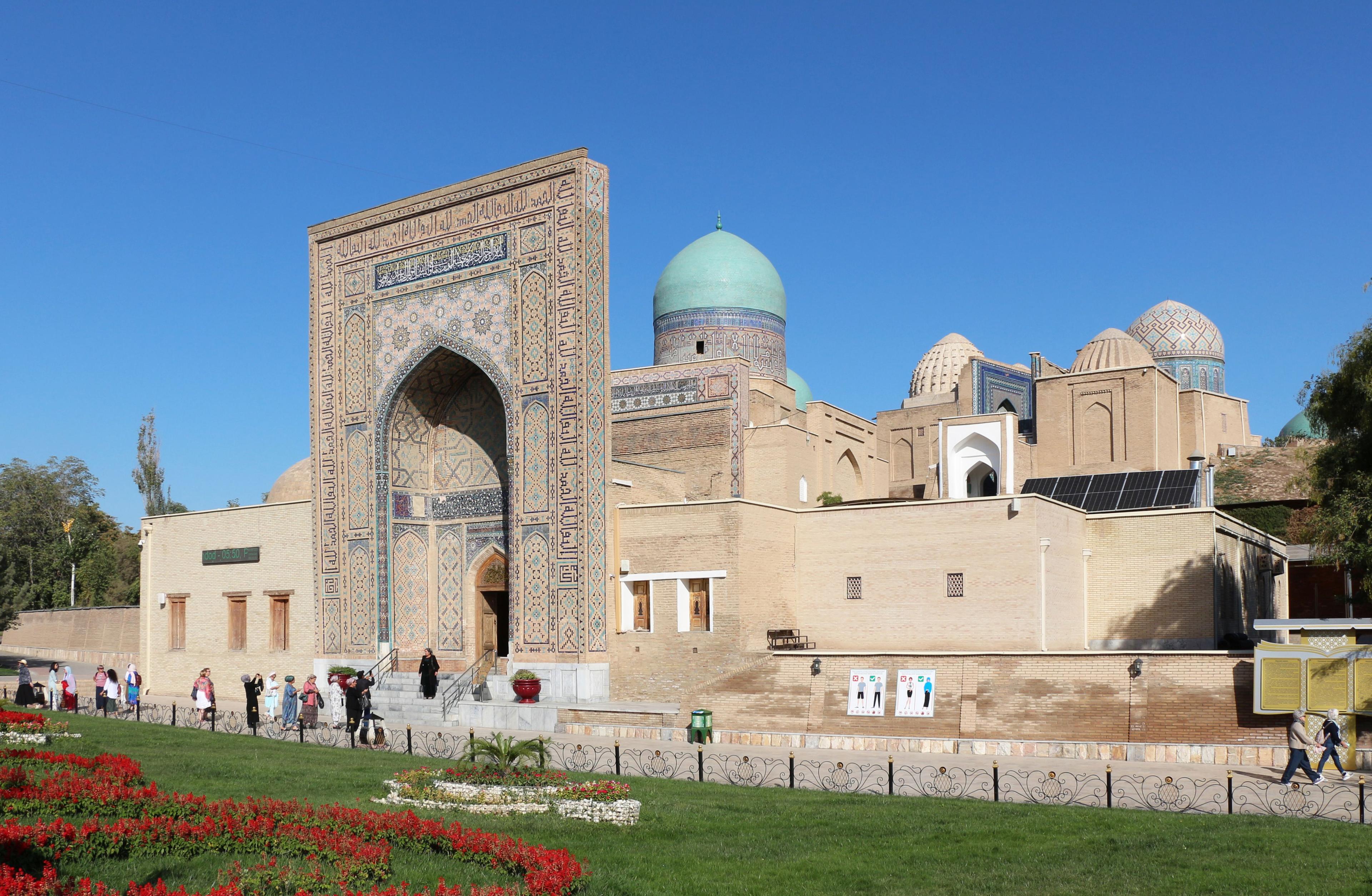

See Karshi: Abu Ubayda Shrine, Odina Madrasah, Kok-Gumbaz and the 1583 Bridge with a local guide
We build private and small-group trips around the places you want to see — with guides who grew up here.