
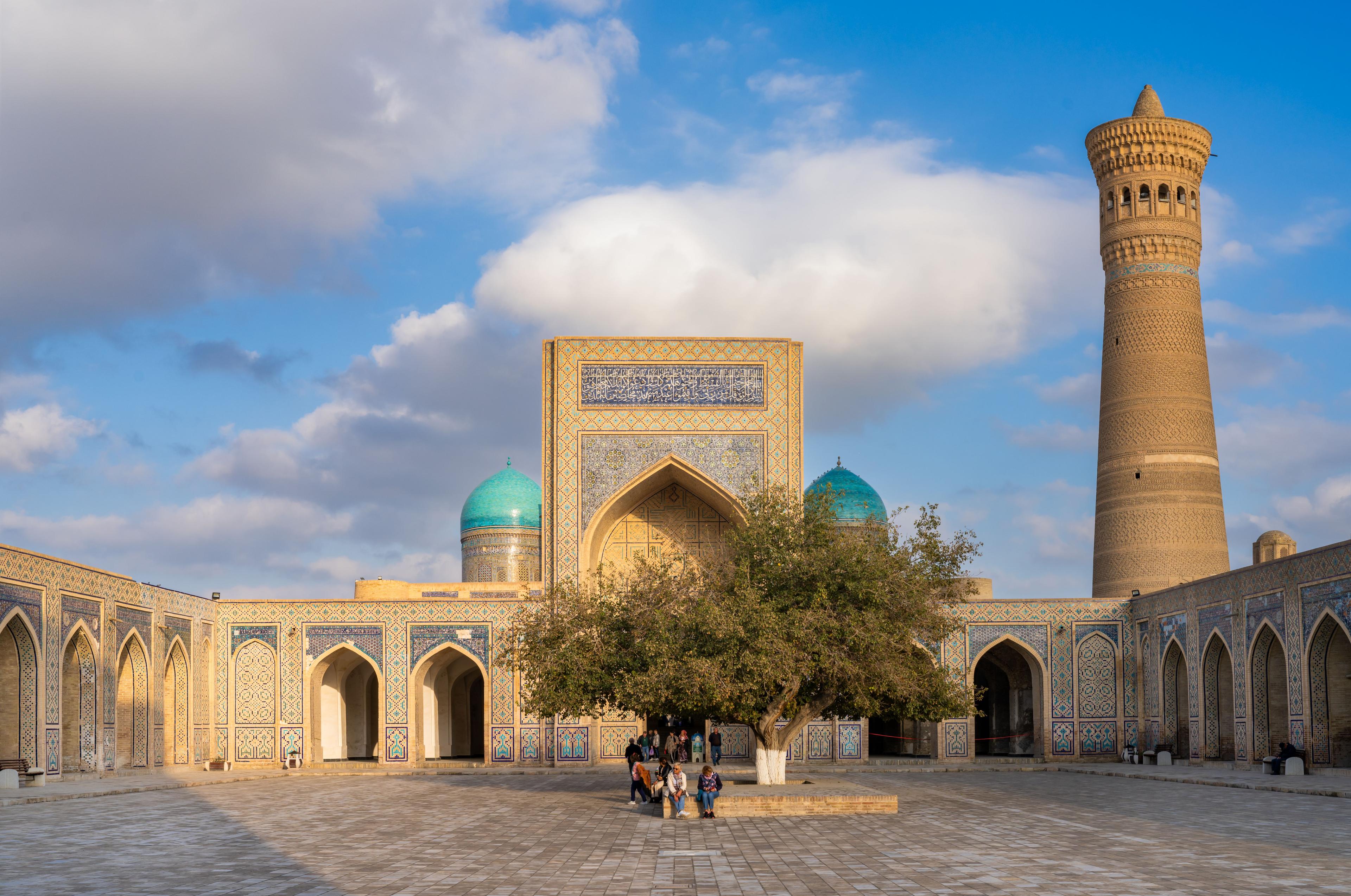
Architectural ensemble · 1127 (minaret), 1514 (mosque), 1535–1536 (madrasa)
Po-i-Kalyan Ensemble
The heart of holy Bukhara: the 12th-century Kalyan Minaret that Genghis Khan left standing, the vast Kalyan Mosque and the turquoise-domed Mir-i-Arab Madrasah, facing each other across one paved square.
About
Po-i-Kalyan means "at the foot of the great one", and the great one is the Kalyan Minaret. Raised in 1127 by the Karakhanid ruler Muhammad Arslan Khan, it rises about 46 metres from a base nearly ten metres across, and for eight centuries it was the tallest thing on the Bukhara skyline. Everything else on the square was built around it, destroyed, and built again.
The minaret
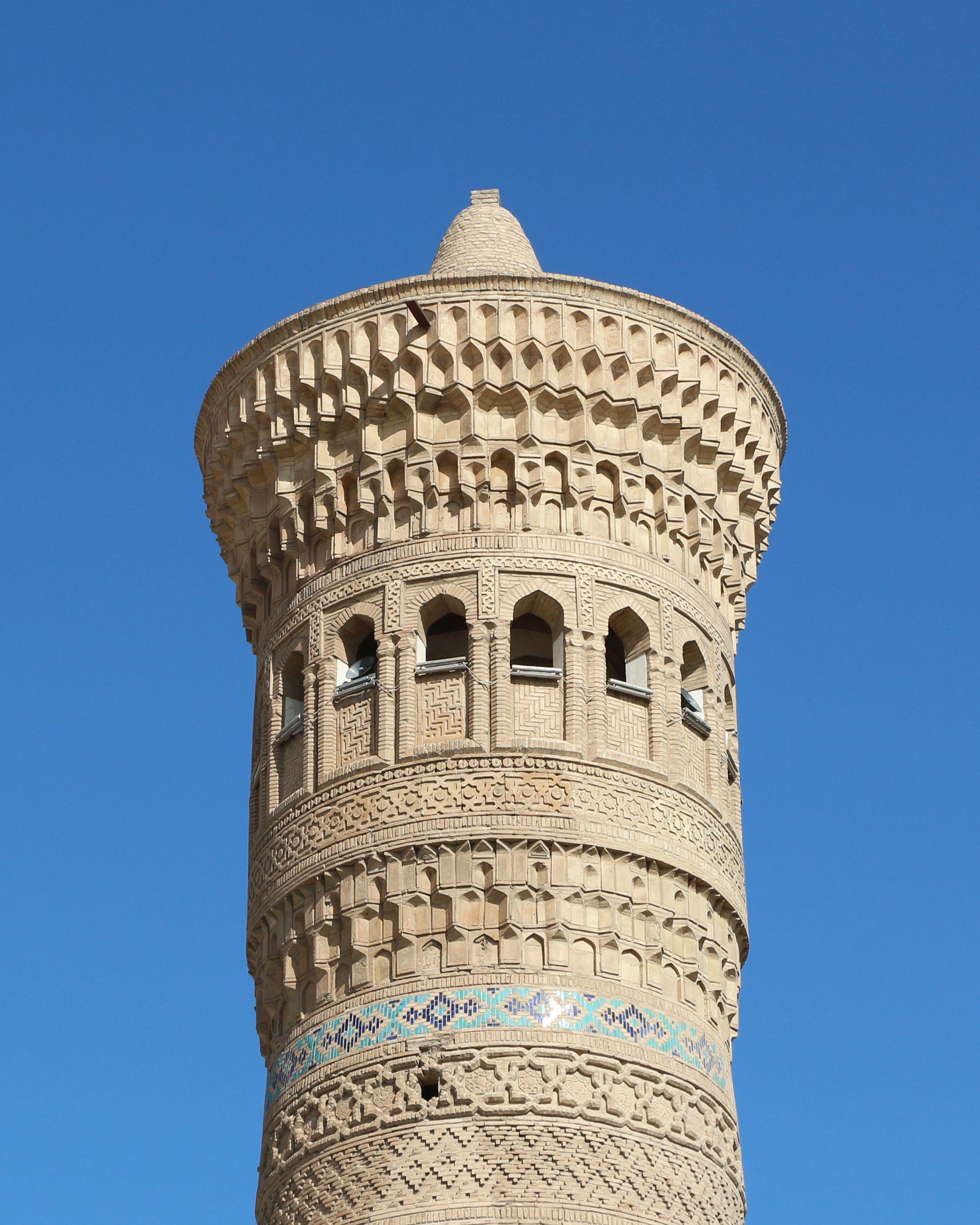
The tower is made entirely of baked brick, yet no two of its decorative bands repeat: herringbone, lattice, diamonds and Kufic lettering are all made by turning and setting the same plain bricks in different ways. A single turquoise band of glazed inscription runs beneath the lantern, whose sixteen arched openings once served the muezzin and, in wartime, the lookouts. When Genghis Khan took Bukhara in 1220 he burned the mosque beside it but ordered the minaret spared. Later centuries gave it a darker name, the Tower of Death: accounts from the 19th and early 20th centuries describe condemned prisoners being thrown from the top.
The Kalyan Mosque
The congregational mosque on the west side of the square was completed in 1514, when Ubaydullah, nephew of the Shaybanid founder Muhammad Shaybani, governed Bukhara and set out to make it a capital to rival Samarkand. Its courtyard is enormous, framed by arcades carrying 288 small domes on 208 pillars, and is said to hold some ten thousand worshippers on a feast day. The great blue dome above the mihrab is the one you see from every rooftop in the old town. The mosque is in use again for Friday prayer, as it was before its Soviet years as a warehouse.
The Mir-i-Arab Madrasah
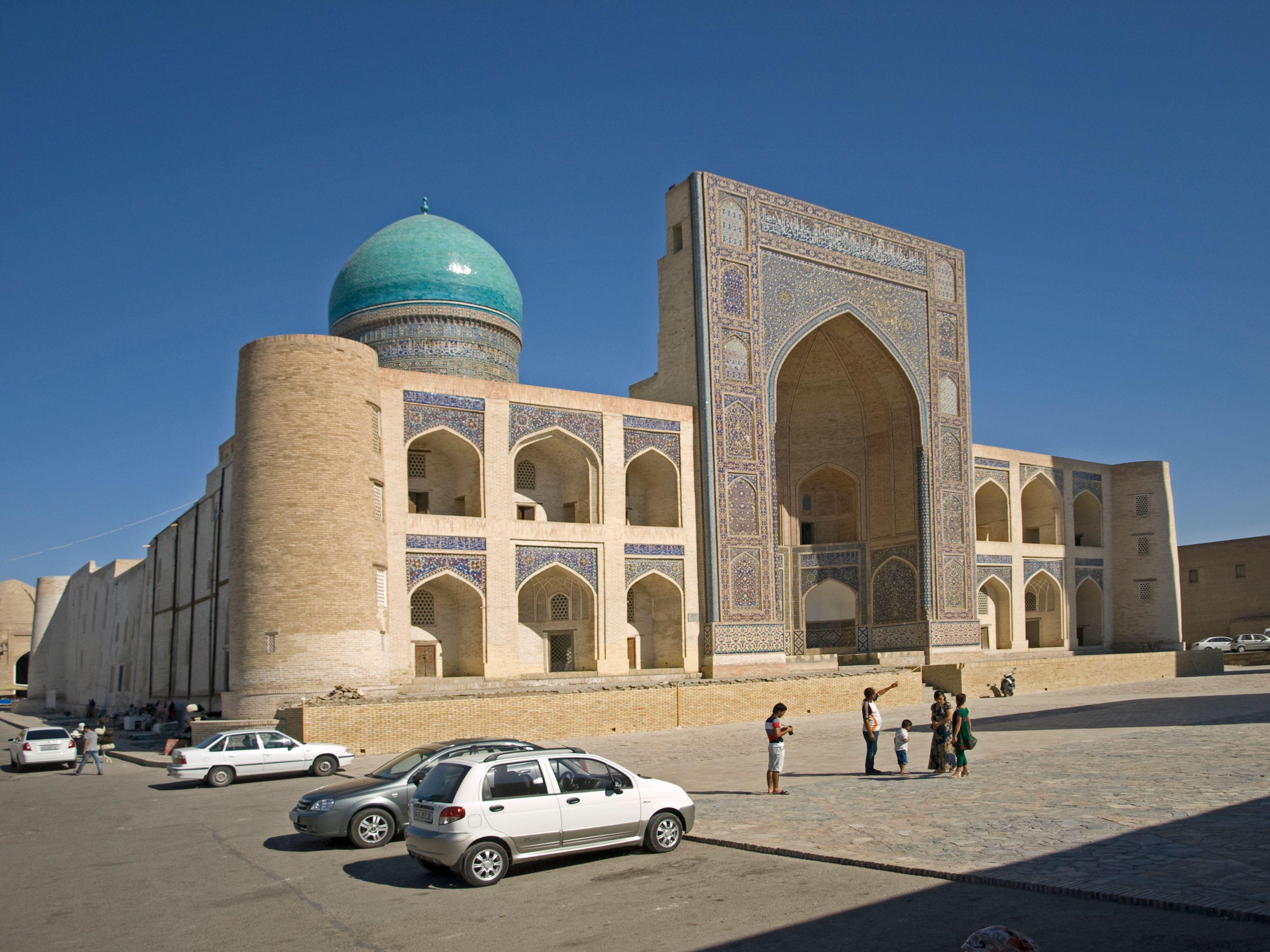
Opposite the mosque stands the Mir-i-Arab Madrasah of 1535–1536, named after the Yemeni sheikh Abdullah Yamani, known as Mir-i-Arab, spiritual guide to Ubaydullah Khan. The khan himself is buried beside his teacher under the madrasah's dome, an unusual choice for a ruler of the time. Mir-i-Arab was one of the very few madrasahs allowed to teach through much of the Soviet period, and it remains a working seminary: visitors may look into the vestibule and courtyard from the entrance, but not go further.
How to experience it
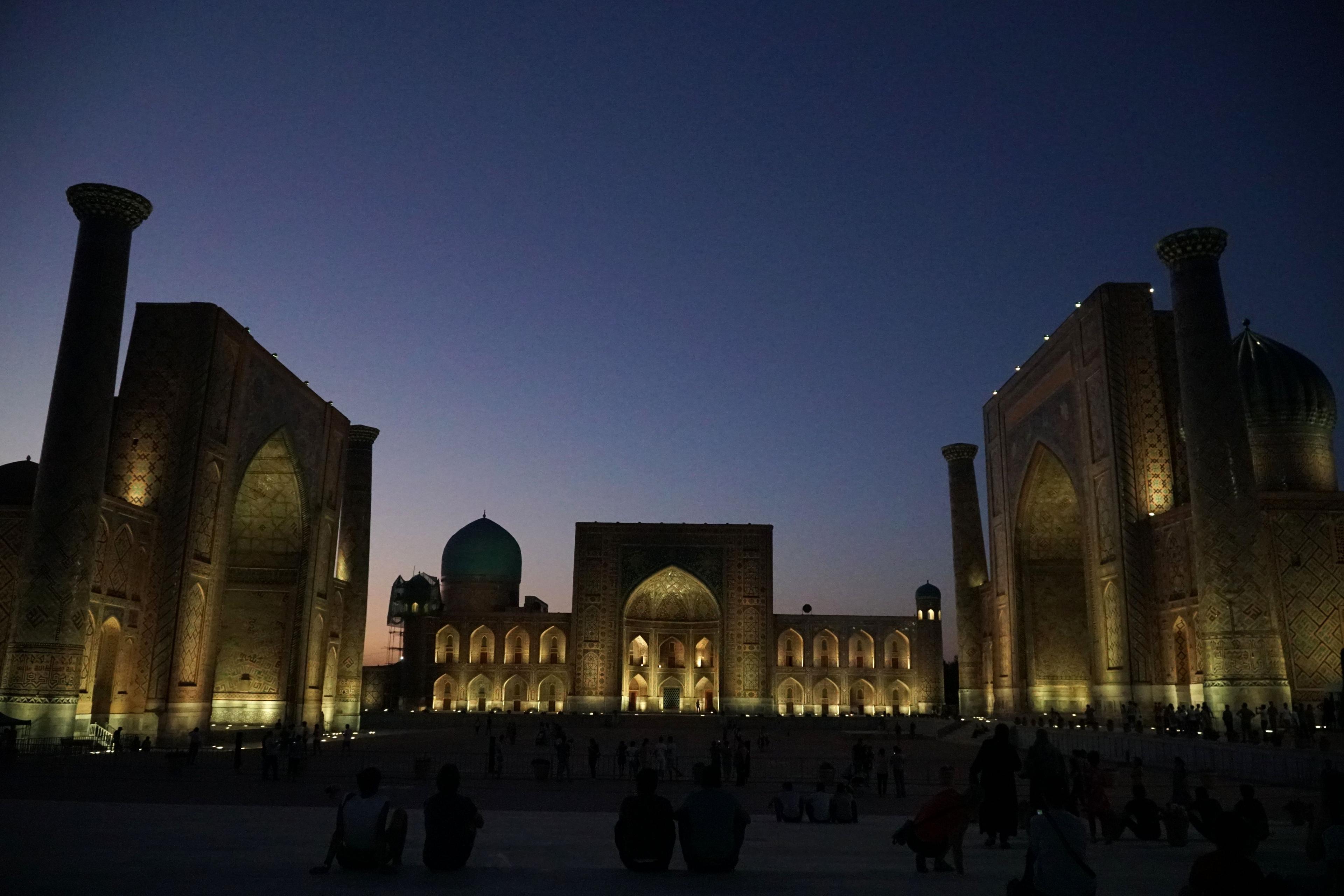
Come twice. In the morning the square is quiet, the light falls across the minaret's brickwork and you can see each pattern clearly. After dark the ensemble is floodlit and the square fills with families and photographers. For the classic view of minaret, mosque and madrasah together, find one of the rooftop cafés on the edge of the square at sunset.
What to see
- The Kalyan Minaret's bands of patterned brick, none repeated
- The turquoise inscription band beneath the lantern
- The arcaded courtyard of the Kalyan Mosque with its 288 domes
- The blue dome above the mosque's mihrab
- The twin turquoise domes of the Mir-i-Arab Madrasah
- The square lit up after dark
- Sunset over the ensemble from a nearby rooftop terrace
Gallery
Tours that visit Po-i-Kalyan Ensemble

More sights in Bukhara
All of Bukhara
See Po-i-Kalyan Ensemble with a local guide
We build private and small-group trips around the places you want to see — with guides who grew up here.