
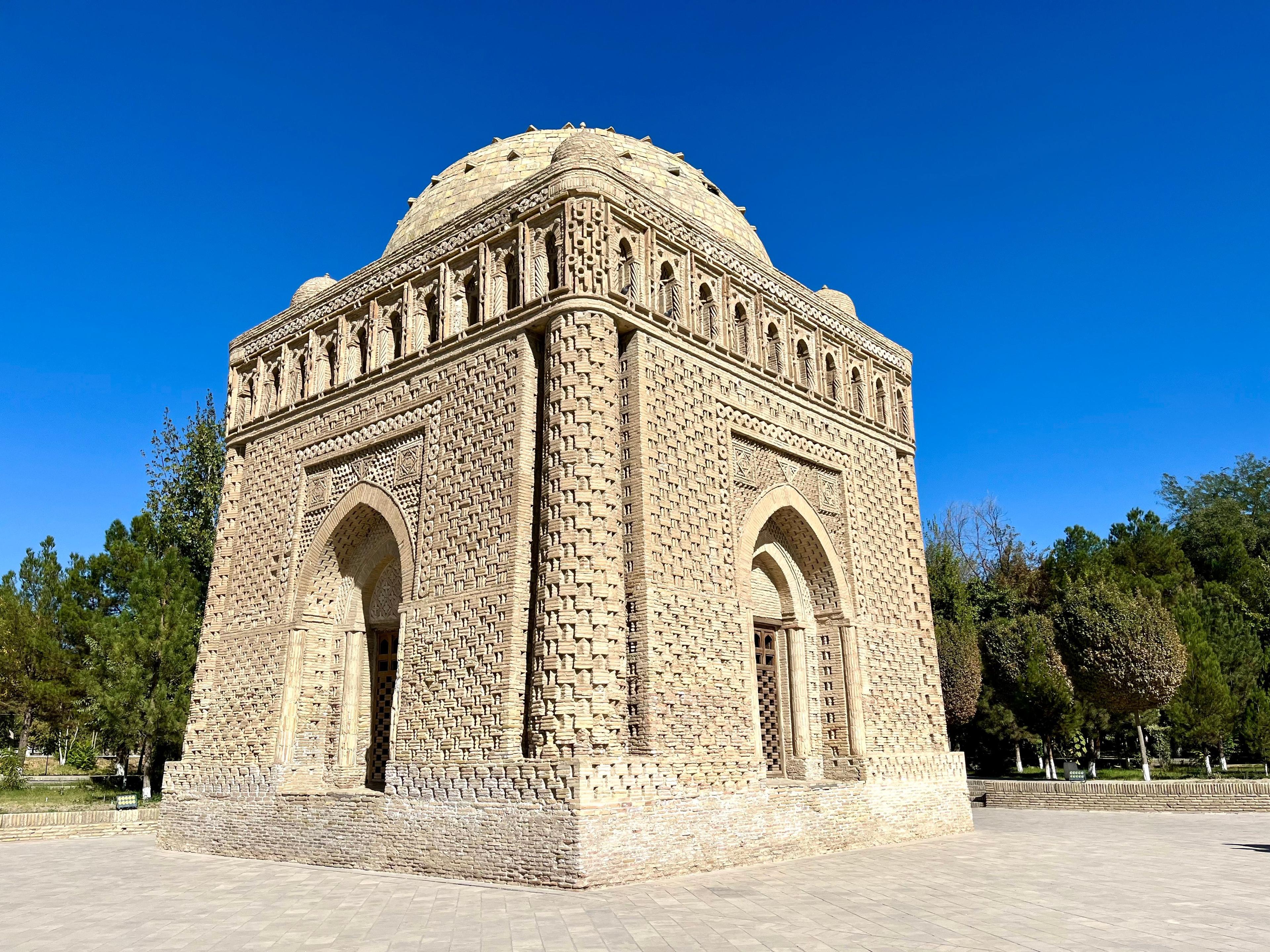
Mausoleum · late 9th – early 10th century
Samanid Mausoleum
A small cube of baked brick, about ten metres a side, that rewrote the rules of Islamic architecture. Built for the Samanid dynasty more than a thousand years ago, it survived the Mongols because it lay buried in silt.
About
The Samanid Mausoleum is the oldest monument in Bukhara and one of the earliest surviving works of Islamic architecture in Central Asia. It was built between the late 9th and the first half of the 10th century as the family tomb of the Samanids, the Persian dynasty that made Bukhara the cultural capital of the eastern Islamic world. Tradition names it after Ismail Samani, who ruled from 892 to 907; a 10th-century endowment document suggests he raised it for his father Ahmad, and an inscription identifies his grandson Nasr II among those buried here.
A building made of light
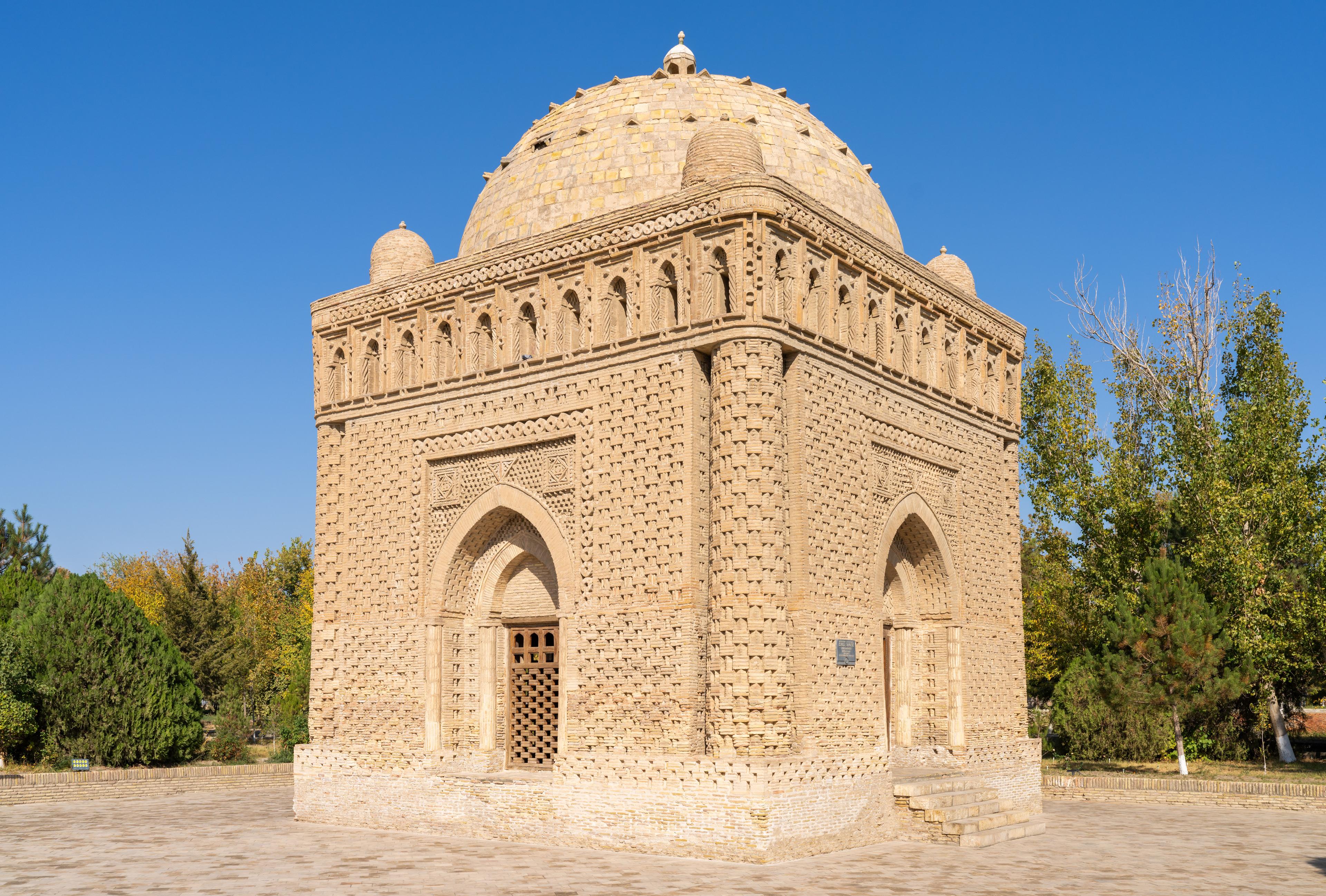
The form is simple: a slightly tapering cube about 9.5 metres a side, with walls almost two metres thick, a hemispherical dome and four small corner domes. What makes it extraordinary is the brickwork. The builders set plain baked bricks in basket-weave, checkerboard and dog-tooth patterns so deep that the walls read almost like woven cloth. As the sun moves, the shadows in each recess shift, and the building changes character from hour to hour: crisp and graphic in the morning, warm and soft at sunset.
Its proportions reach back to older traditions. Scholars have compared the plan to the fire temples of pre-Islamic Iran, and to Buddhist mandalas, and its corner columns and arched gallery give a solid little building an unexpected lightness.
Saved by the mud
When Genghis Khan's army sacked Bukhara in 1220, the mausoleum is believed to have been half-buried under silt and sand, and so it escaped destruction. It remained hidden until Soviet researchers studied and cleared it in the 1920s; it was restored in the late 1930s. The cemetery that once surrounded it was later paved over to make Samanid Park, which still has a funfair a short walk away.
How to experience it
Walk around the building before you go in, and look closely at the corners and the gallery under the dome. Local custom says that circling the tomb three times brings a wish true. Early morning and the last hour before sunset give the best relief on the brick. Chashma-Ayub is a three-minute walk away, and the Bolo-Hauz Mosque and the Ark are ten minutes beyond.
What to see
- The woven-looking basket-weave brickwork on all four facades
- The arched gallery running beneath the dome
- The interior, where the same brick patterns continue
- The play of shadow on the walls at sunrise and sunset
- Samanid Park and the nearby Chashma-Ayub shrine
Gallery

More sights in Bukhara
All of Bukhara

See Samanid Mausoleum with a local guide
We build private and small-group trips around the places you want to see — with guides who grew up here.