

Fortress · from c. 5th century; present buildings 17th–20th centuries
Ark Fortress
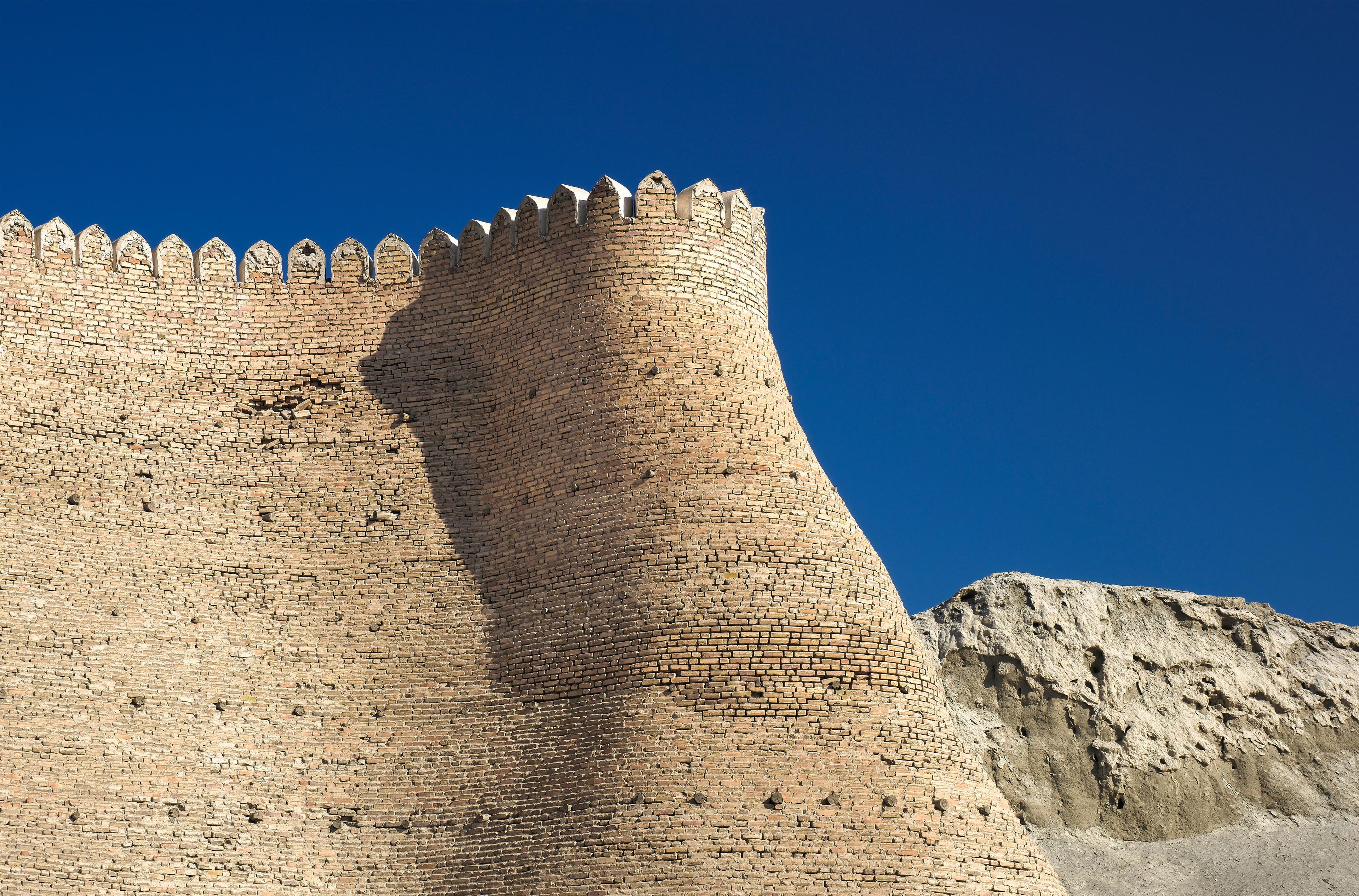
A city within a city: the sloping mud-brick walls of the Ark sheltered Bukhara's rulers for some fifteen centuries, until the Red Army stormed it in 1920. Inside are the coronation court, a royal mosque and the city's museums.
About
The Ark is Bukhara's oldest inhabited site and the seat of its power for most of recorded history. By about 500 AD local rulers were already living on this artificial mound, which rests on some twenty metres of earlier fortresses, each built on the ruins of the one before. Its walls, 16 to 20 metres high and nearly 800 metres around, enclose almost four hectares; inside, until 1920, lived the emir, his ministers, his treasury, his prisoners and hundreds of servants.
Legend and history
Legend gives the fortress a heroic founder, Siyavush of the Persian epic Shahnameh, who was promised a princess if he could build a palace on ground covered by a single bull's hide. He cut the hide into a thin strip and enclosed a whole hilltop with it. The 10th-century historian Narshakhi records a later tale: the fortress kept collapsing until the ruler's astrologers had it laid out on seven points matching the stars of the Great Bear. Tradition also places here the famous Samanid library in which the young Ibn Sina said he found books he had never seen before.
The Mongols sacked the Ark in 1220, and later dynasties rebuilt it many times. Most of what stands today dates from the 17th to the early 20th century. In September 1920 the Red Army under Mikhail Frunze bombarded the citadel; the last emir, Alim Khan, fled, and much of the interior burned. Large parts of the fortress have never been rebuilt, which is why the walls seem to hold more empty space than buildings.
What you see inside
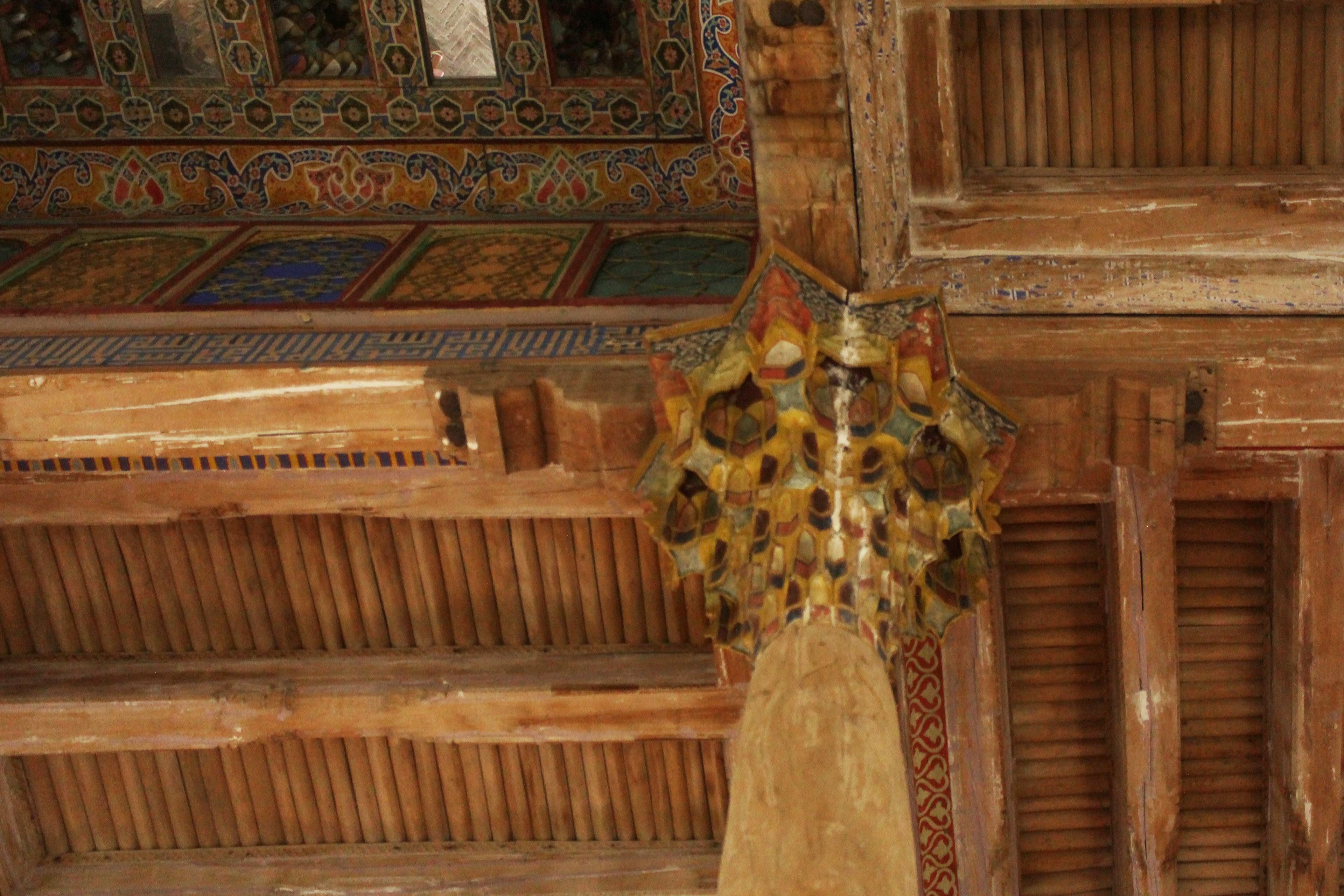
A long ramp climbs between two 18th-century towers to the gate, then a dark covered passage leads past old storerooms and cells into the fortress. Inside are the Friday mosque of the Ark, with a painted wooden porch; the reception and coronation court, where the emirs were enthroned and received ambassadors from a raised throne platform; the former quarters of the chief minister; and several museum halls covering archaeology, coins, manuscripts and the history of the emirate. From the upper terraces the view takes in the whole old town, from the Kalyan Minaret to the Bolo-Hauz Mosque.
The open ground in front of the gate, Registan square, was where emirs held public executions. It was here, in 1842, that two British officers, Charles Stoddart and Arthur Conolly, were beheaded after long imprisonment, an episode of the Great Game. The Zindan, the emir's prison, stands a short walk behind the fortress.
How to experience it
Visit in the morning or late afternoon; the walls hold the heat at midday in summer. Leave time for the terraces, then cross the road to the Bolo-Hauz Mosque.
What to see
- The ramp and gate between the two 18th-century towers
- The reception and coronation court with the emir's throne
- The Ark's Friday mosque and its painted wooden porch
- Museum halls on archaeology, coins and the emirate
- View over the old town from the upper terraces
- The sloping outer walls, best seen from Registan square
Gallery

Tours that visit Ark Fortress
More sights in Bukhara
All of Bukhara
See Ark Fortress with a local guide
We build private and small-group trips around the places you want to see — with guides who grew up here.