
Architectural ensemble · 1568–1623
Lyabi-Hauz Ensemble
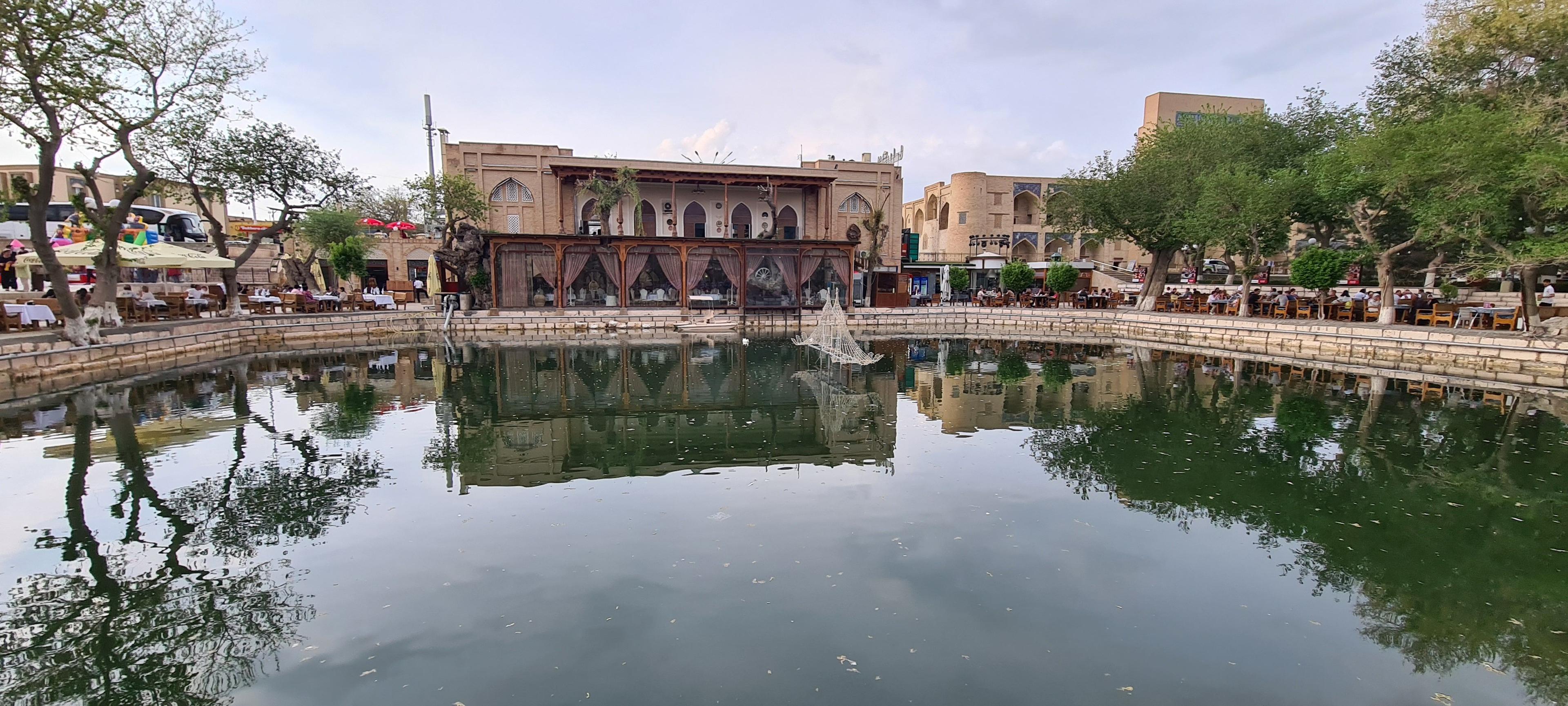
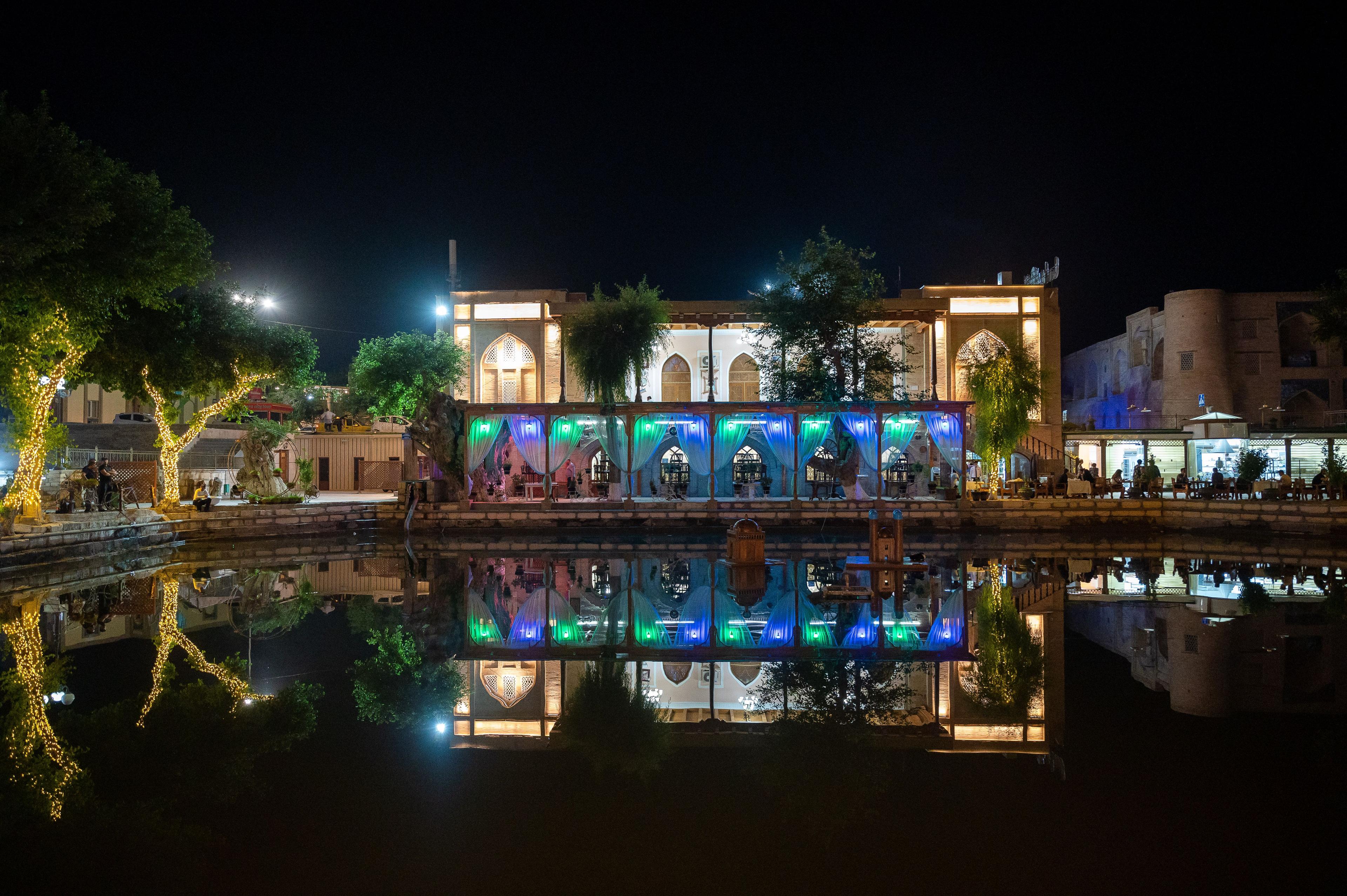
Bukhara's living room: a 17th-century stone pool shaded by old mulberry trees and framed by three religious buildings, where the old town gathers for tea, plov and conversation from morning until late evening.
About
Lyabi-Hauz means simply "by the pool". Bukhara once had dozens of such reservoirs, fed by canals and used for drinking, washing and ritual ablution; they also spread disease, and most were filled in during the 1920s and 1930s. This one survived because of the buildings around it, and today it is the natural meeting point of the old town.
Three buildings and a pool
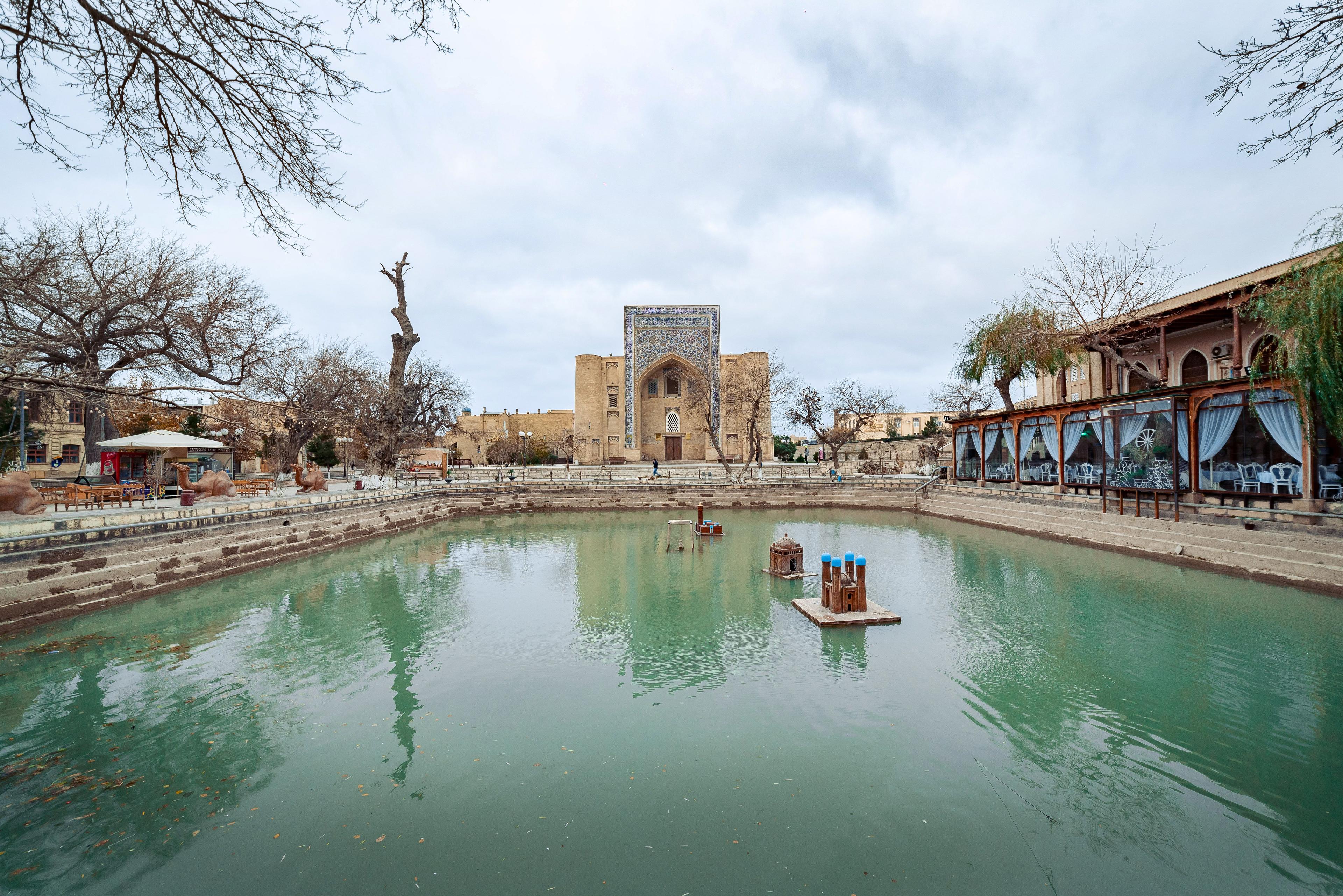
The pool, about 46 by 36 metres, was dug around 1620 by Nadir Divan-Begi, chief minister and uncle of the khan Imamquli. Steps of yellowish limestone descend to the water on every side. On its north side stands the Kukeldash Madrasah of 1568–1569, the largest in Bukhara, with some 160 student cells. To the west is Nadir Divan-Begi's khanaka of 1619–1620, a domed lodge for Sufi gatherings; to the east, his madrasah of 1622–1623, whose portal shows two mythical birds and a sun with a human face.
The widow's pool
A local story explains the pool's second name, Hauz-i Bazur, the "pool made by force". The land Nadir Divan-Begi wanted belonged to a Jewish widow who refused to sell. When the law sided with her, the minister ran a water channel so close to her house that its foundations began to wash away. She finally agreed, on condition that she receive land elsewhere to build a synagogue. The plot she was given is said to have become the heart of Bukhara's Jewish quarter, which still lies a few lanes to the south. Treat the details as legend; the quarter itself is real.
Nasreddin and the mulberry trees
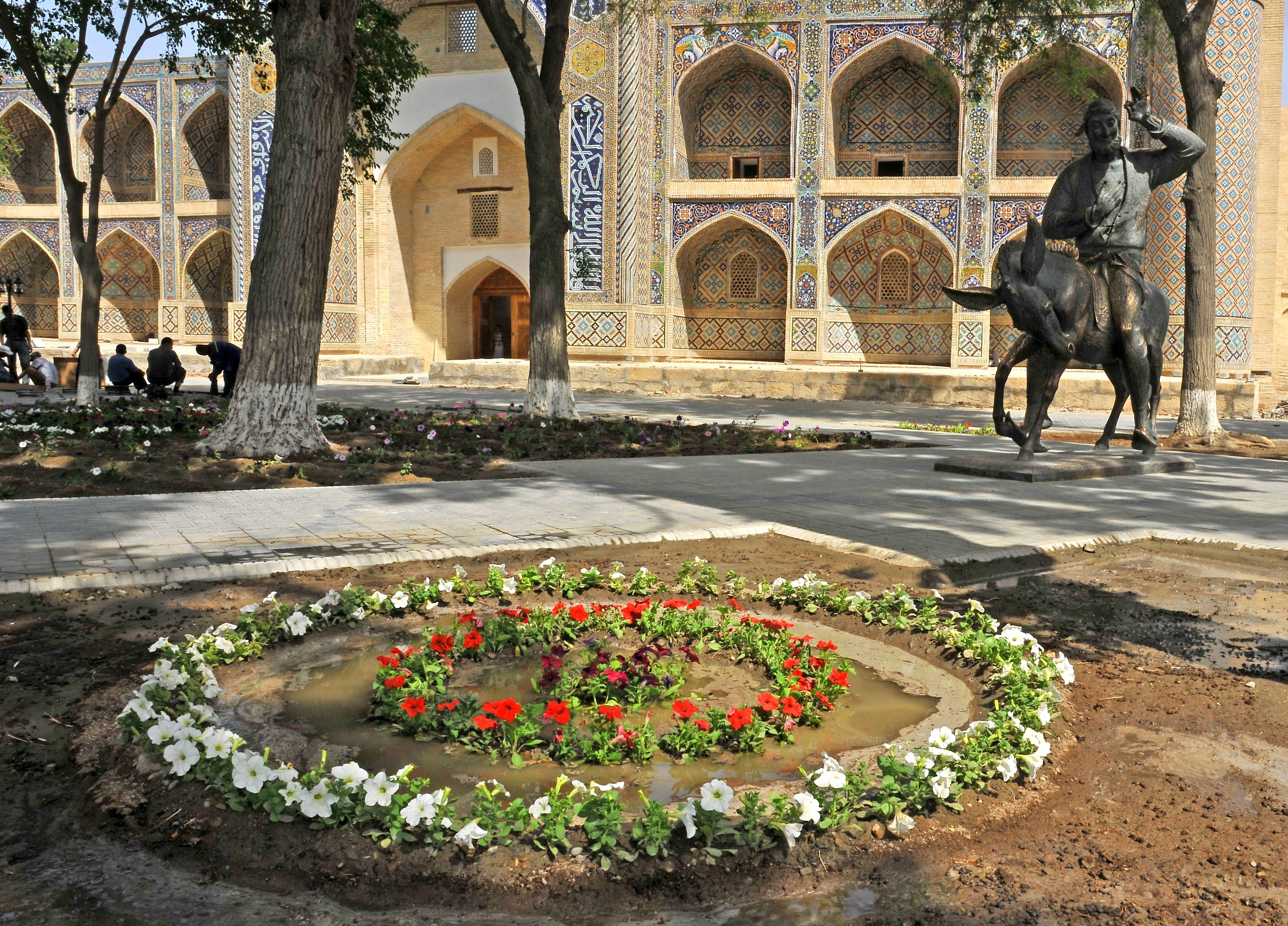
On the square stands a bronze of Khoja Nasreddin, the wise fool of Middle Eastern folklore, riding his donkey; Bukharans have long claimed him as one of their own. The mulberry trees around the water are old, and one is said to have been planted in the 15th century.
How to experience it
Come in the early evening, when the heat breaks and the teahouses fill. Take a table by the water for green tea or plov, then walk five minutes east to the Nadir Divan-Begi Madrasah, where a folklore show and dinner are staged on many evenings in season. In the morning the square is calm and the light on the Kukeldash facade is soft.
What to see
- The 17th-century pool with its stepped limestone banks
- The Kukeldash Madrasah, the largest in Bukhara
- Nadir Divan-Begi's khanaka on the west side
- The mythical-bird mosaics of the Nadir Divan-Begi Madrasah
- The statue of Khoja Nasreddin on his donkey
- Tea or dinner by the water under the old mulberries
Gallery

Tours that visit Lyabi-Hauz Ensemble
More sights in Bukhara
All of Bukhara

See Lyabi-Hauz Ensemble with a local guide
We build private and small-group trips around the places you want to see — with guides who grew up here.