A local guide to Uzbek music and dance: UNESCO-listed shashmaqom and Khorezm lazgi, the doira, dutar and other instruments, regional dance styles, the Bukhara folklore show and the best places to hear live traditional music.
Facts, prices and schedules checked on November 4, 2026
Uzbek music and dance are among the oldest living arts of the Silk Road, and you will meet them everywhere: in the frame drums that announce a wedding, the long-necked lutes played in a Bukhara courtyard, the shimmering hands of a Khorezm lazgi dancer and the classical shashmaqom sung in the old cities of Bukhara and Samarkand.
This guide explains what you are hearing and seeing: shashmaqom and lazgi, both on UNESCO's intangible heritage lists, the doira, dutar and other instruments, the regional dance styles, and, most usefully, where a traveller can hear live music and see dance, from the evening folklore show in Bukhara to festivals and concert halls.
Uzbek music and dance on the UNESCO list
Uzbekistan has more than a dozen elements on UNESCO's intangible cultural heritage lists, and several of them are musical or theatrical:
- Shashmaqom music, shared with Tajikistan, proclaimed in 2003 and inscribed in 2008
- The cultural space of Boysun District, with its folk songs, rituals and spring festival, inscribed in 2008
- Katta ashula, the "great song" of the Fergana Valley, inscribed in 2009
- Askiya, the art of witty improvised dialogue, inscribed in 2014
- Khorazm dance, Lazgi, inscribed in 2019
- Bakhshi art, the tradition of epic singers, inscribed in 2021
- The art of crafting and playing the rubab, a multinational listing from 2024
Together they give a good map of the country's music: a refined classical tradition in the old cities, energetic folk dance in Khorezm, epic storytelling in the south and west, and unaccompanied song in the Fergana Valley.
What is shashmaqom?
Shashmaqom means "six maqoms" in Persian. A maqom is a mode, a system of scales, melodic patterns and rhythms, and the six maqoms of the Bukhara tradition form a large cycle of instrumental pieces and songs. The six are usually named Buzruk, Rost, Navo, Dugoh, Segoh and Iroq.
UNESCO describes shashmaqom as a blend of vocal and instrumental music, melody, rhythm and poetry. A performance usually opens with an instrumental section and moves on to the nasr, the main vocal part. The lyrics come mostly from classical Sufi poetry about divine love, sung in Tajik (Persian) and Uzbek; many Bukhara singers are fluent in both. The ensemble is small and restrained: long-necked lutes such as the tanbur and dutar, a bowed instrument, sometimes a flute, and the doira frame drum keeping the rhythm.
Bukhara is regarded as the historical and spiritual centre of shashmaqom. The city's Jewish community played a large part in preserving and performing it, and Bukharian Jewish musicians later carried it to Israel and the United States. Written notation only captures the outline, so the music is still learned the old way, from master (ustoz) to student (shogird), over many years.
Uzbekistan also has two related regional traditions: the Fergana-Tashkent maqoms and the Khorezm maqoms of Khiva. To hear shashmaqom, look for concerts by maqom ensembles in Tashkent and Bukhara, recordings by singers such as Munojot Yo'lchiyeva, and the classical items that some evening shows and festivals include.
Lazgi: the dance of Khorezm
If shashmaqom is the music of Bukhara's courtyards, lazgi is the heartbeat of Khorezm, the oasis around Khiva and Urgench. On 12 December 2019 UNESCO inscribed "Khorazm dance, Lazgi" on its Representative List of the Intangible Cultural Heritage of Humanity.
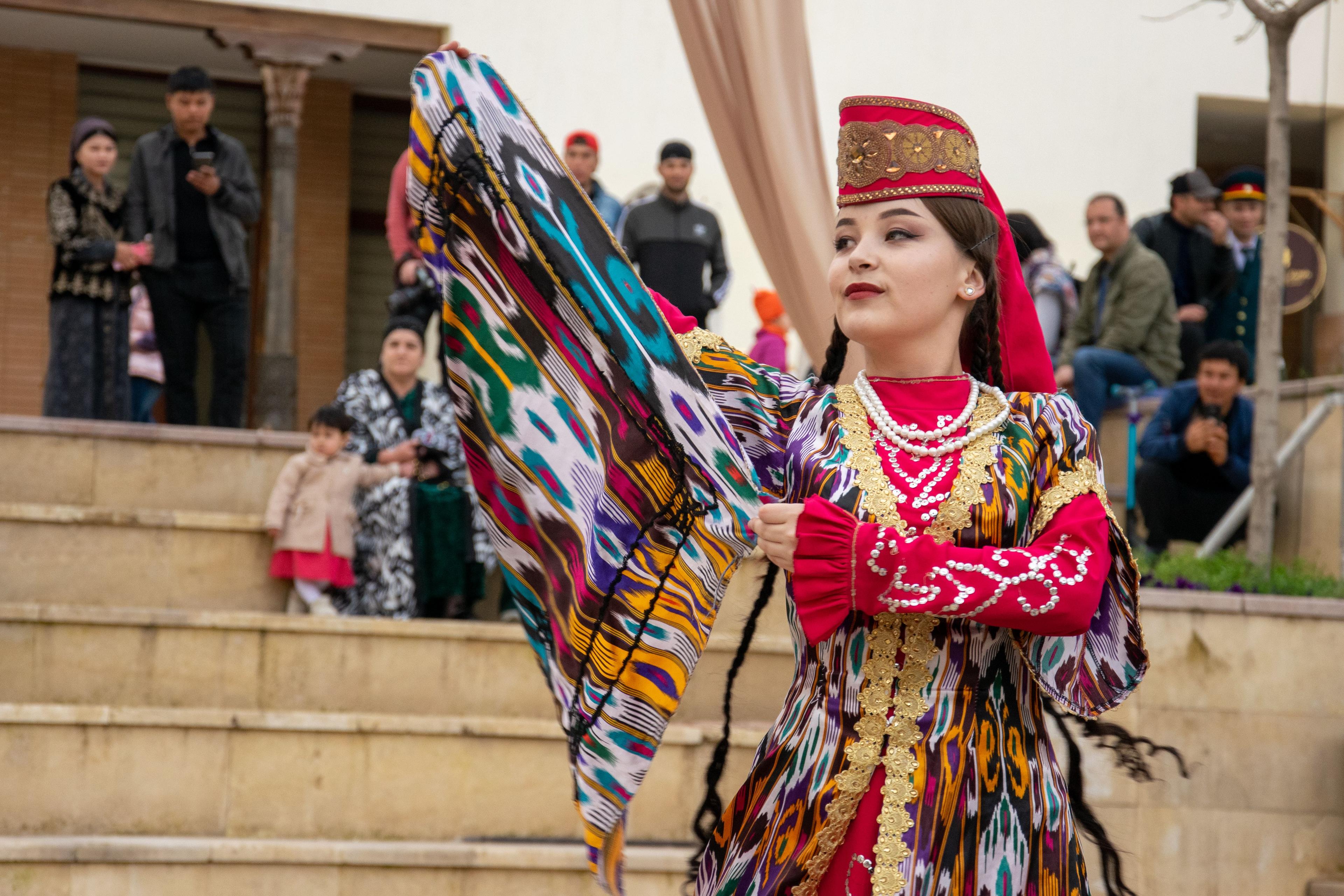
Lazgi is performed together by musicians, singers and dancers. It usually starts slowly and builds to a fast, joyful finale, and the movements are unmistakable:
- Half-bent knees and emphasised footwork
- Quick, fluttering hands and wrists, and small shakes of the shoulders
- A side-to-side movement of the head and neck
- Very expressive faces
According to UNESCO, the movements echo the sounds of nature and feelings of love and happiness, and the dance has two forms: a staged form with set movements for holidays and festivals, and an improvised form danced at family and community events. Wall paintings of dancers found at Toprak-Kala, one of the ancient Khorezm desert fortresses, suggest how old the tradition may be. A local legend says the style was born when a ruler's favourite wife broke her leg and kept dancing so as not to disappoint him.
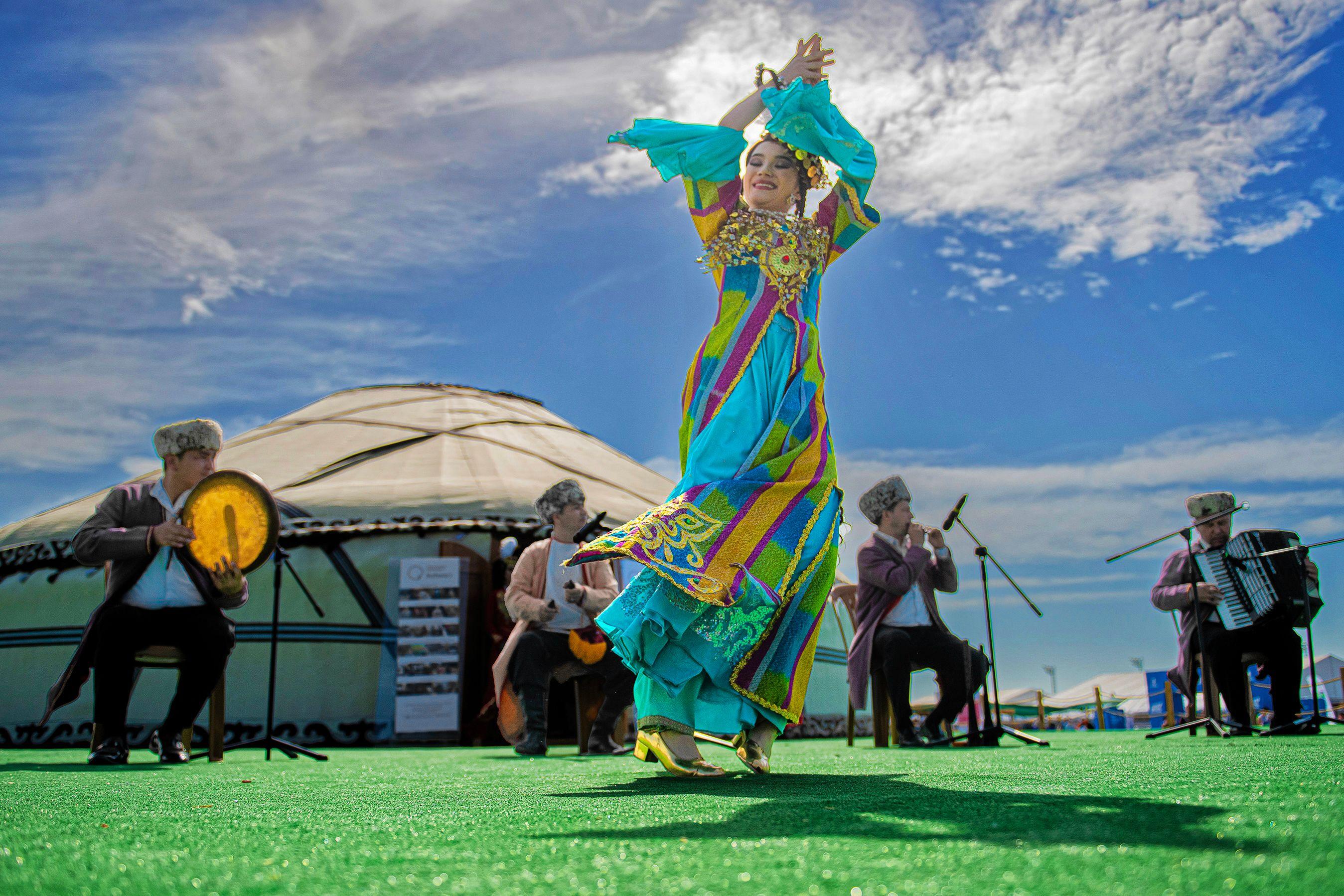
Male dancers often wear a tall shaggy fur hat; women wear bright dresses and headdresses hung with coins. Lazgi is now danced all over Uzbekistan, but it feels different in Khiva, where wedding guests of all ages join in.
Since 2022 Khiva has hosted the International Lazgi Dance Festival, held every two years in late April. The third edition took place in April 2026 inside and around Ichan-Kala; if the pattern holds, the next one should be in spring 2028.

Regional dance styles: Fergana, Bukhara and Khorezm
Uzbek dance is usually divided into three main schools.
- Fergana. Smooth, lyrical and graceful, with flowing arms, gentle turns and delicate hand gestures. Much of what you see on stage today was shaped by the choreographer Mukarram Turgunbayeva, who founded the State Dance Ensemble Bakhor.
- Bukhara. Livelier and more rhythmic, with sharp turns, energetic shoulders and small bells (zang) on the dancers' wrists that sound with every movement. Bukhara's dances also show Persian and Jewish influences.
- Khorezm. The home of lazgi, fast, playful and full of character.
Other regions add their own colour: the epic songs and dances of Surkhandarya and Kashkadarya, and the music of Karakalpakstan in the far west. A good folklore programme usually includes dances from several schools, so you can compare them in one evening. Earlier stars such as Tamara Khanum, an Uzbek dance pioneer of the 20th century, are still household names.
Traditional instruments: doira, dutar and more
You will hear the same handful of instruments again and again:
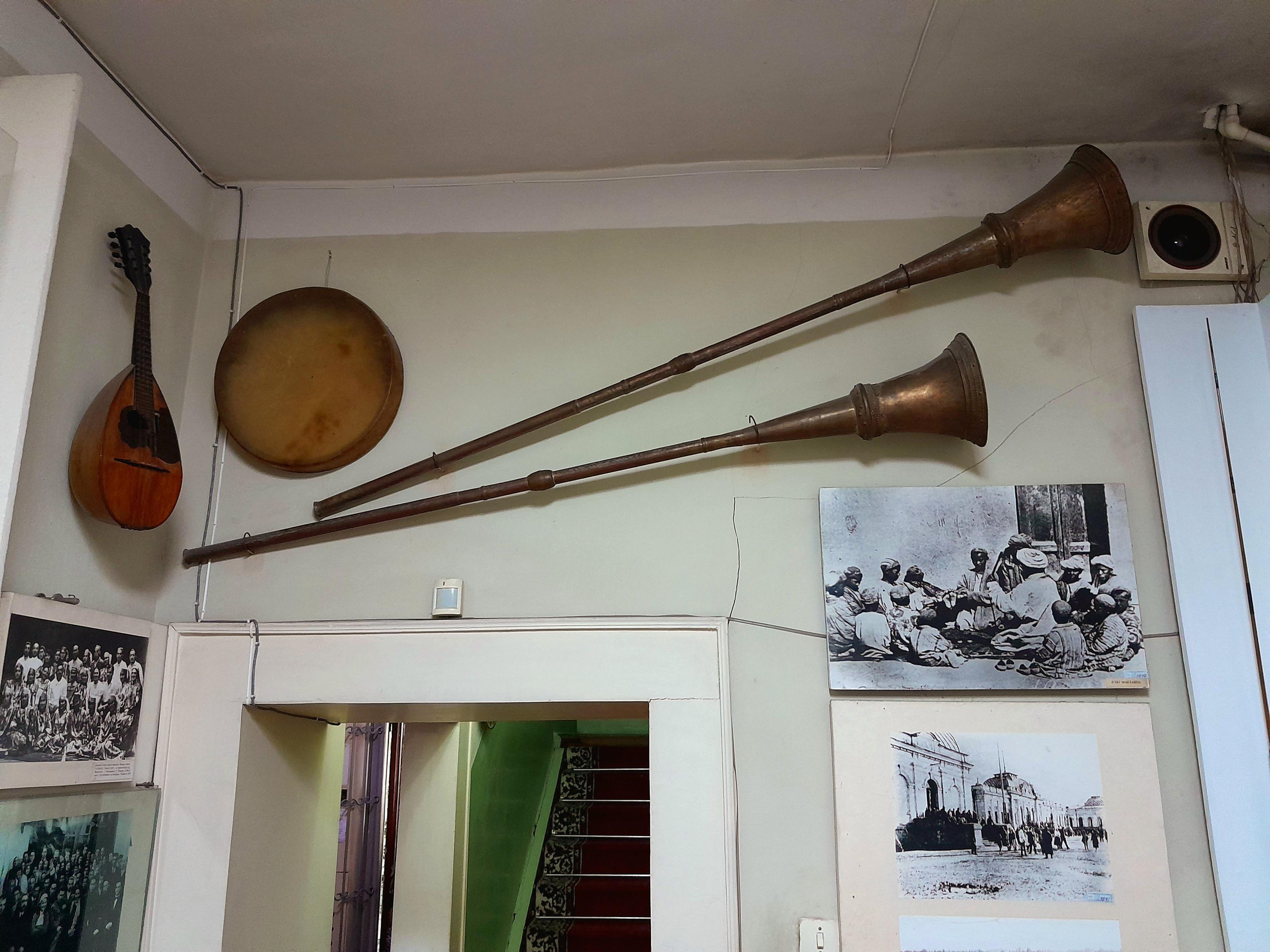
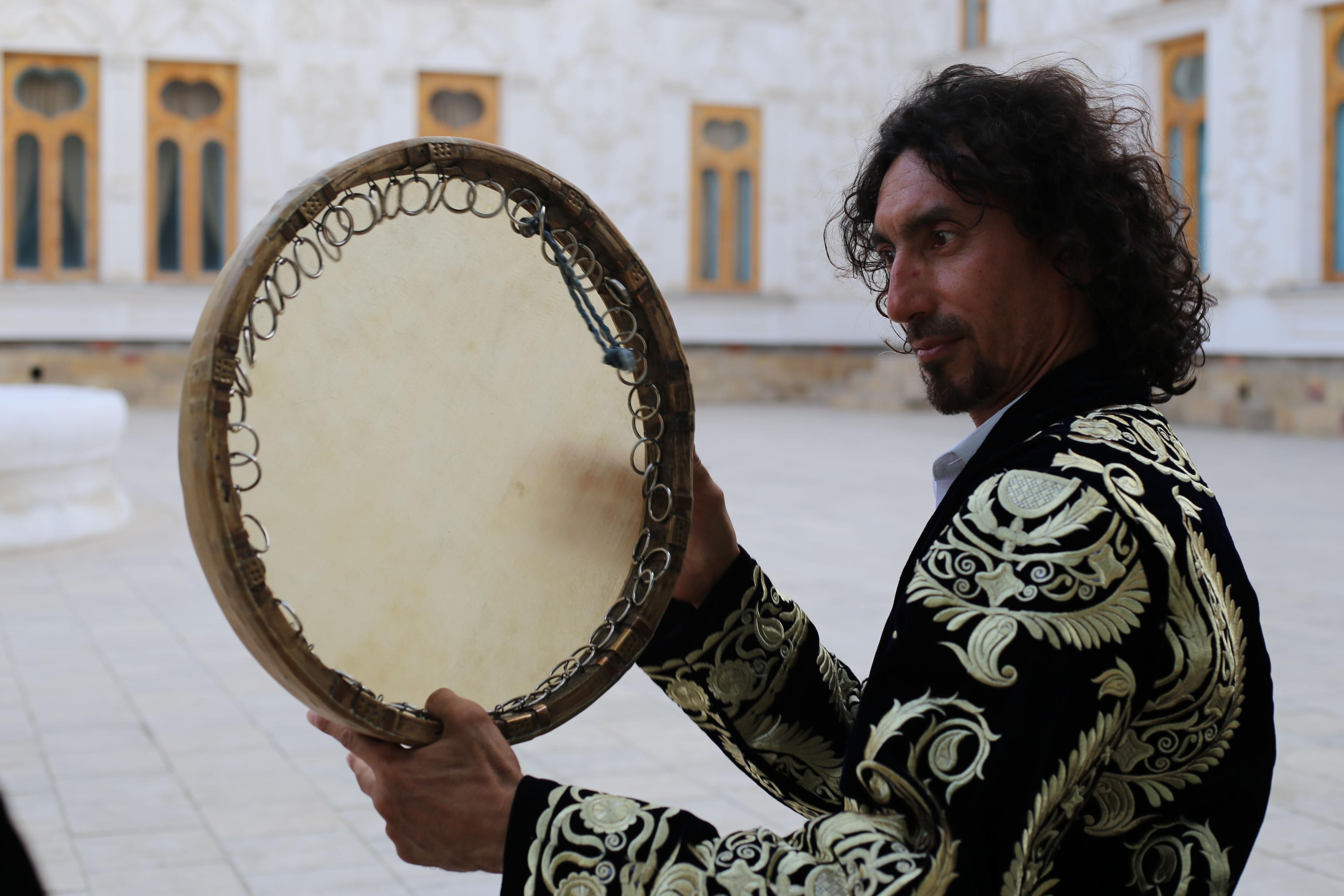
- Doira. A large frame drum with a skin head and metal rings fixed around the inside of the frame. Held in both hands and played with the fingers, it can sound like a whole percussion section. It leads every wedding dance and is often played by women at family celebrations.
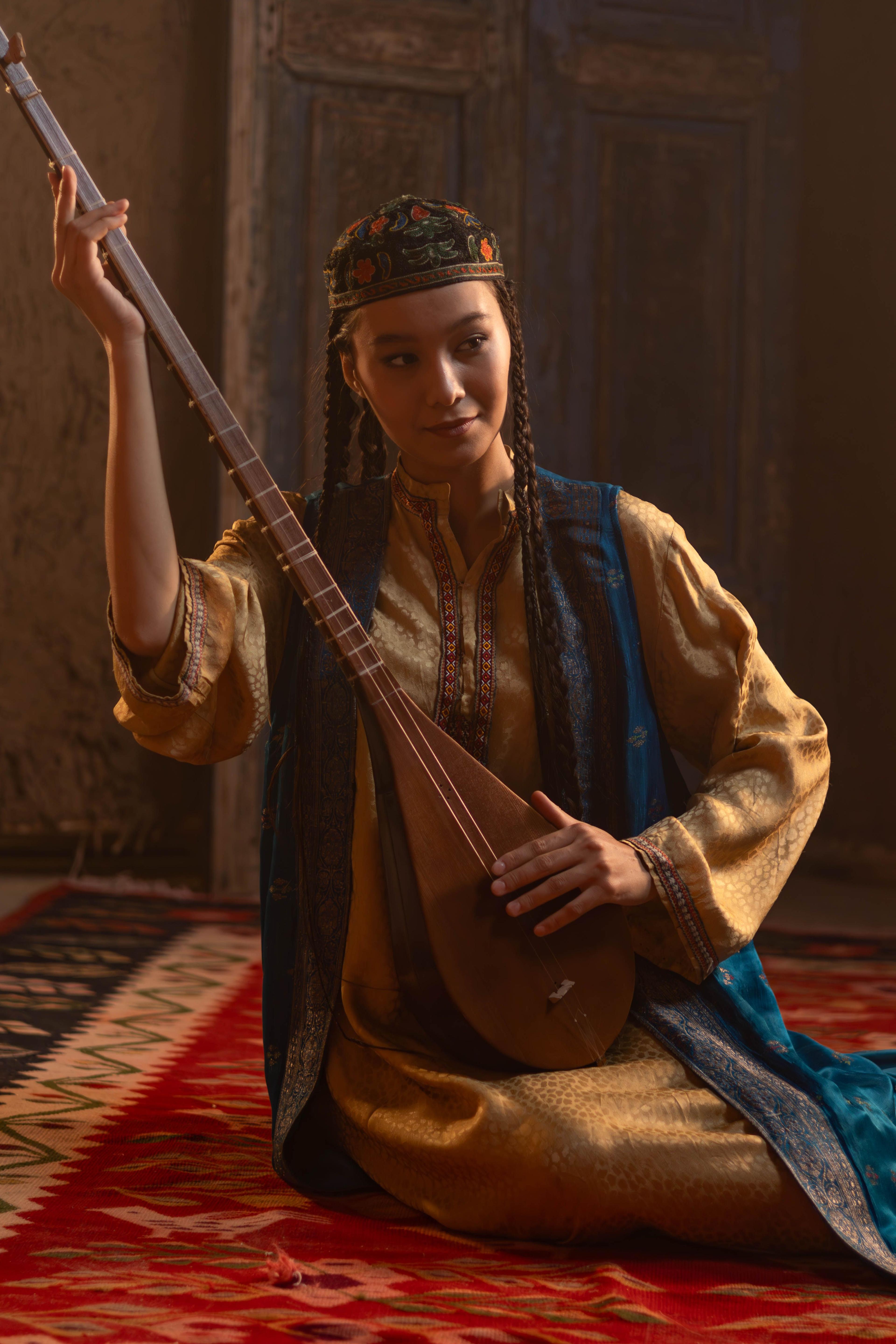
- Dutar. A long-necked lute with two strings, traditionally of twisted silk, now often nylon. Its gentle, warm sound accompanies songs and is a favourite in Khorezm, Karakalpakstan and the Fergana Valley.
- Tanbur. A long-necked lute with raised frets and a bright, metallic tone, central to maqom music.
- Rubab. A short-necked lute with a skin-covered body. Its craft and playing were listed by UNESCO in 2024, together with other countries of the region.
- Gijjak. A small spike fiddle played upright with a bow.
- Nay. A transverse flute, often made of wood or metal.
- Chang. A struck zither, played with light beaters.
- Karnay and surnay. The karnay is a long brass horn, two metres or more, with a deep blast; the surnay is a shrill double-reed pipe. Played with drums, they announce weddings, festivals and Navruz celebrations outdoors.
In Tashkent the Museum of Applied Arts and music shops near the conservatory are good places to see instruments up close. Craftsmen in the old cities also make them to order.
Bakhshi epics and katta ashula
Two more traditions are worth knowing, especially if you travel beyond the classic route.
Bakhshi are epic singers and storytellers who perform long dastans, heroic and romantic epics, from memory, accompanying themselves on the dombra or dutar. The tradition is strongest in Surkhandarya, Kashkadarya, Khorezm and Karakalpakstan, and UNESCO listed bakhshi art in 2021. A bakhshi performance can last for hours, and its deep, throaty style of singing is unlike anything else you will hear in Uzbekistan.
Katta ashula, the "great song" of the Fergana Valley, is sung without instruments by one or several singers who hold a plate or tray in front of their mouths to shape the sound. It is a powerful, solemn style, often heard at celebrations in the valley.
Neither is easy to hear on a fixed schedule, but our guides can tell you about local concerts and festivals during your dates.
The Bukhara folklore show at Nadir Divan-Begi
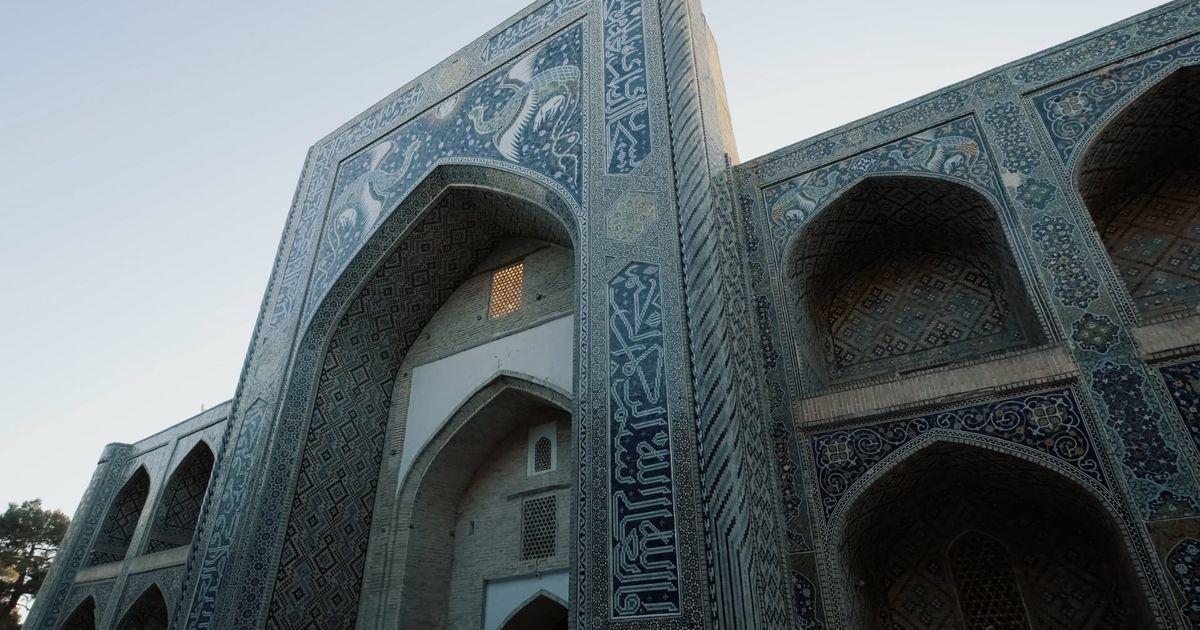
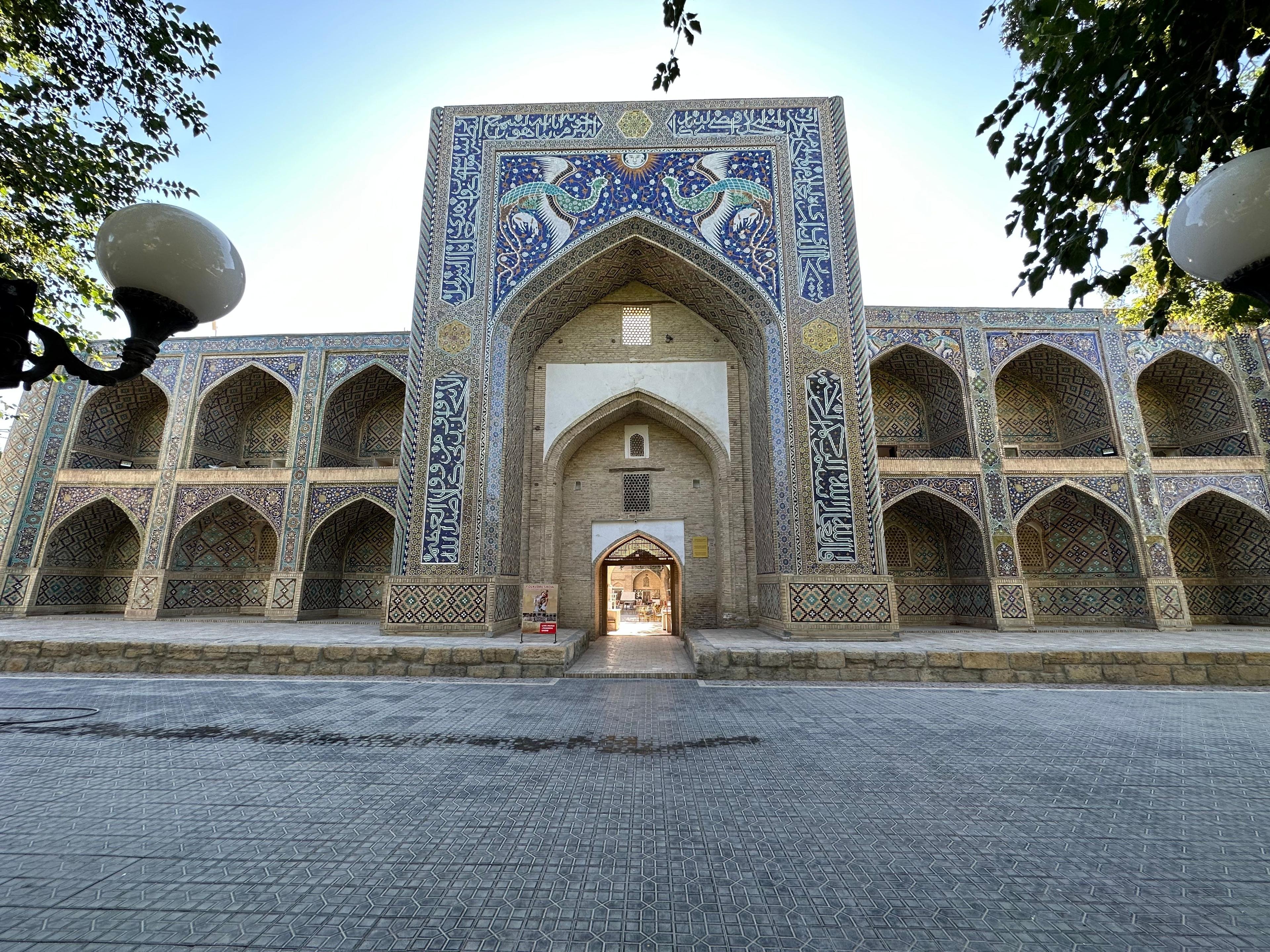
The most popular way for travellers to see Uzbek dance is the evening folklore show in the courtyard of the Nadir Divan-Begi Madrasah, part of the Lyabi-Hauz ensemble in Bukhara.
- What it is. A programme of about an hour with dances from the Fergana, Khorezm, Bukhara and Andijan schools, as well as from neighbouring Iran and Tajikistan, live traditional music, and short fashion shows of clothes by Uzbek designers between the dances.
- Setting. The 17th-century madrasah courtyard, with tables on three sides of the stage for around 150 to 180 guests.
- When. Daily in the main tourist seasons, roughly April to June and August to October. Times reported are around 17:30 for the show alone and 19:30 for the show with dinner, but schedules change.
- Dinner. Optional and mostly Uzbek dishes; it must be ordered in advance.
- Booking. Book ahead, especially in May, September and October.
The show is lively and well staged, and it makes a fine end to a day around Lyabi-Hauz and the trading domes. Several of our Bukhara itineraries include it with dinner.
Where to hear live music in Uzbekistan
Beyond Bukhara, here are the best places to look:
- Samarkand. The El Merosi Theatre of Historical Costume stages a show that tells Uzbekistan's history through costumes, music and dance, from ancient times to the present. In the Silk Road Samarkand complex, evening shows and concerts are also held. Check current schedules locally.
- Tashkent. The Alisher Navoi Theatre, the city's grand opera and ballet house, sometimes stages Uzbek operas and ballets on national themes. Concerts of maqom and folk music are held at the State Conservatory and other halls. Uzbek pop music, often built on folk rhythms, fills the city's restaurants at weekends.
- Khiva. In the season, musicians and lazgi dancers perform at events inside Ichan-Kala, and many courtyard restaurants arrange evening performances for groups.
- Festivals. Sharq Taronalari in Samarkand, Boysun Bahori in the south and the Lazgi festival in Khiva are the big music events. Dates vary and several are held every two years; our festivals calendar has the details.
- Weddings. Every evening wedding banquet has a band, a singer and dancing. You cannot buy a ticket, but if you are invited, go.
For a sense of how tradition lives on in modern music, listen to Uzbek estrada, the country's pop music. Singers such as Yulduz Usmonova and Sevara Nazarkhan made their names with songs built on folk melodies and doira rhythms, and younger artists still borrow lazgi beats and maqom phrases. Ask your guide for a playlist for the long drives between cities: it is the soundtrack you will hear in every taxi and wedding hall.
Also listen out for music in unexpected places: a dutar in a craft workshop, a doira at a Navruz fair, a karnay at a mahalla celebration.
Etiquette: joining in and taking photos
Music and dance in Uzbekistan are made to be shared, and a few pointers will help you enjoy them:
- If you are pulled up to dance at a show or a wedding, say yes. Copy the hand movements, smile and you will be applauded.
- At weddings, guests sometimes place banknotes on dancers or musicians as a gesture of appreciation. Follow your host's lead before doing this yourself.
- Photography at shows is usually fine, but avoid flash during performances and ask before photographing musicians up close.
- At family celebrations, ask the host before filming, and avoid posting close-ups of people without permission.
If you want to take an instrument home, a doira or a small dutar travels reasonably well; buy from a workshop where you can hear it played first, and ask for a soft case.
Music and dance with TourEast
We plan evenings around music: the folklore show in Bukhara, a historical-costume performance in Samarkand, a festival if your dates allow it. Our guides can also suggest concerts during your stay. Tell us what you would like to hear, and we will build it into a private tour or a custom itinerary.
Frequently asked questions
Watch
Photo gallery