
Bazaar · 1534–1577
Trading Domes and Tim Abdullakhan
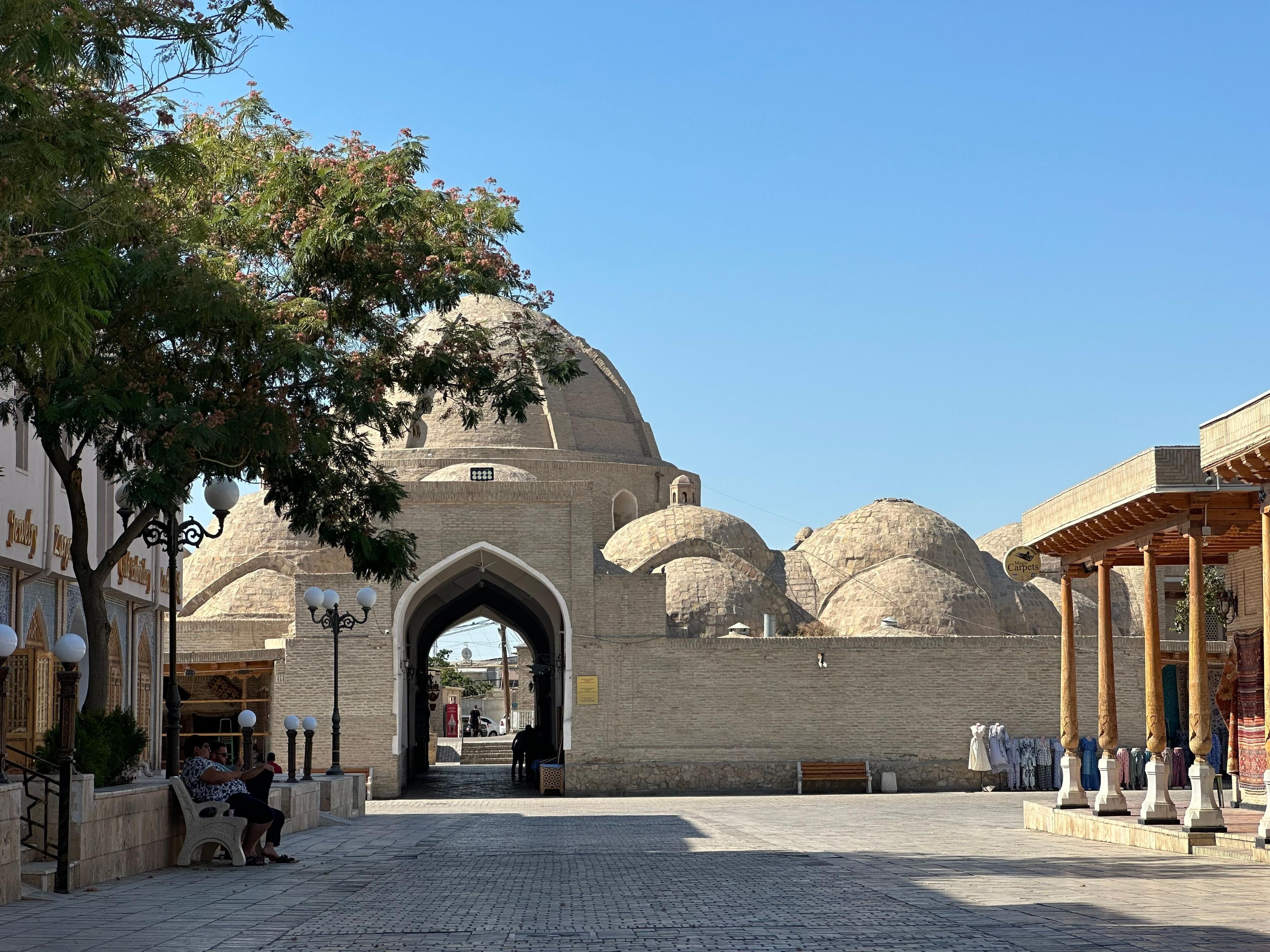
Four 16th-century covered markets on the old caravan street between Lyabi-Hauz and Po-i-Kalyan: the domes of the money changers, hat sellers and jewellers, and the great silk hall of Abdullakhan. Still trading after 450 years.
About
Under the Shaybanid khans of the 16th century, Bukhara's main commercial street was roofed at its busiest crossings with brick domes, each given to a single trade. Four of these buildings survive along the walk from Lyabi-Hauz to the Kalyan Minaret, and they are still markets: you can buy a carpet today in a hall built for selling silk in 1577.
The money changers, the hat sellers and the jewellers
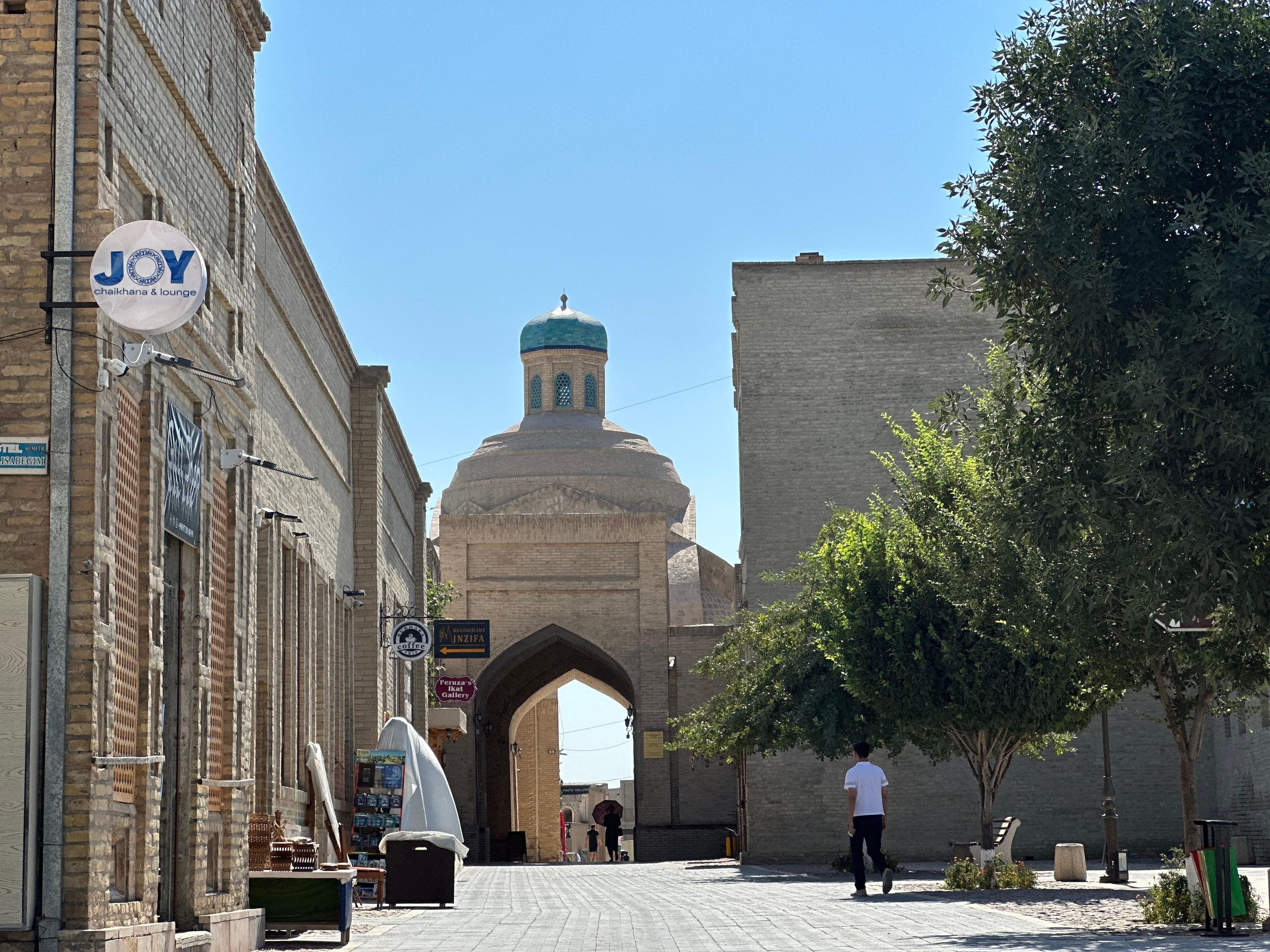
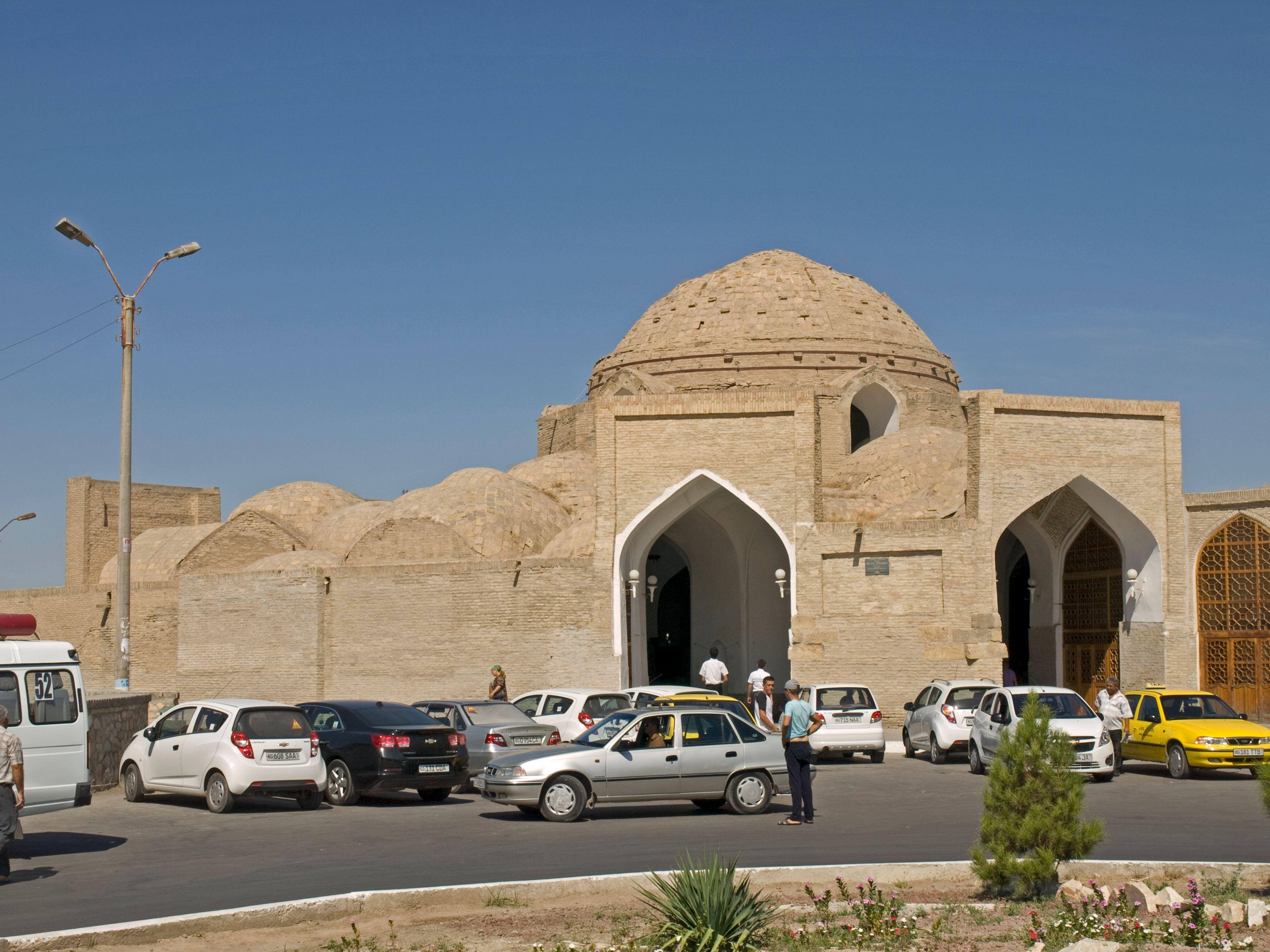
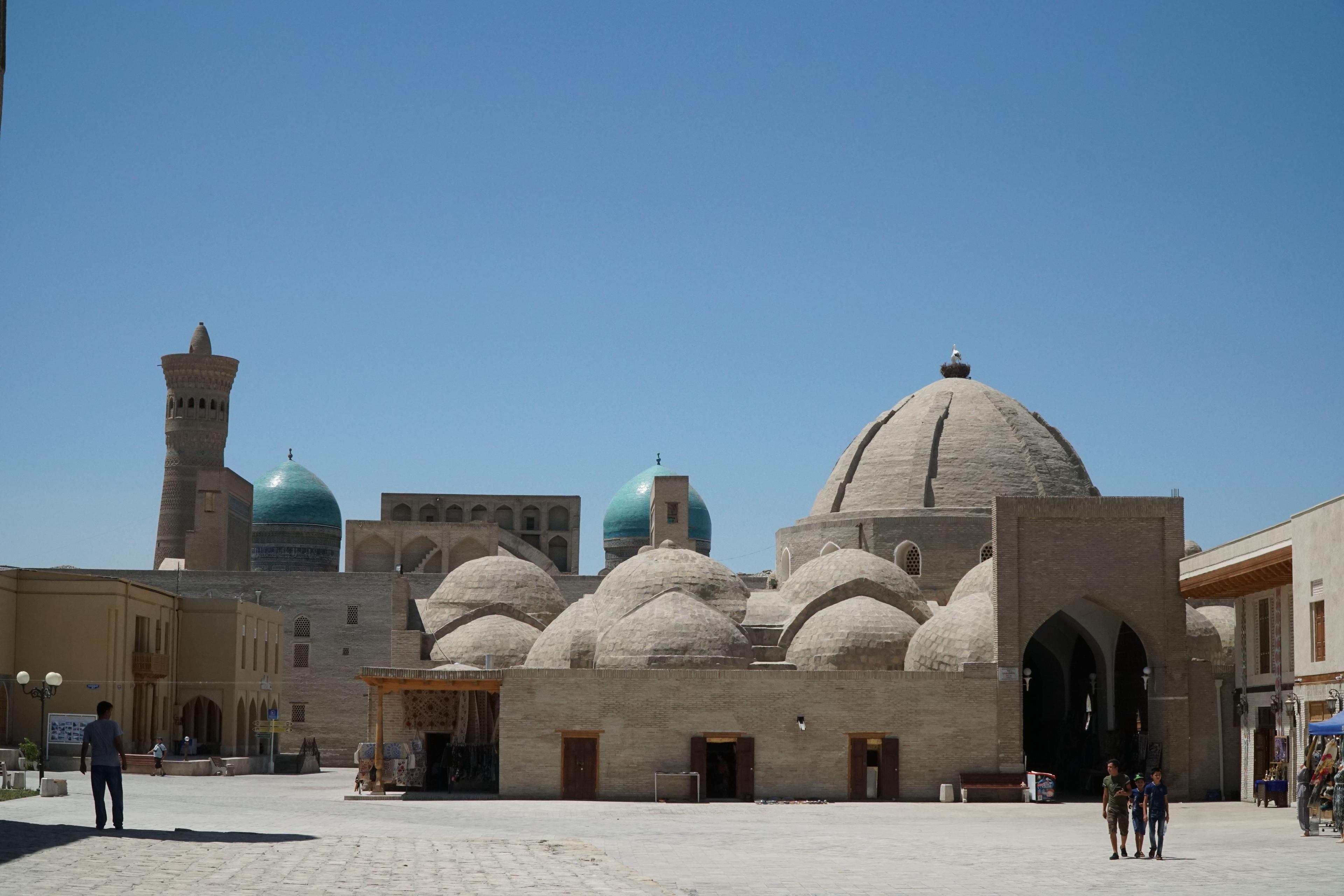
Closest to Lyabi-Hauz is Toki Sarrafon, the dome of the money changers, built in 1534–1535 over the Shakhrud canal, then the city's main water channel. Merchants from Persia, India, Russia and China changed their coins here. A few minutes north, Toki Telpak Furushon, the hat sellers' dome of 1570–1571, stands at a five-way junction; over the centuries it also sheltered booksellers. The largest is Toki Zargaron, the jewellers' dome of 1569–1570, at the crossroads beside the Ulugbek and Abdulaziz Khan madrasahs. Each dome is a cluster of brick vaults around a high central drum pierced with windows, so that the passage stays cool and dim even in July.
Tim Abdullakhan
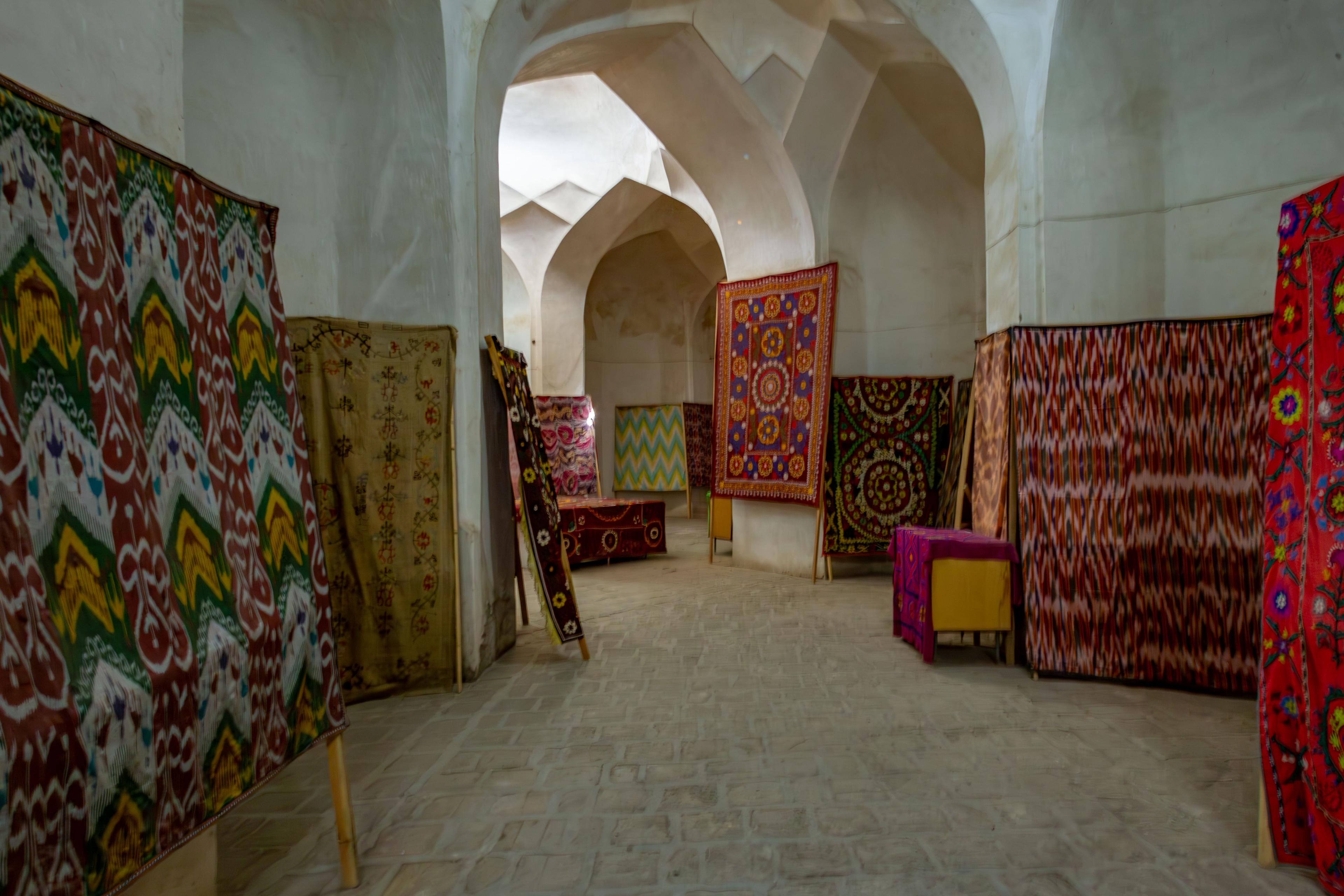
Between the hat sellers' and jewellers' domes stands Tim Abdullakhan, the great covered hall built in 1577 by Abdullah Khan II for the trade in silk and wool. It is roughly 39 by 42 metres, with a high central dome over an octagonal hall and dozens of vaulted shop niches around it, lit from windows in the roof. It is the only one of Bukhara's covered tims to survive, and today it is hung with carpets.
What you will find now
The stalls sell suzani embroidery, carpets, ikat silks, miniature paintings, copperwork, hand-forged knives and the stork-shaped scissors that are a Bukhara speciality. Some sellers are the craftspeople themselves, and many will show you how the work is done. Prices are rarely fixed; take your time, ask questions, and bargain politely.
How to experience it
Walk the street once early, when the domes are almost empty and you can see the architecture, and come back in the afternoon to shop. Most stalls open by mid-morning and close in the early evening.
What to see
- Toki Sarrafon, the money changers' dome of 1534–1535
- Toki Telpak Furushon at its five-way junction
- Toki Zargaron, the largest of the domes
- The vaulted silk hall of Tim Abdullakhan
- Suzani, carpets, miniatures and hand-forged knives
- Stork-shaped scissors from Bukhara's blacksmiths
Gallery
Tours that visit Trading Domes and Tim Abdullakhan
More sights in Bukhara
All of Bukhara

See Trading Domes and Tim Abdullakhan with a local guide
We build private and small-group trips around the places you want to see — with guides who grew up here.