
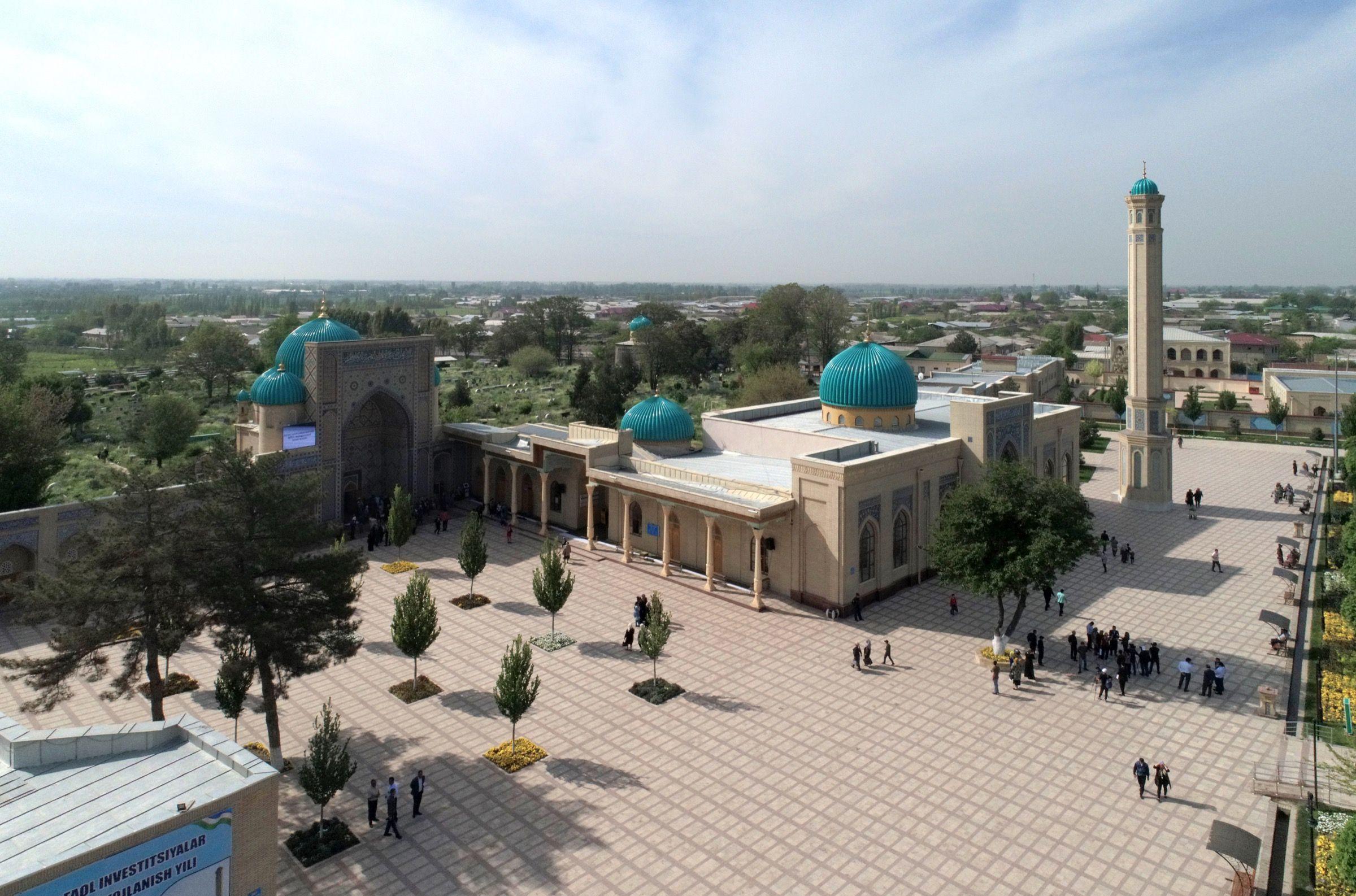
Mausoleum · Mausoleum late 14th century, portal early 15th; mosque and madrasa 1832, minaret 1870
Zangi-ota Memorial Complex
The main pilgrimage site of the Tashkent region, 20 km from the city: the Timurid mausoleum of the Sufi Zangi-ota, a 19th-century mosque and minaret, and the tomb of his wife Ambar-bibi, where women come to ask for marriage and children.
About
Zangi-ota lies just beyond the southern edge of Tashkent, in the district town that carries its name. For most of the year it is a calm place of gardens, plane trees and a cemetery; on Fridays, holidays and in the weeks around weddings it fills with families from across the region. It is the place to understand how pilgrimage (ziyarat) still works in everyday Uzbek life.
Who Zangi-ota was
Sheikh Ai-Khoja, called Zangi-ota, "the dark-skinned father", was a 13th-century Sufi of the Yasawi line, a shepherd by trade and, in the tradition, the fifth successor of Ahmad Yasawi. He is said to have taught in the villages south of Tashkent and died around 1258. His wife Ambar-bibi (Anbar-ona) was the widow of his own teacher, and her grave became a shrine in its own right.
The buildings
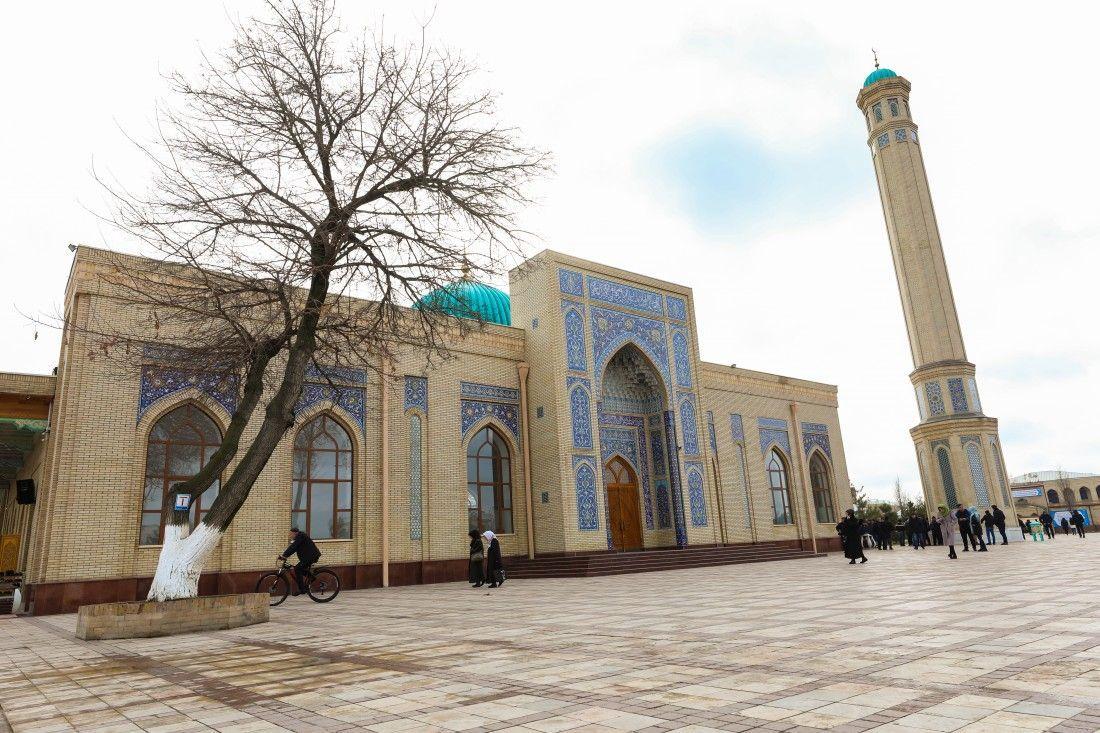
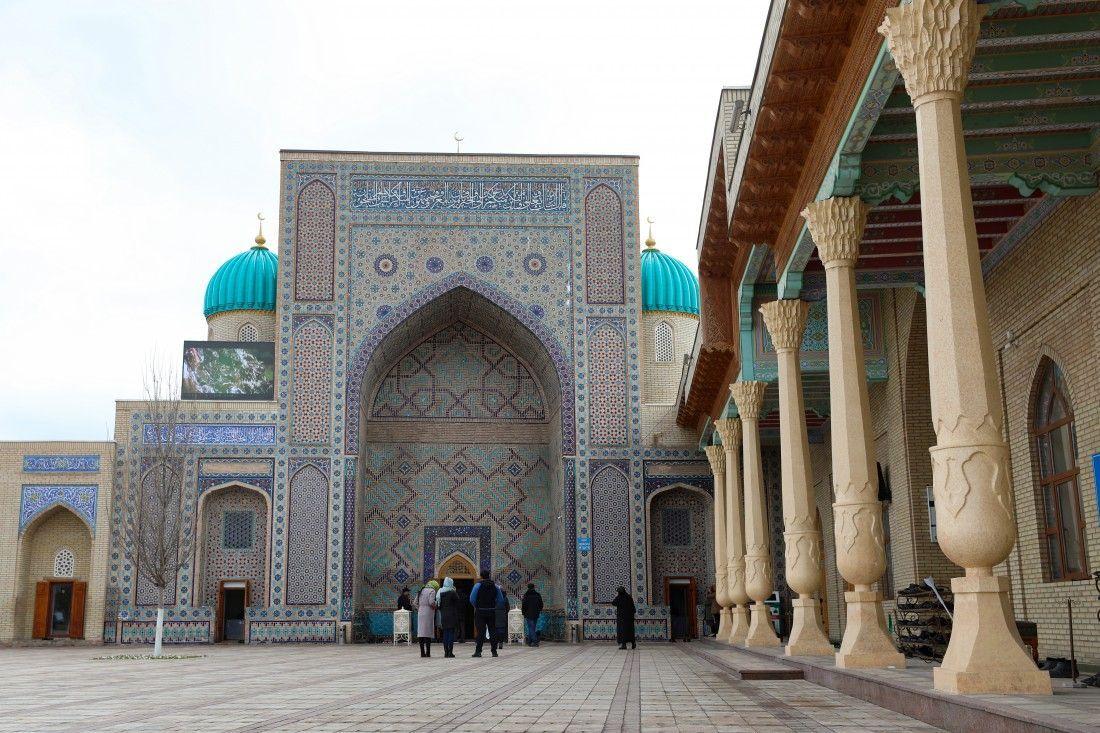
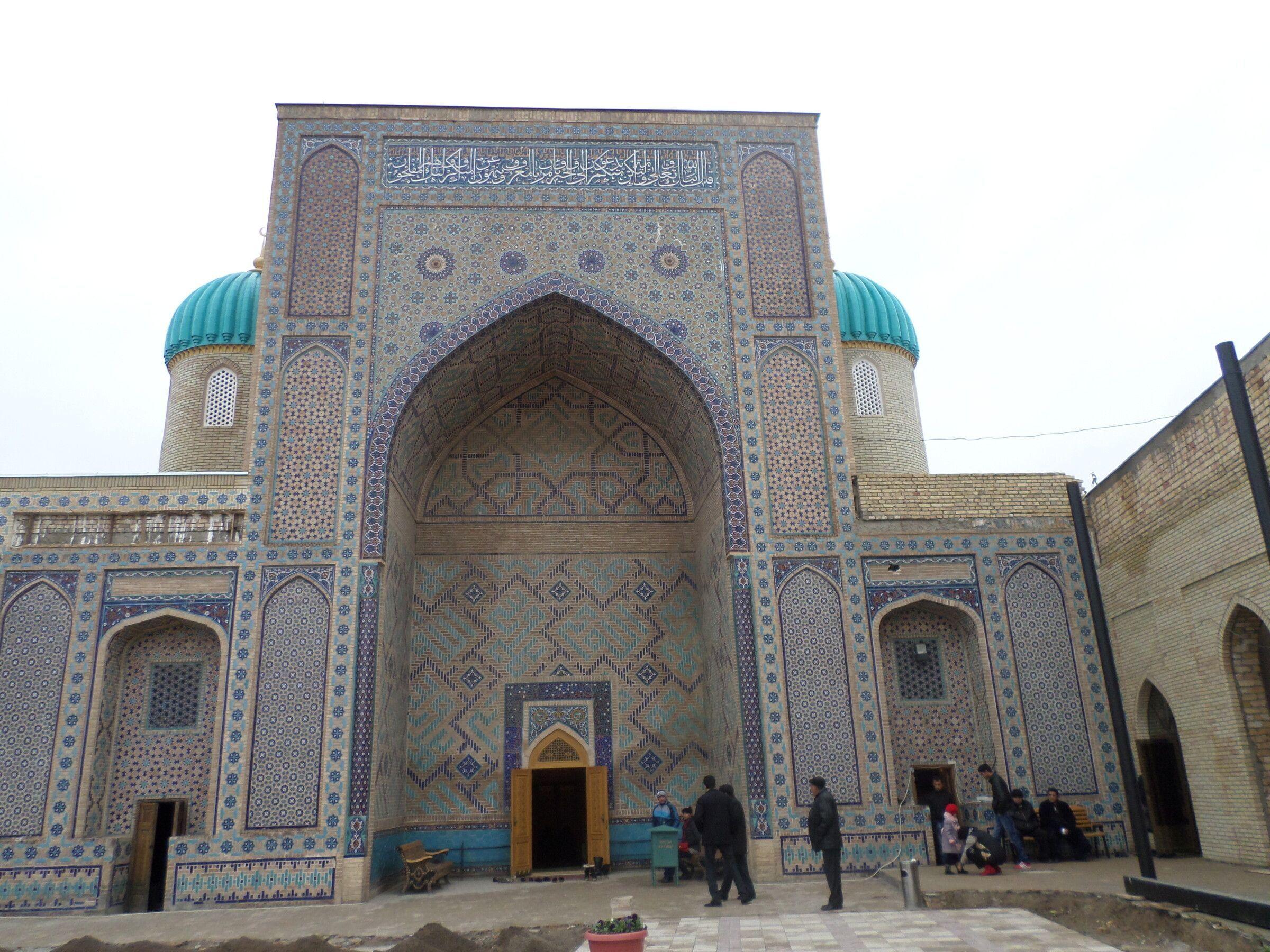
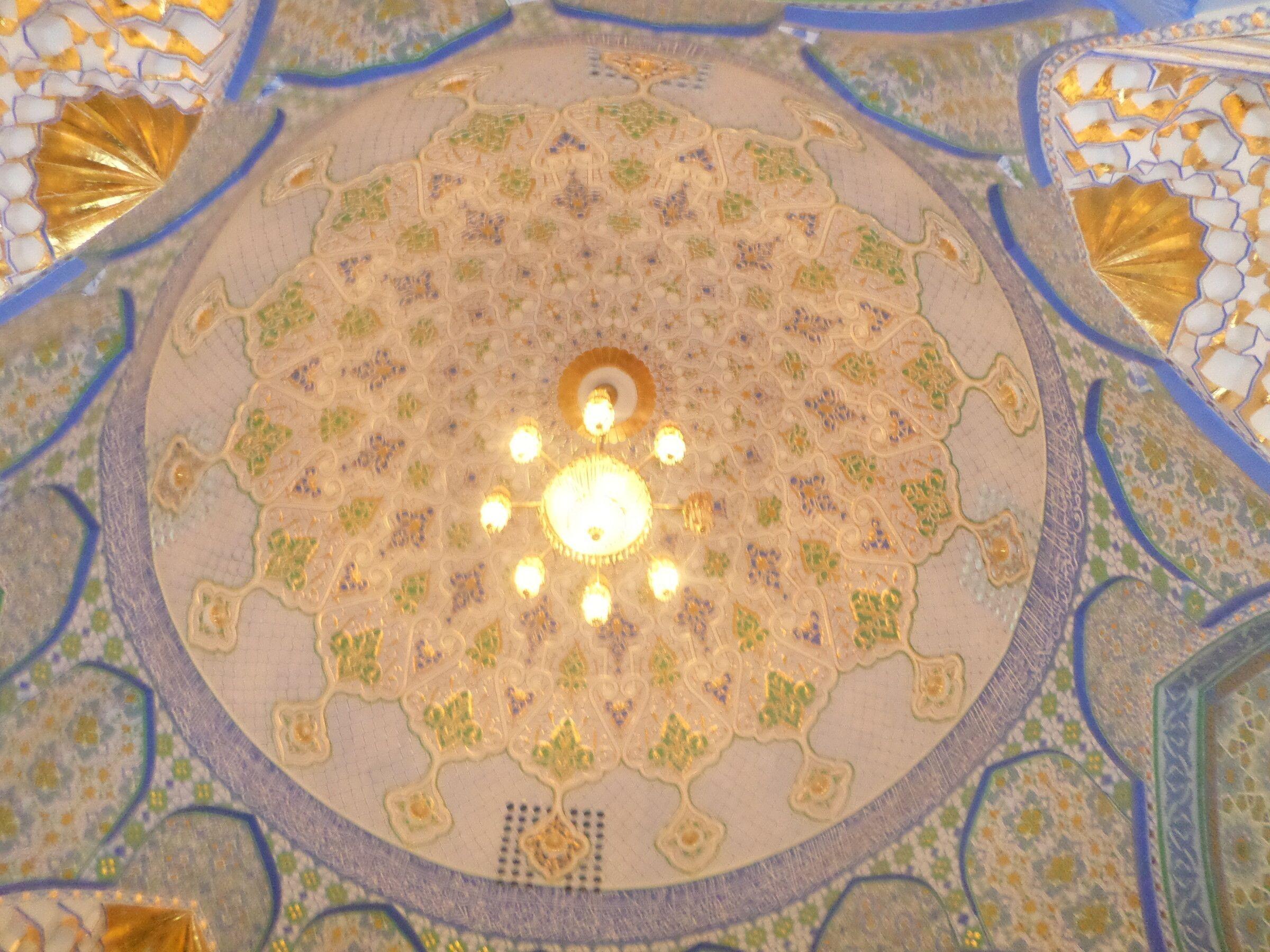
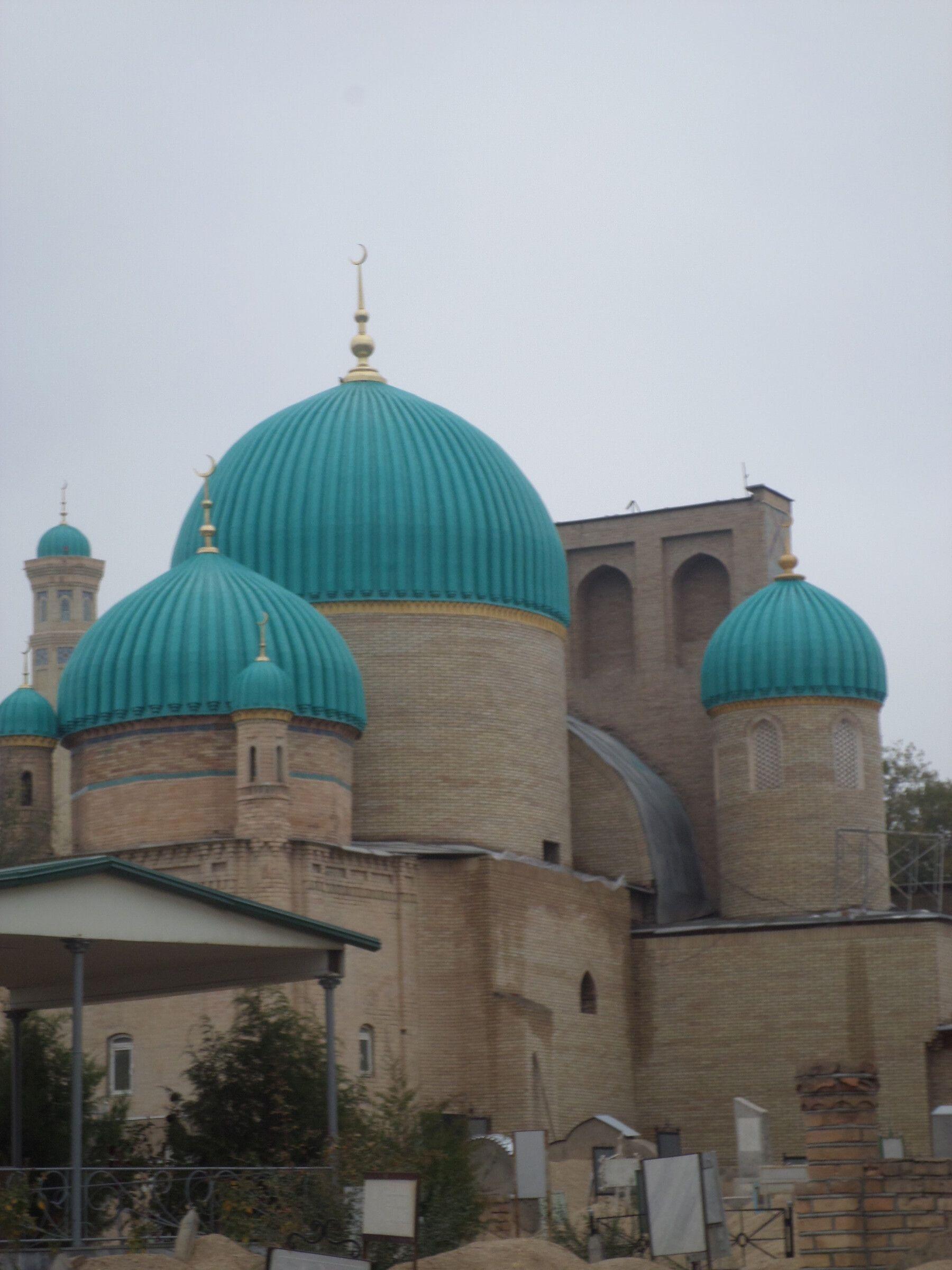
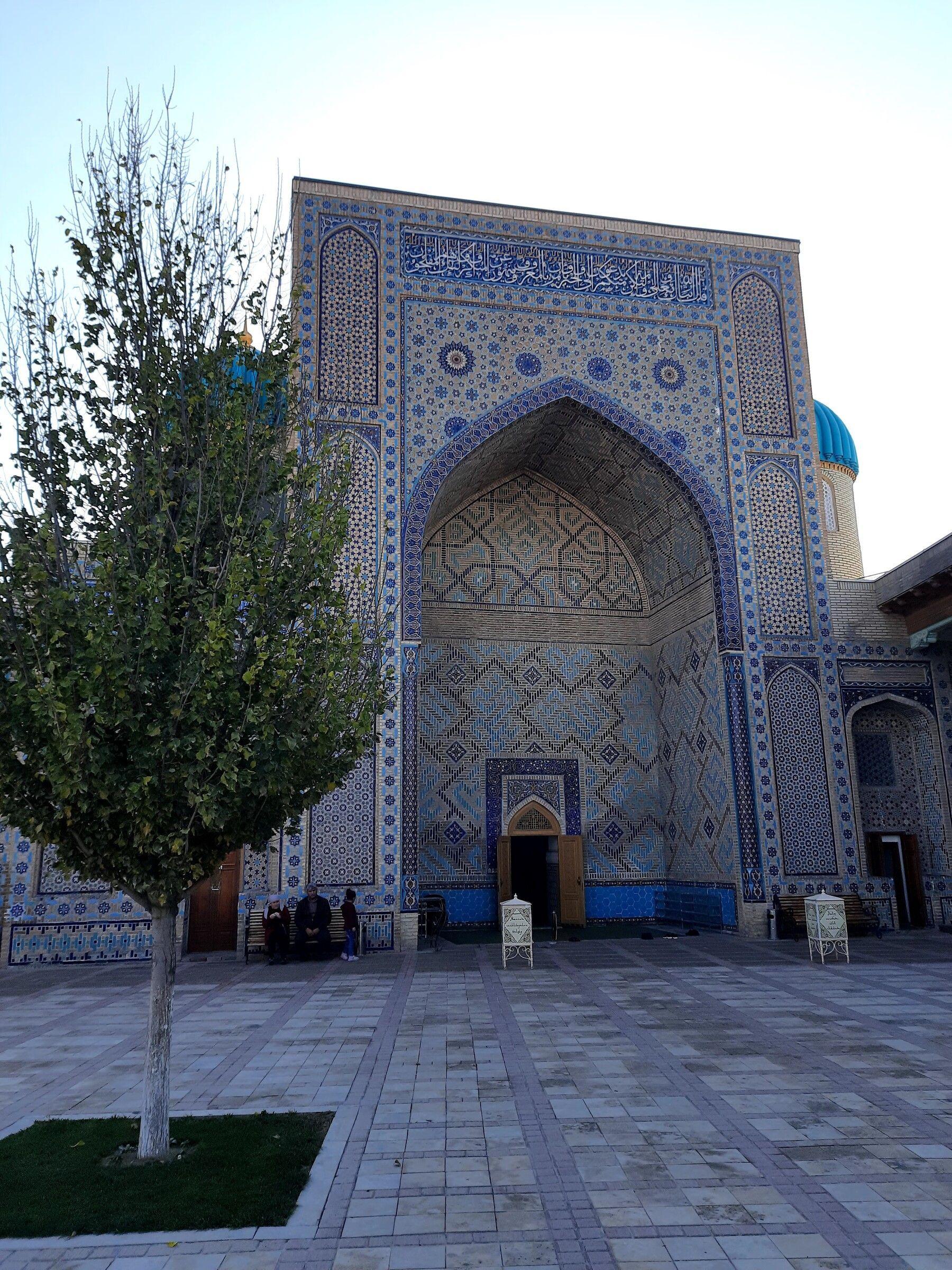
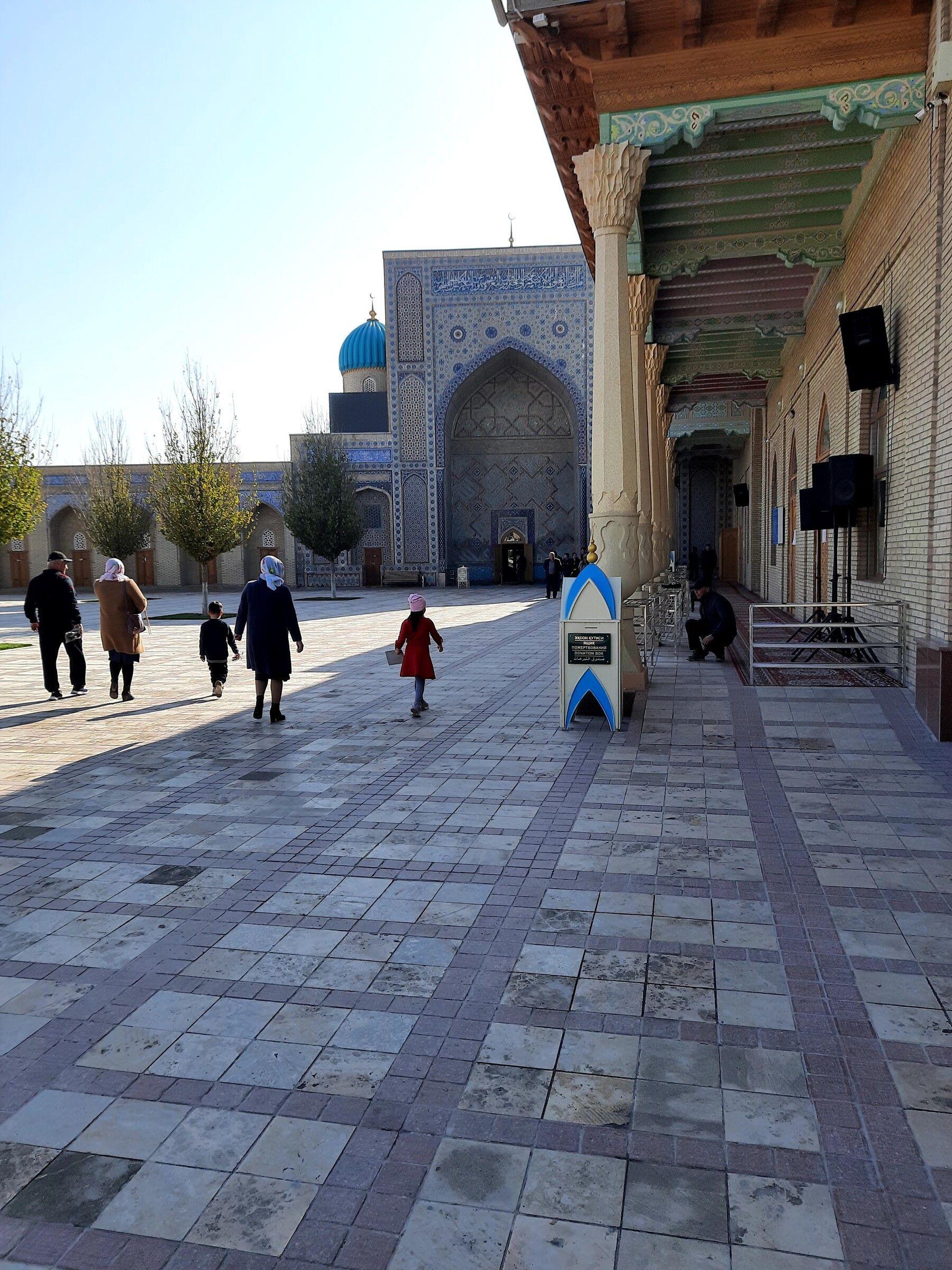
The mausoleum is attributed to Amir Timur in the 1390s and its tiled portal to Ulugbek in the early 15th century; this is the standard local account and is repeated on site, though scholars treat the attributions with some caution. What survives is a four-chambered brick tomb with a later glazed portal, an interior of majolica panels and a mihrab inscribed in Arabic. Around it, in the 19th century, the Kokand khanate added a madrasa and a winter mosque (1832); the courtyard minaret, decorated with carved and coloured tiles, was raised in 1870 by a master from Kokand. The whole complex was restored and landscaped in the 1990s, and again in recent years, with a new entrance arcade and a large garden.
Ambar-bibi
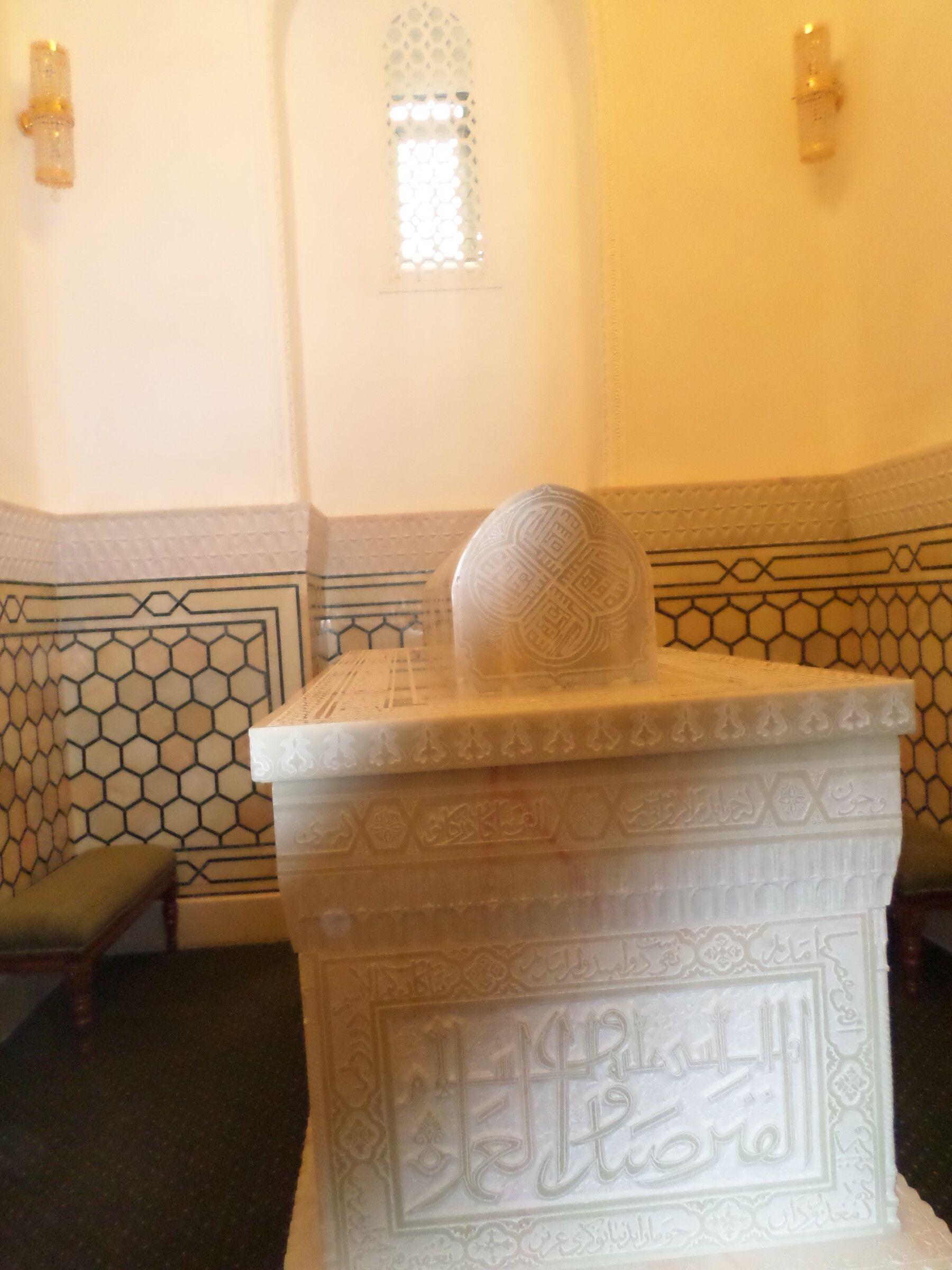
The small mausoleum of Ambar-bibi stands in the cemetery south-west of the main tomb. She is revered as a protector of women and motherhood, and the rituals here are practical and specific: an unmarried woman sweeps the floor around the grave with a broom kept for the purpose, a woman hoping for a child walks three times clockwise around the building, and both tie a strip of cloth or leave a small offering. Women visitors may be invited to take part; men should wait outside.
Legends
The founding legend, told by every guide, says Timur first tried to build a mausoleum for Ahmad Yasawi in Turkestan, but the walls kept collapsing until Yasawi appeared to him in a dream and asked that his pupil Zangi-ota be honoured first. Timur built here, and the walls at Turkestan stood. Treat it as a story that explains why this modest shrine carries a Timurid portal.
Visiting
Allow an hour. Dress modestly, cover hair in the mausoleum and mosque, remove shoes at the carpets and keep cameras down near people praying. There is a tea house by the gate. Zangi-ota makes a half-day with the Tashkent Sea reservoir or an easy stop on the road south towards Samarkand.
What to see
- Timurid mausoleum of Zangi-ota with Ulugbek-era tiled portal
- Mausoleum of Ambar-bibi and the women's rituals for marriage and children
- Carved-tile minaret of 1870 and the Kokand-period mosque and madrasa
- Majolica interior and inscribed mihrab
- Friday pilgrimage atmosphere and wedding visits
- Gardens and cemetery under old plane trees
Gallery
Tours that visit Zangi-ota Memorial Complex
 New
Six Days, Seven Plovs
From
$995
 Premium
Twelve Gates of the Silk Road
From
$1,750
 Best Seller
Four Crowns: Tashkent, Samarkand, Bukhara, Khiva
From
$1,270
More sights in Tashkent
All of Tashkent


See Zangi-ota Memorial Complex with a local guide
We build private and small-group trips around the places you want to see — with guides who grew up here.