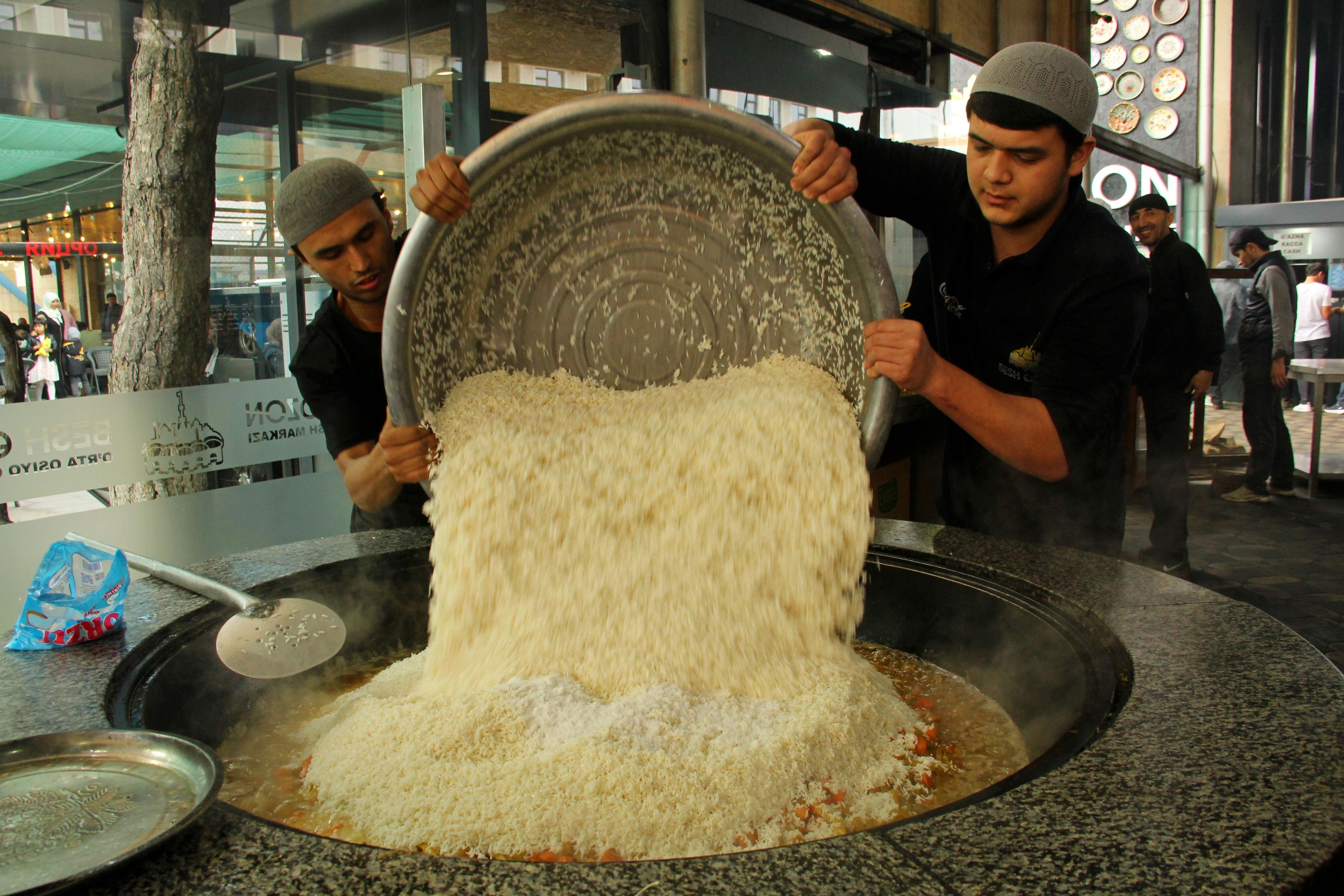
What to expect from an Uzbek cooking class or plov masterclass in Tashkent, Samarkand and Bukhara: format, duration, typical 2026 prices, what you learn, and how to choose a family kitchen over a tourist show.
Facts, prices and schedules checked on November 4, 2026
There is a good reason that the most popular activity after sightseeing in Uzbekistan is a cooking class. Plov, the national dish, is as much a ritual as a recipe. It is cooked in a huge cast-iron kazan over fire, often outdoors, by a cook who has learned the craft from another cook, and it is eaten with the people who helped to make it. A cooking class is the simplest way to be one of them.
This guide explains what happens in an Uzbek cooking class or plov masterclass, how long it lasts, what you will learn, what it costs in 2026, what to look for in a good one and how to avoid a tourist show. It covers Tashkent, Samarkand and Bukhara, where classes are most common. For the dish itself, see our plov guide; for the wider table, see our Uzbek food guide.
What is an Uzbek cooking class?
The format varies, but most classes follow the same outline.
- A visit to a bazaar, usually in the morning, to choose rice, meat, carrots and spices with your host. In Samarkand this is often Siab Bazaar.
- Cooking in a family home or a courtyard, outdoors or in a kitchen, often with a kazan on a gas ring or a wood fire.
- Hands-on preparation: cutting the carrots, browning the meat, layering the rice, stirring the zirvak.
- A shared meal at the end, with bread, salads, tea and sweets.
Some classes concentrate on plov alone. Others add samsa, the baked pastries, or lagman, hand-pulled noodles, or bread baked in a tandoor. Most are held in English, with a host or a guide translating. Many include hotel pickup and a return transfer, especially when the home is in a village outside the city.
How long does it last, and what does it cost?
Online listings in 2026 show a wide range, which reflects different formats.
- Duration: from about one and a half hours for a short private plov lesson to four or five hours for a market visit, a village drive, cooking and a meal. Half a day is a typical format.
- Price: listings for Samarkand show roughly US$50 to 125 per person, with many around US$65 to 95 for a half-day class with pickup, ingredients and the meal. Private sessions cost more. Prices change, and platforms show different currencies, so treat these as a typical 2026 range, not a quote.
- What is included: usually ingredients, instruction, the meal, tea and, in many cases, transport. Check whether the bazaar visit and drinks are included.
For Bukhara and Tashkent we found fewer public listings, so we cannot give a reliable range for those cities. Ask for a written price before you book, and check what happens if the weather is bad.
What you learn in a plov masterclass
A plov class is not only a recipe. A good host explains why each step is done.
- The oil and onion. Why the fat is heated until very hot, and how the cook judges the colour of the onions.
- The meat. How the bones and meat are browned to give the base its flavour.
- The carrots. Why they are cut into strips, not grated, and how much to add.
- The zirvak. The simmered base of meat, carrot, onion and spices, which is the heart of the dish.
- The rice. How it is washed and soaked, then laid in an even layer over the zirvak and cooked in water until it has absorbed it.
- The finish. How the cook gathers the rice into a dome, pokes steam holes and covers the kazan to steam, and how the plov is served on a large platter.
You also learn the rhythm of the occasion: why plov is eaten at midday, and why it is often cooked by one person for many. If you ask, a host will explain the regional differences, such as the layered plov of Samarkand, the sweeter Bukhara style with dried fruit, and the Fergana version with devzira rice, which our regional cuisines guide describes.
Samsa, bread and other dishes you may cook
Some classes add a second dish, which is a good reason to choose a longer session.
- Samsa. Flaky or yeasted pastries filled with lamb and onion, or pumpkin, and baked against the wall of a tandoor. Learning to fold and seal them takes practice.
- Bread. Round non, stamped with a pattern and baked in a tandoor. In a few classes you can watch a baker slap the dough on the oven wall.
- Lagman and manti. Noodles and dumplings, which show the Uyghur and Chinese influence in the region.
- Kazan kebab and salads. A simple meat and potato dish cooked in the same kazan, and fresh tomato and onion salad.
Ask for the menu in advance. Vegetarians should say so when booking, since the main dishes are meat-based; our vegetarian guide explains the options, such as pumpkin samsa and vegetable-based dishes. Halal is the default in Uzbek kitchens.
Samarkand, Bukhara or Tashkent: where to take a class
- Samarkand has the largest choice of home and village classes, with a market visit and pickup. It is the easiest place to find a family host.
- Bukhara is a good place for plov and for the old-town cooking tradition. Local plov is cooked slowly and is sweeter than elsewhere, and classes can be built around the Bukhara style. Our regional cuisines guide also notes classes in family kitchens in the old town.
- Tashkent suits a short class on arrival day or on a rest day. The Central Asian Plov Centre next to the TV tower is not a class, but it is where you see plov made at scale and can eat it.
- Khiva has a regional dish, shivit oshi, and some hosts teach it.
If you have time for only one class, choose Samarkand or Bukhara, where the setting is part of the pleasure.
A typical half-day timeline
Formats differ, but here is an illustrative half-day class. The timings are typical, not those of a specific host.
- 09:00 to 10:00: pickup from your hotel and a visit to the bazaar, where you choose rice, carrots, spices and fresh bread.
- 10:00 to 10:30: drive to the host's home or courtyard, welcome tea and a first look at the kazan.
- 10:30 to 12:30: cooking. Several hands share the chopping and the stirring, and you may also make samsa or a salad while the plov simmers.
- 12:30 to 13:30: lunch at the table, with the dish you made, bread and tea.
- 13:30: transfer back to town.
Plov is a midday meal in Uzbekistan, so a late-morning start fits the tradition. In summer, ask for an early start to avoid the afternoon heat, and in winter ask whether cooking takes place indoors. If you are travelling with children, many hosts are happy to let them knead dough or stir salad, and a class makes a good family activity; our family travel guide has other ideas.
How to choose a good class
Questions to ask before you book:
- How many people are in the group? Smaller groups, with six to eight people or fewer, mean more hands-on cooking.
- Is it a family home or a purpose-built tourist kitchen? A family host is usually warmer and more informative, though facilities may be simpler.
- Do I cook, or do I watch? Look for descriptions that mention chopping, layering and stirring.
- Is the market visit included, and is it a real market?
- How long is the class, and when does the meal start?
- Are vegetarian or allergy-friendly options available?
- What is the price, and what does it include? Is there a cancellation policy?
Warning signs include classes that are described only as a demonstration, very large groups, vague descriptions and prices far below the range. Reading recent reviews on more than one platform helps.
What to wear and bring
- Comfortable clothes that can get splashed. Cooking is warm work near a fire.
- Closed shoes for a courtyard or village.
- A hat and sunscreen for outdoor sessions in summer.
- A small gift if you are visiting a home, such as sweets or fruit.
- Your appetite. The meal at the end is generous.
Take the recipe in writing or ask the host to share it on Telegram or WhatsApp afterwards.
Doing it with TourEast
We can add a cooking class to a private tour in Tashkent, Samarkand or Bukhara, with a family host, a market visit and the meal, and fit it around your travel days. See our food-led itineraries, such as Flavours of Uzbekistan, or tell us what you would like on WhatsApp or in our trip builder at /trip-builder.