
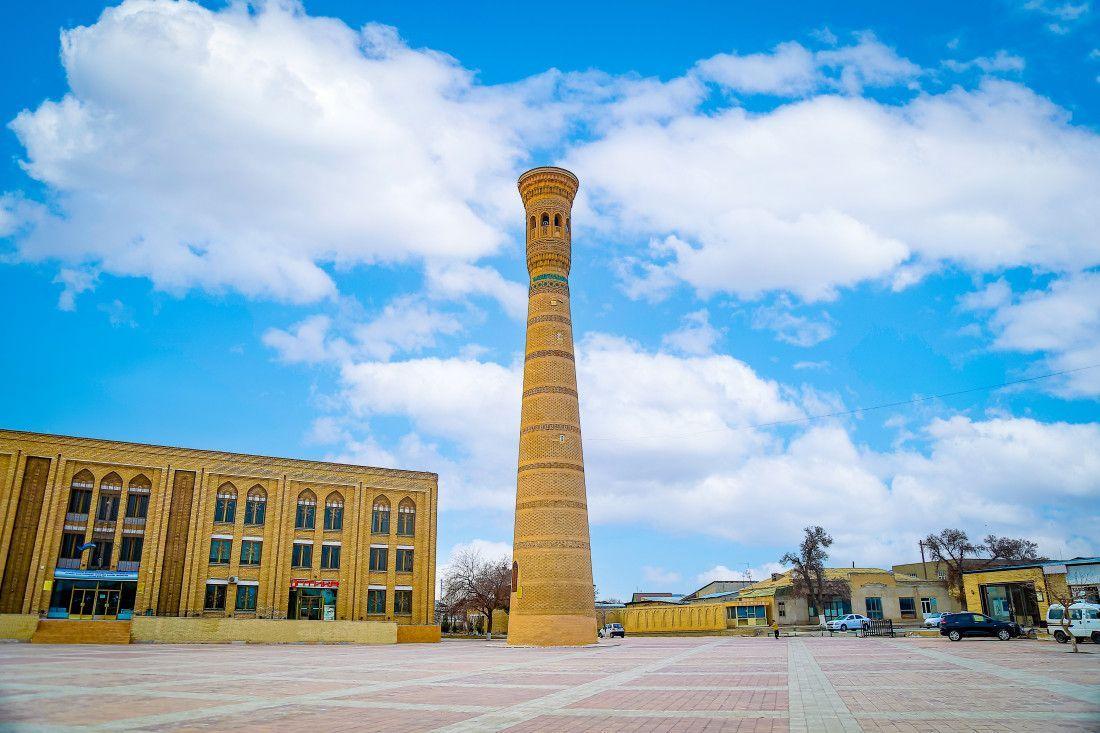
Minaret · Vobkent minaret 1196–1198; Deggaron mosque 11th–12th century; Rabat-i-Malik caravanserai and sardoba 11th century
Vobkent, Deggaron and Rabat-i-Malik: the road to Samarkand
Three Karakhanid-era monuments strung along the old caravan road north-east of Bukhara: the 40-metre Vobkent minaret, the four-pillared Deggaron mosque at Hazara and the portal and cistern of Rabat-i-Malik. A half-day that turns the transfer to Samarkand into a journey.
About
Most travellers cover the 270 kilometres between Bukhara and Samarkand by train in two hours. Those who go by road along the Zarafshan can see, in half a day, what the Silk Road looked like between the cities: a minaret that rivals the Kalyan, a mosque older than almost anything in Bukhara and the gate of a royal caravanserai in the open steppe. All three were inscribed in 2023 as part of the UNESCO Silk Roads: Zarafshan-Karakum Corridor.
Vobkent minaret
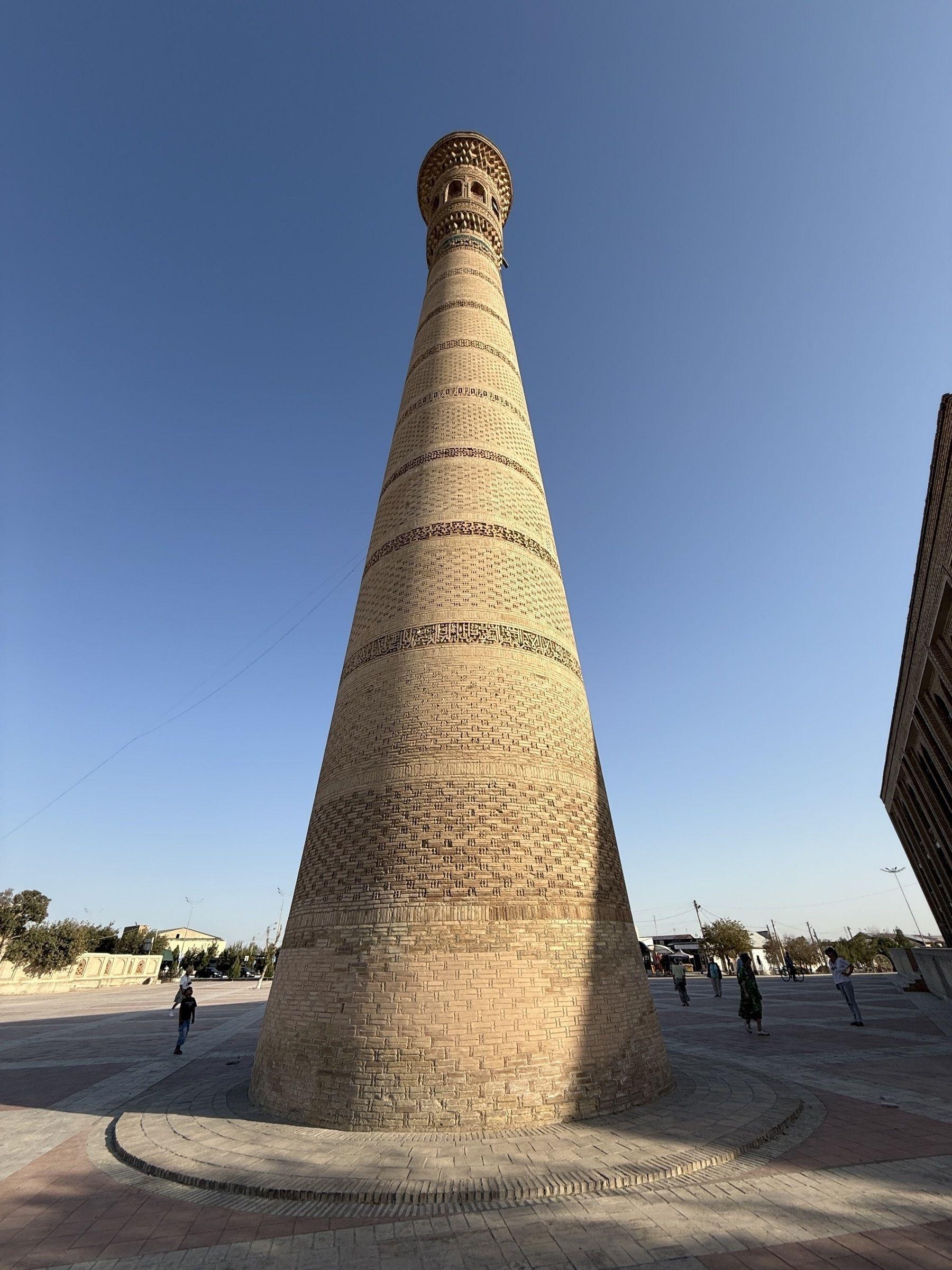
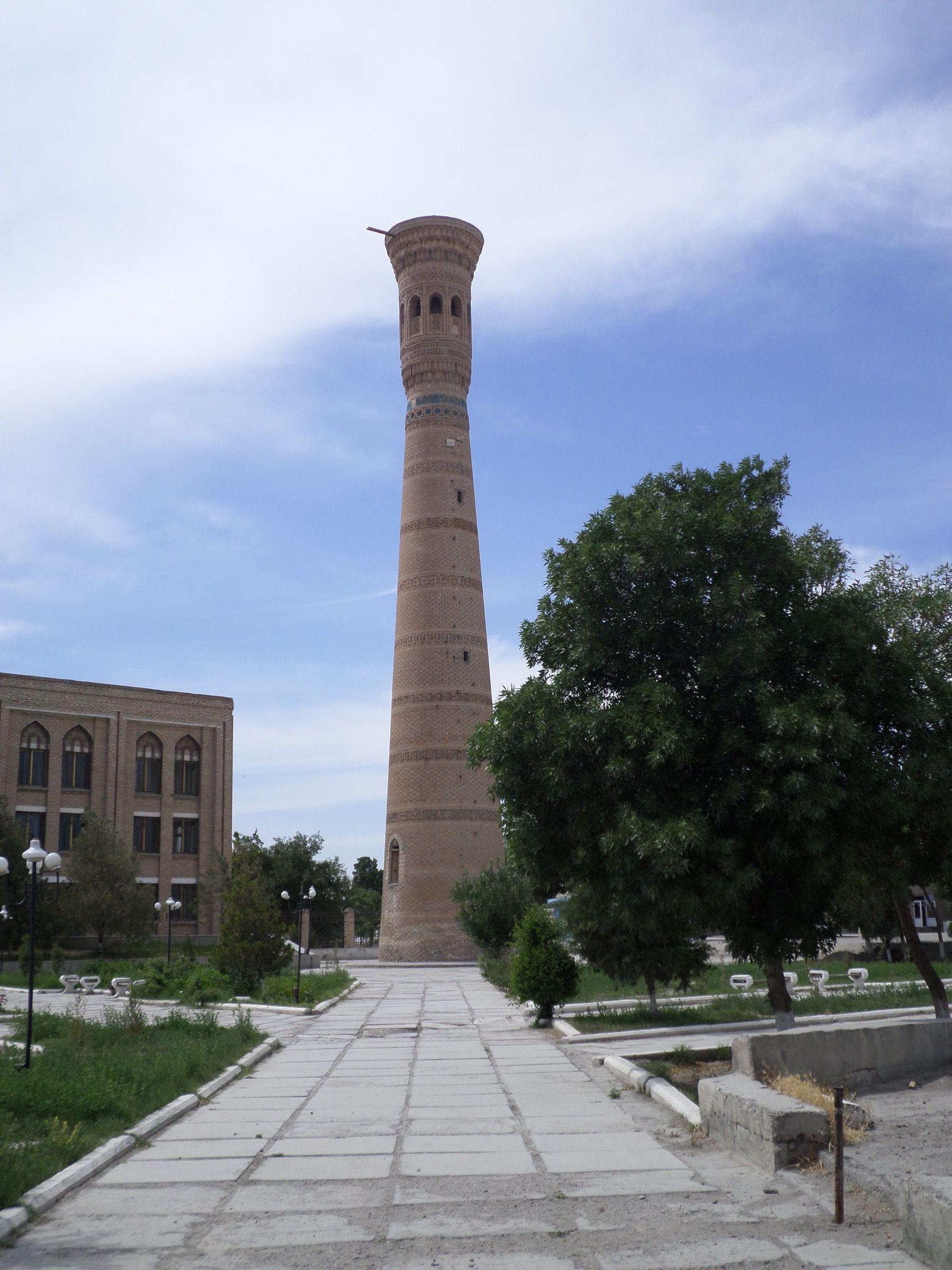
Twenty-five kilometres north-east of Bukhara, the district town of Vobkent keeps a minaret that is the younger sibling of the Kalyan. Its Kufic inscriptions record that it was ordered in 1196 by the sadr Burhan al-Din Abdulaziz II, head of the family of religious leaders who effectively governed Bukhara under the Karakhanids, and completed in 1198. It stands 40.3 metres high, a tapering cylinder of baked brick with ten ornamental bands, a stalactite cornice and a lantern of arched openings; archaeologists believe another two metres lie buried at the base. The mosque and madrasah that once stood before it have largely gone, which leaves the minaret in splendid isolation on the main square.
Deggaron mosque at Hazara
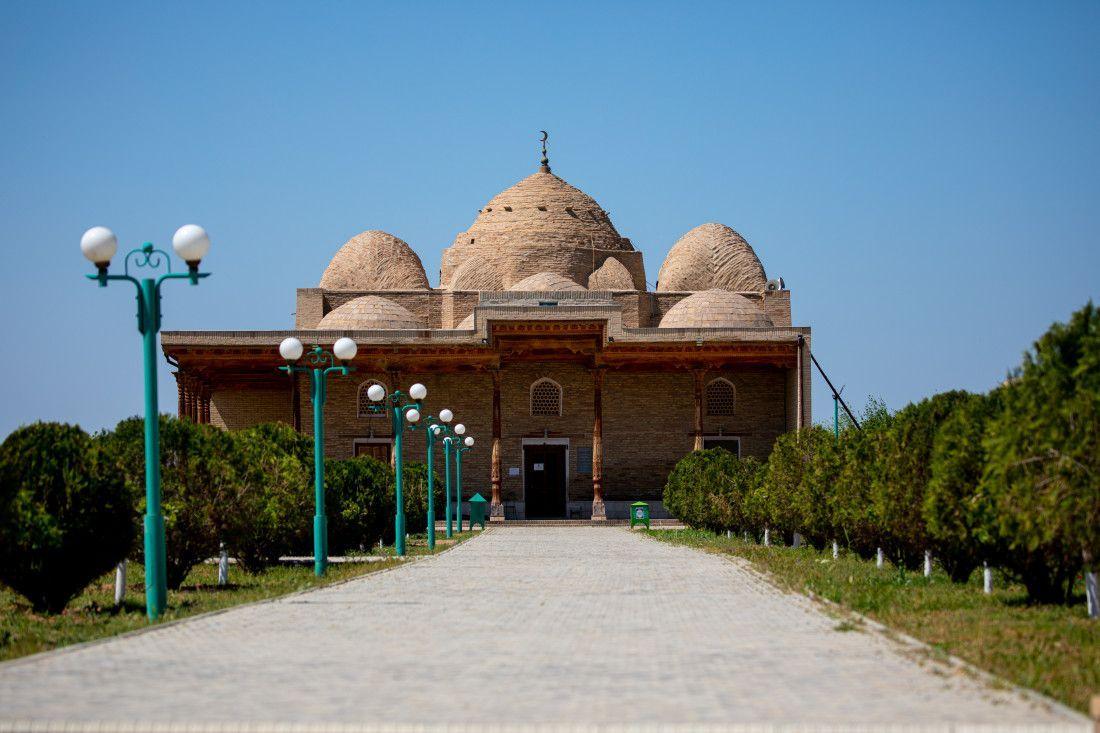
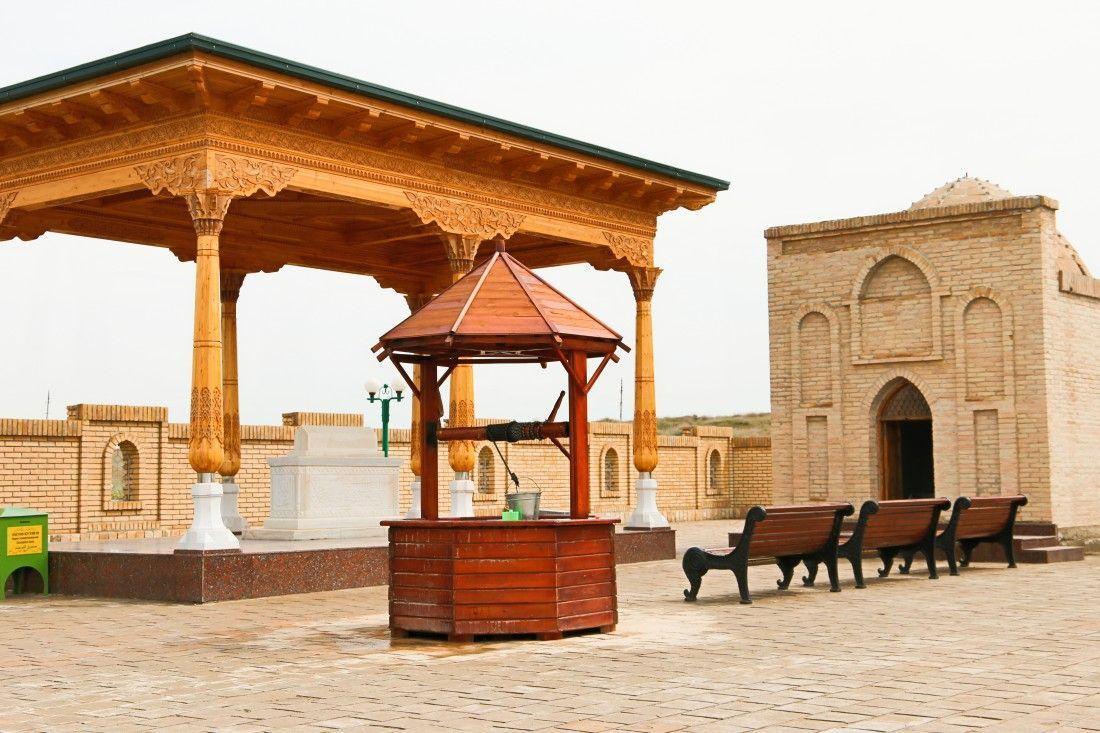
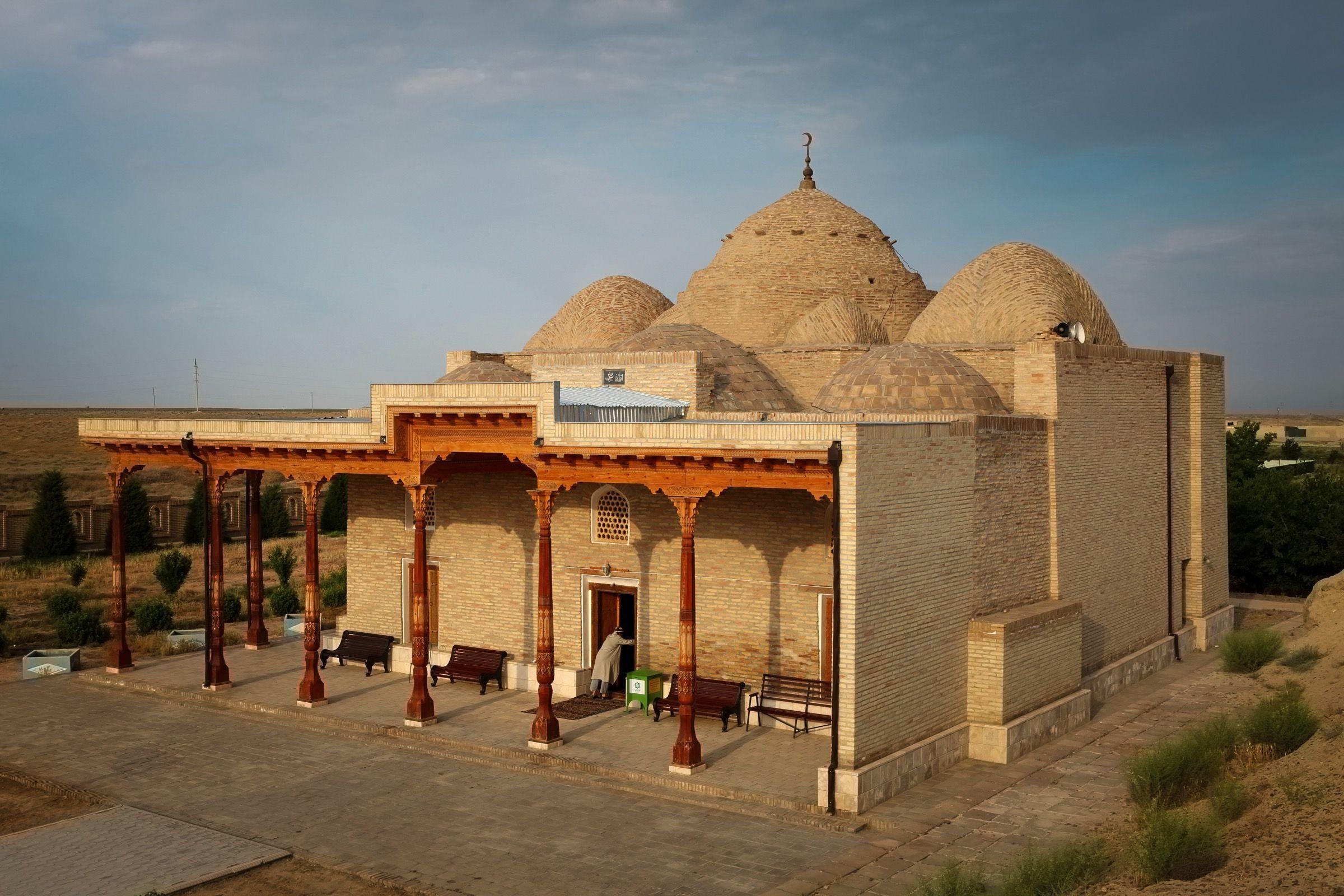
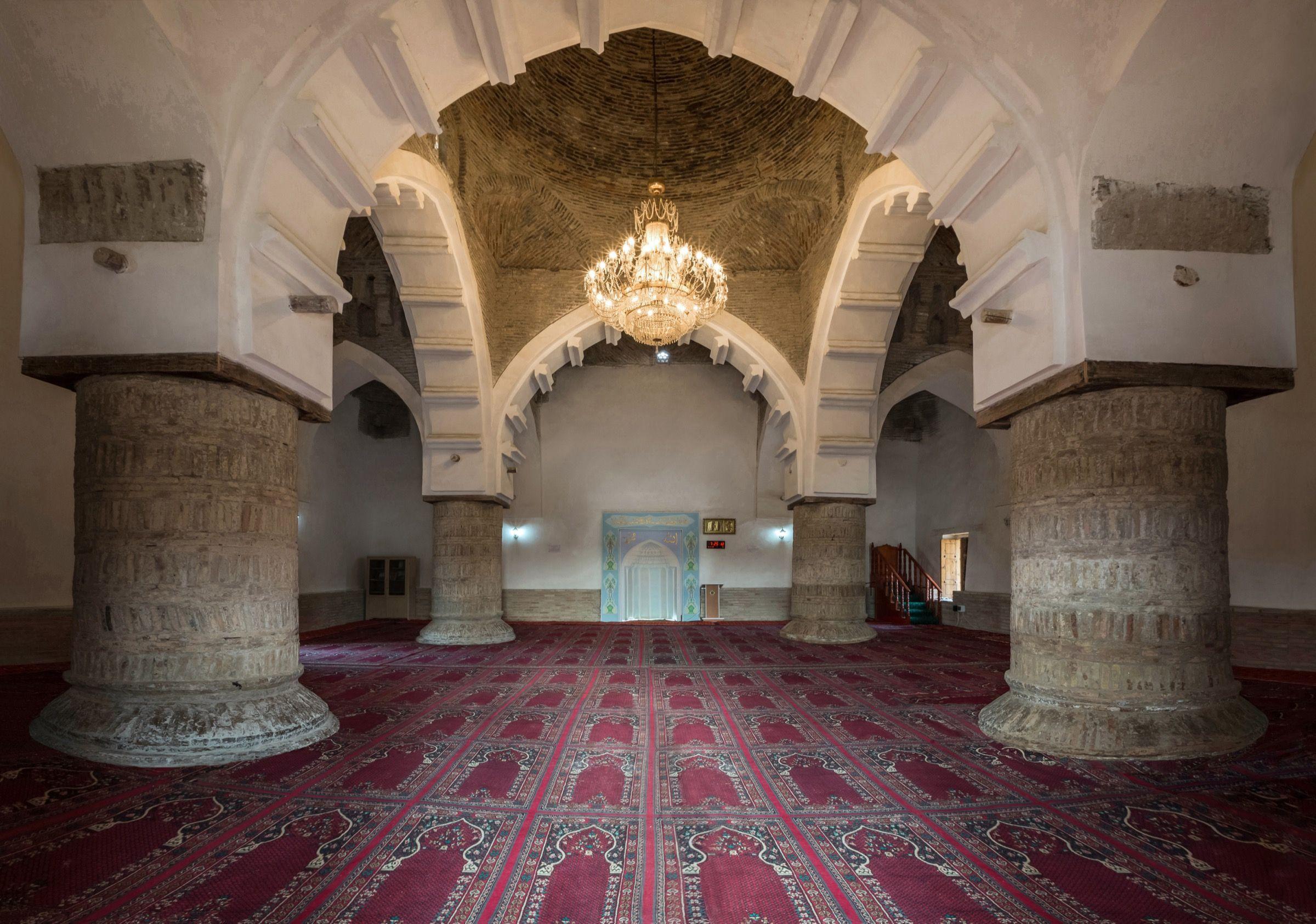
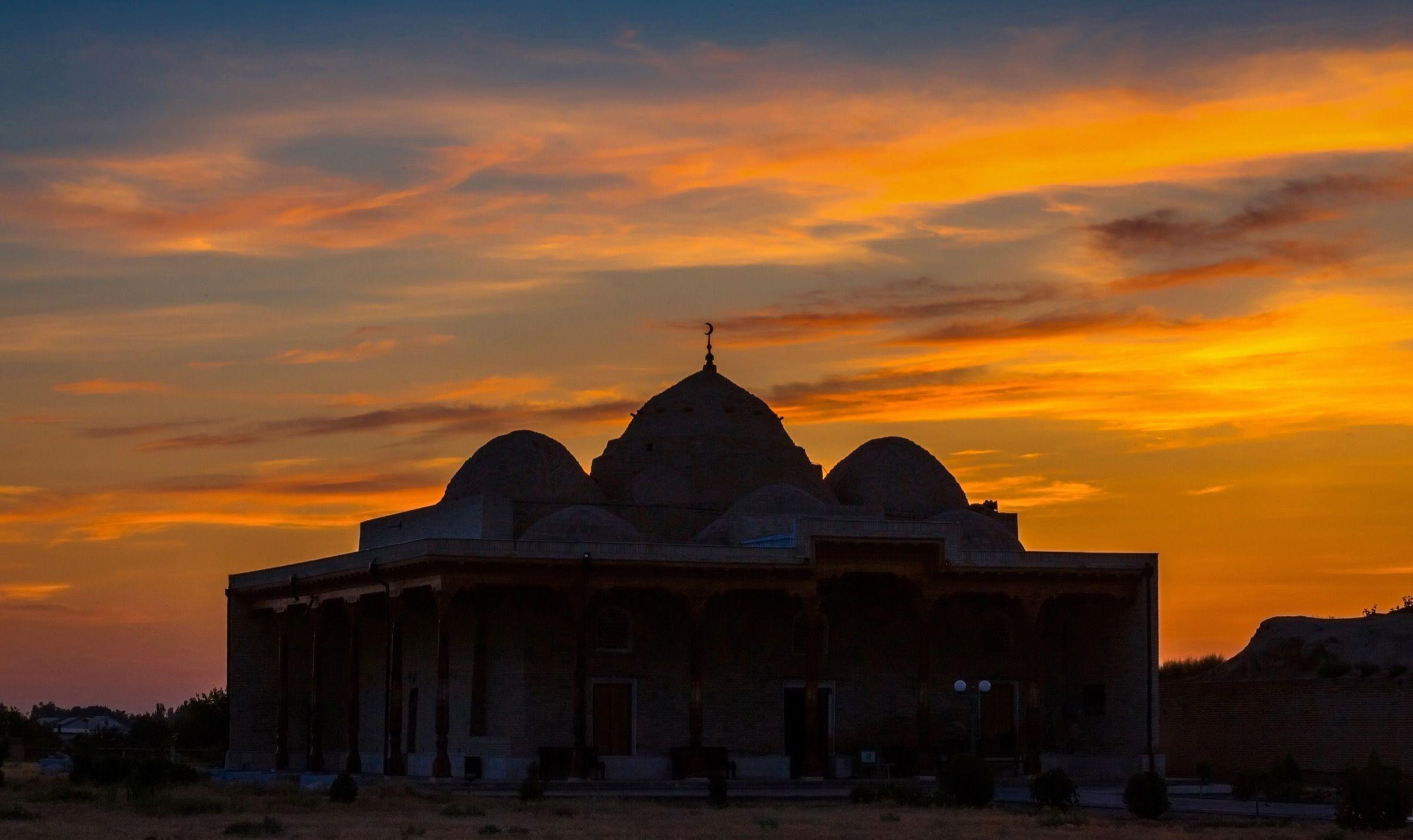
Another forty-five minutes east, past Gijduvan and over the regional border into Navoi, a side road leads to the village of Hazara and a low brick building that looks nothing like a mosque. Deggaron, the name means potters, was identified in 1946 by the expedition of the archaeologist Alexander Yakubovsky. Four squat columns carry a central dome surrounded by smaller vaults, a plan with roots in pre-Islamic Sogdian and early Christian building rather than in the courtyard mosque. Most scholars date it to the 11th or 12th century, and some to earlier still, built over an older structure. It was restored in recent decades and still serves the village. Chashma-Ayub, a small shrine with a spring, stands nearby.
Rabat-i-Malik and its sardoba
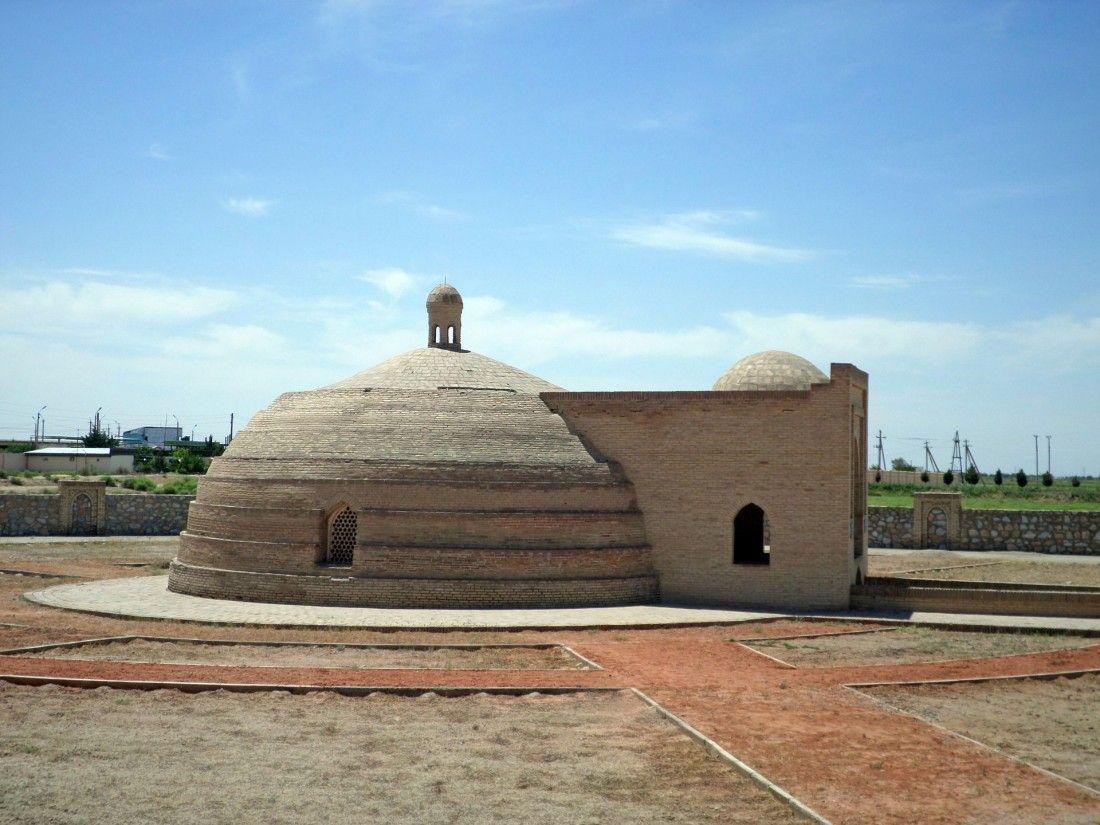
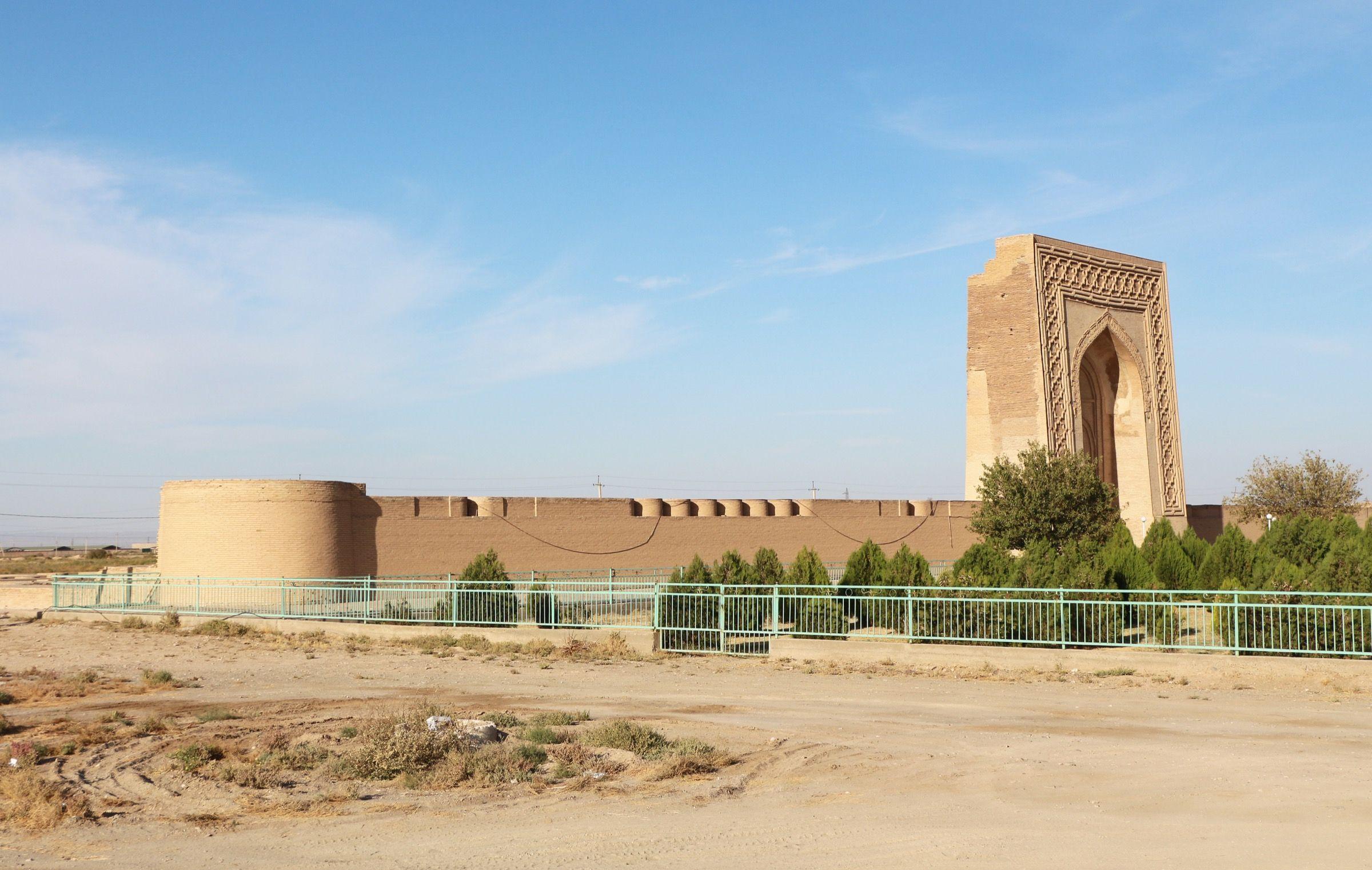
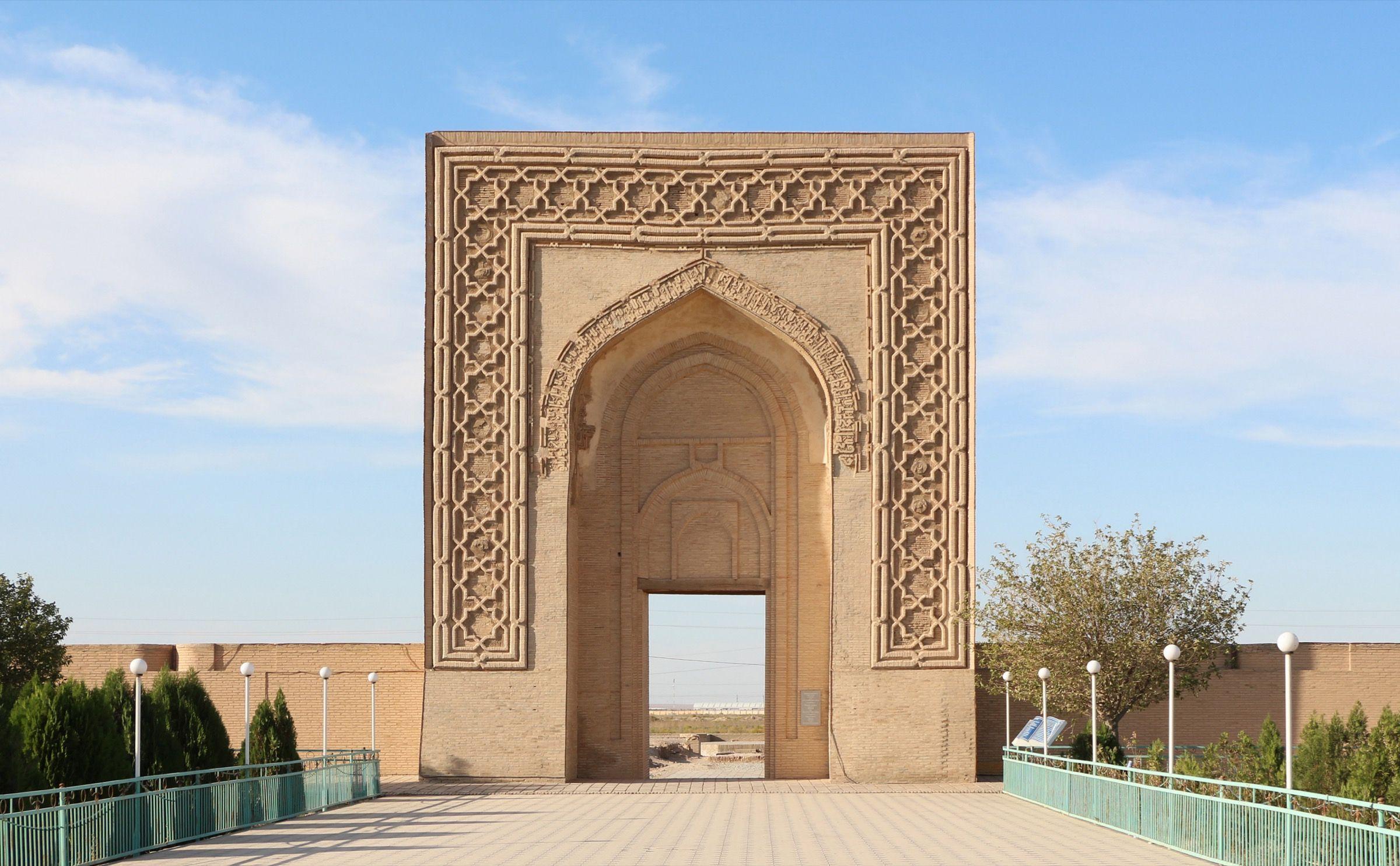
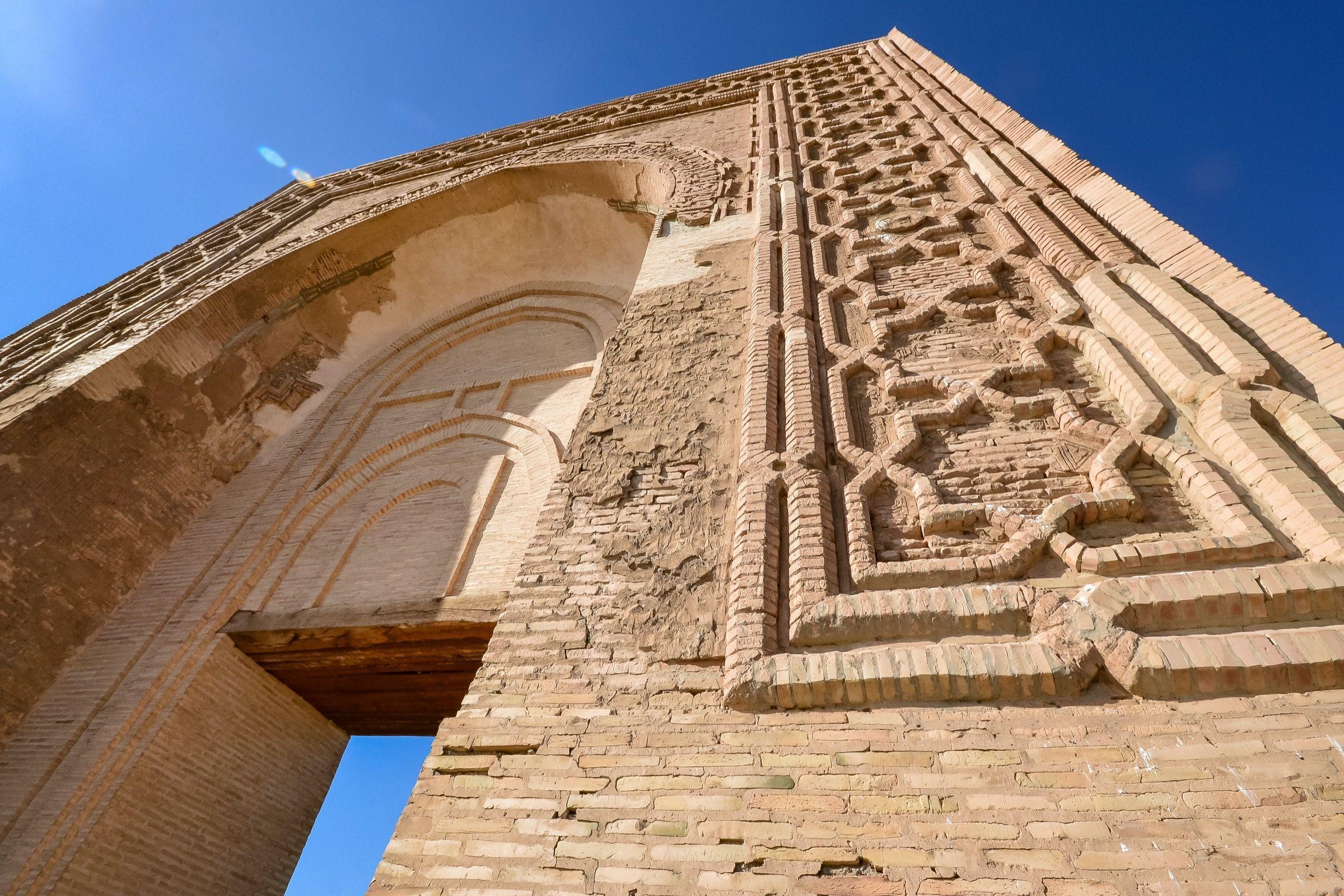
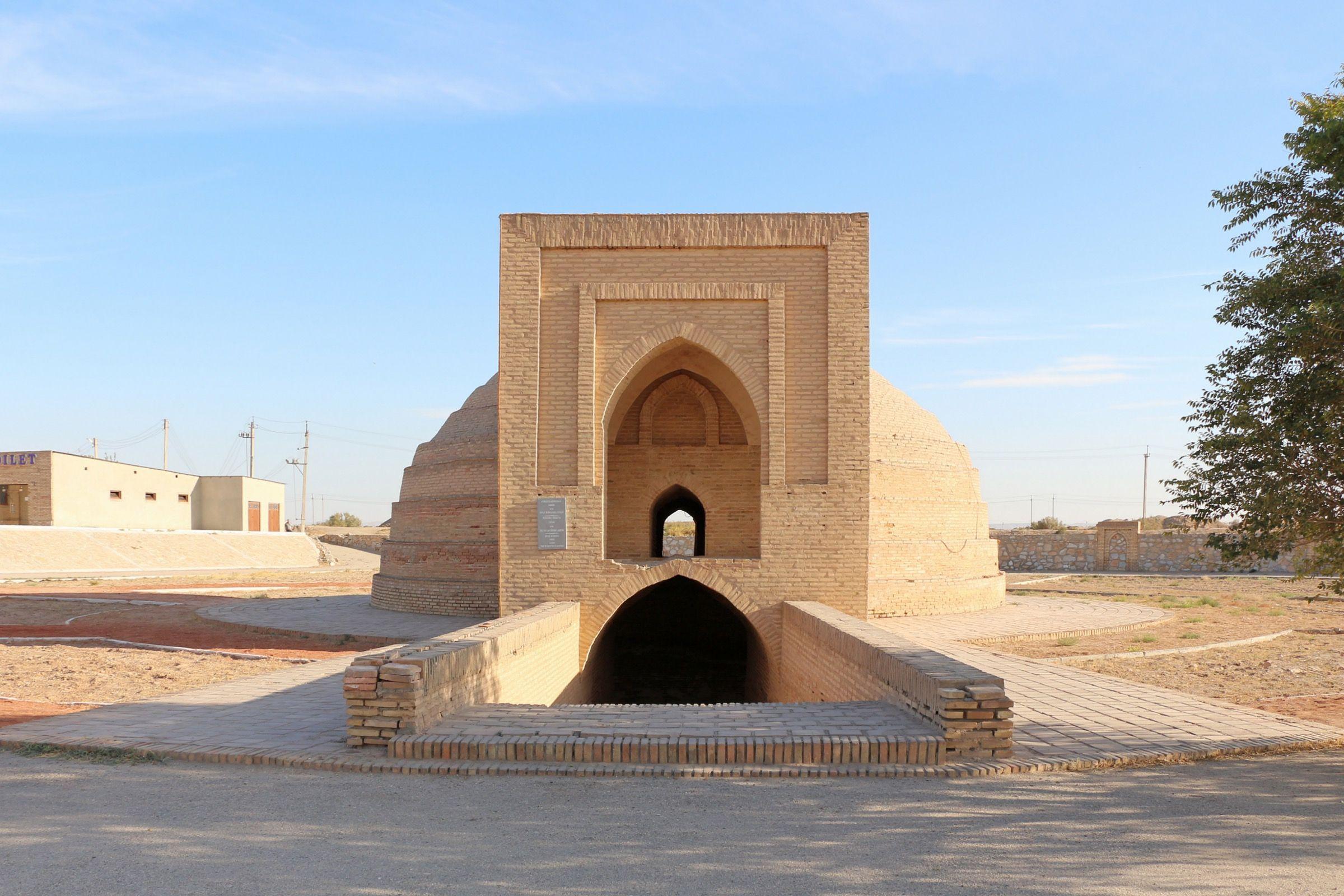
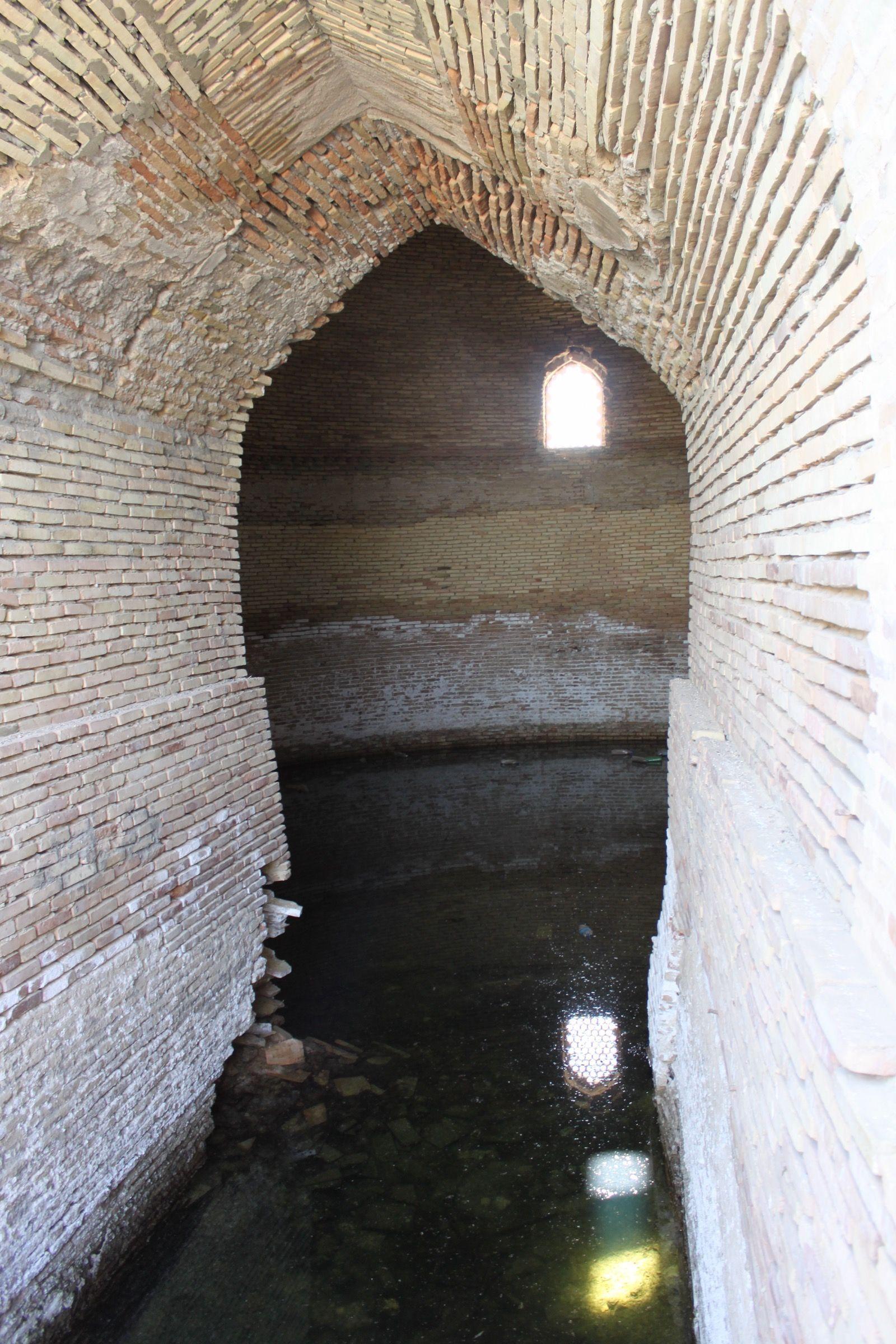
Back on the highway, a few kilometres further towards Navoi, the great portal of Rabat-i-Malik rises beside the road. The Royal Caravanserai was built in the 11th century by the Karakhanid ruler Shams al-Mulk Nasr; the twelve-metre portal with its corrugated brick decoration is the main survivor of a walled compound that once held a mosque, stables and lodgings. Across the road is the sardoba, a domed brick cistern of the same period, the largest and oldest in Uzbekistan, which collected water brought from the Zarafshan by an underground channel. Rabat-i-Malik has its own page on this site under the Nuratau and Kyzylkum region; here it is the natural end of the Bukhara leg.
How to experience it
Leave Bukhara in the morning with a car and driver, stop at Gijduvan for the ceramics workshops and the shrine of Abdul Khaliq Gijduvani, and reach Rabat-i-Malik by lunchtime; continue to Nurata and Lake Aydarkul or straight on to Samarkand. In the opposite direction the same stops break the drive from Samarkand. Spring and autumn are ideal; in July the steppe at Rabat-i-Malik is best seen early.
What to see
- The 40-metre Karakhanid minaret of Vobkent and its Kufic inscriptions
- The ten decorative brick bands and stalactite cornice
- Deggaron mosque: four columns and a dome on a pre-Islamic plan
- The village of Hazara and the Chashma-Ayub spring
- The portal of Rabat-i-Malik on the open steppe
- The domed sardoba cistern across the highway
- Gijduvan ceramics and shrine on the same road
Gallery
Tours that visit Vobkent, Deggaron and Rabat-i-Malik: the road to Samarkand
 New
Six Days, Seven Plovs
From
$995
 Premium
Twelve Gates of the Silk Road
From
$1,750
 Best Seller
Four Crowns: Tashkent, Samarkand, Bukhara, Khiva
From
$1,270
More sights in Bukhara
All of Bukhara

See Vobkent, Deggaron and Rabat-i-Malik: the road to Samarkand with a local guide
We build private and small-group trips around the places you want to see — with guides who grew up here.