How to add Arslanbob, the largest walnut forest on earth, to a Fergana Valley trip: the Dostuk border from Andijan, Osh and Jalal-Abad transport, CBT homestays, the waterfalls and horse treks, the September walnut harvest, who the detour suits, and the Uzbek-side transfers we arrange.
Facts, prices and schedules checked on November 4, 2026
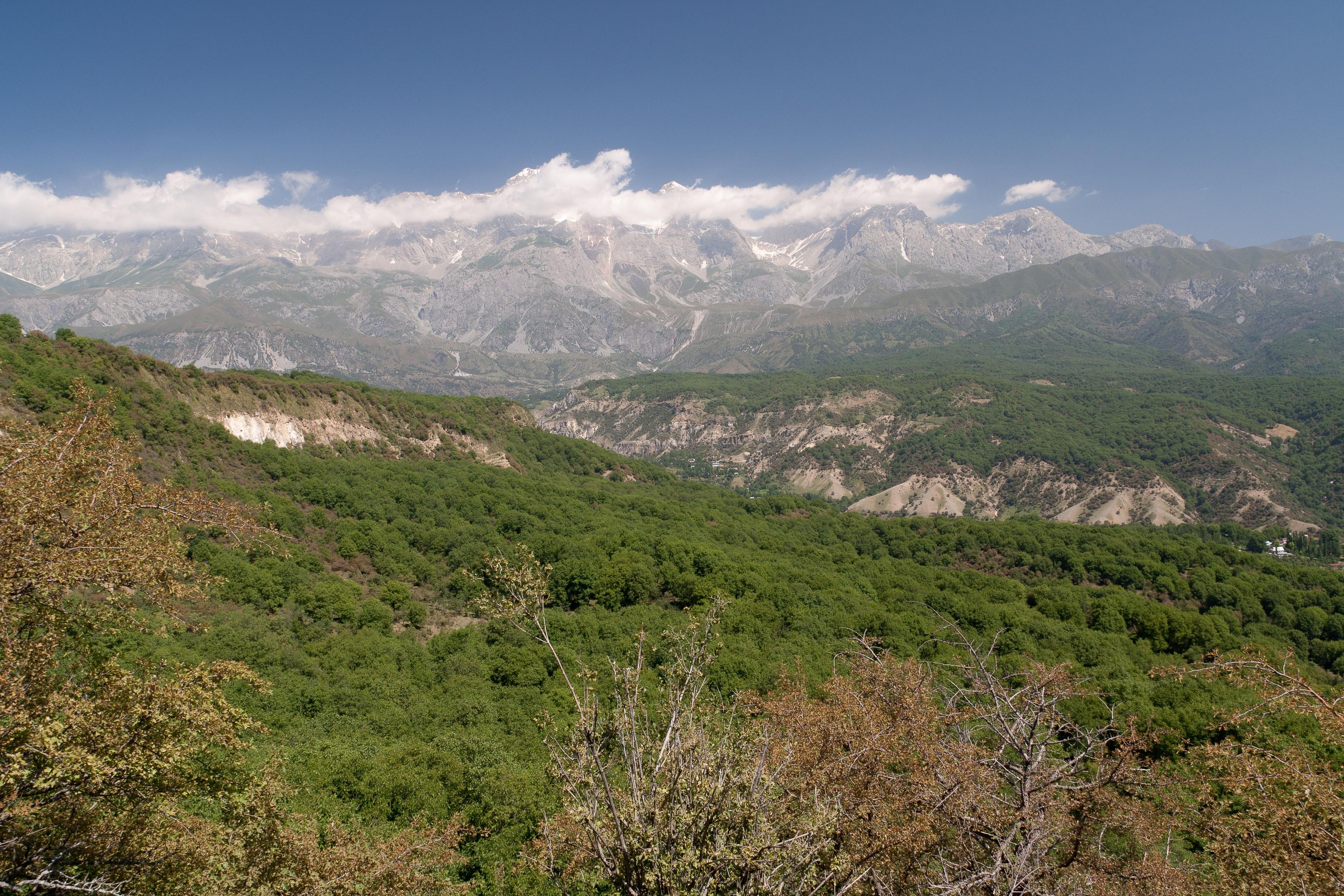
Two hours beyond the Uzbek border, in the foothills of the Babash-Ata range in southern Kyrgyzstan, a village sits inside the largest natural walnut forest in the world. Arslanbob is the kind of place travellers remember long after the madrasahs have blurred together: cold streams, a waterfall you walk to after breakfast, families camping under the trees for the autumn harvest, and homestays where dinner is whatever the garden produced that day.
For anyone touring the Fergana Valley, it is a natural extension. From Andijan the Dostuk border is an hour away, Osh is on the other side, and Arslanbob is a further three to four hours by road. Two or three days are enough.
This guide explains how to get to Arslanbob from Uzbekistan as of November 2026: the crossing, the transport via Osh or Jalal-Abad, what the forest and the village offer, the CBT homestays, the September walnut harvest, who the detour suits and who should skip it, how to fit it between the Fergana Valley and Bishkek, and what we arrange on the Uzbek side.
TourEast is an Uzbekistan operator. We take you to the border and collect you on your return; inside Kyrgyzstan you travel with local drivers, CBT hosts or a Kyrgyz agency.
What is Arslanbob and why go?
Arslanbob is a valley and a cluster of five villages at about 1,400 to 1,600 metres in the Jalal-Abad region of Kyrgyzstan, backed by the 4,000-metre peaks of Babash-Ata. The walnut forest that surrounds it covers roughly 11,000 hectares in the immediate valley, part of a much larger belt of walnut and fruit woodland along the southern slopes of the Fergana range; whichever figure you use, it is the largest natural walnut forest on earth, and it is ancient. Legend says Alexander the Great carried its nuts back to Greece.
The village is largely ethnic Uzbek, so a visitor arriving from Andijan will hear a familiar language and eat familiar food. It is also a place of pilgrimage: Arslanbob is said to be the name of a holy man who planted the forest, and his shrine draws visitors from both countries.
What the valley offers:
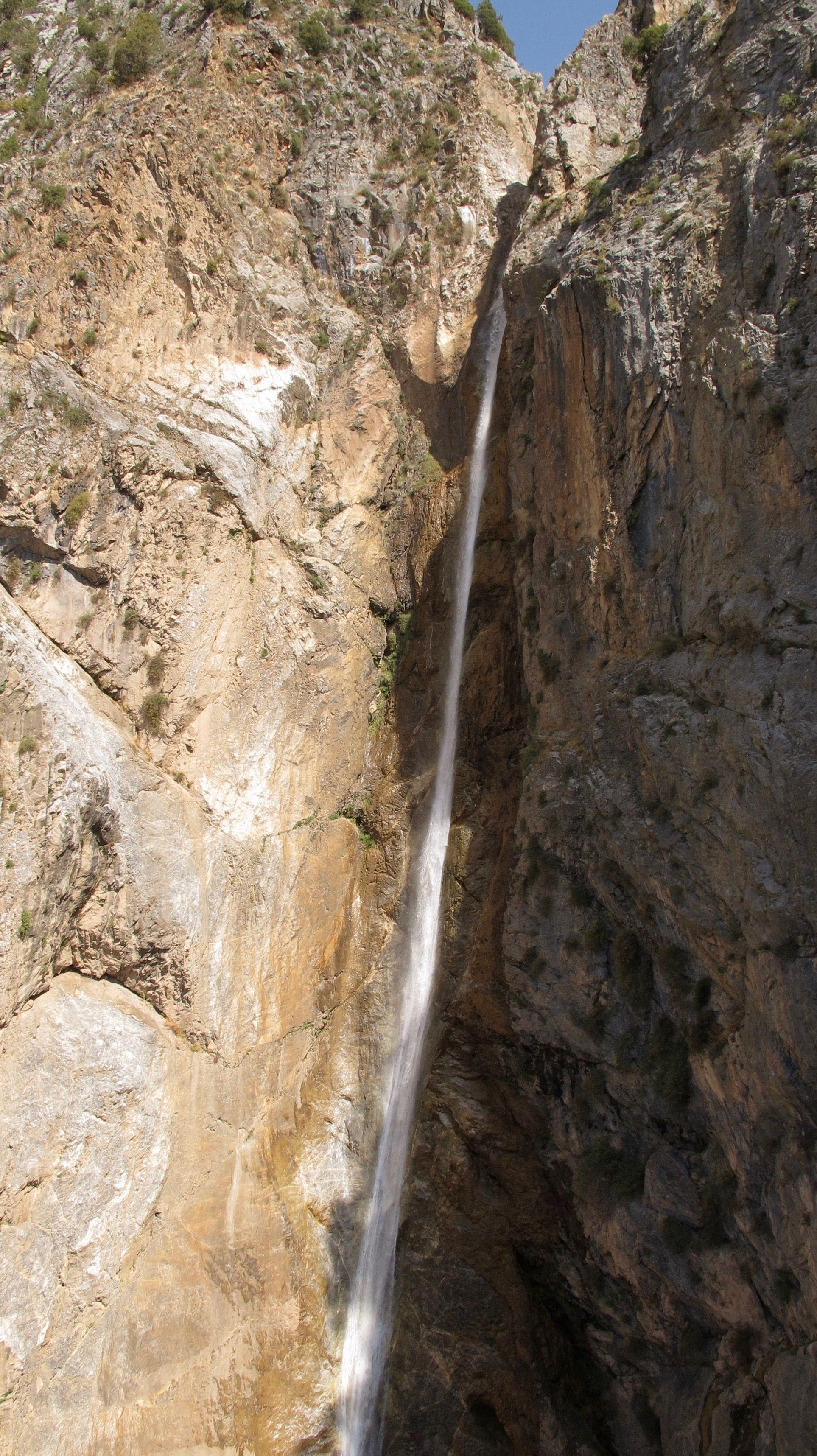
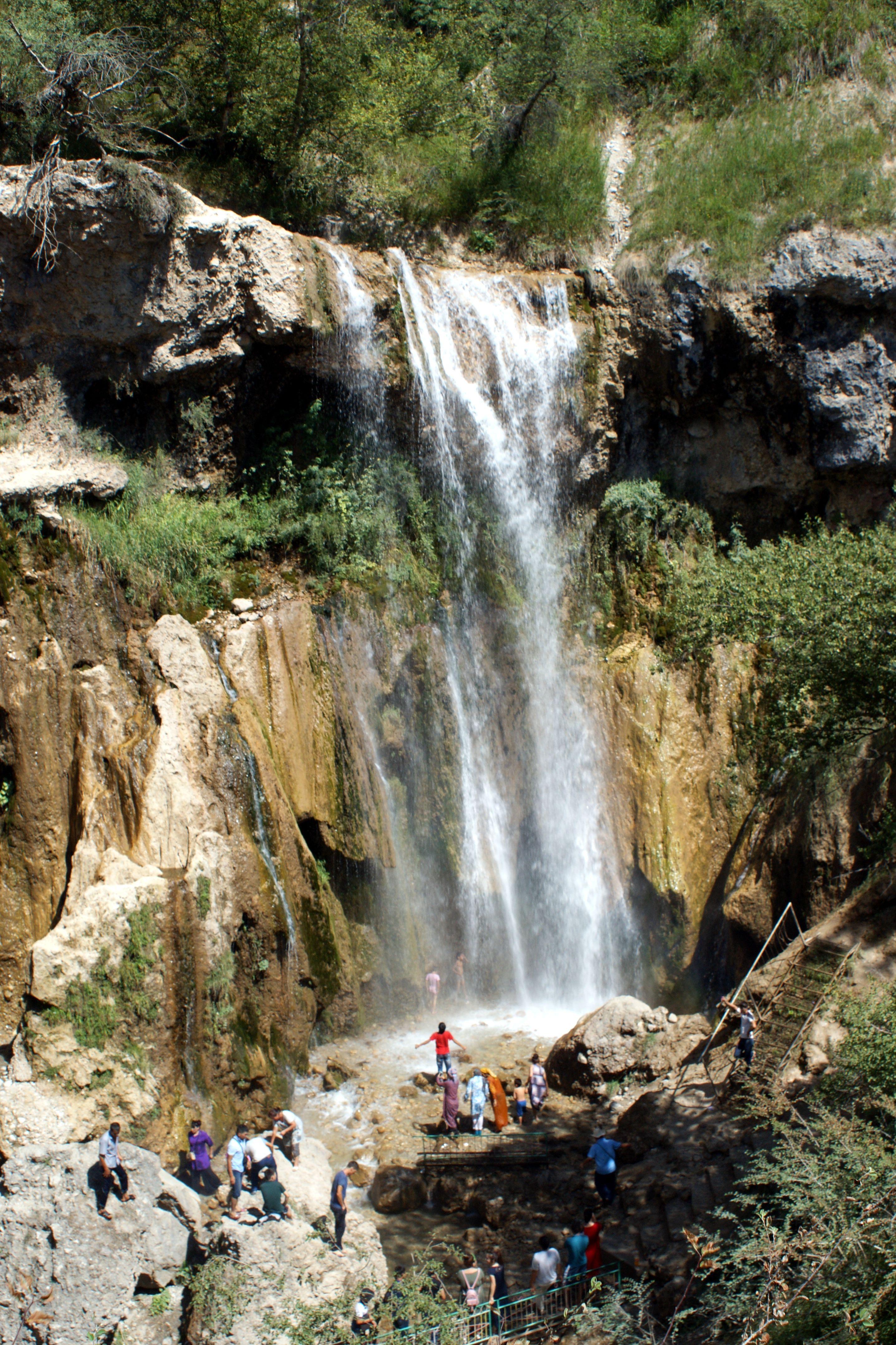
- The Small Waterfall (about 25 m), a 40-minute walk from the village
- The Big Waterfall (about 80 m), a two-hour walk or a short taxi ride and a climb
- Panorama Hill and the walnut forest itself, an easy half-day loop
- Horse treks and multi-day hikes to the Holy Lake (Kol-Mazar) and the high pastures, from June to September
- The walnut harvest in late September and early October, when families move into the forest to camp and gather
- Winter skiing and snowshoeing on the slopes above the village, with simple hire gear
It is not a place of sights. It is a place of walking, eating and sleeping well.
From the Fergana Valley to Arslanbob: the Dostuk border
The Uzbek-Kyrgyz crossing for this trip is Dostuk, called Dustlik on the Uzbek side, which lies on the eastern edge of the Fergana Valley a few kilometres from the centre of Osh. From Andijan it is about an hour by car; from Fergana city about two hours; from Tashkent about six hours by road or a train to Andijan plus the hour.
The crossing is open 24 hours and busy with local traders. Tourists cross on foot: Uzbek exit, a short walk, Kyrgyz entry. Expect 30 to 60 minutes, longer at weekends and in the late morning. Our Osh from Fergana article describes the crossing in detail.
Visa notes for Kyrgyzstan, as of November 2026:
- From 1 January 2026 Kyrgyzstan reduced the visa-free stay for citizens of around 55 countries, including most of Europe, the UK, the US, Canada and Australia, to 30 days within any 60-day period. For a two- or three-day side trip this changes nothing, but check your nationality on the official Kyrgyz e-visa portal before you go.
- Other nationalities apply for a Kyrgyz e-visa online; it is accepted at Dostuk.
- Re-entering Uzbekistan afterwards is straightforward for visa-free nationalities (30 days per entry) and for e-visa holders with a multiple-entry visa; single-entry e-visa holders need a new visa. Our Uzbekistan visa article explains.
We drop you at the Dustlik gate from Andijan, Fergana or Margilan, and meet you there on your return.
Osh or Jalal-Abad: the two ways in
From the Kyrgyz side of Dostuk, a taxi into Osh takes 15 minutes. From Osh there are two routes to Arslanbob.
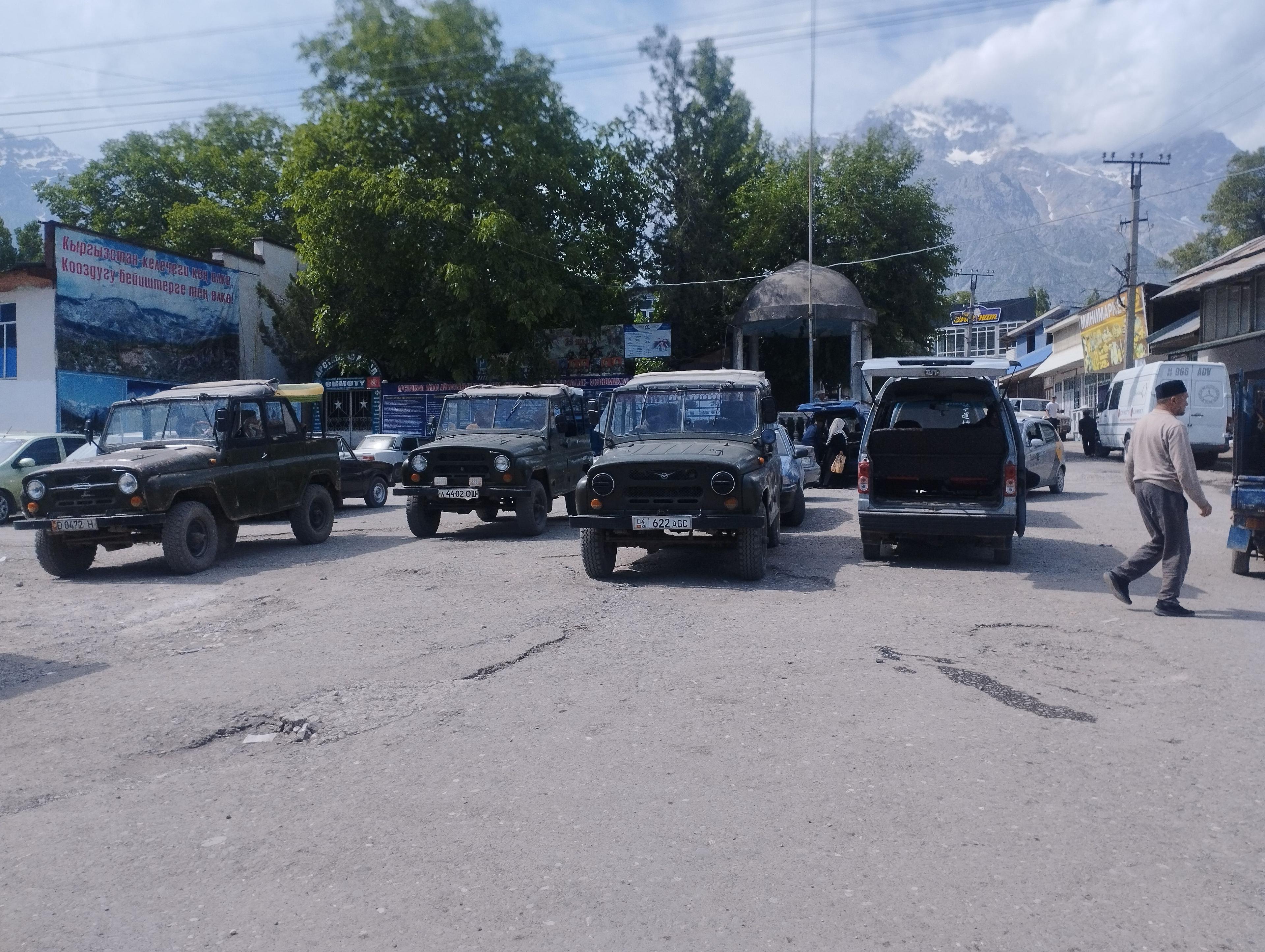
Via the direct minibus. One marshrutka a day leaves Osh's new bus station for Arslanbob, at about 13:30 in 2026 (arrive by 13:00 to secure a seat; it leaves when full). It costs around 200 som and takes four to five hours, including a stop at Bazar-Korgon. The return leaves Arslanbob market at about 06:50. Timetables shift; confirm at the station.
Via Jalal-Abad. Marshrutkas and shared taxis from Osh to Jalal-Abad run all day, about two hours. From Jalal-Abad's central bus station a shared taxi to Arslanbob costs around 200 som and takes an hour and a half; or take a minibus to Bazar-Korgon (45 minutes) and another up to Arslanbob (one hour). This route is more flexible and is the one to use if you leave Osh after lunch.
By private car. A taxi from Osh to Arslanbob costs roughly 3,000 to 5,000 som in 2026 and takes under three hours; from Jalal-Abad, around 1,500 to 2,500 som. A Kyrgyz agency or your CBT host can arrange a driver to meet you at the border, which turns the whole journey from Andijan into a four-hour transfer with a lunch stop in Osh.
A note on Jalal-Abad: it is a pleasant, leafy regional town with a bazaar and the old spa park, not a destination in itself, but a reasonable overnight if you arrive late. The Destination Jalal-Abad visitor centre in the town speaks English and can book Arslanbob homestays.
CBT homestays and what to expect in the village
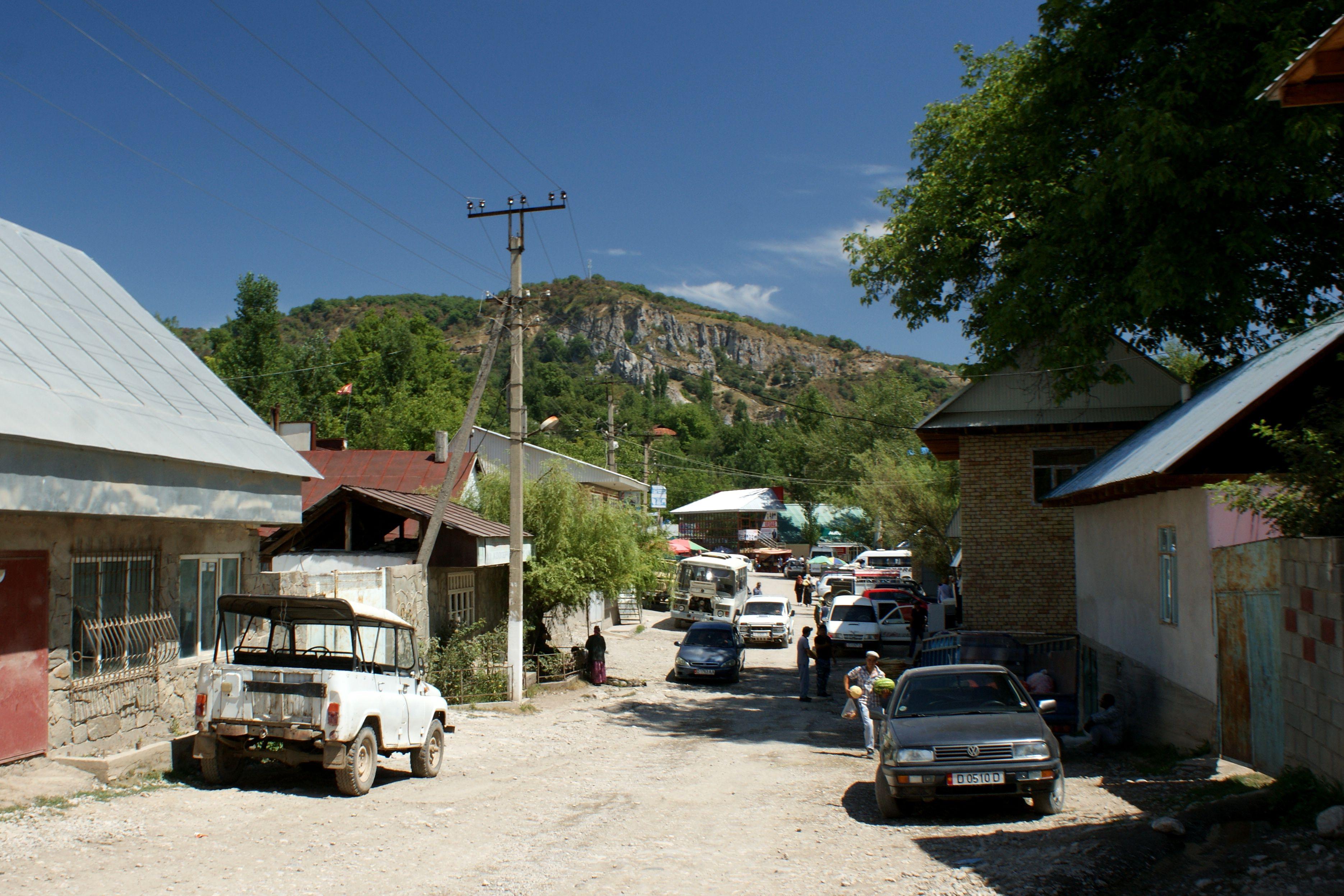
Accommodation in Arslanbob is almost entirely homestays run through Community Based Tourism (CBT), the Kyrgyz network that began here in the early 2000s. The CBT office is near the bazaar in the main village, and it allocates guests to family houses, arranges guides, horses and treks, and sells the walnut-oil factory visit and other small tours.
What a homestay is like: a room in a family house, often with a raised platform for sleeping and a courtyard under the trees, a warm shower (not always), an outdoor toilet (usually), and meals cooked by the family: plov, lagman, fresh bread, kaymak, jam, walnuts in everything. Typical 2026 prices are about 600 to 1,000 som per person a night with breakfast, with dinner 250 to 400 som extra; CBT's own guidance quotes US$15 to US$25 a night including meals. Book through CBT or directly with a host; in the harvest weeks and in July and August, book ahead.
Practical points:
- Bring cash in som. There is one bank, closed at weekends, and the ATM is unreliable. Change money in Osh or Jalal-Abad.
- Most homestays have no Wi-Fi. Mobile data works on the O! network and patchily on others; a Kyrgyz SIM bought in Osh is worth it.
- Dress modestly: the village is religious and conservative. Knee-length shorts and covered shoulders at a minimum; no swimwear at the waterfalls.
- Alcohol is not sold openly in the village.
- Evenings are cold even in summer; bring a fleece.
Walks, waterfalls and horse treks
Day walks need no guide.
- Small Waterfall: 1.5 km from the village along a path lined with stalls, about 40 minutes each way. A small entrance fee (around 10 to 20 som). The Cave of Forty Angels, a prayer cave, is beside it.
- Big Waterfall: 7 km, about two hours each way on foot, or a taxi to the base and a steep 20-minute climb. Entrance fee around 50 som. The 80-metre fall is at its fullest in May and June.
- Panorama Hill and the walnut forest: continue 90 minutes beyond the Small Waterfall to the viewpoint, then 20 minutes down into the forest. Combined with both waterfalls it is a 10 km day.
Longer routes need a guide and, usually, horses, both arranged through CBT:
- Holy Rock (Kul-Mazar) day trek: 16 km, seven hours, to 3,200 m; moderate to demanding, May to October.
- Two-day sunset trek with a tent night at around 3,200 m, June to early September.
- Holy Lake horse trek: three days and two nights to a lake at about 3,300 m, for experienced riders only, around 30,000 som per person in 2026 including guide, horses, food and camping gear.
- Babash-Ata four-day trek: 40 km, three nights in tents, to 3,700 m, mid-June to early September.
Mountain bikes, skis and snowshoes can be hired in the village, and the walnut-oil press offers a short tour with bread and oil to taste. Prices are posted at the CBT office and change yearly; treat the figures above as a guide.
The walnut harvest: late September to early October
If you can choose your dates, choose the harvest. From the last week of September for about three weeks, families who hold rights to plots of forest move out of the village and camp under their trees, shaking the branches, gathering the nuts, drying them on tarpaulins and sorting them by the fire in the evenings. The whole valley smells of woodsmoke and walnut husks. Visitors are welcome to join a family for an afternoon of gathering, which CBT arranges, and some homestays will take you to their own plot.
The harvest coincides with the best weather of the year: warm days, cold clear nights, the forest beginning to turn yellow. It is also the busiest period, so book the homestay and the border transfer early.
Outside the harvest: May and June for waterfalls and wildflowers; July and August for the high treks, with the village itself a cool refuge from the Fergana Valley's heat; December to February for snow.
Who Arslanbob suits, and who should skip it
Arslanbob suits:
- Hikers and riders who want two or three days in the mountains without an expedition.
- Families with children who walk; the waterfalls, the homestay animals and the river are easy wins. Our Uzbekistan with kids article covers the Fergana Valley side.
- Slow travellers who like homestays, long meals and village life.
- Anyone travelling overland from the Fergana Valley to Bishkek, for whom Arslanbob is almost on the way.
It suits less well:
- Travellers on a tight schedule between Tashkent and Samarkand; the detour costs at least three days including the border.
- Those who need comfortable hotels, reliable hot water and Wi-Fi.
- Winter visitors not interested in snow sports; the walks are closed by snow from November to April.
If Arslanbob is too far, Osh alone, with Sulaiman-Too and the Jayma Bazaar, is a single-day side trip from Andijan and gives a taste of Kyrgyzstan.
Fitting Arslanbob between the Fergana Valley and Bishkek
Arslanbob lies just off the main Osh to Bishkek highway at Bazar-Korgon, which makes it the natural halfway stop on an overland journey across Kyrgyzstan.
A sample plan, Tashkent to Bishkek in ten days:
- Days 1 to 3: the Fergana Valley from Tashkent: Kokand, Rishtan, Margilan and Andijan, with the silk and ceramics workshops. Our Fergana Valley guide and Crafts of Fergana tour cover this leg.
- Day 4: Andijan to Dostuk with our driver, cross, taxi to Osh. Sulaiman-Too and the Jayma Bazaar in the afternoon.
- Day 5: Osh to Arslanbob via Jalal-Abad. Small Waterfall in the late afternoon.
- Day 6: Big Waterfall and the forest, or a horse ride. Second homestay night.
- Day 7: Bazar-Korgon and the long road north: Toktogul reservoir, the Ala-Bel and Too-Ashuu passes, to Bishkek (10 to 12 hours by shared taxi, or two days with a stop at Toktogul or Suusamyr in a private car).
- Days 8 to 10: Bishkek, Ala-Archa and Issyk-Kul.
In reverse, the trip ends with the Fergana Valley and Tashkent. Our Central Asia itinerary and Kyrgyzstan travel guide articles give the wider picture, and our Uzbekistan versus Kyrgyzstan comparison helps if you are still deciding how to split your time.
The only awkward link is the shared taxi from Bazar-Korgon to Bishkek, which is long and fast; a private car from Osh or Jalal-Abad through a Kyrgyz agency is more comfortable and lets you stop.
What TourEast arranges
We handle the Uzbek side: the Fergana Valley programme, a guide and driver to Andijan or Fergana, the transfer to the Dustlik gate timed for a quiet crossing, and the pick-up at the border when you return, with the itinerary continuing to Tashkent, Samarkand or wherever you go next. We can suggest CBT contacts and Kyrgyz agencies for the Arslanbob days, and we plan the Uzbek dates around the walnut harvest or the trekking season if that is what you have come for.