How Uzbekistan celebrates Ruza Hayit (Eid al-Fitr) and Qurbon Hayit (Eid al-Adha): family visits, sweets and plov, what closes, how trains fill up, and expected 2027 dates with a check-the-calendar caveat.
Facts, prices and schedules checked on November 4, 2026
Eid in Uzbekistan is called Hayit, and it comes twice a year: Ruza Hayit (also Ramazon Hayit), which ends the month of Ramadan, and Qurbon Hayit, the Feast of Sacrifice, known elsewhere as Eid al-Fitr and Eid al-Adha. Both are public holidays, both centre on the family table, and for a traveller they are among the warmest moments to be in the country, provided you plan for the practical side: full trains, closed banks and busy bazaars.
This guide explains how Uzbeks celebrate the two Hayits, what changes for visitors, and when they fall in 2027. It is written for travellers of any faith, with particular care for Muslim visitors who may be planning a trip around the festival. Lunar dates move about eleven days earlier each year, so every date below is an estimate until officially announced.
Ruza Hayit: the end of Ramadan
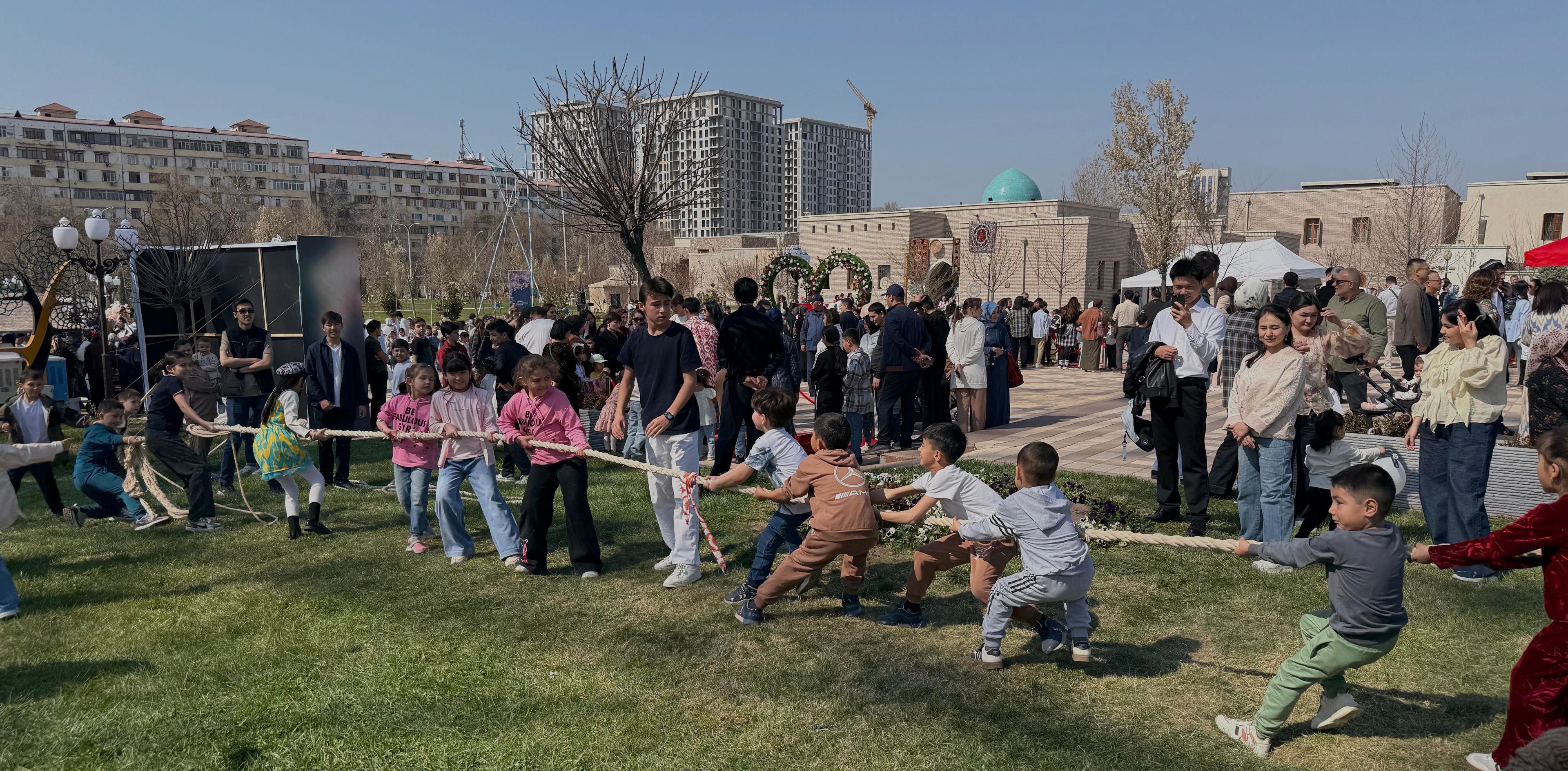
Ruza Hayit marks the end of the month of fasting and is a day of joy rather than solemnity. Preparation starts days earlier: families bake baursak, fried dough pieces, and make chak-chak, a honey-sweetened pastry, and fill the house with fruit, nuts and dried fruit. On the morning of the holiday men and boys go to the mosque for the special Hayit prayer, wearing their best clothes, and many families then visit the graves of relatives.
The rest of the day is for hospitality. Tables are laid with sweets, fruit and tea, and in the evening many families cook plov and invite neighbours. Visiting is central: people call on relatives, neighbours and friends, who return the visit in the following days. Adults give children small gifts of money, known as hayitlik, and new clothes are often bought for the occasion.
A visitor invited into a home on this day will be offered tea and sweets first and then, if the family has planned it, a full meal. Accept what you can, praise the cooking and do not decline tea. For the wider picture of everyday manners, see our guide to culture and etiquette in Uzbekistan.
Qurbon Hayit: the Feast of Sacrifice
Qurbon Hayit falls on the tenth day of Dhu al-Hijjah and the celebration lasts for several days, according to the Islamic calendar. After the morning prayer, families who can afford it sacrifice a sheep or another animal and share the meat with relatives, neighbours and people in need; a third is traditionally given away. The days before the holiday are busy at livestock markets, and the bazaars are frantic the day before and quiet on the day itself.
The meat is cooked in family dishes. Plov, shorpa soup and kebabs are common, and the table is again set for visitors. Giving to those in need and visiting the elderly and the unwell are part of the spirit of the day. Mid-May, when the holiday falls in 2027, is also one of the most popular times for tourism, so the combination of local travel and foreign visitors puts pressure on trains, hotels and restaurants.
When are the Hayit holidays in 2026 and 2027?
Dates depend on the sighting of the moon and are confirmed by the Muslim Board of Uzbekistan shortly beforehand. Based on astronomical estimates:
- Ramadan 2027: expected to begin around 8 February and end around 8 March.
- Ruza Hayit 2027: expected on or about Tuesday 9 March 2027.
- Qurbon Hayit 2027: expected on or about Sunday 16 May 2027, with Monday 17 May possible as the day off.
For comparison, Ruza Hayit in 2026 fell around 20 March, close to Navruz, and the government granted a long break around Qurbon Hayit in late May 2026. The president signs a decree each December that adds bridge days to the following year's holidays, so a one-day holiday can turn into a four- or five-day break. The 2027 decree had not been published as of early November 2026; see our Uzbekistan public holidays 2027 guide for the full calendar.
What closes, and what stays open
Less than many visitors fear. Based on how the holidays are normally observed:
- Banks, government offices and embassies are closed for the official days off. Cash machines and airport exchange counters keep working.
- The big monuments in Samarkand, Bukhara and Khiva generally stay open, though a few state museums in Tashkent may shorten their hours. Confirm the day before if a particular museum matters.
- Bazaars are open and at their liveliest in the mornings before the holiday.
- Restaurants and cafés are open, though the best fill with family celebrations; book dinner.
- Trains and flights run to normal timetables but sell out, since families travel between cities. Book as soon as dates are known.
- Alcohol is sold as usual, although some venues close during the daytime of Ruza Hayit as a courtesy.
The practical trap is paperwork. If you need a bank transaction, a notary or a visa extension, do it before the holiday begins.
Travelling during Hayit: how to plan
If your trip overlaps a Hayit, treat it as a high season. Book trains between Tashkent, Samarkand and Bukhara and rooms in the better hotels weeks ahead, and expect domestic travel peaks on the day before and the day after the holiday. Roads out of Tashkent and Samarkand can be congested, so allow extra time for airport transfers. Domestic flights fill as well.
Muslim visitors may wish to join the Hayit prayer at a mosque. The large mosques in Tashkent fill early, so arrive well before the prayer and dress modestly. Ask your hotel which mosque is closest, and allow time for your return, as roads near large mosques close temporarily. Women's attendance at prayers varies by mosque; ask your hotel or guide. If you are a non-Muslim visitor, you are welcome to observe from a respectful distance; follow the guidance of locals about where you can stand, remove shoes where asked and ask before photographing people.
For prayer rooms, halal food and mosque etiquette, see our guides to halal travel and to ziyarat pilgrimage. If you are travelling during Ramadan itself, our Ramadan guide explains daytime restaurant hours.
How to be a good guest at a Hayit table
Hayit is a time when strangers can become guests. If you are invited:
- Bring something small: sweets, fruit or a cake are customary. Avoid alcohol unless you know the host.
- Remove shoes at the door; slippers are often provided.
- Greet the eldest first, and wait to be shown where to sit.
- Accept tea and bread, and try each dish at least once.
- Do not refuse hospitality abruptly; a polite refusal is "rahmat", thank you, with a hand on the chest.
- Say Hayit muborak, a wish that the holiday be blessed, to your hosts.
If you are a guest in a mahalla, the traditional neighbourhood community, you may find that the whole street is celebrating. Our guide to traditions, weddings and the mahalla explains how these neighbourhoods work.
For visitors from Indonesia, Malaysia and the wider Muslim world
Muslim travellers from Southeast Asia will recognise much of the day: the early prayer, new clothes, visits to elders, special sweets and open houses are familiar from Lebaran and Hari Raya. The differences are in the details. The weather is cooler in March than at home, plov replaces rendang or ketupat on the table, and the greeting is Hayit muborak rather than Selamat Hari Raya or Selamat Idul Fitri. Hosts will appreciate any attempt to say it. Many hosts are delighted to hear how the festival is celebrated in your country.
If your holiday leave coincides with Eid in your own country, consider travelling just after it: you will see Uzbek celebrations still in the air, the crowds are likely to be thinner and hotel prices lower than on the holiday itself. Our guide to travelling to Uzbekistan from Indonesia and Malaysia covers flights and visa-free entry.
Eid food worth trying
Hayit tables are a good introduction to Uzbek home cooking. Expect plov, samsa, fried and baked dough sweets, chak-chak, halva, nuts, dried apricots and raisins, and fresh fruit, with plenty of green tea. In the days after Qurbon Hayit, meat dishes such as shorpa and kebabs dominate. If you are travelling with a halal diet in mind, our halal travel guide explains what to look for. For the wider kitchen, see our Uzbek food guide and our plov guide.
Planning an Eid trip with TourEast
We can plan a private or small-group itinerary that puts you at a family table on the holiday and handles the practical side: trains, hotels and transfers booked early, museum hours checked and prayer times respected. Guides in Indonesian, Malay or Arabic are available on request. Tell us your dates through our trip builder at /trip-builder or on WhatsApp, and we will check how the holiday calendar affects your route.