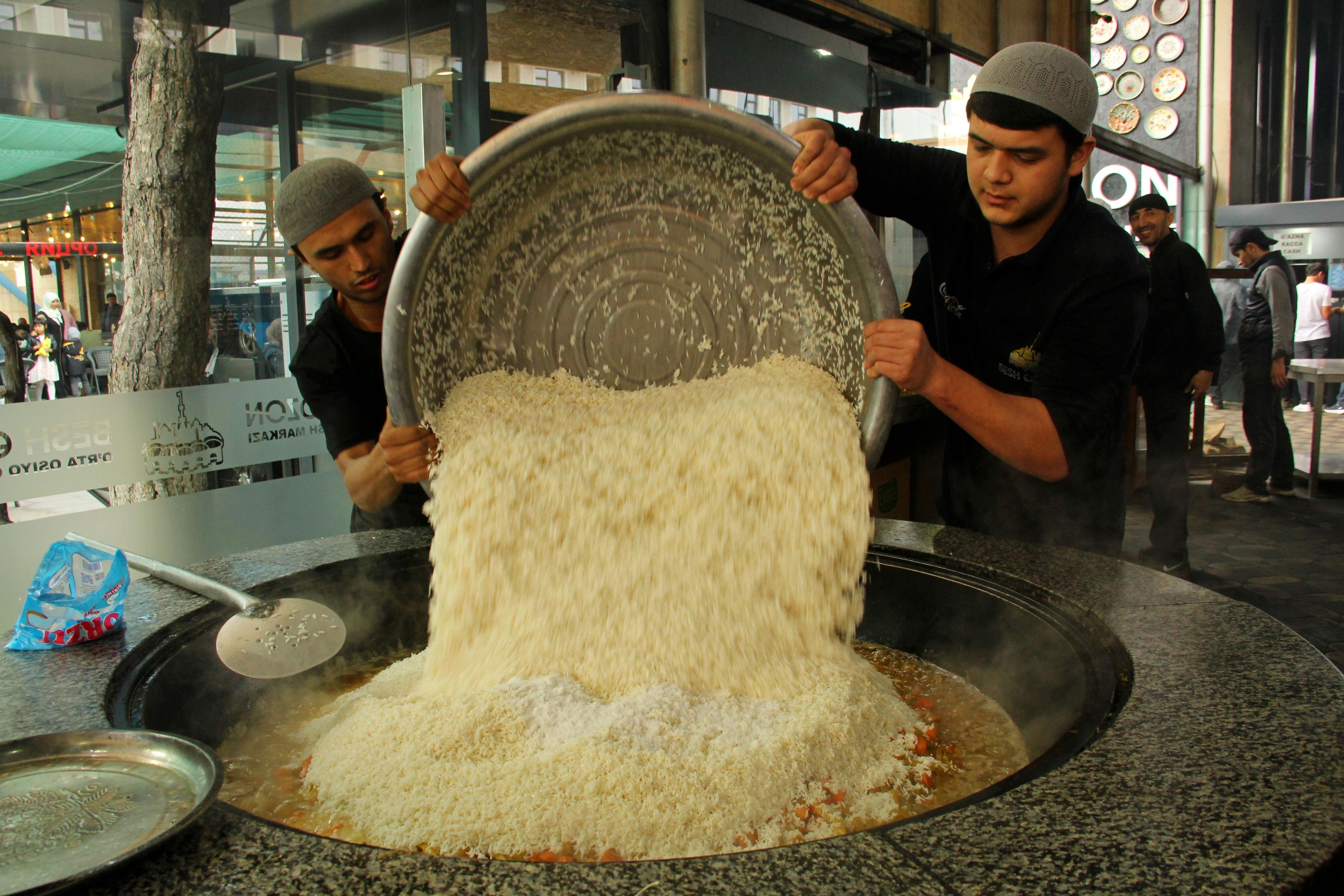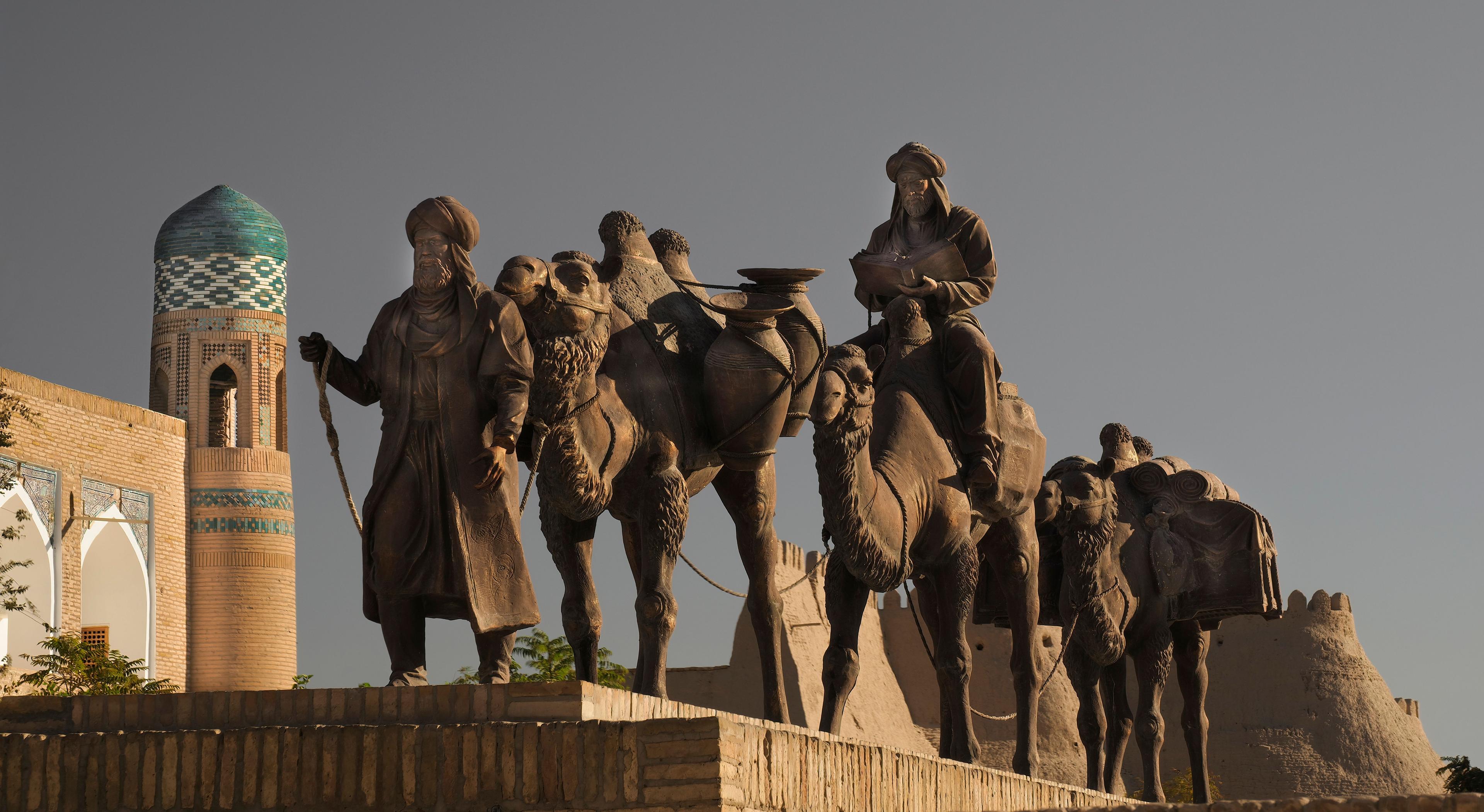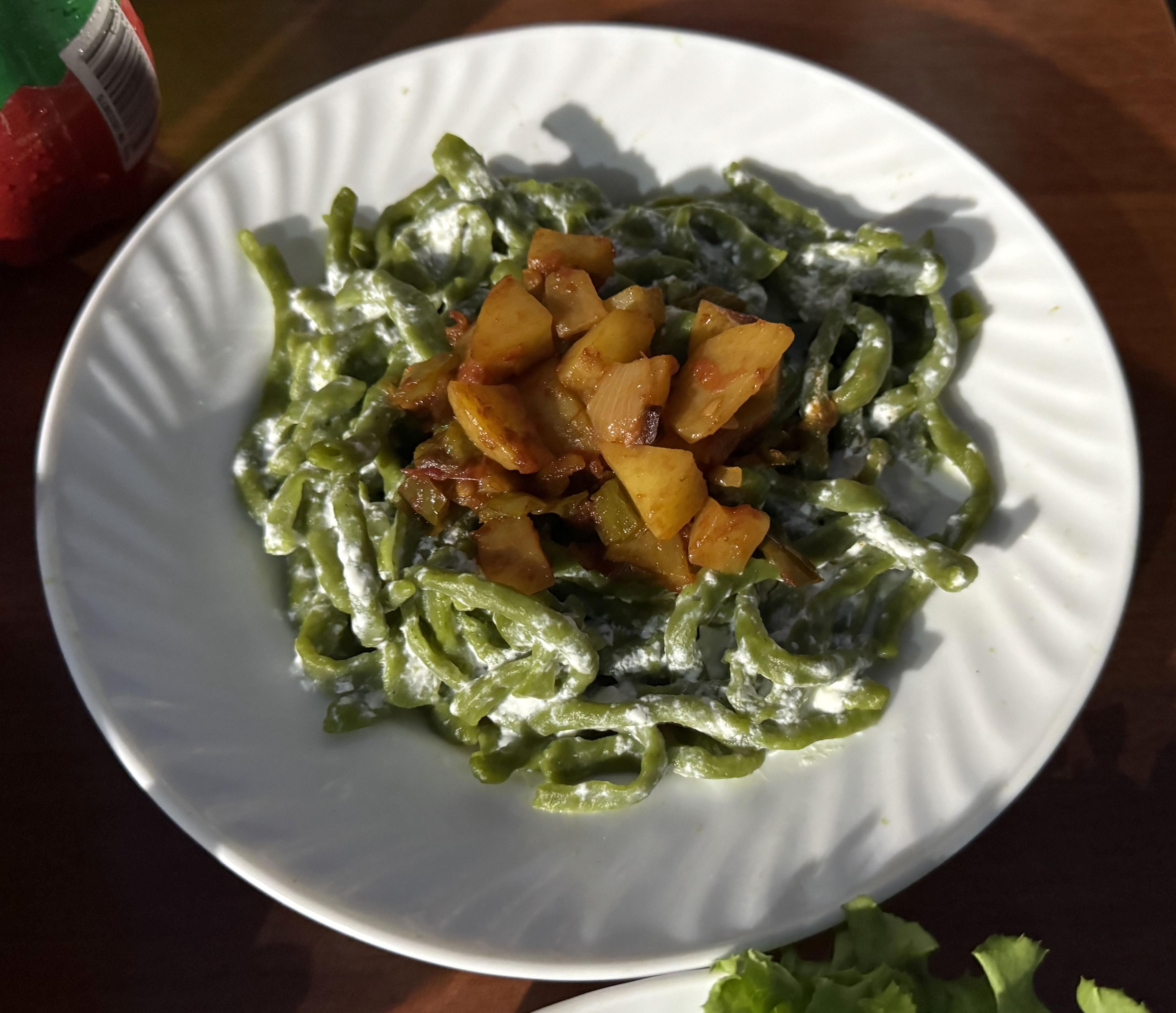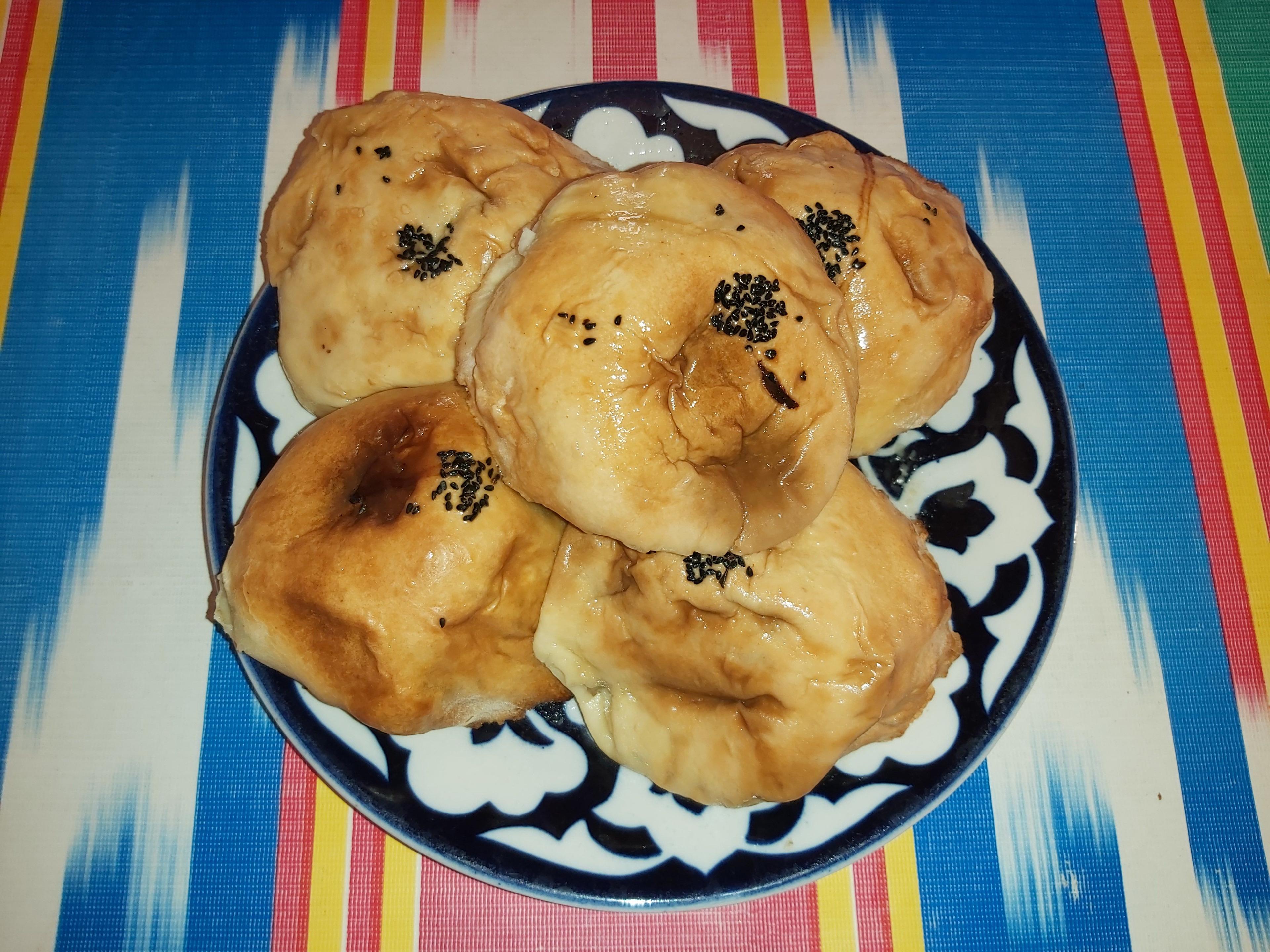
Halfway between Tashkent and Samarkand sits Jizzakh, a city most travellers see only from a train window. Uzbeks stop there on purpose, for a samsa the size of a dinner plate baked in a vertical tandir and for Zomin's kazan-patyr, a bread baked in a cauldron and eaten with melted butter. What they are, where the road passes, how to time the stop and what it costs.
Facts, prices and schedules checked on November 11, 2026
The Afrosiyob train makes the Tashkent-to-Samarkand run in a little over two hours, which is why almost no foreign visitor sees Jizzakh. Uzbeks driving the same route see it differently. Ask a Tashkent family where they stop on the way to a Samarkand wedding and the answer is automatic: Jizzakh, for samsa. The city has turned a pastry into a civic identity, and the drivers who pull off the highway for a plate of it are not being sentimental. It is, by a wide margin, the best samsa in the country.
Two foods justify a road journey instead of a train ticket: the Jizzakh samsa, a tandir pastry three or four times the size of the ordinary kind, and kazan-patyr, the cauldron-baked bread of the Zomin district in the mountains to the south, which in July 2025 became the twentieth Uzbek product to receive a protected geographical name. Here is where the road runs, how long the stop takes, what to order with it and how to turn the detour into a day in Zaamin National Park.
What makes a Jizzakh samsa different
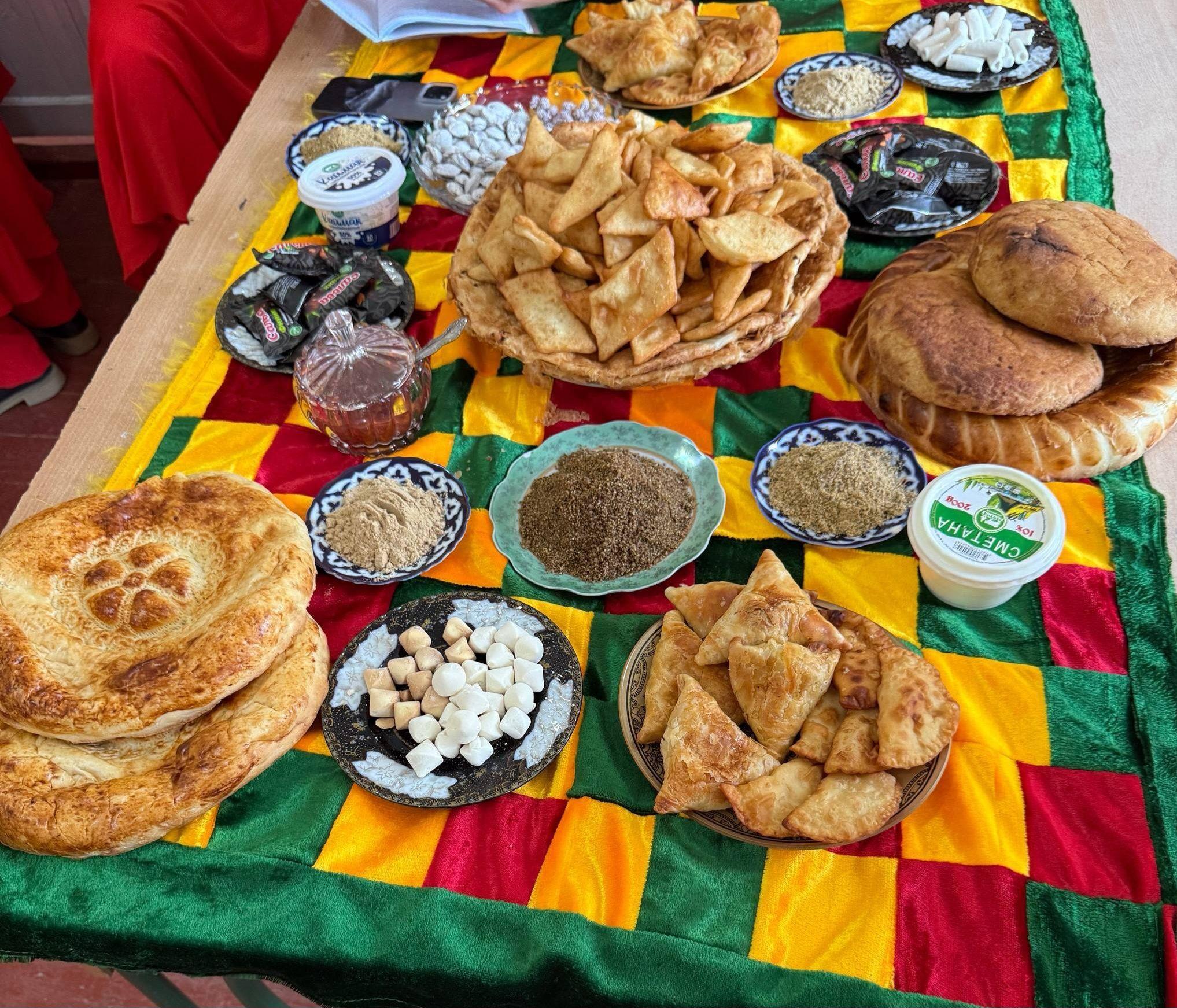
An ordinary Uzbek samsa is a palm-sized triangle or round of layered dough with minced lamb and onion, baked on the wall of a clay tandir. The Jizzakh version keeps the tandir and abandons the proportions. It weighs several times as much, its dough is rolled very thin so that the ratio of filling to pastry is reversed, and the filling is not minced but coarsely chopped mutton, cut into pieces big enough to keep their juice, with onion and generous pieces of kurdyuk, the fat from the tail of the local sheep. The fat renders in the heat of the oven, and the result is a pastry that must be eaten with a spoon, like a soup in a crust, from the top down.
Locals call it Qipchoq somsa, Kipchak samsa, after a mahalla of the city where, by one account, the recipe was perfected; the Kipchaks were a Turkic people whose descendants settled around Jizzakh. How the bakers stick a pastry that heavy to a vertical tandir wall and keep it there through the bake is the part they do not explain. Jizzakh samsa does not fall, they say, and leave it at that.
It is a meal, not a snack. One samsa with a bowl of broth or a tomato-and-onion salad called achichuk and a pot of green tea is lunch for an adult. Two is a mistake you make once.
Kazan-patyr: the bread baked in a cauldron
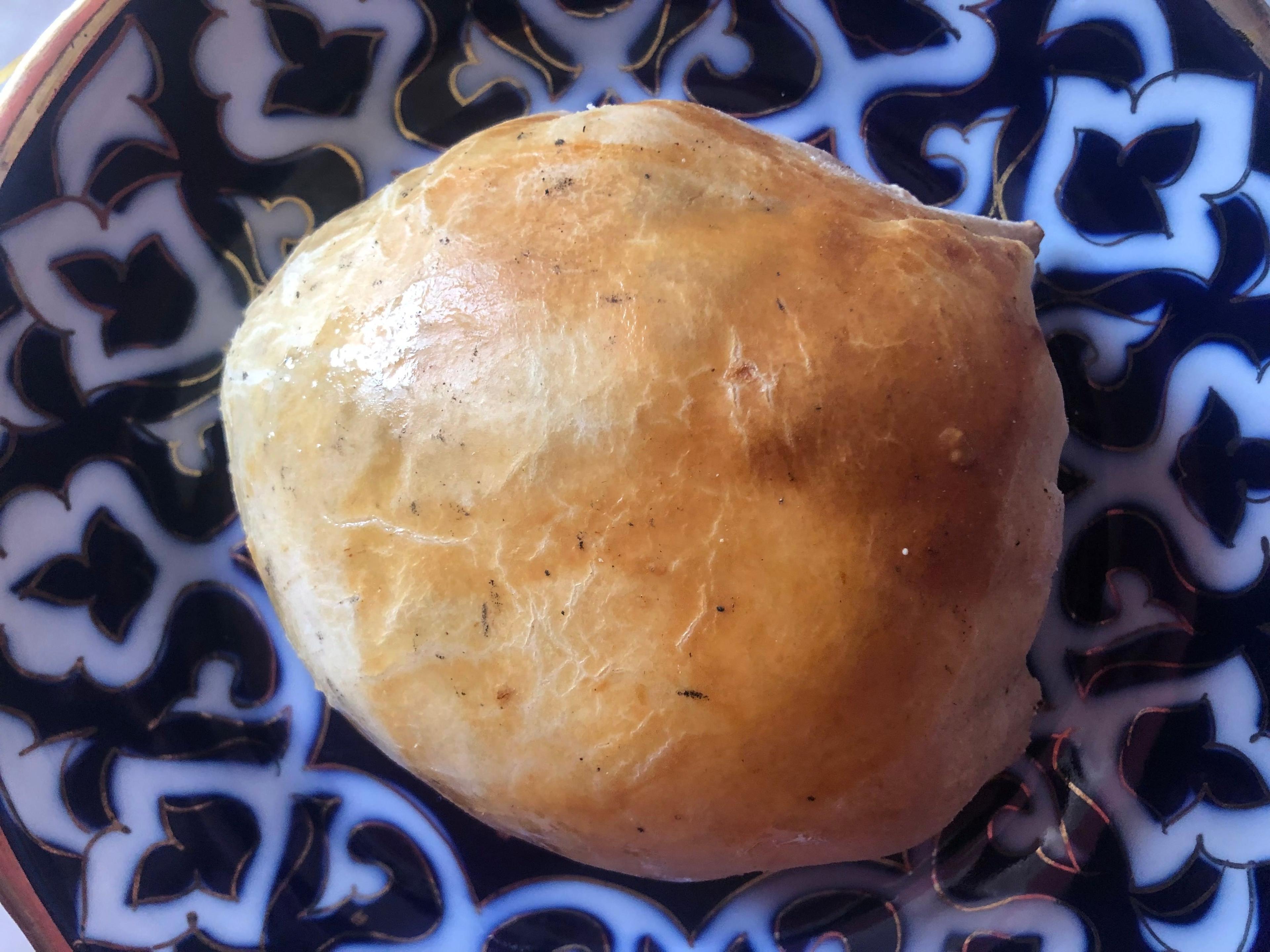
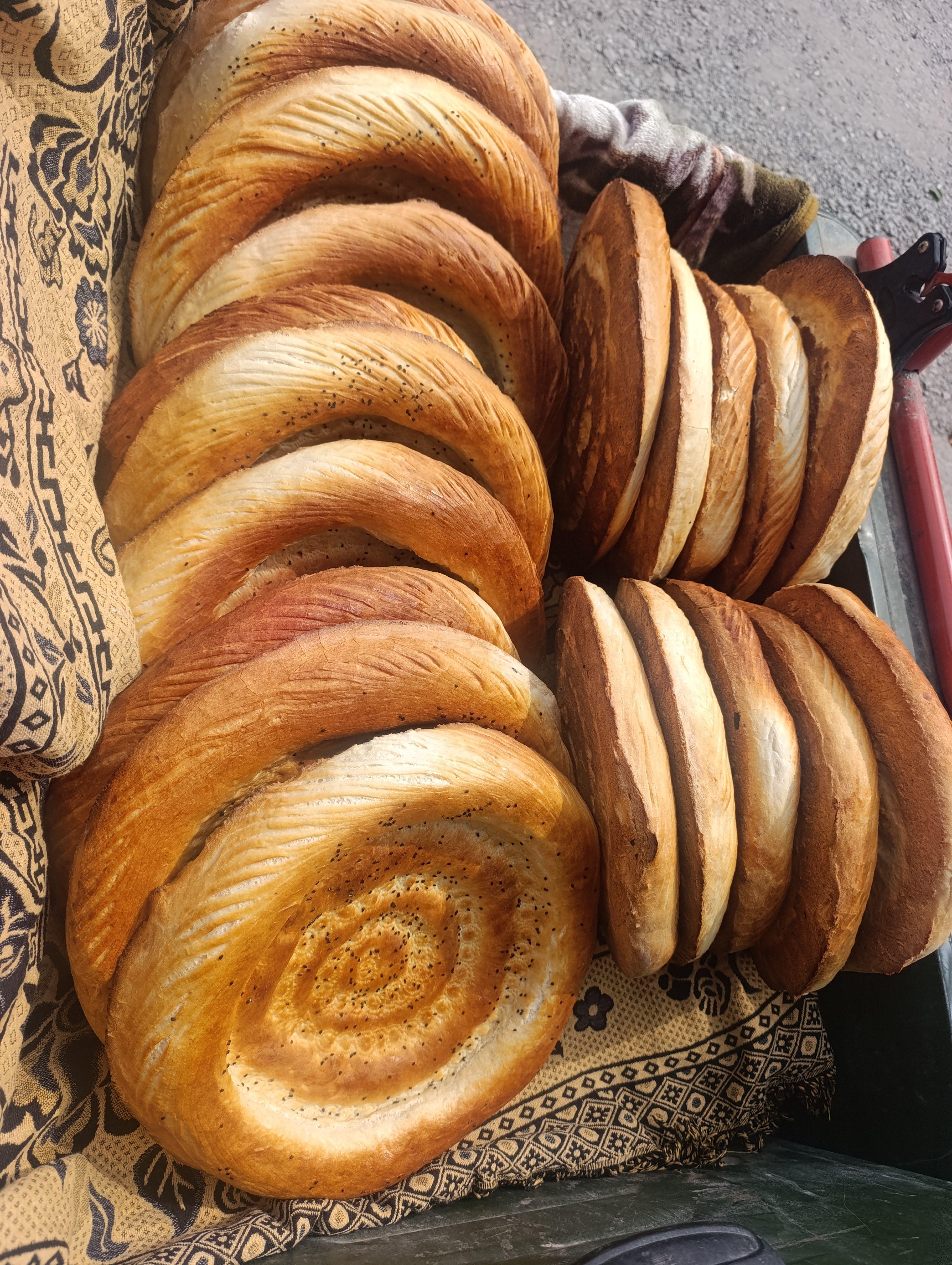
Patyr is the name for the richer kind of Uzbek flatbread, made with fat or milk in the dough and baked thick. In the Zomin district of Jizzakh region, up against the Turkestan range, bakers make it in a kazan rather than a tandir: the dough is kneaded with local milk and butter, pressed into a deep iron cauldron, decorated by pushing a pattern into the surface, and baked over the fire with the lid on. It comes out round, domed and the shape of the pot, with a soft crumb and a crisp base. The way to eat it is specific. A lump of butter is dropped into the hot centre, where it melts into a pool; you tear a piece from the edge and dip it. With kaymak and tea, it is the mountain breakfast.
On 11 July 2025 the Ministry of Justice registered Zomin qozon patiri as a geographical indication, the twentieth entry in the national register, after Samarkand bread, Chust knives and Guzar tandir lamb. The registration ties the name to the Zomin district and to the local milk and butter. Bakers elsewhere in Jizzakh make a similar bread, and good versions are sold at the roadside and in the city bazaar, but the Zomin loaf is the original.
Where the road runs and where to stop
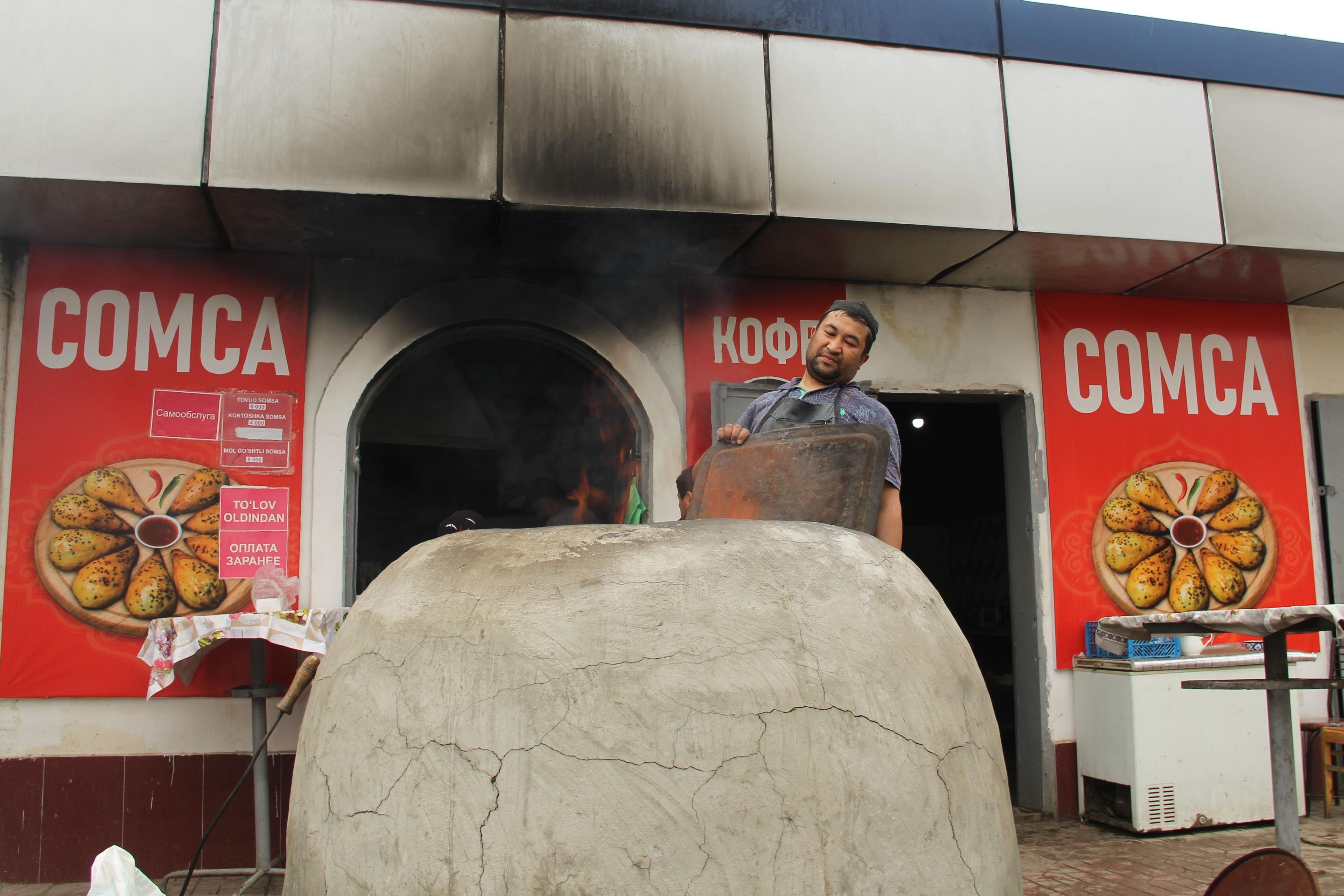
The M39 highway from Tashkent runs south-west through the Syrdarya steppe, passes Gulistan, and reaches Jizzakh after roughly 200 km, two and a half to three hours of driving. Samarkand is another 100 km, about an hour and a half, over the low pass at the western end of the Turkestan range. Jizzakh is therefore the natural halfway point, and both the bypass and the roads into the city are lined with samsa houses, most of them with the tandir in plain view and a stack of finished pastries under a cloth on the counter.
Two practical rules. First, stop where the tandir is lit and the pastries are coming out, not where the stack is tall and cold; a Jizzakh samsa reheated is a different and sadder thing. Second, the best bakers sell out by early afternoon, so an 11:00 to 13:00 arrival is ideal. Many families treat the stop as a full lunch and sit at the tapchan platforms behind the ovens. Drivers know their own favourites; if you are travelling with us, ours is a family oven on the road into the city that has been baking since the Soviet period.
If you are determined to take the train, note that some Afrosiyob services have stopped at Jizzakh station for two minutes since 2019, and a few stop at Zomin station as well; that is long enough to board, not to buy samsa. The pastry is a reason to drive.
Making a day of it: Jizzakh city and Zaamin
Jizzakh itself is a quiet regional capital on the Sangzor river, with boulevards, a central bazaar where kazan-patyr and dried fruit from the mountain villages are sold, and a few Soviet-era monuments. Most travellers give it the lunch stop and no more, which is fair. The detour that rewards a full day is to the south-east, to Zomin, 70 km from the highway, and the national park above it.
Zaamin is Uzbekistan's oldest protected area, a reserve founded in 1928 to protect the juniper forests of the Turkestan range, now a national park with a sanatorium at about 2,000 m, walking tracks, a glass-floored viewing bridge and a cable car added in the 2020s, and summer temperatures ten degrees below the valley. Village guesthouses in the district serve kazan-patyr for breakfast with butter, kaymak and honey, and in autumn the bazaar in Zomin sells the apples and walnuts the region is known for. A route Tashkent, Jizzakh (samsa), Zomin (overnight), Samarkand turns a transit day into two days and loses nothing from the main itinerary.
From Jizzakh it is also an easy run west to the Nuratau mountains and the Nuratau mountain villages, where community guesthouses in Sentob and Hayat bake their own bread in the yard.
How to get there, when and what it costs
By road: a private car with driver from Tashkent to Samarkand with the Jizzakh stop costs in the region of US$70 to 100 as of November 2026, depending on vehicle; shared taxis from Tashkent's Olmazor station run the same route for a few dollars a seat but will not wait while you eat. By train: the Afrosiyob and the slower Sharq both stop at Jizzakh, and a Tashkent to Jizzakh seat costs well under US$10, but the samsa houses are a taxi ride from the station.
Food costs are modest and change with the price of mutton, so we give ranges rather than figures: a Jizzakh samsa with tea and salad is a few dollars a person at a roadside oven; a Zomin kazan-patyr is sold by the loaf and is cheap enough that the butter you eat it with costs more. Cash is the rule at the ovens and in the bazaar; cards work in the city's cafes.
When to go: the samsa is a year-round food, warming in Jizzakh's cold winters and, the locals insist, a complete meal in its hot summers. Zaamin is best from May to October; the road up can be closed by snow in winter. Spring, when the steppe is green and the apricots are in blossom along the highway, is the prettiest time for the drive.
The Jizzakh stop with TourEast
Our fixed programmes take the train between Tashkent and Samarkand, but on a private itinerary that goes by road we build in the Jizzakh samsa stop, and families on Plov, Camels and Castles: Uzbekistan for Families can swap the train for the road on request. Our six-day food route, Six Days, Seven Plovs, can be run with the Jizzakh drive in place of the morning train on request, adding the samsa and a kazan-patyr tasting to the week. For a slower crossing, Four Crowns: Tashkent, Samarkand, Bukhara, Khiva can take the Zomin overnight as an extension. Tell us whether you want the stop, the mountain night or both, and we will plan the road accordingly.
Frequently asked questions
Photo: Zoirovna / Wikimedia Commons, CC0; Игорь Улитин / Wikimedia Commons, CC BY-SA 4.0; Mirzoulugʻbek / Wikimedia Commons, CC0