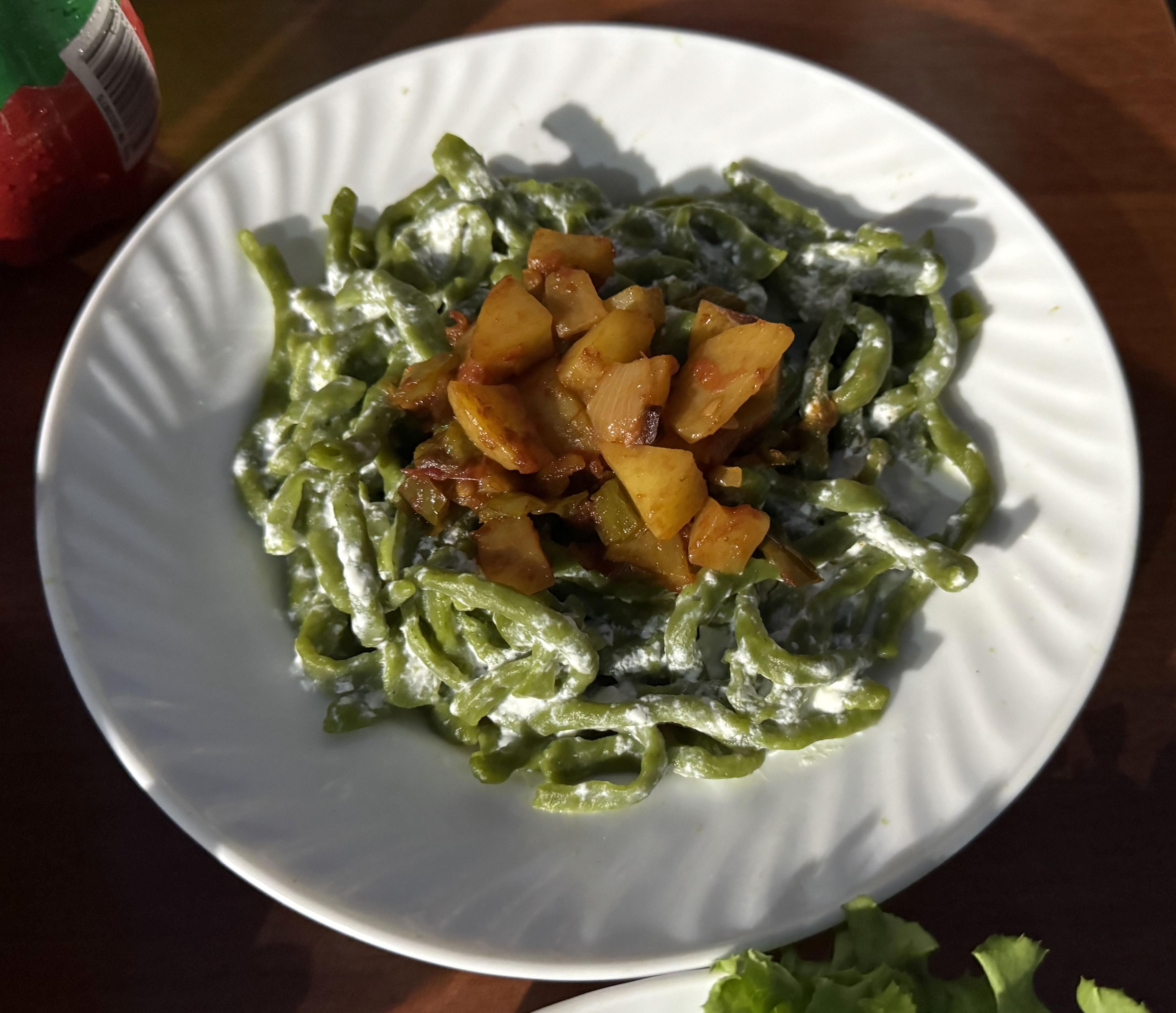
Tashkent is the best city in Central Asia to eat in, and the best of it is on three streets rather than in the hotel restaurants: the food hall and samsa row at Chorsu Bazaar, the city's official gastronomic street on Taras Shevchenko in Mirabad, and the plov cauldrons at the foot of the TV tower. What to eat on each, when to go and what it costs.
Facts, prices and schedules checked on November 11, 2026
Tashkent is a city of more than three million people who take lunch seriously, and the places they take it are not the ones in the hotel brochures. The capital's food geography has three poles. In the old town, under the blue dome of Chorsu, is the bazaar food hall and the samsa row behind it, where the city has eaten since the market was rebuilt in the 1980s. In the leafy Mirabad district south of the centre, Taras Shevchenko Street became the city's first official gastronomic street in October 2024 and has been under reconstruction in stages ever since. And on the northern edge, at the foot of the television tower, the Besh Qozon plov centre cooks the national dish in cauldrons the size of bathtubs for a lunchtime crowd that fills a hall the size of a football pitch.
Each has its own dishes and its own best hour, and all three are easy to reach on the Tashkent Metro. The gastronomic street project needs a word of explanation too, since parts of Shevchenko Street have been behind hoardings for much of 2026.
Chorsu Bazaar: the food hall and the samsa row
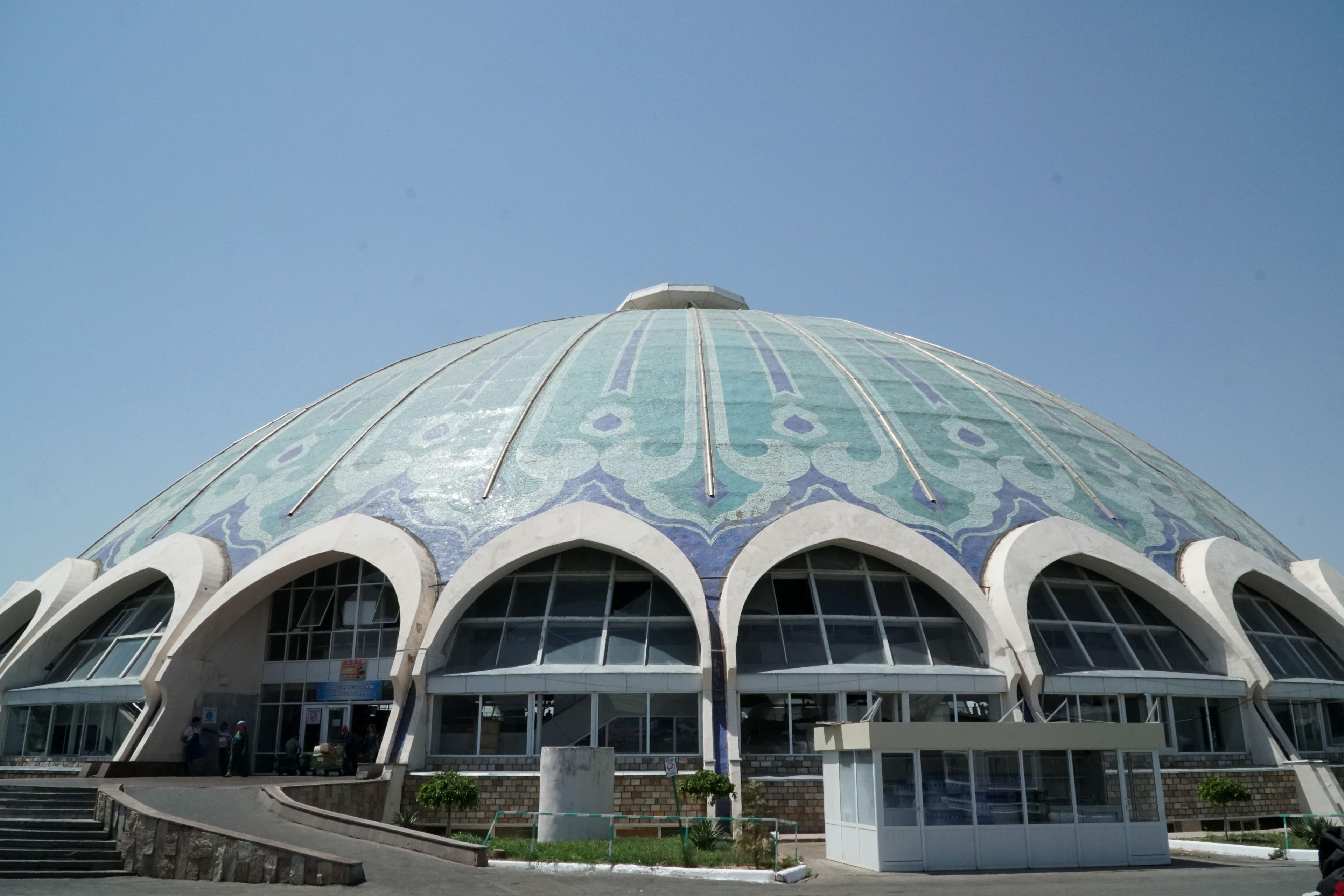
Chorsu Bazaar is the oldest market in Tashkent, on a site that has traded for roughly a thousand years, and since 2026 one of the newest World Heritage Sites: in July 2026 UNESCO inscribed it with nine other buildings as Tashkent Modernist Architecture. The blue dome that gives the market its skyline was designed in 1980 by Vladimir Azimov, Sabir Adylov and their team and built through the late 1980s; it spans close to 90 m, with the lower structure engineered for earthquakes.
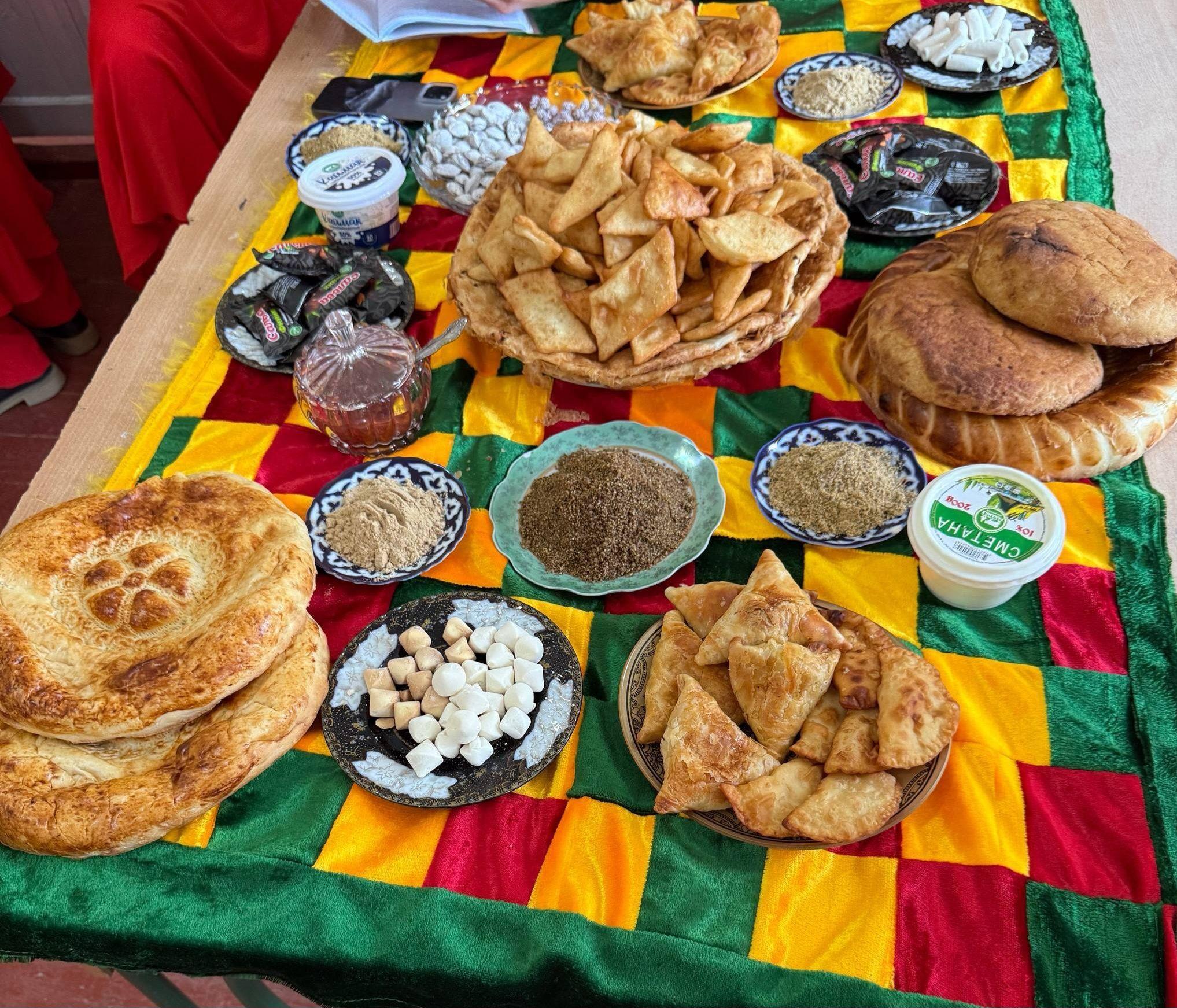
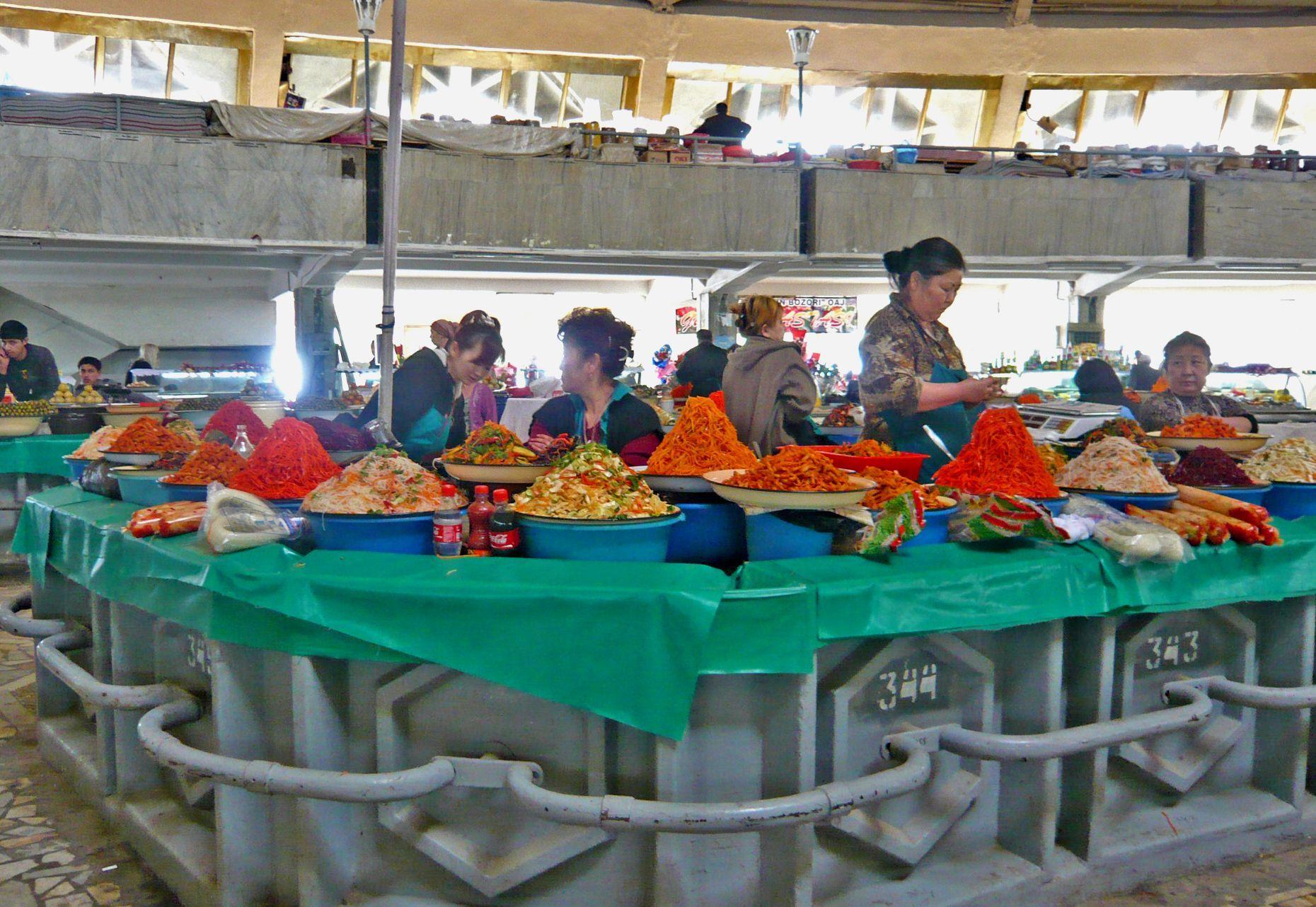
Under the dome is the produce and dairy hall, arranged in concentric rings: meat at the centre, dairy and pickles around it, spices, dried fruit, nuts and sweets on the upper gallery. This is where to see kaymak ladled from basins, qurt and suzma, navat crystals, halva cut from slabs, and the horse-meat sausage kazy that Tashkent's Kazakh and Uzbek families both claim. The bread market is in the open section outside.
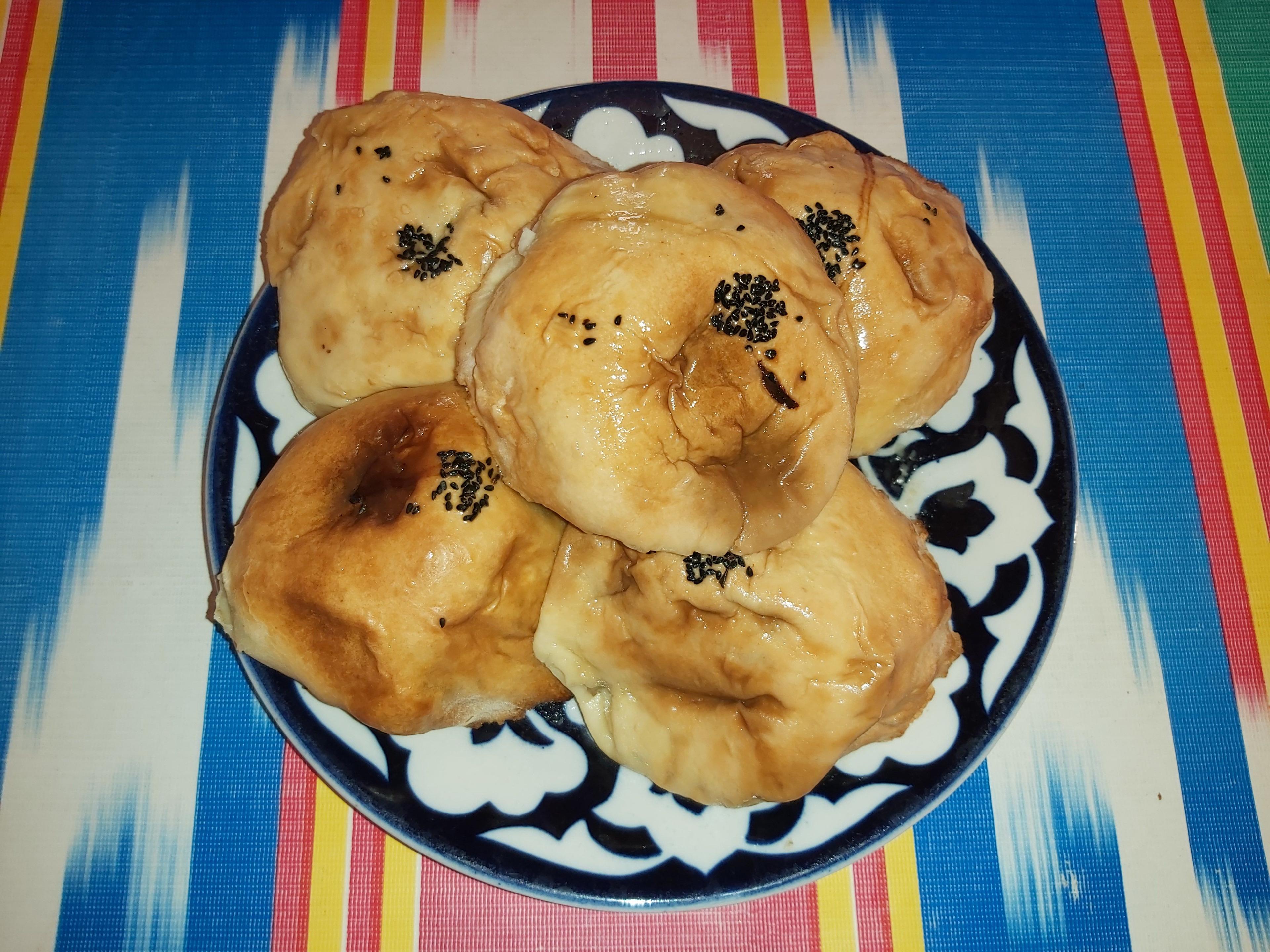
The eating happens behind the dome, in the covered rows locals call the ovqat bozori, the food market. The samsa section is the main event: a dozen or more tandir ovens within a short walk of each other, each baker with a speciality, lamb, beef, pumpkin, greens in spring, and a crowd that tells you which oven is best that morning. Beside them are the plov cooks with a single kazan each, the norin stalls, where cold hand-cut noodles are mixed with horse meat and pepper, the hasip sausage sellers and the shashlik grills. The food market works from early morning; the samsa are at their best between nine and noon, the plov is cooked for a one o'clock lunch, and by four the ovens are cooling. Most stalls are closed or thin on Mondays. Metro: Chorsu station, across the street.

Taras Shevchenko Street: the official gastronomic street
Mirabad is the district south of the railway station where Tashkent's restaurant scene has quietly concentrated: Korean, Georgian, Turkish and Italian kitchens beside Uzbek chaikhanas, bakeries and coffee roasters, on streets shaded by plane trees. In 2024 the city chose an 800 m stretch of Taras Shevchenko Street, between Shahrisabz and Nukus streets, to become its first gastronomic street. The reasons given were practical: a dense run of cafes and restaurants, heavy foot traffic and no residential entrances to disturb. The first 250 m section, from Said Baraka to Fidokor streets, was rebuilt over the summer and opened on 26 October 2024, with the road narrowed to one lane, wider pavements, summer terraces, photo zones, a sound system and permission for food trucks and live music.
The operating idea is simple. Restaurants set their own hours and may serve around the clock, and the street closes to cars every evening from 20:00 until six or seven in the morning, when it becomes a pedestrian promenade. On a warm night it works: tables spill onto the pavement, there is music, and the mix of a Korean grill, a Turkish bakery, an Uzbek kebab house and a wine bar within a hundred metres is something no other Central Asian city offers.
Two cautions. The reconstruction has continued in stages, and the third stage began in July 2026 with the aim of finishing by the end of the year, so expect hoardings on part of the street during that period. And the restaurants change quickly; rather than name places that may have closed, we recommend walking the street from the Shahrisabz end at about seven in the evening and choosing by the crowd. A second gastronomic street has been announced for the Yashnabad district. Metro: Oybek or Kosmonavtlar, then a ten-minute walk; a Yandex Go taxi from the centre costs 15,000 to 25,000 som.
Besh Qozon: plov at the foot of the TV tower
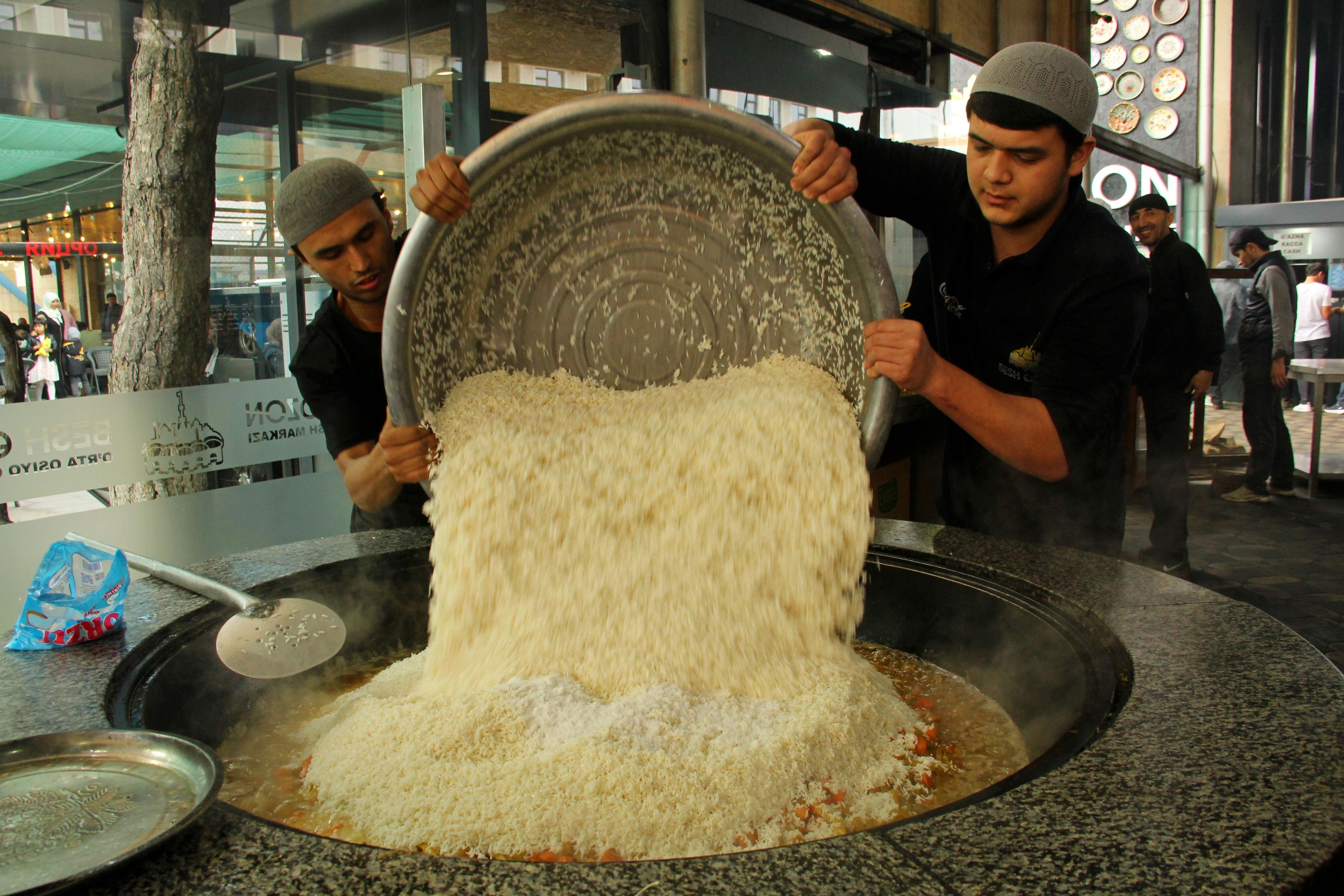
Besh Qozon, five cauldrons, is the formal name of what everyone calls the Plov Centre, or in English the Central Asian Plov Centre. It stands beside the Tashkent Television Tower in the north of the city, a hangar-sized hall with suzani on the walls, a summer terrace and, in the open kitchen along one side, a row of kazans in which plov for hundreds is cooked each morning over open fire. Visit between eleven and one to see the cooks working the cauldrons with shovel-sized skimmers; by two the main batches are sold and the hall begins to empty.
The menu is short and the ordering system is unusual: there is often no printed menu, and the staff expect you to know what you want. The core choices are to'y oshi, wedding plov, the classic Tashkent style with yellow carrot, chickpeas and raisins; choyxona oshi, the everyday chaikhana plov; a chicken plov; a devzira plov made with the red Fergana rice; and a zig'ir plov cooked in linseed oil in the Samarkand manner. Portions come as a full or 0.7 plate with a salad of tomato and onion, bread and tea. In late 2024 a portion cost 38,000 to 42,000 som; the restaurant's own site in November 2026 lists a single-person set of wedding or chaikhana plov at 70,000 som and a kilogram of wedding plov to take away at 122,000 som. Kazy, quail eggs and extra meat are ordered on top.
Is it the best plov in Tashkent? Locals will tell you that a good mahalla oshpaz, cooking one kazan for a known crowd, beats it, and the restaurant's consistency has been criticised in the local press. But nowhere else lets you compare four or five regional plovs at one table, and the spectacle of the cauldrons is worth the trip. Metro: Bodomzor, then a short walk. There are branches in Sergeli and other districts, but the TV tower hall is the original.
The rest of the local map
Beyond the three poles, the places Tashkenters actually eat are spread through the mahallas. The reliable patterns:
- Plov houses: every district has an oshpaz who cooks one kazan for lunch and sells out by two. Ask at your hotel for the nearest; the ones near Chorsu and in the Chilanzar district are the best known.
- Chaikhanas in the old town, around Kukeldash Madrasah and the Khast-Imam complex, for shurpa, lagman, manti and tea on a tapchan; this is where Tashkent eats breakfast and a slow lunch.
- Mirabad Bazaar, a smaller market near Shevchenko Street, for dairy, Korean salads from the Koryo-saram stalls, bread and fruit; a good place to assemble a picnic before a day trip.
- The Soviet-era centre around Amir Timur Square for the city's restaurant institutions and the newer chef-led Uzbek kitchens that have opened since 2022.
- Summer food festivals: the Gastro Bazaar festival runs for about ten days each summer with sixty or more vendors, and is the one event where Tashkent's home cooks and restaurants are in one place.
Shashlik, lagman and the city's Korean kuksi noodles each deserve their own guide, and we have them; this article is about the streets, not the dishes.
How to get there, when to go and what it costs
Tashkent's three food poles are twenty to thirty minutes apart by metro or taxi, so one day can cover all three: Chorsu in the morning, the Plov Centre for lunch and Shevchenko Street in the evening. Since 1 October 2026 a metro ride costs 2,500 som paid by card or phone at the gate, or 3,000 som with a paper QR ticket; Yandex Go taxis across the centre cost 15,000 to 40,000 som.
Timings: Chorsu's food rows from about 06:00, best 09:00 to 13:00, quiet after 16:00 and thin on Mondays; the Plov Centre from late morning, with the cauldrons in action 11:00 to 13:00; Shevchenko Street from 18:00, pedestrianised from 20:00, lively until after midnight in summer. Friday and Saturday evenings are the busiest.
Costs as of November 2026: a bazaar lunch of two samsa, salad and tea, 30,000 to 45,000 som; a plate of plov with the trimmings at the Plov Centre, 45,000 to 70,000 som; dinner for two on Shevchenko Street with a bottle of local wine, 300,000 to 500,000 som. Cards are accepted in restaurants and increasingly at bazaar stalls, but carry cash for the samsa row. Tashkent is not a tipping city, though rounding up is appreciated; see our guide to tipping in Uzbekistan.
Eating Tashkent with TourEast
Most TourEast itineraries that start in the capital leave time for at least one of these places. Six Days, Seven Plovs opens with an afternoon tasting walk through Chorsu Bazaar and a welcome dinner of Uzbek classics before the morning train to Samarkand; on our eight-day small group, Eight Days, One Table: Small-Group Silk Road, the arrival day is free, so Shevchenko Street makes an easy first evening, and the Tashkent day has a break for lunch; and the twelve-day Twelve Gates of the Silk Road gives the capital a full day with a guide, Chorsu Bazaar included. If you want a Tashkent evening food walk on its own, or a plov lesson with a mahalla oshpaz rather than a restaurant, tell us the date and we will arrange it.
Frequently asked questions
Photo gallery
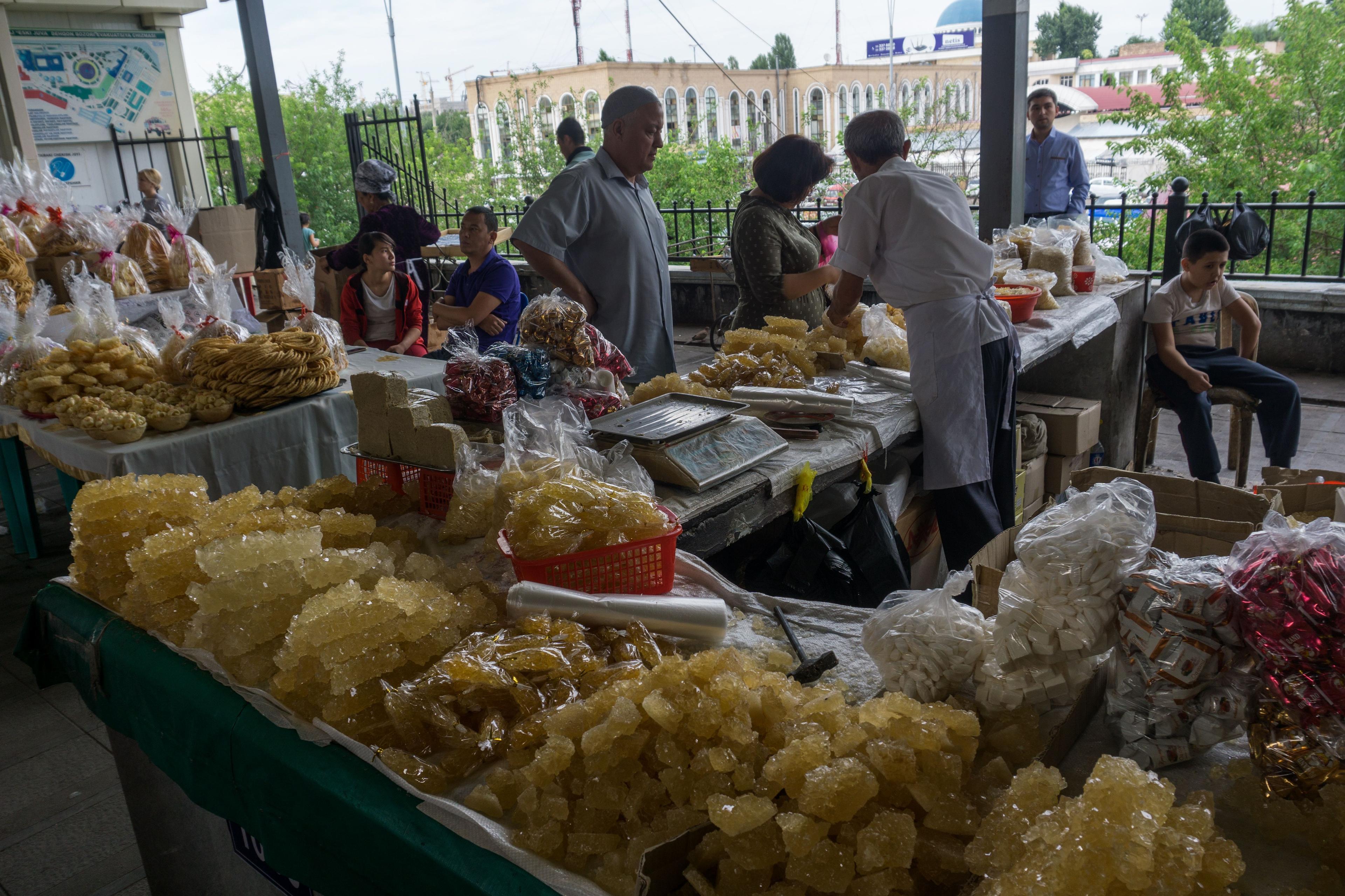
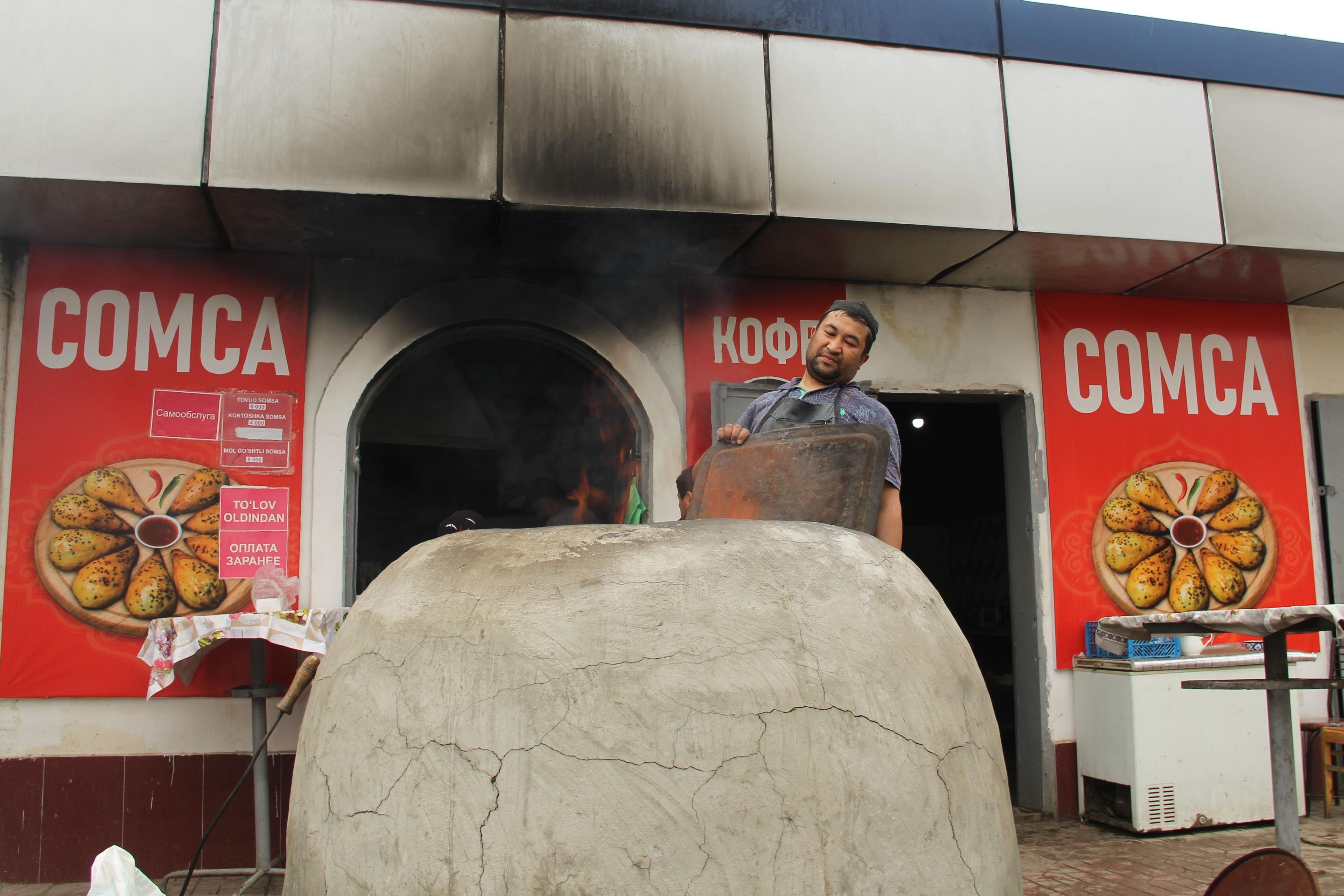
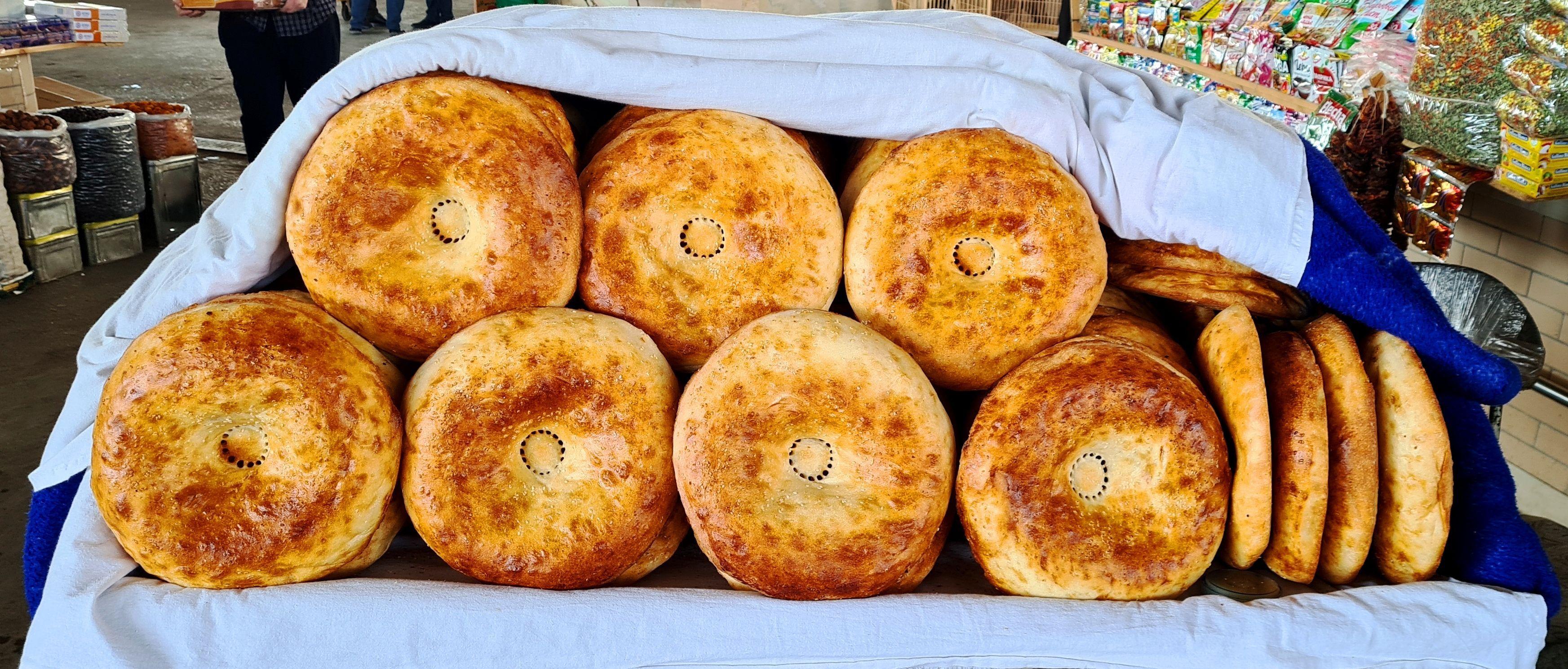
Photo: Adam Harangozó / Wikimedia Commons, CC BY-SA 4.0; LBM1948 / Wikimedia Commons, CC BY-SA 4.0; Alexey Komarov / Wikimedia Commons, CC BY-SA 4.0; Игорь Улитин / Wikimedia Commons, CC BY-SA 4.0; BeshevI / Wikimedia Commons, CC0; Enric / Wikimedia Commons, CC BY 4.0