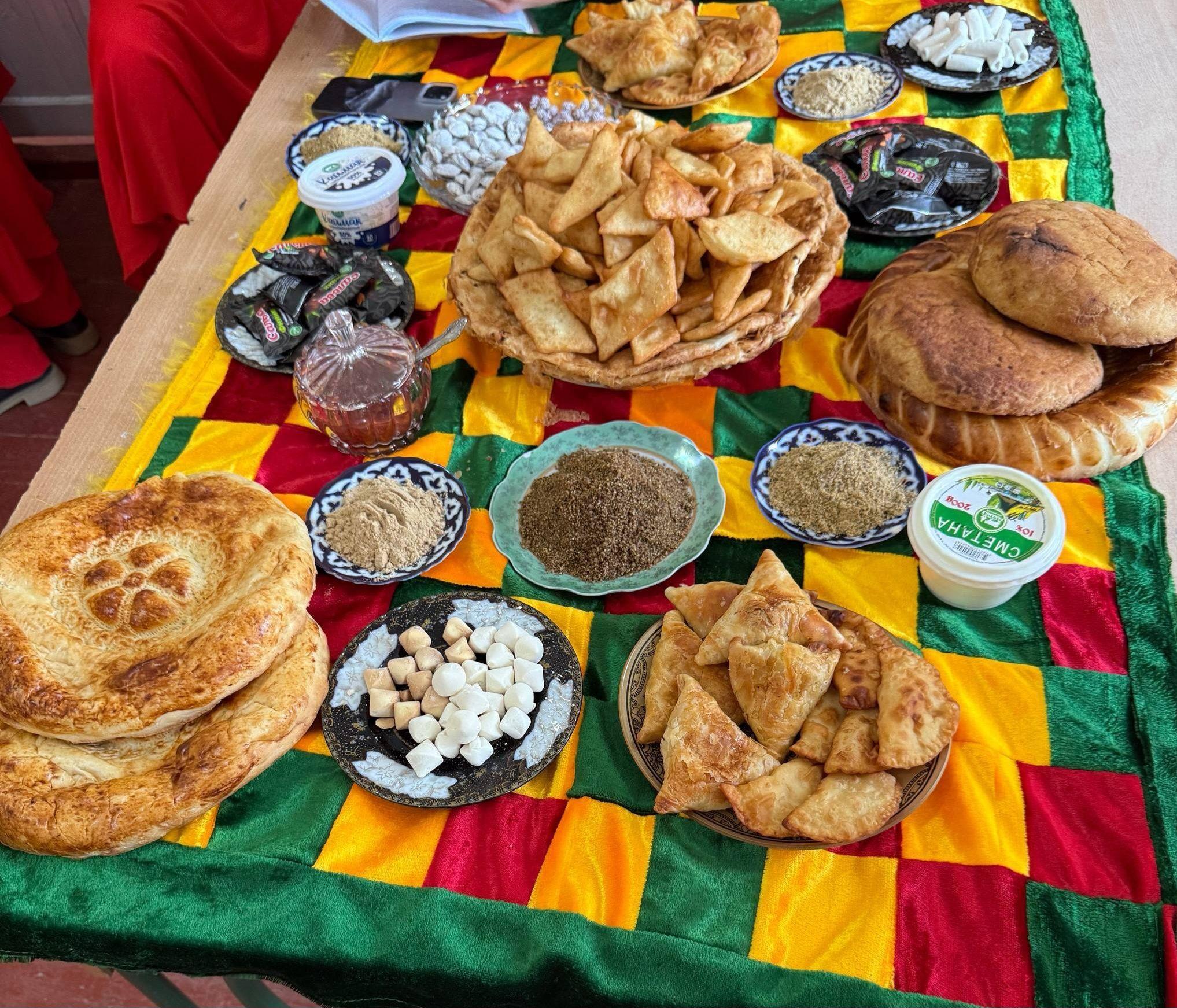
Khiva eats differently from the rest of Uzbekistan: green dill noodles, dumplings filled with raw egg that sets in the pot, fried gumma pastries and a raw-meat dish with a legend attached. What each one is, where to order it inside and outside Ichan-Kala, what it costs and how to learn to cook it.
Facts, prices and schedules checked on November 11, 2026
Khorezm is an oasis on the lower Amu Darya, four hundred kilometres of desert from Bukhara, and for most of its history it was easier to reach from the Caspian than from Samarkand. The food shows it. Khiva's kitchen leans on dill, eggs, sour milk and thin boiled dough rather than on the heavy rice and lamb of the Fergana Valley, and it has dishes that exist nowhere else in Uzbekistan. A traveller who orders plov three times in Khiva has missed the point of the city.
Five dishes define Khorezm cuisine; here is where to eat them inside and outside the walled town of Ichan-Kala, what a meal costs, how to join a one-hour cooking class, and why two of these dishes now carry an official geographical indication like Champagne or Parma ham. It is written from the point of view of a Bukhara-based guide who has eaten a great deal of shivit oshi, some of it reluctantly, and who has opinions about the dill.
Why Khorezm eats differently
Three things shape the Khorezm table. The first is geography: the oasis grows wheat, rice, melons, pumpkins and an extraordinary amount of dill, and it keeps cattle and goats as much as sheep, so dairy and eggs matter more here than in the south. The second is history: Khiva was the capital of its own khanate until 1920, with its own dialect, its own music and its own ideas about dinner. The third is the climate. Summers on the lower Amu Darya run above 40 °C for weeks, and several of the region's signature dishes are deliberately light and cold: sour-milk sauces, boiled dumplings, noodles served at room temperature.
The local word you will hear is barak, meaning a boiled filled dumpling. Khorezm has a whole family of them: tukhum-barak with egg, kuk-barak with greens, kovok-barak with pumpkin. Shivit oshi, the green noodle dish, is the one everyone photographs, but it is the baraks that locals will argue about.
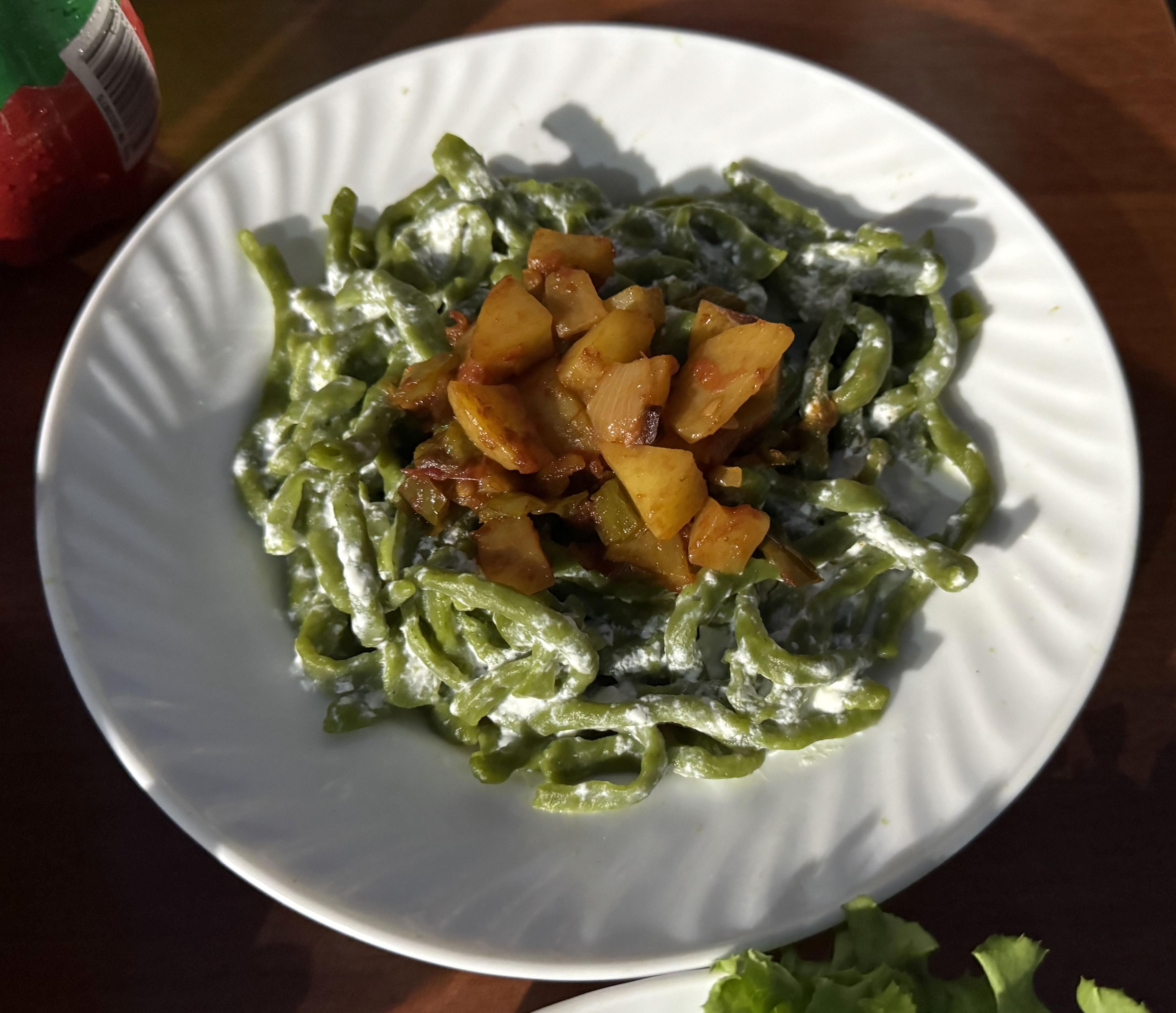
Shivit oshi: the green dill noodles
Shivit means dill in the Khorezm dialect, and shivit oshi is a noodle dough kneaded with dill juice or a strong dill infusion until it turns bright green. The noodles are cut like lagman, boiled and served under two toppings: a white sauce of suzma or qatiq (strained sour milk) and a stew the locals call vaju, of beef or lamb with potato, carrot and tomato. Some cooks also add a soft-boiled egg. It is eaten warm rather than hot and is traditionally a summer dish, though restaurants in the old town serve it year round.
The official tourism portal credits the dish's spread beyond Khorezm to a Khiva chef, Rajab Sattarov, who moved to Tashkent in 1958 and put it on the capital's menus. We have not found an independent source for that story, so treat it as the accepted local version rather than documented history. What is certain is that shivit oshi is on the menu of practically every restaurant inside Ichan-Kala and almost nowhere else in the country.
How much dill you taste varies enormously by kitchen. In some places the green is mostly colour; in others the noodle is unmistakably herbal. If you dislike dill, the local phrase is shivit siz, without dill, and cooks will not be offended. Expect to pay in the region of 50,000 to 80,000 som for a plate in the tourist zone, where a main course rarely costs more than US$7.
Tukhum-barak: the dumpling filled with raw egg
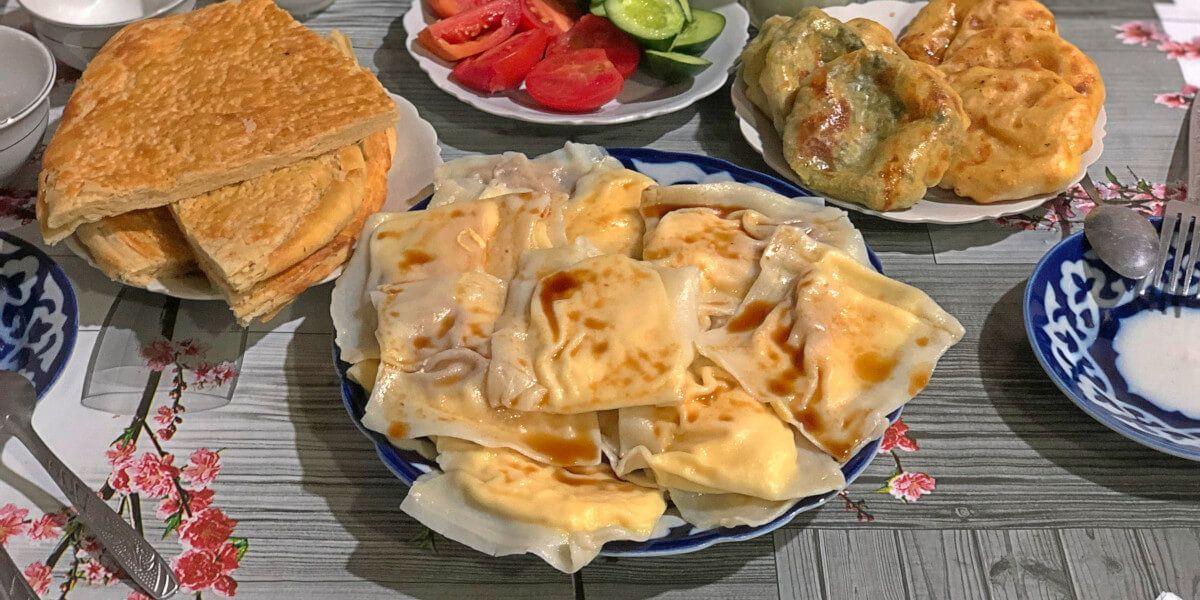
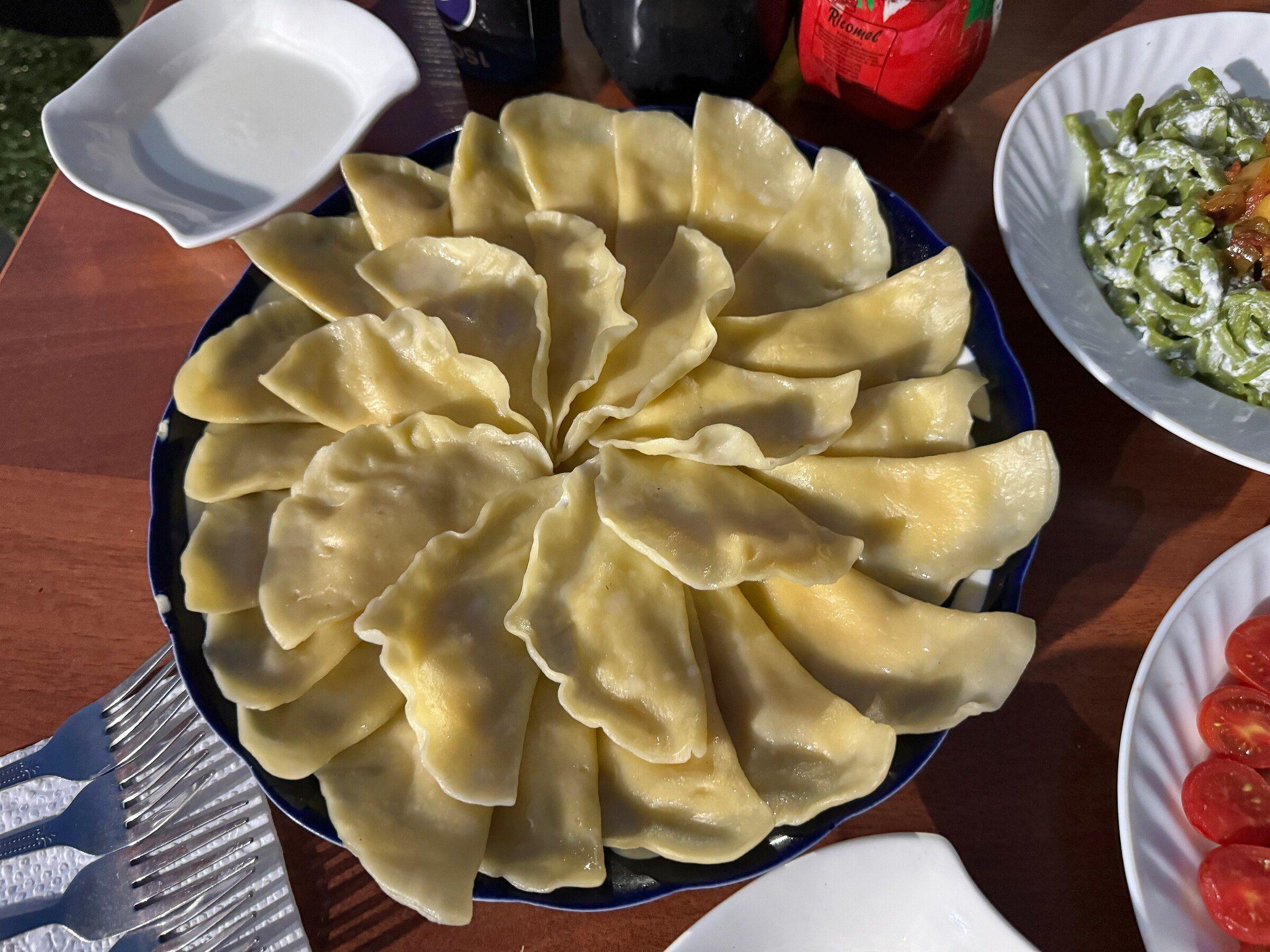
Tukhum-barak is the dish that surprises visitors most. Squares of thin dough are sealed into pockets, and into each pocket the cook pours a raw mixture of beaten egg with milk or melted butter, sometimes tinted with turmeric. The parcels go straight into boiling water; the egg sets inside the dough within a minute or two and the dumpling floats when ready. It is served hot with sour cream or qatiq and tastes, as one visiting food writer put it, like an omelette wrapped in pasta. A plate is a light meal on its own and a good first course before meat.
In June 2025 Uzbekistan's Ministry of Justice registered Khorezm tukhum-barak as a geographical indication, placing it in the same legal category as Samarkand bread and Gijduvan kebab. The practical meaning is that only Khorezm producers may use the name commercially, and the intention is to protect a recipe that is easy to imitate badly.
There is a story in Khiva that tukhum-barak was the khan's private dish, eaten before he visited the harem. It is a legend, repeated by guides and restaurant menus, and we have found nothing historical behind it. Order the dumplings for their own sake.
Gumma, ijjon and the rest of the Khorezm table
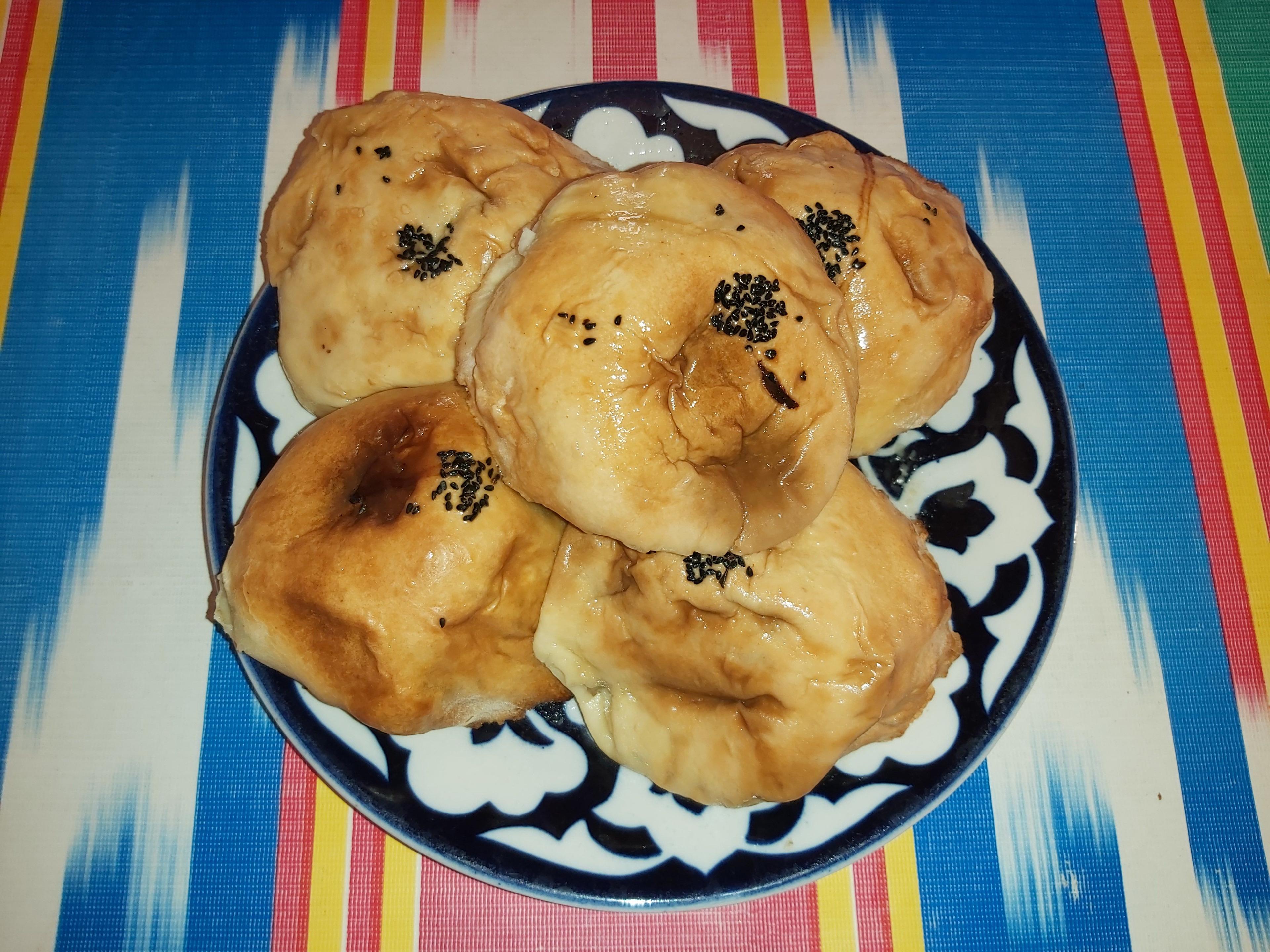
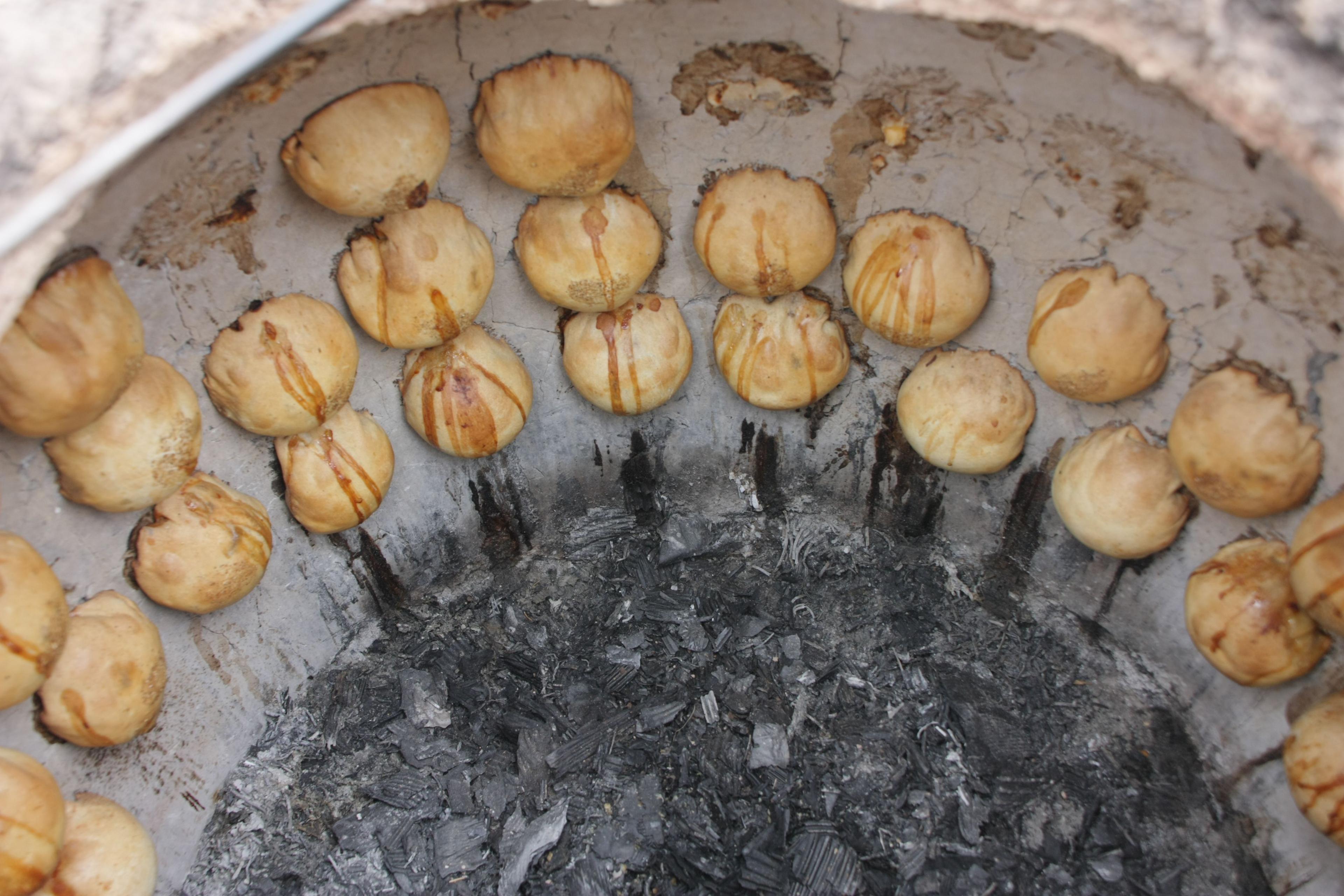
Gumma is Khorezm's fast food: a disc of very thin dough folded over minced meat, potato, soft cheese or herbs and fried in oil until blistered, or baked in a tandir as the drier version called katyrma. In the bazaar it is sold hot with chopped offal and a spoon of tomato sauce, and it is the thing to eat standing up at the market outside the walls before nine in the morning.
Ijjon, sometimes written izhzhan, is the dish to ask about but think twice before ordering. It is raw minced beef worked with cold water, salt, oil and plenty of onion into a soft paste, closer to a Levantine kibbeh nayyeh than to anything else in Central Asia. The local legend says a khan once forbade the common people to cook meat, and they ate it raw in defiance; the dish became a symbol of stubbornness. Modern cooks freeze the meat for two days before preparing it. It appears at festivals and in a few family kitchens rather than on restaurant menus, and we do not recommend it for travellers with sensitive stomachs.
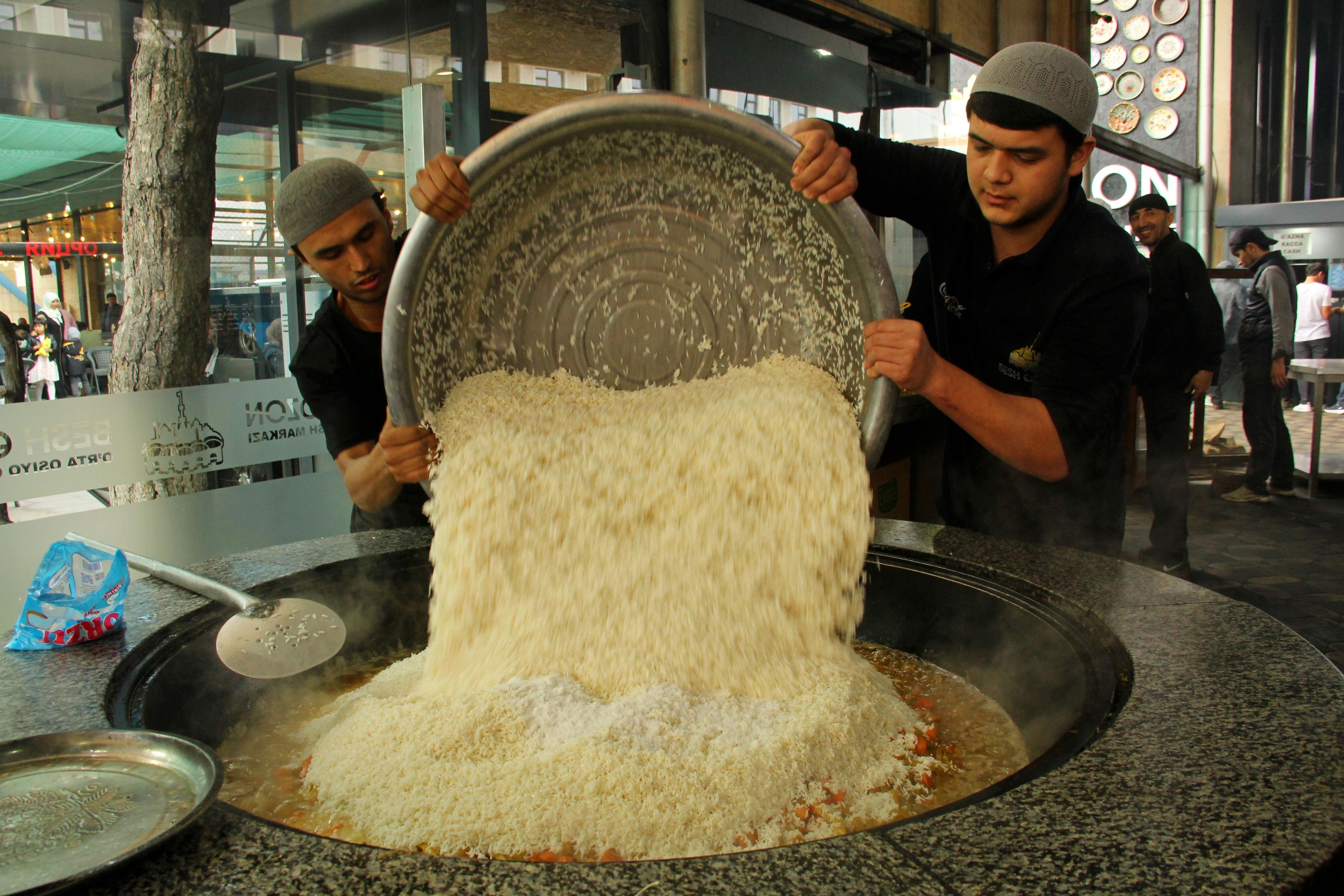
Around these sit the everyday dishes of the region: kuk-barak with spring greens, kovok-barak with pumpkin, kazan-kebab of lamb fried in its own fat, tuncha shurpa, a clear broth cooked slowly in a clay pot, and bogirsok, small fried dough pillows served with tea. Khorezm plov exists too, cooked with more carrot and often with chickpeas, but it is the least distinctive thing on the table.
Where to eat in Khiva: inside and outside the walls
Restaurants inside Ichan-Kala are set in former madrasahs and courtyards, charge tourist prices and are, on the whole, better than their reputation. Outside the walls the food is cheaper and more local, and a ten-minute walk is enough to find it. Our picks as of autumn 2026:
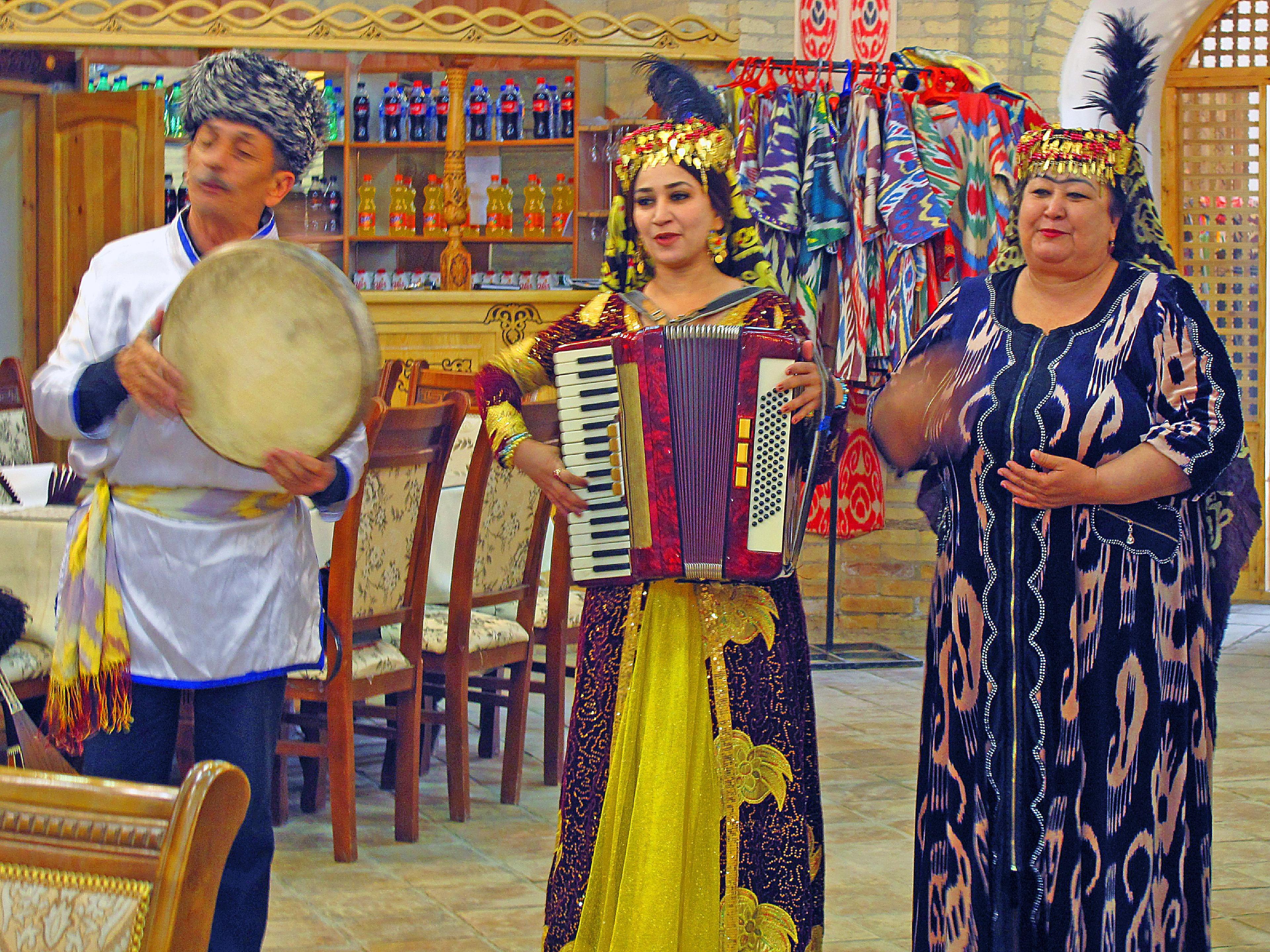
- Arxi Terrasa, inside the walls. Order shivit oshi and gul khonim, the steamed dumplings served with sour cream; ask for the upper terrace, which looks across the rooftops to the Islam Khodja Minaret. Musicians play most evenings.
- Sultan, inside the walls near the wood-carvers. A reliable tukhum-barak and a decent Khorezm plov.
- Mirza Boshi tea house, inside the walls. Good soups and pumpkin samsa; this is also where the one-hour shivit osh cooking class runs.
- Yasavul Boshi, in an old madrasah courtyard, worth it for the setting and the live music as much as the food.
- Tandiriy, a short walk outside the walls. Local crowd, fair prices and a good nohat shurak, the chickpea-and-lamb stew that Samarkand claims as its own.
- Bread & Samsa, beside the Terrassa cafe. Pumpkin bread and potato samsa to take away; cash only.
The Ichan-Kala entry ticket, valid for two days and covering most museums, cost 250,000 som (about US$20) in autumn 2026. Most restaurants in the tourist zone list mains at the equivalent of US$4 to 7, salads and bread extra, and many now accept cards, though the stalls outside the walls do not.
Learn to cook it: the shivit osh class and the Khans' festival
The simplest way to understand shivit oshi is to make it. The Mirza Boshi tea house runs a short class, around an hour, in which you knead the dill dough, roll and cut the noodles, and eat the result with vaju and qatiq. English-language sessions were scheduled at 10:00 and 16:00 in 2026 and the class can be booked through major activity platforms or through us. One portion uses one egg, roughly 150 g of dill and 200 g of flour, which tells you how green the noodle is meant to be.
For a wider view of the regional kitchen, Khiva now hosts a gastronomic festival called National Dishes of the Khans of Khorezm. The second edition took place on 19 and 20 September 2026 at the Arda Khiva complex outside the walls, with more than twenty Khorezm dishes cooked in public, from tukhum-barak and kuk-barak to ijjon, kazan-kebab, tuncha shurpa and katlama, alongside guest kitchens from Turkey, Kazakhstan, Azerbaijan, Georgia, India, China, Korea and Italy. If it continues on the same calendar, mid-September is the week to be in Khiva for food.
How to get there, when to come and what it costs
Khiva lies 30 km from Urgench, which has the region's airport. Uzbekistan Airways and other carriers fly Tashkent to Urgench in about 1 hour 40 minutes several times a day; a taxi to Khiva's west gate takes half an hour. From Bukhara, the high-speed train reaches Khiva in around four hours, and the drive across the Kyzylkum takes six to seven hours with stops. Our guides to Khiva and to the Bukhara-to-Khiva journey cover tickets and timings.
For eating, spring and autumn are ideal: March to May brings kuk-barak with fresh greens, and September and October bring the melon harvest, the pumpkin baraks and the festival. July and August are brutally hot but are the true season for cold shivit oshi and sour-milk dishes; restaurants simply serve them later in the evening.
Budget as of November 2026: a two-course meal with tea inside Ichan-Kala, 100,000 to 180,000 som (US$8 to 15) a head; outside the walls, half that. The cooking class is priced in dollars by the platforms that sell it, typically in the US$15 to 30 range; confirm before booking. Carry some cash for bazaars and the stalls outside the gates.
Tasting Khorezm with TourEast
Khiva is the last of the four cities on Four Crowns: Tashkent, Samarkand, Bukhara, Khiva; dinner there is not included, but on request we book a Khiva evening of shivit oshi and tukhum-barak rather than another plov. On Edge of the Map: Desert Forts and the Vanished Aral the Khorezm table is the starting point before the fish dishes of Karakalpakstan, and on our ten-day small-group Silk Road, No Alarm Clocks there is free time for the cooking class as well as the monuments, booked as an extra at your own expense. Tell us if you want the September festival, a family dinner in a Khiva courtyard or the ijjon experience, and we will arrange it.
Frequently asked questions
Photo: PolarMishka / Wikimedia Commons, CC BY-SA 4.0; Davide Mauro / Wikimedia Commons, CC BY-SA 4.0; Enric / Wikimedia Commons, CC BY-SA 4.0; Jamshid Nurkulov / Wikimedia Commons, CC BY-SA 4.0