Why plov is layered in Samarkand and mixed in Fergana, Bukhara's oshi sofi and Jewish-influenced bakhsh, Khorezm's green dill noodles and egg dumplings, Fergana samsa and Kokand sweets, Surkhandarya's tandir lamb, Tashkent's Korean and Russian layers and Karakalpak fish, with a regional tasting plan for a 10-day route.
Facts, prices and schedules checked on November 4, 2026
Ask for plov in Samarkand and it arrives in layers, the rice pale and the carrots and meat on top. Ask in Fergana and it is mixed, dark with cumin and oil, the rice a reddish grain grown in the valley itself. Both are Uzbek plov; neither cook would accept the other's version as correct. That argument, repeated across every dish, is what makes Uzbek regional cuisine worth travelling for.
Our general Uzbek food guide introduces the national dishes and our plov guide follows the one that matters most. This article goes region by region: Khorezm's dill noodles and egg dumplings, Bukhara's ceremonial oshi sofi and Jewish bakhsh, the Fergana Valley's samsa and Kokand halva, the tandir lamb of Surkhandarya in the south, Tashkent's Korean and Russian layers and the fish of Karakalpakstan, ending with a tasting plan for a 10-day route. Prices are typical as of November 2026 and will vary.
Why Uzbek food differs from region to region
Uzbekistan is a country of oases separated by desert and mountains, each with its own history. Khorezm on the lower Amu Darya was a khanate with Persian and Turkmen neighbours; Bukhara was an emirate with a large Jewish and Tajik population; the Fergana Valley is dense, agricultural and shared with Kyrgyz and Uighur traditions; Surkhandarya in the far south borders Afghanistan and keeps old mountain customs; Karakalpakstan in the north-west is a nomadic and fishing culture; Tashkent is a Soviet-era capital where every community of the former union opened a kitchen.
The ingredients differ too. Khorezm grows yellow carrots and the best melons; Fergana grows devzira rice and walnuts; Bukhara's cooks use dried fruit and lamb fat more generously than anyone else; the mountains of the south have herbs and mutton; the delta had fish until the Aral Sea retreated. Good cooks everywhere work in a kazan, the cast-iron cauldron, and a tandir, the clay oven, but what goes into them changes with the water.
Samarkand plov vs Fergana plov: the great divide
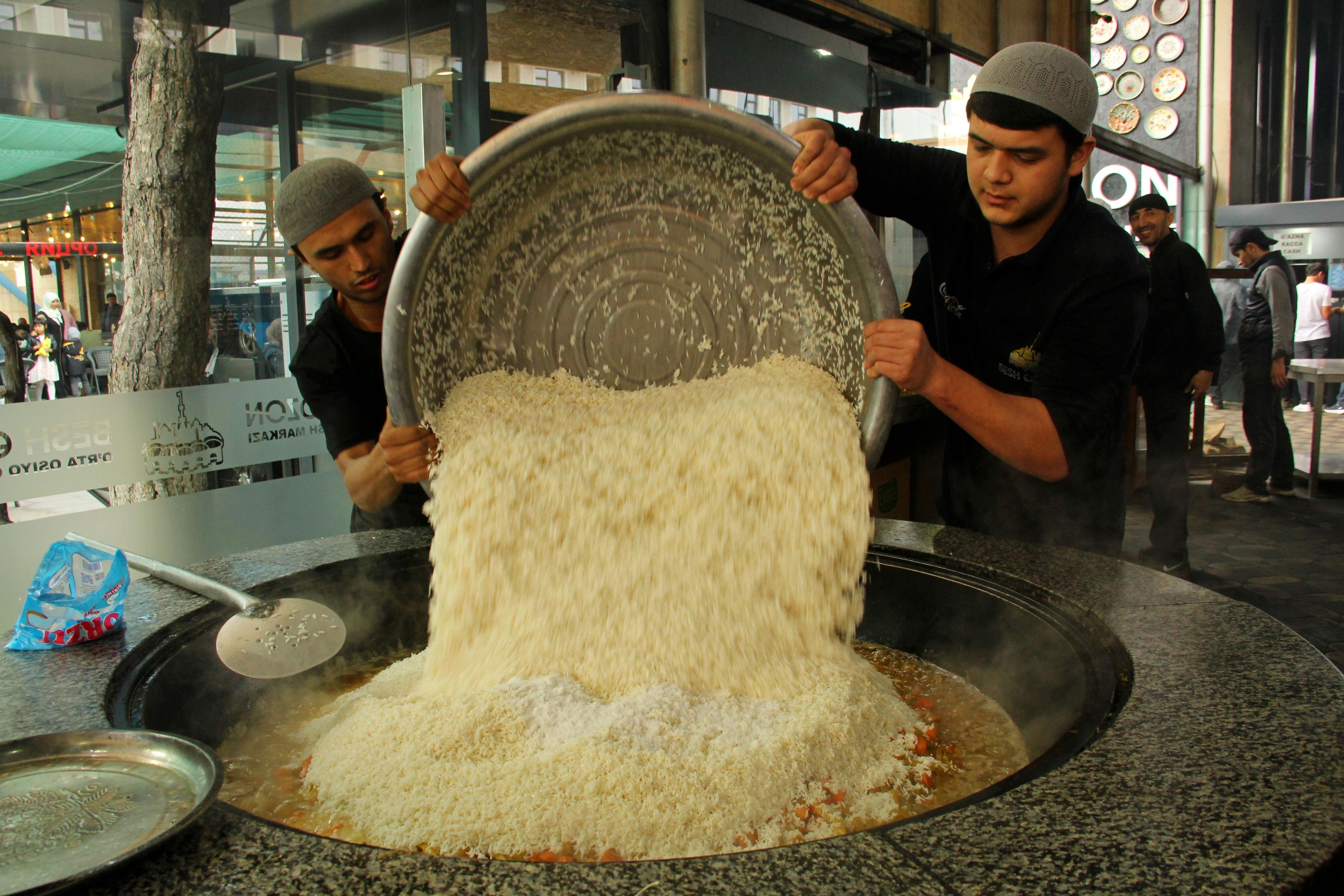
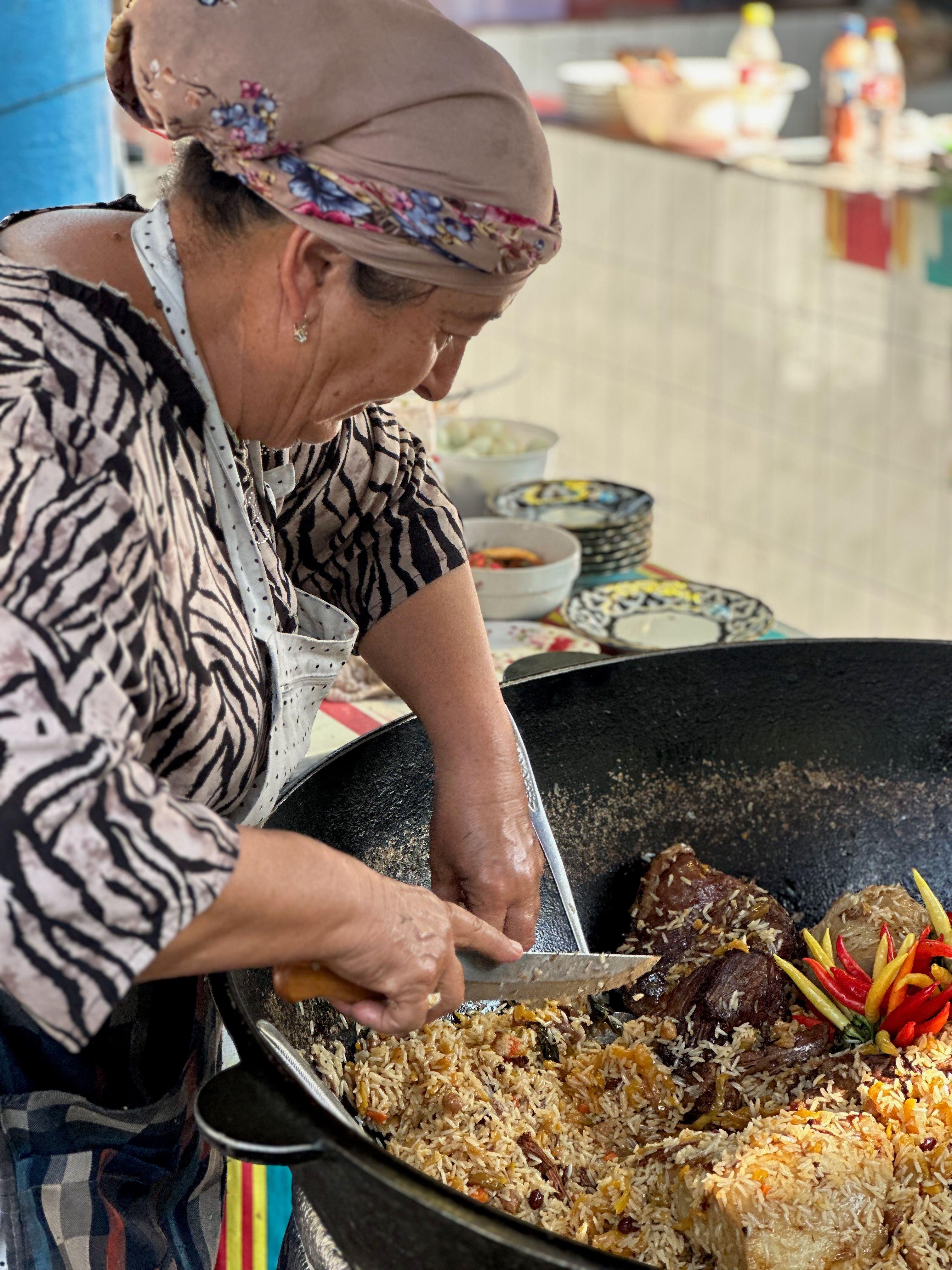
Samarkand plov is built in layers and served in layers. The cook fries onion and meat, lays yellow carrots over them, then rice, and never stirs after the water goes in; the finished dish is lifted out so that the pale rice sits under the carrots and meat, often with chickpeas and quail eggs. It tastes clean and lightly sweet and is traditionally eaten at breakfast or lunch, rarely at night.
Fergana plov, which is also what Tashkent considers standard, is stirred before serving so that every grain is coated in the oil, cumin and meat juices; it uses devzira, a local red-brown rice that absorbs fat without going soft, and often includes a whole head of garlic and dried barberries. It is darker, richer and heavier. The valley's cooks argue that it is the original; Samarkand's reply that theirs is the more refined.
Bukhara plov is a third thing, and Khorezm plov a fourth, both covered below. Taste all of them; our plov guide tells you where. In Samarkand, a lunchtime portion at a good plov house runs to about 50,000 to 80,000 som in 2026.
Bukhara cuisine: oshi sofi, bakhsh and the Jewish table
Bukhara's signature dish is oshi sofi, the ceremonial plov of the emirate. Unlike the fried plovs of the east, its ingredients are boiled rather than fried: meat and carrots cooked separately, rice steamed over them, green raisins and sometimes dried apricots added, and the whole assembled at the end. It takes more than three hours, was traditionally reserved for weddings and is sweeter and less oily than any other plov; restaurants in the old town list it as Bukhara plov and some cooking classes build a morning around it.
The second thread is Bukharan Jewish cooking, which fed the city for a thousand years and survives in a few families and kitchens. Bakhsh is green rice, coloured with coriander and dill, cooked with meat and sometimes liver and traditionally steamed in a cloth bag; it is made to order rather than kept on a stove. Oshi sabo is a Shabbat dish of rice and meat cooked slowly overnight. Shulah is a soft rice dish like a risotto. Our Jewish heritage of Bukhara guide tells the story of the community; a restored merchant house in the old town offers bakhsh cooking classes.
Everyday Bukhara eats shashlik from the mangal, thick sourdough bread from the Bukhara bakeries, and halva; the sweets stalls near the trading domes sell the city's own white halva with nuts. Dinner by the Lyabi-Hauz pool is the setting most visitors remember; the better food is a few lanes away in family-run chaikhanas.
Khorezm cuisine: shivit oshi, tukhum barak and the Khiva table
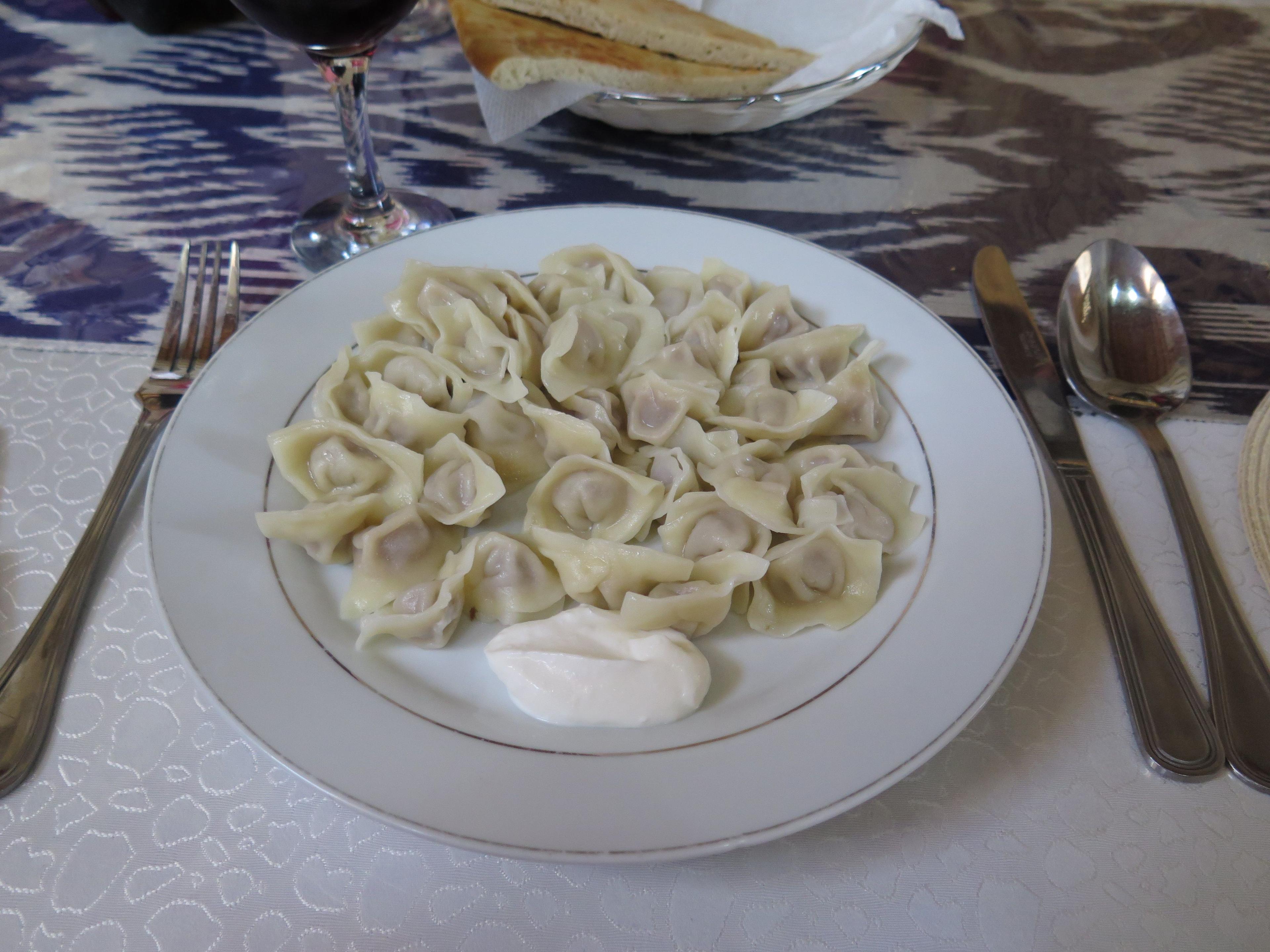
Khorezm, the oasis around Khiva and Urgench, has the most distinctive regional kitchen in the country. The famous dish is shivit oshi, hand-cut noodles kneaded with fresh dill so that they come out bright green, served with a sauce of meat, potato and vegetables and a bowl of sour milk on the side. It is a summer dish, eaten cold or warm, and almost every restaurant inside Ichan-Kala serves it; expect 40,000 to 70,000 som in 2026.
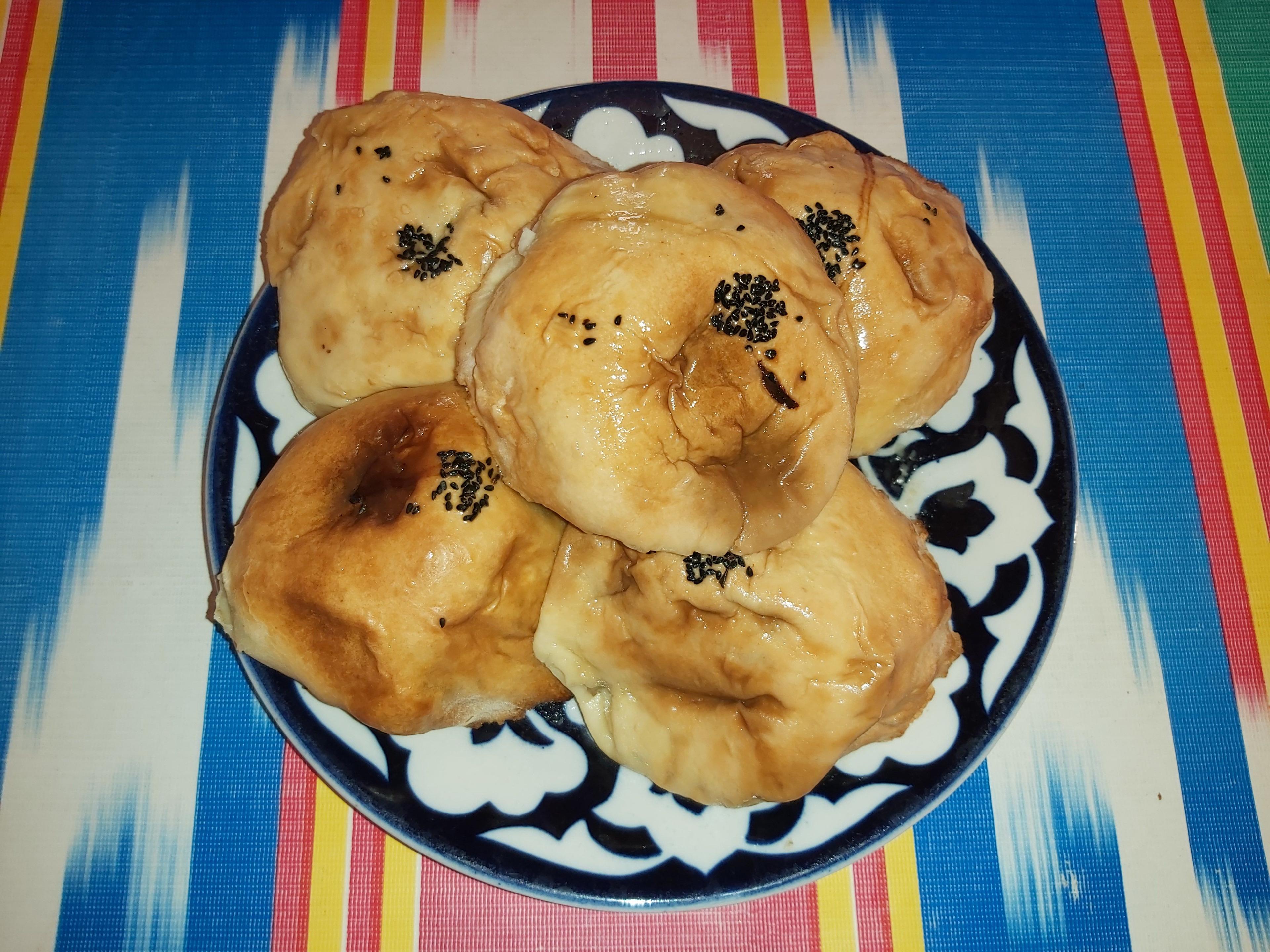
Tukhum barak are flat dumplings shaped like ravioli and filled with raw egg beaten with milk and butter, dropped into boiling water so that the egg sets inside; they are served hot with sour cream and are unlike anything elsewhere in Central Asia. Gumma are fried pastry turnovers of minced meat and onion, the Khorezm answer to samsa. Khorezm plov is lighter than the eastern versions and made with yellow carrots; the oasis also grows the best melons in Uzbekistan, celebrated at a festival in Khiva each summer, and Khiva's samsa are small and rich.
Khiva hosts an international festival of Khorezm cuisine, and shivit oshi has been proposed for the UNESCO intangible heritage lists. Cooking classes in family kitchens in the old town are the best way in. Our Khiva travel guide lists where to eat.
Fergana Valley food: samsa, Kokand sweets and valley rice
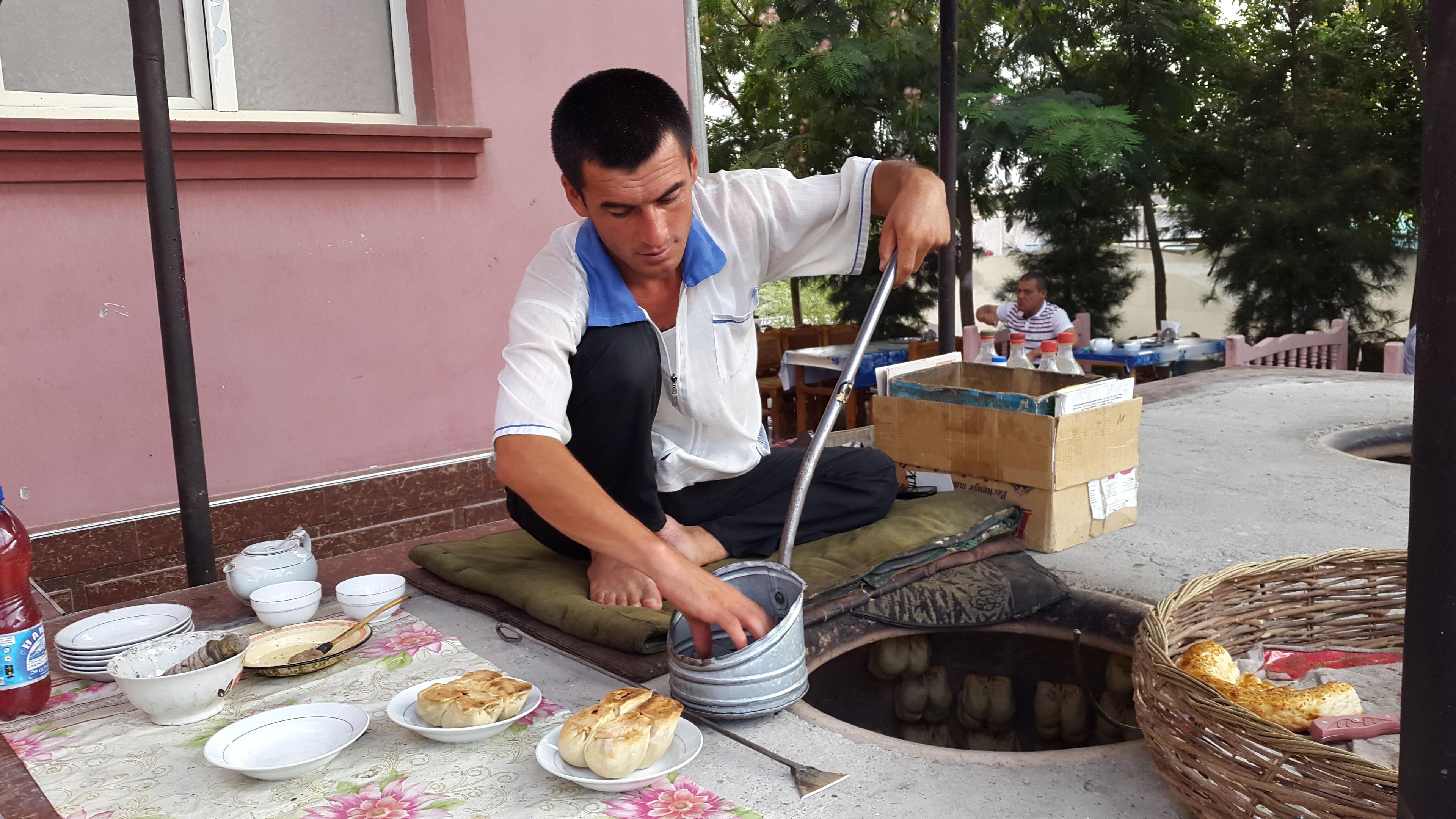
The Fergana Valley is the country's orchard and its most traditional table. Samsa here are the measure of all samsa: tandir-baked, flaky, filled with lamb and tail fat and onion; the village of Oltiarik near Fergana is famous for them, and the giant samsa of Jizzakh, on the road between Tashkent and Samarkand, is a related tradition. The valley's devzira rice gives Fergana plov its colour and chew, and the Uighur and Dungan communities contribute hand-pulled lagman noodles and manti.
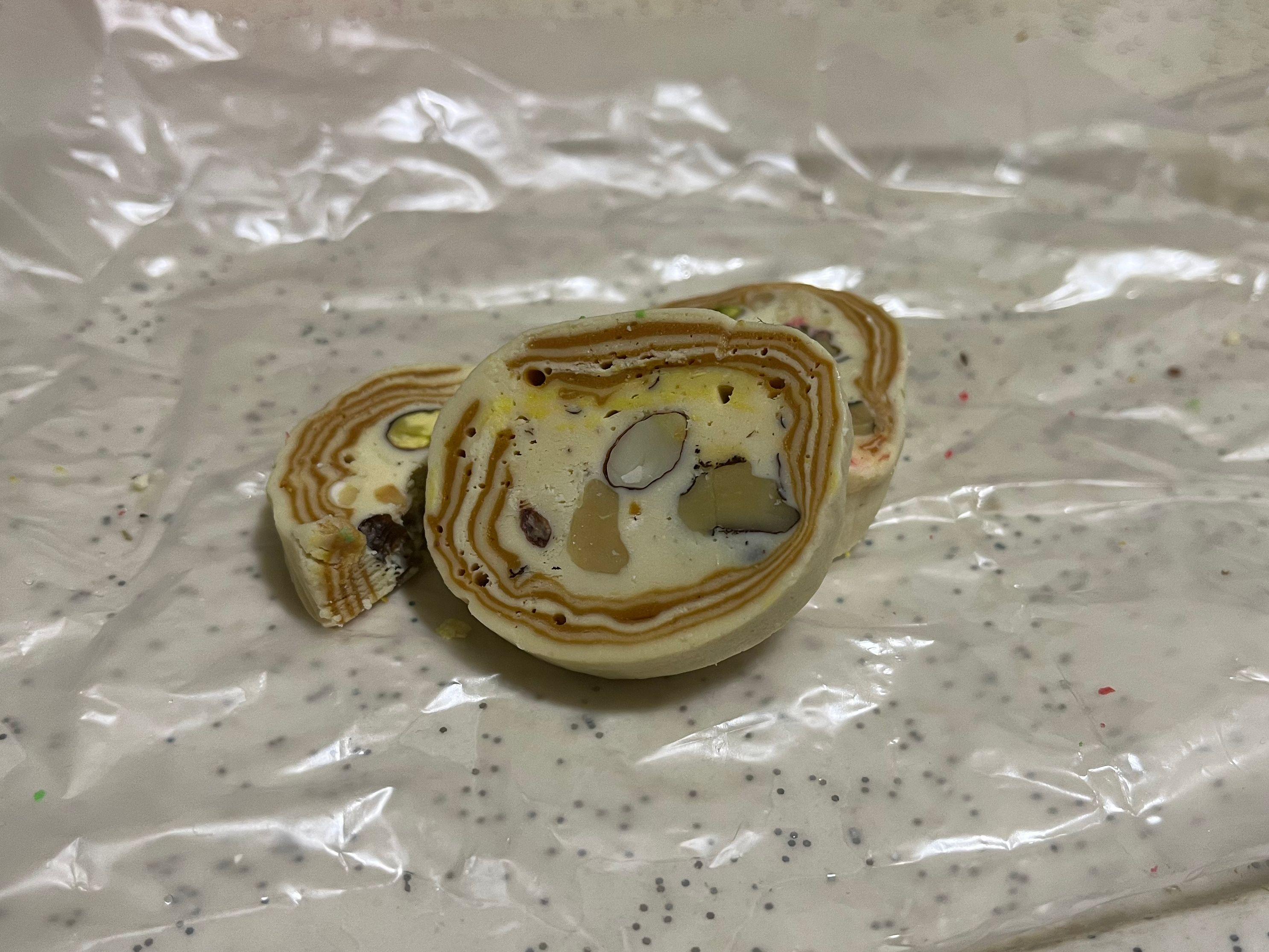
Kokand is the sweet capital. Kokand halva, made with flour, sugar and fat and often layered with nuts, is sold in stacked blocks at the bazaar and exported across the country; the valley also makes navat, crystallised sugar on a string, and parvarda, the pillow-shaped boiled sweets. Walnuts, apricots and the dried fruit of the valley fill the bazaars of Margilan and Andijan. Our Fergana Valley guide and our desserts guide cover the markets and the sweets; our street food guide has the samsa in detail.
Surkhandarya and the south: tandir lamb, shurpa and Boysun mountain food
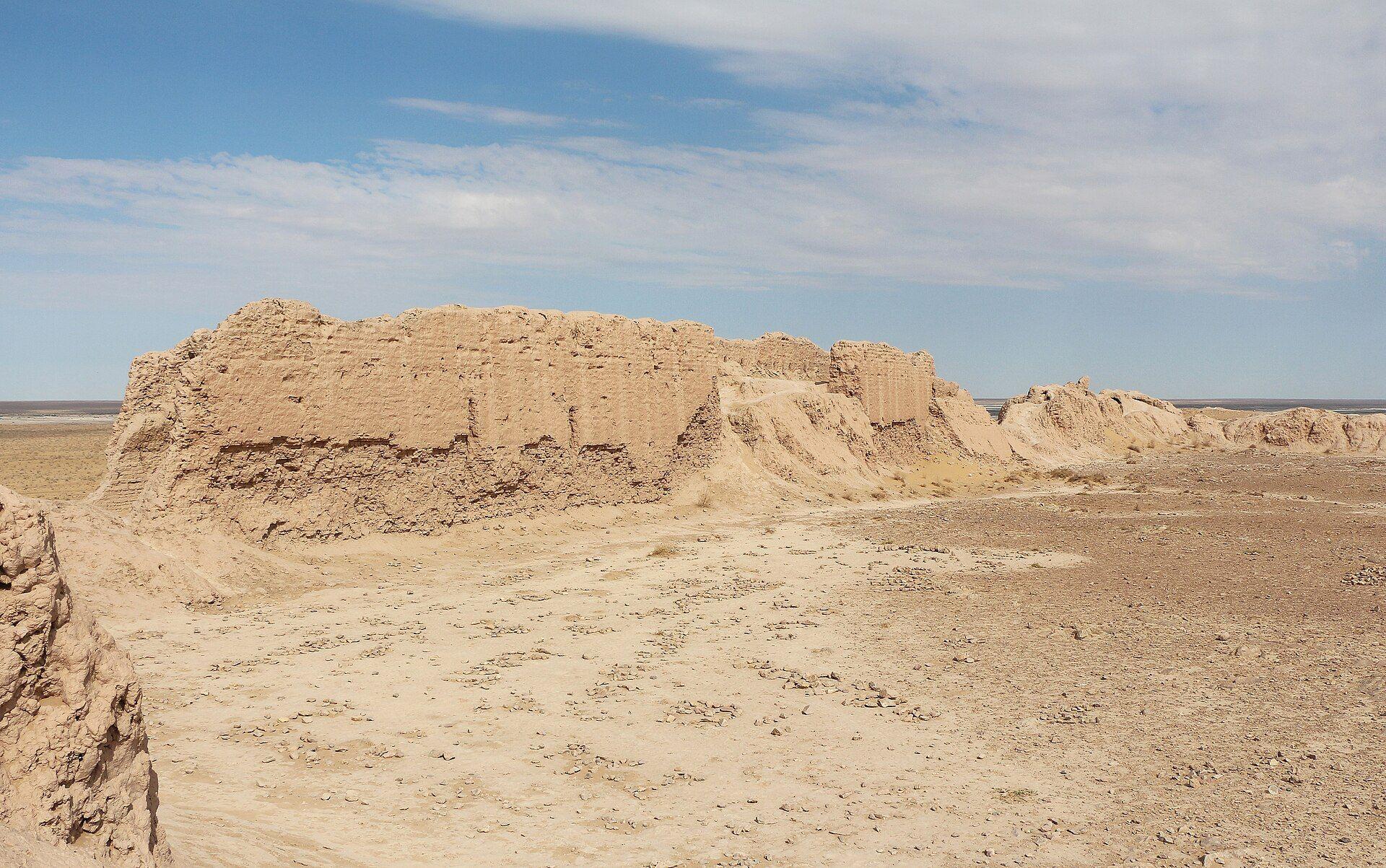
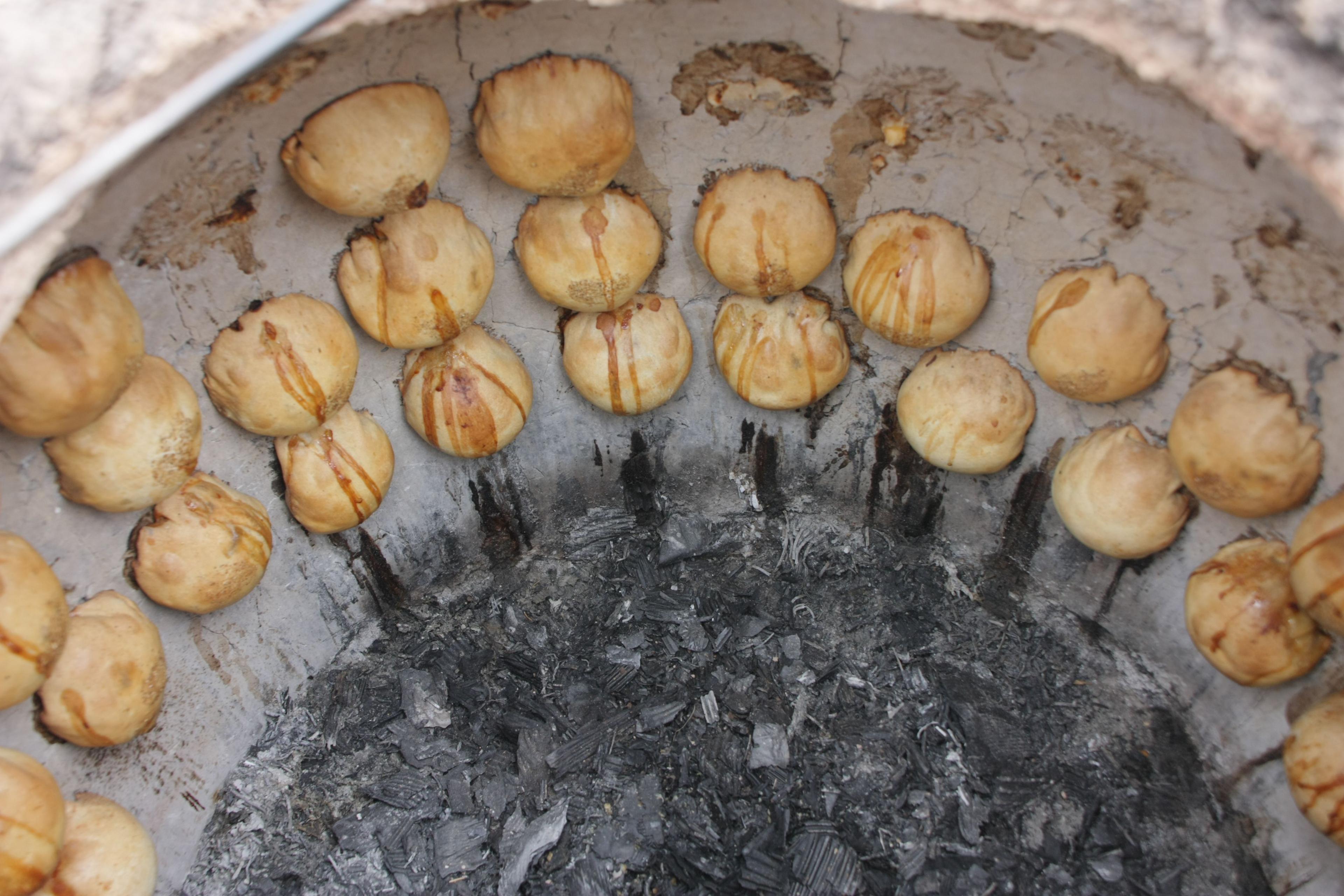
Surkhandarya, the far south around Termez and the Boysun mountains, cooks the way the mountains have cooked for centuries. The region is known for lamb from the tandir: whole joints or a young animal rubbed with salt and herbs and sealed in the clay oven on juniper branches until it falls from the bone, a dish for festivals and guests. Restaurants in Termez serve shurpa, the rich meat and vegetable broth; kazan-kabob, meat and potatoes fried in the cauldron; and what locals call kuy gosht, mutton cooked in its own fat.
Boysun, the mountain district recognised by UNESCO for its living traditions, holds a spring festival with food stalls, and the regional gastronomic festival in Termez has made the southern kitchen easier to find. Bread from the Boysun tandirs, mountain herbs and dried mulberries complete the table. Termez is a short flight from Tashkent, and our Termez and Surkhandarya guide explains how to combine the Buddhist sites with the food.
Tashkent: the cosmopolitan layer
Tashkent eats everything. The capital has the great plov halls, where cauldrons the size of a bath feed a thousand people at lunch, and it has the layers left by a century of migration. The Koryo-saram, Koreans deported to Uzbekistan in 1937, gave the whole country its spicy carrot salad, morkovcha, sold from heaps at Chorsu Bazaar, along with kimchi and cold noodles. Russians brought pelmeni, borsch and the bakery culture; Tatars and Uighurs their own dumplings; and the modern city adds Georgian, Turkish and Italian restaurants on every main street.
The bazaar is the place to see it all together: the Korean salad rows, the horse-meat sausage called kazy, the halva stalls and the tandir bread. Our Chorsu Bazaar guide and our Tashkent travel guide have the practicalities, and our vegetarian guide is useful here, since Tashkent is the easiest city for meat-free eating.
Karakalpakstan: fish, dumplings and the memory of the Aral Sea
The Karakalpaks of the Amu Darya delta were herders and fishermen, and their food is closer to Kazakh than to Uzbek. The national dish is beshbarmak, boiled meat over flat noodles with onion broth; turama is chopped meat and dumplings served with the broth fat; zhueri gurtik are dumplings made from sorghum flour. Fish was the pride of the table while the Aral Sea existed, and a boiled fish dish called karma, or balik karma, was registered as a protected regional speciality in 2025; a festival in Muynak celebrates fish dishes each year, a defiant gesture beside the ship graveyard.
Meals are eaten from a shared cloth with the fingers, broth served separately in bowls. Nukus has a handful of restaurants that serve Karakalpak dishes to order. Our Savitsky Museum guide and our Aral Sea trip guide cover the region.
A regional tasting plan for a 10-day route
Follow the classic east-to-west route and eat each region's dish in its own place:
- Day 1, Tashkent: lunch at a plov hall, evening at Chorsu for Korean salads and kazy.
- Day 2, Fergana Valley day trip or overnight: Oltiarik samsa, Fergana plov with devzira rice, Kokand halva from the bazaar.
- Day 3, the road to Samarkand: a giant Jizzakh samsa at a roadside tandir.
- Days 4 and 5, Samarkand: layered plov at lunch, Samarkand bread, a glass of local wine; see our wine guide.
- Days 6 and 7, Bukhara: oshi sofi at a cooking class or an old-town restaurant, bakhsh if you can order it a day ahead, white halva from the domes.
- Day 8, the Kyzylkum: melon from a roadside pile and tea at a desert chaikhana.
- Days 9 and 10, Khiva: shivit oshi, tukhum barak and gumma, with a family cooking class.
Add two days for Termez and Boysun in the south, or two for Nukus and Muynak in the north-west, and you have eaten the whole country. Our Flavours of Uzbekistan tour follows roughly this line.
Eating regionally with TourEast
Our guides are from these regions and they eat at home, which is the point: we can build a food-led private itinerary around cooking classes in Khiva and Bukhara, a samsa morning in the Fergana Valley and a tandir lamb lunch in Surkhandarya, or add the right lunches to any of our standard tours. Tell us what you want to taste and we will put it on the route.
Frequently asked questions
Watch
Photo gallery