For five centuries southern Uzbekistan was a Buddhist frontier. The Kushan cities of Dalverzintepa and Kampyrtepa, the Termez monasteries, the smashed temple at Kuva in the Fergana Valley, why it all vanished and which museums hold the art.
Facts, prices and schedules checked on November 11, 2026
For about five centuries, the land that is now southern Uzbekistan was one of the northern provinces of Buddhism. Monks chanted in cave sanctuaries above the Amu Darya, pilgrims circled stupas of mud brick and gold leaf, and sculptors in a Kushan city near Denau modelled bodhisattvas with Greek drapery and Bactrian faces. Then the monasteries emptied, the sand came in, and the memory was lost so completely that the first Buddha found at Fayaz Tepe in 1968 was a surprise to almost everyone.
This is not a guide to the Termez monasteries themselves; we have written two of those already, the Termez and Surkhandarya guide and a site-by-site guide to Fayaz Tepa, Kara Tepa and Zurmala. This piece takes the wider view: how Buddhism reached Central Asia, the Kushan cities that sustained it, the lone temple in the Fergana Valley that proves it travelled far beyond the Oxus, why it vanished, and where its art can be seen today. Information is as of November 2026.
How Buddhism reached the Oxus
The story begins with the Kushans. In the 1st century AD a dynasty from the nomadic Yuezhi confederation, settled in Bactria after the fall of the Graeco-Bactrian kingdom, built an empire that ran from the Amu Darya to the plains of northern India. For the first time, the monasteries of Gandhara and the Punjab and the oasis towns of Bactria answered to the same ruler, and the roads between them carried monks as well as merchants.
The Kushan kings were not exclusive patrons. Their coins show Greek, Iranian and Indian gods side by side, and the cities of northern Bactria had fire sanctuaries and temples to local goddesses alongside their stupas. Buddhism nonetheless did best out of this tolerance. Between the 1st and 4th centuries AD monasteries rose along the Amu Darya crossings, most of all around Termez, ancient Tarmita, and the Buddhist art of Gandhara was reworked here in local clay, stone and paint. It was from this frontier that Buddhism continued north and east along the trade roads towards the Tarim Basin and China.
Dalverzintepa: the Kushan city and its gold
If one place explains the wealth behind northern Buddhism, it is Dalverzintepa, a walled city mound in the Surkhan valley about 60 km north-east of Termez. Founded under the Graeco-Bactrians in the 3rd century BC and at its height in the 1st–3rd centuries AD, it had a citadel, a walled town of about thirty hectares, artisans' quarters and the mansions of a rich elite. Galina Pugachenkova, who excavated it from the 1960s, thought it might have been an early Kushan capital; most scholars now call it one of their principal northern cities.
In 1972 excavators found, under the floor of one mansion, 115 gold objects weighing about 36 kg: ingots marked in Kharoshthi script, bracelets, torques and Indian-style jewellery. It is still the largest gold hoard discovered in Central Asia. Nearby came ivory pieces, an elephant and a zebu among them, that are read as pieces of chaturanga, the Indian ancestor of chess.
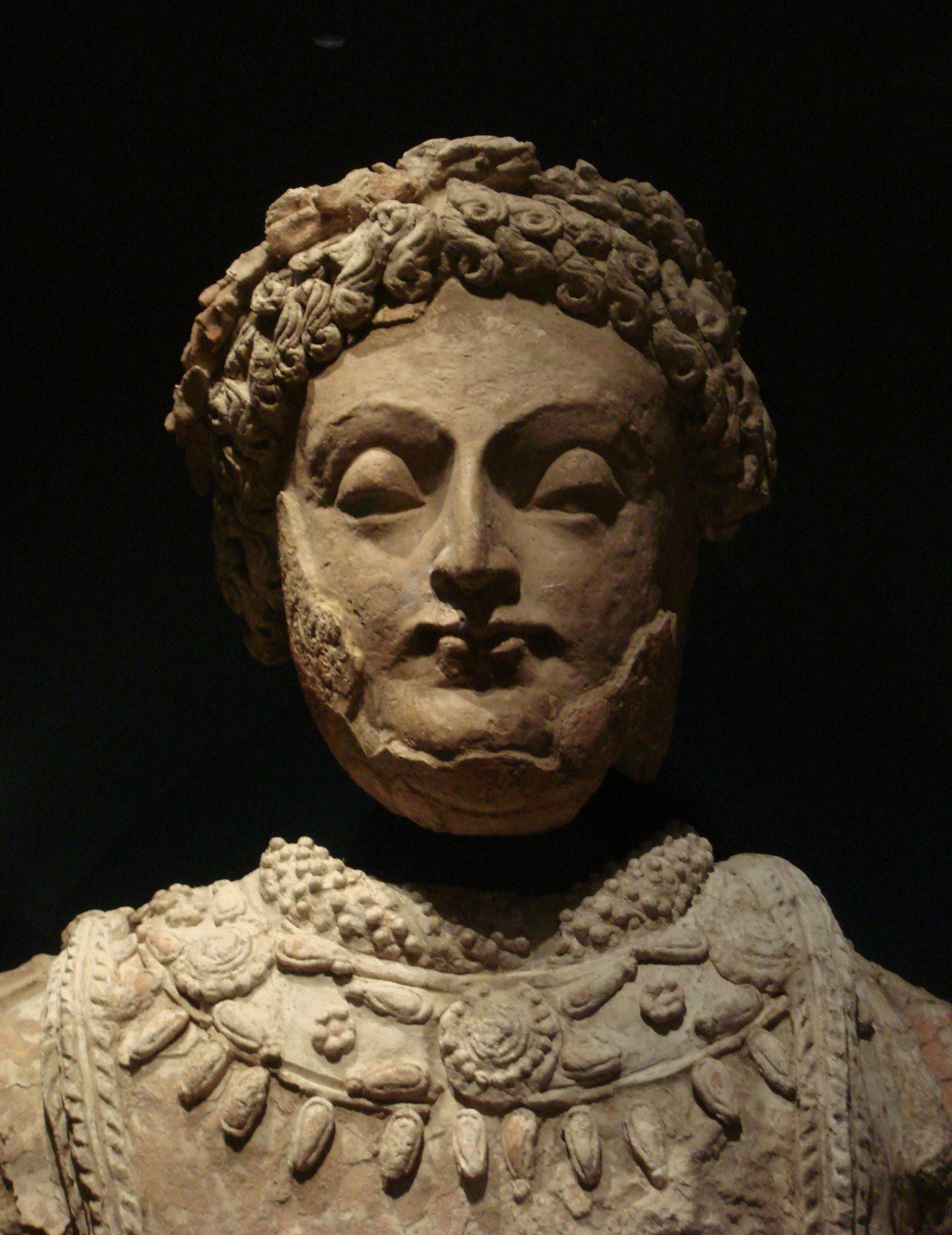
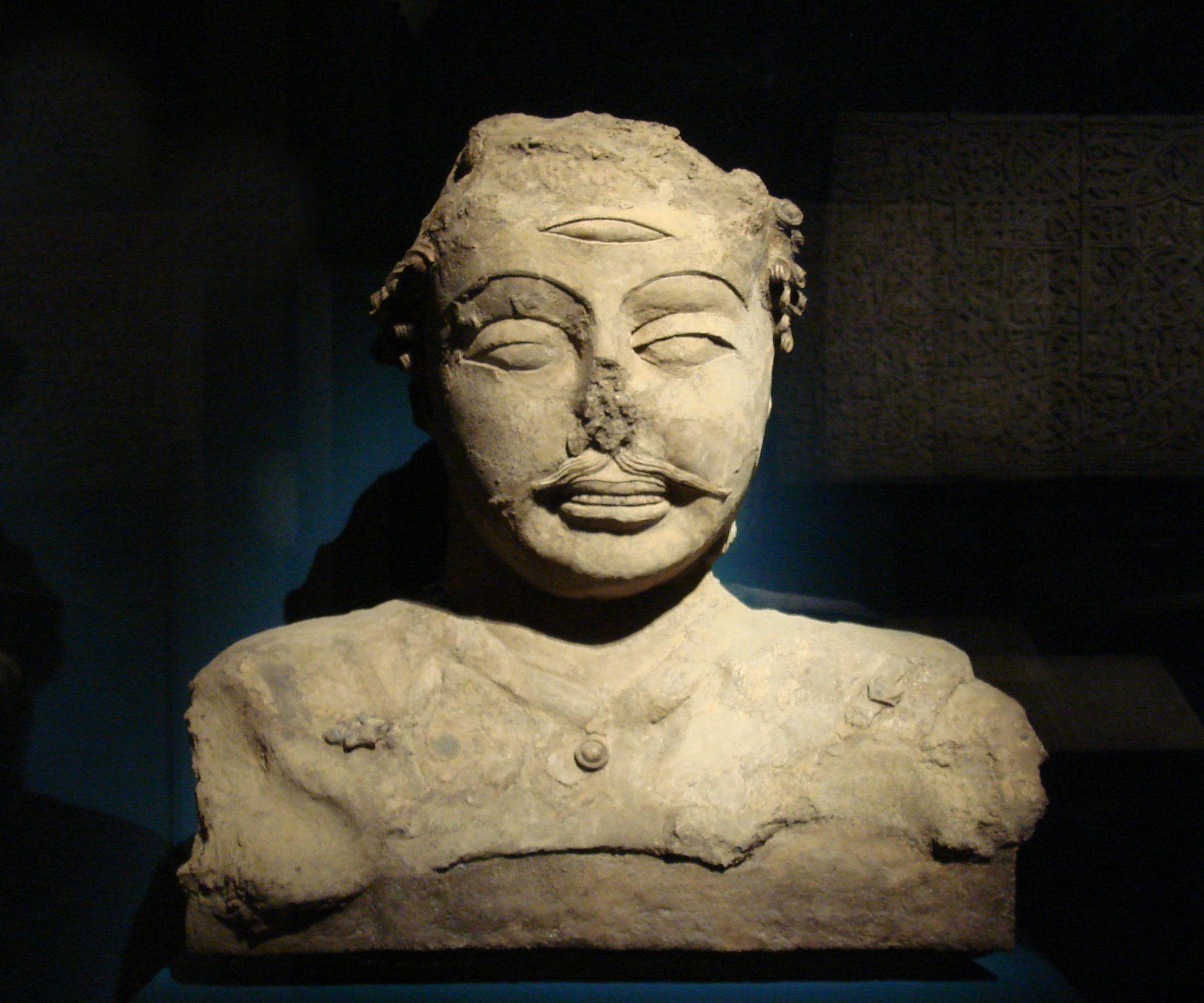
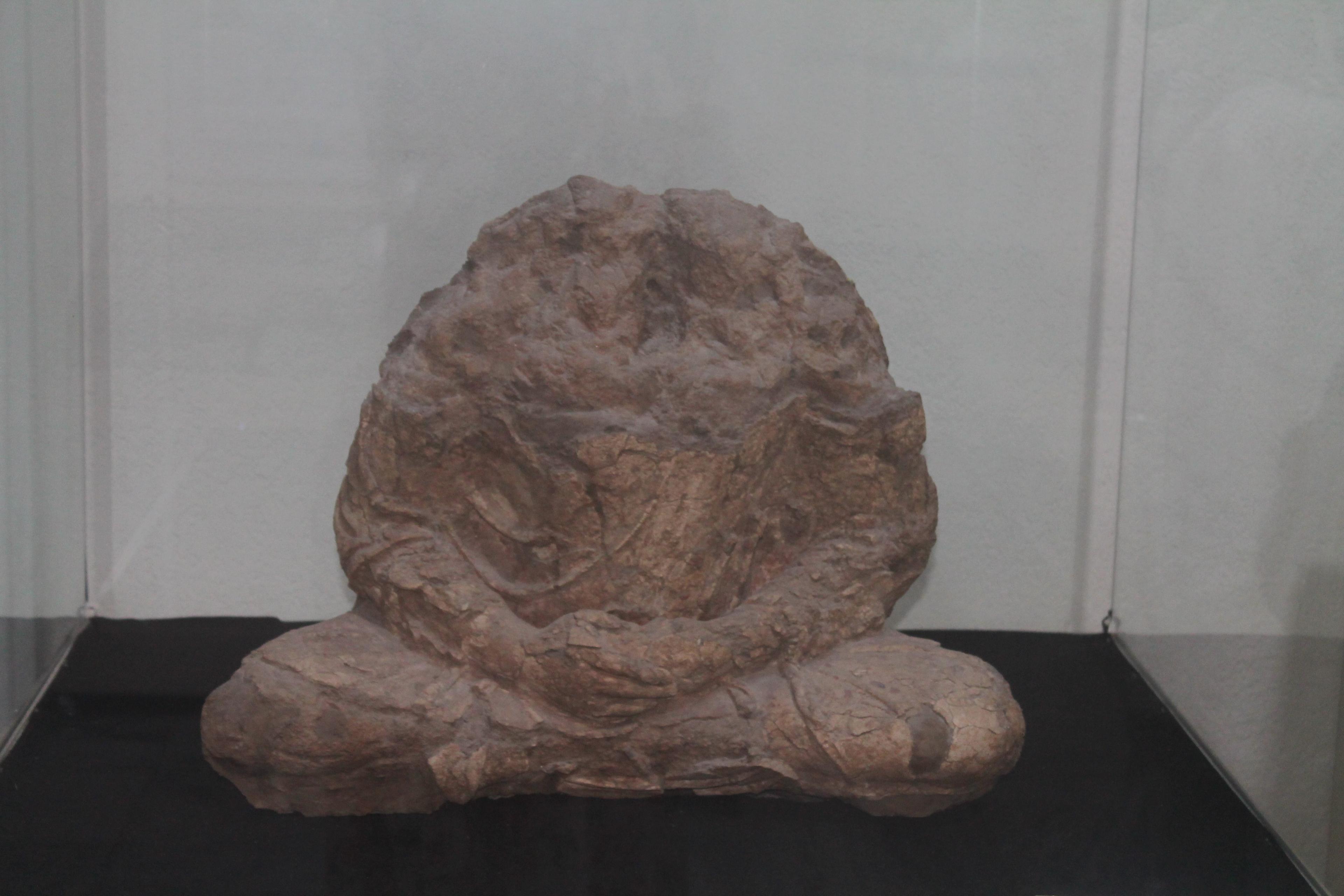
For the Buddhist story, the key finds are the two temples. Their walls carried painted clay sculpture: a serene Buddha, bodhisattvas, and heads of Kushan nobles in tall headdresses, a rare portrait gallery of the people who paid for it all. On site today you see grassed ramparts and trenches, not restored buildings; the sculpture is in museums in Termez and Tashkent.
Kampyrtepa: the river port behind it all
Kampyrtepa, on a loess terrace about 30 km west of Termez, is not a Buddhist site, but it shows the world Buddhism grew in. Founded in the late 4th century BC, in the years after Alexander's campaign in Bactria, it was a port and fortified crossing on the Amu Darya. Greek inscriptions on pottery and coins of the Graeco-Bactrian king Euthydemus I mark its first phase; the Kushans rebuilt it as a planned town with a citadel and regular blocks of houses. Its excavator, Edvard Rtveladze, has proposed that it is Ptolemy's Alexandria on the Oxus, an identification that is argued rather than proven.
What matters for a visitor is legibility. Because nothing was built over it after the river moved away around the 2nd century AD, the streets, rooms and storage jars of a Kushan town lie open on the ground. Standing on the citadel, with Afghanistan across the floodplain, you understand why the crossings of the Oxus became the places where religions changed hands.
The Termez monasteries in brief
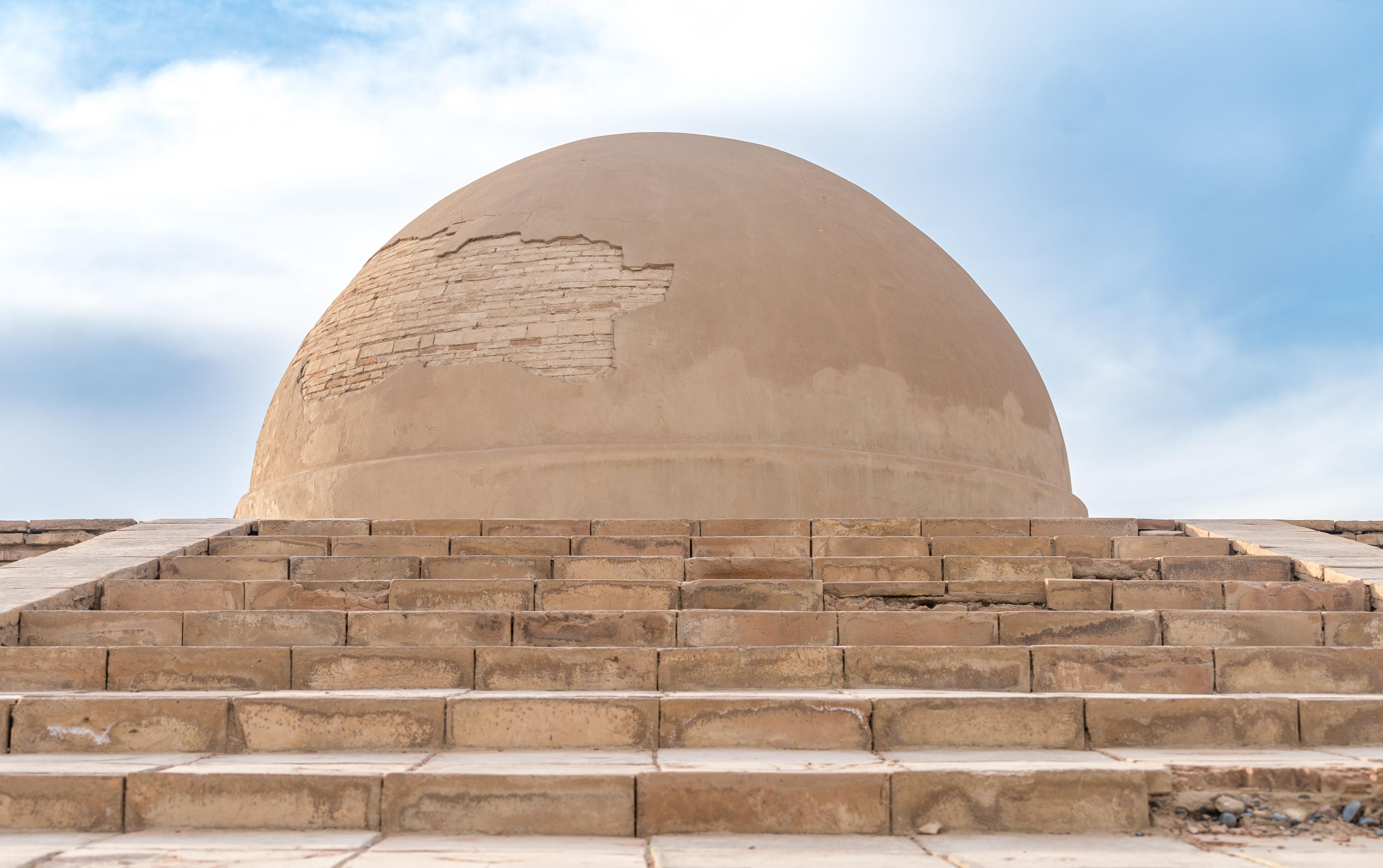
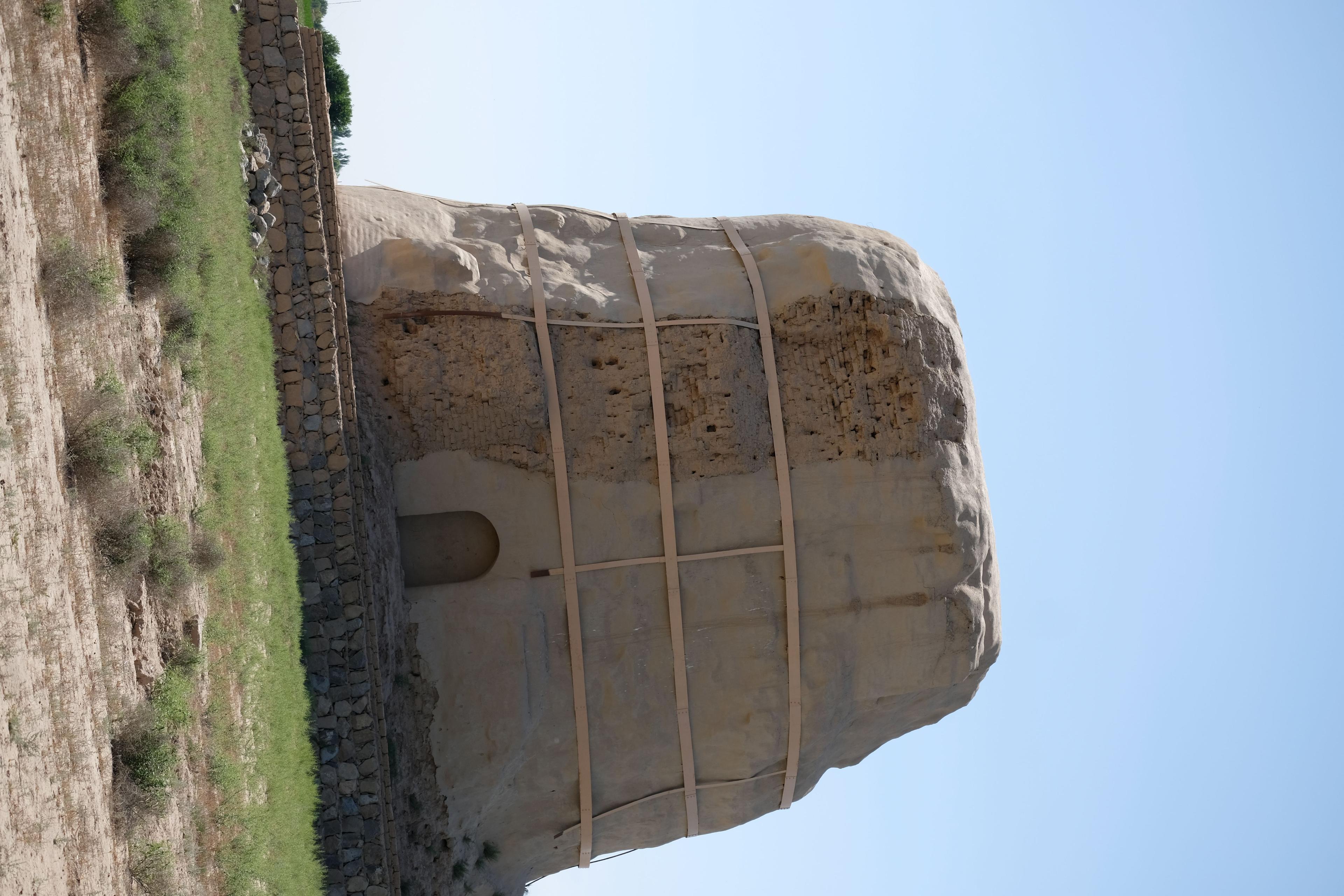
Around Old Termez stand the sites most travellers come for, all three in the border zone and visited with a registered guide. Fayaz Tepe, found in 1968 and excavated by Lazar Albaum until 1976, is a monastery with a prayer hall, monks' cells and a restored stupa, active from the 1st century AD and at its peak in the 3rd–4th centuries. Kara Tepe, a kilometre away, is a complex of cave sanctuaries cut into a hill above the river. The Zurmala stupa, a weathered brick cylinder on the edge of town, is the oldest standing Buddhist structure in Uzbekistan.
When the Chinese monk Xuanzang passed through in the 7th century on his way to India, he recorded about ten monasteries in Termez with roughly a thousand monks, which means the community outlived the Kushans by several centuries. Our two Termez guides linked above cover the sites, permits and timings in detail.
Kuva: Buddhism in the Fergana Valley
The site that changes the map is 500 km to the north-east. Kuva, a garden town between Fergana and Andijan, was the medieval city of Quba, second in the valley after Akhsikent. In 1956–57 archaeologists of the Uzbek Academy of Sciences uncovered a Buddhist temple of the 7th century inside its old walls.
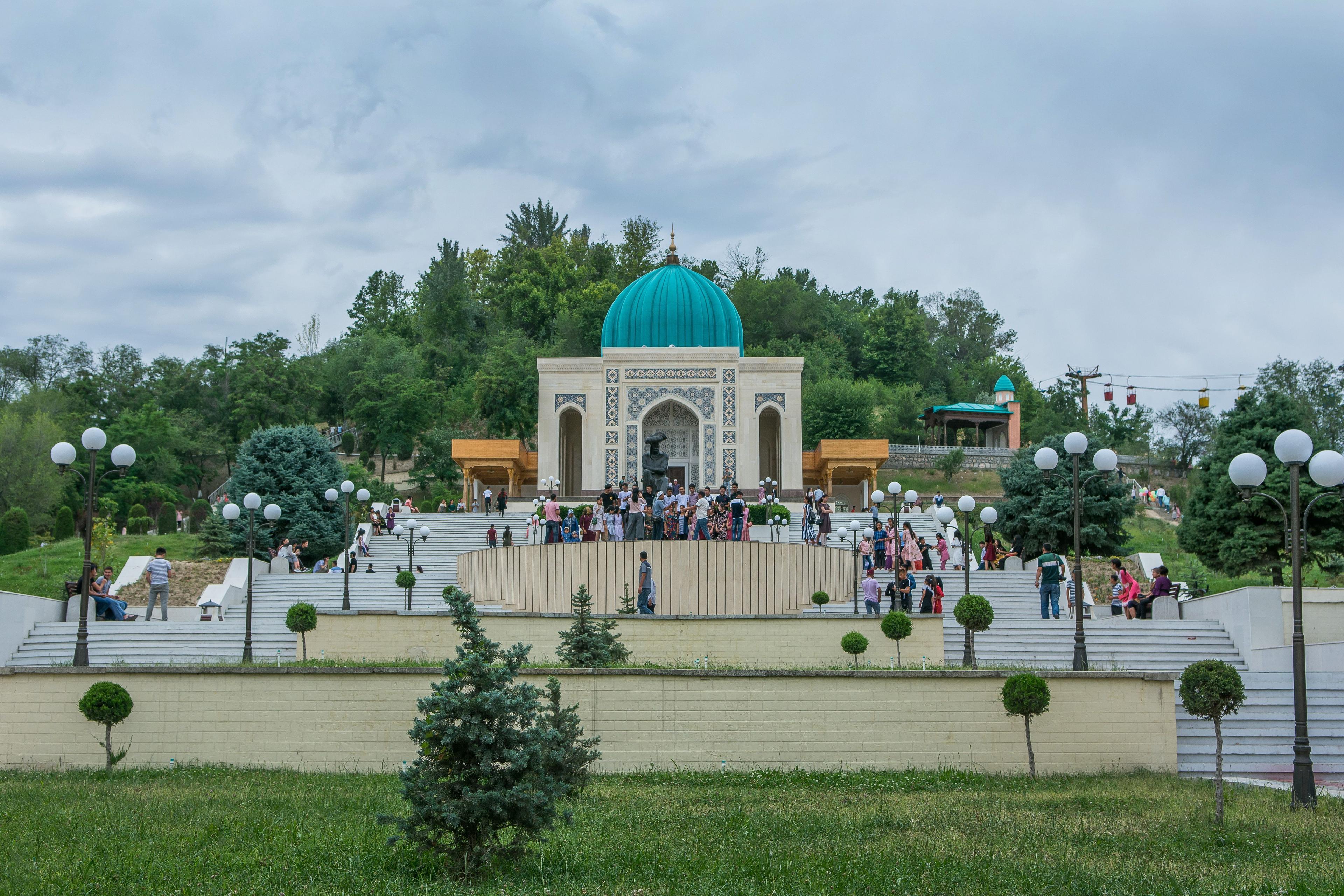
The sculpture had been deliberately smashed, probably during the campaigns of the Arab commander Qutayba ibn Muslim in the early 8th century. Enough survived to reconstruct a seated Buddha of monumental size, a demon's head with bulging eyes and guardian figures, one of them identified as Weshparkar, the Sogdian wind god, which says something about how freely Buddhist and Iranian imagery mixed. These remain the only Buddhist finds of their kind from the valley. The originals are in museums in Tashkent; on site you see a grassed mound with wall lines, beside the memorial garden to the astronomer al-Farghani. Allow an hour and come with a guide who knows the plan.
Why Buddhism disappeared
There was no single ending. Sasanian Persian campaigns against the Kushans in the 3rd century hit the Termez monasteries hard, and several were in decline by the 4th and 5th centuries, though some shrines stayed in use into the 6th. Xuanzang still found a living community in the 7th century.
The decisive change came with the Arab conquest of the 8th century. Historians do not agree that the monasteries were systematically destroyed; the smashed images at Kuva suggest violence in some places, while elsewhere the special taxes imposed on non-Muslim institutions and the steady conversion of the population during the 8th and 9th centuries did the work more slowly. Where the monks went is unrecorded; the idea that many moved south to Kashmir is a reasonable guess, not a documented fact. One nice detail: between the 9th and 12th centuries Sufi hermits settled in the half-ruined caves of Kara Tepe, so the hill remained a place of contemplation under a different faith.
Where to see the art: museums
Because the sites are unrestored, the museums carry half the experience.
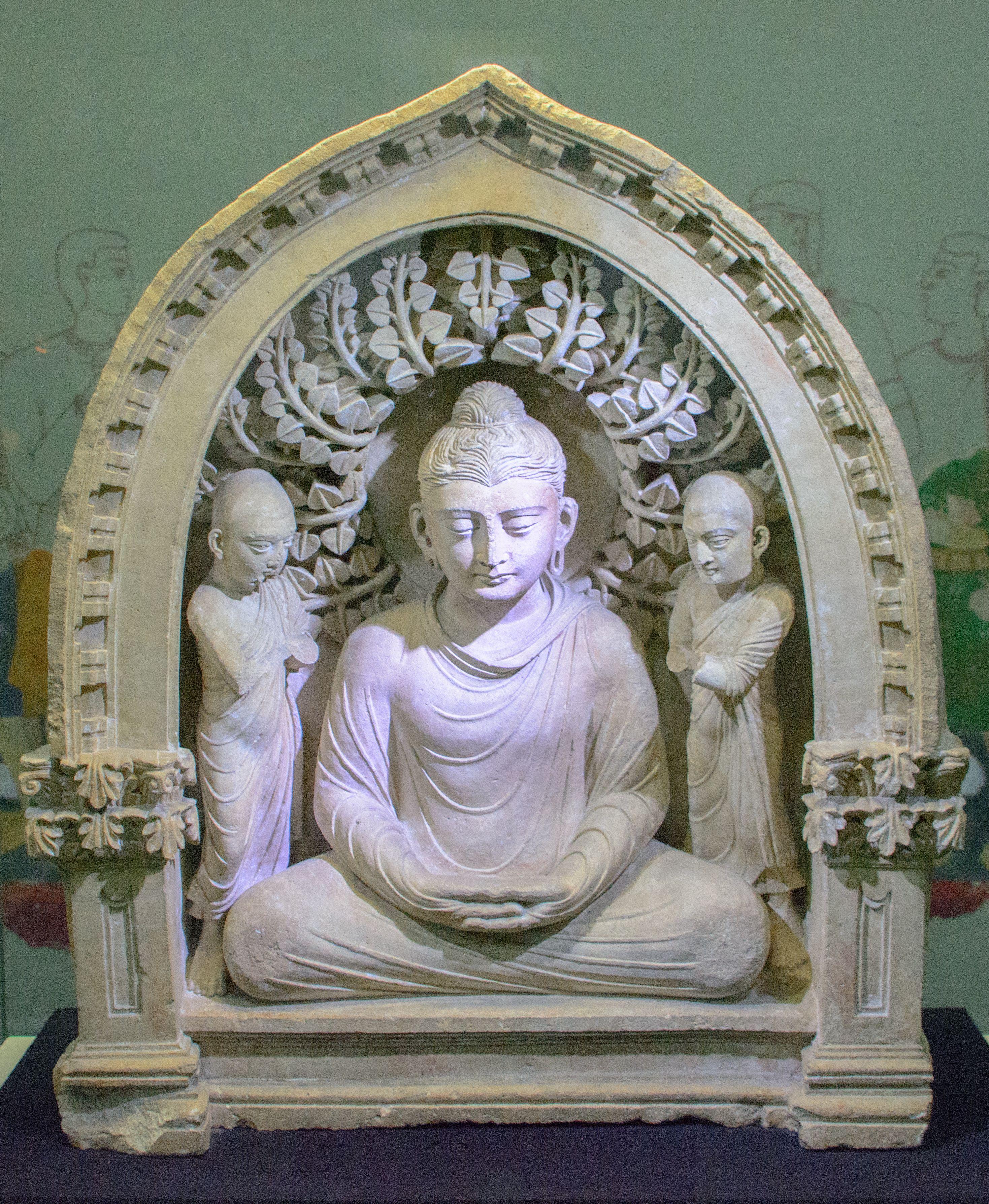
- State Museum of History of Uzbekistan, Tashkent. Most of the frescoes and reliefs recovered at Fayaz Tepe are here, including the well-known sculpture of the Buddha seated under the bodhi tree between two monks, along with Kushan finds from the Surkhandarya sites. Plan an hour and a half and check opening days locally before you go.
- Termez Archaeological Museum. The best introduction before visiting the sites, with Buddha figures and reliefs from Old Termez, finds from Kampyrtepa such as a carved bone comb with a woman's portrait, and material from Dalverzintepa. Visit it first.
- The Hermitage, St Petersburg. The Airtam frieze, a 1st–2nd century stone relief of musicians among acanthus leaves found on the Amu Darya east of Termez in the 1930s, has been there since the Soviet era. It is worth knowing about even if you never see it, since it is often reproduced in Uzbek books.
Some star pieces travel: in recent years Kushan treasures from Uzbekistan have been lent to major exhibitions in Europe, so a particular object may occasionally be away.
How to plan it: route, season and cost
A Buddhist itinerary in Uzbekistan works best as three linked pieces.
- Tashkent, half a day. The State Museum of History, ideally on your first or last day.
- Termez and Surkhandarya, two to three days. Fly from Tashkent (about 1 hour 30 minutes) or take the overnight train. Day one: Termez Archaeological Museum, Fayaz Tepe, Kara Tepe if open to visitors that season, and Zurmala. Day two: Kampyrtepa early in the morning, then the drive of about an hour and a half to Dalverzintepa, continuing to Denau or the mountains of Boysun.
- Kuva, one hour. Add it to any Fergana Valley programme; it lies on the road between Fergana and Andijan.
The border-zone sites require advance registration with your passport, which a tour operator arranges. Go in March to May or October to November: Termez is the hottest city in the country, and summer middays above 40°C make the shadeless mounds hard work. Entrance fees at the sites and museums are modest; the real cost is the private car, guide and permits, which we quote per group rather than publish, since it depends on dates and group size.
Travelling the Buddhist route with TourEast
We do not run a fixed-date Buddhist tour, but we build this route as a private programme, often for travellers from Japan, Korea, Thailand and other Buddhist countries who want to see where the faith crossed into Central Asia. A typical plan adds two or three days in Termez and Surkhandarya to a classic Silk Road journey, with a guide who knows the archaeology and handles the border-zone paperwork.
If you prefer to start from an existing tour, Twelve Gates of the Silk Road covers Tashkent, the Fergana Valley and the great cities and can be extended south to Termez, while Silk, Clay and Steel: The Makers of Fergana is the natural place to add a stop at Kuva. For a fully private version with a specialist guide, Silk Road in Silk: Private Uzbekistan is the template we adapt. Send us your dates and we will suggest the order that suits the season.
Frequently asked questions
Photo gallery
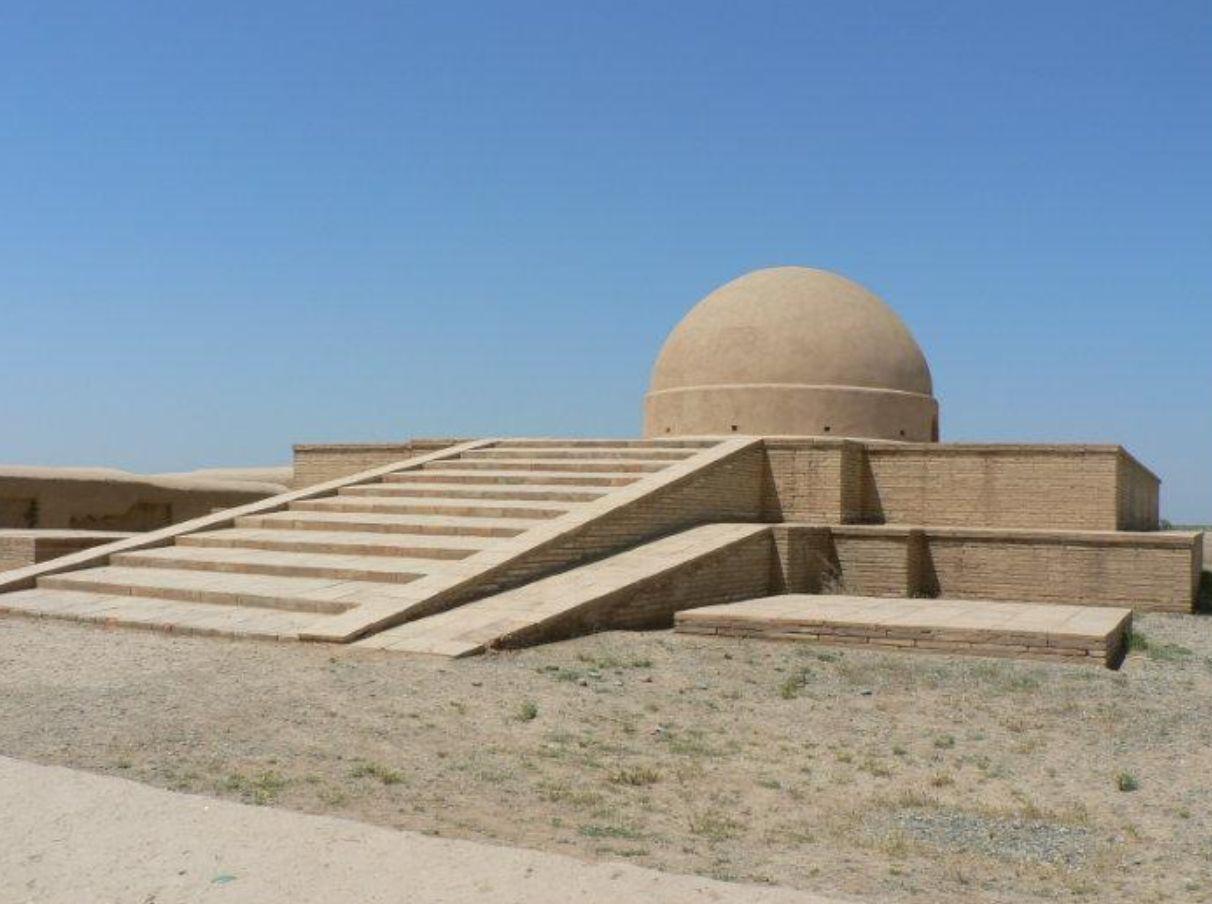
Photo: ALFGRN / Wikimedia Commons, CC BY-SA 2.0; Iaa2023 / Wikimedia Commons, CC BY-SA 4.0; Panpanchik / Wikimedia Commons, CC BY-SA 4.0; Miss Kamola / Wikimedia Commons, CC0; BrandNavigator / Wikimedia Commons, CC BY-SA 3.0