Kupkari, or ulak, is the Uzbek version of the Central Asian game in which hundreds of riders fight for a goat carcass and carry it to a goal. It is played from late autumn to spring, at weddings, Navruz and in an international tournament that moved to Bukhara in 2026. What the rules are, what the riders wear, which regions play it, how to find a game and how to watch safely.
Facts, prices and schedules checked on November 11, 2026
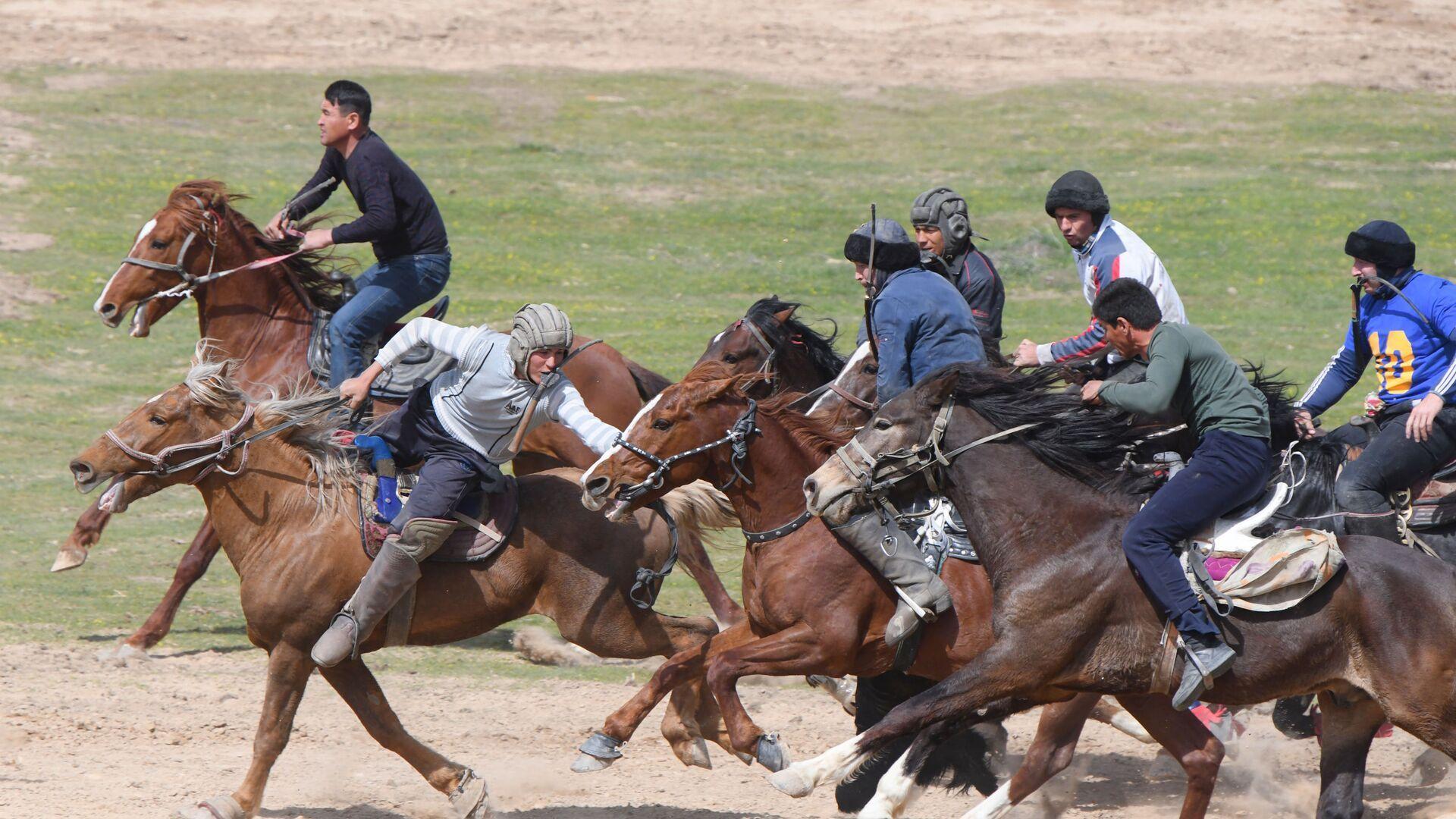
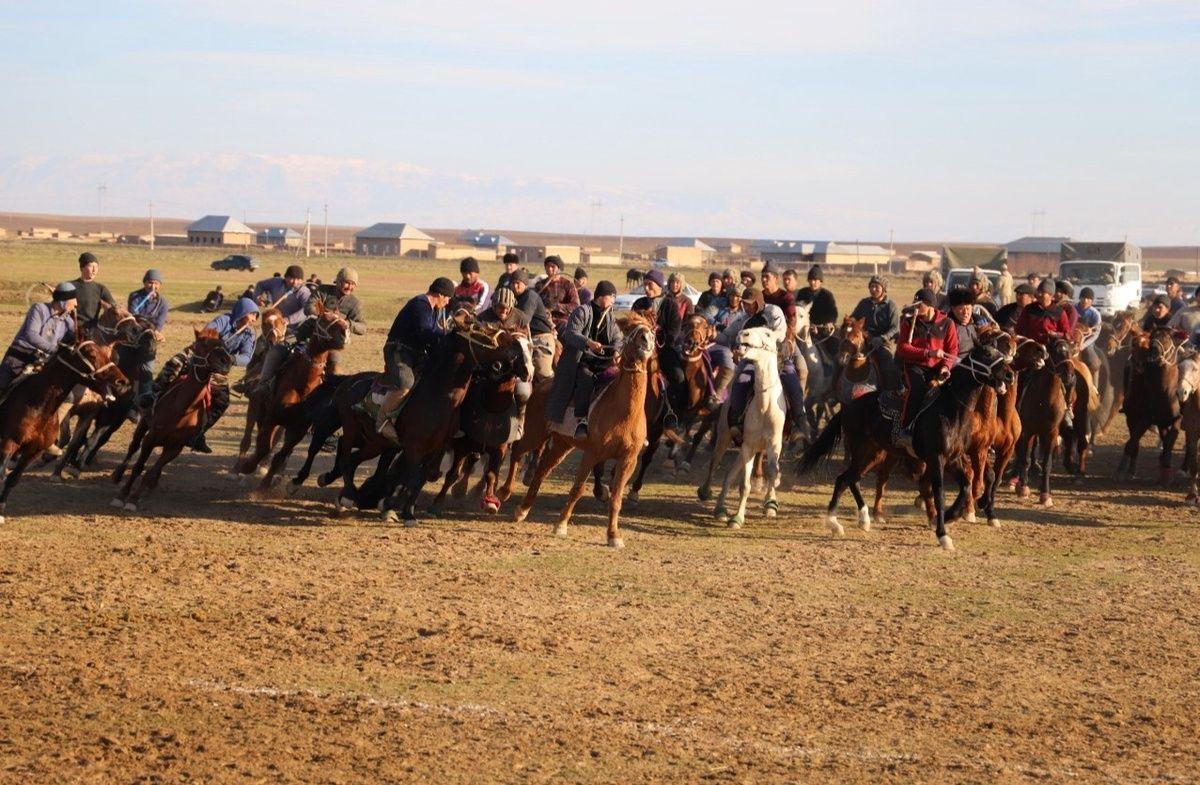
On a cold morning somewhere south of Samarkand, a few hundred men on horseback are waiting in a field for a goat. The carcass, headless and soaked overnight so that it will hold together, is dropped in the centre; a judge shouts; and for the next several hours the field is a moving wall of horses as riders lean out of the saddle at a gallop to grab it, lose it, and grab it again, until one of them breaks clear and throws it into a marked circle. That rider's horse, his prize and his village are remembered for a season. This is kupkari, also called ulak, the Uzbek form of the game known as buzkashi in Afghanistan, kokpar in Kazakhstan and kok-boru in Kyrgyzstan.
It is the most physical spectacle in Central Asia and one of the hardest for a visitor to find, because games are organised by villages and families rather than by tourism offices and are announced a few days ahead, if at all.
What kupkari is and how it is played
The object is simple. A carcass, a goat by tradition or a calf for a big game, with the head and lower legs removed, must be carried on horseback from the centre of the field to a goal, which may be a circle drawn on the ground, a pit dug for the purpose and called the kazan, or a marked post. Whoever gets it there scores, and in the traditional free-for-all every rider plays for himself. Team versions, with set numbers and sides, are used in tournaments and borrow the rules of Kazakh kokpar.
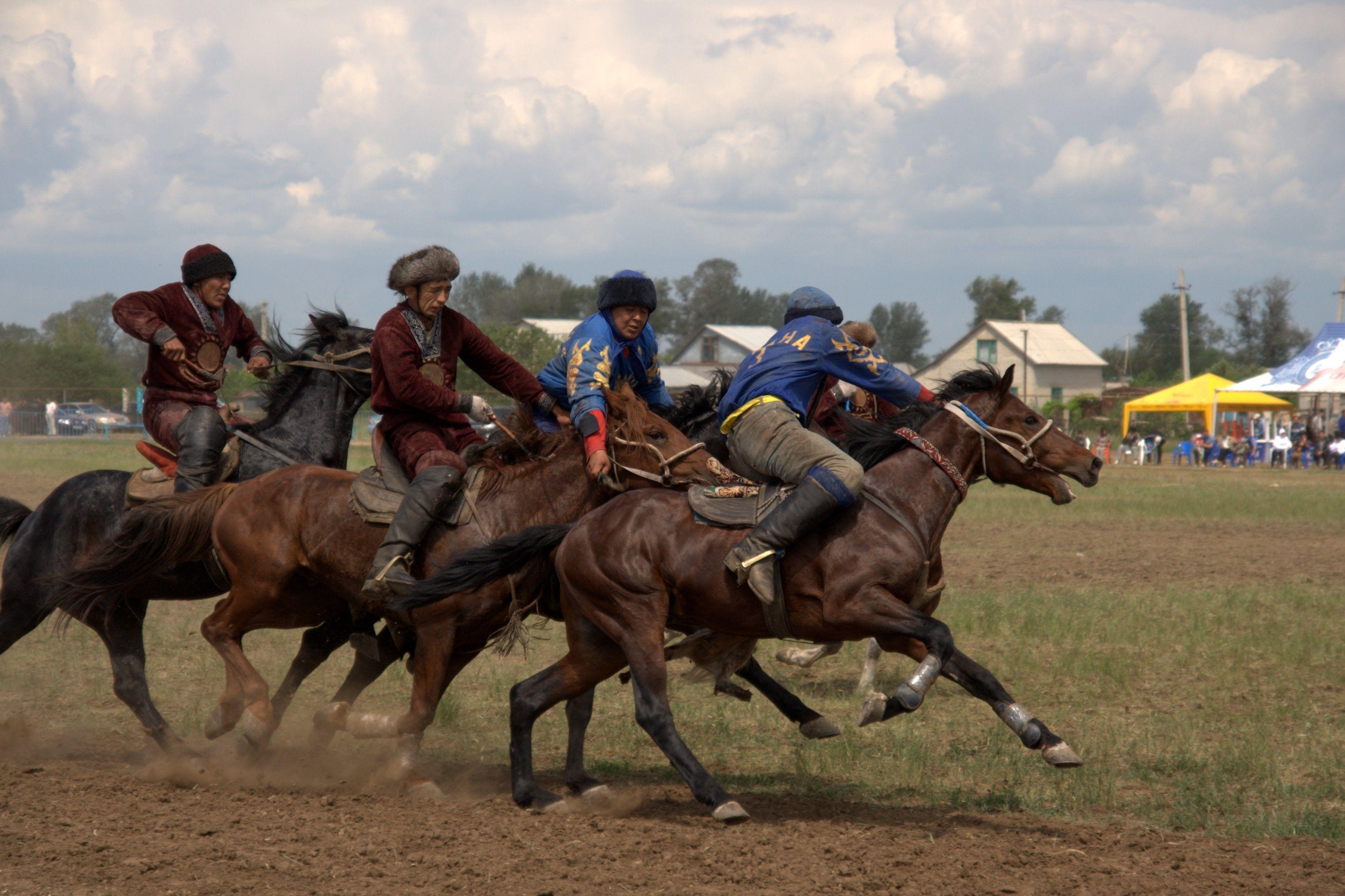
Before a game a council, the maslikhat, meets to set the prizes and choose a carcass of suitable weight. Sources disagree on how heavy it may be: Uzbek rules often cap it around 50 kg so that a strong man can lift it from the saddle, while other accounts describe goats closer to 30 kg; a calf carcass for a wedding game can be much heavier. The basic rules are few and matter: no attacking a rider from behind, no deliberately pulling a man from his horse, no riding over a rider who is bent down for the carcass, no weapons and, in the organised game, no whipping another rider. Judges watch from a stand or, in the villages, from the back of a pickup.
A game can last from a couple of hours to a whole day, with dozens of scoring runs; prizes are given for each, and the big prize for the last. Riders drop out as horses tire. The crowd stands on the slopes around the field, and part of the skill of the sport is that the mass of horses moves unpredictably, sometimes straight into the spectators.
The riders, the horses and what they wear
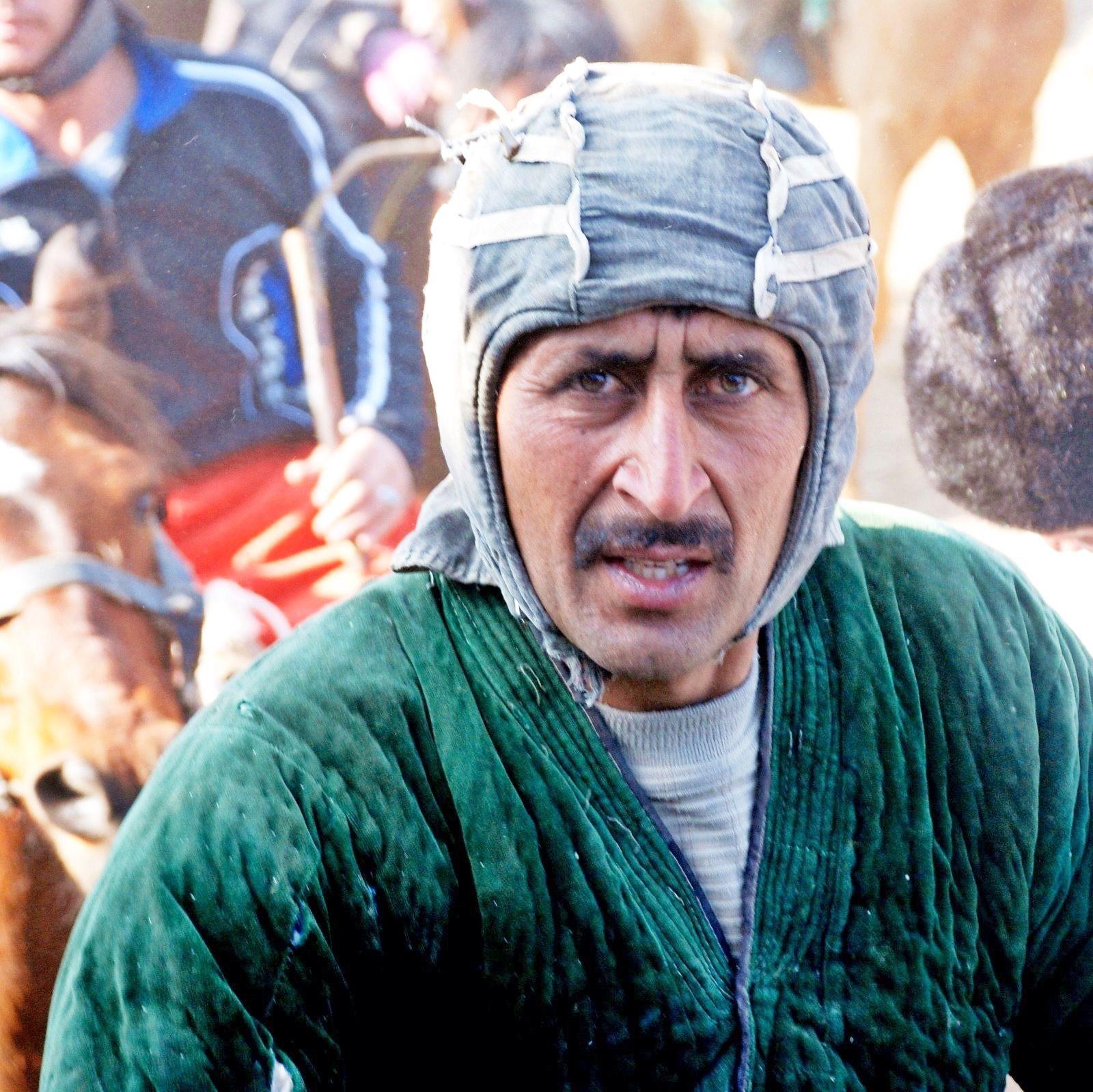
The riders, chavandoz, are mostly farmers and herders from the villages of the steppe and foothills, and the best are known across their region by name. They wear a thick quilted chapan over padded trousers, often several layers, as protection against other horses, other riders and the ground, and most now wear a hard helmet, which in the villages is often a Soviet tank crew helmet with its leather ridges. The whip is carried in the teeth when both hands are needed.
The horse matters more than the rider. The breed of choice is the Karabair, Uzbekistan's own horse, a compact, strong animal developed over centuries from local and Arab stock in the Kashkadarya and Surkhandarya steppes, and a good kupkari horse is trained for years to push into a crowd and to stand still while its rider hangs upside down from the saddle. Prize horses change hands for the price of a car.
Prizes were once livestock, carpets and lengths of cloth; today a wedding game may put up sheep and cattle for the small runs and a carpet, a television, a motorbike or, at the richest games, a car for the final. The donor is usually the family hosting the wedding or a local businessman, and the announcement of the prize list is what draws riders from neighbouring provinces.
Where it comes from
Kupkari belongs to the whole Turkic and Persian horse world, and every country on the steppe claims the oldest version. Local historians in Uzbekistan link it to the horse culture of the Fergana Valley, the Davan of ancient Chinese chronicles whose heavenly horses the Han emperors coveted, and the game in its present form is certainly older than any written record of it; a Russian painter, Franz Roubaud, recorded a Central Asian buzkashi in the 1880s, and travellers of the Russian conquest describe it in the villages around Samarkand and Bukhara. The ethnographers' explanation is training: a game that teaches riders to control a horse at the gallop in a crowd while leaning out of the saddle is a cavalry drill with a goat in it.
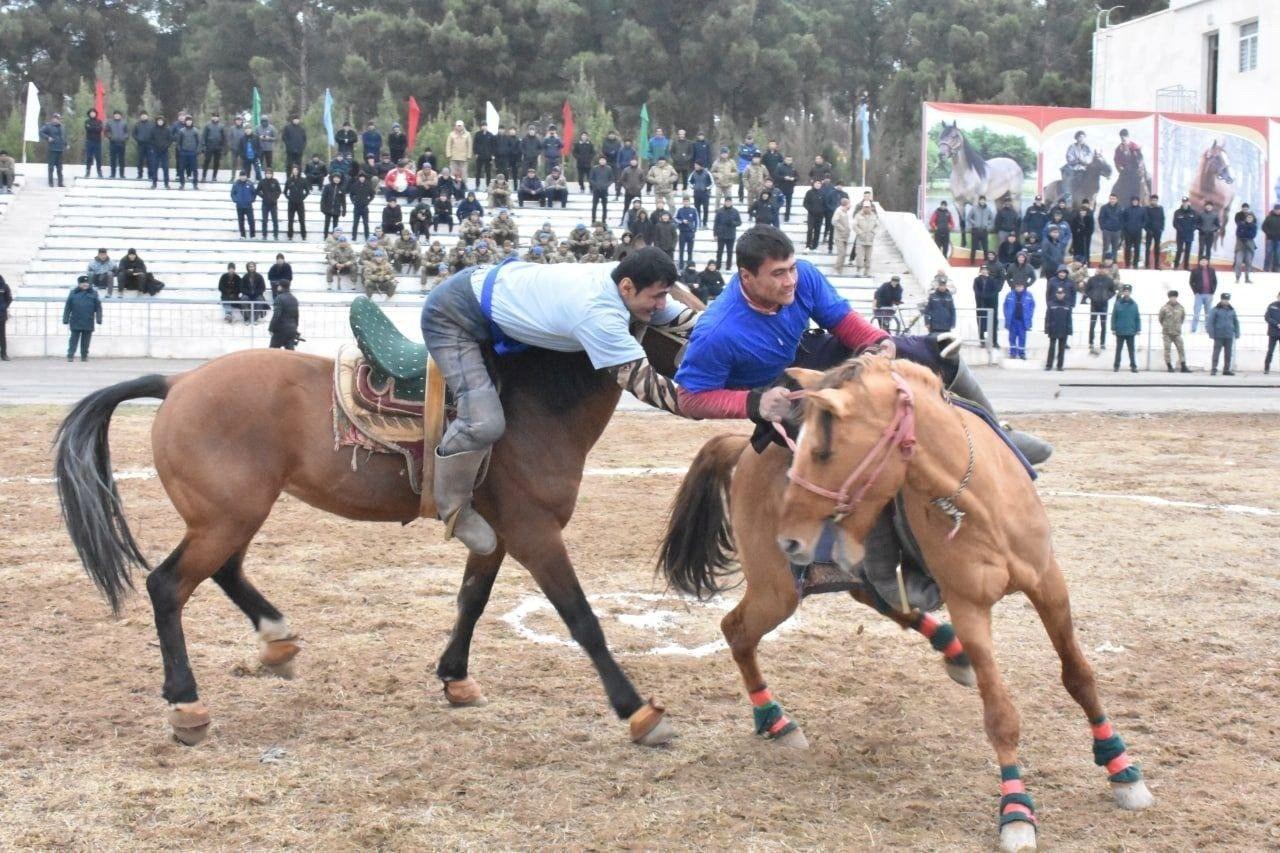
In the Soviet period the game survived as a village pastime and was briefly formalised as a sport; since independence it has been promoted as national heritage. Since 2022 Uzbekistan has hosted an international ulak-kupkari tournament, held in Surkhandarya in 2022 and 2023, in the Fergana region in 2024, in Namangan in 2025 and, from 27 to 29 March 2026, at the National Guard's Riders' School in the Bukhara district, with teams from Russia, China, Kazakhstan, Kyrgyzstan, Tajikistan and Uzbekistan. The fifth edition drew more foreign teams than any before it.
When games happen: the kupkari calendar
Kupkari is a cold-weather sport. The season opens in late autumn after the harvest, when the fields are empty and the horses are fit, runs through the winter and ends in spring, with the biggest games around Navruz, 21 March, when every province organises festivities. Summer games are rare: the ground is hard, the horses suffer and the farmers are busy.
Within that season, games are tied to occasions. The most common is the wedding kupkari, put on by a family as part of a wedding celebration in the countryside, with the carcass and the prizes paid for by the host; these are announced by word of mouth a few days before and draw riders from a wide radius. Then there are Navruz games organised by district administrations, usually on the holiday itself or the weekend nearest, and memorial games held in honour of a respected elder. Regional festivals sometimes include a game: the biennial Boysun Bahori folklore festival in the mountains of Surkhandarya, held from 1 to 7 May 2026 and next due in 2028, has featured horse games in past editions, though the programme varies by year. In spring 2026 the European press reported large kupkari gatherings in Surkhandarya, where the season arrives earliest.
The practical rule for a traveller is that a trip in March, or between November and February, has a good chance of a game within reach of Samarkand, Bukhara or Termez; a trip in July has almost none.
Where to look: the kupkari regions
The game is strongest in the south and the steppe: Kashkadarya, around Karshi, Shakhrisabz and Guzar; Surkhandarya, from the Termez plain up to Boysun; the Jizzakh and Samarkand regions, particularly the villages around Urgut and the foothills of the Nuratau; Bukhara's Karakul and Alat steppe; and the Fergana Valley, where the Kyrgyz and Uzbek traditions meet. Tashkent region has games in the Chirchik and Akhangaran valleys. Khorezm and Karakalpakstan have their own horse games but fewer kupkaris.
Finding one is a matter of asking. District hokimiyats know the Navruz games; chaikhana owners and horse breeders know the weddings. We keep a list of breeders in Kashkadarya and Samarkand who tell us when a game is called, and most guides in the south can do the same at a few days' notice. Social media in Uzbek is the other channel; a search for the Uzbek word ko'pkari with a province name in the week before a trip usually turns up something.
The tournament is the one fixed point: late March, announced in advance by the Ministry of Sports and the equestrian federation, with a venue that changes each year. For a guaranteed sighting it is the safest bet; for the real thing, a wedding game in a Kashkadarya village is better.
How to see it, when and what it costs
Getting to a game means a car and a local guide. From Samarkand, the Urgut and Shakhrisabz districts are an hour to ninety minutes away over the Takhtakaracha pass; from Bukhara, the steppe villages are within an hour; from Termez, the Boysun and Sherabad districts are two to three hours. Games start mid-morning and run into the afternoon, so plan a full day with a picnic, because there is rarely food at the field beyond bread, tea and the plov cooked for the riders afterwards, to which spectators are often invited.
What it costs, as of November 2026: there is no admission; a car with driver from Samarkand or Bukhara for the day runs US$70 to 110, a guide US$40 to 60, and a contribution to the host family, if you are invited to the plov, is a courtesy rather than a charge. A private excursion arranged through us with a guaranteed game is priced on request because it depends on the season and the region.
How to watch safely: stand on high ground, well back from the field and never on the downhill side of the scrum; the mass of horses can move fifty metres in seconds and the riders cannot see you. Keep children close. Cars are used as grandstands, and standing on a vehicle roof with the locals is the best view. Dress for cold wind, bring water and expect dust. Photography is welcome, drones are not unless the organisers agree, and riders will pose with their horses after the game, which is the time for portraits.
Seeing kupkari with TourEast
None of our scheduled tours promise a kupkari, because we will not promise a thing that depends on a village wedding. What we do is build it in when the calendar allows. Snow on the Domes: Winter Uzbekistan runs at the height of the season; a game is not part of its programme, but if one is called near Samarkand or Bukhara that week, we can try to arrange a visit in the free time, at extra cost. Four Crowns: Tashkent, Samarkand, Bukhara, Khiva on a March trip can be extended by a day for a Navruz game, and on a private itinerary such as Silk Road in Silk: Private Uzbekistan we can plan the whole route around the tournament or a wedding game in Kashkadarya, with a horse breeder as host. Tell us your dates and we will tell you what the chances really are.
Frequently asked questions
Photo gallery
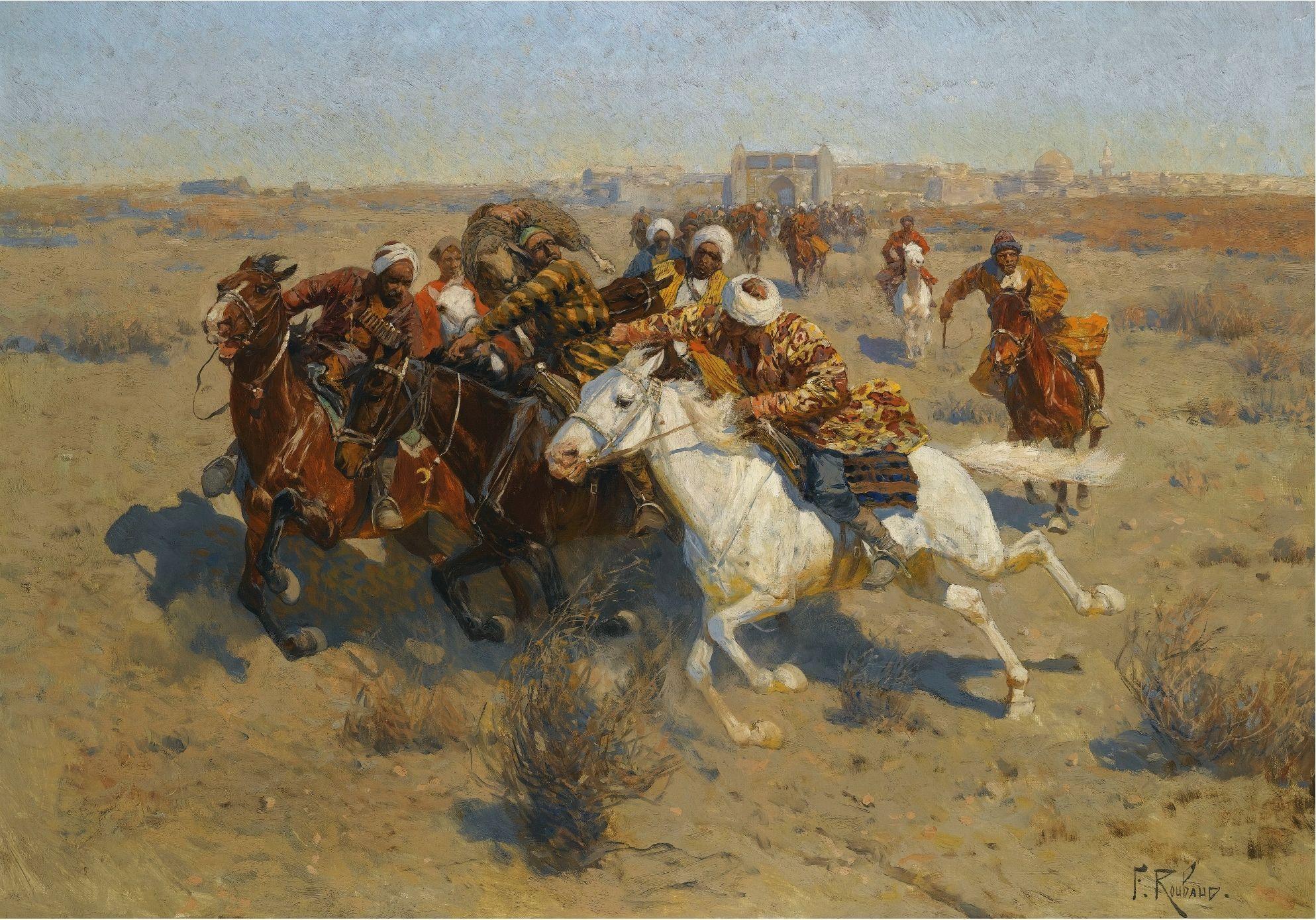
Photo: Akmal Daloman / Wikimedia Commons, CC BY-SA 4.0; ShShShDDD / Wikimedia Commons, CC BY-SA 4.0; Rustam Uzbekov / Wikimedia Commons, CC BY-SA 4.0; Franz Roubaud / Wikimedia Commons, Public domain